Kelim Senneh
287 × 194 cm
1.253 €




1.325 €
Incl. VAT
In Stock · Ready to Ship
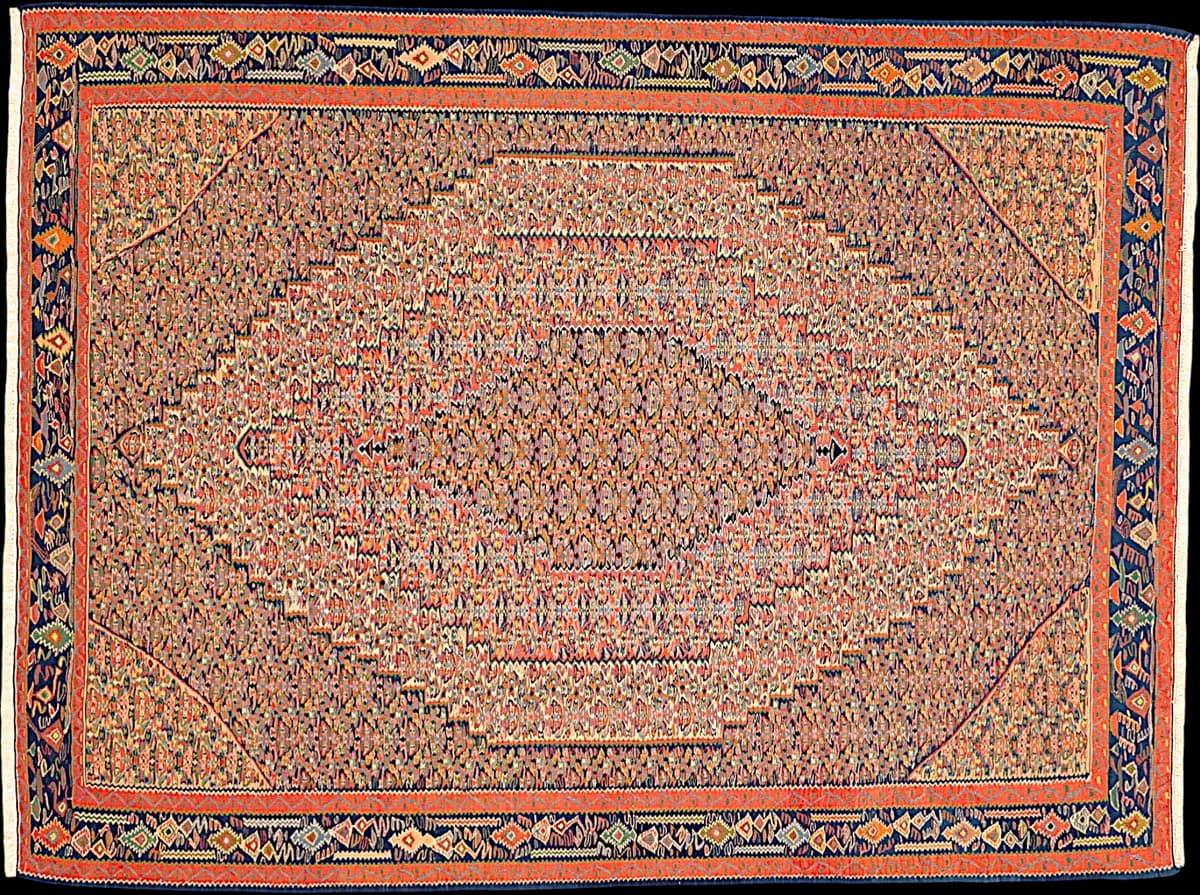
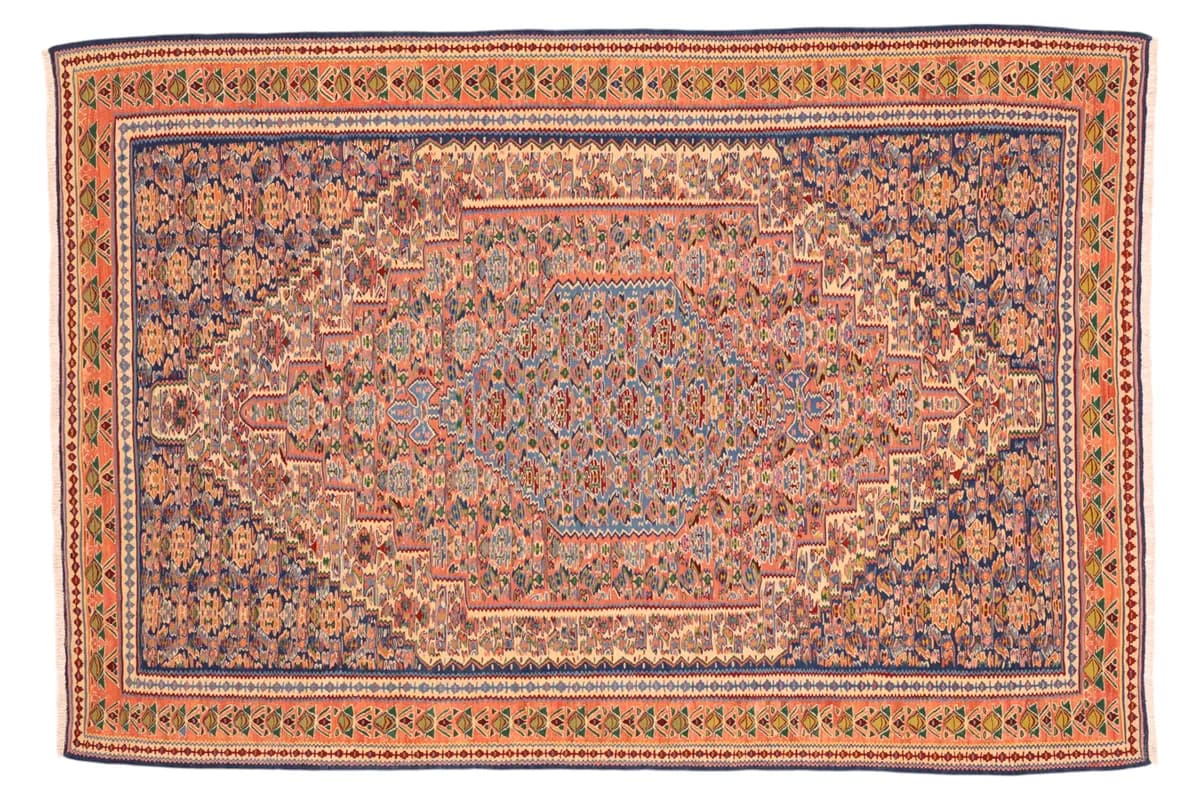
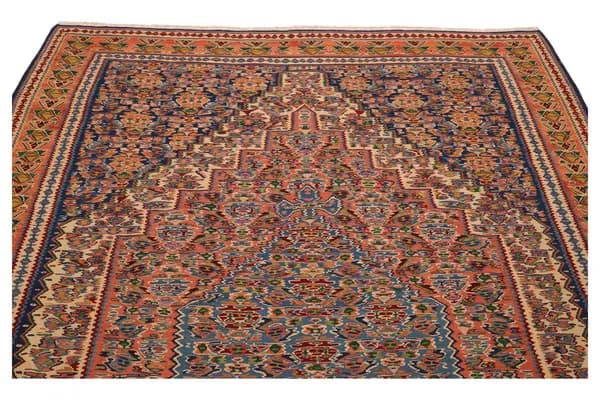
This is a kilim, also written kelim, from Kordestan, the Kurdish region of western Iran, woven flat rather than knotted, 293 x 201 cm (9'7" x 6'7"). Kilims of this kind are known for bold, graphic geometry and for being fully reversible, since the pattern is woven through rather than tied on top. This one carries that same technique but a calmer temperament.
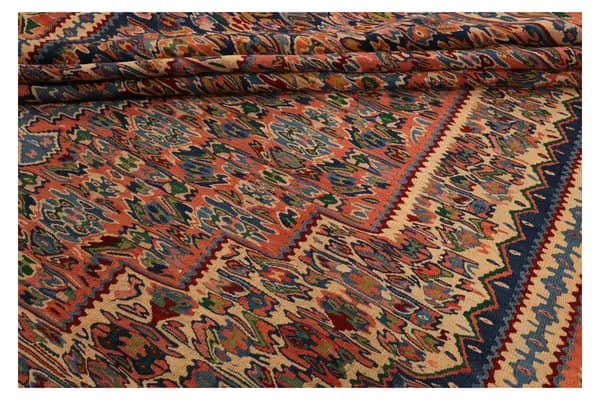
The eye settles first on a stepped, lozenge-shaped medallion in dove blue, floating on a ground of salmon and apricot at the centre of the rug. Around it lies a field of deep indigo, its four corner spandrels picking up the same dove blue so the whole composition reads as symmetrical from any angle. Inside the medallion, small floral and geometric motifs pack tightly together in cream, rust-red, olive, mustard and dusty rose. A wide multi-band border in salmon, patterned with a floral zigzag, closes the design with narrower stripes of blue and cream.
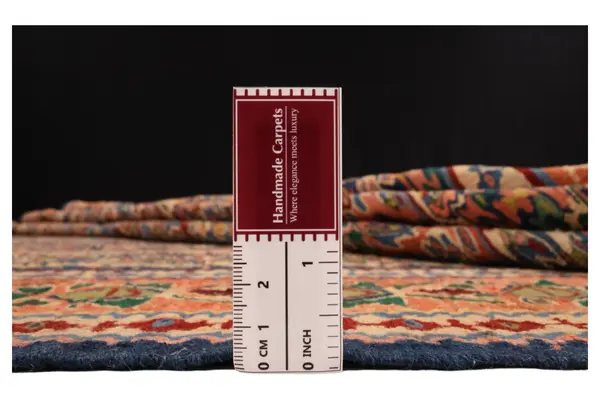
Kilims are woven, not knotted: coloured wool is passed through a cotton warp to build the pattern directly into the structure, rather than tied stitch by stitch afterwards. That technique keeps every line of the medallion and border sharp and flat, at four millimetres thick, with none of the softening blur a deep pile would bring to a design this densely filled. The wool itself has been hand-spun rather than machine-spun, which gives the surface a slight, natural irregularity and a quiet sheen rather than a uniform gloss. Both faces of the rug are equally finished, so either side can be turned to the room.
A rug of this size suits a living room or study, laid under a seating group or a desk where the whole pattern can be read at once. The salmon ground warms a pale or neutral floor, while the indigo field holds its own against darker furniture nearby. Underfoot it is light, flat and cool rather than deep, and because both faces are equally finished, daily use spreads the wear evenly across each side rather than pressing it into one. In low light the dove-blue medallion stays legible and calm; when the sun crosses it, the mustard and rust accents warm and catch.
More on Kilims: origin, making and how to recognise a genuine piece
At 293 × 201 cm (5.89 m²) this is a large rug. It sits under a seating group with the front legs of sofa and chairs on it, or under a dining table for four. A table for six wants about 80 cm of clearance all round, and needs more.
No — this piece is hand-woven, not knotted. A flatweave has no pile: the pattern comes from warp and weft alone. That makes it thin, light and usable on both sides, and it is a technique in its own right rather than a simpler version of a knotted rug.
Vacuum regularly, ideally along the weave and without a rotating brush. A flatweave can be turned over, which spreads the wear — flip it once or twice a year. Blot spills at once with clear water and a light cloth, working inwards, and never rub.
We are in the Hamburg Speicherstadt. Come and see this rug in daylight, or write to us — a person answers.
Certificate included verifying origin, materials, and craftsmanship.
Ref: 810448