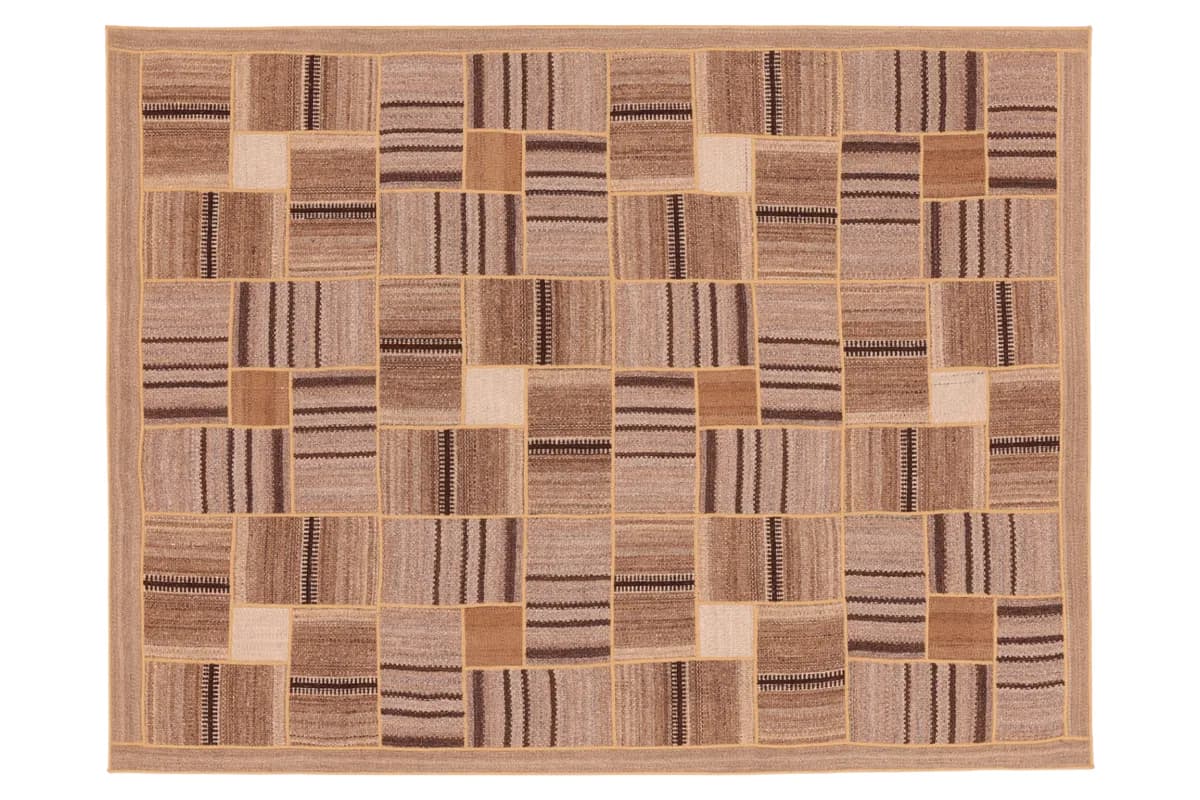
Kelim Patchwork
196 × 150 cm
675 €
1.339 €
Incl. VAT
In Stock · Ready to Ship
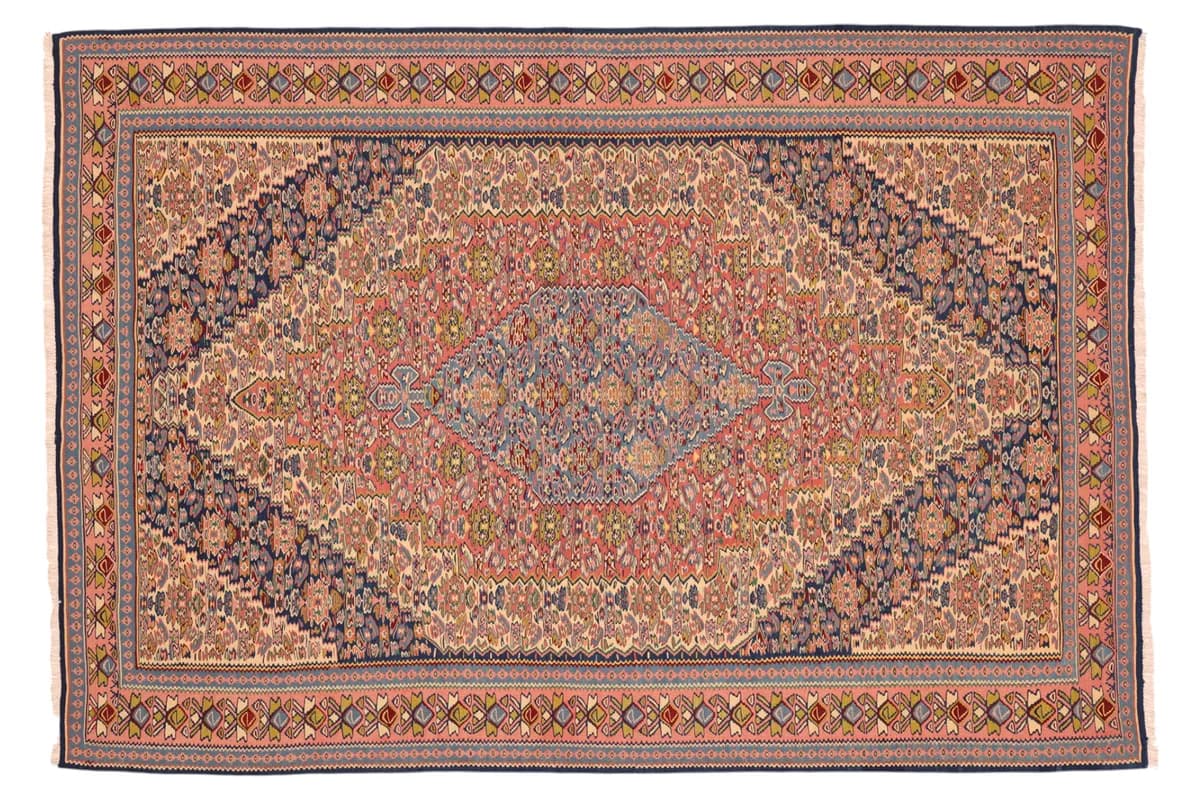
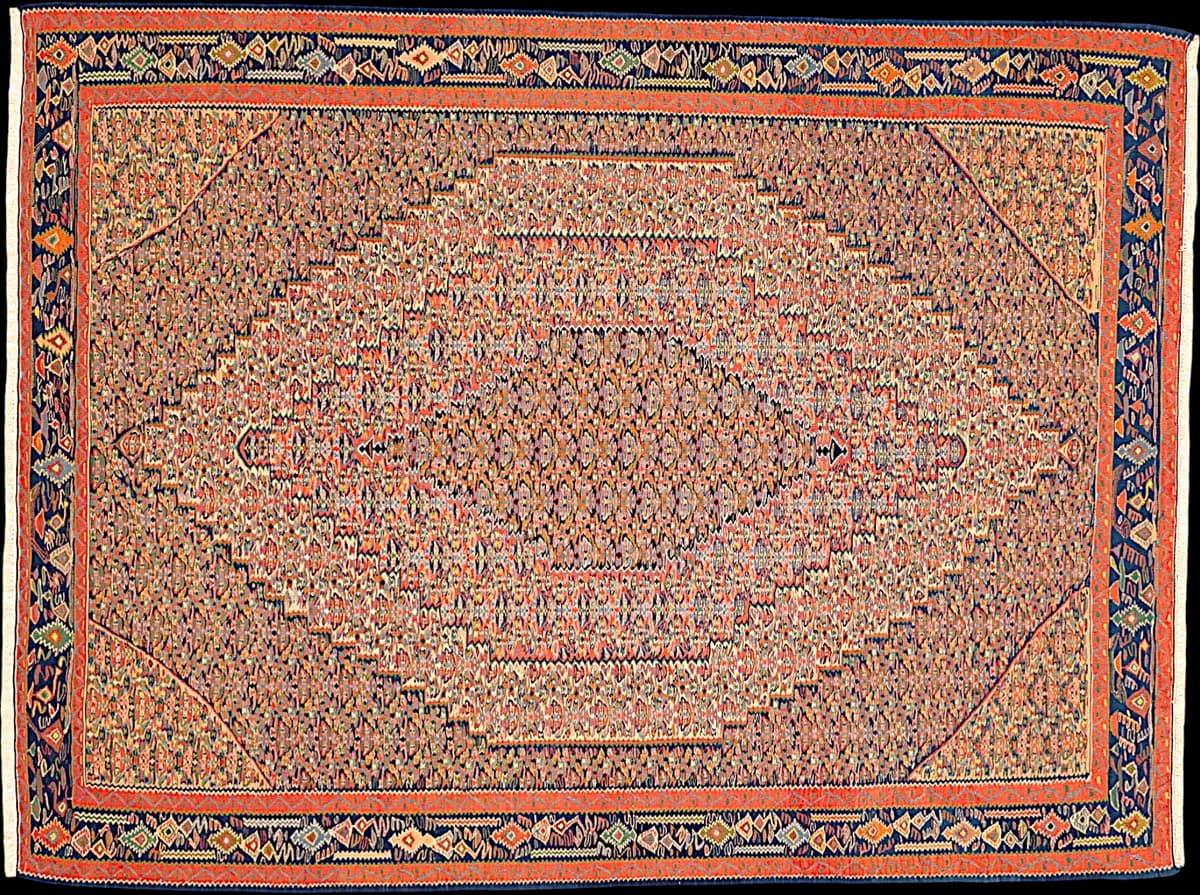
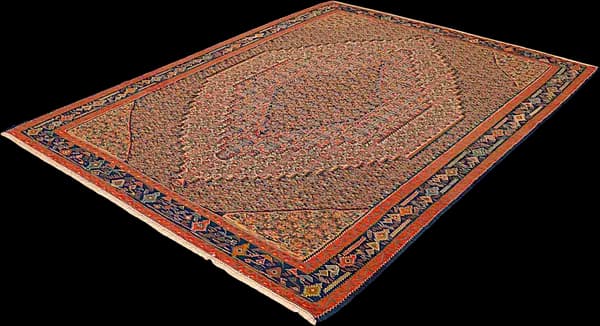
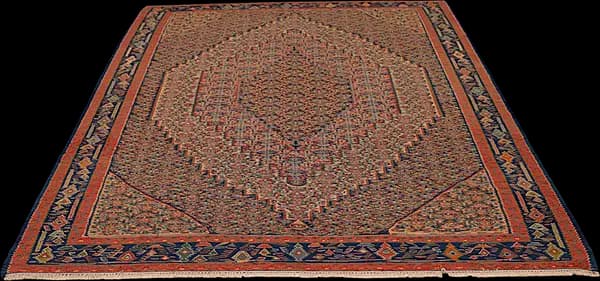
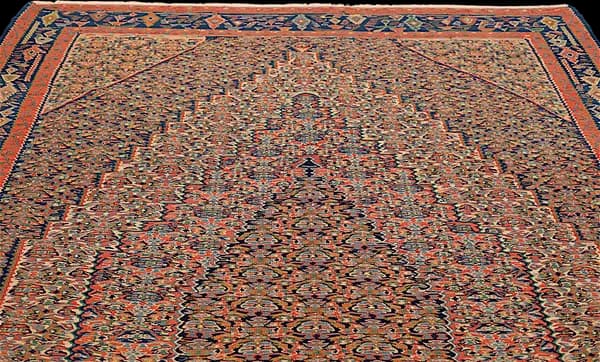
Kordestan is Kurdish territory in western Iran, and this is a kilim from that region — a flatweave, woven rather than knotted, 282 x 211 cm (9'3" x 6'11"). Kilims from this part of Persia are built on bold, clearly legible geometric pattern, and because the weave carries no pile, the design reads with equal clarity from either face.
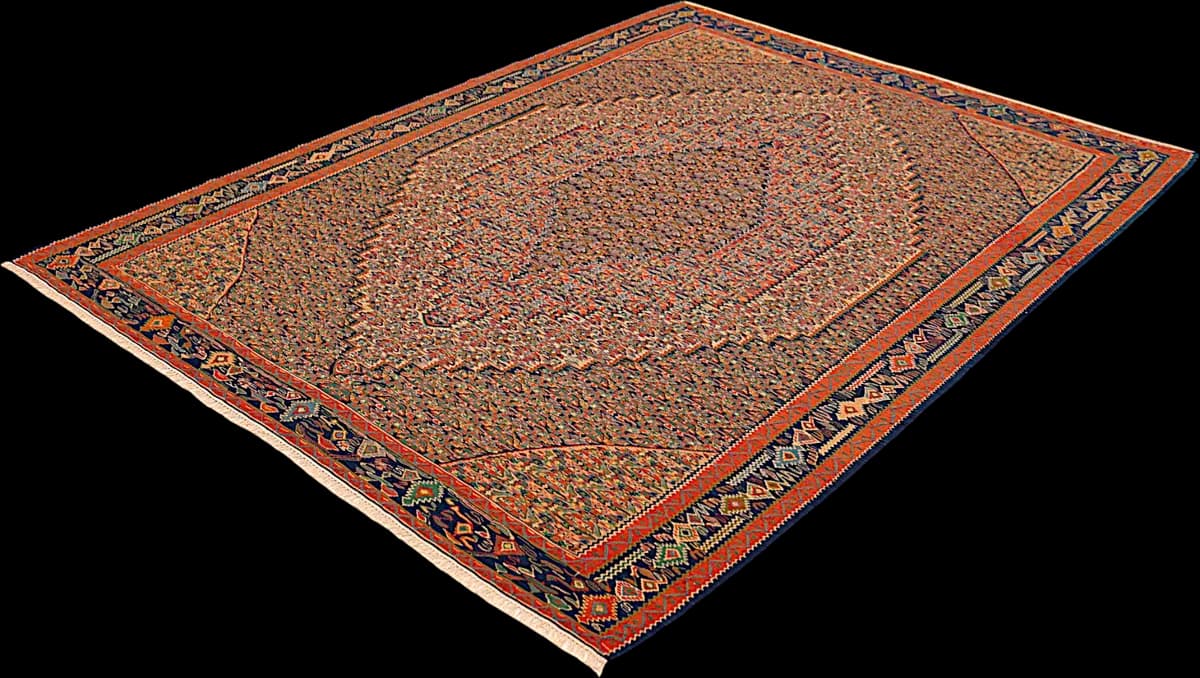
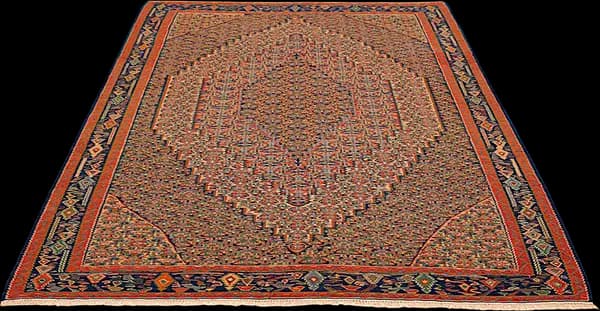
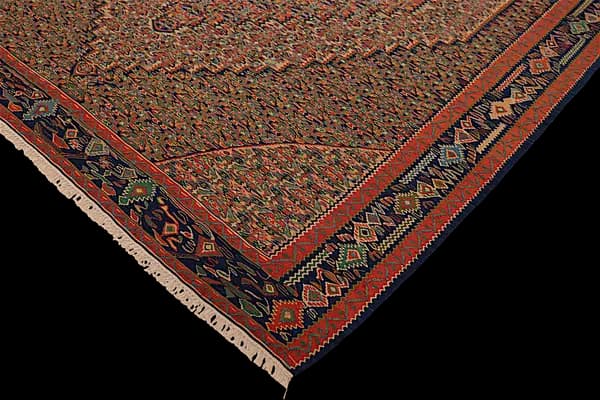
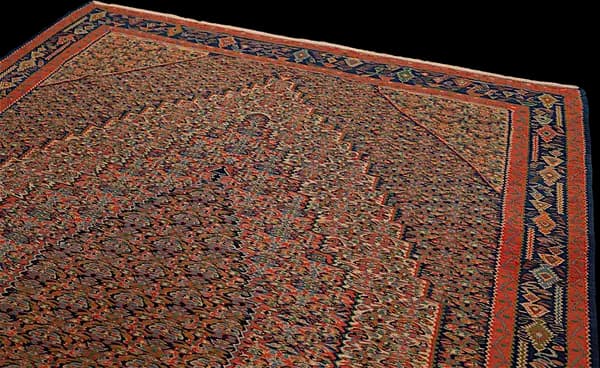
The field is a warm salmon-terracotta, worked so densely in a repeating Mahi diamond lattice that from across a room it settles into something closer to a textured solid than a pattern. Look again and a stepped diamond medallion sits at its centre, but it is drawn in the same warm tones as the field around it, so it emerges only faintly rather than announcing itself. All the visual weight instead falls to the border: a wide band of navy carrying polychrome geometric diamonds, closed with a slim terracotta guard stripe, and it is this border, not the medallion, that gives the piece its contrast and its frame.
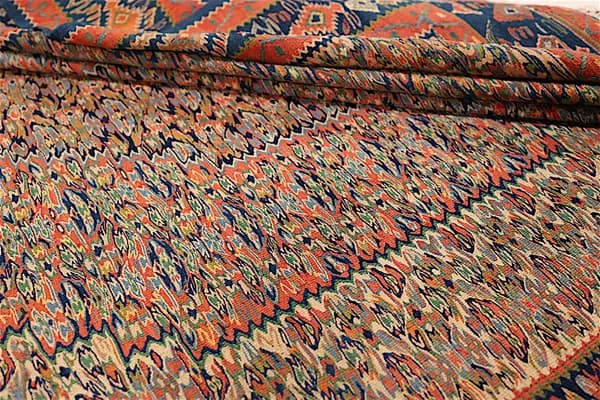
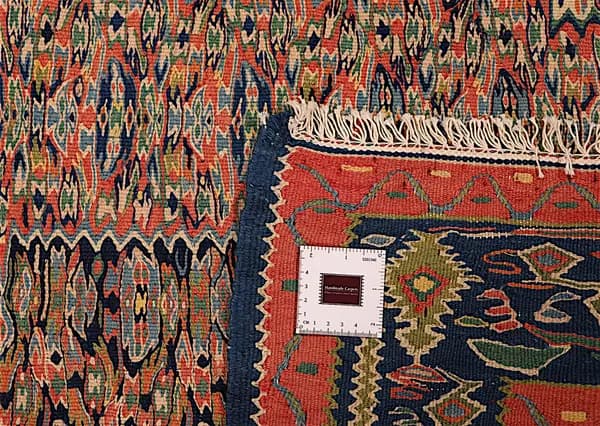
This is a hand-woven kilim, cotton warp, hand-spun wool laid in by hand rather than knotted and sheared, which is why the surface stays flat — about 4 mm — and matte, with the fine speckling that only hand-spun yarn produces. Because there is no pile to trim, the pattern is built directly in the weave itself, block by block of colour, and both faces come out equally finished, which is what lets a kilim be walked on from either side and doubles its working life. The medallion's quietness here is a choice within that method, not a limit of it: keeping it in the field's own palette, while reserving navy for the border alone, is what lets it dissolve rather than compete.
At just over 280 by 210 centimetres, this sits comfortably in a living or dining room, under a coffee table or anchoring a seating group. The terracotta warms a pale floor and holds its own against dark wood or navy upholstery alike, echoing the border rather than fighting it. Underfoot it is light, thin and flexible rather than deep and soft, easy to live on daily and equally happy layered over another rug. As light moves across the room through the day, the lattice shifts between reading as plain warm colour and resolving into its full geometry.
More on Kilims: origin, making and how to recognise a genuine piece
At 282 × 211 cm (5.95 m²) this is a large rug. It sits under a seating group with the front legs of sofa and chairs on it, or under a dining table for four. A table for six wants about 80 cm of clearance all round, and needs more.
No — this piece is hand-woven, not knotted. A flatweave has no pile: the pattern comes from warp and weft alone. That makes it thin, light and usable on both sides, and it is a technique in its own right rather than a simpler version of a knotted rug.
Vacuum regularly, ideally along the weave and without a rotating brush. A flatweave can be turned over, which spreads the wear — flip it once or twice a year. Blot spills at once with clear water and a light cloth, working inwards, and never rub.
We are in the Hamburg Speicherstadt. Come and see this rug in daylight, or write to us — a person answers.
Certificate included verifying origin, materials, and craftsmanship.
Ref: 880857