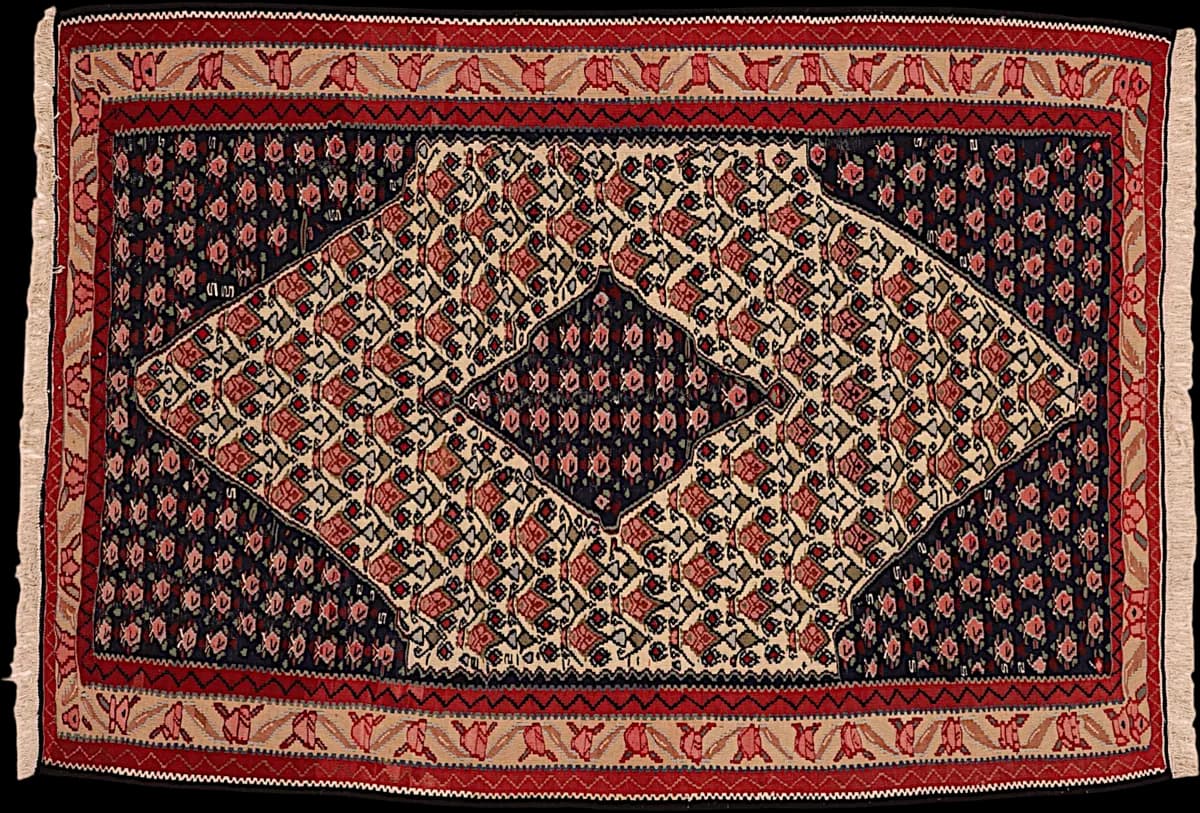
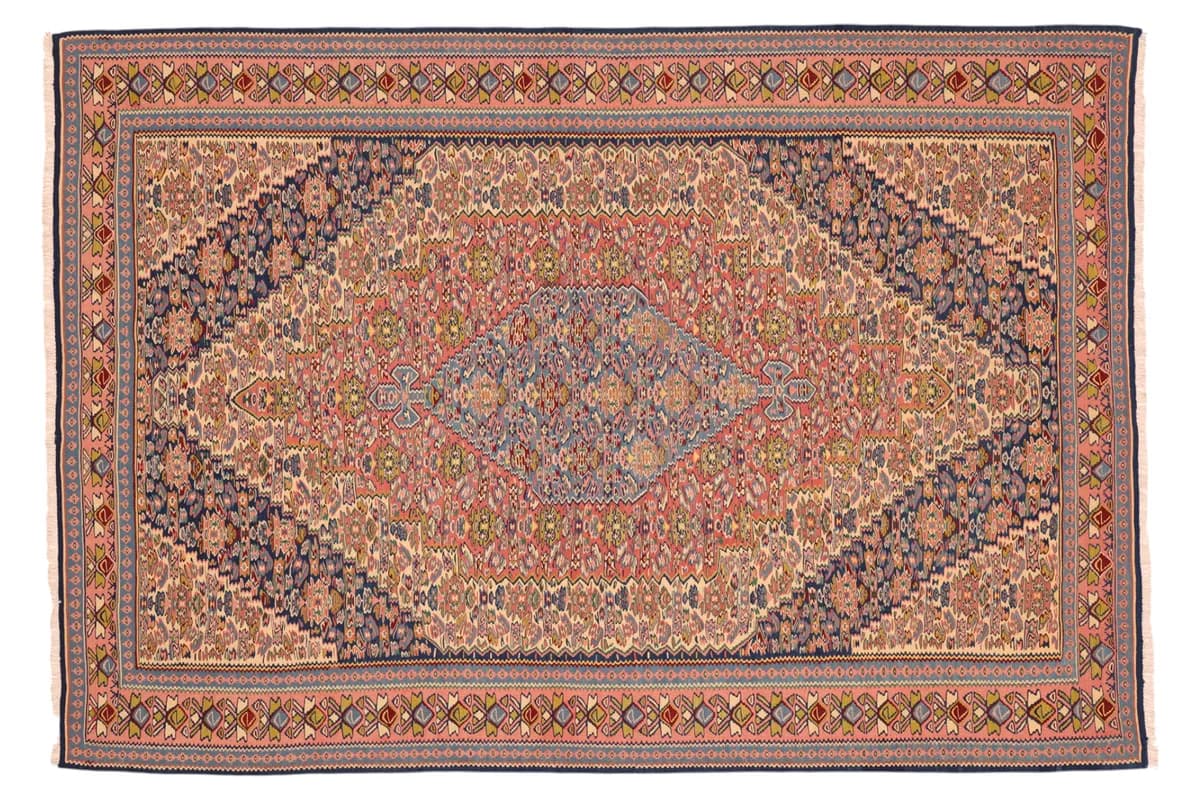
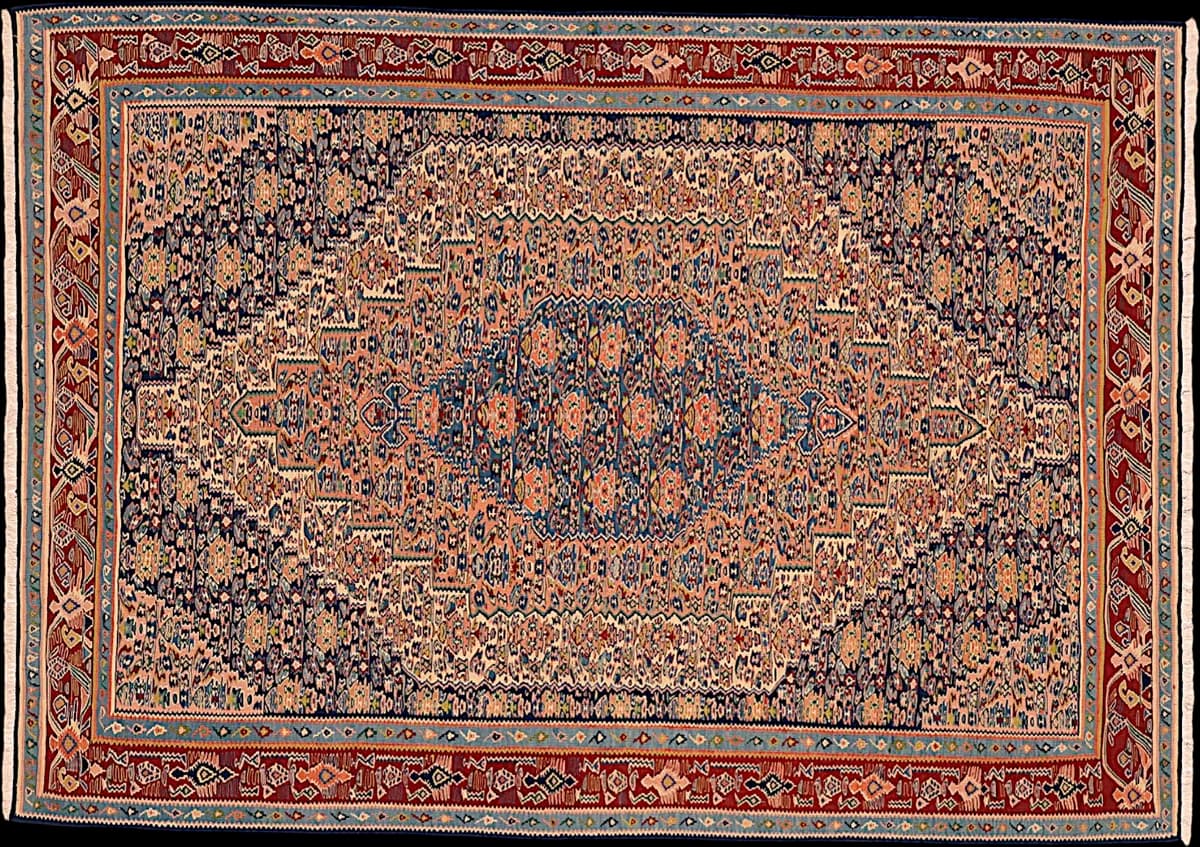
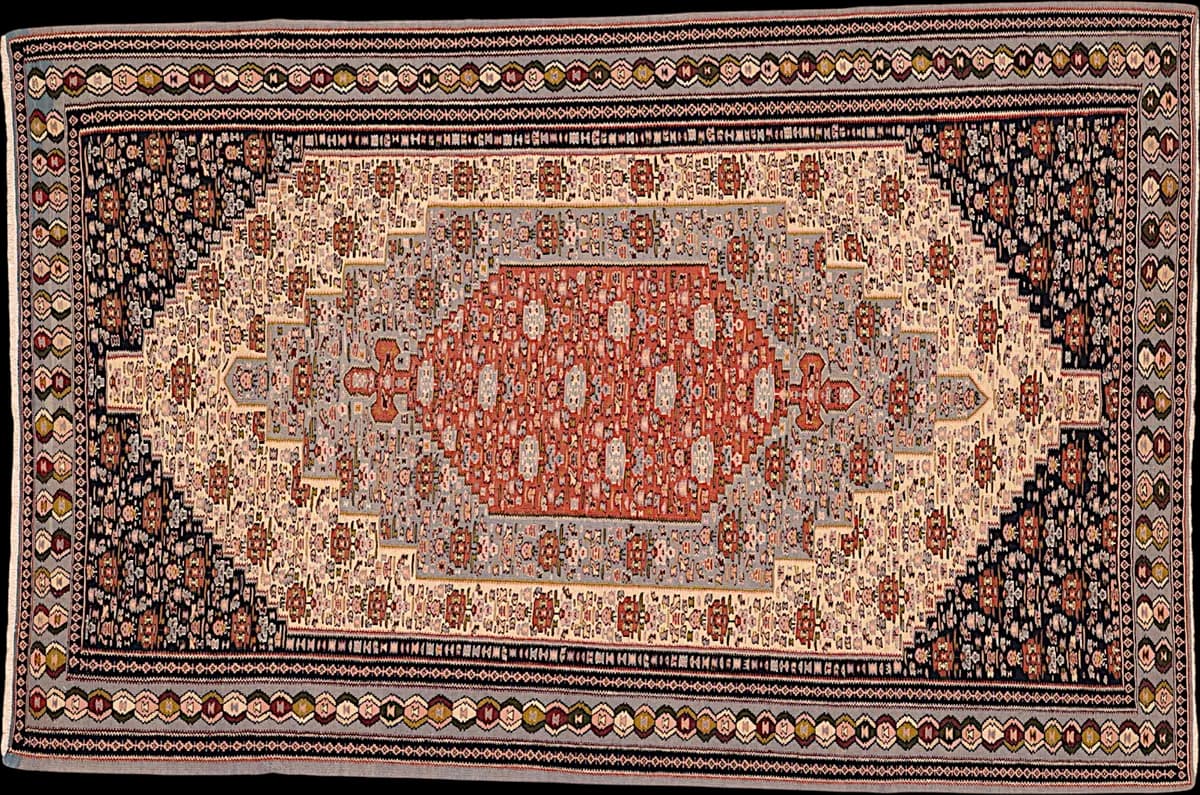
Kelim Senneh
294 × 221 cm
1.463 €
289 €
Incl. VAT
In Stock · Ready to Ship
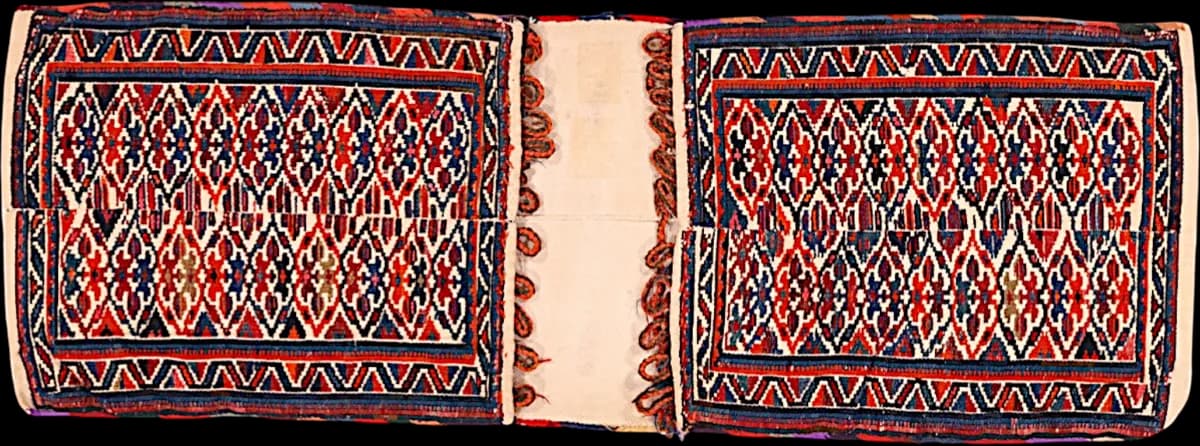
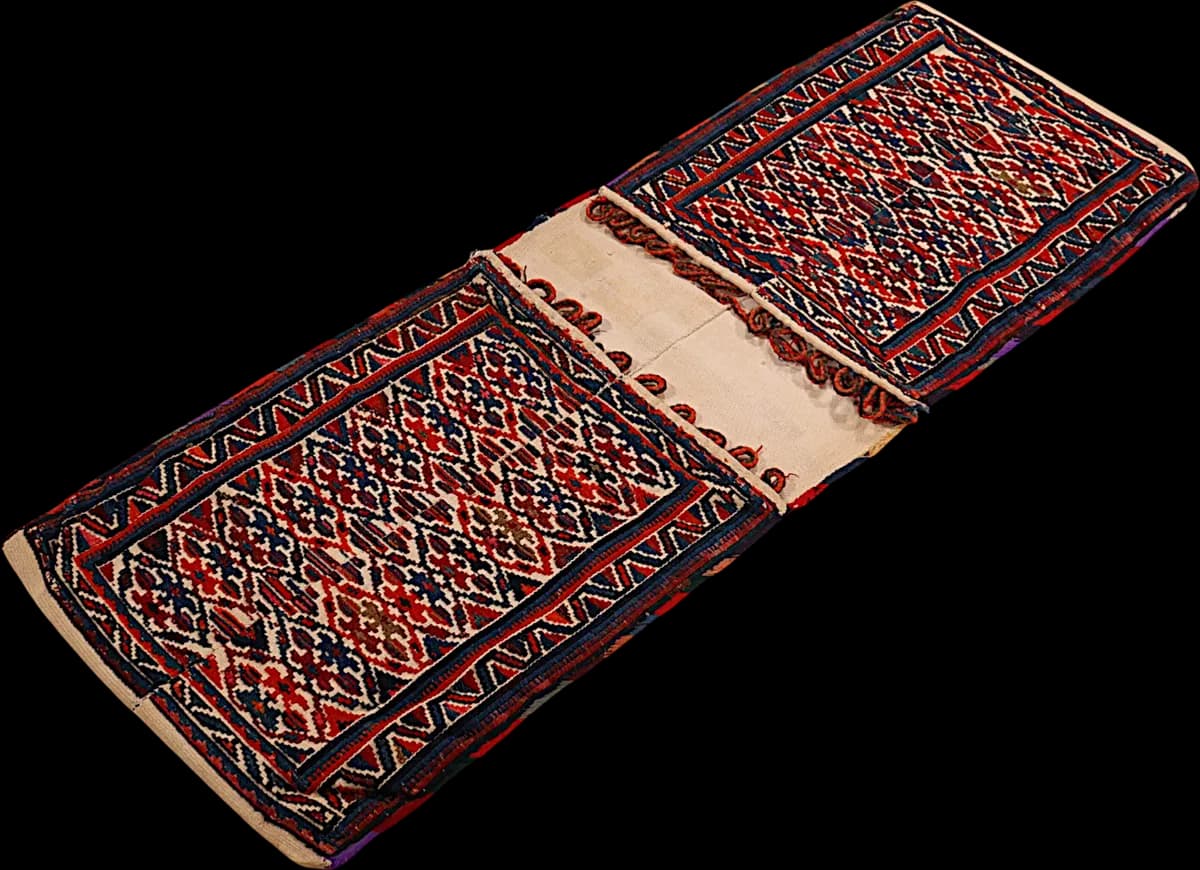
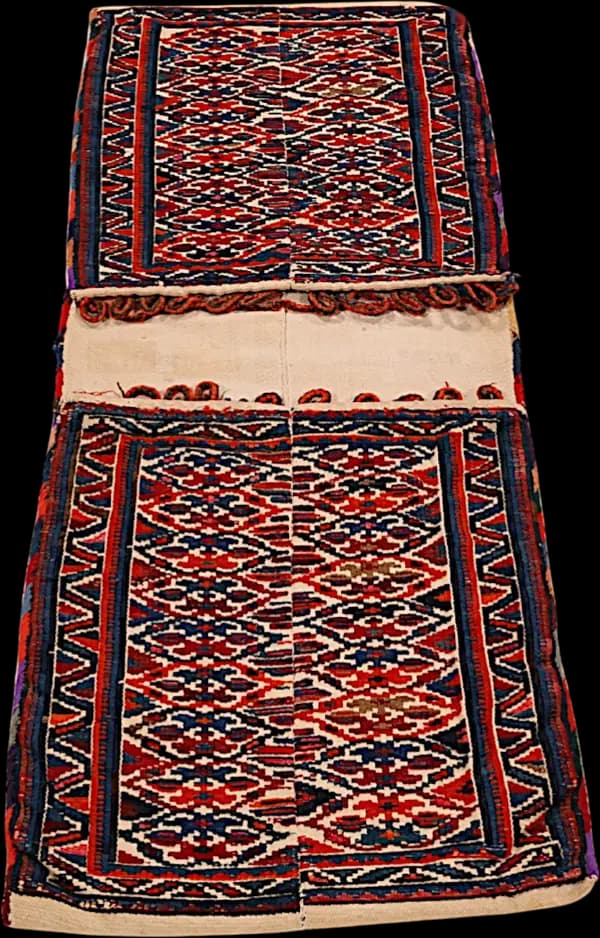
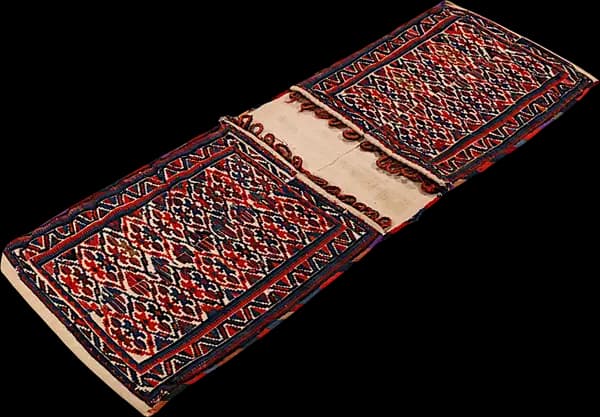
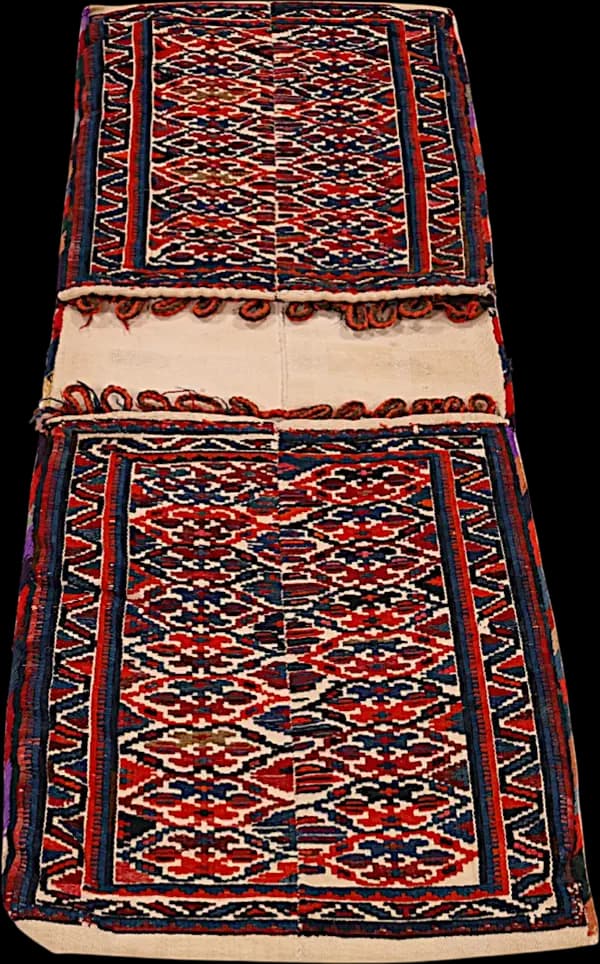
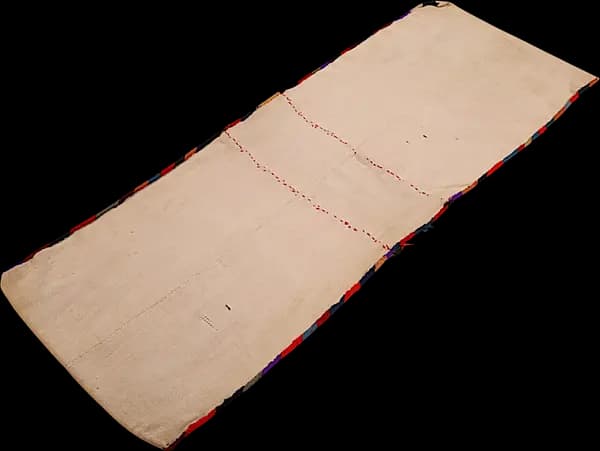
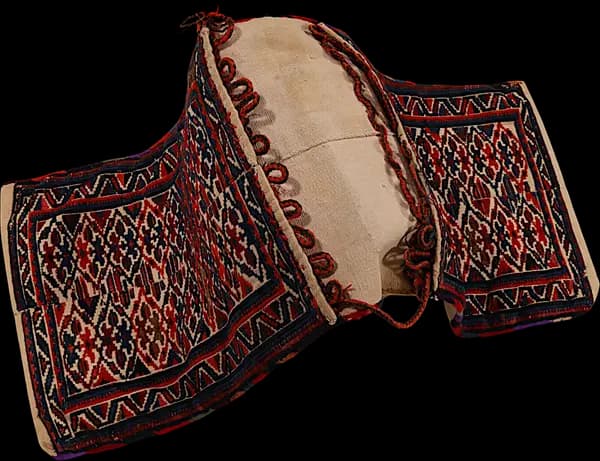
This is a khorjin, a nomadic saddlebag from the tribal weaving regions of Iran, opened flat and measuring 124 x 44 cm (4'1" x 1'5"). Bags like this were woven to be carried, slung across a mule or a shoulder, and what survives here is a complete piece, two woven faces and the mouth that joined them, made for use long before it hung on a wall.
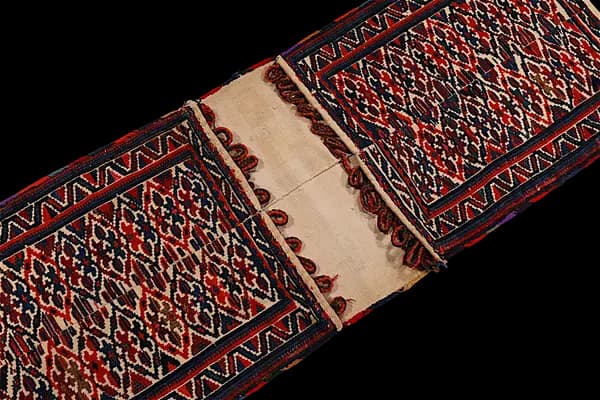
Both faces share the same design, a tight diamond lattice of small serrated rosettes in red, navy and cream against a deep brick-red ground, ivory showing through between the diamonds, with touches of rust-brown and muted plum inside the cells. Narrow striped borders frame each panel, finishing in a navy zigzag guard band on ivory that holds the red without dulling it. Between the two panels sits a plain cream gusset, closed by hand-twisted red-and-blue cords that still tie.
The two faces are hand-knotted in handspun wool on a wool warp, which gives them a close, ridged surface where three colours sit sharply against each other in a fine lattice. The gusset joining them is flatwoven rather than knotted, plain and supple where the bag needed to bend and open. Dense pile for the load-bearing sides, flat weave for the mouth: a practical division that has kept the piece's shape and its hand-twisted closures intact through twenty to forty years of use.
A piece this size suits a hallway or a study rather than open floor, laid on a bench by the door or hung flat against a wall where the lattice reads as pattern. The brick red holds its own in a dim entrance with little daylight, and the knotted surface is dense and firm to the touch, hardy rather than delicate. Seen at an angle, the navy zigzag catches whatever light there is and keeps moving.
More on Kilims: origin, making and how to recognise a genuine piece
Traditional craftsmanship
At 124 × 44 cm (0.55 m²) this is a runner. It belongs in a hallway, an entrance, on a landing or lengthways beside a bed. It is too narrow for the middle of a room.
No — this piece is hand-woven, not knotted. A flatweave has no pile: the pattern comes from warp and weft alone. That makes it thin, light and usable on both sides, and it is a technique in its own right rather than a simpler version of a knotted rug.
Vacuum regularly, ideally along the weave and without a rotating brush. A flatweave can be turned over, which spreads the wear — flip it once or twice a year. Blot spills at once with clear water and a light cloth, working inwards, and never rub.
We are in the Hamburg Speicherstadt. Come and see this rug in daylight, or write to us — a person answers.
Certificate included verifying origin, materials, and craftsmanship.
Ref: 997992