Kelim Senneh
165 × 119 cm
441 €




1.361 €
Incl. VAT
In Stock · Ready to Ship
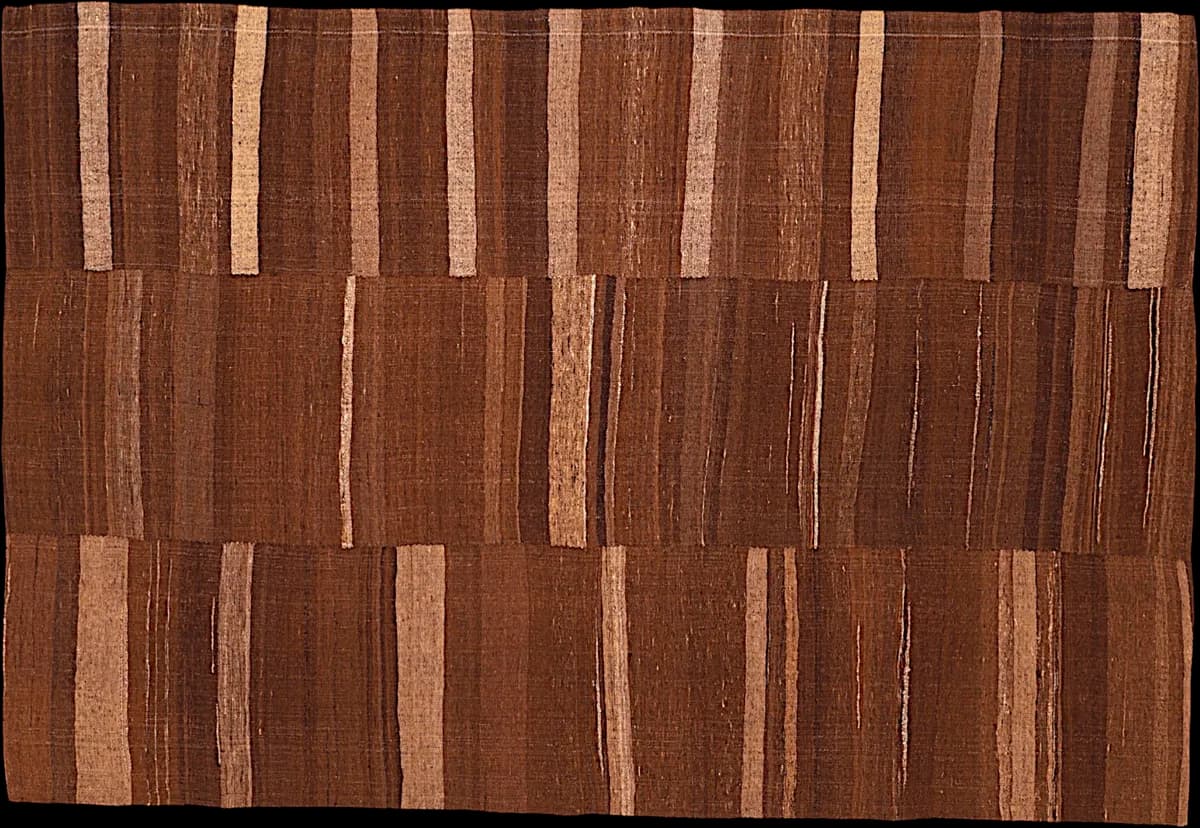
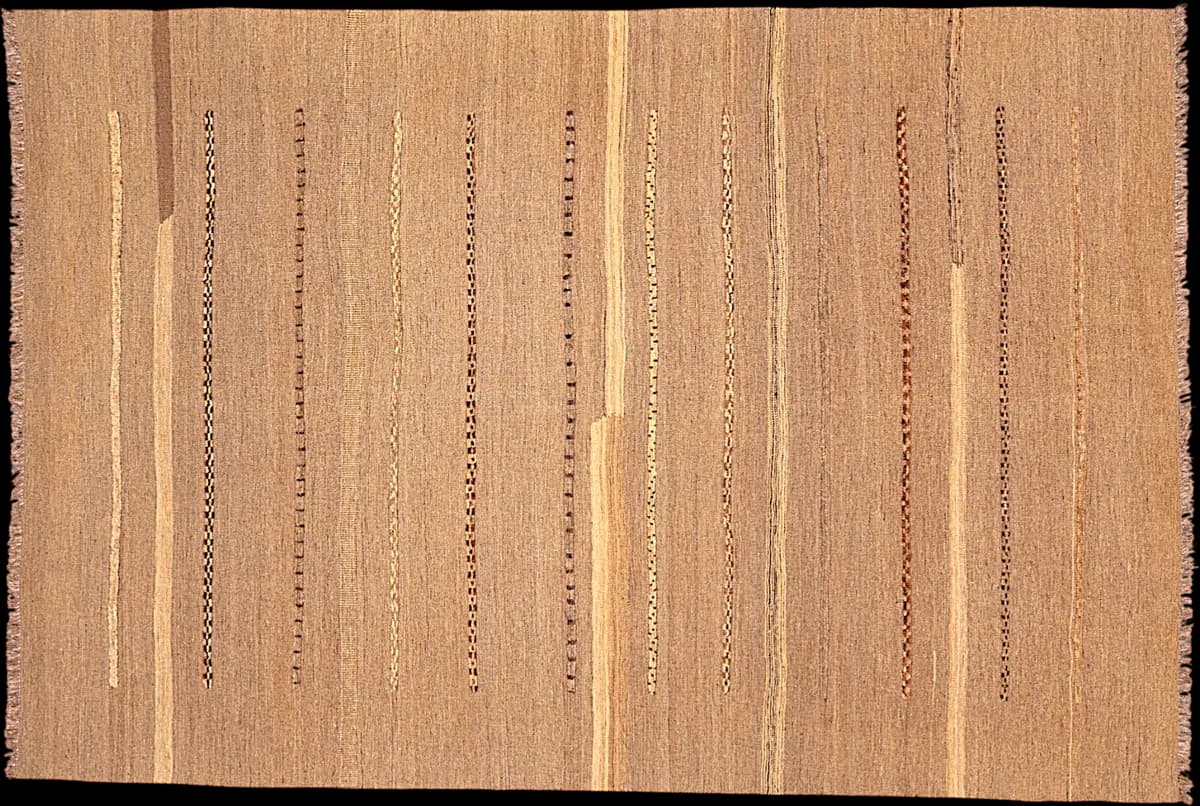
A kilim from the tribal weaving regions of Iran, 291 x 208 cm (9'7" x 6'10"), a flatweave in the true sense: woven rather than knotted, with no pile to wear down and no back to hide. Kilims of this kind are made to be turned over as readily as they are walked on, each side as complete as the other, and that plainness of construction is what gives them their particular lightness underfoot and on the wall alike.
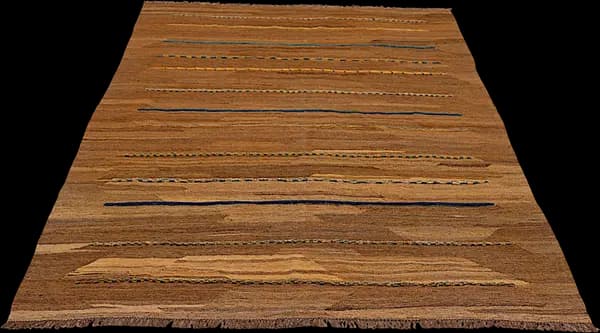
The field is a warm camel brown, its surface finely striated so the colour never sits flat, and across it run thin vertical stripes in navy, teal, mustard and ivory. There is no medallion to anchor the eye and no border to close the composition; the pattern simply runs the length of the rug and stops at the fringe. Looked at closely, the stripes are not quite straight. They waver slightly, drawn rather than ruled, which is exactly what keeps a design this spare from ever feeling mechanical.
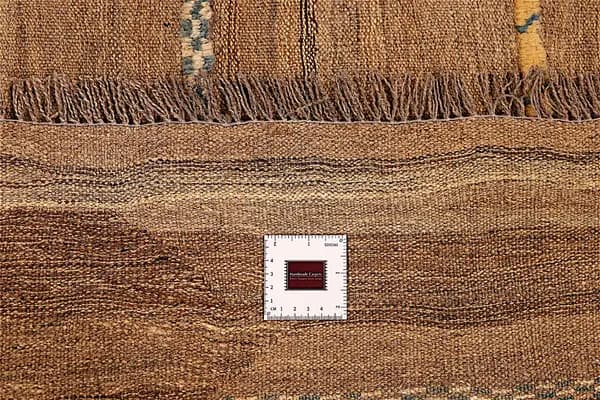
That waver comes directly from the way the piece was made. The wool was hand-spun before it was hand-loomed, so the yarn itself varies in thickness along its length, and a hand-loom does not hold tension with the constancy of a mill. Weave a straight line under those conditions and it will drift, just enough to show a hand behind it. The construction is thin, around 4 mm, with no pile at all, which is why both faces read equally clearly and why the rug can simply be flipped when one side has taken its share of years.
In a living room or study, laid under a low table or at the edge of a seating group, that camel ground does real work against a pale floor, warming it without ever competing with what stands on it. The stripes read as incident rather than pattern, something the eye picks up gradually rather than all at once. Underfoot it is flat, firm and entirely unprecious, a rug meant for daily footsteps rather than careful ones. In low afternoon light the ribbed weave catches unevenly along its length, and the stripes seem to shift very slightly as you cross the room, which is a small pleasure this piece keeps offering long after the first look.
More on Kilims: origin, making and how to recognise a genuine piece
At 291 × 208 cm (6.05 m²) this is a large rug. It sits under a seating group with the front legs of sofa and chairs on it, or under a dining table for four. A table for six wants about 80 cm of clearance all round, and needs more.
No — this piece is hand-woven, not knotted. A flatweave has no pile: the pattern comes from warp and weft alone. That makes it thin, light and usable on both sides, and it is a technique in its own right rather than a simpler version of a knotted rug.
Vacuum regularly, ideally along the weave and without a rotating brush. A flatweave can be turned over, which spreads the wear — flip it once or twice a year. Blot spills at once with clear water and a light cloth, working inwards, and never rub.
We are in the Hamburg Speicherstadt. Come and see this rug in daylight, or write to us — a person answers.
Certificate included verifying origin, materials, and craftsmanship.
Ref: 264576