Kelim Senneh
294 × 204 cm
1.350 €
441 €
Incl. VAT
In Stock · Ready to Ship
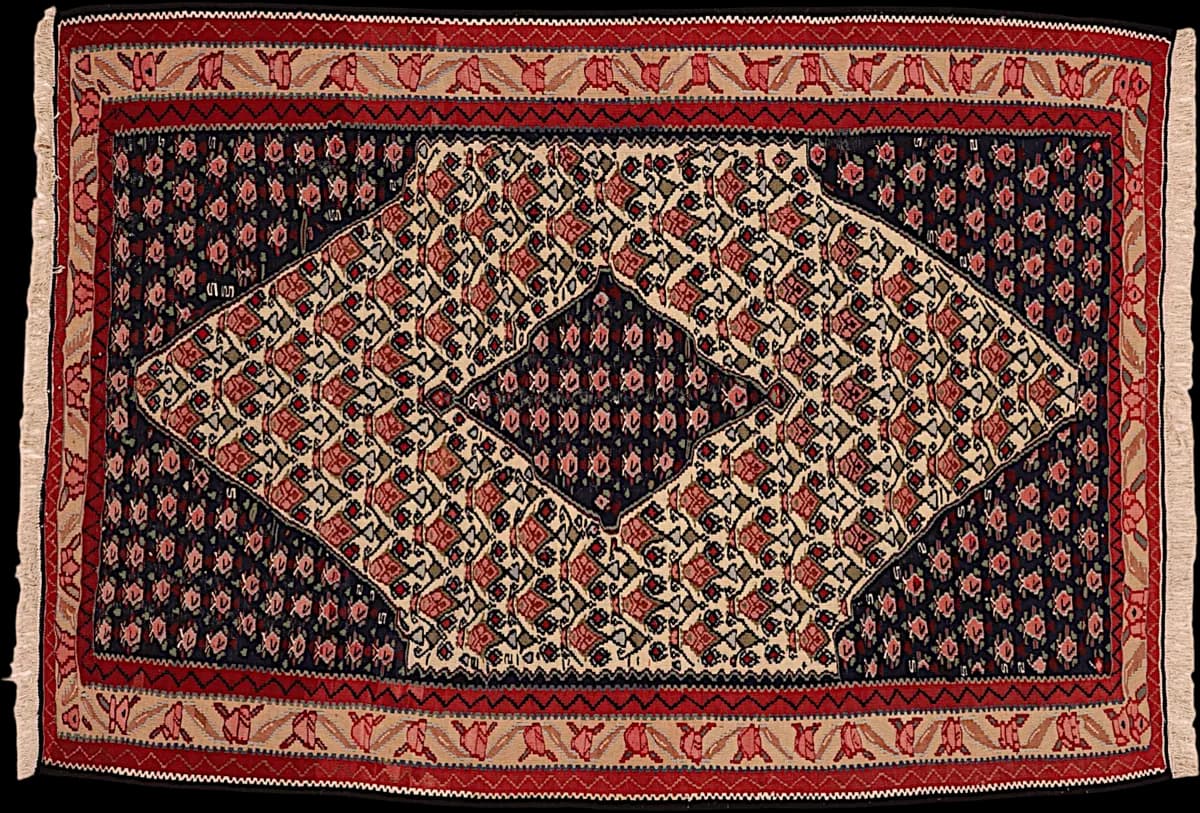
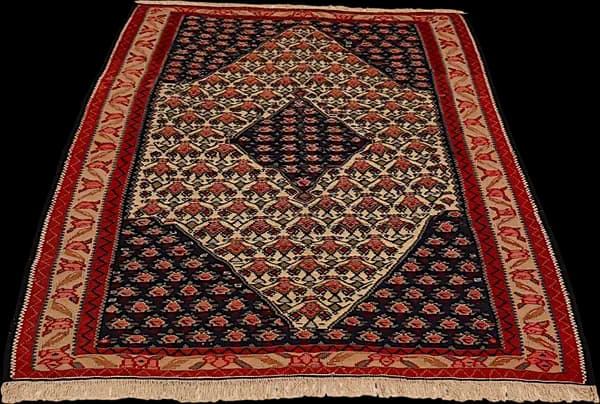
This is a kilim, also written kelim, a flatwoven rug from the tribal weaving regions of Iran, made by interlocking coloured wefts rather than tied knots. Kilims are known for bold geometric pattern and for being fully reversible, both faces equally clear. This piece measures 165 x 119 cm (5'5" x 3'11"), and its medallion is drawn far more quietly than the type usually allows.
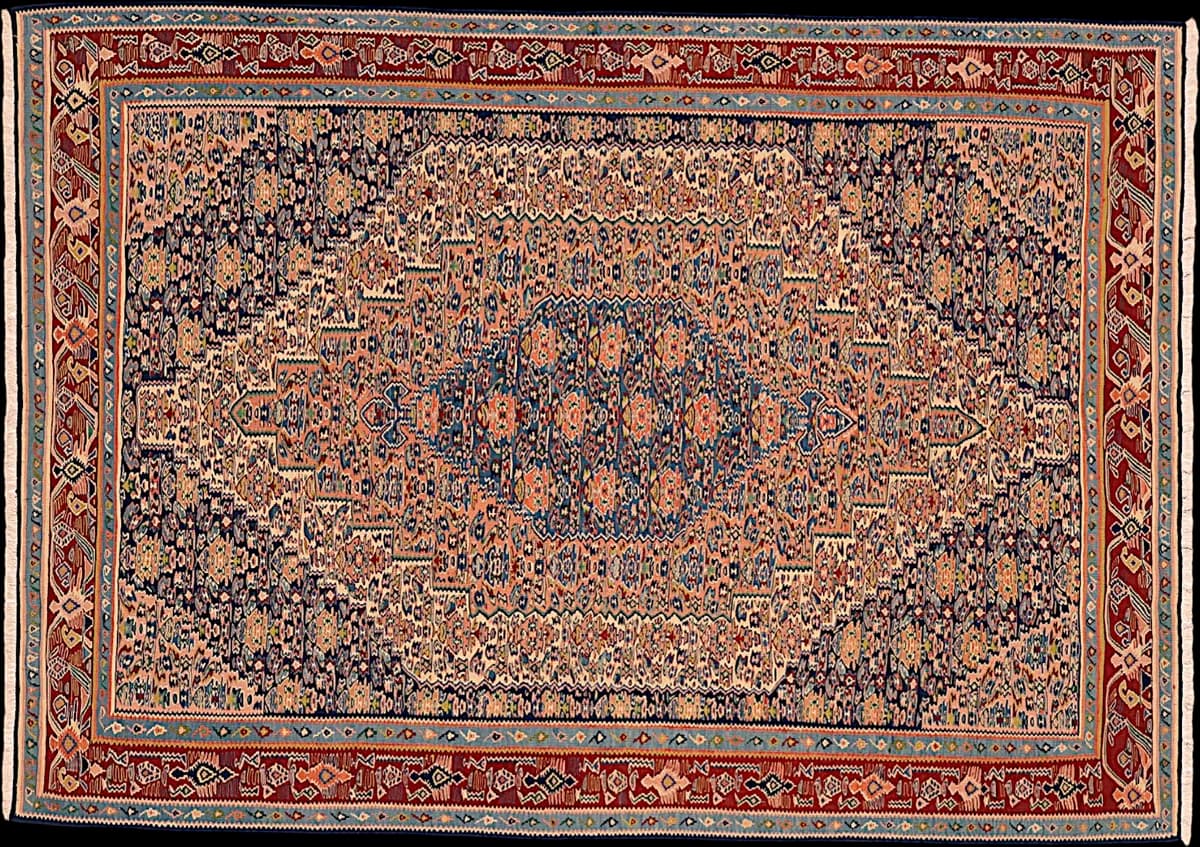
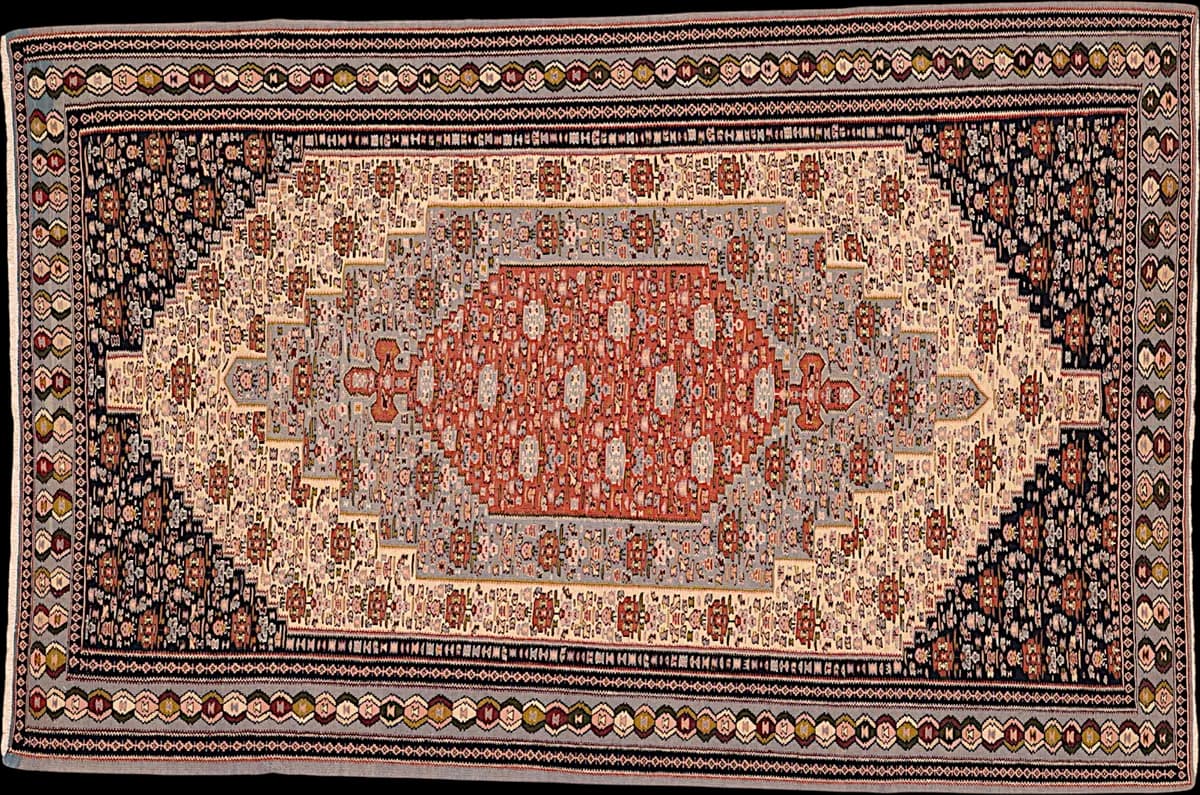
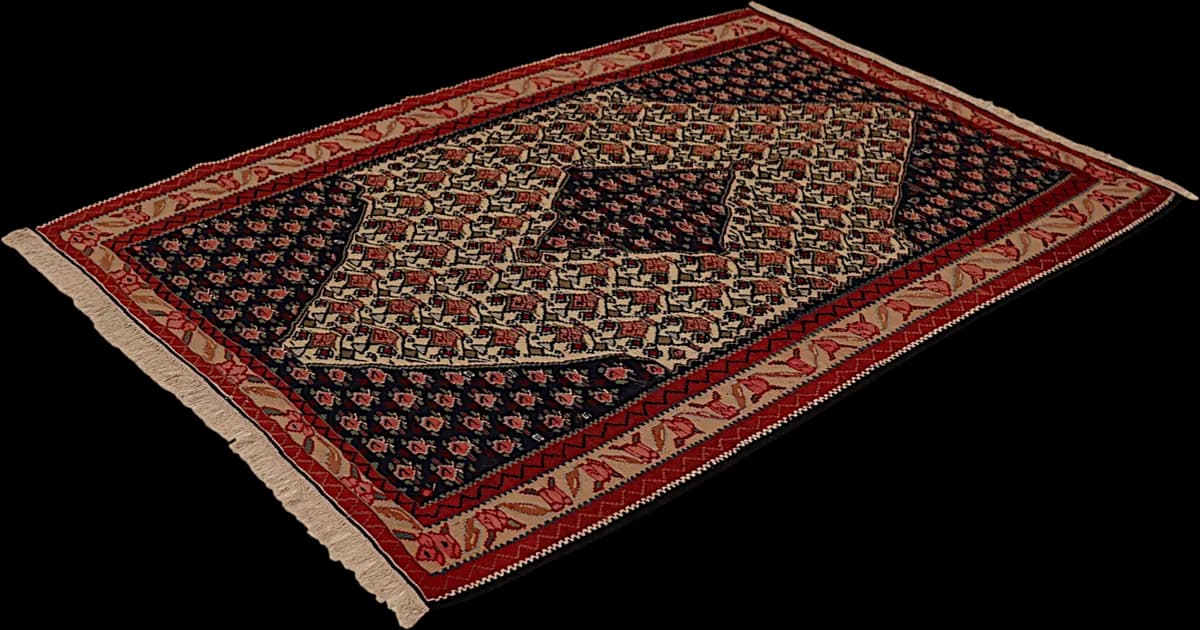
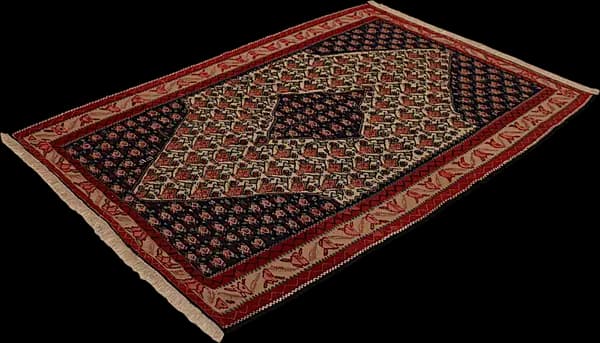
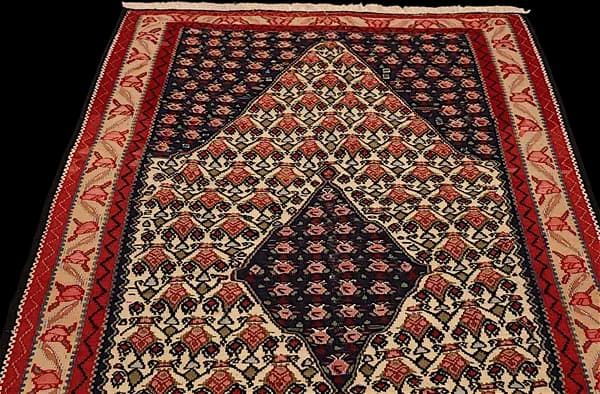
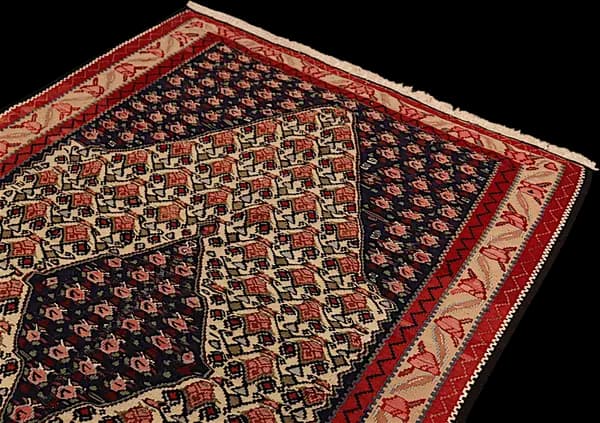
The first impression is an ivory diamond medallion glowing against a deep navy field. Look closer and both areas share the same small diamond-boteh repeat; nothing in the pattern marks a boundary, only the shift from navy to cream defines the medallion, with a smaller diamond compartment nested at its centre. A wide brick-red border frames it, edged by a narrower camel stripe carrying a repeating rose-pink botteh, with touches of sage green and dusty pink through the field.
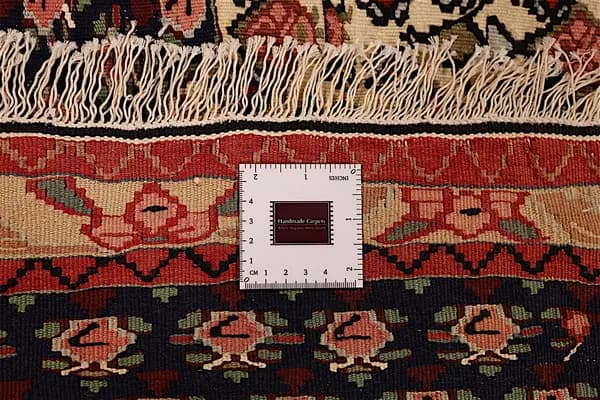
The wool is hand-spun and the piece hand-woven on a natural wool warp, giving a flat surface just 4 millimetres thick with a slight ribbing under the fingers. Because the pattern comes entirely from weft colour rather than pile height, both faces read with equal clarity, which is what lets the medallion work as pure tone against tone rather than as a drawn outline. Newly made, it arrives with its structure fully intact.
This is a rug for a bedroom or a small study, laid beside a bed or under a reading chair. Navy holds its depth against pale floorboards, while the ivory medallion and brick-red border keep the room from feeling cool. Flat and thin, it lies close to the floor and wears evenly on both faces. Morning light finds the ivory diamond first, and the colour only settles as the day goes on.
More on Kilims: origin, making and how to recognise a genuine piece
At 165 × 119 cm (1.96 m²) this is a small rug. It works beside a bed, in a reading corner, in front of a fireplace or as a mat by a door. It does not furnish a room; it makes a point in one.
No — this piece is hand-woven, not knotted. A flatweave has no pile: the pattern comes from warp and weft alone. That makes it thin, light and usable on both sides, and it is a technique in its own right rather than a simpler version of a knotted rug.
Vacuum regularly, ideally along the weave and without a rotating brush. A flatweave can be turned over, which spreads the wear — flip it once or twice a year. Blot spills at once with clear water and a light cloth, working inwards, and never rub.
We are in the Hamburg Speicherstadt. Come and see this rug in daylight, or write to us — a person answers.
Certificate included verifying origin, materials, and craftsmanship.
Ref: 311335