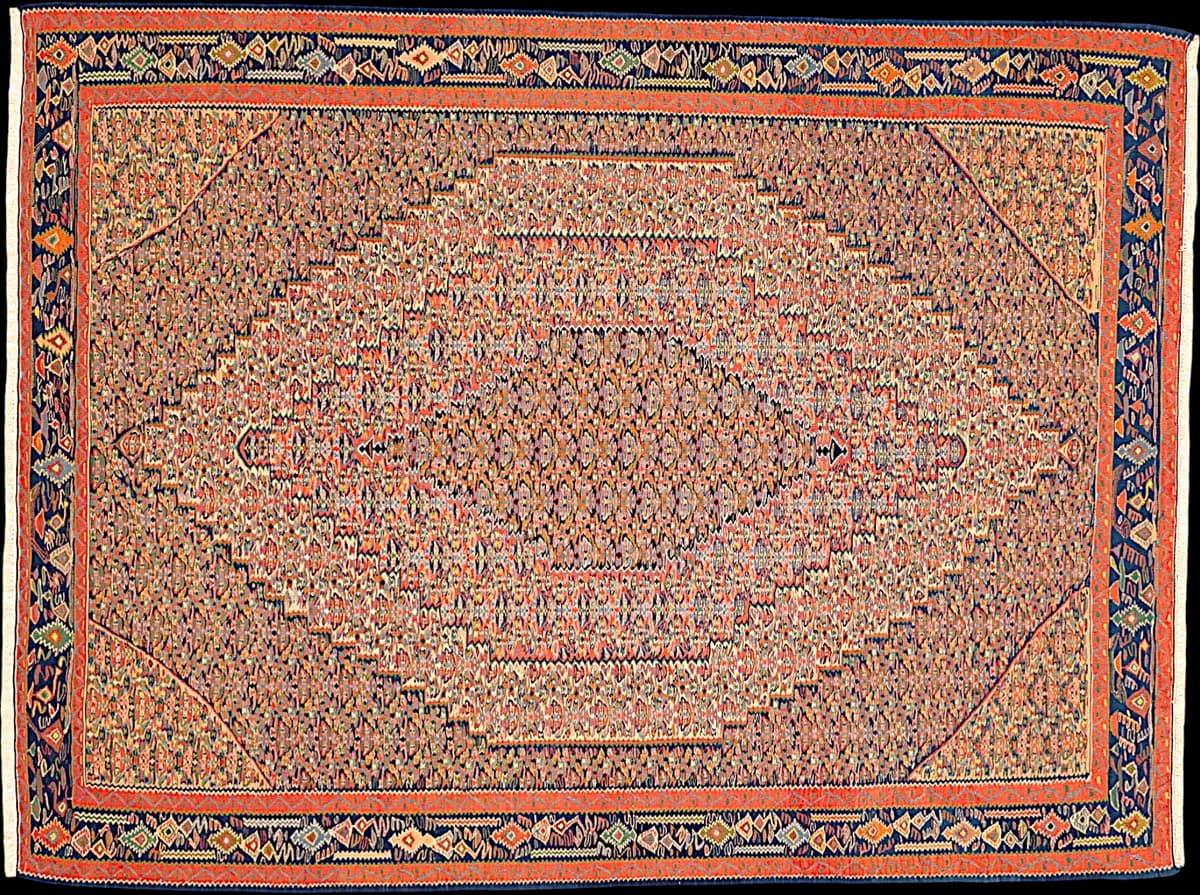
Kelim Senneh
282 × 211 cm
1.339 €




1.222 €
Incl. VAT
In Stock · Ready to Ship
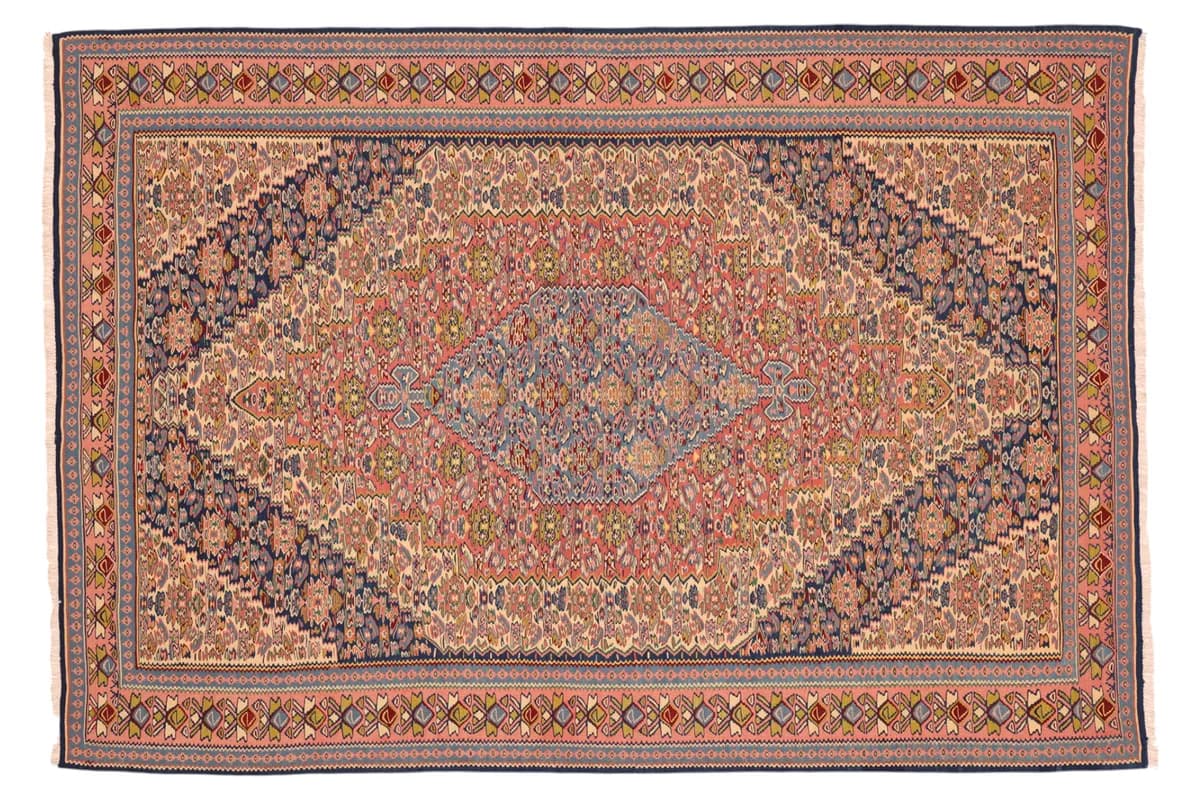
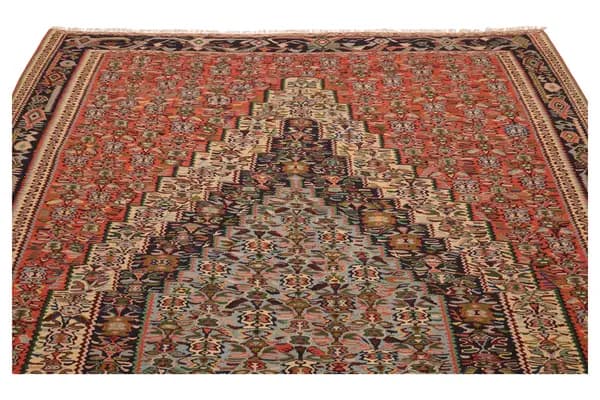
This is a kilim, also written kelim — a flatwoven rug rather than a knotted one — from Kordestan in the Kurdish west of Iran. At 280 x 194 cm (9'2" x 6'4") it is a substantial example of the type. Kilims are built entirely in the weave, prized less for pile than for reversibility and the confidence of their geometric pattern.
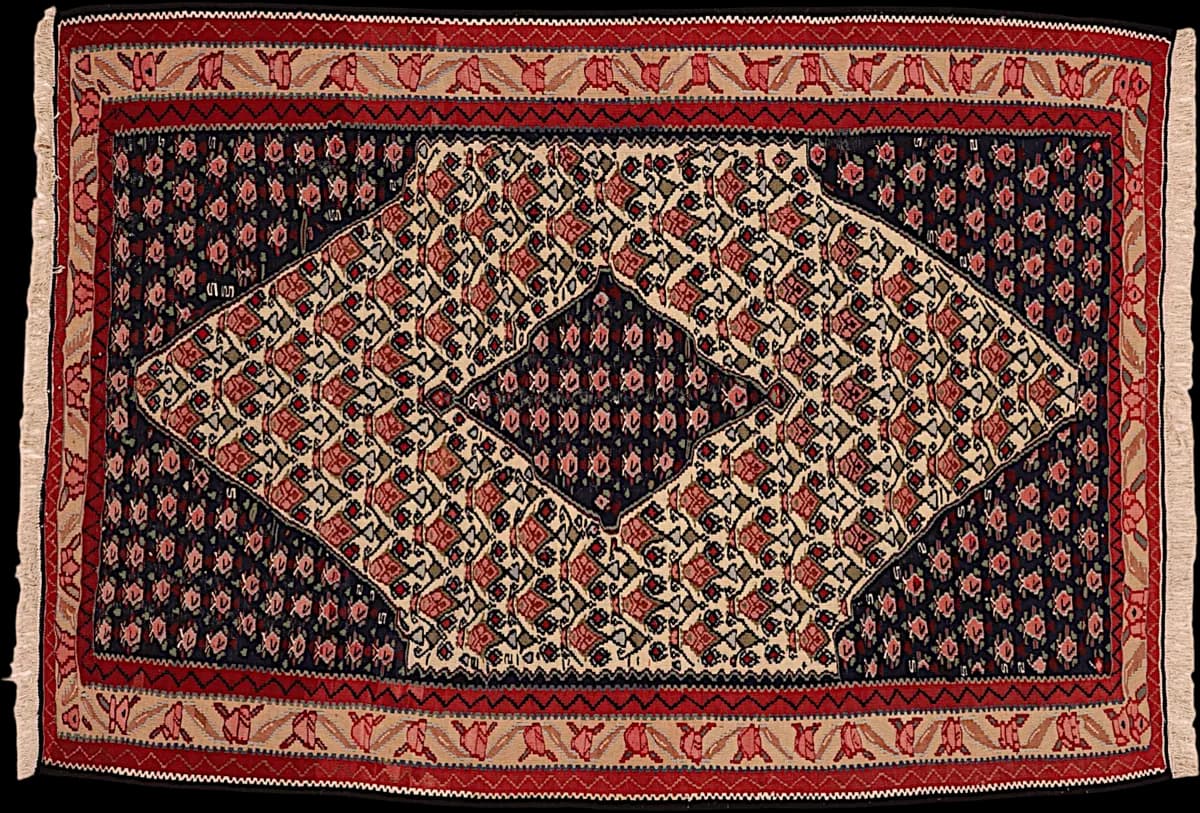
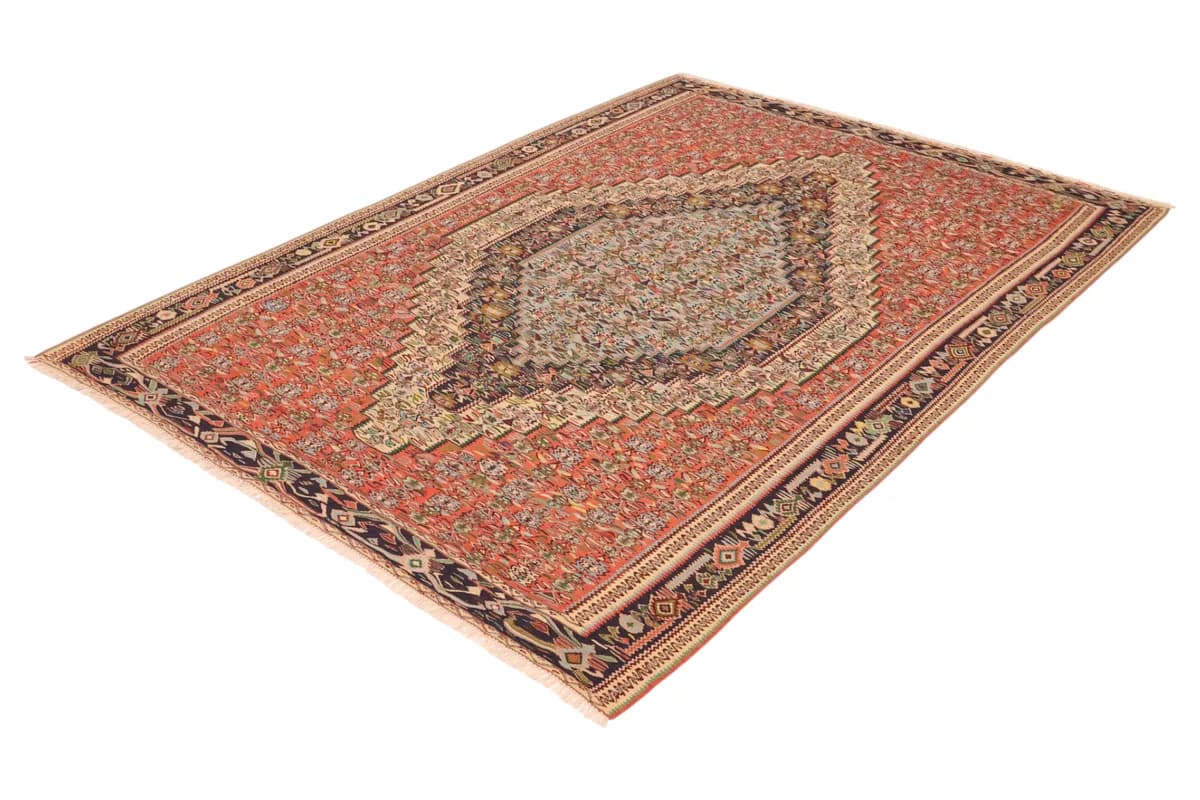
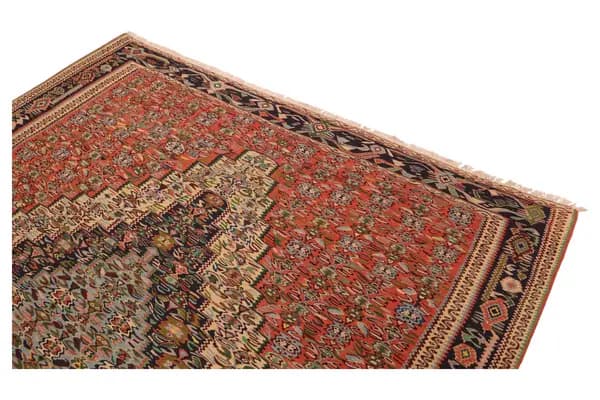
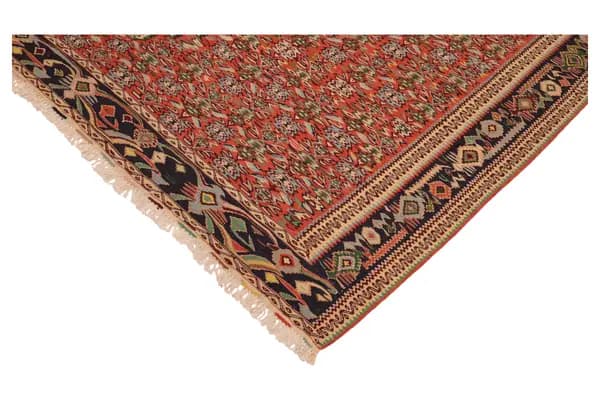
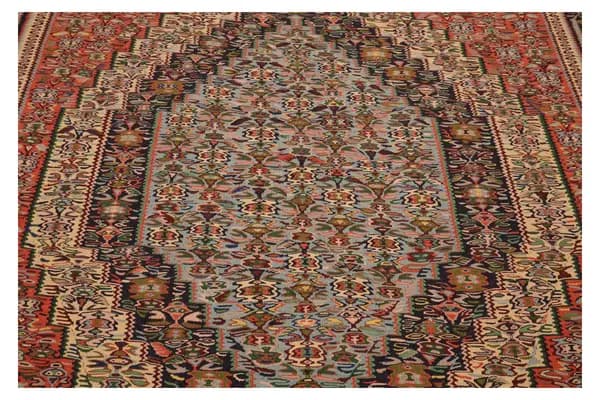
The field is a warm brick red, filled edge to edge with the small repeating Mahi, or fish, motif that recurs across Persian weaving. Over it floats a large stepped diamond medallion, built not as one flat shape but as three diamonds nested inside each other — a dark navy outline, an ivory ring, and a pale steel-blue heart. The effect reads as depth rather than pattern. A wide navy border, filled with small polychrome diamonds and rosettes, closes the composition firmly against the red.
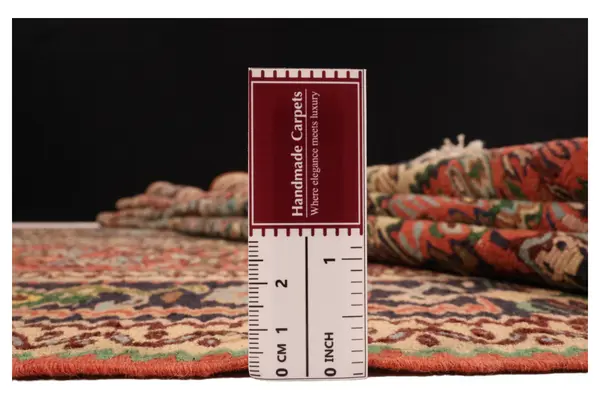
That layered medallion is a weaving decision, not a coincidence. A kilim carries no knots, only hand-spun wool weft threads interlocked across a cotton warp, so colour change happens block against block, in the weave itself. Building three nested diamonds instead of the single flat colour usual to this design takes more colour changes and more care at each join. The cloth stays under four millimetres thick, light enough to fold, yet the pattern holds its shape on both faces.
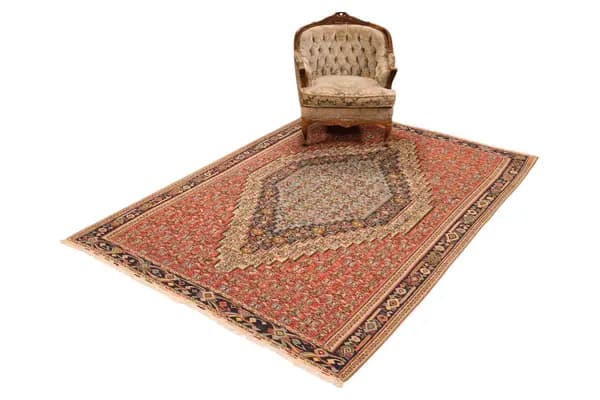
At this size the rug suits a living room, laid under a seating group where the brick red warms a pale floor and holds its own against dark wood. Underfoot it is flat, thin and supple, made for daily footsteps rather than careful protection — flip it in years to come and the reverse looks almost the same. In low light the nested diamond keeps its quiet depth.
More on Kilims: origin, making and how to recognise a genuine piece
At 280 × 194 cm (5.43 m²) this is a large rug. It sits under a seating group with the front legs of sofa and chairs on it, or under a dining table for four. A table for six wants about 80 cm of clearance all round, and needs more.
No — this piece is hand-woven, not knotted. A flatweave has no pile: the pattern comes from warp and weft alone. That makes it thin, light and usable on both sides, and it is a technique in its own right rather than a simpler version of a knotted rug.
Vacuum regularly, ideally along the weave and without a rotating brush. A flatweave can be turned over, which spreads the wear — flip it once or twice a year. Blot spills at once with clear water and a light cloth, working inwards, and never rub.
We are in the Hamburg Speicherstadt. Come and see this rug in daylight, or write to us — a person answers.
Certificate included verifying origin, materials, and craftsmanship.
Ref: 867024