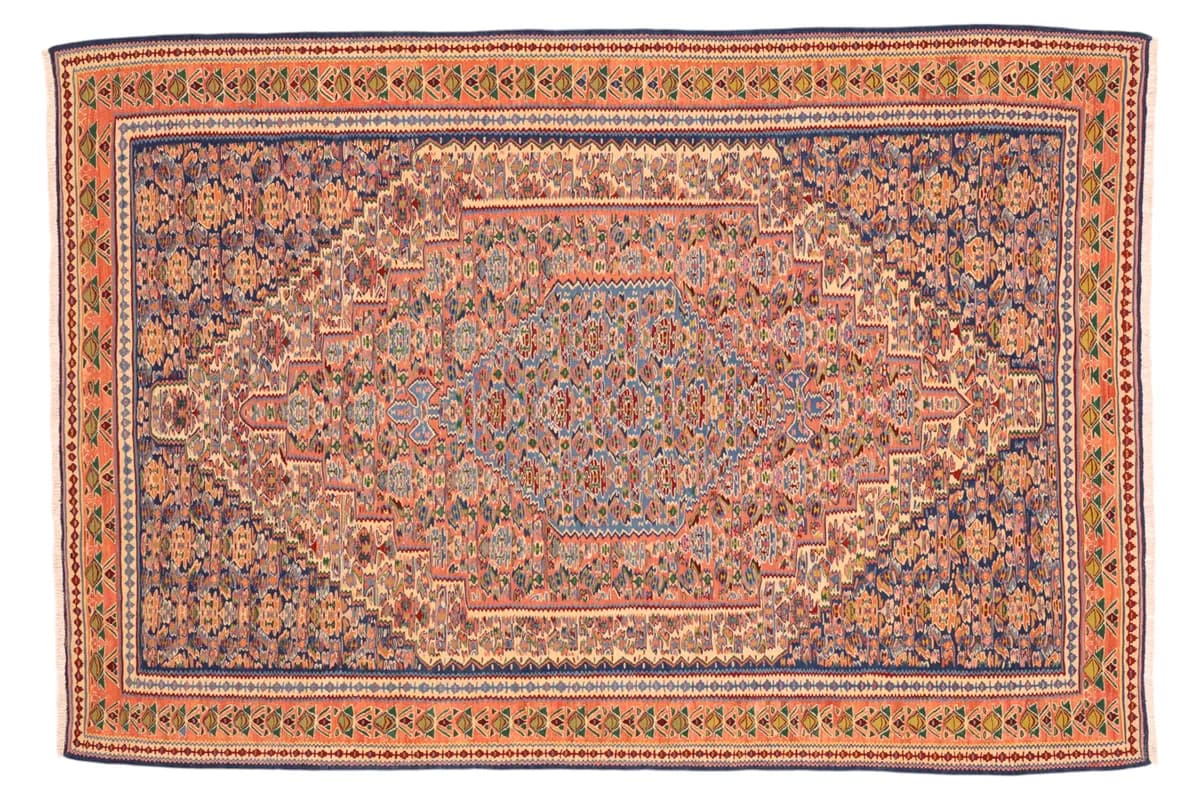
Kelim Patchwork
234 × 172 cm
960 €
394 €
Incl. VAT
In Stock · Ready to Ship
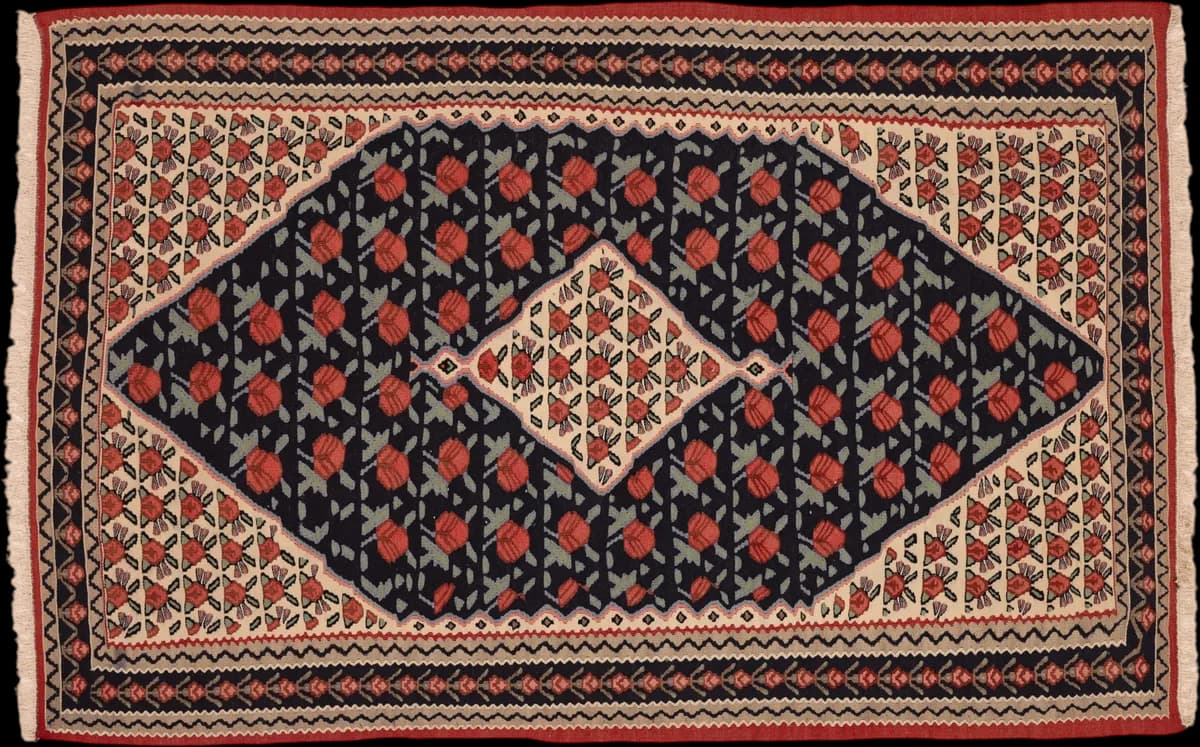
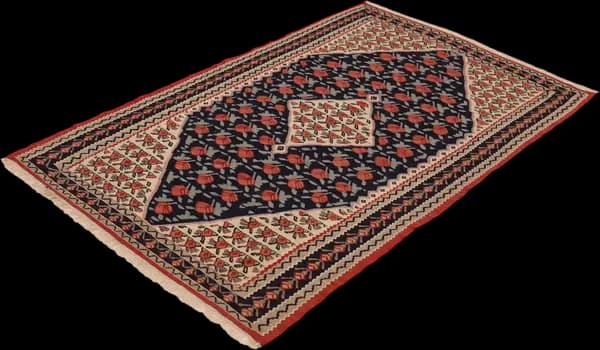
A kilim, also written kelim, hand-woven rather than knotted, measuring 164 x 107 cm (5'5" x 3'6"). Kilims come from the tribal weaving regions of Iran, known for bold geometric pattern woven flat, with no pile to soften it and both faces equally finished. This piece carries more structure than most — a medallion built right into that flatness.
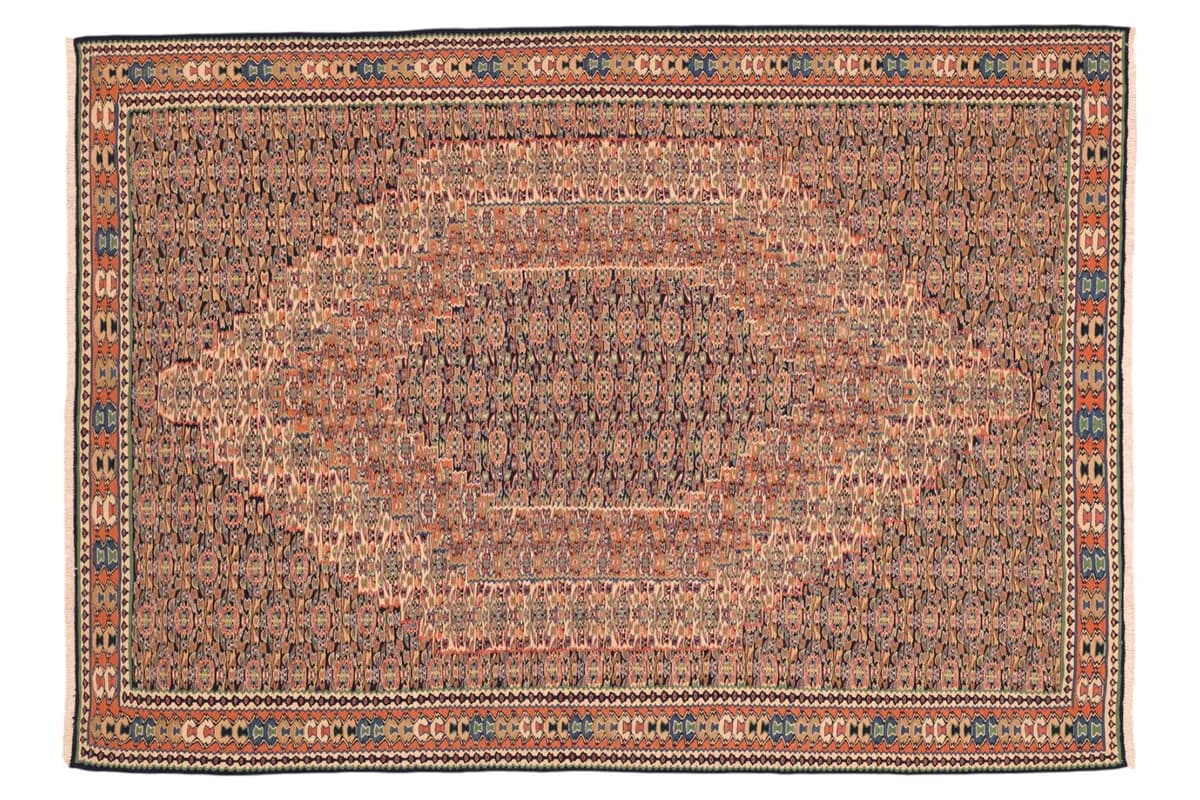
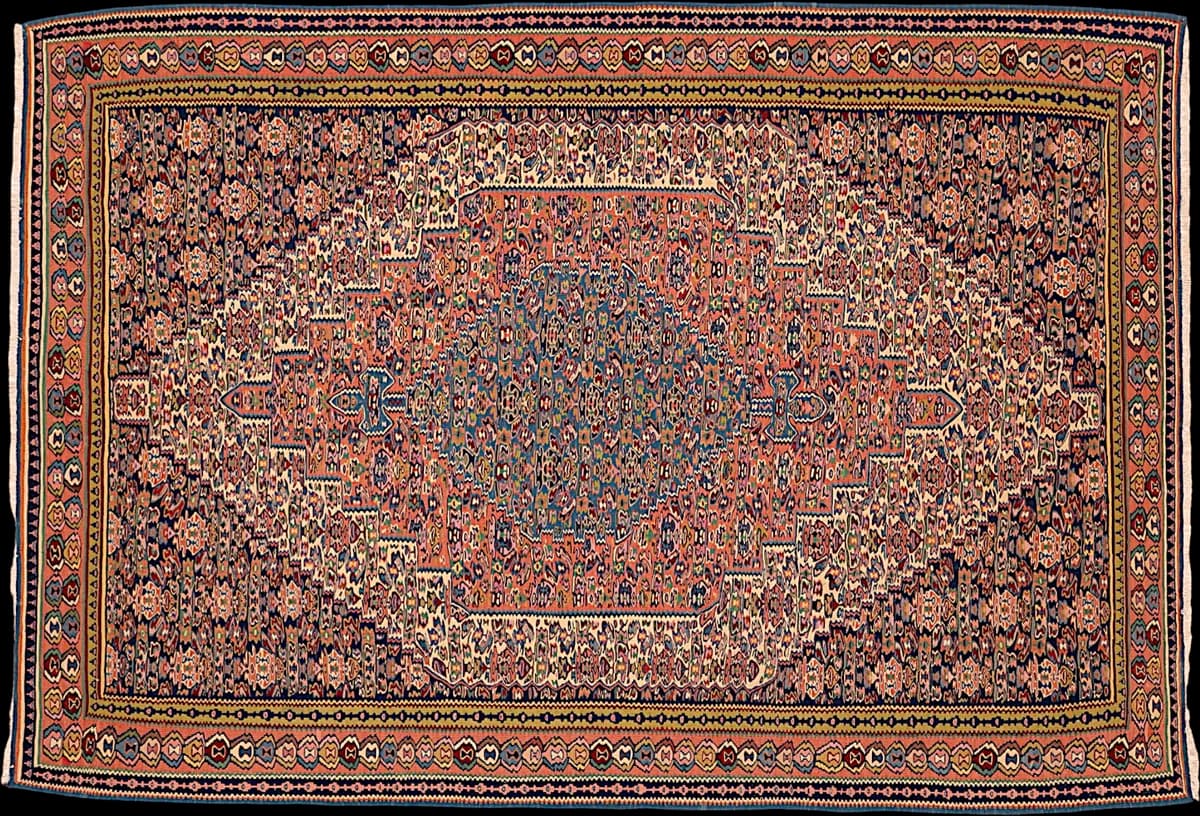
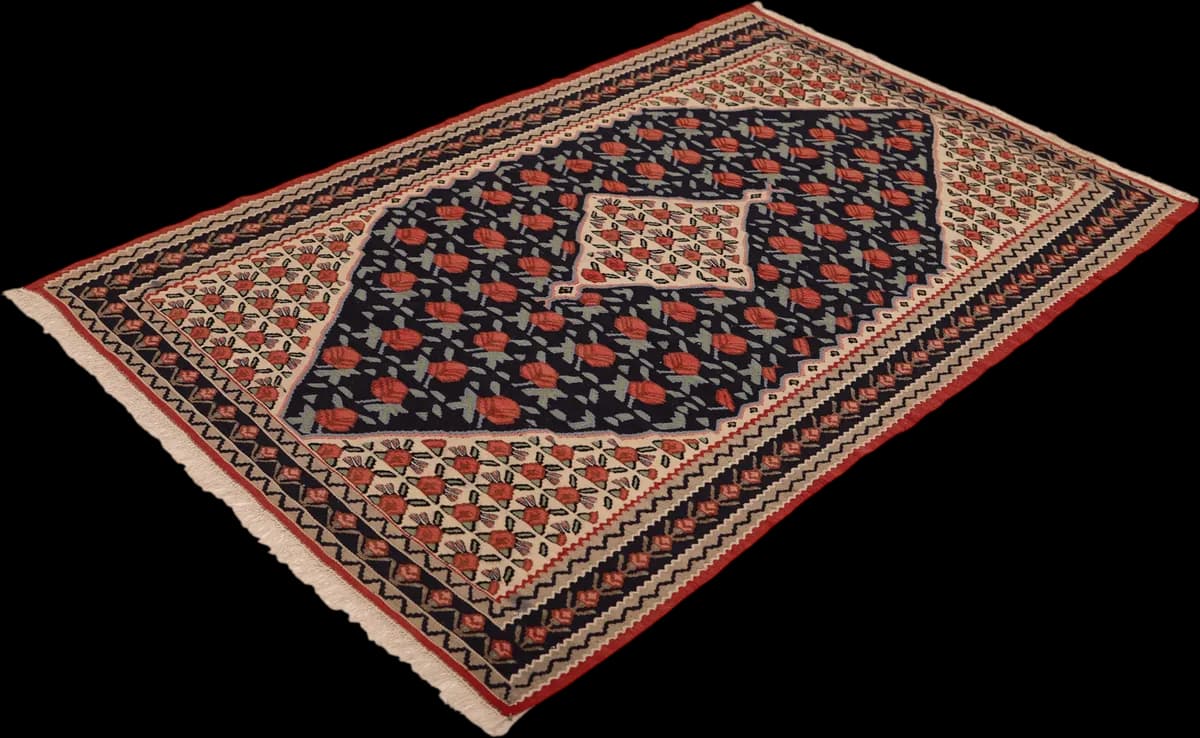
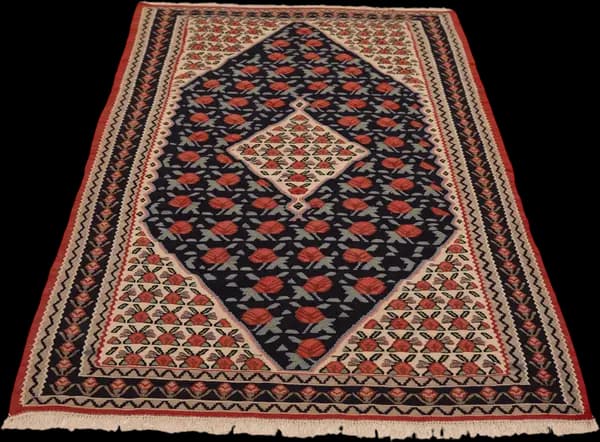
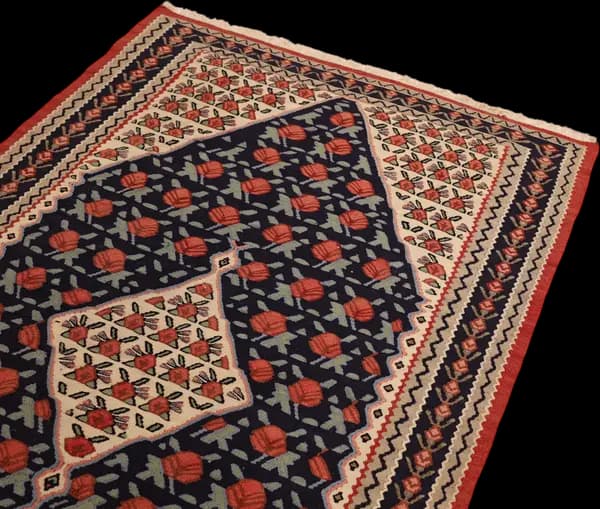
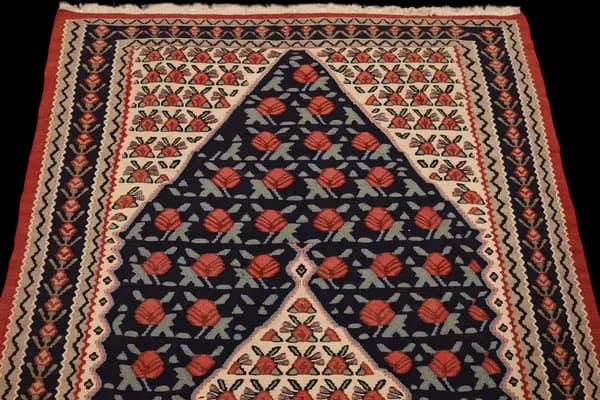
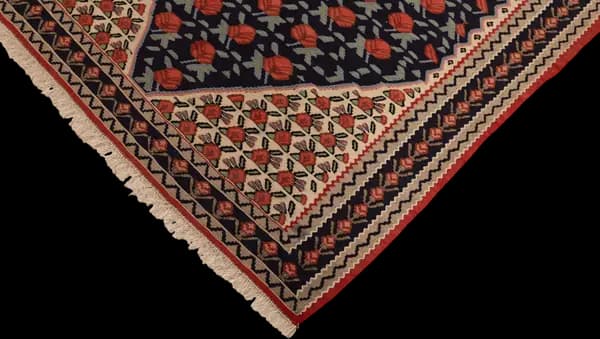
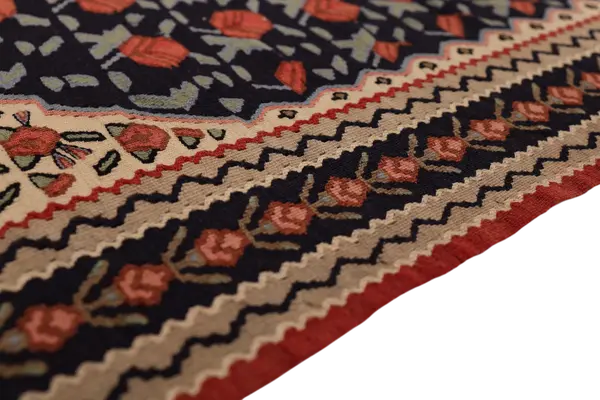
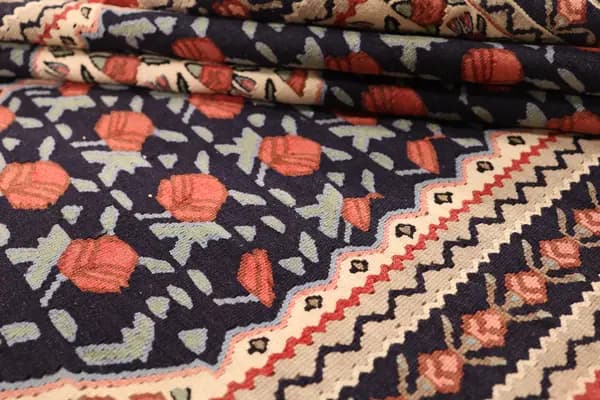
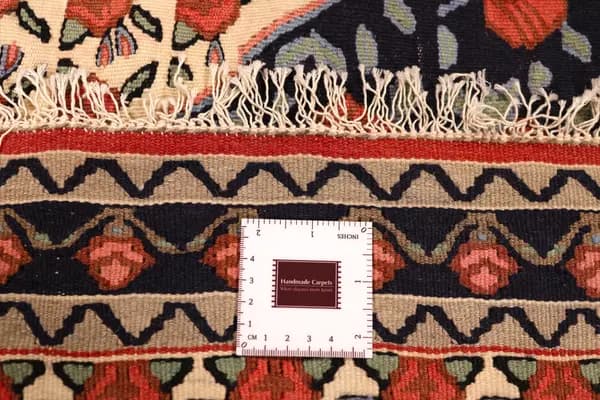
Ground colour is a deep navy, almost blue-black, holding a large lozenge medallion built from tight diagonal rows of brick-red and coral flowers. Look closer and a second, smaller diamond sits nested at its centre — a medallion within the medallion. Ivory spandrels in the corners carry the same floral trellis, calm against the density of the field. Three borders close around it: a red band, a narrow ivory floral guard, and a wide navy zigzag scattered with red rosettes.
Nothing here is knotted; the pattern is woven directly into the cloth, weft interlocking with weft across a wool warp until the surface lies flat, ribbed, barely four millimetres thick. That flatness is what lets the medallion read so sharply — no pile blurs the diamond's edge, no shading softens where red meets navy. It also means both faces are equally finished, so the rug wears evenly whichever side lies up.
A rug this size suits a defined spot rather than a room to fill — a bedside, a hallway, or under a small table in a study. Against a pale floor the navy holds its own, and the red medallion warms the space rather than fading into it. Underfoot it stays light and flexible, a flatweave that travels easily if you want to move it, and what stays with you is the diamond folded inside a diamond, drawing the eye in each time you pass.
More on Kilims: origin, making and how to recognise a genuine piece
At 164 × 107 cm (1.75 m²) this is a small rug. It works beside a bed, in a reading corner, in front of a fireplace or as a mat by a door. It does not furnish a room; it makes a point in one.
No — this piece is hand-woven, not knotted. A flatweave has no pile: the pattern comes from warp and weft alone. That makes it thin, light and usable on both sides, and it is a technique in its own right rather than a simpler version of a knotted rug.
Vacuum regularly, ideally along the weave and without a rotating brush. A flatweave can be turned over, which spreads the wear — flip it once or twice a year. Blot spills at once with clear water and a light cloth, working inwards, and never rub.
We are in the Hamburg Speicherstadt. Come and see this rug in daylight, or write to us — a person answers.
Certificate included verifying origin, materials, and craftsmanship.
Ref: 645589