Belutsch
237 × 113 cm
1.166 €





547 €
Incl. VAT
In Stock · Ready to Ship
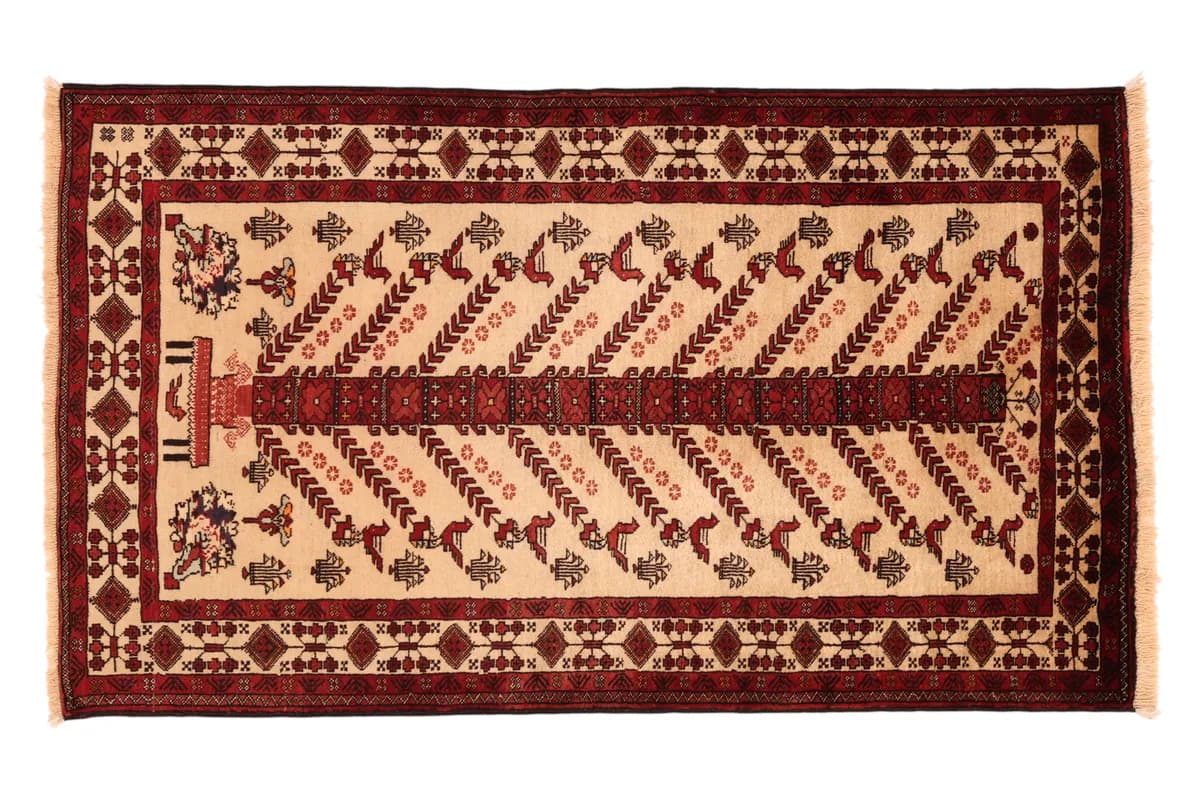
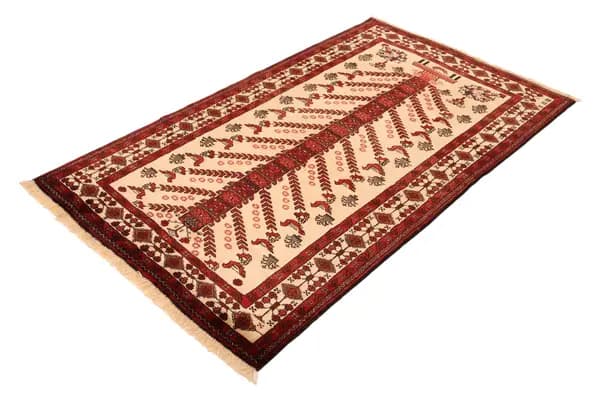
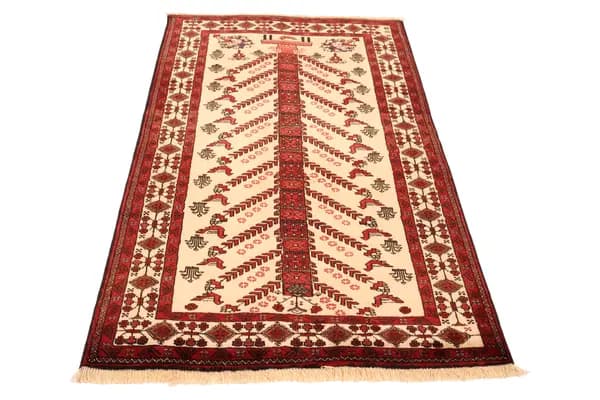
A Baluch rug, also written Belouch, 183 x 105 cm (6'0" x 3'5"), a tribal weaving from the borderlands of southeastern Iran. These are nomadic pieces, knotted from memory rather than from a drawn plan, and they are known for bold, angular geometry set against deep, earthy colour, often arranged in the prayer-rug layouts that give the type its name.
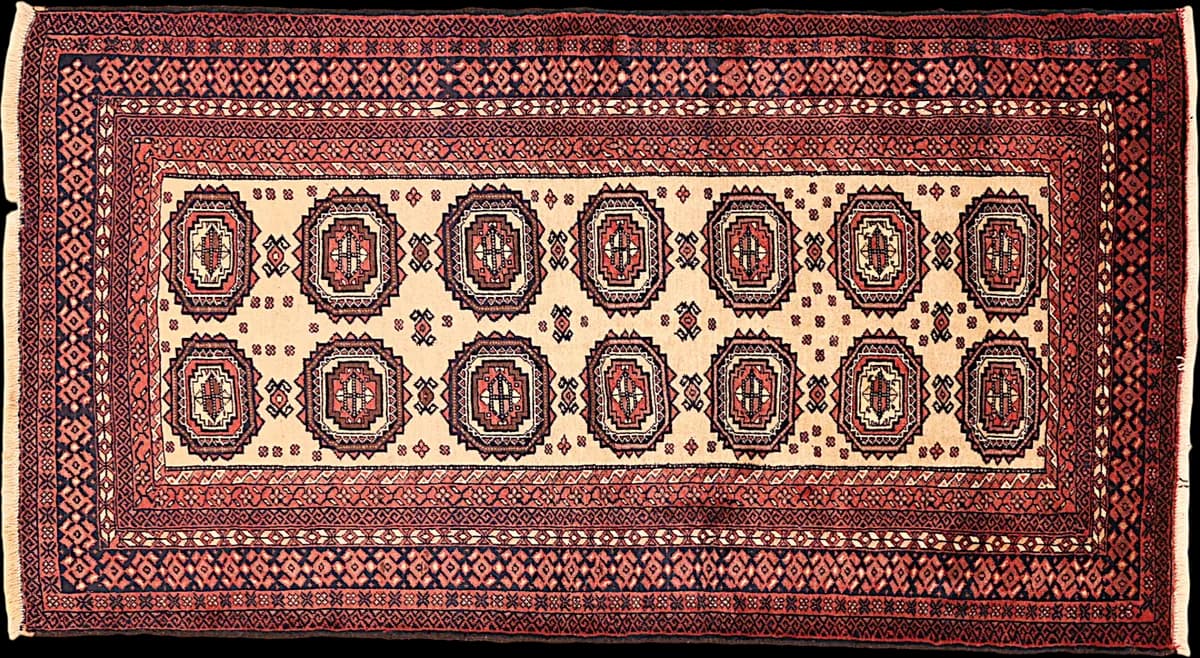
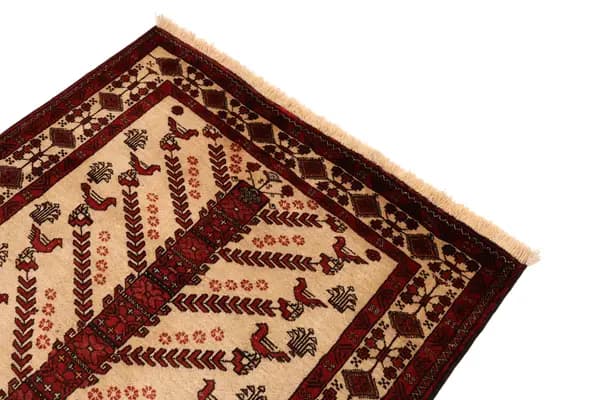
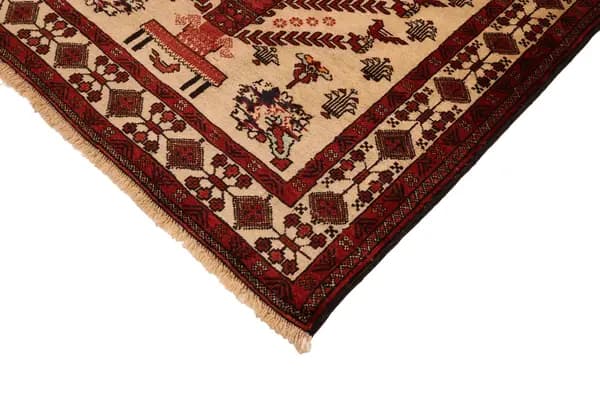
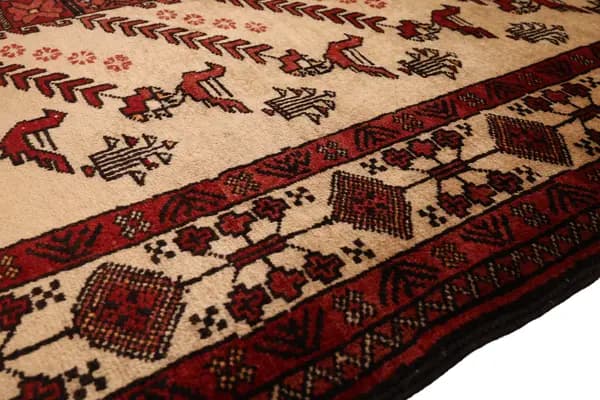
The field is a warm ivory, uncommon ground for a Baluch, and across it run dense diagonal rows of dark red, comb-topped branches, each one outlined in near-black. They step inward from both the top and the bottom edge toward a red vase-like form set on a horizontal band at the centre, so the rug reads as two mirrored prayer-niche ends meeting in the middle rather than the single mihrab this weaving usually carries. Small pale blue-grey and dusty pink accents sit in the corner ornaments, with a scatter of gold dots across the field. A broad, deep-red border, filled with small hooked diamonds, closes the composition, held on both sides by narrow ivory guard stripes worked with diamond-and-cross figures.
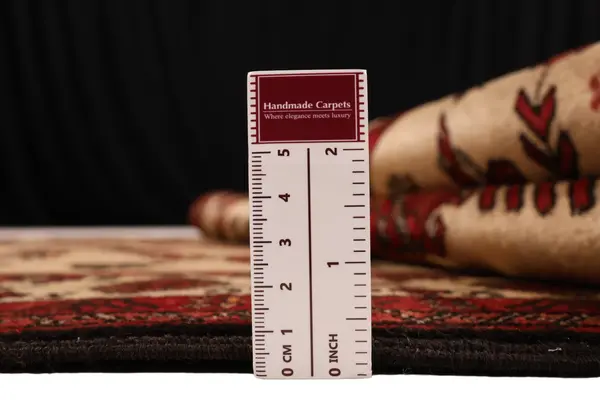
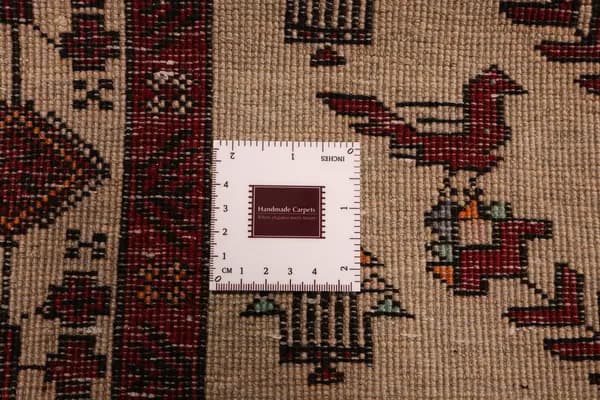
The pile is hand-spun wool, knotted by hand onto a cotton warp and clipped low and even, at around 128,000 to 160,000 knots per square metre. That density is modest by workshop standards, but it was never the point here: this is a piece worked from memory, on a portable loom, without a cartoon to follow, and the slight give in how closely the two mirrored ends echo each other is the mark of that hand rather than a fault in it. The surface has a light rib to it, matte throughout, with the slightly uneven, tactile feel that hand-spun wool always keeps.
A rug of this size and shape suits a hallway or a landing, somewhere you pass through and see from either direction, which is exactly what its mirrored design was made for: there is no wrong way to arrive at it. The ivory ground lifts a dim passage without daylight, while the red carries enough weight to hold its own against darker skirting or a runner of doors on both sides. Underfoot it is dense and firm, built for a stretch of floor that gets walked rather than admired from a chair, and the low pile means it wears in rather than wears out. Morning light along a hallway will catch the ribbed wool and shift the red from brick to almost claret through the day.
More on Baluch rugs: origin, making and how to recognise a genuine piece
Traditional weave
At 183 × 105 cm (1.92 m²) this is a small rug. It works beside a bed, in a reading corner, in front of a fireplace or as a mat by a door. It does not furnish a room; it makes a point in one.
Yes, knotted by hand — knot by knot on a loom, not machine-made. The density is 128,000 to 160,000 knots per square metre; across 1.92 m² that is roughly 250,000 to 310,000 individual knots, every one of them tied by hand.
Hand-spun wool still carries its own lanolin, which keeps liquid sitting on the surface for a moment: blot quickly, with clear water and a light cloth, working inwards and without rubbing. Otherwise regular vacuuming along the pile is enough. Turn the rug once or twice a year so light and footfall reach it evenly.
We are in the Hamburg Speicherstadt. Come and see this rug in daylight, or write to us — a person answers.
Certificate included verifying origin, materials, and craftsmanship.
Ref: 406305