Bidjar
224 × 139 cm
2.280 €







1.050 €
Incl. VAT
In Stock · Ready to Ship
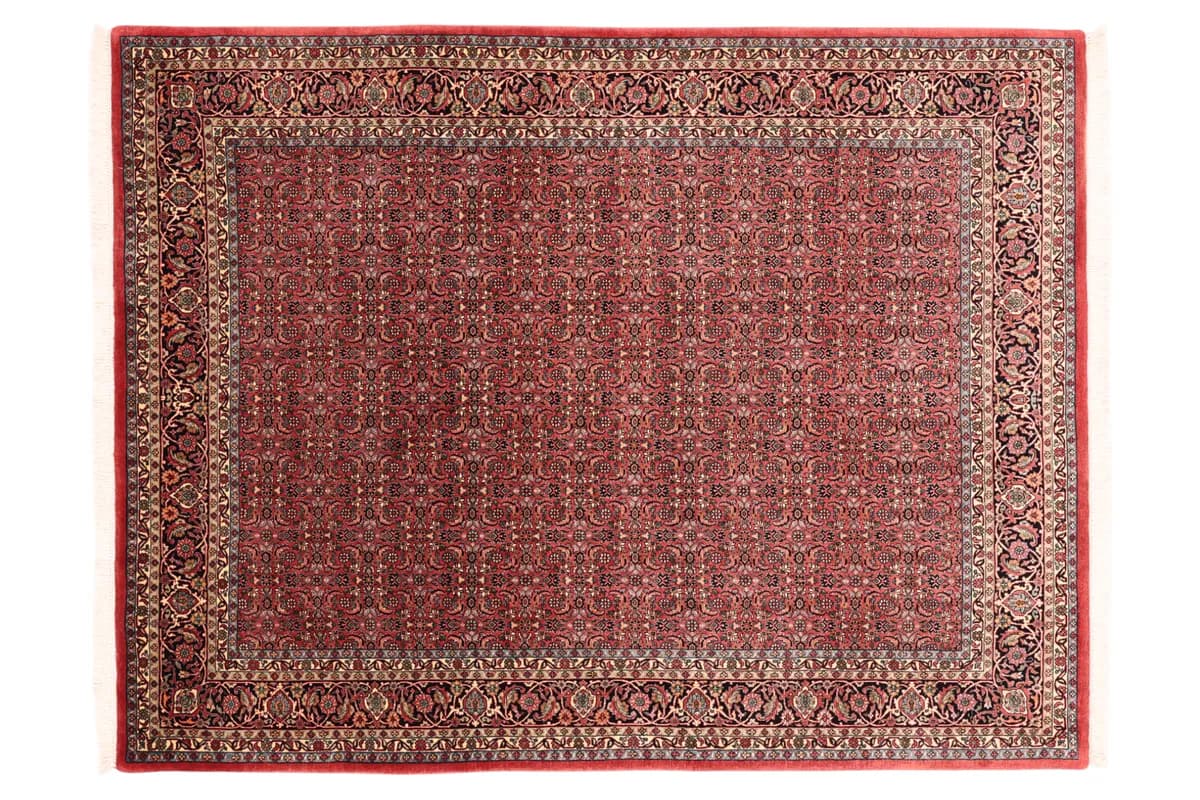
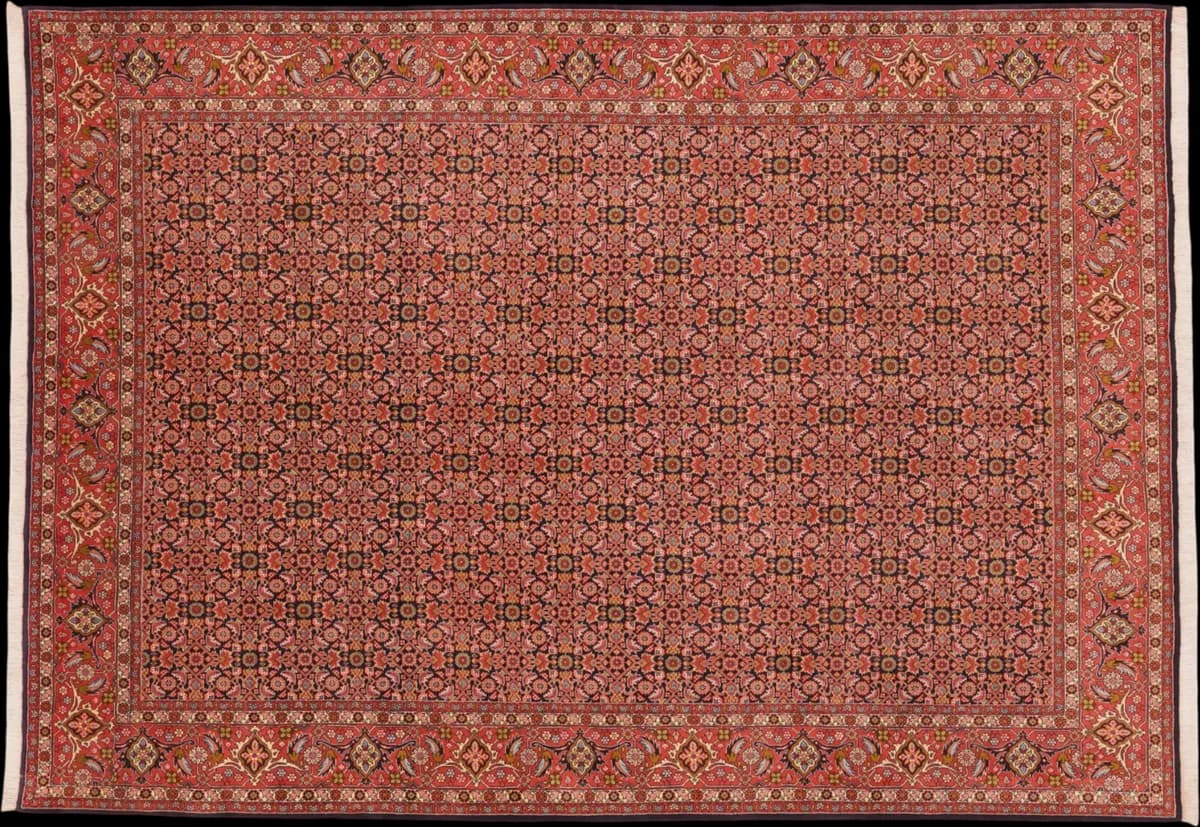
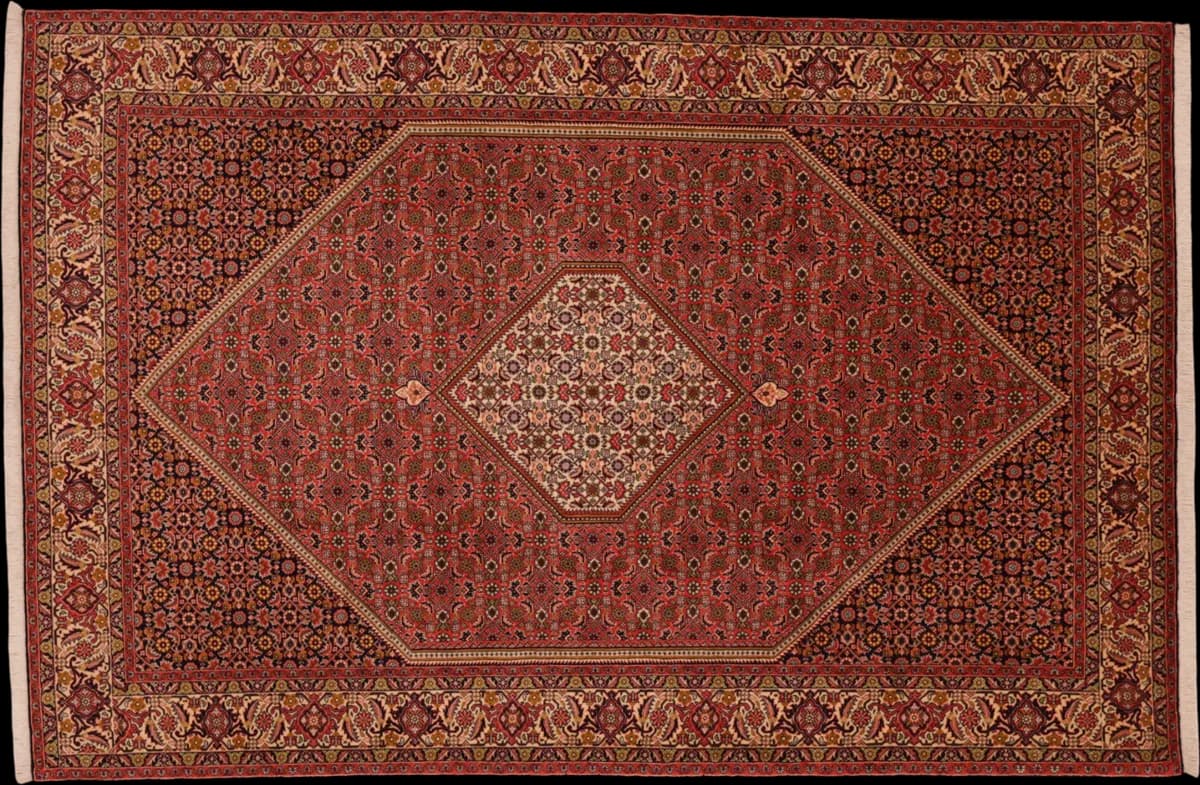
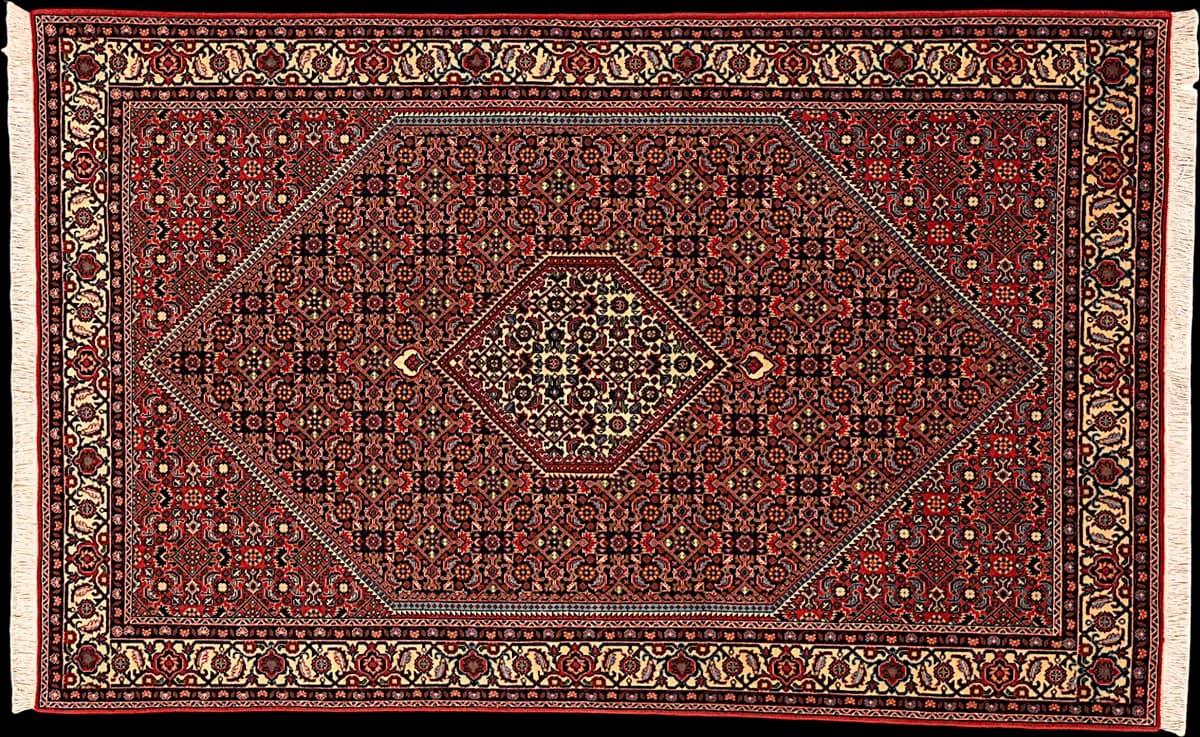
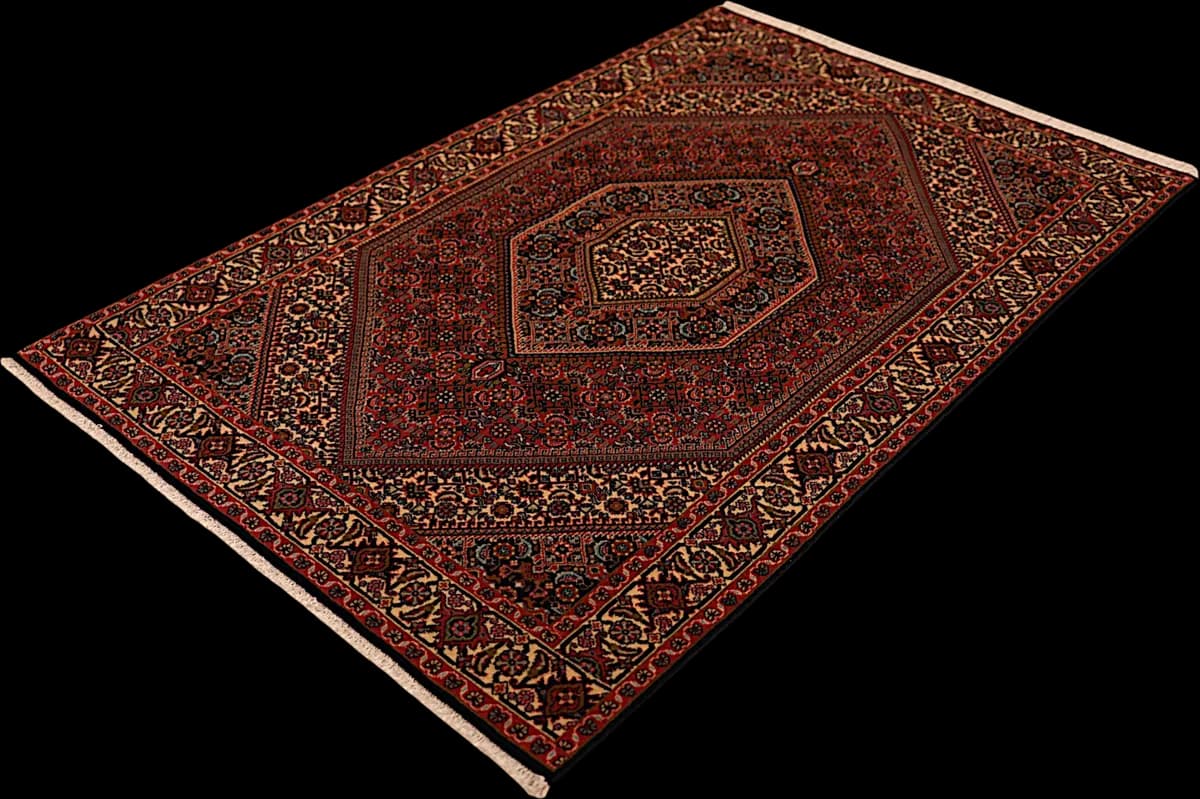
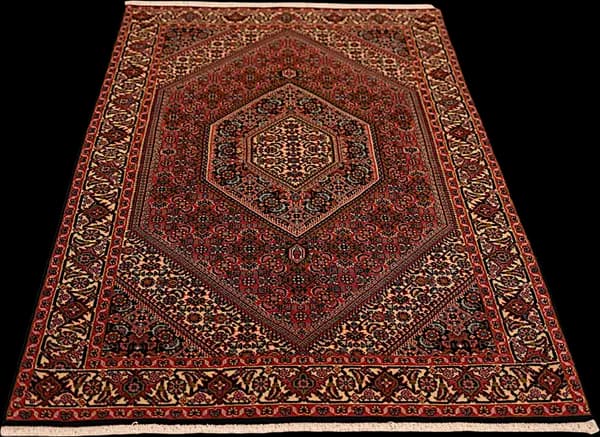
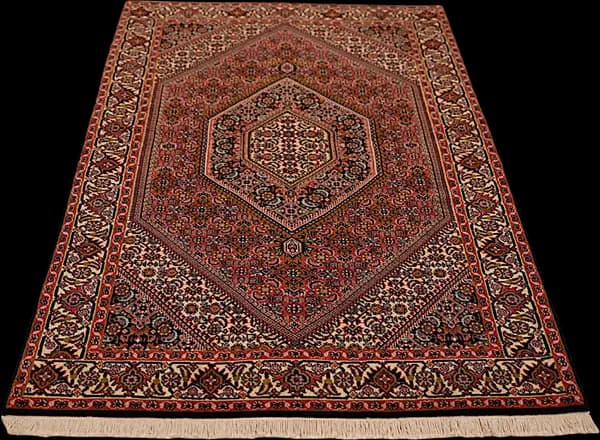
This is a Bidjar, from the Kurdish weaving regions of western Iran, measuring 175 x 114 cm (5'9" x 3'9"). Bidjars carry the old nickname "The Iron Rugs of Persia", earned by a structure so dense and so firmly pressed that a piece this size cannot be folded, only rolled. What sets this example apart within that tradition is how cleanly its medallion is drawn: a genuinely architectural piece of design rather than a loose or simplified version of the type.
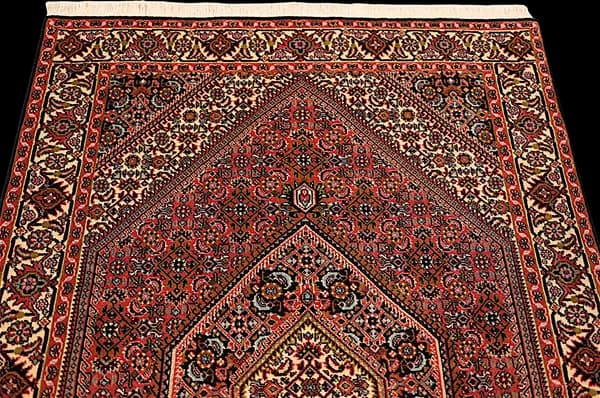
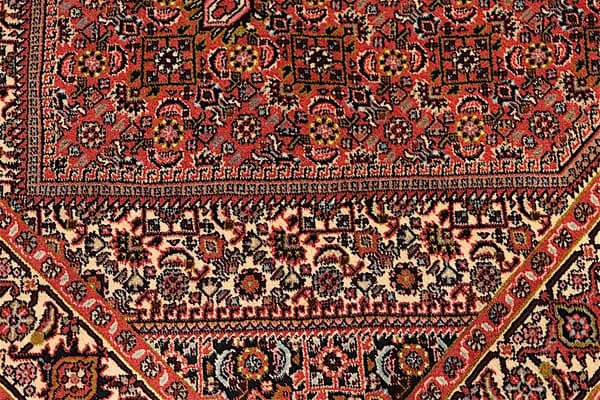
The first impression is a deep wine red, held in check by a dark navy field beneath it. That field is built from a fine, repeating fish-and-rosette lattice, the Mahi pattern, in navy and black, dense enough to read almost as a single dark plane from a distance. Sitting on it is a large stepped hexagonal medallion, worked in three nested layers of red, navy and cream, each ring set inside the last so the whole shape gains a sense of depth rather than lying flat. A wide ivory-cream border, filled with red and navy floral scrollwork and taking up close to a fifth of the rug's width, closes the composition and gives the eye somewhere calm to land.
That layered clarity is a direct result of how tightly it is knotted. At 251,000 to 320,000 knots per square metre, this sits among the densest weaving in the whole Persian tradition, and it is that density which lets the weaver draw a hexagon within a hexagon with a clean, unbroken edge rather than a blurred one. The pile itself is hand-spun wool, clipped to 15 mm over a cotton warp, hand-knotted throughout, which gives the surface its slight sheen and its notably substantial, heavy feel in the hand. It is this same tightness of construction that makes the rug immovable in the best sense: firm underfoot and resistant to the kind of wear that flattens a looser weave within a decade.
A rug this size sits well in a bedroom, laid beside or at the foot of the bed rather than centred under furniture. The wine red and navy hold their own against dark wood and read warmly against pale floorboards, while the cream border keeps the whole thing from feeling heavy in a smaller room. Underfoot it is dense, firm and entirely built to be walked on rather than kept for best. As morning light moves across it, the rosette lattice and the layered medallion catch the wool's faint sheen in turn, so the pattern never quite looks the same twice.
More on Bidjar rugs: origin, making and how to recognise a genuine piece
Fine quality weave
At 175 × 114 cm (1.99 m²) this is a small rug. It works beside a bed, in a reading corner, in front of a fireplace or as a mat by a door. It does not furnish a room; it makes a point in one.
Yes, knotted by hand — knot by knot on a loom, not machine-made. The density is 251,000 to 320,000 knots per square metre; across 1.99 m² that is roughly 500,000 to 640,000 individual knots, every one of them tied by hand.
Hand-spun wool still carries its own lanolin, which keeps liquid sitting on the surface for a moment: blot quickly, with clear water and a light cloth, working inwards and without rubbing. Otherwise regular vacuuming along the pile is enough. Turn the rug once or twice a year so light and footfall reach it evenly.
We are in the Hamburg Speicherstadt. Come and see this rug in daylight, or write to us — a person answers.
Certificate included verifying origin, materials, and craftsmanship.
Ref: 415700