Belutsch
197 × 96 cm
539 €
486 €
Incl. VAT
In Stock · Ready to Ship
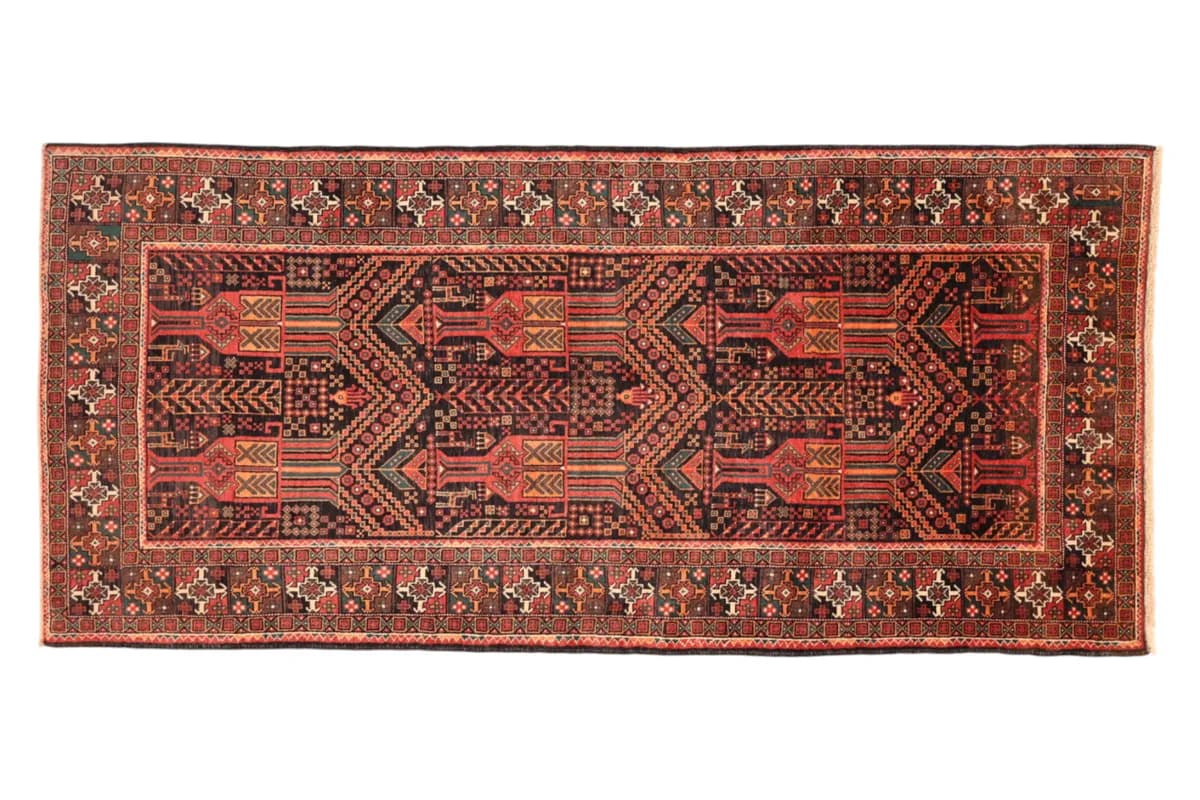
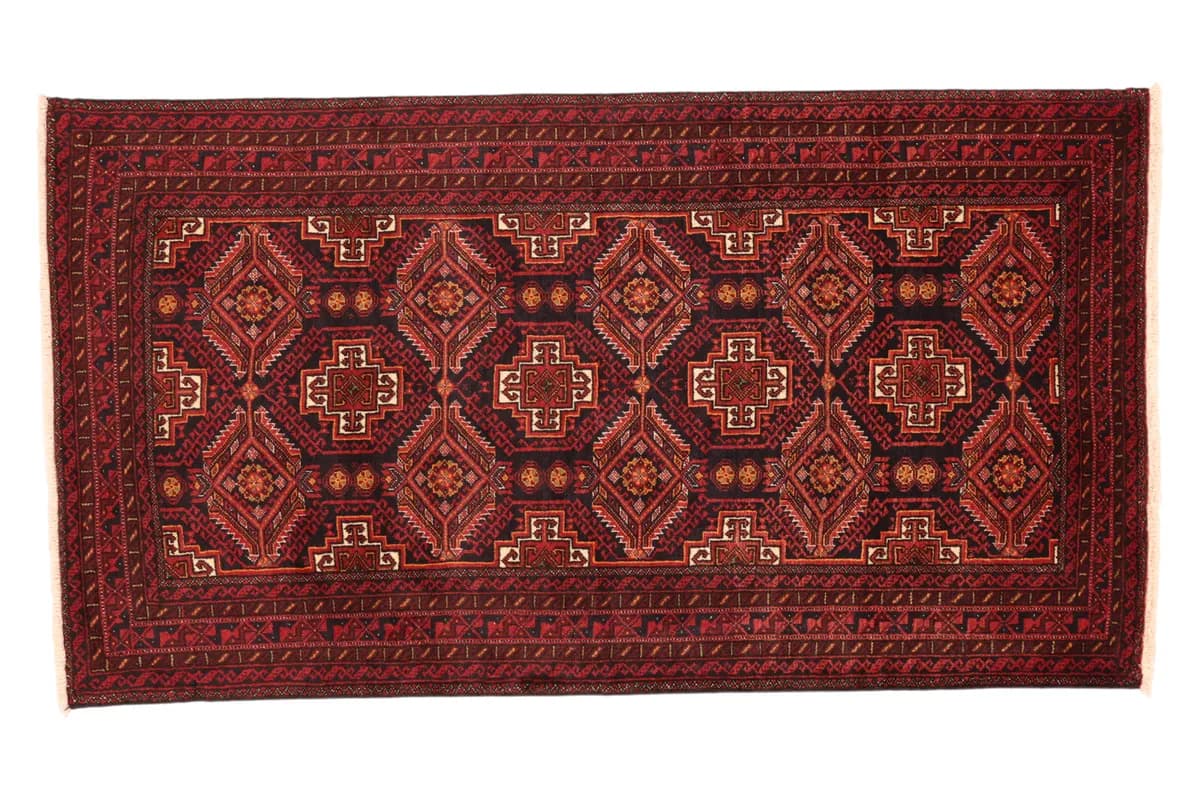
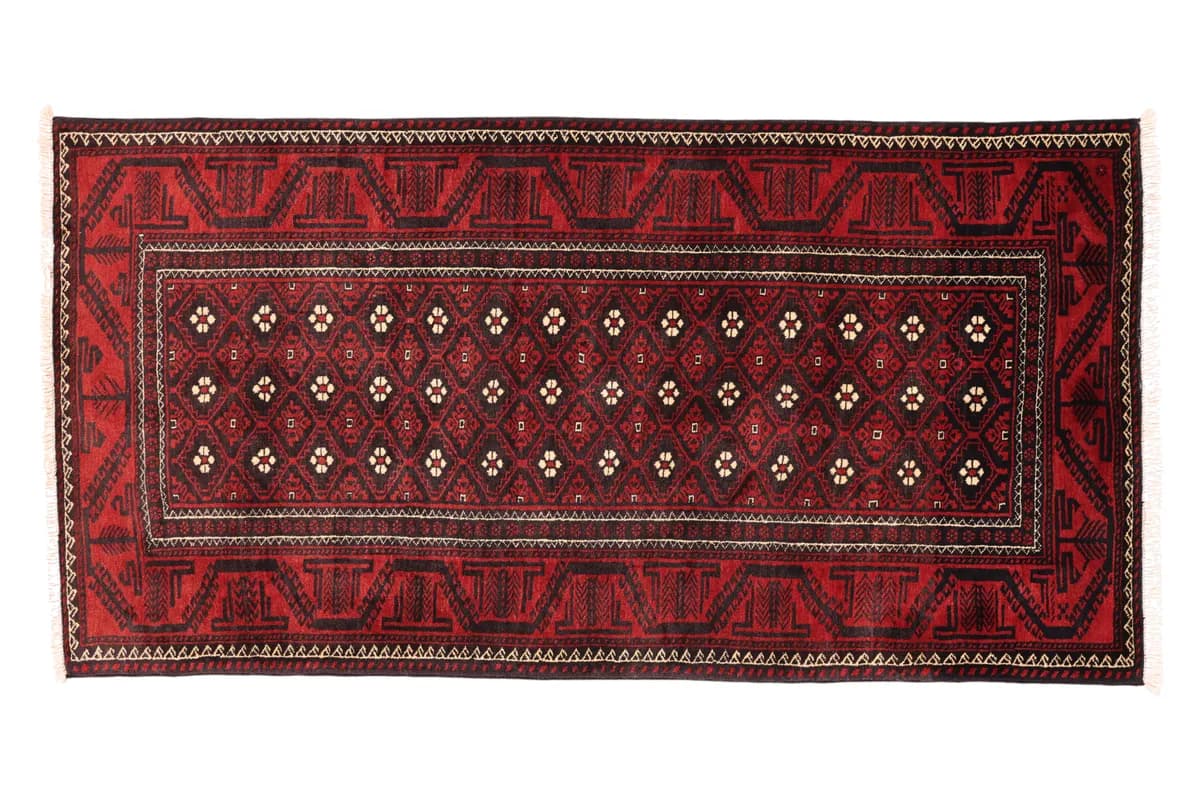
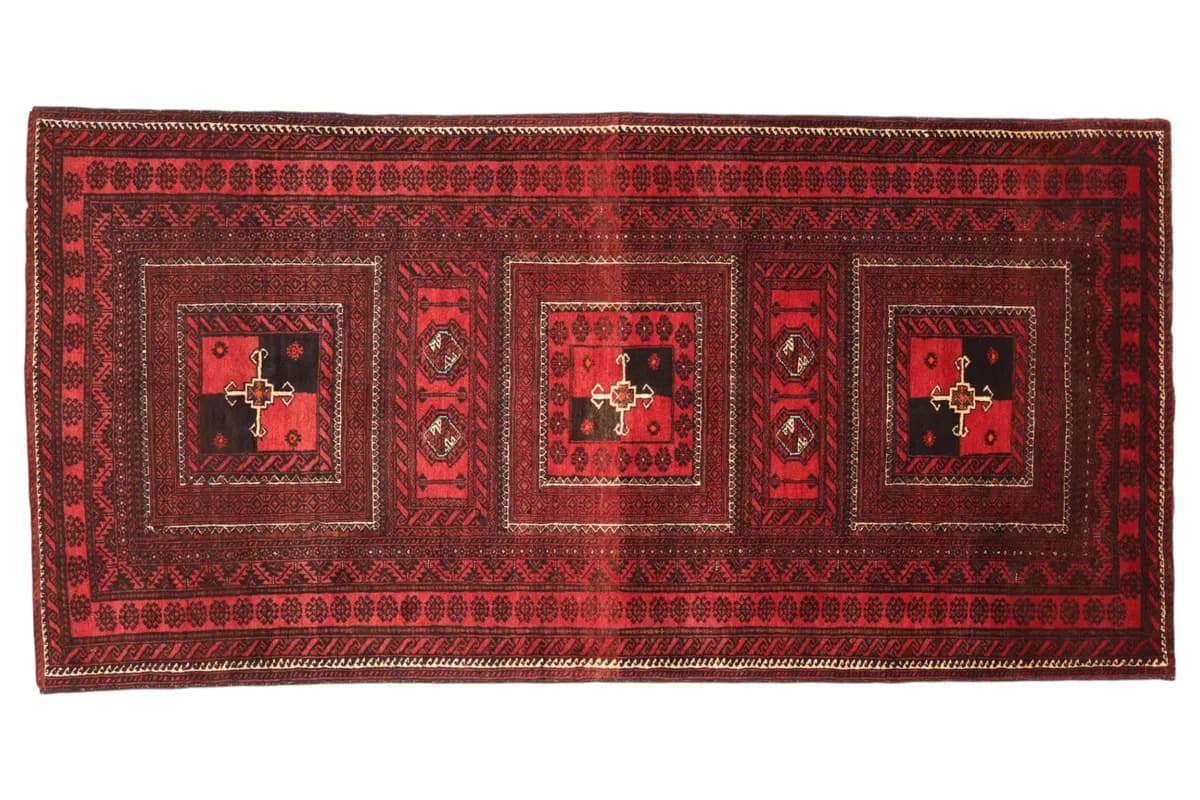
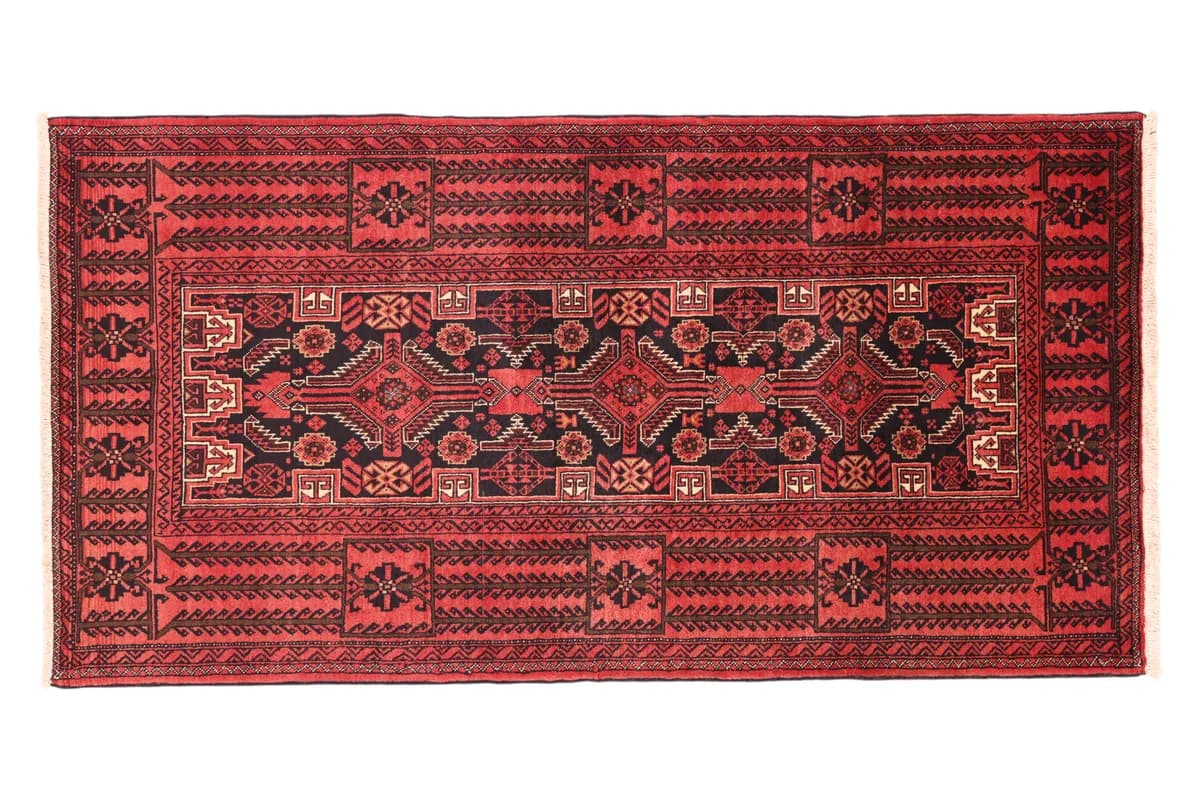
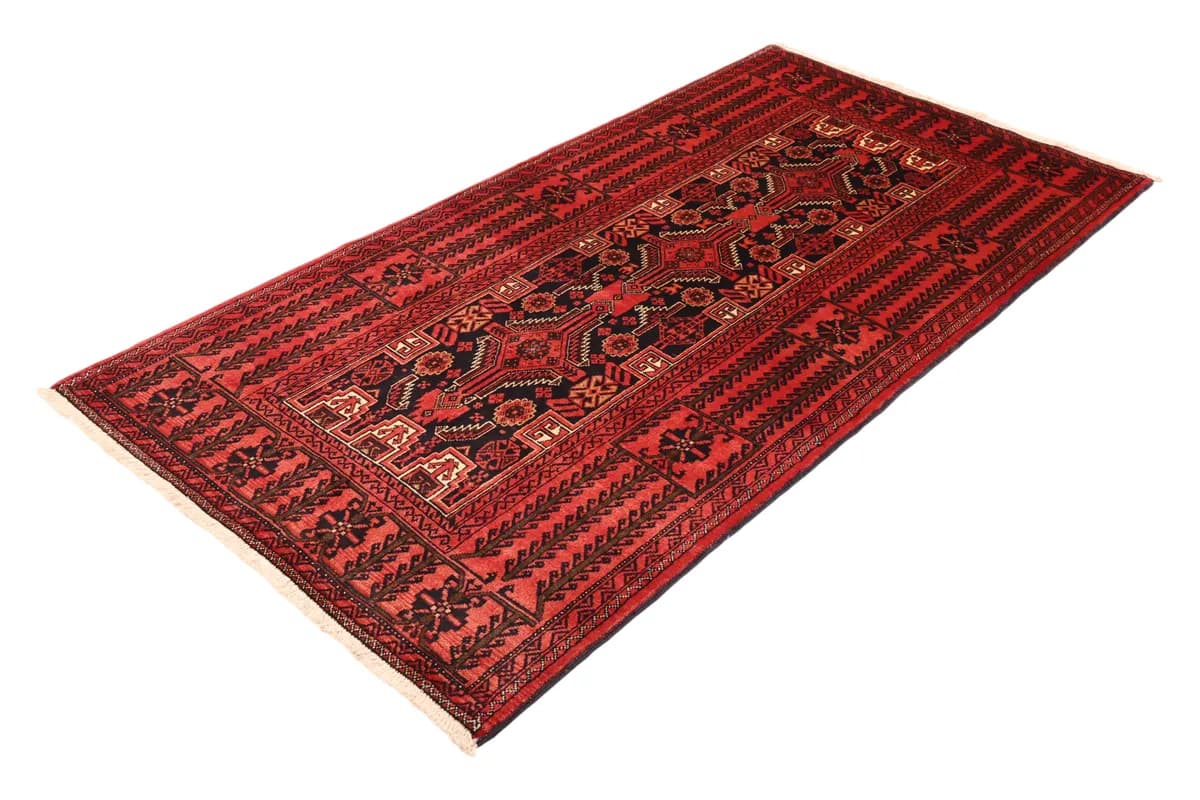
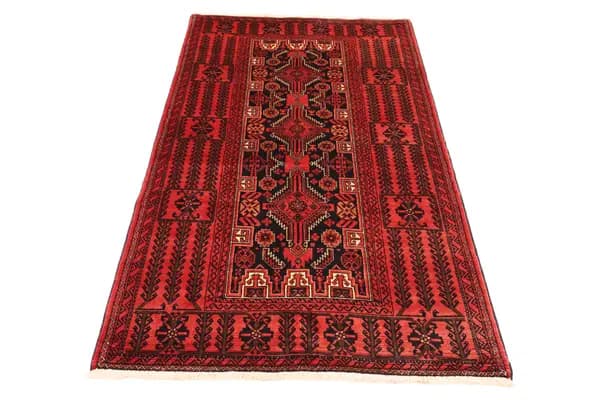
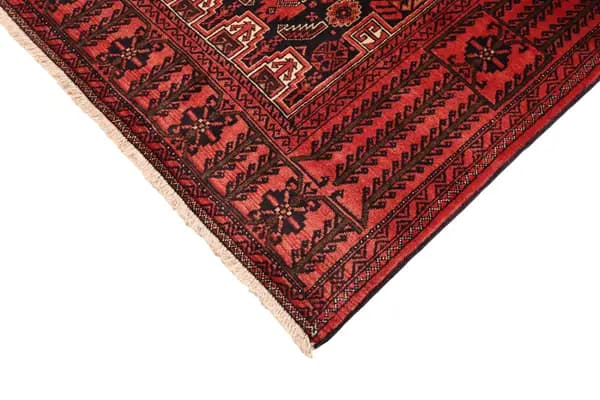
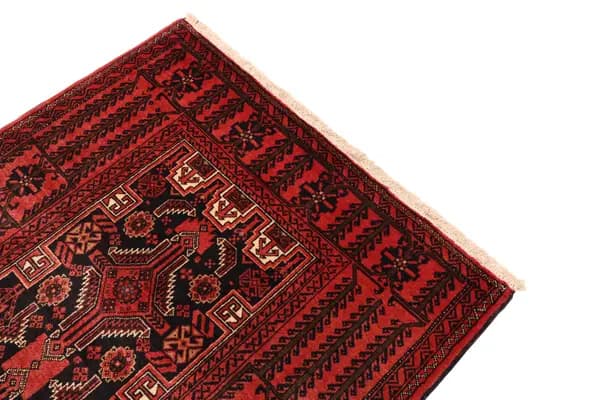
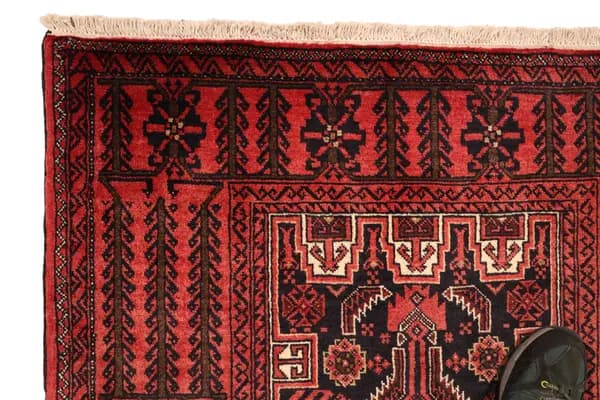
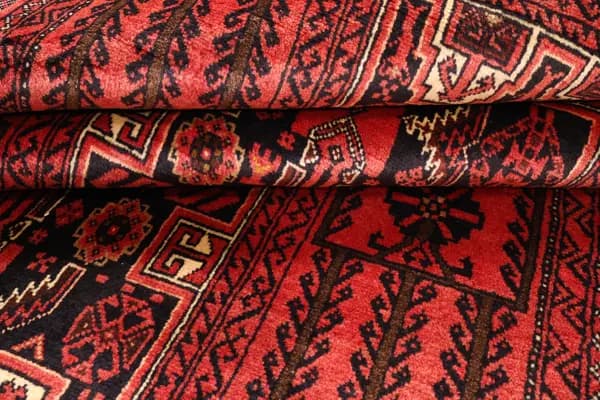
This is a Baluch rug — also written Belouch — 195 x 100 cm (6'5" x 3'3"), woven by the nomadic and semi-nomadic tribes of the borderlands of southeastern Iran. Baluch weaving is known for its deep, earthy reds and indigo, and for bold, angular geometry carried in the memory of the weaver rather than drawn out on paper beforehand. This piece sets three diamond medallions in a column, one above the other, rather than scattering a single motif across the field.
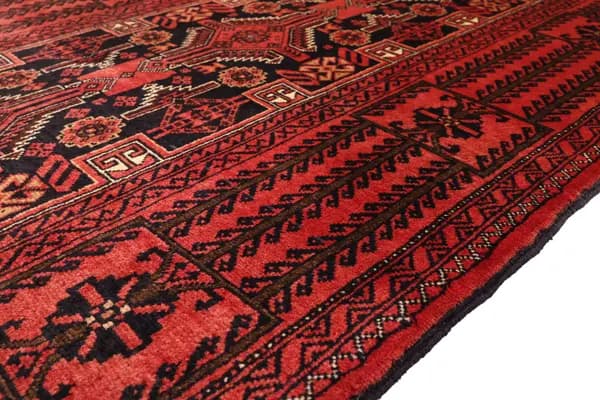
The first impression is of deep brick red meeting a ground of dark navy, close to black, the two holding each other in firm contrast. Set within that dark field, the three medallions are drawn in mustard-gold and rust, a design Baluch weavers know as Seh Torandj, three medallions, and here they read as a considered trio rather than a repeating pattern. Around this dark centre runs an unusually wide red border, built up in banded stripes of small florets and latch-hook geometry, with ivory-cream picking out the finer details, a frame substantial enough to hold its own against the field it surrounds.
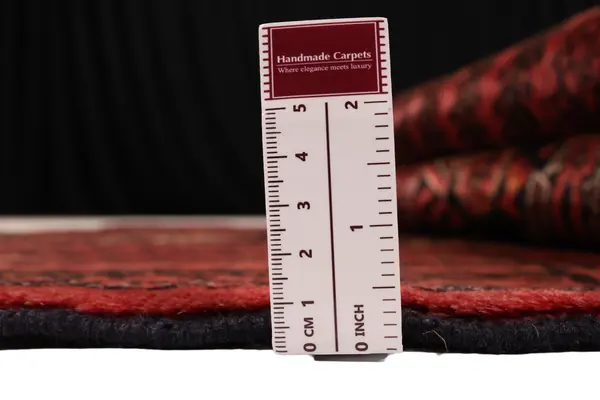
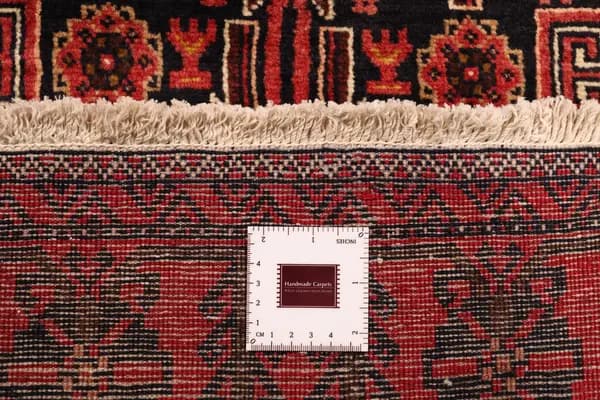
The pile is hand-spun wool, knotted by hand onto a cotton warp, and it is this that gives the surface its matte, slightly uneven texture rather than any sheen. Hand-spun yarn varies in thickness along its length, and a design worked from memory rather than a fixed plan lets small shifts of scale and colour enter as the piece grows, which is why the three medallions sit as related figures rather than identical copies of one another. At a density of around 128,000 to 160,000 knots per square metre, the weave is open enough for this bold, angular geometry to read clearly, a structure suited to strong shapes rather than fine curves.
A rug of this size and character earns its place in a hallway, a landing, or beside a bed, somewhere it is met at close range rather than viewed across a room. The deep red and near-black field carry their own weight even where daylight is scarce, and warm a pale floor without needing help from anything around them. Underfoot it is firm and substantial rather than soft, a wool this dense made to be walked on, not spared. Under passing light, the mustard-gold of the medallions is the first thing to catch, and the last thing you stop noticing.
More on Baluch rugs: origin, making and how to recognise a genuine piece
Traditional weave
At 195 × 100 cm (1.95 m²) this is a small rug. It works beside a bed, in a reading corner, in front of a fireplace or as a mat by a door. It does not furnish a room; it makes a point in one.
Yes, knotted by hand — knot by knot on a loom, not machine-made. The density is 128,000 to 160,000 knots per square metre; across 1.95 m² that is roughly 250,000 to 310,000 individual knots, every one of them tied by hand.
Hand-spun wool still carries its own lanolin, which keeps liquid sitting on the surface for a moment: blot quickly, with clear water and a light cloth, working inwards and without rubbing. Otherwise regular vacuuming along the pile is enough. Turn the rug once or twice a year so light and footfall reach it evenly.
We are in the Hamburg Speicherstadt. Come and see this rug in daylight, or write to us — a person answers.
Certificate included verifying origin, materials, and craftsmanship.
Ref: 506195