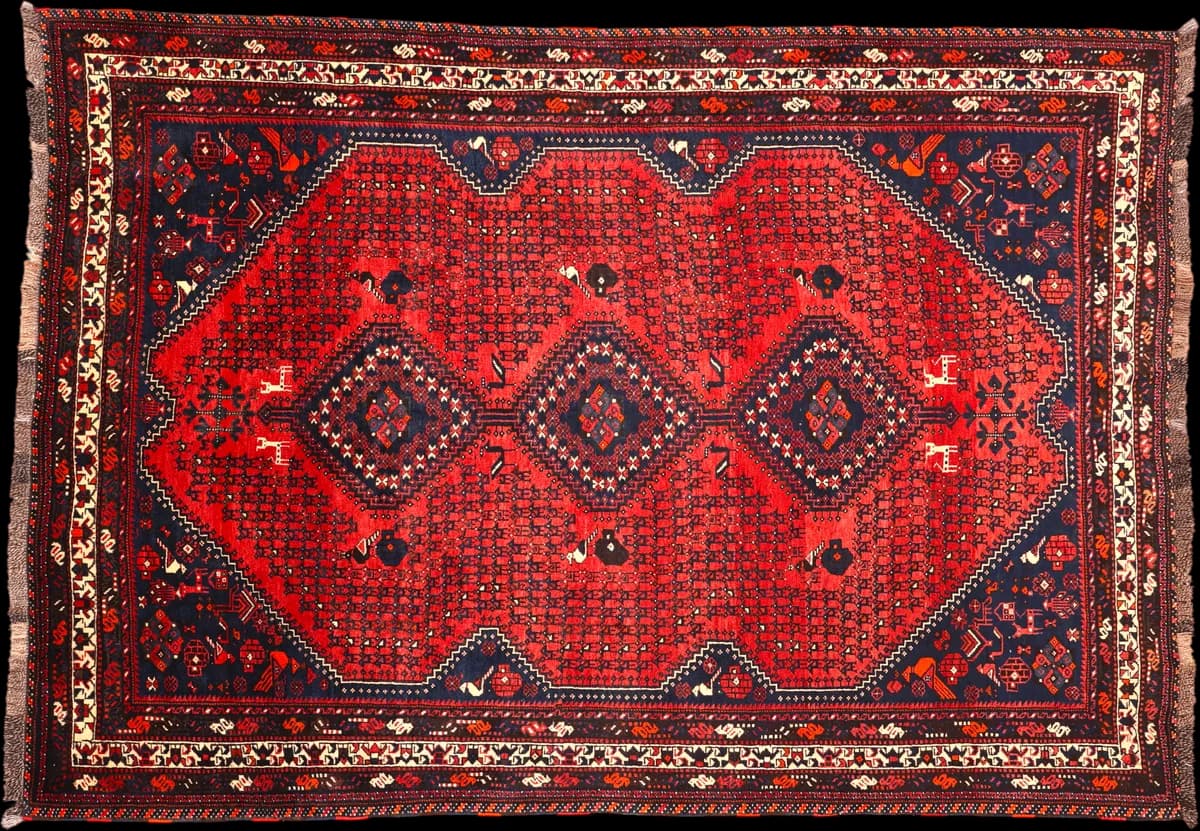
Ghashghai
305 × 208 cm
4.350 €
4.050 €
Incl. VAT
In Stock · Ready to Ship
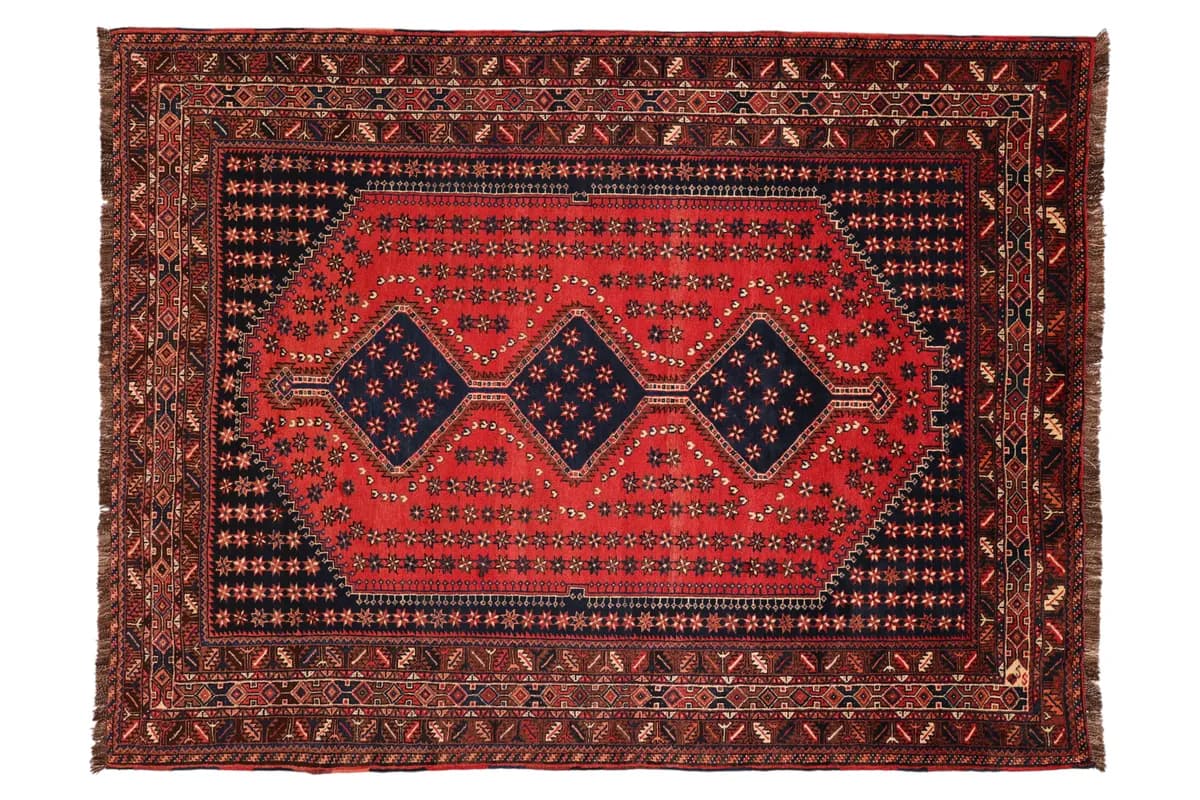
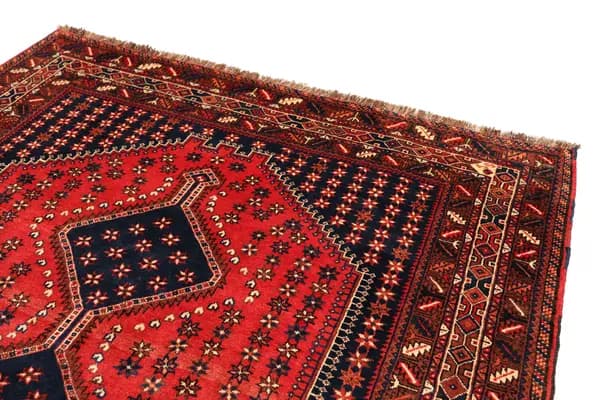
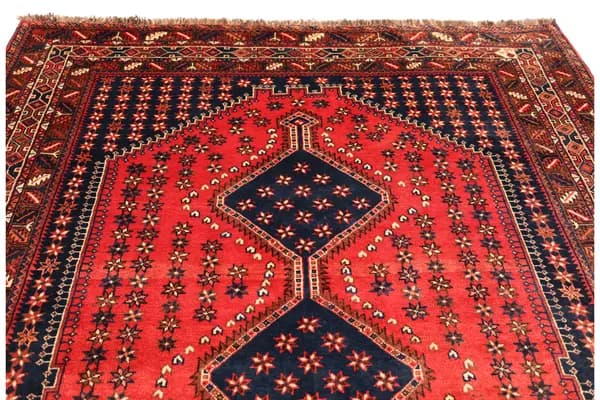
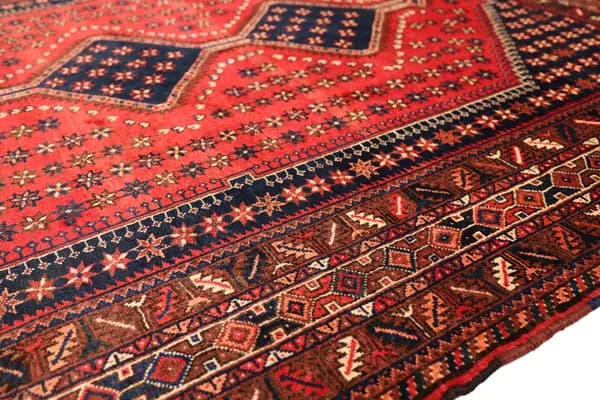
A Shiraz, a tribal weaving from the villages around the great trading city of that name in southern Iran's Fars province, measuring 277 x 209 cm (9'1" x 6'10"). Weavers here drew on several neighbouring traditions — Qashqai, Khamseh, Afshar, Luri — and the type is known above all for bold diamond medallions set into a strong geometric field. The classic layout, seh-torandj, places three such medallions along the centre as separate, self-contained forms. This one does not keep them apart.
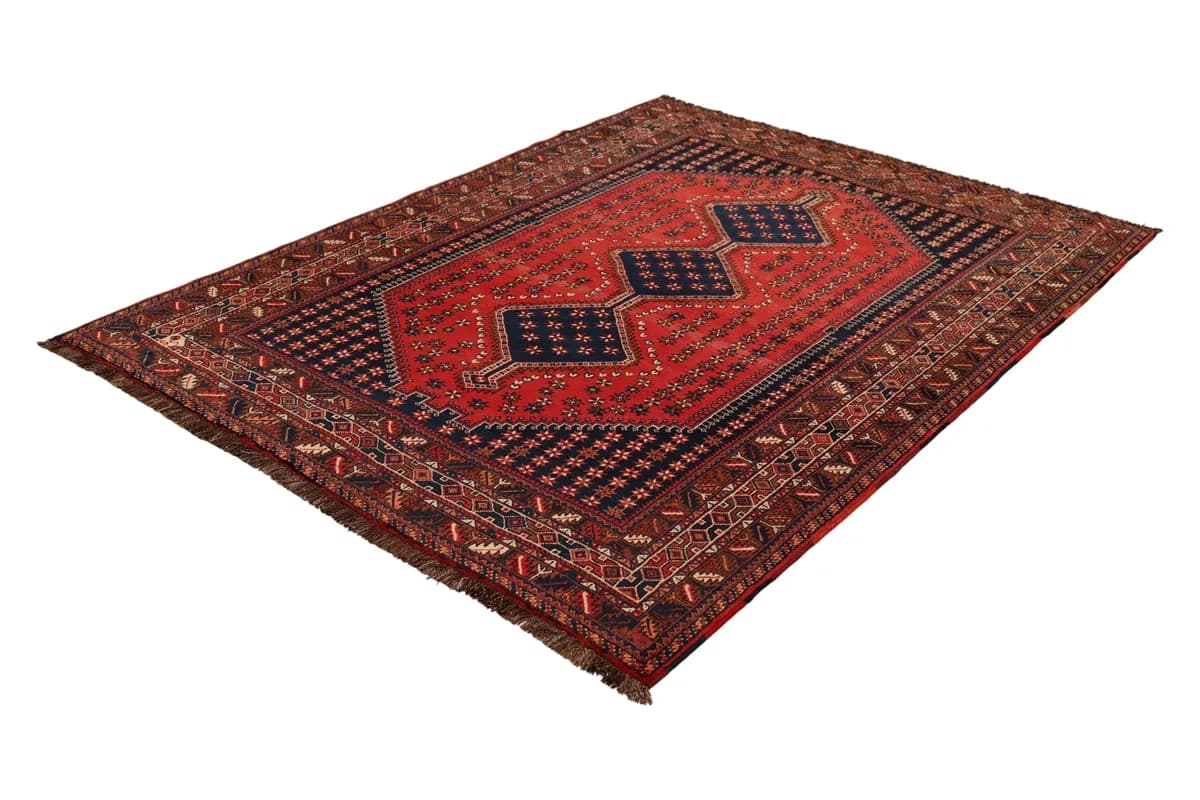
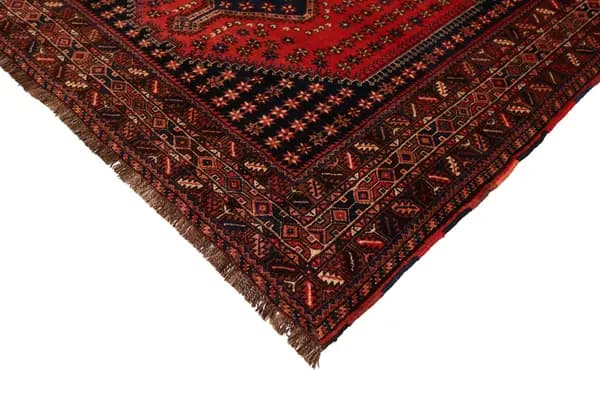
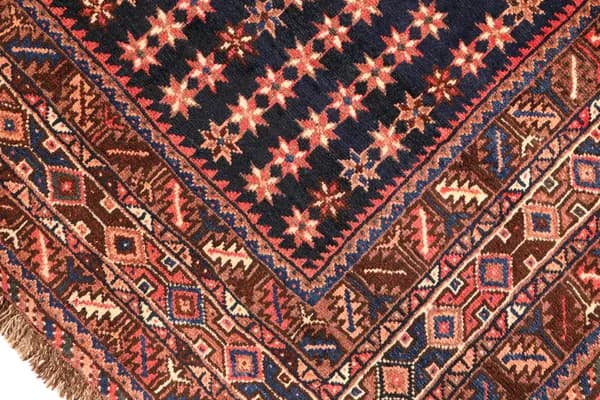
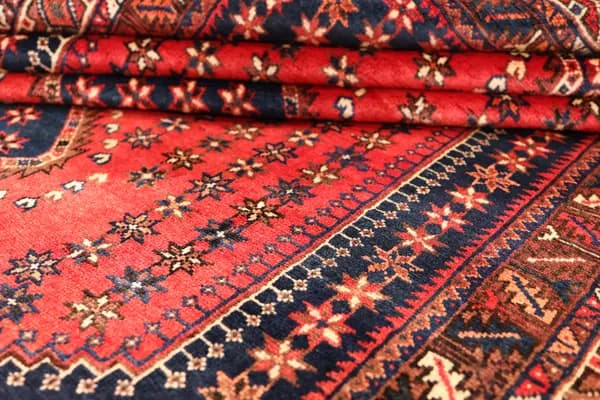
The field is a warm, tomato-toned red, scattered with small stars that give it a restless, glinting surface. Down the centre run three navy diamond medallions, but instead of standing alone they are joined at their points into a single unbroken chain, so the eye reads one continuous shape rather than three. A wide navy border holds the composition, patterned with rows of cream and rust rosettes, and several narrow geometric guard stripes step the whole rug in before the field takes over.
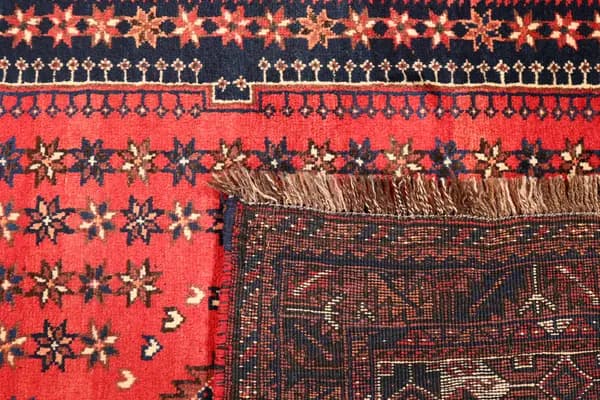
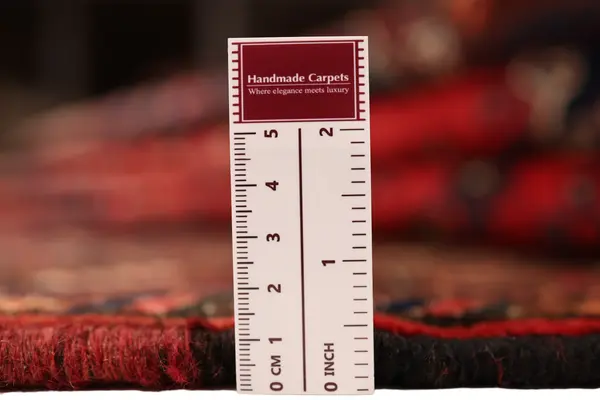
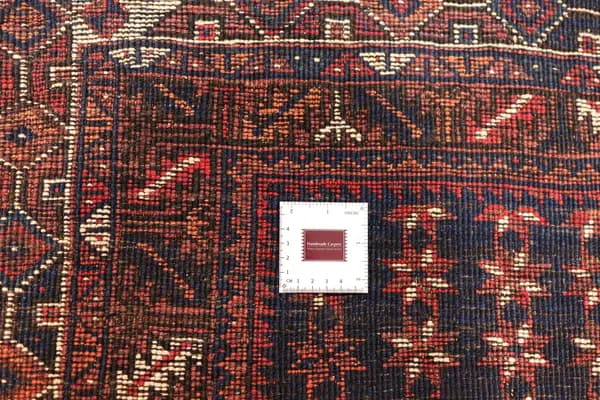
Village and workshop rugs are drawn first and knotted second, each medallion measured out to its place on the plan. A Shiraz like this one was knotted from memory, on a portable loom, without a cartoon to fix where one medallion should end and the next begin — which is exactly how three separate forms could run together into a chain instead of standing apart. The wool, hand-spun from sheep raised on the surrounding mountain pastures, was knotted at a density of 128,000 to 160,000 knots per square metre and finished to a pile of 12 millimetres, tight and low, with a slightly ribbed, matte surface that shows the hand behind it rather than a machine.
At this size the rug suits a dining table or a living room seating group, with room to see the full chain of medallions rather than a corner of it. The red holds its own against dark wood and warms a pale floor without needing help from anything else in the room. Underfoot it is dense and firm, built for a room that gets used rather than one kept for best. Morning light along that unbroken chain of diamonds is what you will keep coming back to look at.
More on Qashqai rugs: origin, making and how to recognise a genuine piece
Traditional weave
At 277 × 209 cm (5.79 m²) this is a large rug. It sits under a seating group with the front legs of sofa and chairs on it, or under a dining table for four. A table for six wants about 80 cm of clearance all round, and needs more.
Yes, knotted by hand — knot by knot on a loom, not machine-made. The density is 128,000 to 160,000 knots per square metre; across 5.79 m² that is roughly 740,000 to 930,000 individual knots, every one of them tied by hand.
Hand-spun wool still carries its own lanolin, which keeps liquid sitting on the surface for a moment: blot quickly, with clear water and a light cloth, working inwards and without rubbing. Otherwise regular vacuuming along the pile is enough. Turn the rug once or twice a year so light and footfall reach it evenly.
We are in the Hamburg Speicherstadt. Come and see this rug in daylight, or write to us — a person answers.
Certificate included verifying origin, materials, and craftsmanship.
Ref: 521194