Belutsch
194 × 98 cm
656 €






544 €
Incl. VAT
In Stock · Ready to Ship
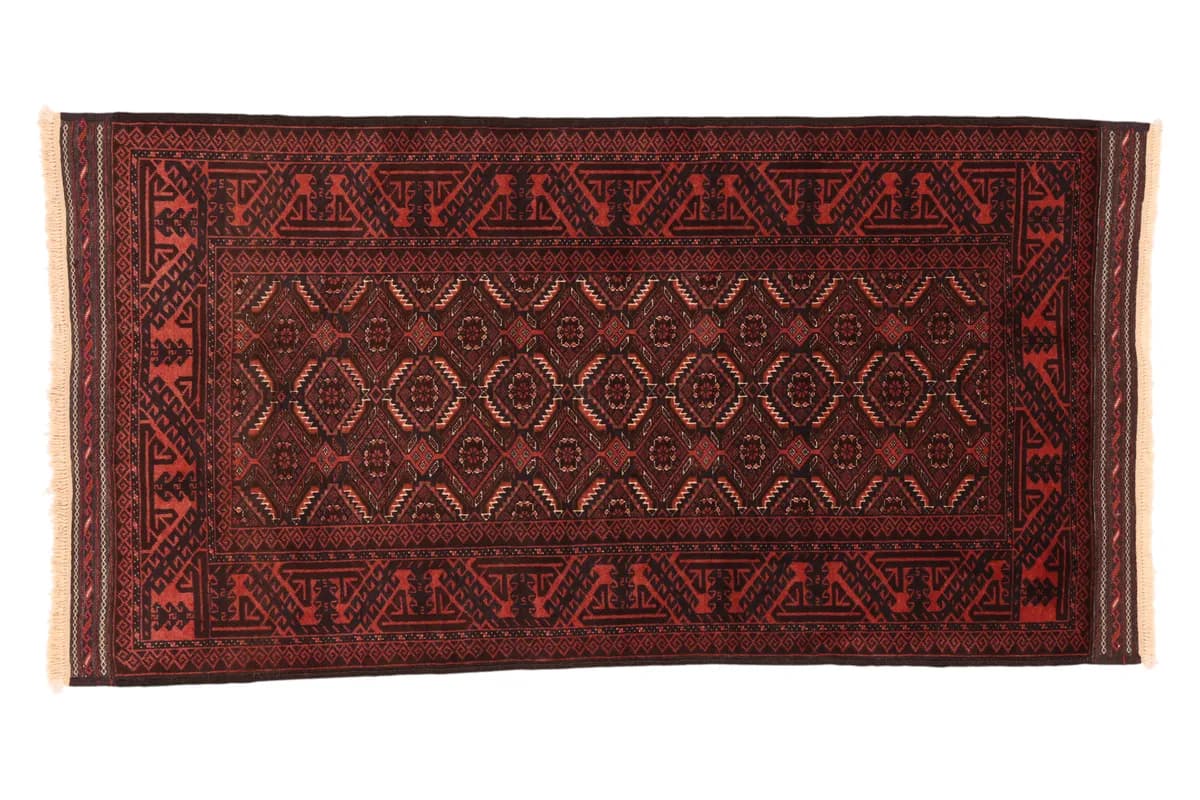
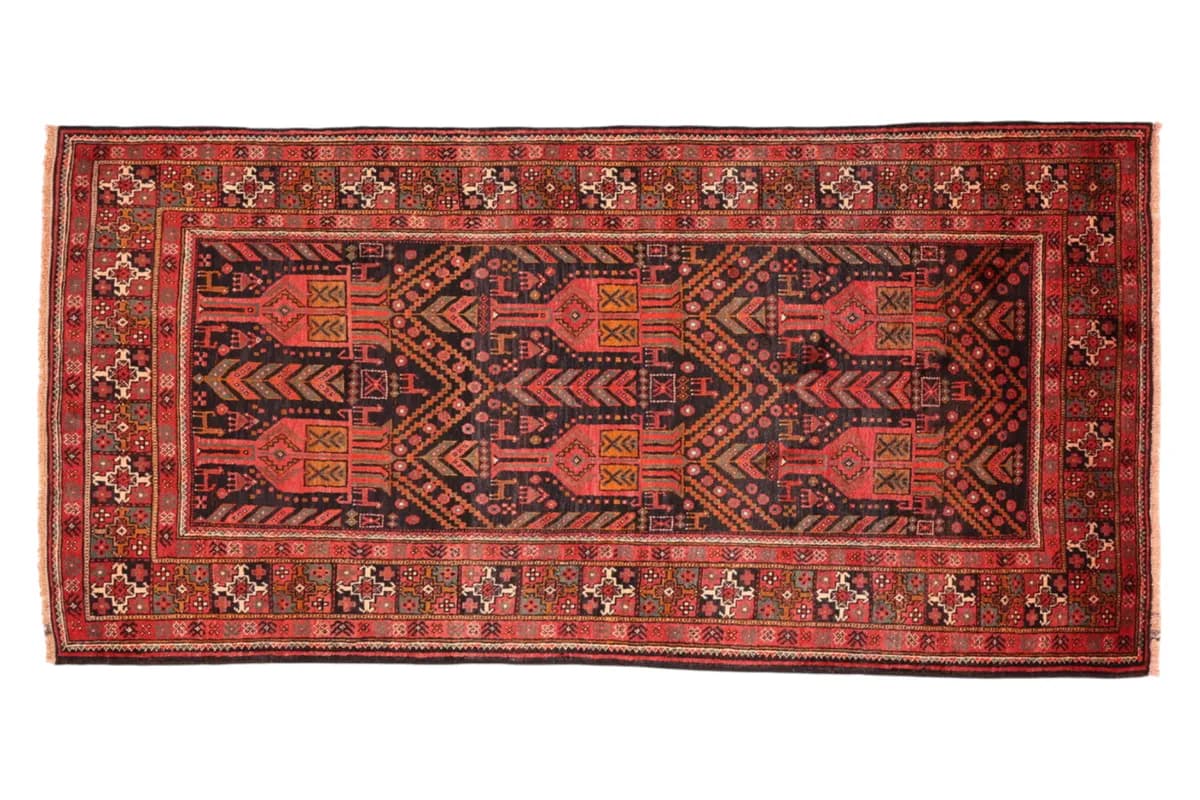
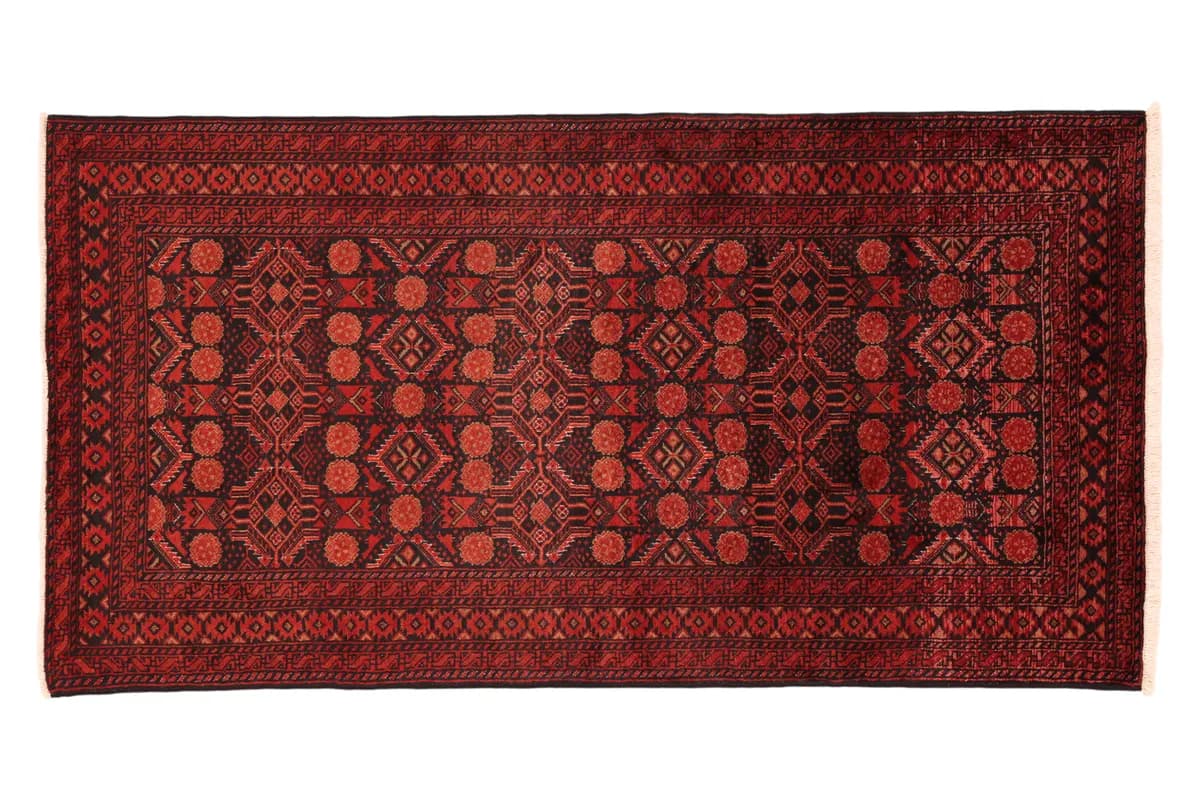
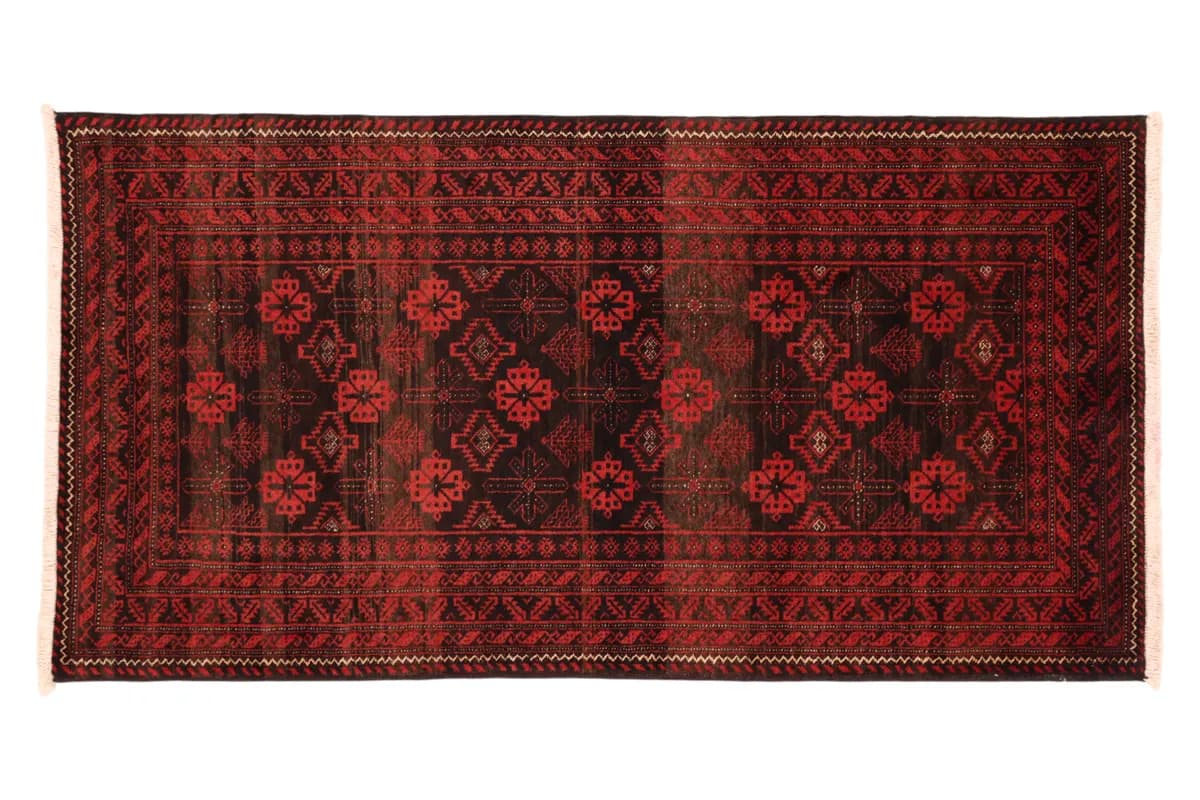
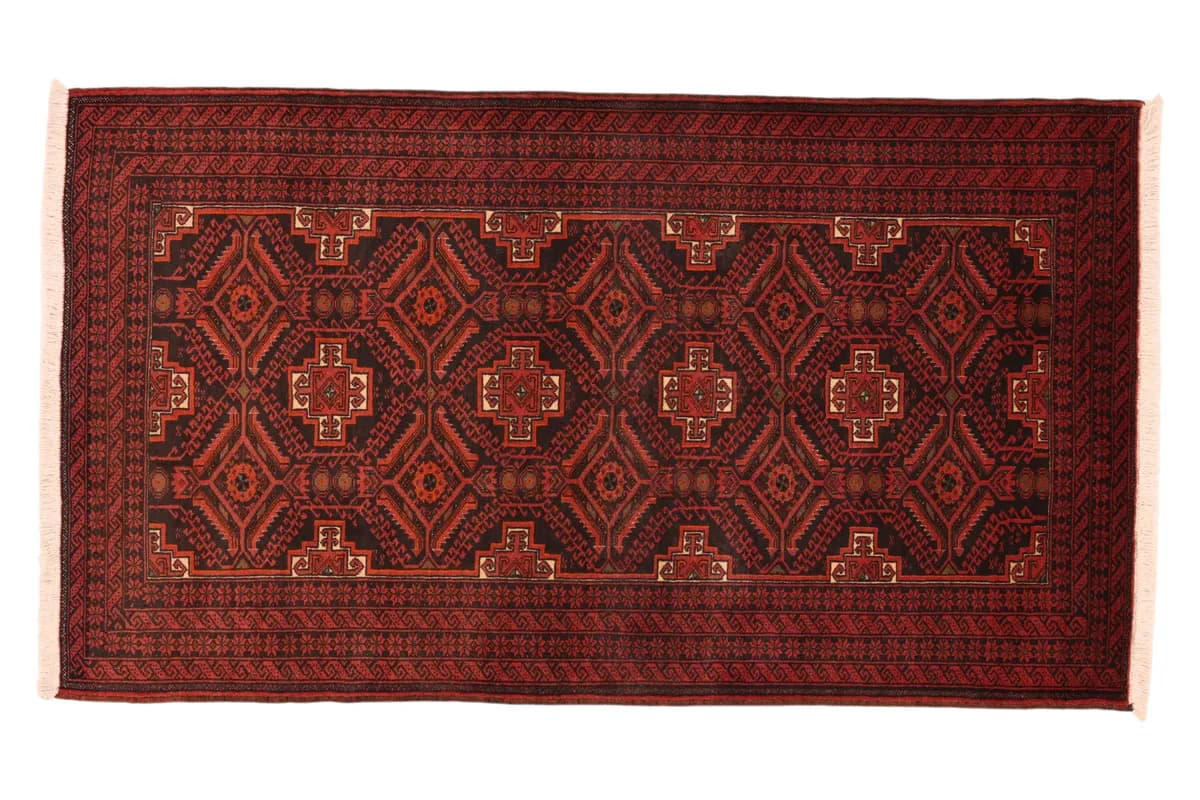
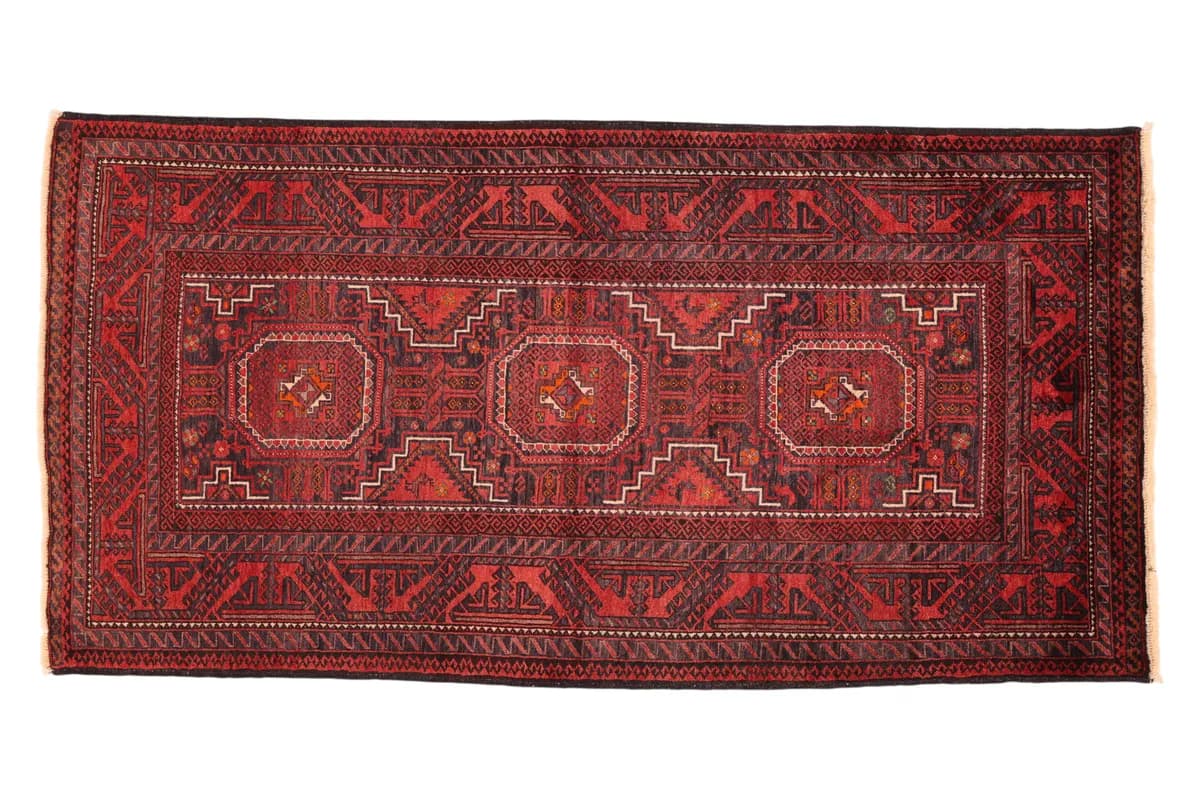
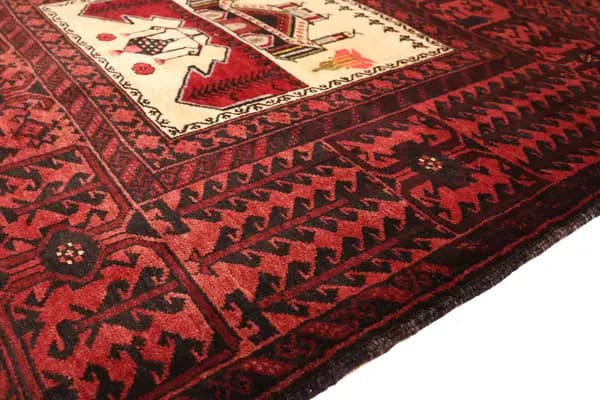
This is a Baluch — also written Belouch — a tribal weaving from the borderlands of southeastern Iran, measuring 184 x 104 cm (6'0" x 3'5"). Baluch rugs are the work of nomadic weavers knotting from memory rather than from a drawn plan, and the type is known above all for its deep reds and indigo, and for prayer-niche, or mihrab, layouts that recur across generations of weavers.
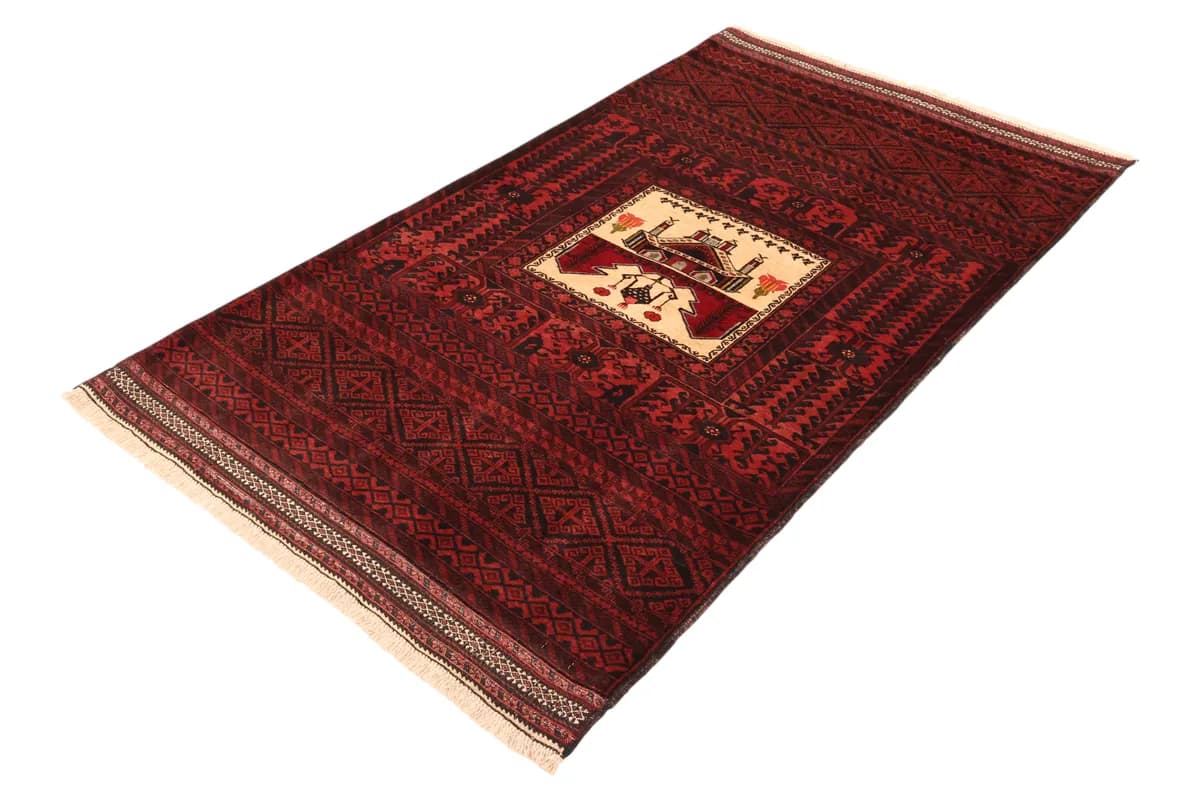
The field runs a deep brick red toward red-brown, and it is worked so densely with concentric geometric bands that there is barely any open ground left to rest the eye. At its centre sits a small cream-coloured mihrab panel, glowing like a lit window in a dark room, holding a zigzag tree in dark red beside a striped, lamp-like column topped with small tufts of mustard and coral. Around this, several borders in near-black and dark red carry diamond lattice and dogtooth patterns, closely toned rather than sharply contrasted against the field, so the whole rug reads as one continuous weave of pattern rather than a centre framed by separate rings.
The pile is hand-spun wool, hand-knotted onto a cotton warp, at a density of 128,000 to 160,000 knots per square metre — looser than a workshop silk rug, and it is this slight irregularity in the spun wool that gives the surface its dry, matte body rather than any sheen. What stands out is where the knotting went. A Baluch prayer rug is usually left plain around its niche, with the pattern reserved for the border; here the weaver carried the same banded geometry across nearly the whole ground, so a piece some twenty to forty years old, of modest size, carries an unusual amount of worked pattern for its format.
At 184 x 104 cm, this is a rug for a hallway, a landing, or the floor beside a bed — a space to cross rather than to settle into, where a smaller, self-contained piece earns its keep. Against pale floorboards the red warms the passage; against dark furniture it holds its own rather than fading into the background. The pile is dense and fairly flat underfoot, made for daily footsteps rather than careful protection. Catch it in low afternoon light and the cream panel at its centre lifts quietly, glowing against all that surrounding red.
More on Baluch rugs: origin, making and how to recognise a genuine piece
Traditional weave
At 184 × 104 cm (1.91 m²) this is a small rug. It works beside a bed, in a reading corner, in front of a fireplace or as a mat by a door. It does not furnish a room; it makes a point in one.
Yes, knotted by hand — knot by knot on a loom, not machine-made. The density is 128,000 to 160,000 knots per square metre; across 1.91 m² that is roughly 240,000 to 310,000 individual knots, every one of them tied by hand.
Hand-spun wool still carries its own lanolin, which keeps liquid sitting on the surface for a moment: blot quickly, with clear water and a light cloth, working inwards and without rubbing. Otherwise regular vacuuming along the pile is enough. Turn the rug once or twice a year so light and footfall reach it evenly.
We are in the Hamburg Speicherstadt. Come and see this rug in daylight, or write to us — a person answers.
Certificate included verifying origin, materials, and craftsmanship.
Ref: 677597