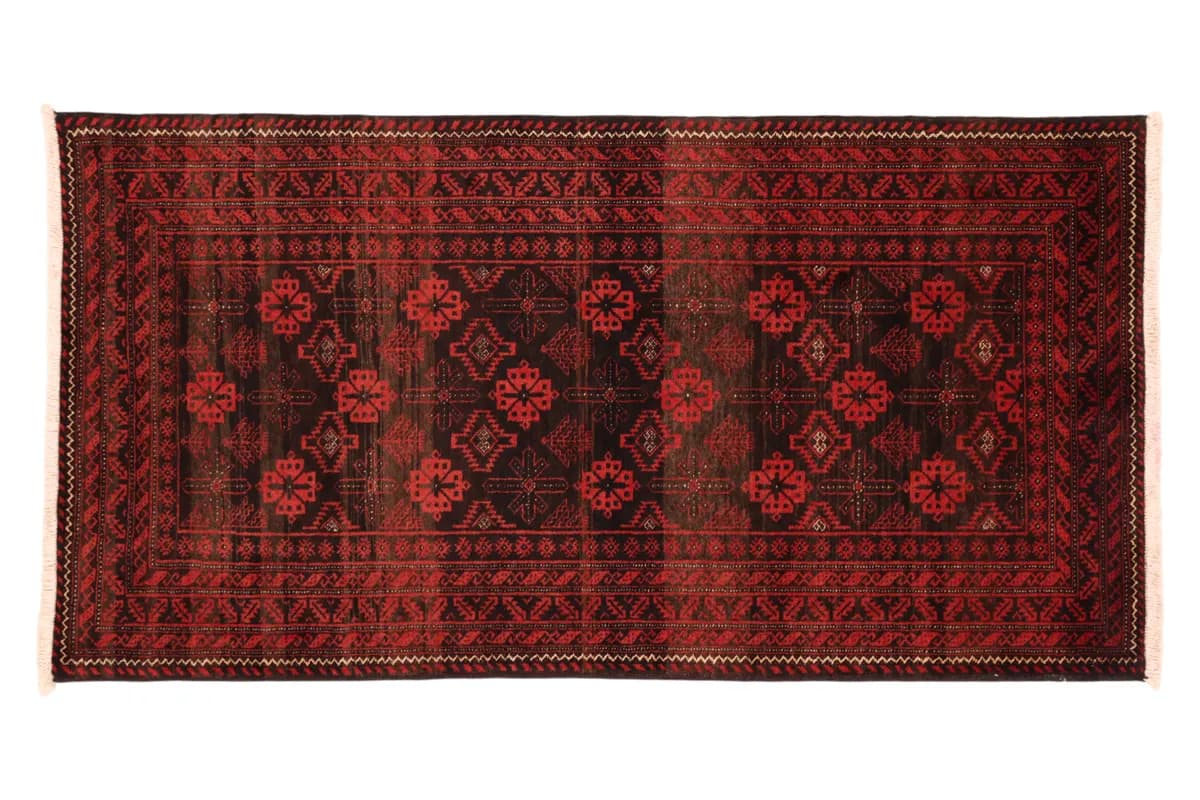
Belutsch
196 × 102 cm
598 €






491 €
Incl. VAT
In Stock · Ready to Ship
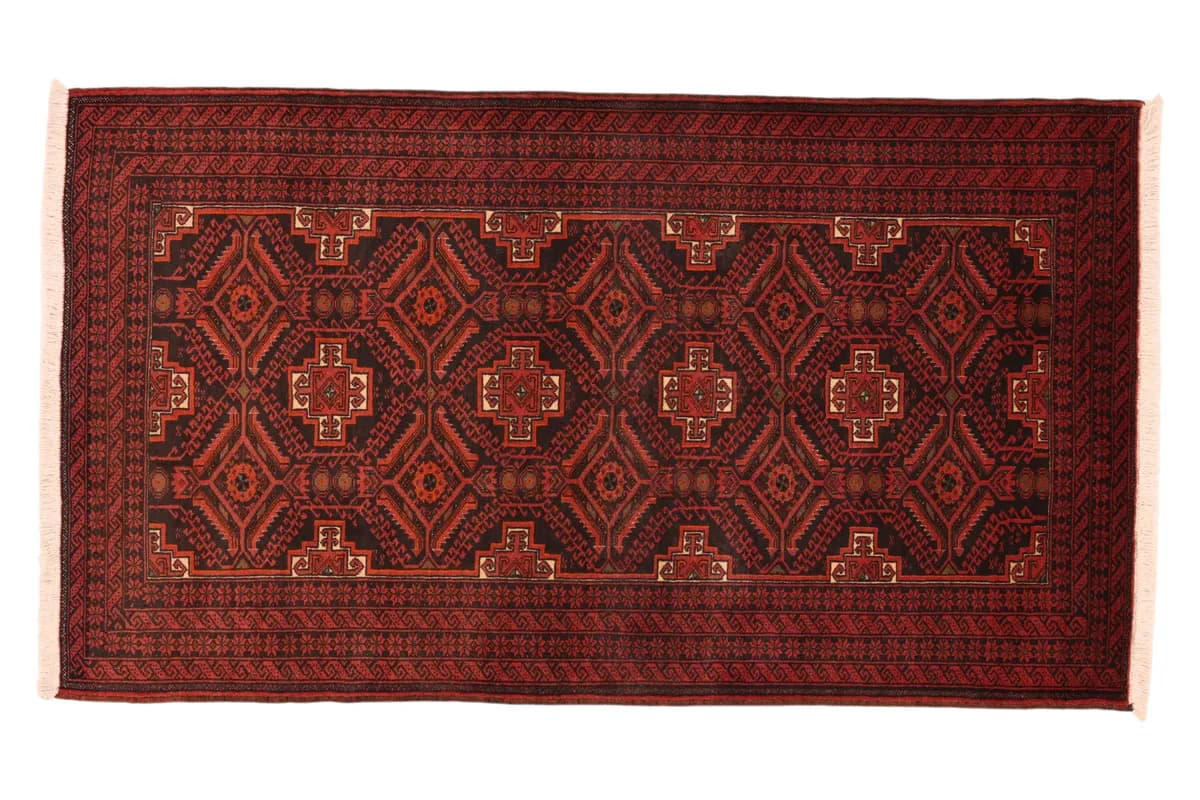
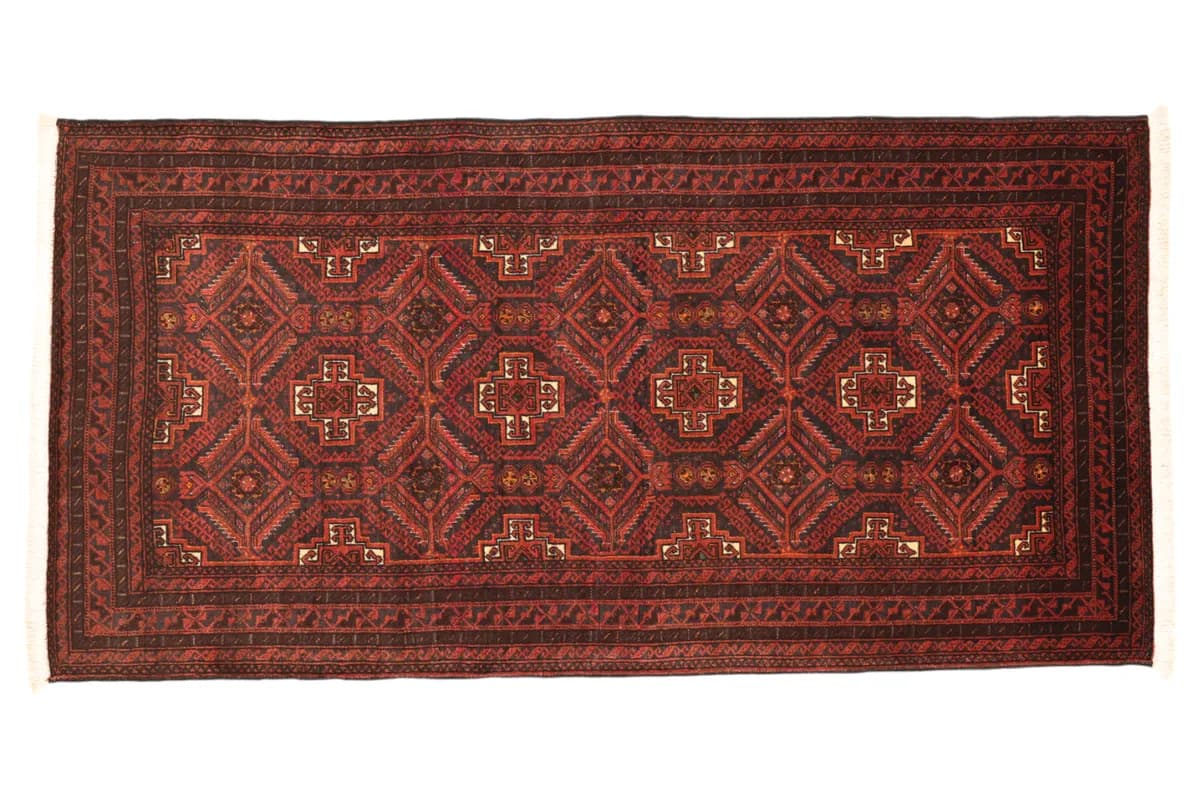
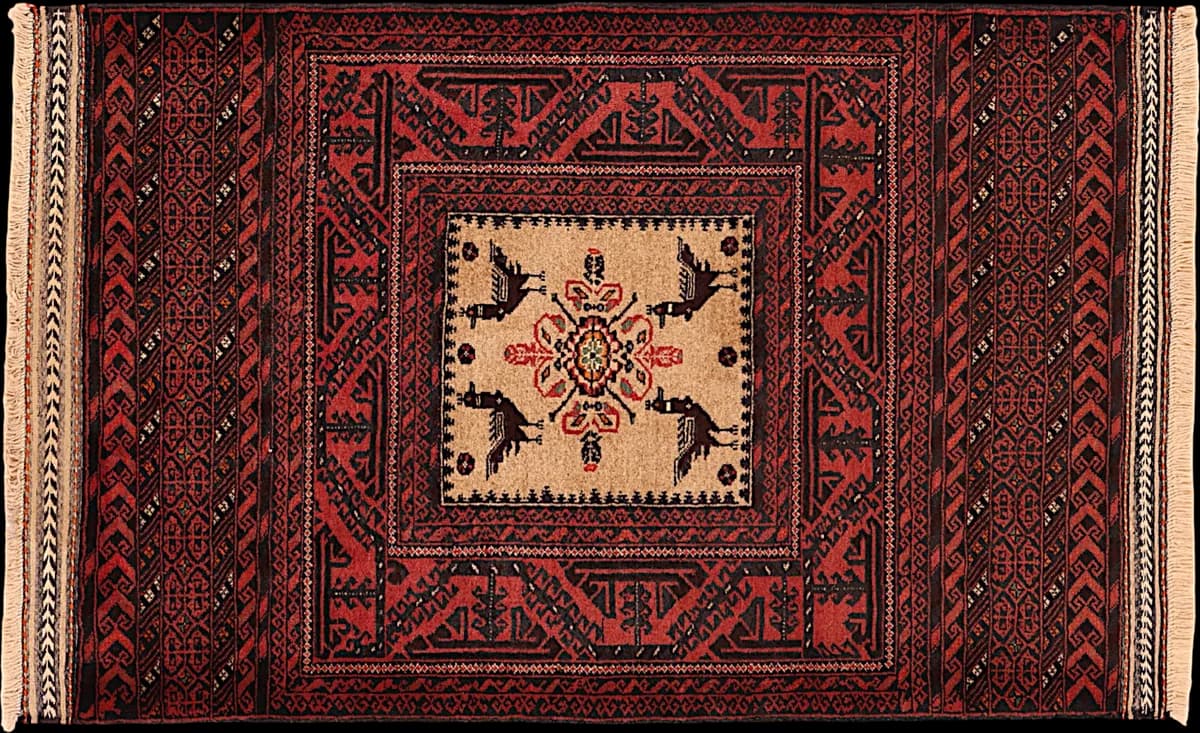
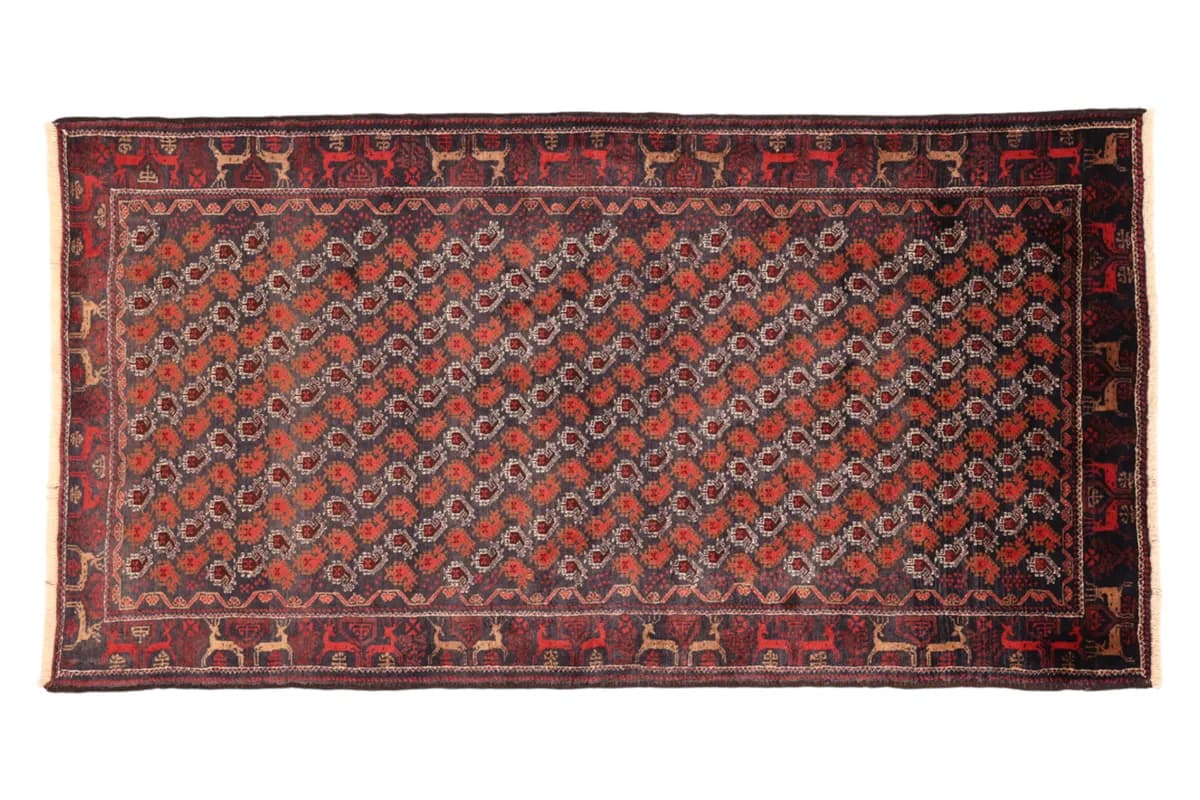
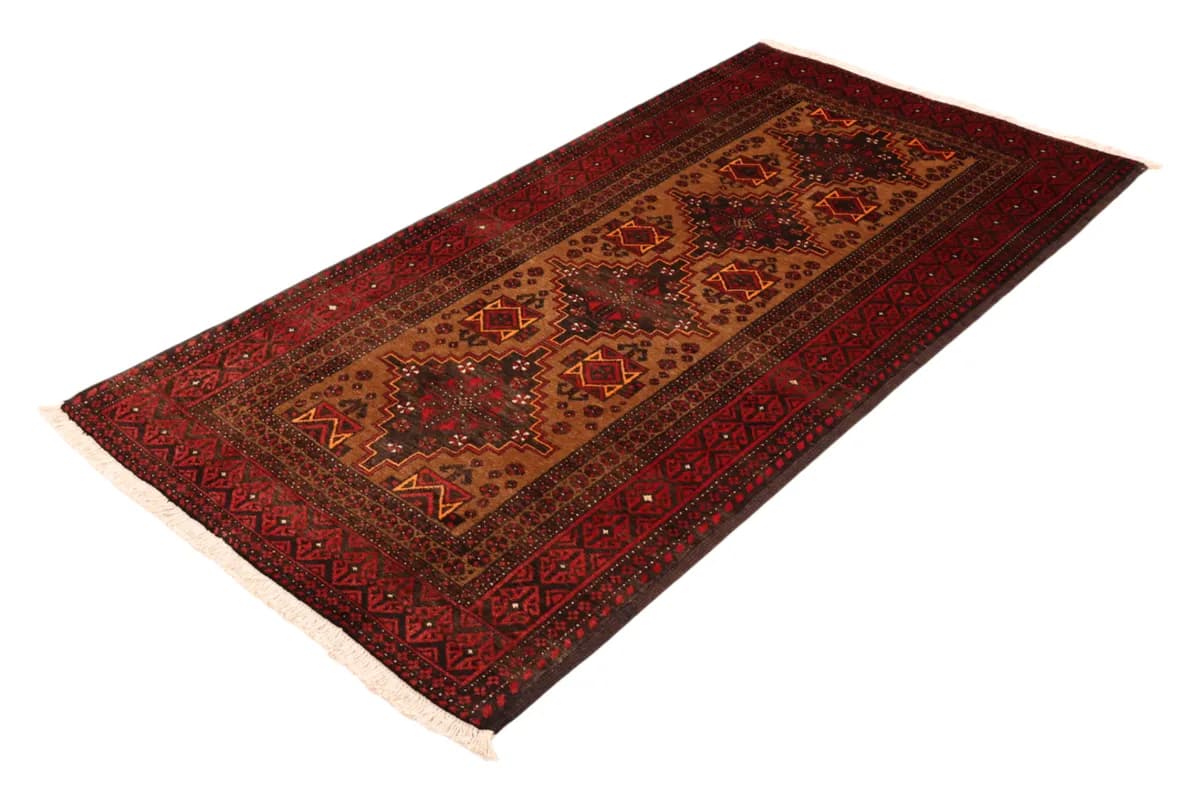
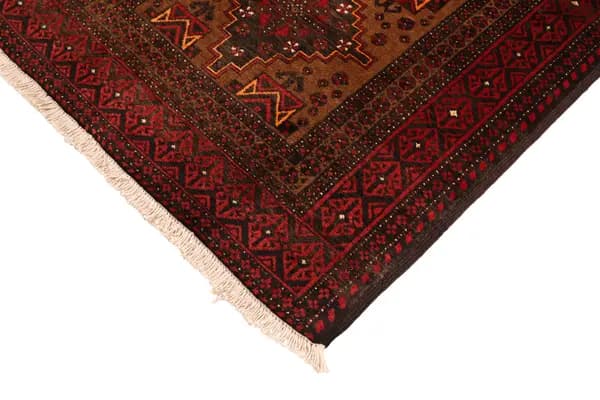
Belutsch rugs are woven by nomadic and semi-nomadic families along the borderlands of south-eastern Iran, knotted from memory rather than from any drawn plan. The type is best known for a dark, smouldering palette of deep reds and indigo and for bold, angular geometry, often built around a prayer-niche layout. This piece measures 199 x 99 cm (6'6" x 3'3"), a runner-scaled format, and it departs from that usual darkness at once: the ground is a warm camel brown, a rare choice for a Baluch weaving and the thing that sets this rug apart from most of its type.
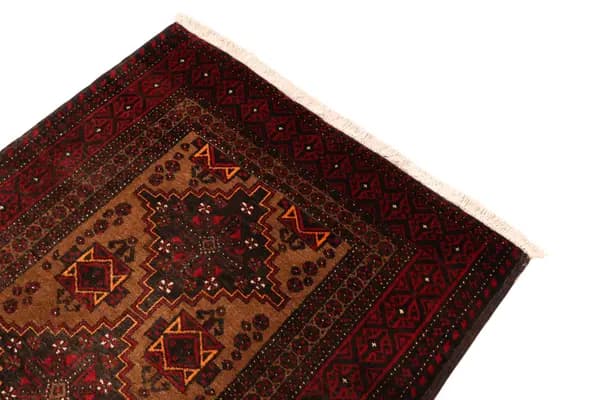
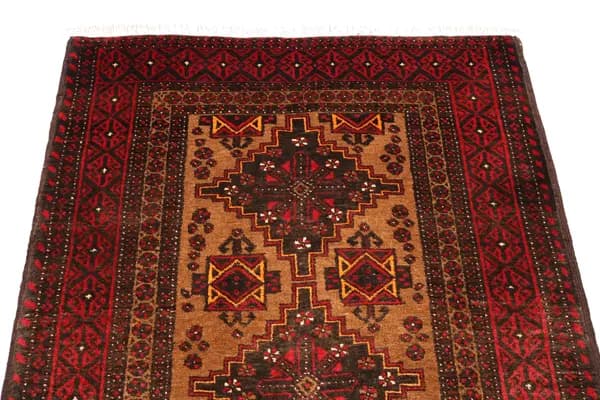
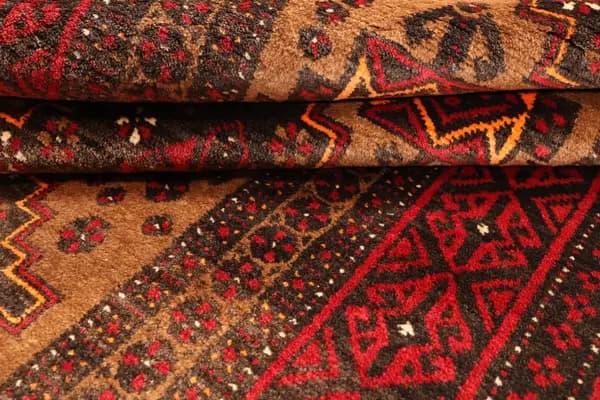
Against that camel field, six diamond-shaped medallions in dark brown, each outlined in orange, run down the length of the rug in a slightly staggered column, so the eye follows them almost like a path. Ivory florets sit between them, with small touches of orange and gold. The whole field is held by a broad red main border carrying its own geometric diamond pattern, and that red is fenced in turn by several narrow dark guard borders in zigzag and dot motifs, together taking up roughly a fifth of the width. The contrast between the pale field and the deep red frame is what carries the design; nothing here is muted, but nothing is crowded either.
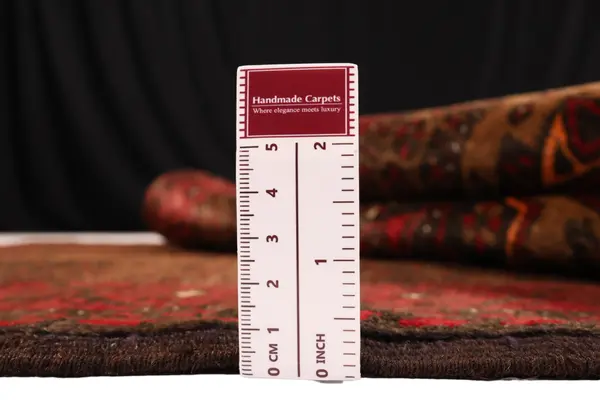
The wool is hand-spun rather than machine-spun, and hand-spun wool takes dye a little unevenly along its length, which is why you can see a faint, lighter streak passing through the centre of the field — a natural variation known as abrash, and a sign of the yarn's origin rather than a flaw. Knotted by hand at a density of roughly 128,000 to 160,000 knots per square metre on a cotton warp, with a 6 mm wool pile, the rug carries the slight, deliberate irregularity that comes from working a pattern from memory on a portable loom rather than from a fixed cartoon. It is twenty to forty years old, worn in rather than worn down.
A rug this size finds its place in a hallway, along a landing, or beside a bed, and the camel ground is particularly good at warming a pale wooden floor where a darker Baluch would simply sit heavily on top of it. The dense, hand-spun pile is firm and slightly springy underfoot, built for a well-used passage rather than a room kept for best. Catch it in low morning light and the orange outlines around each medallion pick up a warmth the deep reds never quite show on their own.
More on Baluch rugs: origin, making and how to recognise a genuine piece
Traditional weave
At 199 × 99 cm (1.97 m²) this is a small rug. It works beside a bed, in a reading corner, in front of a fireplace or as a mat by a door. It does not furnish a room; it makes a point in one.
Yes, knotted by hand — knot by knot on a loom, not machine-made. The density is 128,000 to 160,000 knots per square metre; across 1.97 m² that is roughly 250,000 to 320,000 individual knots, every one of them tied by hand.
Hand-spun wool still carries its own lanolin, which keeps liquid sitting on the surface for a moment: blot quickly, with clear water and a light cloth, working inwards and without rubbing. Otherwise regular vacuuming along the pile is enough. Turn the rug once or twice a year so light and footfall reach it evenly.
We are in the Hamburg Speicherstadt. Come and see this rug in daylight, or write to us — a person answers.
Certificate included verifying origin, materials, and craftsmanship.
Ref: 706000