Belutsch
85 × 74 cm
255 €






1.253 €
Incl. VAT
In Stock · Ready to Ship
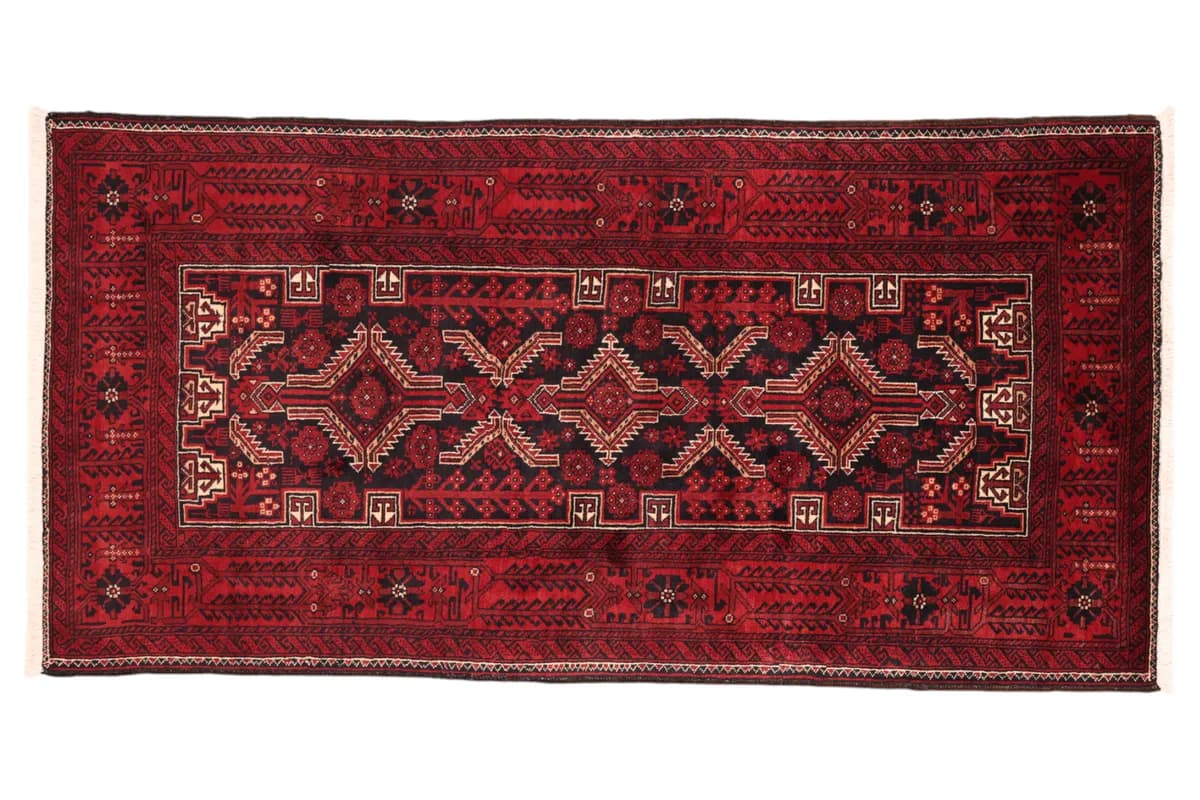
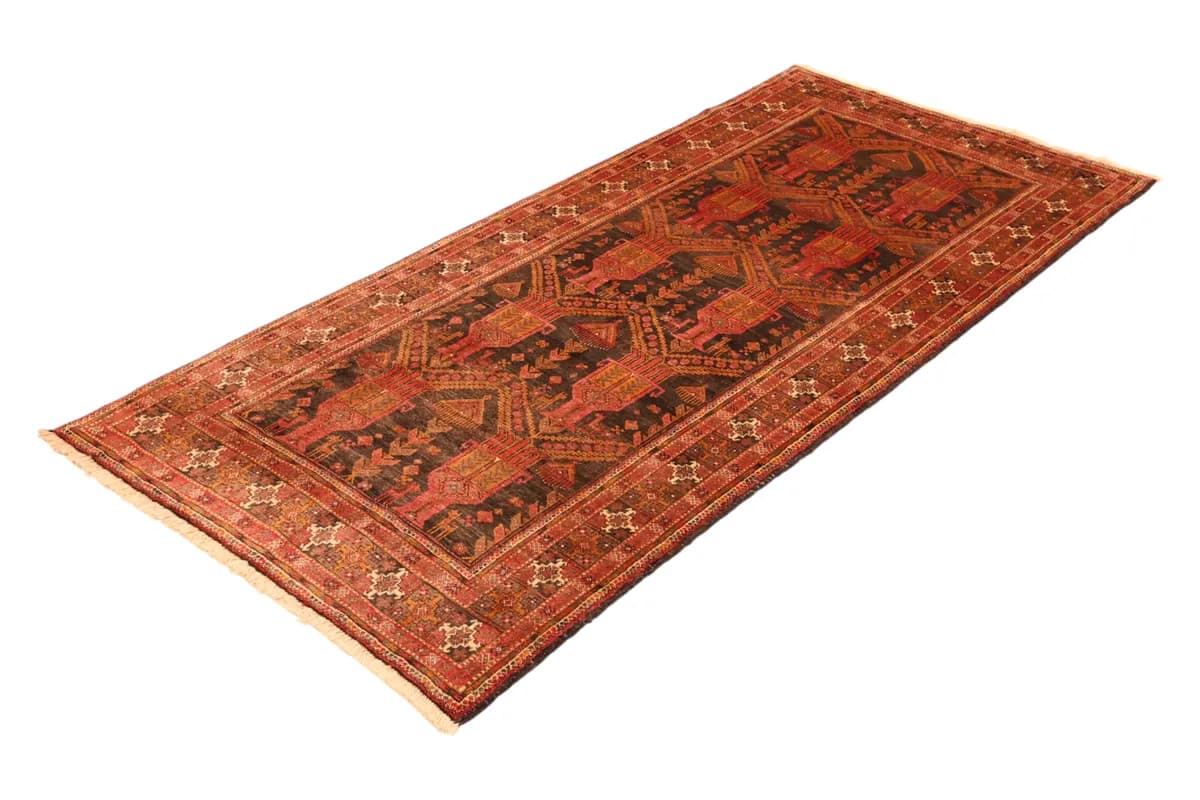
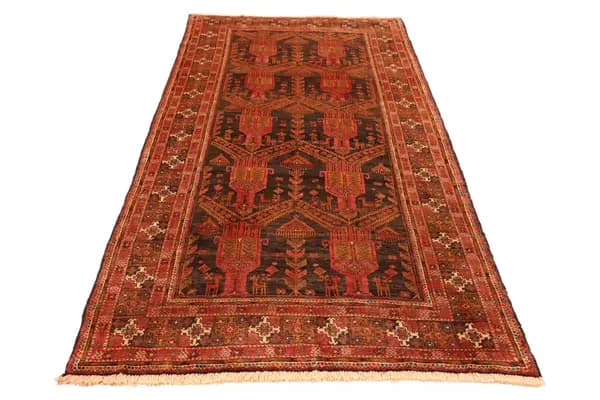
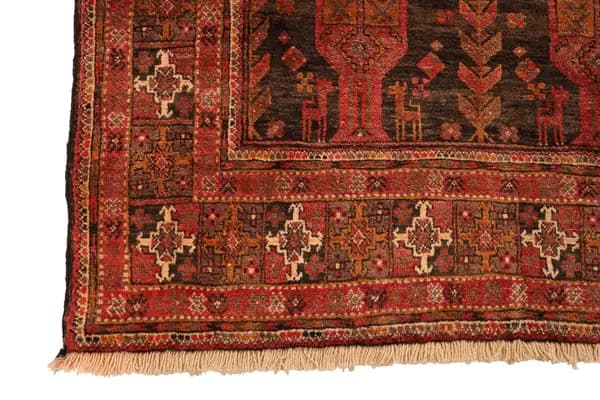
A Baluch runner, 274 x 122 cm (9'0" x 4'0"), woven by nomadic tribes from the borderlands of southeastern Iran. These weavings are known for bold, angular geometry and a deep, earthy palette, knotted from memory on a portable loom rather than drawn out beforehand. This particular runner carries that tradition through a chain of stepped hook-diamonds that reads less like a repeating pattern and more like a procession moving down the field.
A dark chocolate-brown ground holds the eye first, quiet enough to let everything else stand forward. Down its length runs a mirrored column of hooked, stepped medallions in rust-red and brick, the red deepening or lightening gently from one to the next, touched here and there with muted pink and small notes of ochre. A wide brick-red border encloses the field, marked with rows of ivory cross motifs that stand out sharply against both the border colour and the dark ground beyond it.
The wool here is hand-spun, which means it was not machine-drawn to an even thickness, and the slight unevenness in the yarn is what gives the surface its visible ribbing and softly textured, matte finish rather than a flat, uniform sheen. At 128,000 to 160,000 knots per square metre, the density is modest by the standards of city workshops, but it suits this kind of weaving well: it lets the wool keep its character while still holding the hooked diamonds in a clean, legible line down the runner's length, each one mirrored by eye rather than by plan. At 6mm, the pile sits with enough body underfoot to feel substantial without losing the crispness of the geometry above it.
A runner of this size and character belongs in a hallway or along a landing, somewhere it is seen in passing rather than sat upon. In a corridor without much daylight, the rust and brick tones do real work, warming a space that would otherwise stay flat and grey, while the dark brown ground takes footmarks and daily wear without showing them. Underfoot it is dense and firm, built for a passage that gets used every day rather than admired from a doorway. Walk it in low afternoon light and the ivory crosses along the border catch first, flaring briefly before the eye moves on down the line of medallions.
More on Baluch rugs: origin, making and how to recognise a genuine piece
Traditional weave
At 274 × 122 cm (3.34 m²) this is a runner. It belongs in a hallway, an entrance, on a landing or lengthways beside a bed. It is too narrow for the middle of a room.
Yes, knotted by hand — knot by knot on a loom, not machine-made. The density is 128,000 to 160,000 knots per square metre; across 3.34 m² that is roughly 430,000 to 530,000 individual knots, every one of them tied by hand.
Hand-spun wool still carries its own lanolin, which keeps liquid sitting on the surface for a moment: blot quickly, with clear water and a light cloth, working inwards and without rubbing. Otherwise regular vacuuming along the pile is enough. Turn the rug once or twice a year so light and footfall reach it evenly.
We are in the Hamburg Speicherstadt. Come and see this rug in daylight, or write to us — a person answers.
Certificate included verifying origin, materials, and craftsmanship.
Ref: 760261