Djozan
220 × 138 cm
2.475 €
930 €
Incl. VAT
In Stock · Ready to Ship
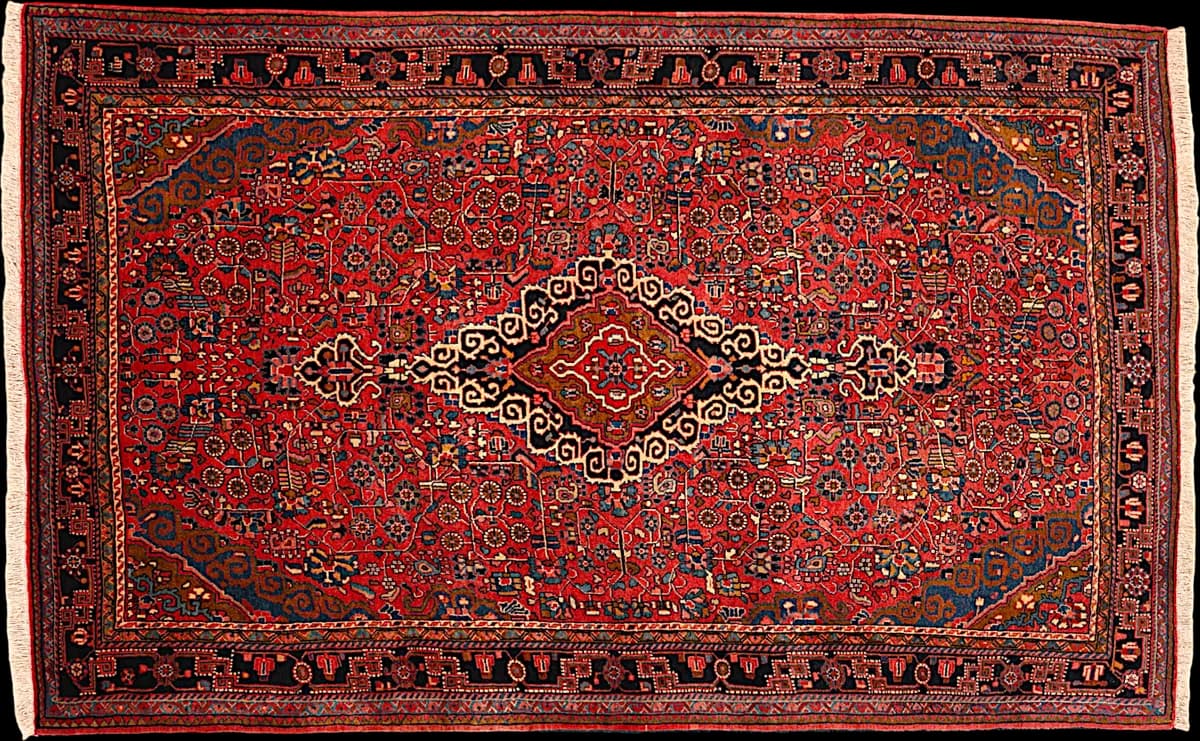
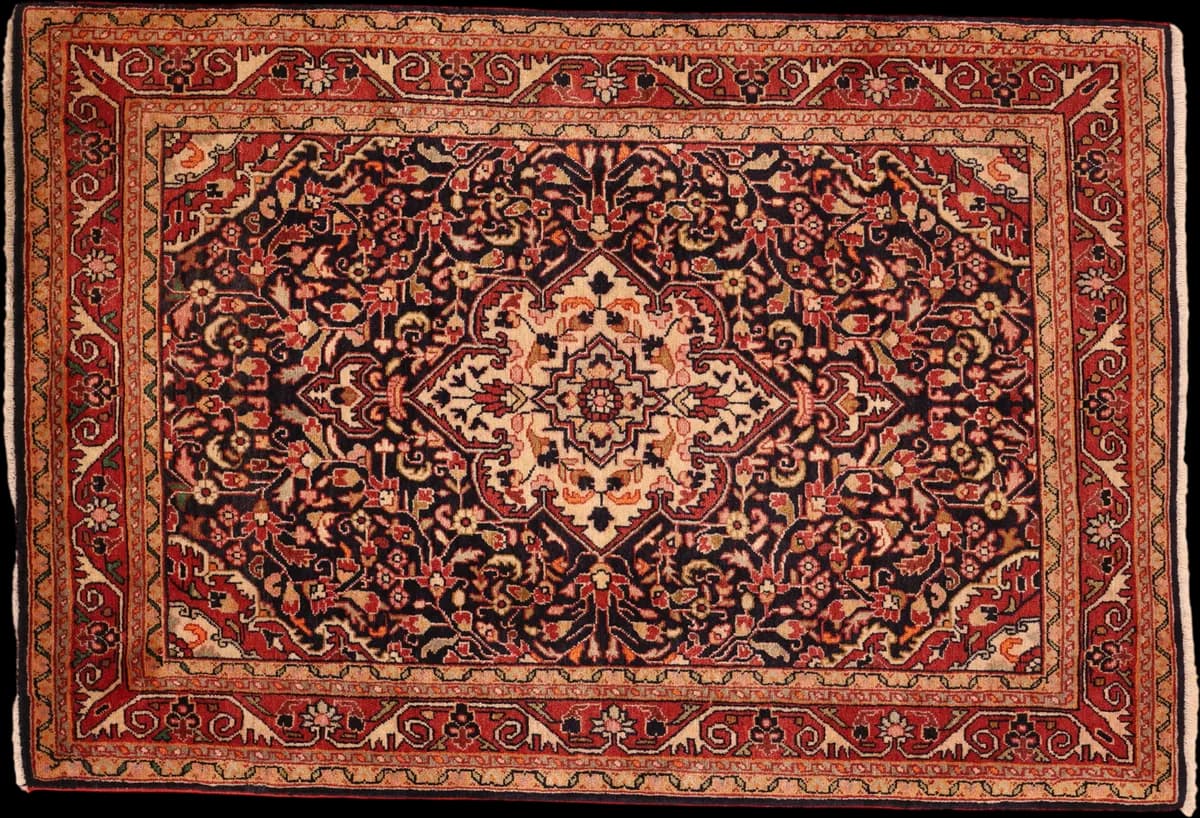
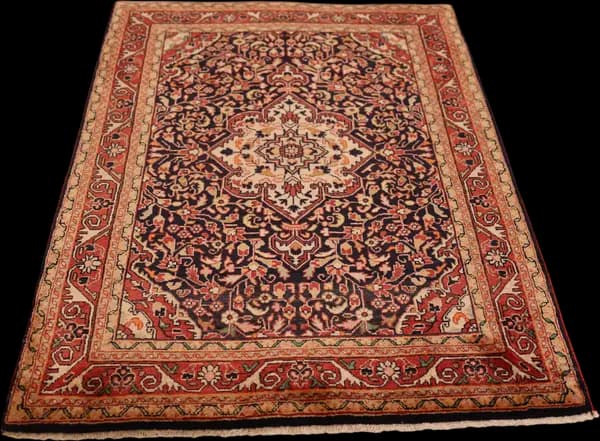
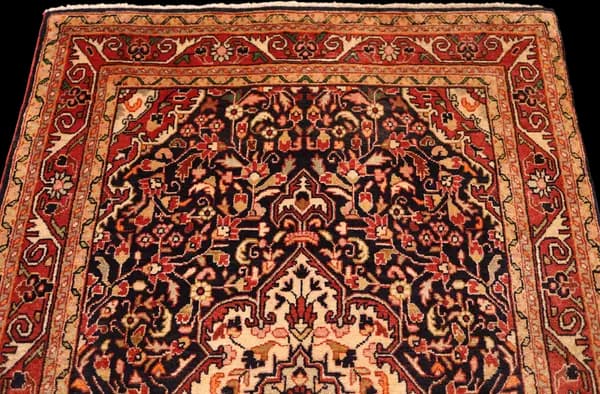
This is a Djozan, a village-workshop weaving from the Khorasan region of northeast Iran, measuring 159 x 107 cm (5'3" x 3'6"). Khorasan weaving is known for its large medallion compositions and warm colouring, and Djozan carries that tradition without the polish of the big city workshops nearby — the drawing here is direct rather than refined, a village hand working from a grand idea rather than a fine cartoon.
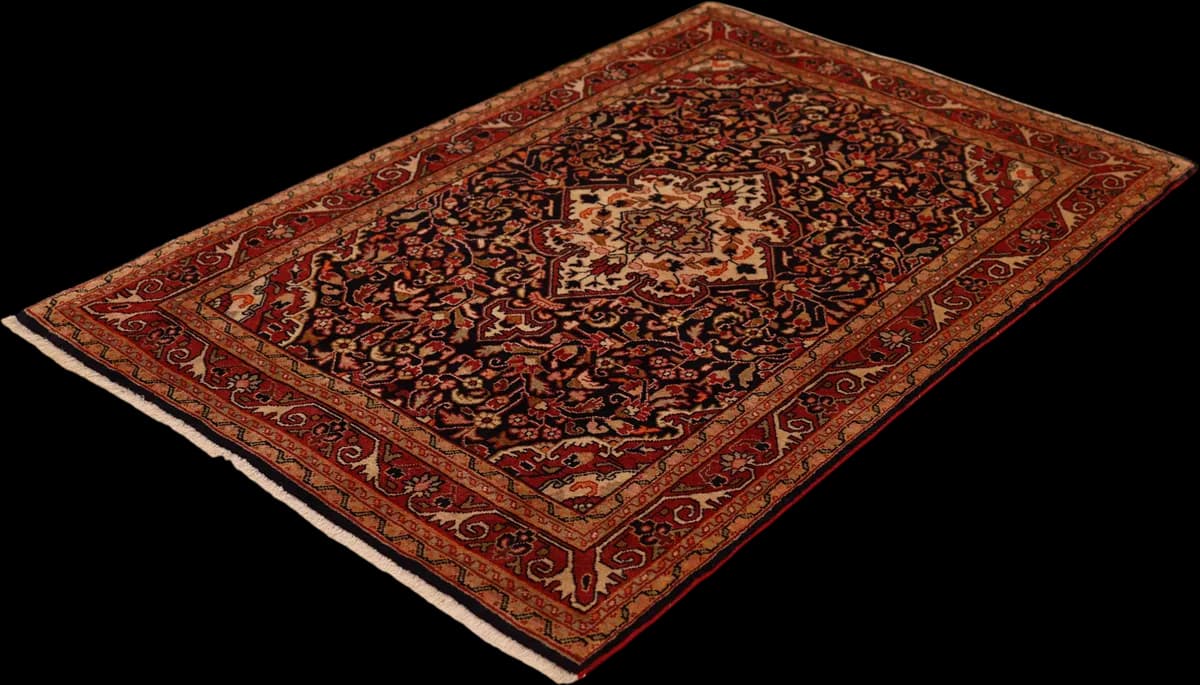
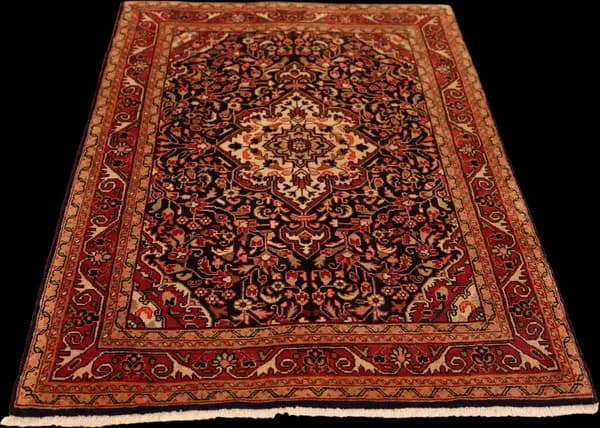
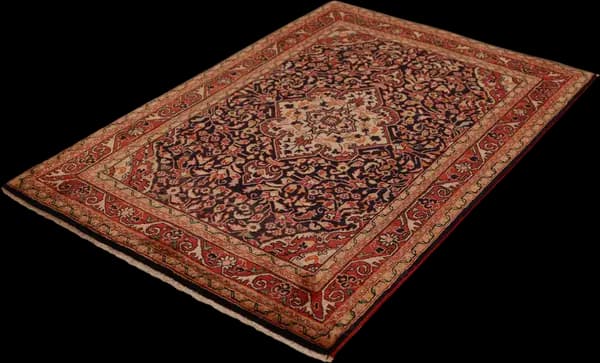
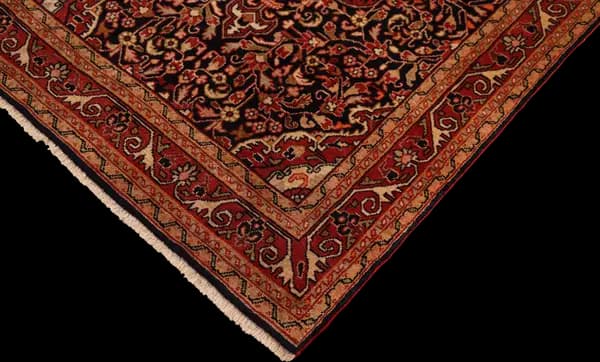
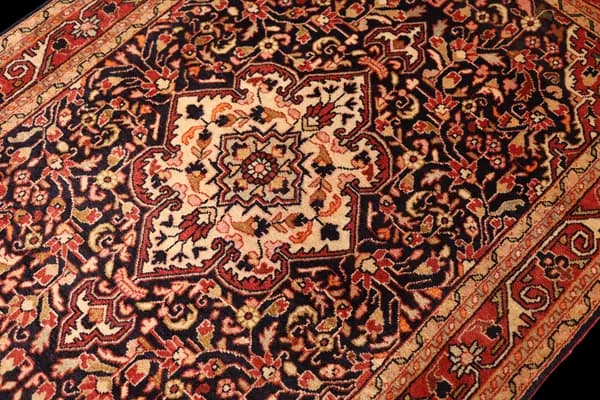
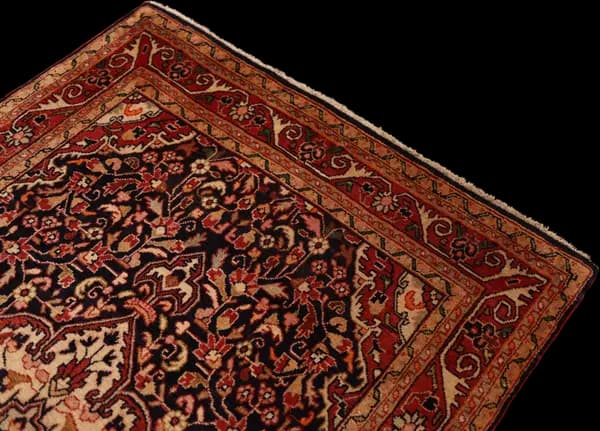
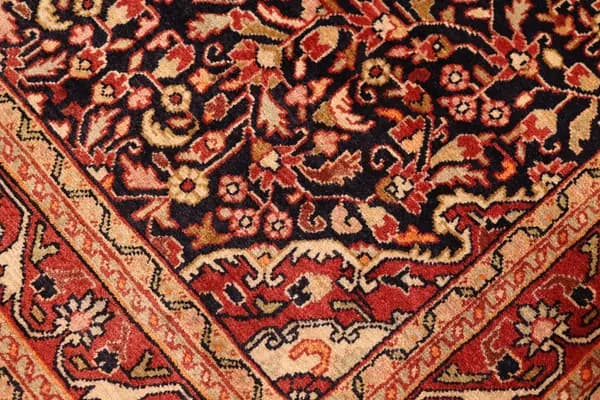
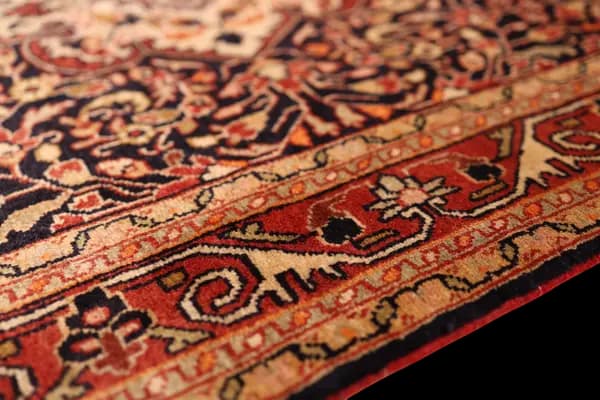
The first impression is a deep navy field lit by a bold ivory medallion, diamond-shaped and set with pendants, its outline broken into points that give it an almost layered look. Around it, dense scrolling florals in mustard, dusty pink and slate blue cover the ground, and brick-red spandrels fill the corners where the medallion meets the field. A wide red border, filled with the same scrolling vine work, runs around the whole rug, held in by narrow cream and red guard stripes. Nothing here is understated — the contrast between the dark ground and the pale medallion is the point, and the border matches it in weight rather than receding.
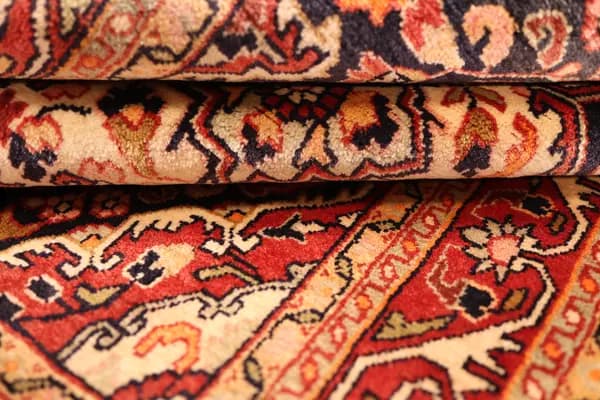
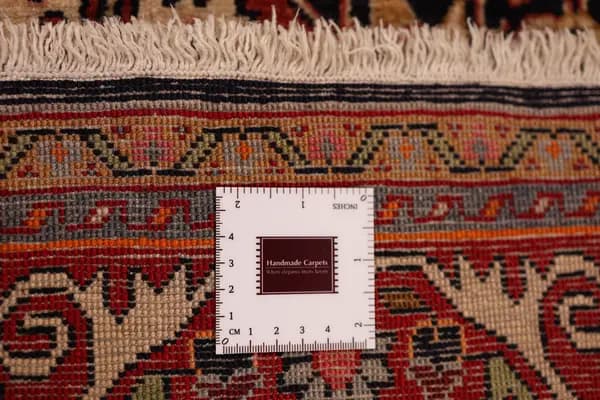
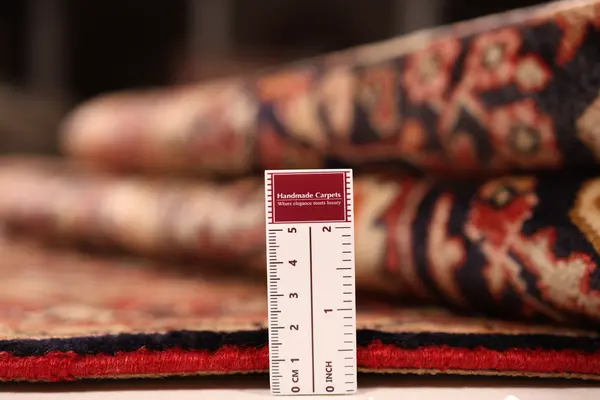
That directness comes from how it was built. The pile is hand-spun wool rather than machine-spun, so the yarn carries small natural irregularities that keep the surface honest rather than glassy — a light sheen, but nothing polished. Knotted at 201,000 to 250,000 knots per square metre onto a cotton warp, it sits below the fine city densities, which is exactly why the medallion reads boldly rather than delicately: the drawing is bigger and plainer, built for presence rather than intricacy. A 12mm pile gives it real substance underfoot.
At this size, it suits a bedroom, laid beside or at the foot of the bed, or a study, in front of a favourite chair. Against a pale floor the navy grounds the room while the ivory medallion keeps it from feeling heavy; against darker furniture it simply holds its own. Underfoot it is dense and firm, a rug built to be walked on rather than kept for best, and its colour only settles further as the wool takes on the room's daily light.
Hamadan rugs come from the ancient city of Hamadan (the historic Ecbatana) and its surrounding region of over a thousand villages in western Iran. Woven with the symmetrical (Turkish) knot on a cotton foundation, they are distinguished by their single-weft construction, one weft thread between each row of knots, which creates a characteristic ribbed appearance on the reverse.
Geometric medallion-and-corner layouts, Herati patterns, and boteh (paisley) motifs dominate the design language, rendered in a classic palette of deep reds and blues from madder root and indigo. The sturdy highland wool ensures excellent durability for everyday use.
Fine quality weave
At 159 × 107 cm (1.70 m²) this is a small rug. It works beside a bed, in a reading corner, in front of a fireplace or as a mat by a door. It does not furnish a room; it makes a point in one.
Yes, knotted by hand — knot by knot on a loom, not machine-made. The density is 201,000 to 250,000 knots per square metre; across 1.70 m² that is roughly 340,000 to 430,000 individual knots, every one of them tied by hand.
Hand-spun wool still carries its own lanolin, which keeps liquid sitting on the surface for a moment: blot quickly, with clear water and a light cloth, working inwards and without rubbing. Otherwise regular vacuuming along the pile is enough. Turn the rug once or twice a year so light and footfall reach it evenly.
We are in the Hamburg Speicherstadt. Come and see this rug in daylight, or write to us — a person answers.
Certificate included verifying origin, materials, and craftsmanship.
Ref: 889890