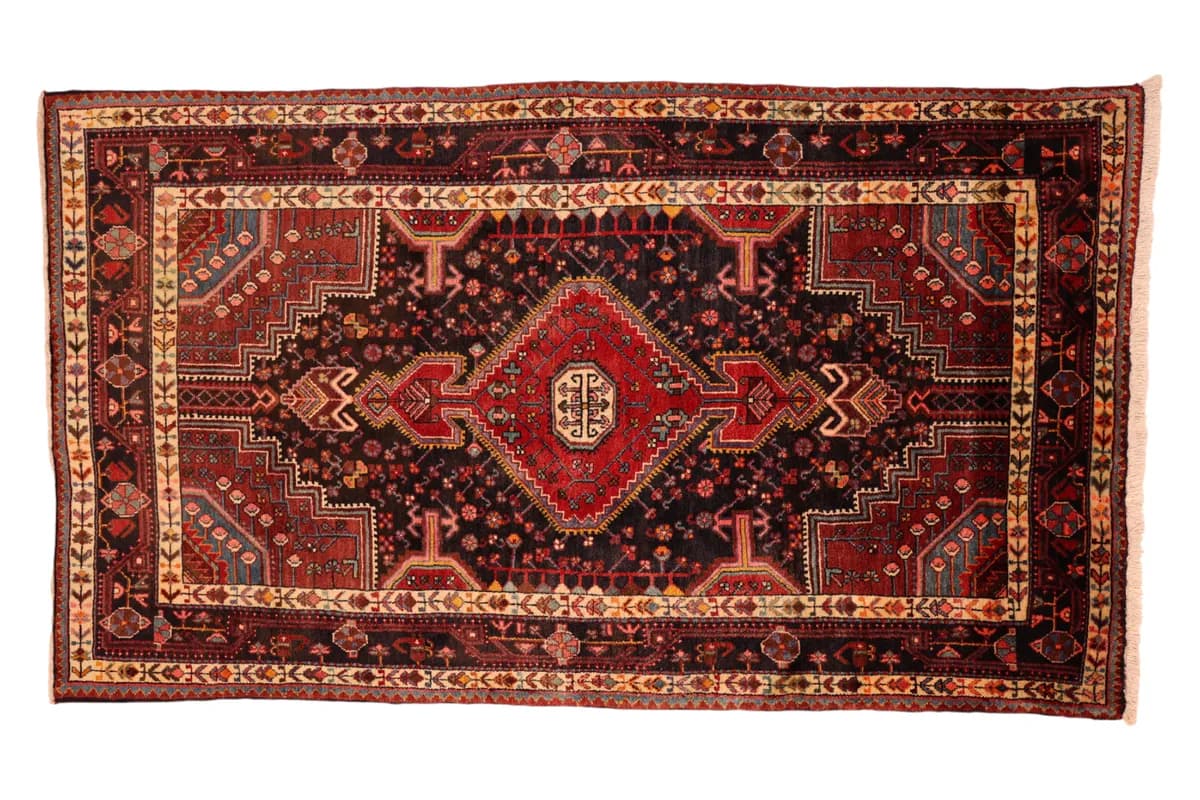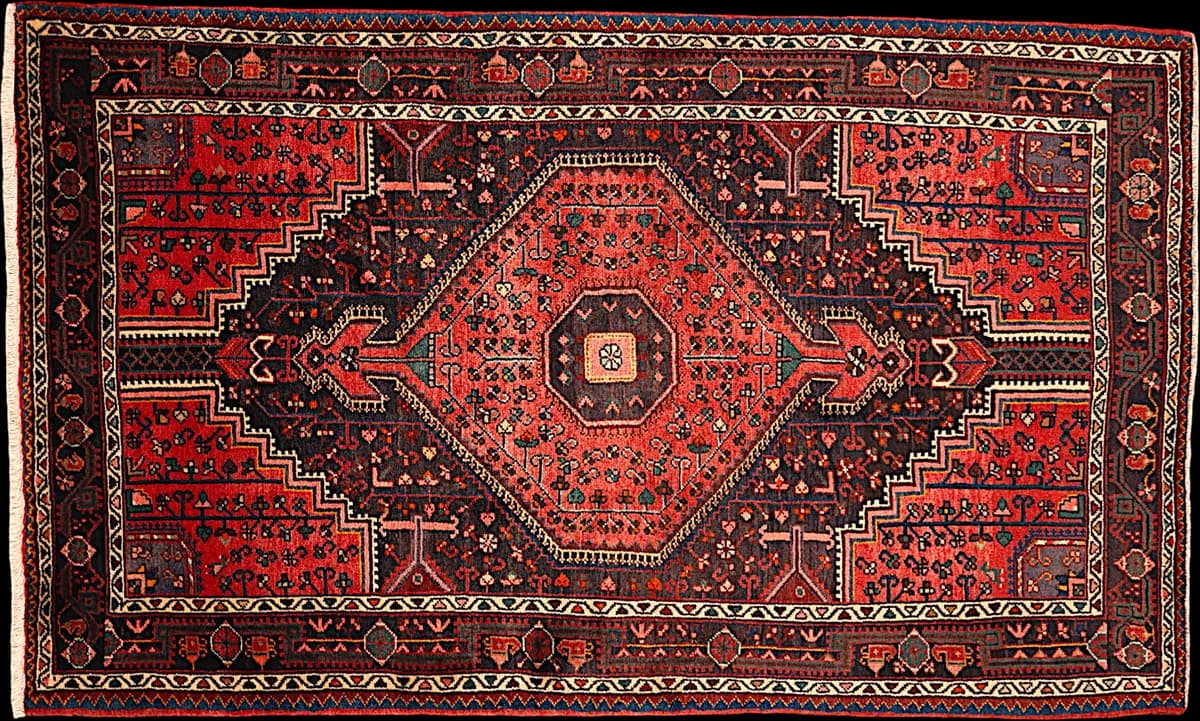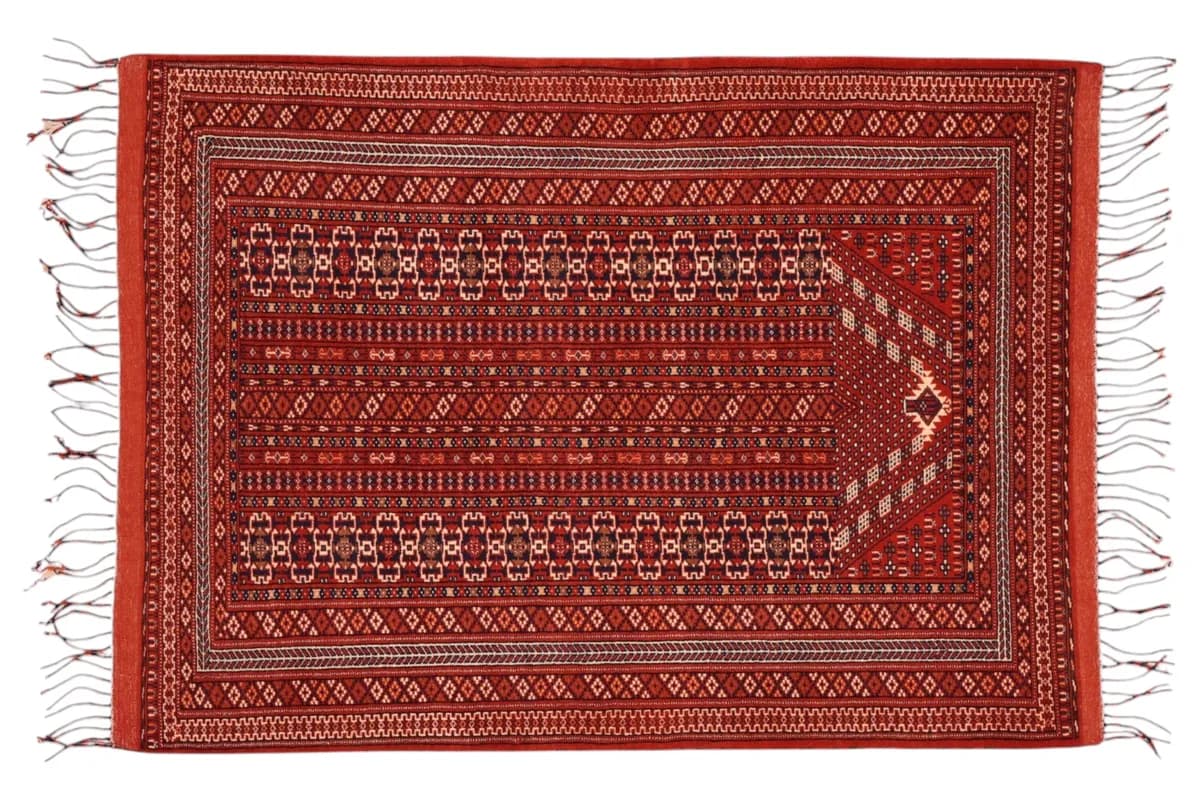
Tuyserkan
192 × 123 cm
673 €






855 €
Incl. VAT
In Stock · Ready to Ship
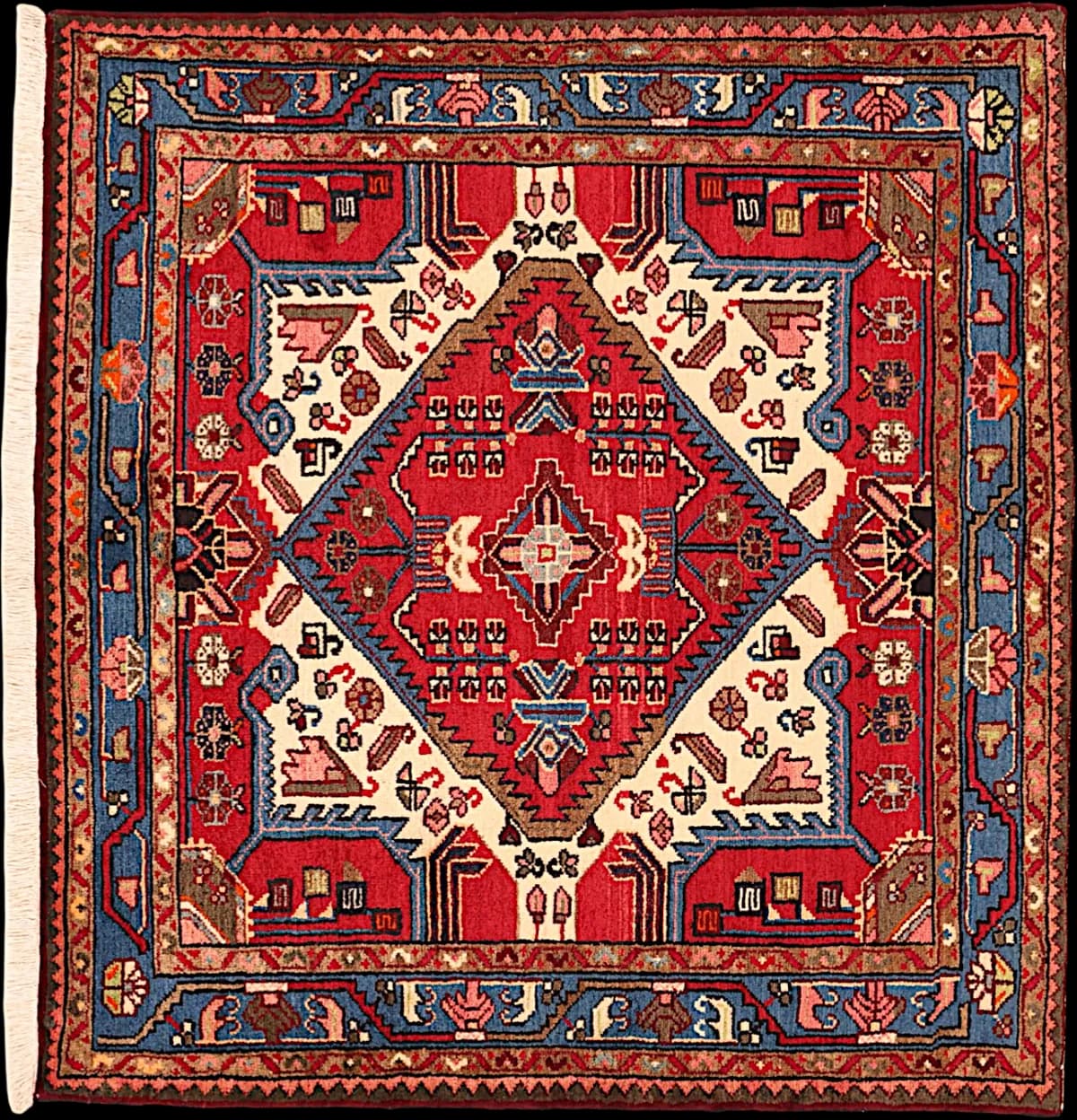
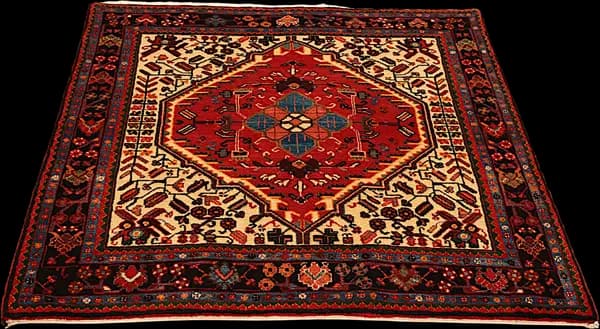
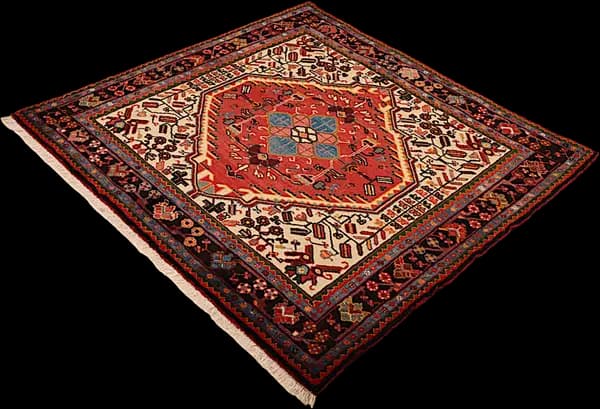
This is a village rug from Beghardeh, in the weaving districts of western Iran, measuring 128 x 135 cm (4'2" x 4'5") — close enough to square that it reads less like a rectangle of pattern and more like a single medallion set as a tile. Beghardeh pieces are woven for daily use rather than export, and what they are known for is exactly this: an honest, practical construction carrying a design drawn from memory rather than a plan.
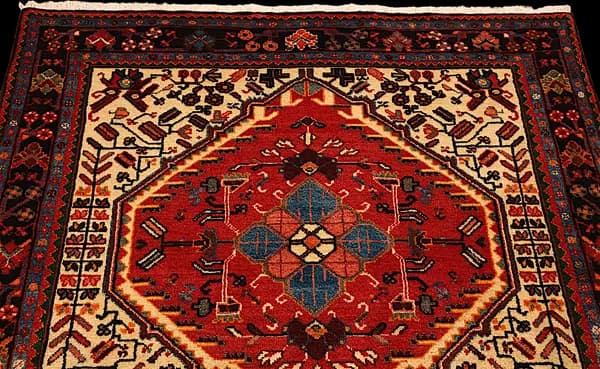
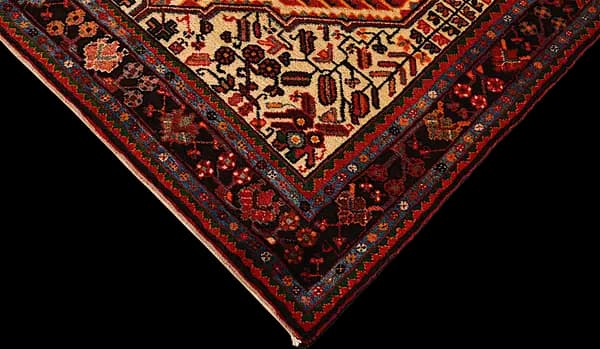
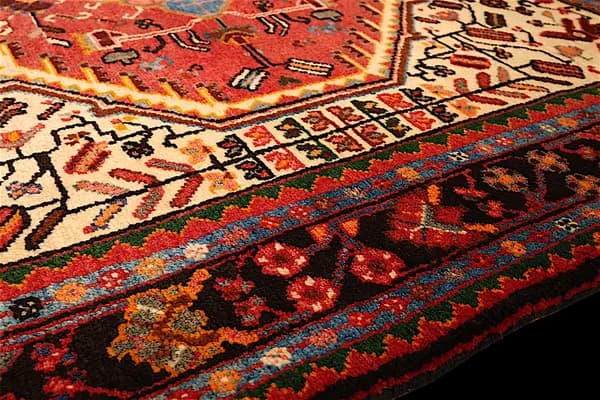
The first impression is a bold red diamond medallion floating on an ivory ground, and it holds that focus rather than spreading it, thanks to the format. Look again and the medallion opens into a second, smaller diamond lattice inside it, worked in pale blue and pink around a small ivory rosette at the centre — a medallion within a medallion, which is not something every village rug attempts. Ivory floral spandrels fill the corners, and the whole field is held by a wide, near-black border of small repeating florals, edged in light blue and green guard stripes that keep the dark border from closing in on the red.
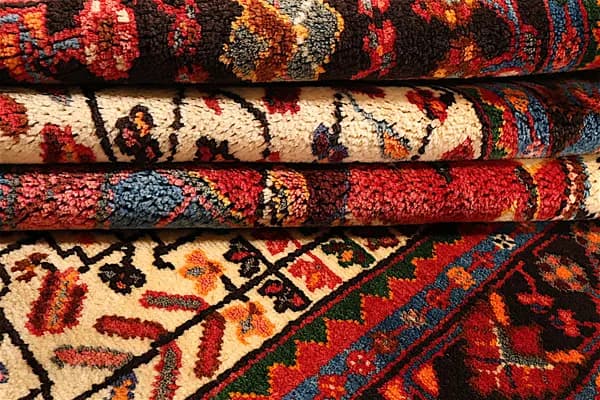
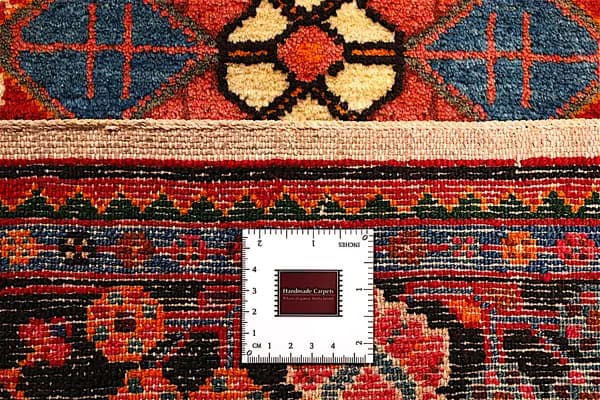
The construction explains why this layering works rather than becoming a muddle. The pile is hand-spun wool, knotted by hand onto a cotton warp at a density of 201,000 to 250,000 knots per square metre — coarse enough, by village standards, to have taken real patience over a design this nested. A pile height of 10 mm gives it noticeable depth underfoot without softening the drawing, and at twenty to forty years old, the wool has already taken on the slightly matte, hand-spun character that keeps the colours looking warm rather than bright.
At just over a metre and a quarter square, this is a rug for a defined spot rather than a room-filling statement — under a small hall table, in front of a reading chair, or on the floor of a study where its square format sits naturally against the walls around it. The red and ivory hold their warmth against pale floorboards and equally against darker furniture, and the dense wool pile takes daily footsteps without complaint. Move a lamp near it in the evening and the pale blue lattice at its centre catches the light before the rest of the field does.
More on Beghardeh rugs: origin, making and how to recognise a genuine piece
Fine quality weave
At 128 × 135 cm (1.73 m²) this is a small rug. It works beside a bed, in a reading corner, in front of a fireplace or as a mat by a door. It does not furnish a room; it makes a point in one.
Yes, knotted by hand — knot by knot on a loom, not machine-made. The density is 201,000 to 250,000 knots per square metre; across 1.73 m² that is roughly 350,000 to 430,000 individual knots, every one of them tied by hand.
Hand-spun wool still carries its own lanolin, which keeps liquid sitting on the surface for a moment: blot quickly, with clear water and a light cloth, working inwards and without rubbing. Otherwise regular vacuuming along the pile is enough. Turn the rug once or twice a year so light and footfall reach it evenly.
We are in the Hamburg Speicherstadt. Come and see this rug in daylight, or write to us — a person answers.
Certificate included verifying origin, materials, and craftsmanship.
Ref: 494759