A village name without a market name
Tabriz, Nain, Kashan — such names carry a reputation, and that reputation sits in the price. Beghardeh carries none. It is one of many small villages in the western Iranian weaving country whose rugs are named after the place of weaving because there is nothing larger to name.
For a buyer that is an opportunity. Anyone who buys by the name walks past pieces like this. Anyone who buys by the numbers finds around 335,000 knots per square metre — more than most Kurdish village types and considerably more than the unknown name suggests.
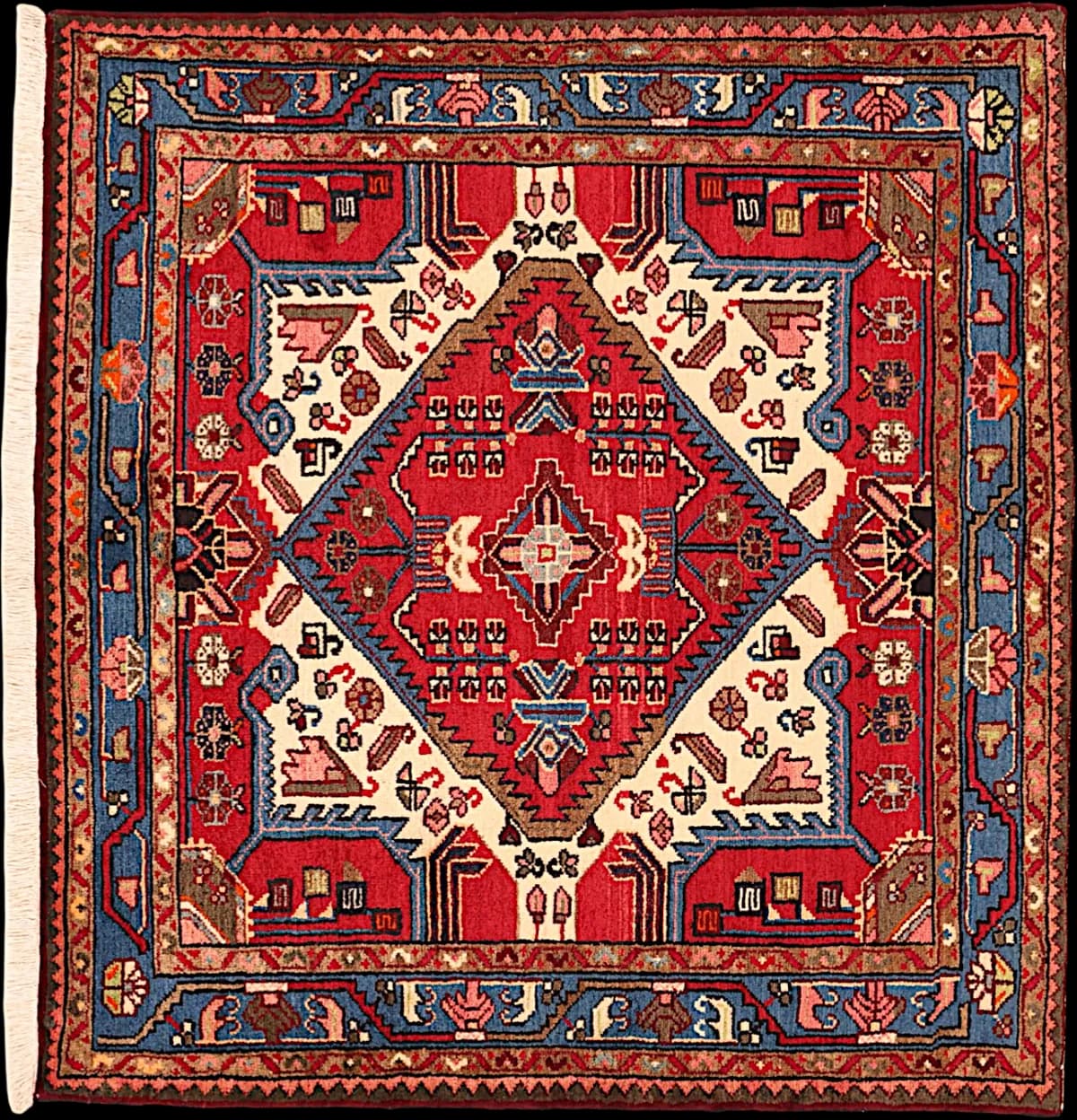
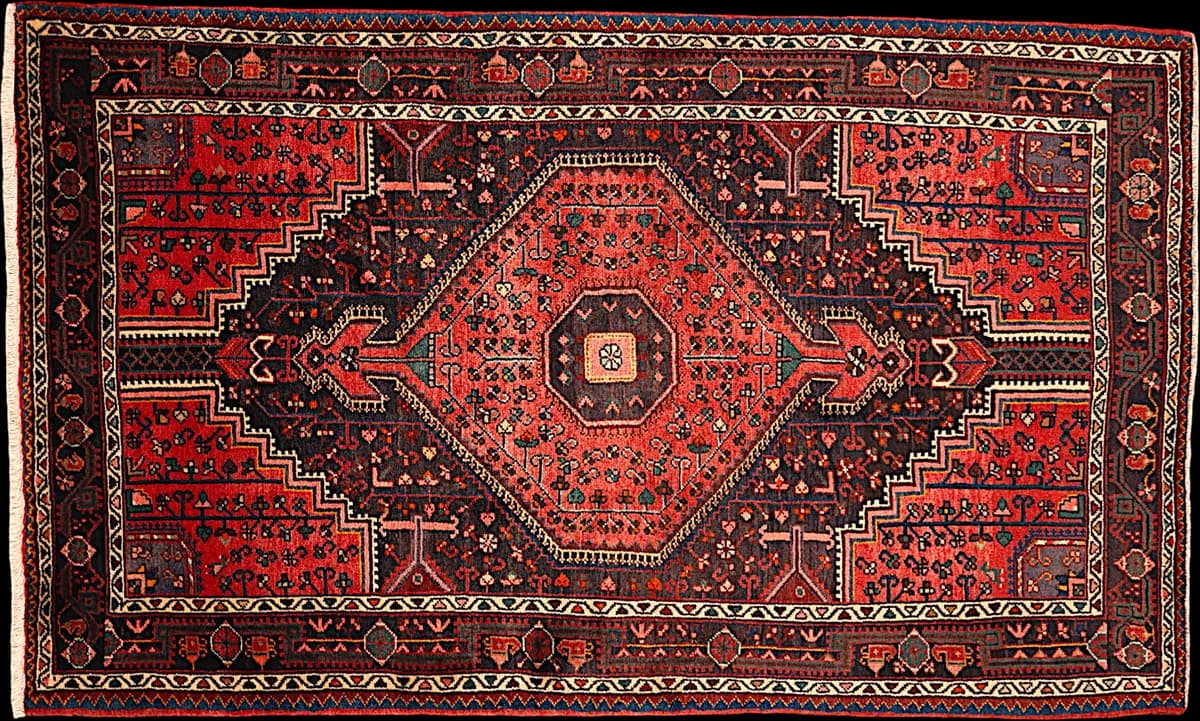
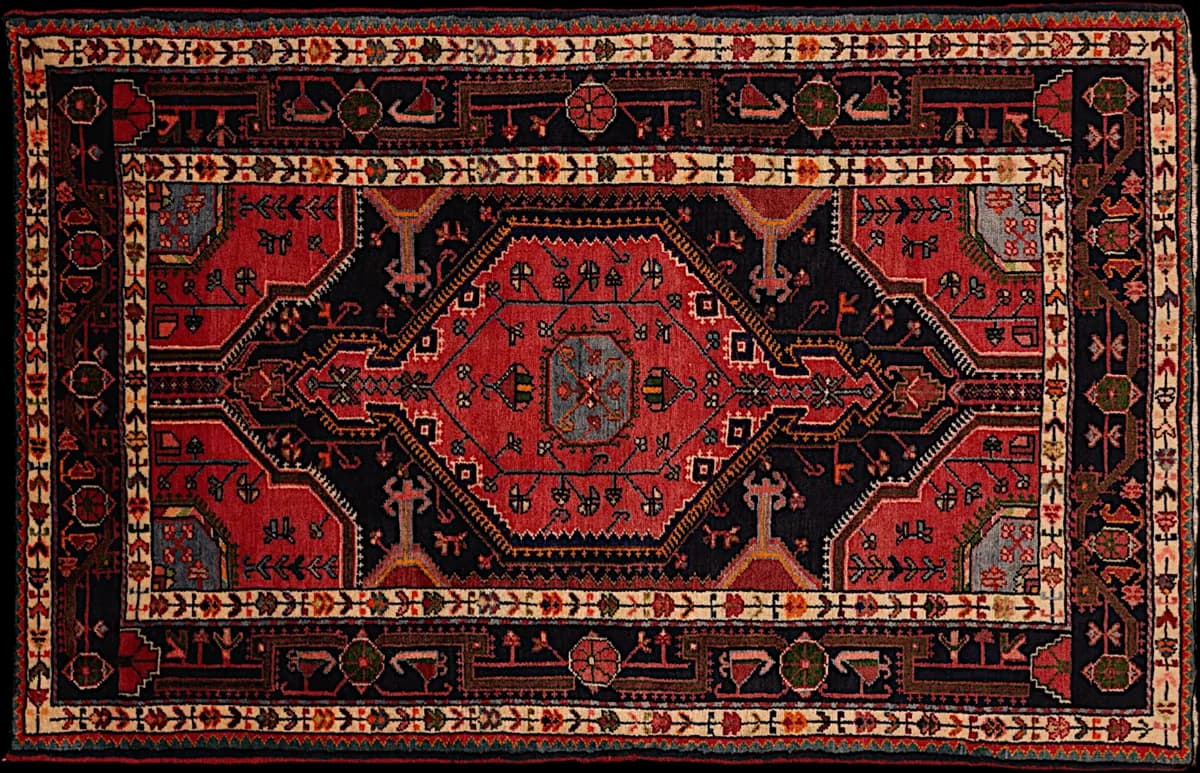
What is missing is recognisability. A Beghardeh does not immediately look like a Beghardeh the way a Heriz looks like a Heriz. It looks like a cleanly made western Persian village rug — which is exactly what it is.
How to judge the quality
With a type that carries no great name, examining the piece itself matters all the more. At 335,000 knots the back shows a fine, even picture; waving or an irregular edge points to tension that slackened during the work.
The pile should feel faintly greasy and leave water standing on the surface for a moment — the lanolin of handspun wool. Machine-spun wool takes liquid at once and feels drier.
On pieces twenty to forty years old, colours shifted slightly warmer are no defect but settled patina. Brittle edges are another matter and worth checking.
- Fine, even knot picture on the back.
- Pile with lanolin — faintly greasy handle, water beads for a moment.
- Clear medallion composition without overcrowding.
- Flat pile of around ten millimetres.
- Even wear is patina; uneven wear is a warning sign.
Which room a Beghardeh suits
At just under two to three and a half square metres this is a rug for a place: in front of a sofa, in front of a bed, in a study, in a hallway.
The flat pile of ten millimetres builds up little and passes under doors that close close to the floor — a point you only notice when a thicker rug catches.
For a dining table the format is not enough. There you need around 80 centimetres of clearance beyond the table edge, and only considerably larger pieces manage that.
Care
Vacuum along the pile, without a rotating brush. On a flat pile there is no deep dirt for a brush to work loose.
Blot spills at once with clear water and a light cloth, from the outside in, without rubbing.
On a piece of this age a professional deep clean is worthwhile. It lifts dust from the base of the pile, and the colours emerge noticeably clearer afterwards.
Beghardeh or Hossein-Abad?
Both are western Iranian village weavings on a cotton warp with a medallion. The difference lies in density and format.
| Criterion | Beghardeh | Hossein-Abad |
|---|---|---|
| Knot density | around 335,000 / m² | around 250,000 / m² |
| Pile height | around 10 mm | around 12 mm |
| Typical size | 1.7 – 3.4 m² | over 6 m² |
| Typical age | 20 – 40 years | mixed |
| Use | seating corner, hallway, bedroom | living room, dining table |
Common questions
Where is Beghardeh?
It is a small village in the weaving country of western Iran. The name denotes the place of weaving and is not an established trade term — unlike Tabriz or Kashan, whose names carry a reputation of their own.
Is an unknown name a disadvantage in quality?
No, it is mainly a price advantage. Well-known names carry a premium the construction does not always justify. Around 335,000 knots per square metre is above what most village types reach — here the number says more than the name.
Why are the pieces mostly twenty years and older?
Because with this type it is predominantly older stock that reaches the trade. For a buyer that is more advantage than drawback: in two decades the colours have settled and shifted slightly warmer.
Does a Beghardeh fit under a dining table?
As a rule no. The formats lie between just under two and three and a half square metres, and a dining table needs around 80 centimetres of clearance beyond the table edge.
How do I recognise handspun wool?
The thread is minutely uneven and still contains lanolin. The pile feels slightly greasy, and a drop of water stands on the surface for a moment before soaking in. Machine wool is more even, drier and absorbs at once.