What single-weft knotting means
In most Persian rugs a pair of weft threads lies between two rows of knots: one taut, one slack. The slack one pushes the warp threads apart into two planes, which makes the fabric thicker and softer and gives the back a pronounced relief.
In the Hamadan region the traditional method is single-weft — Senneh Baft. Only one weft lies between the rows of knots. The warp threads therefore stay side by side in one plane, the fabric becomes flatter and firmer, and the back shows a very regular, almost chequered knot pattern.
In practice that means the rug lies flatter on the floor and travels less. It is less cushioned than a double-weft rug of the same pile height, but more dimensionally stable — an advantage with the large formats this region is known for.
How to recognise a Hossein-Abad
The first look goes to the back. The single-weft fabric shows a strikingly regular knot pattern in which the warp threads lie side by side in one plane. A double-weft rug shows a relief instead, because every second warp sits deeper.
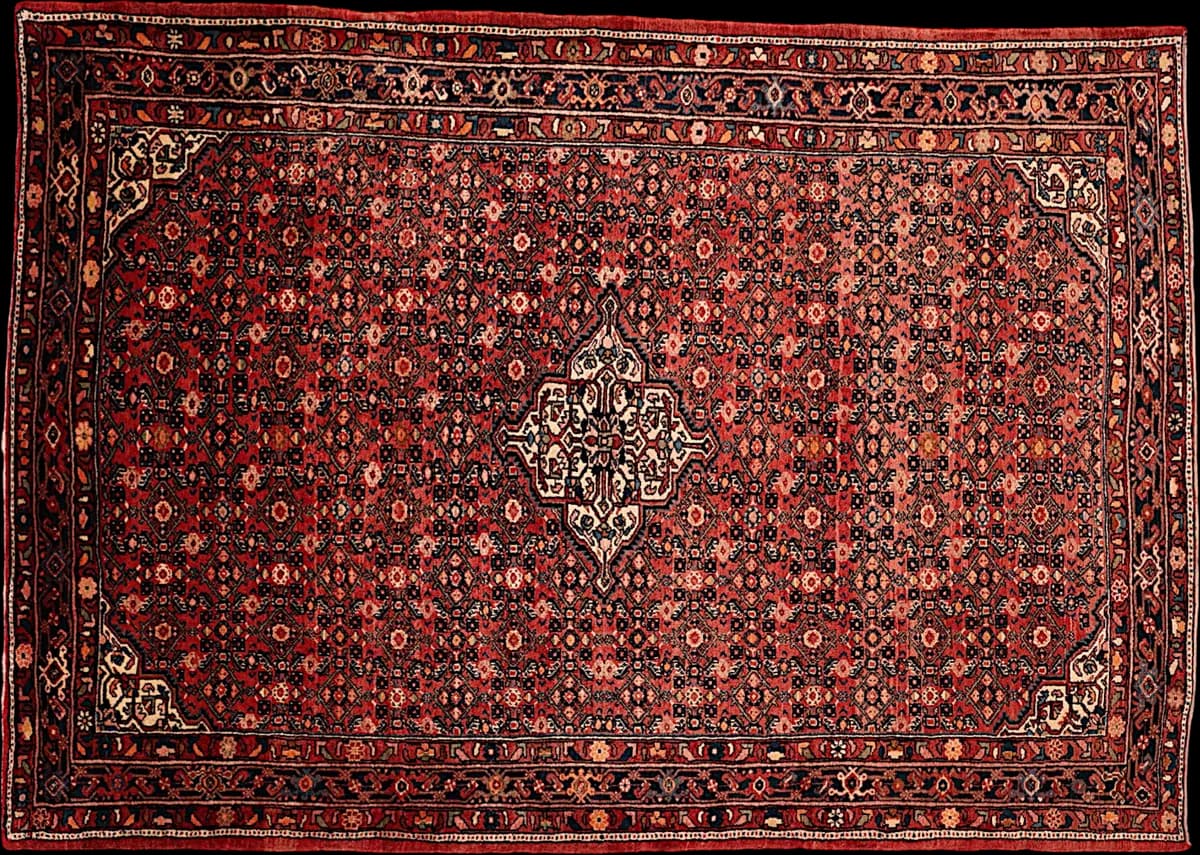
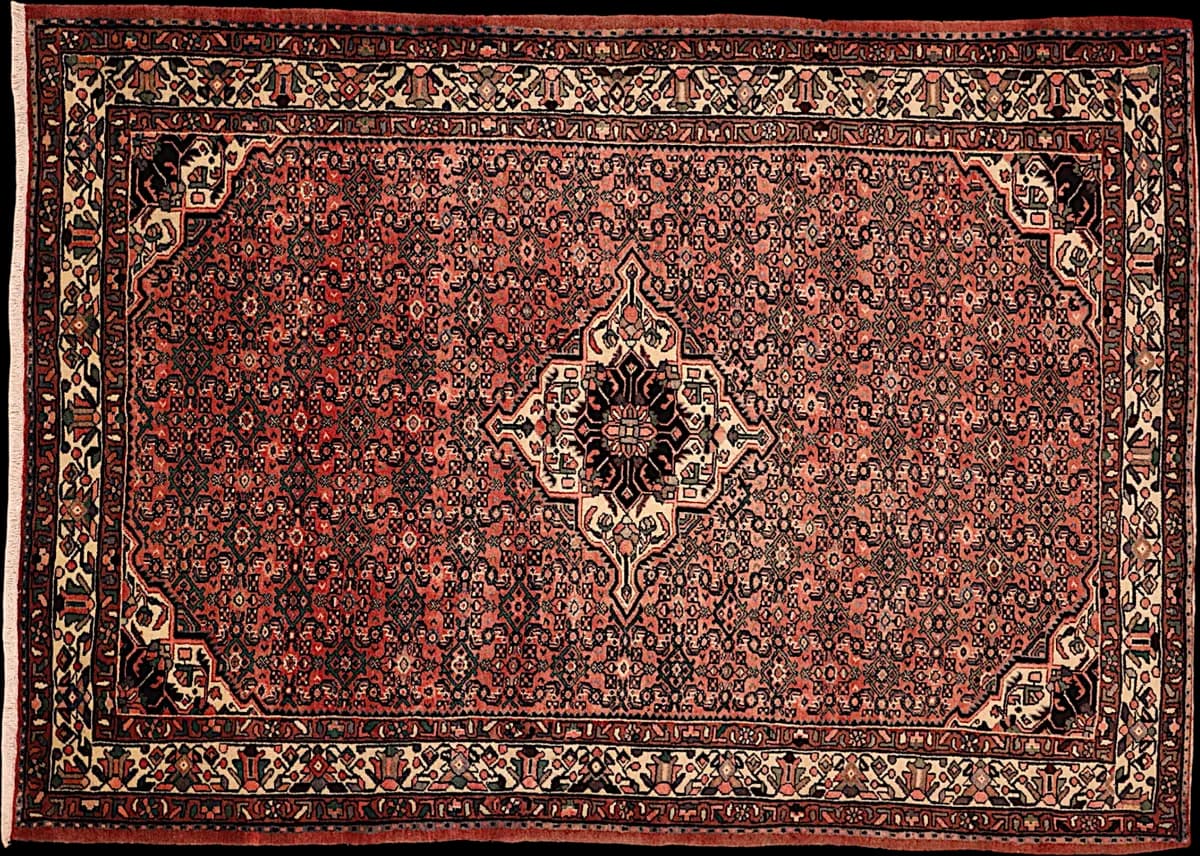
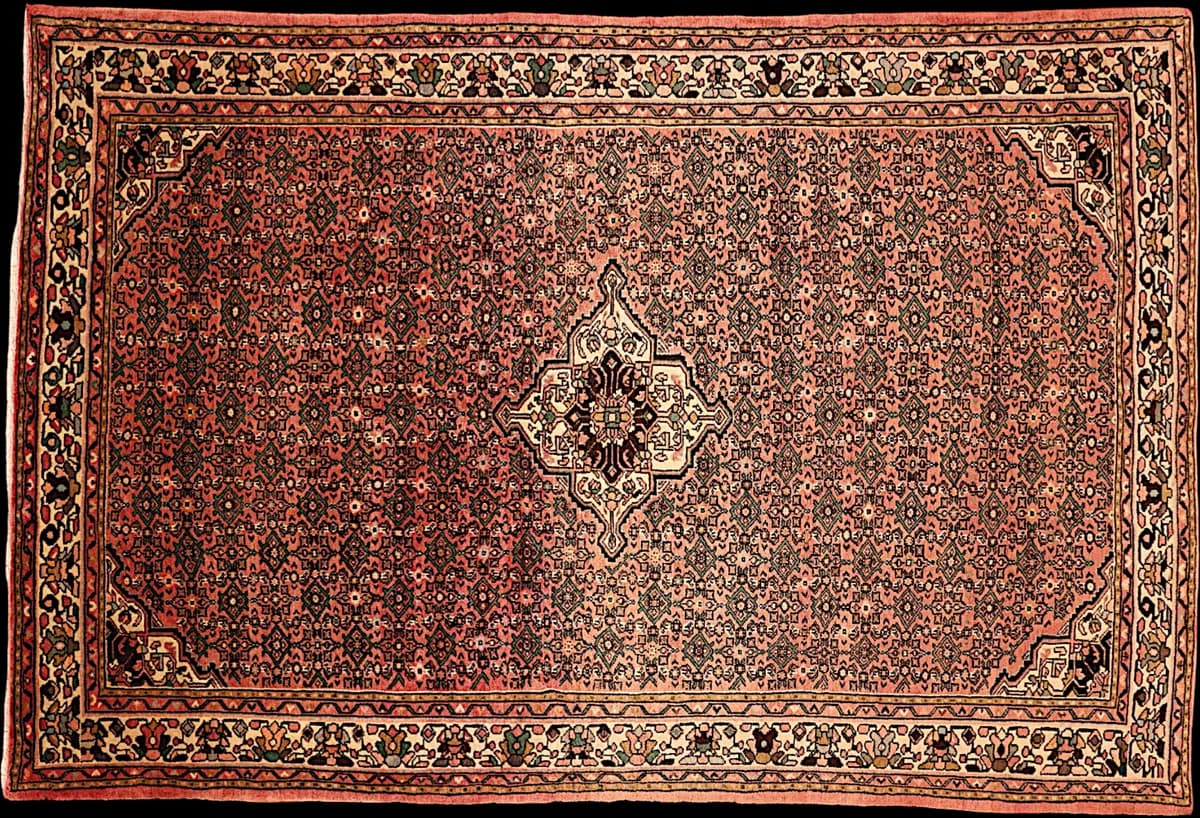
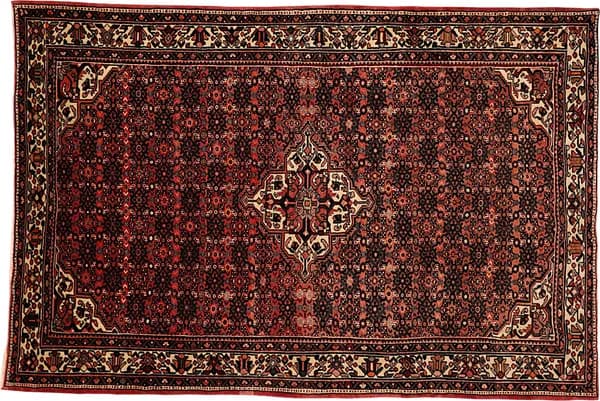
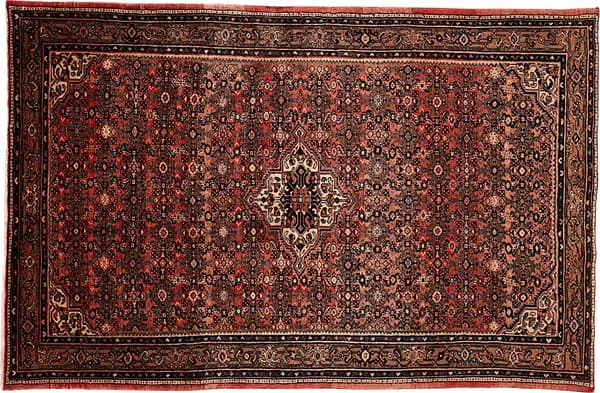
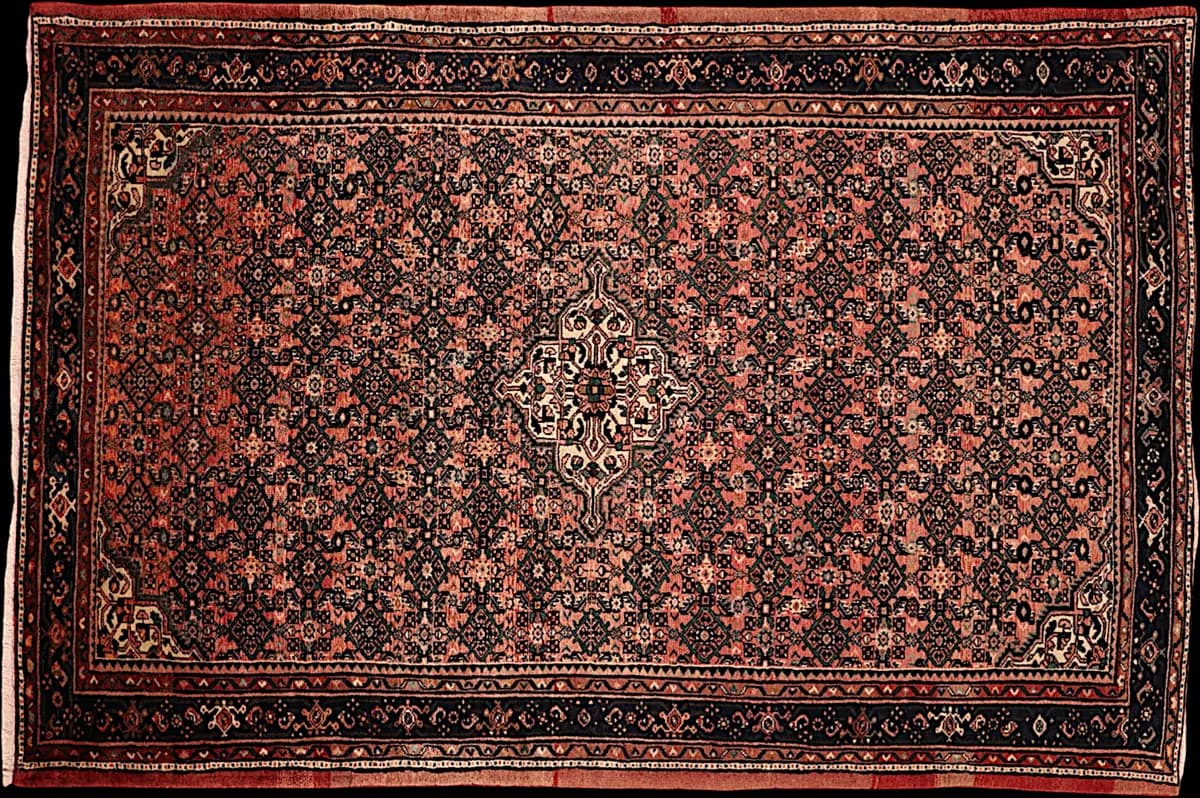
The second concerns the composition. Practically every piece carries a central medallion with elaborated corner spandrels — the classical Persian arrangement, in a village execution that is somewhat more angular than in the city manufactories.
The third is the size. Where many village types stop at four or five square metres, the average here is above that. Anyone looking for a hand-knotted rug for a whole living room without the premium of a city manufactory is in the right place with the Hamadan villages.
- Regular, flat knot pattern on the back — the mark of single-weft technique.
- Central medallion with spandrels, executed with village angularity.
- Cotton warp, light smooth fringes.
- Large formats of over six square metres.
- Firm, flat-lying construction that travels little.
Which room a Hossein-Abad suits
Over six square metres carries a whole seating group with every furniture leg on the rug, or a dining table with the chairs pushed back — allow around 80 centimetres of clearance beyond the table edge.
The firm, flat fabric is a genuine advantage there. It lies quietly, barely travels, and needs no anti-slip mat on most floors.
The medallion composition does want an open middle, though. A sofa covering half the rug takes from a medallion rug exactly what defines it — unlike an all-over field.
Care
Vacuum along the pile, without a rotating brush.
Blot spills at once with clear water and a light cloth, from the outside in, without rubbing.
On a large rug in a living room, turning it once or twice a year is the most effective single step: otherwise the window side fades visibly faster than the room side over the years.
Hossein-Abad or Koliayie?
Both are western Iranian village weavings on a cotton warp. The difference lies in technique, density and format.
| Criterion | Hossein-Abad | Koliayie |
|---|---|---|
| Region | Hamadan district | Kermanshah |
| Technique | single-weft (Senneh Baft) | double-weft |
| Knot density | around 250,000 / m² | 128,000 – 160,000 / m² |
| Typical size | over 6 m² | 3.5 – 5.5 m² |
| Build | flat and firm | stronger, more cushioned |
Common questions
What is Senneh Baft?
The single-weft knotting technique: only one weft thread lies between two rows of knots instead of a pair. That makes the fabric flatter and firmer and gives the back a very regular knot pattern. It is typical of the Hamadan region and shares only its name with the town of Senneh.
Is a single-weft rug inferior?
No, only built differently. It is flatter and more dimensionally stable, but less cushioned than a double-weft rug of the same pile height. With large formats the dimensional stability is an advantage, because the rug lies more quietly.
Where exactly is Hossein-Abad?
It is a village in the Hamadan weaving region of western Iran. The name is common in Persia — what matters is the region: Hamadan is one of the most productive rug landscapes there is, and its villages share technique and design language.
Does a Hossein-Abad suit a dining table?
Yes, that is one of its strengths. The formats average over six square metres, and the flat, firm fabric lets chairs run without sinking in. Allow around 80 centimetres of clearance beyond the table edge.
Why does the back look so regular?
Because with single-weft knotting the warp threads lie side by side in one plane rather than in two. That produces a flat, almost chequered knot pattern — and it is the fastest way to recognise the technique.