Hosseinabad
310 × 209 cm
1.458 €


1.575 €
Incl. VAT
In Stock · Ready to Ship
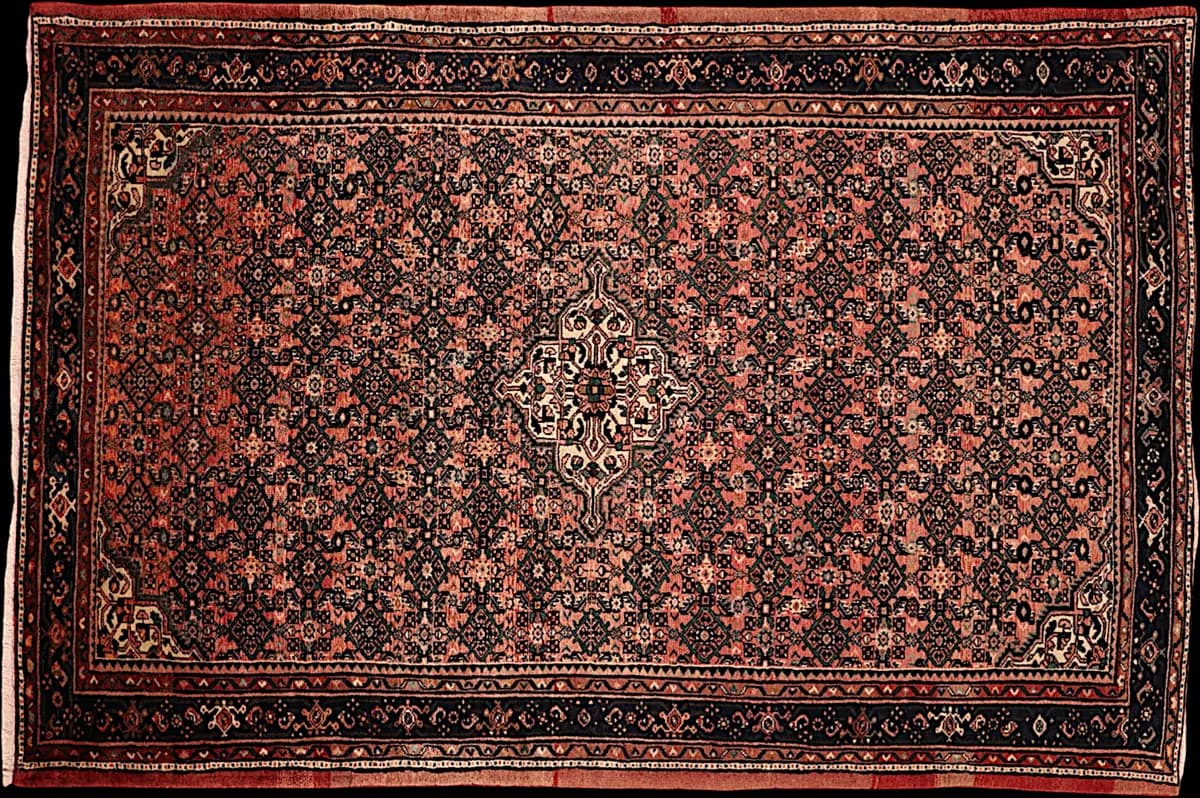
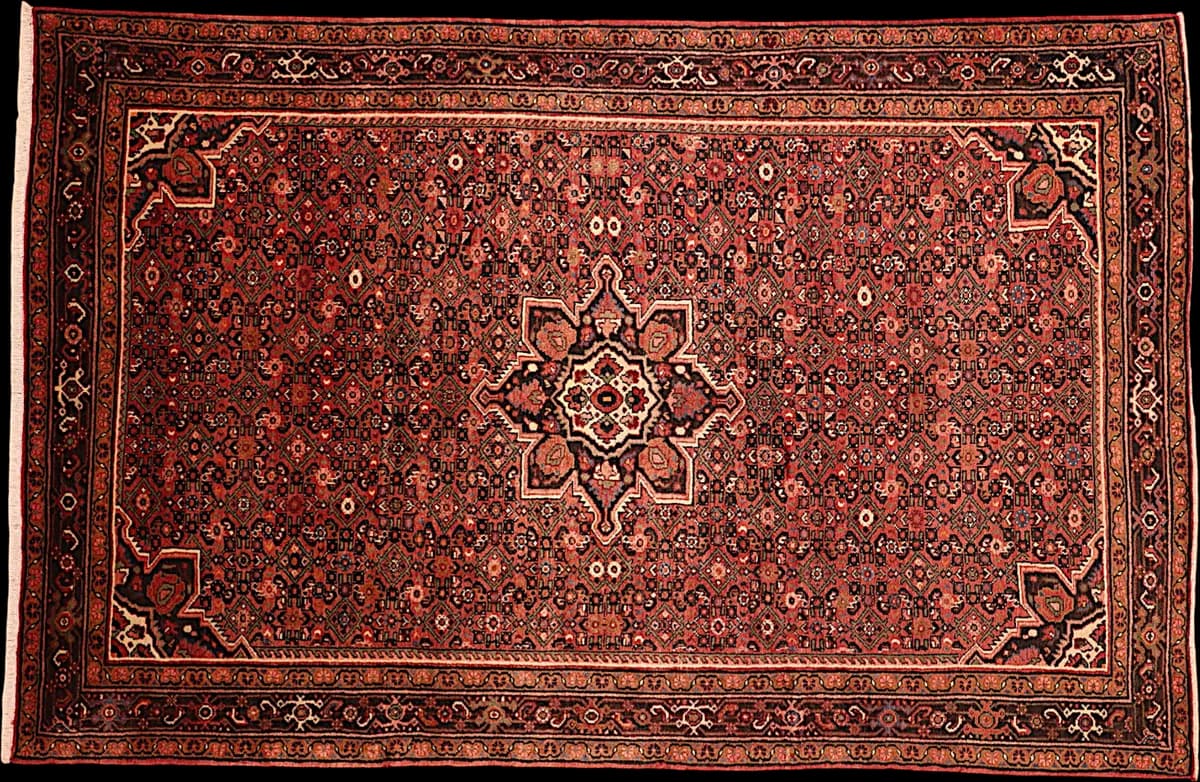
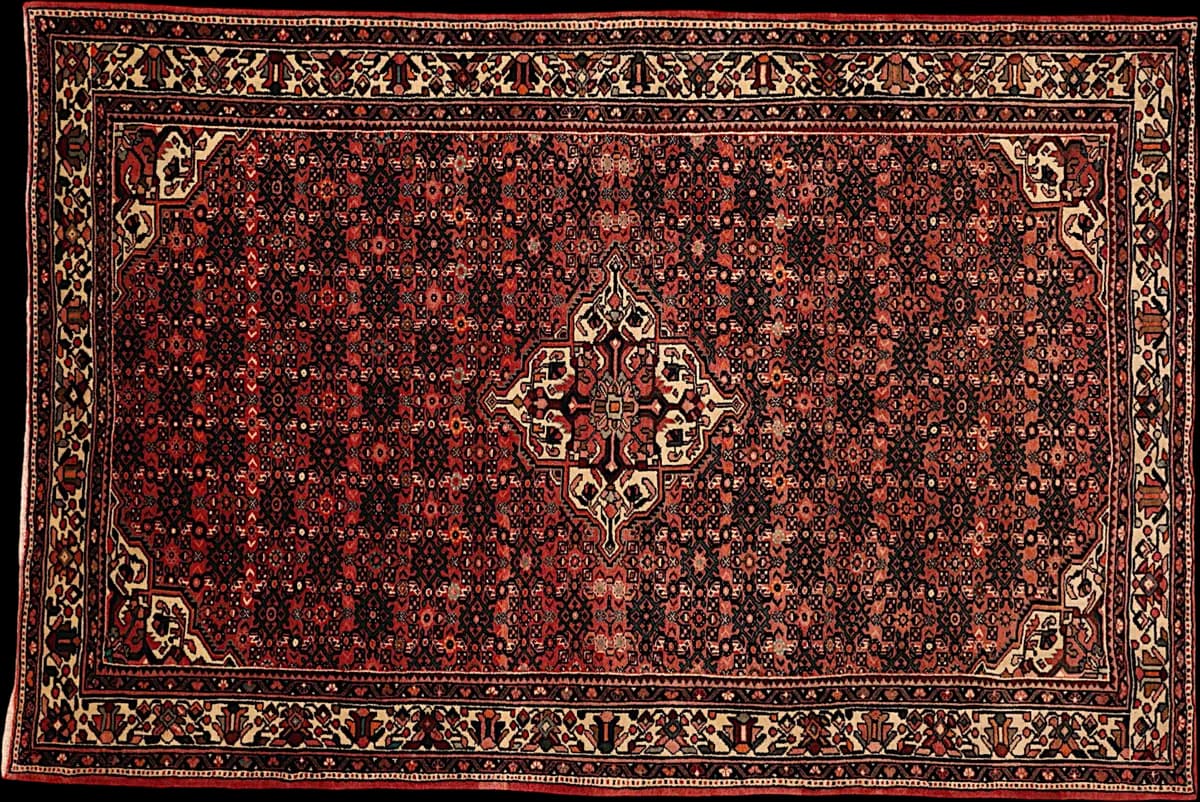
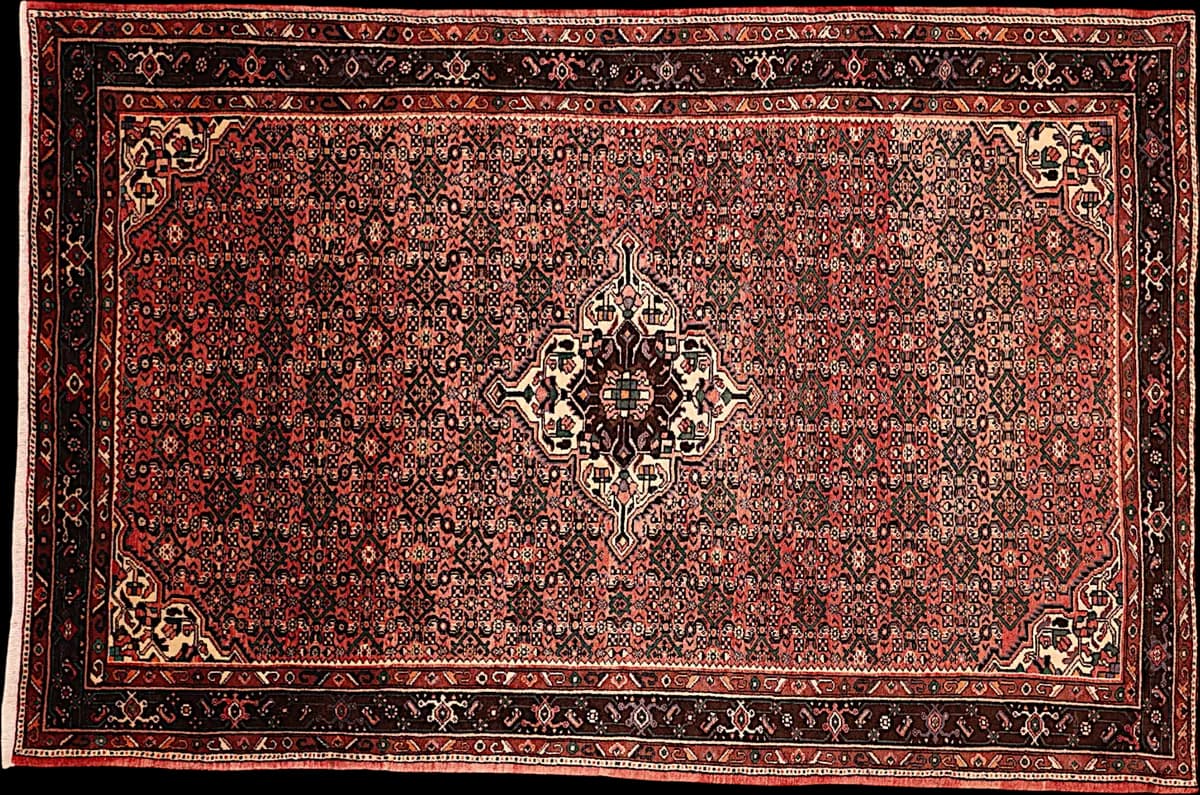
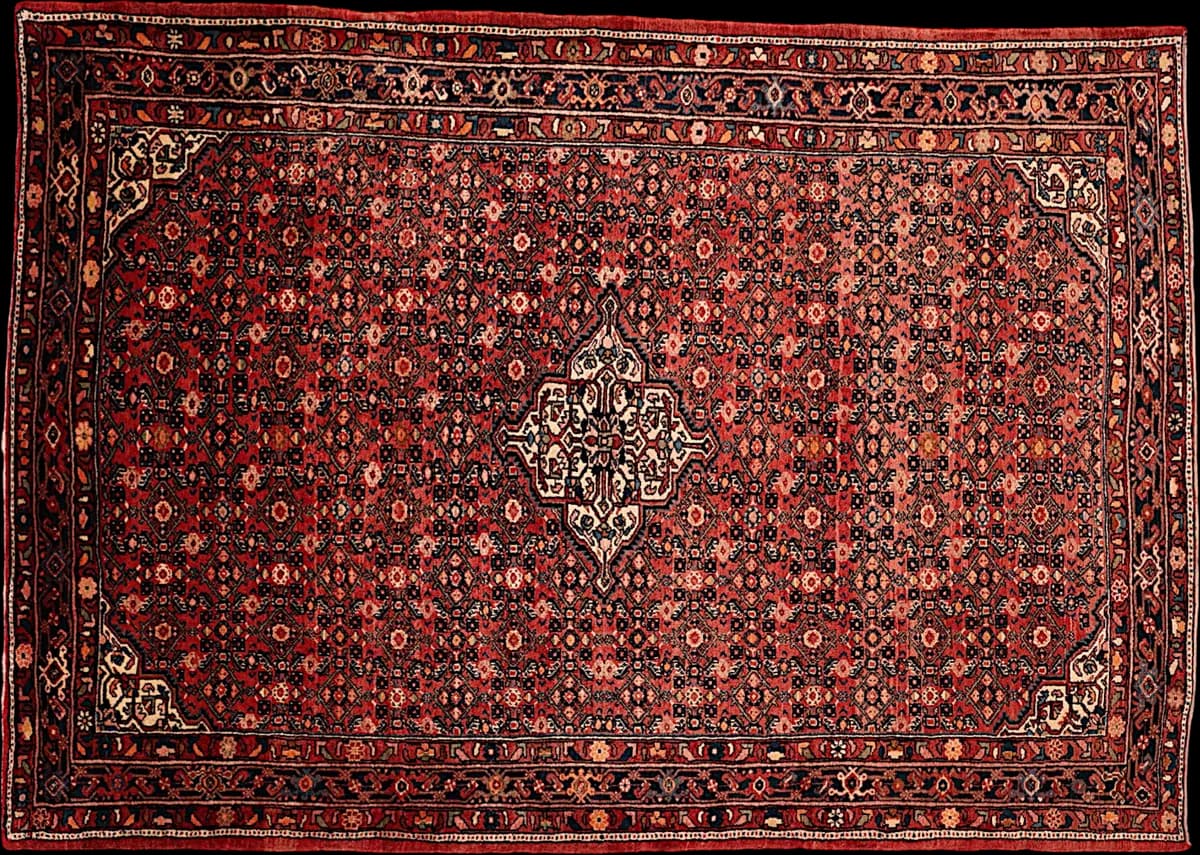
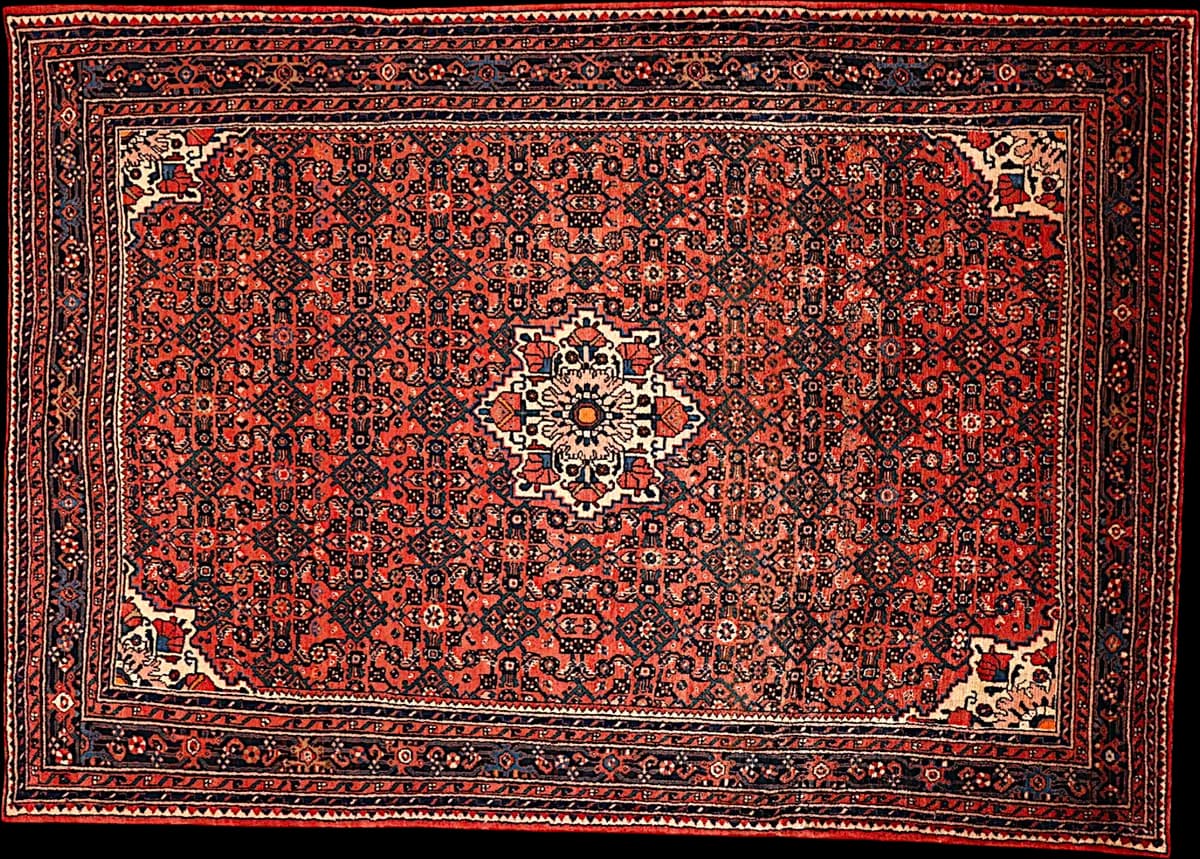
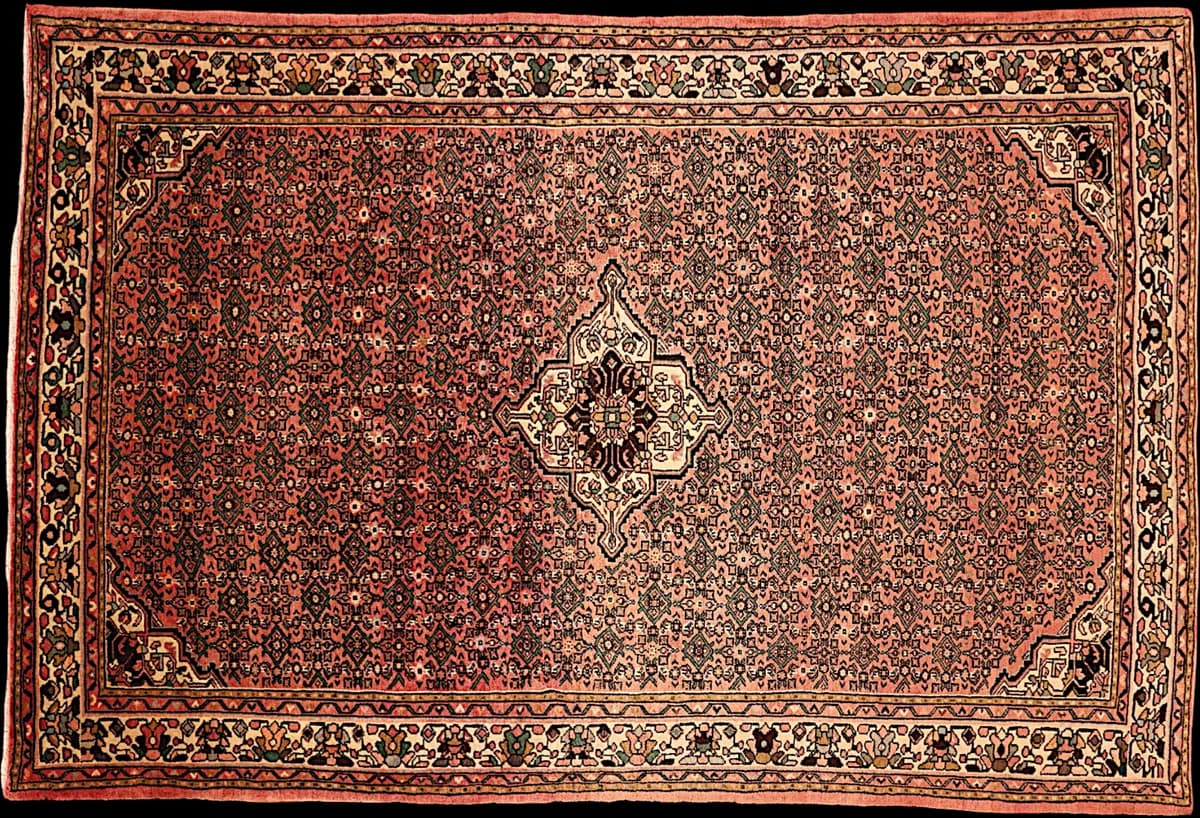
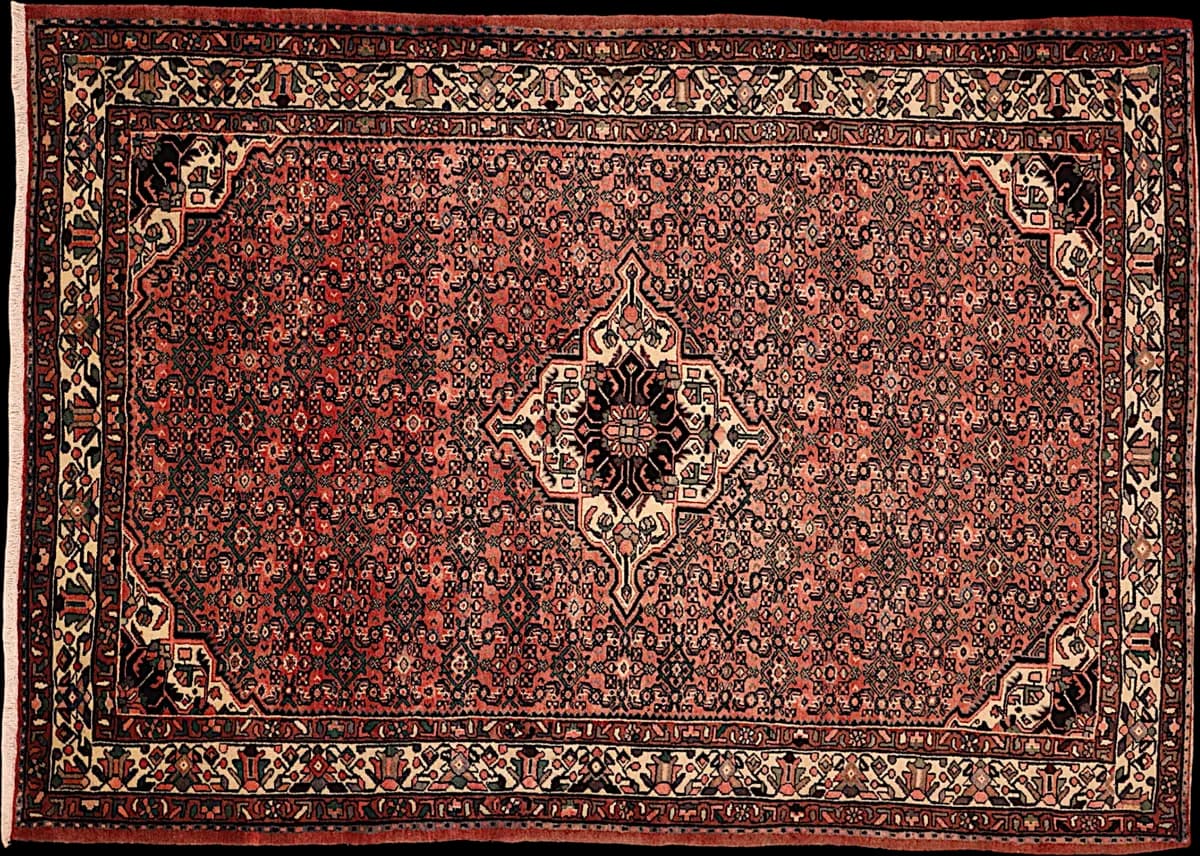
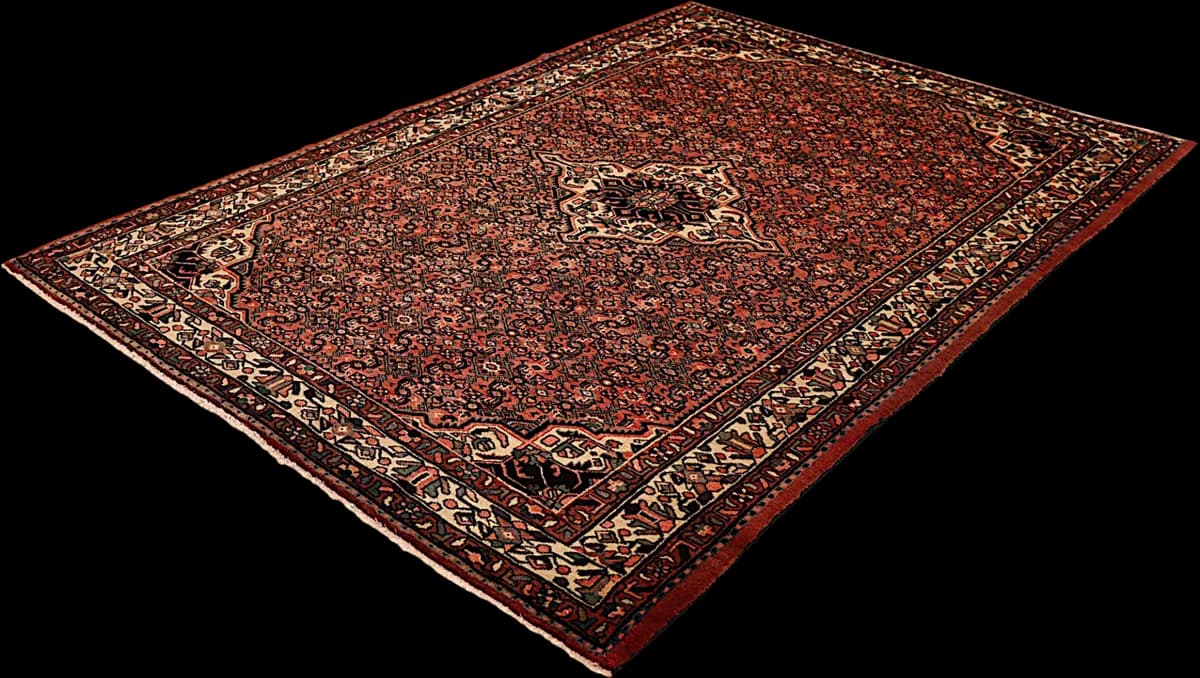
This is a Hossein-Abad, a village rug from the Hamadan weaving region of western Iran, 314 x 223 cm (10'4" x 7'4"). Villages across Hamadan are known for a sturdy, single-wefted structure on a cotton foundation and for dense, all-over geometric patterns drawn freehand rather than to any fixed plan. Here a single, sharply drawn medallion runs through the field — a calmer, more disciplined reading of a pattern that is usually left to run edge to edge with no centre at all.
The ground is a warm brick red, broken into a lattice of rosettes and serrated leaves that alternate red and near-black, so from a distance the field seems to flicker between the two. Riding across this restless pattern sits one ivory medallion, elongated into a lozenge with sharp pendant points top and bottom, and it is this shape, plain and pale against the dark lattice, that the eye settles on first. A wide ivory border encloses the field, filled with stylised palmettes in red, green and dusty rose, held between narrow dark guard stripes and a plain red outer band that draws the whole composition to a close.
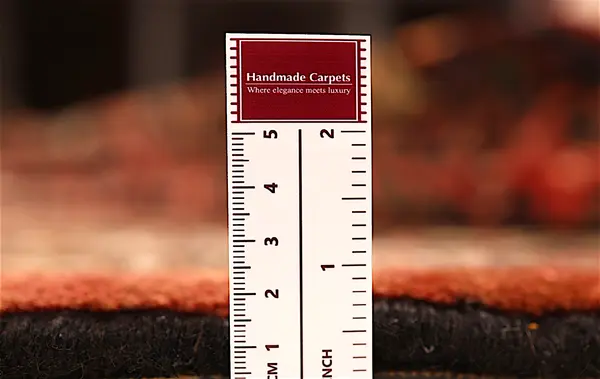
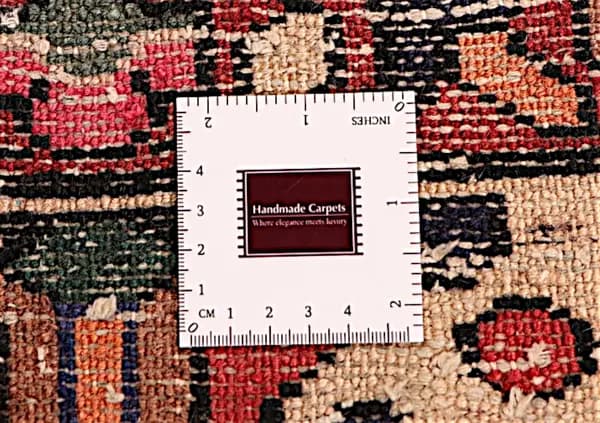
The clarity of that medallion is a matter of weaving discipline as much as design. Hossein-Abad rugs are made on the single-wefted Sennah Baft structure typical of Hamadan villages, with a cotton foundation carrying a pile of hand-spun wool at a density of 201,000 to 250,000 knots per square metre — a respectable count for a village loom, and enough to hold a shape as precise as this lozenge without it blurring into the lattice around it. The pile is clipped to 12mm and kept level throughout, which is what gives the pattern its crisp, matte definition rather than the soft, uneven surface hand-spun wool can sometimes produce.
At 314 x 223 cm this rug sits comfortably under a dining table or beneath a living room seating group, with enough size to be read whole from across the room. The brick red holds its own against dark furniture and warms a pale floor, while the ivory medallion keeps the eye from getting lost in the lattice beneath it. Underfoot the wool is dense and firm, well suited to a room in daily use rather than one kept for best. As the light shifts through the day, the near-black cells of the lattice deepen and lighten in turn, and the medallion stays exactly where it is — the one still point in a field built to move.
More on Hossein-Abad rugs: origin, making and how to recognise a genuine piece
Fine quality weave
At 314 × 223 cm (7.00 m²) this is a large rug. It sits under a seating group with the front legs of sofa and chairs on it, or under a dining table for four. A table for six wants about 80 cm of clearance all round, and needs more.
Yes, knotted by hand — knot by knot on a loom, not machine-made. The density is 201,000 to 250,000 knots per square metre; across 7.00 m² that is roughly 1.4 to 1.8 million individual knots, every one of them tied by hand.
Hand-spun wool still carries its own lanolin, which keeps liquid sitting on the surface for a moment: blot quickly, with clear water and a light cloth, working inwards and without rubbing. Otherwise regular vacuuming along the pile is enough. Turn the rug once or twice a year so light and footfall reach it evenly.
We are in the Hamburg Speicherstadt. Come and see this rug in daylight, or write to us — a person answers.
Certificate included verifying origin, materials, and craftsmanship.
Ref: 121837