Belutsch
218 × 118 cm
848 €







1.138 €
Incl. VAT
In Stock · Ready to Ship
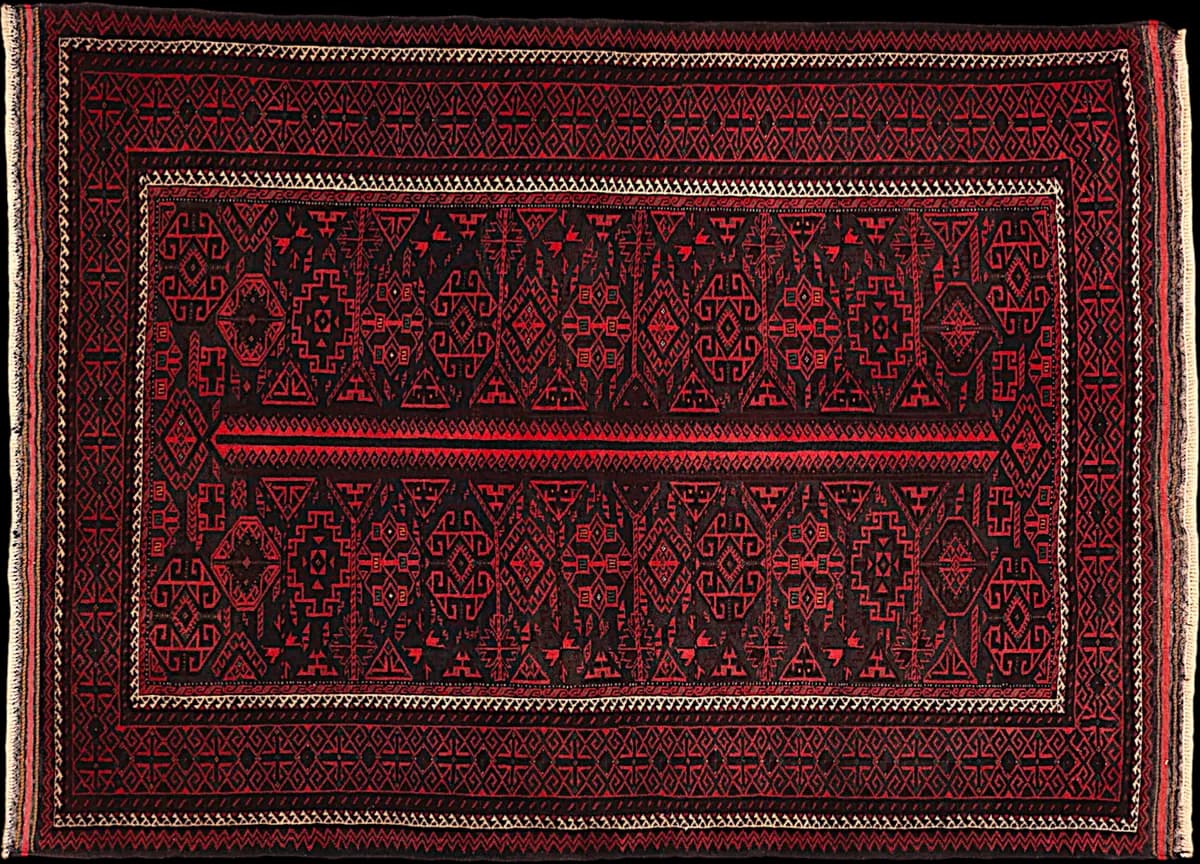
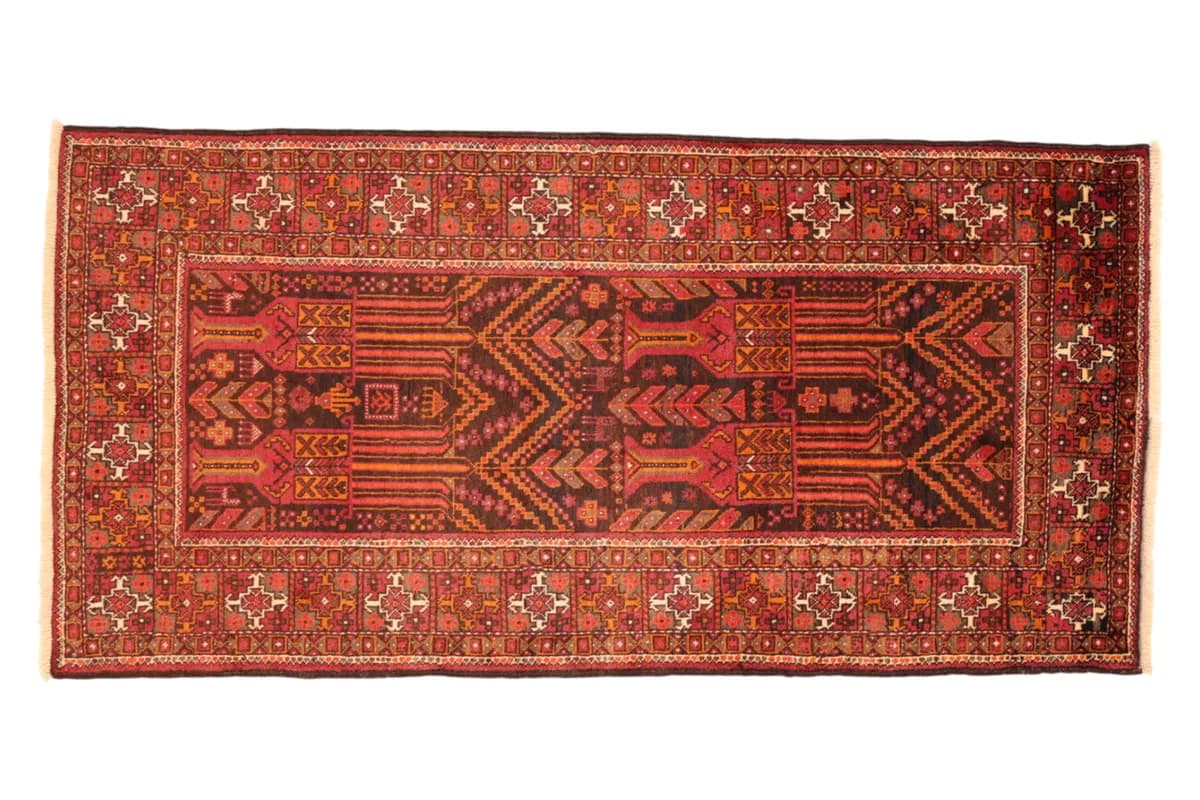
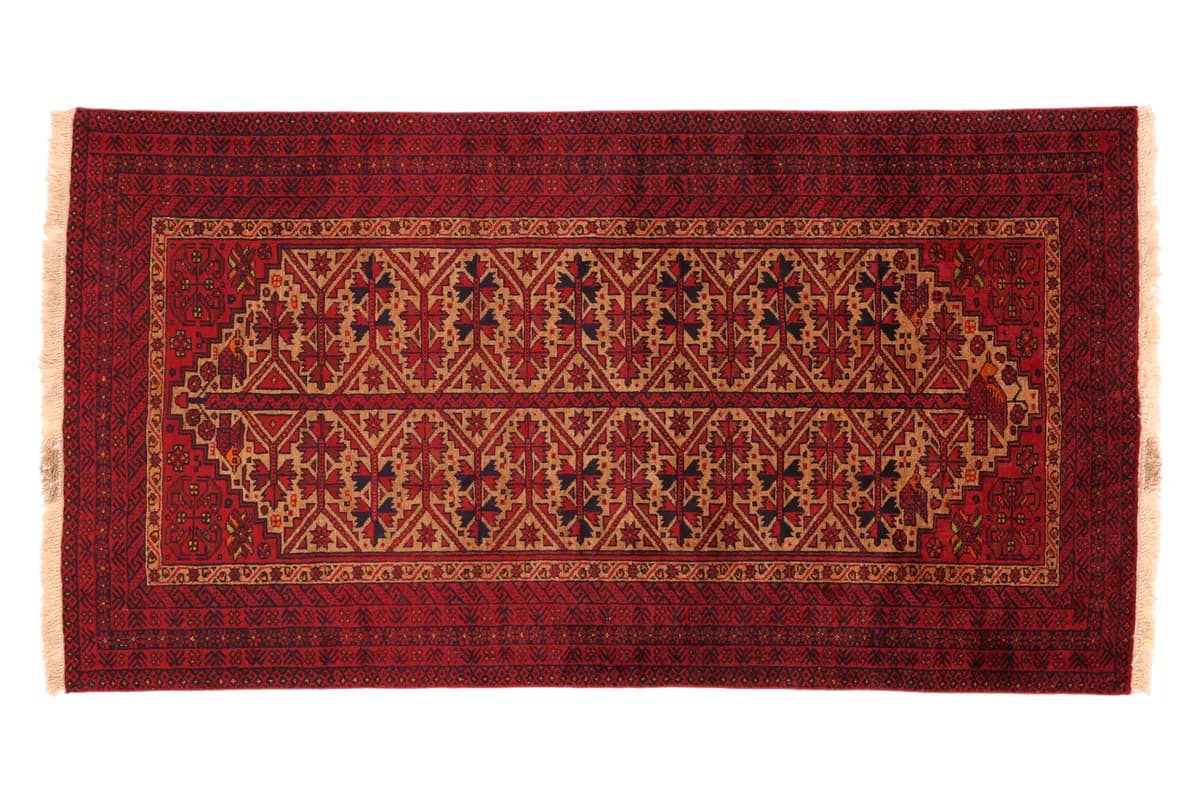
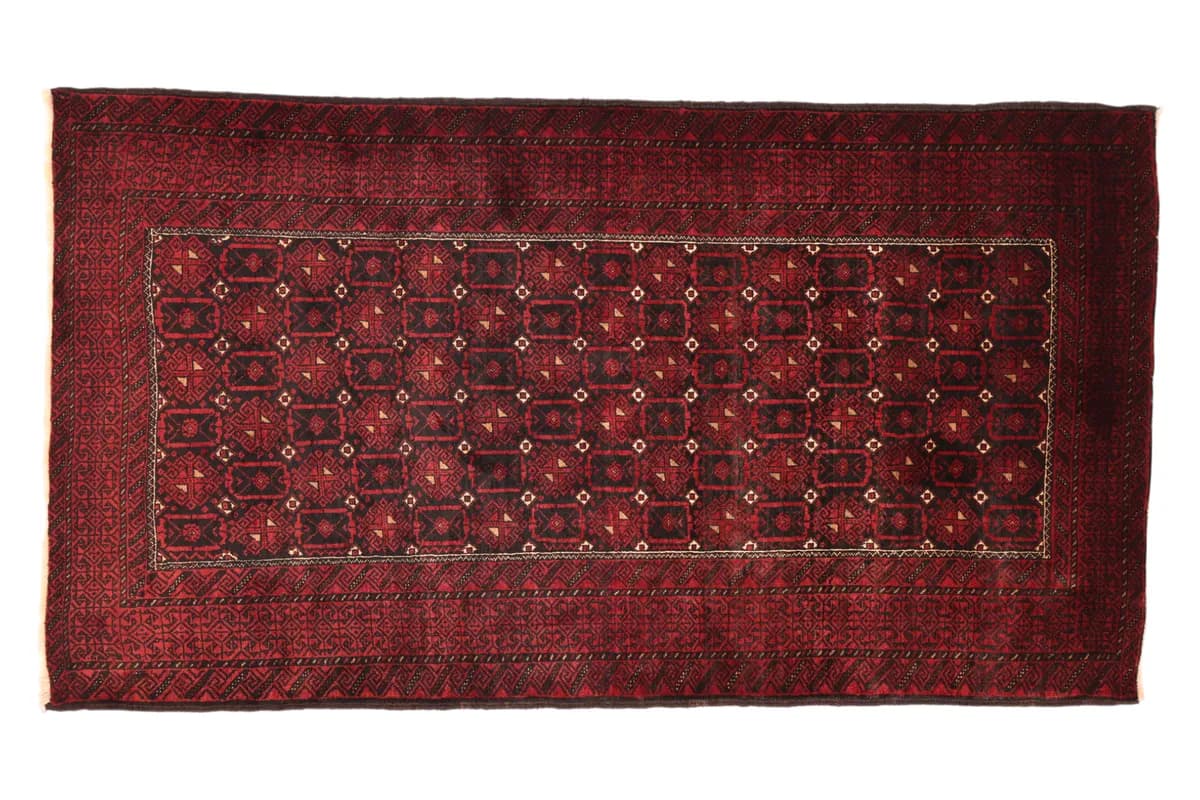
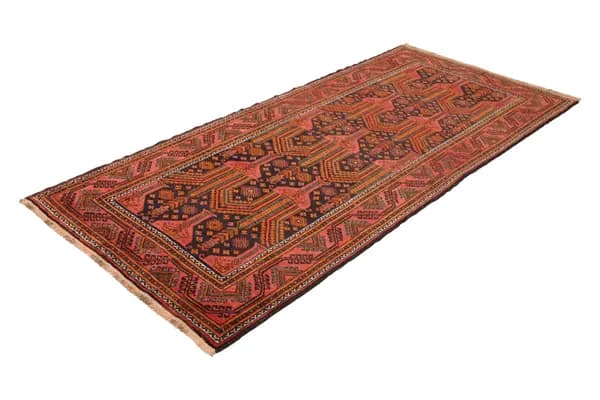
A Baluch runner — also written Baluchi — 249 x 113 cm (8'2" x 3'8"), knotted by nomadic weavers from the borderlands of southeastern Iran. These are tribal pieces made from memory rather than from a drawn plan, and they are known above all for bold, angular geometry and a deep, earthy palette built on red and indigo. This one is a fine example of the type, and its column of medallions carries a small variation that is characteristic of exactly this kind of weaving.
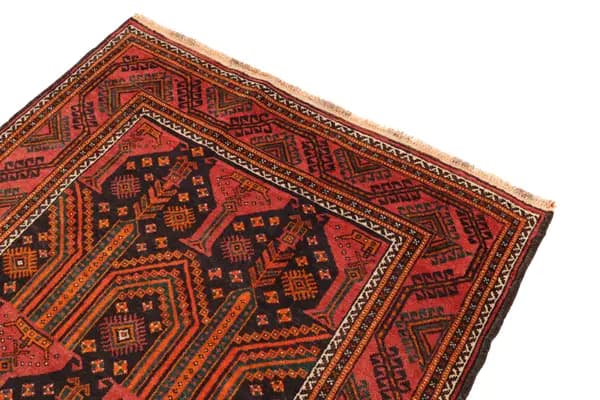
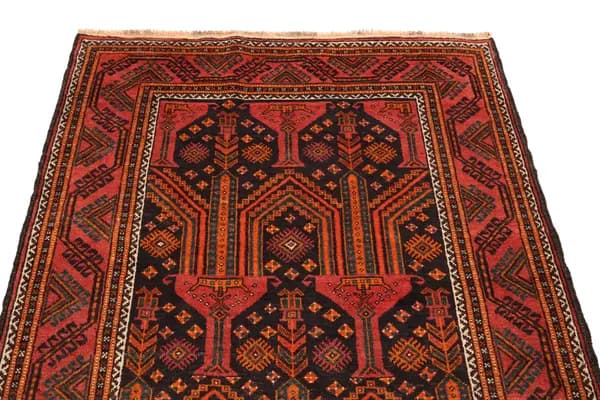
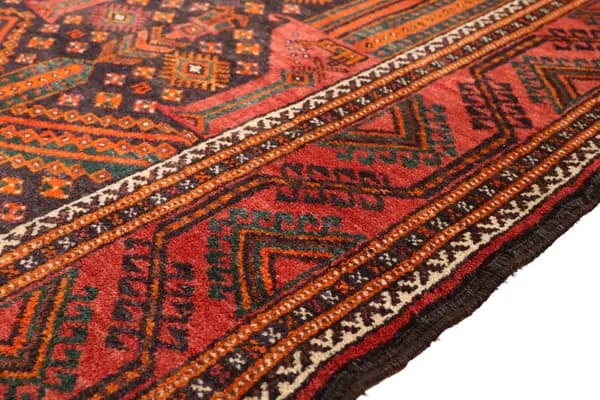
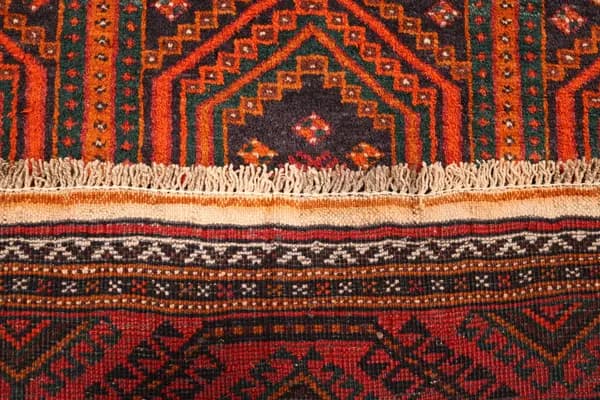
The ground is a deep brick red, and down its length runs a column of four stepped, hooked medallions in dark aubergine-brown, almost black, alternating with panels of red diamond lattice. Burnt orange, mustard and ivory sit inside the medallions as accents, with the occasional touch of slate teal. Look closely and the four are not identical: each is a little different in size and in the detail of its hooks, a column that repeats without quite repeating. Around all of this runs an unusually wide border, itself built from several banded stripes of zigzag and diamond in red, ivory, brown and ochre, dense enough to read almost as a second pattern framing the first.
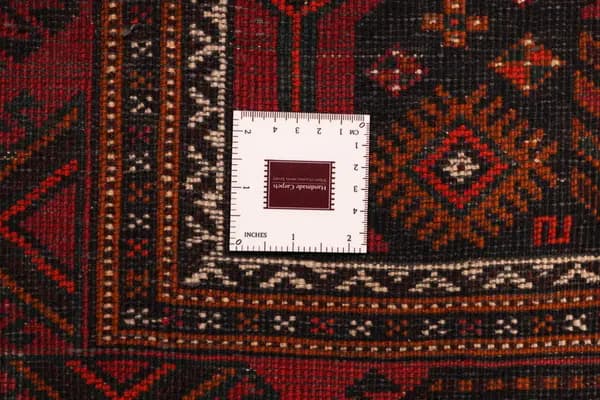
That small unevenness in the medallions is not a flaw to explain away — it is what happens when a design is carried in the memory of the weaver rather than copied from a cartoon on a workshop floor, redrawn a little differently each time it recurs. The wool here is hand-spun, spun by hand rather than machine, which gives the yarn an irregular thickness and the surface its ribbed, matte texture with no sheen at all. At 128,000 to 160,000 knots per square metre this is a coarser, bolder knot than a city workshop would use, and it is exactly what produces the strong, hooked, angular forms rather than fine curved ones. The piece is twenty to forty years old, and the wool has settled into the kind of firmness that comes only with use.
A runner of this size belongs in a hallway, on a landing, or along the floor beside a bed, and the brick red will warm a space that gets little daylight while the dark medallions hold their own against a dark floor rather than disappearing into it. Underfoot it is dense and firm, tightly packed, a weave made to be walked on rather than kept for best. Walk its length and the pleasure is in watching each medallion answer the one before it, never quite the same twice.
More on Baluch rugs: origin, making and how to recognise a genuine piece
Traditional weave
At 249 × 113 cm (2.81 m²) this is a runner. It belongs in a hallway, an entrance, on a landing or lengthways beside a bed. It is too narrow for the middle of a room.
Yes, knotted by hand — knot by knot on a loom, not machine-made. The density is 128,000 to 160,000 knots per square metre; across 2.81 m² that is roughly 360,000 to 450,000 individual knots, every one of them tied by hand.
Hand-spun wool still carries its own lanolin, which keeps liquid sitting on the surface for a moment: blot quickly, with clear water and a light cloth, working inwards and without rubbing. Otherwise regular vacuuming along the pile is enough. Turn the rug once or twice a year so light and footfall reach it evenly.
We are in the Hamburg Speicherstadt. Come and see this rug in daylight, or write to us — a person answers.
Certificate included verifying origin, materials, and craftsmanship.
Ref: 995359