Turkaman
117 × 61 cm
277 €






1.075 €
Incl. VAT
In Stock · Ready to Ship
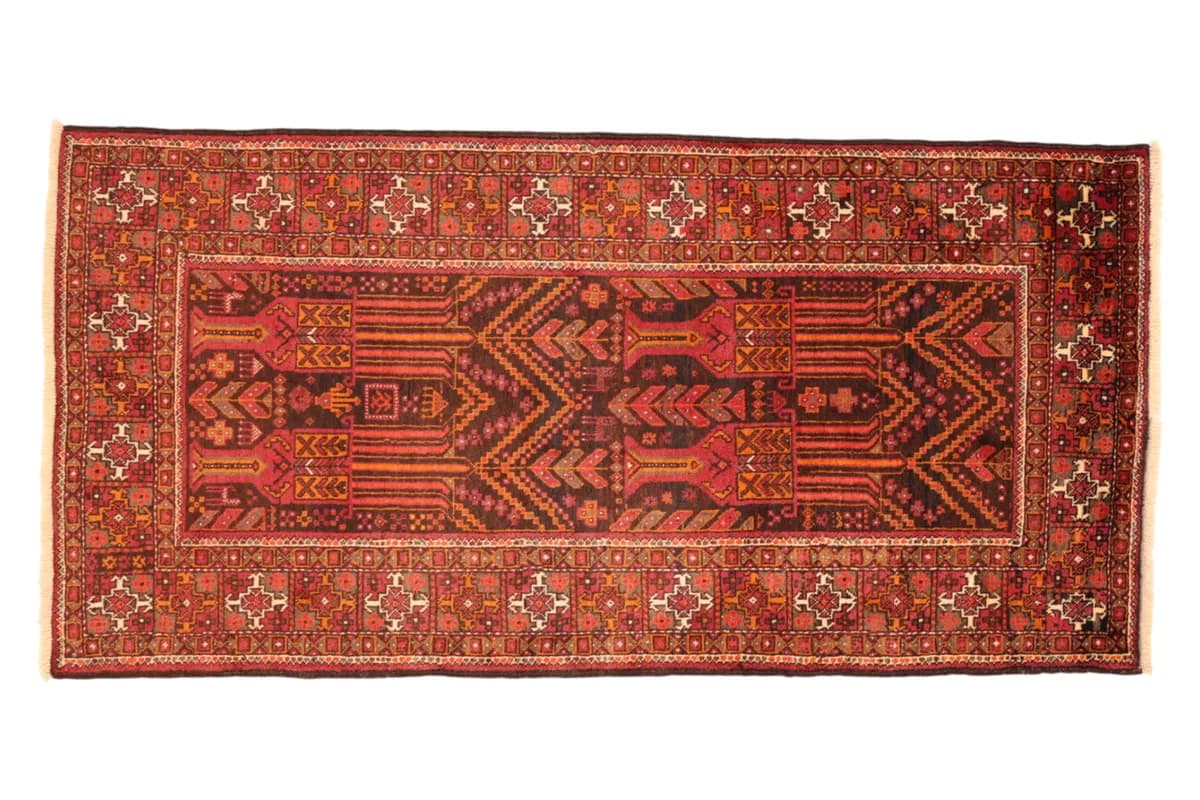
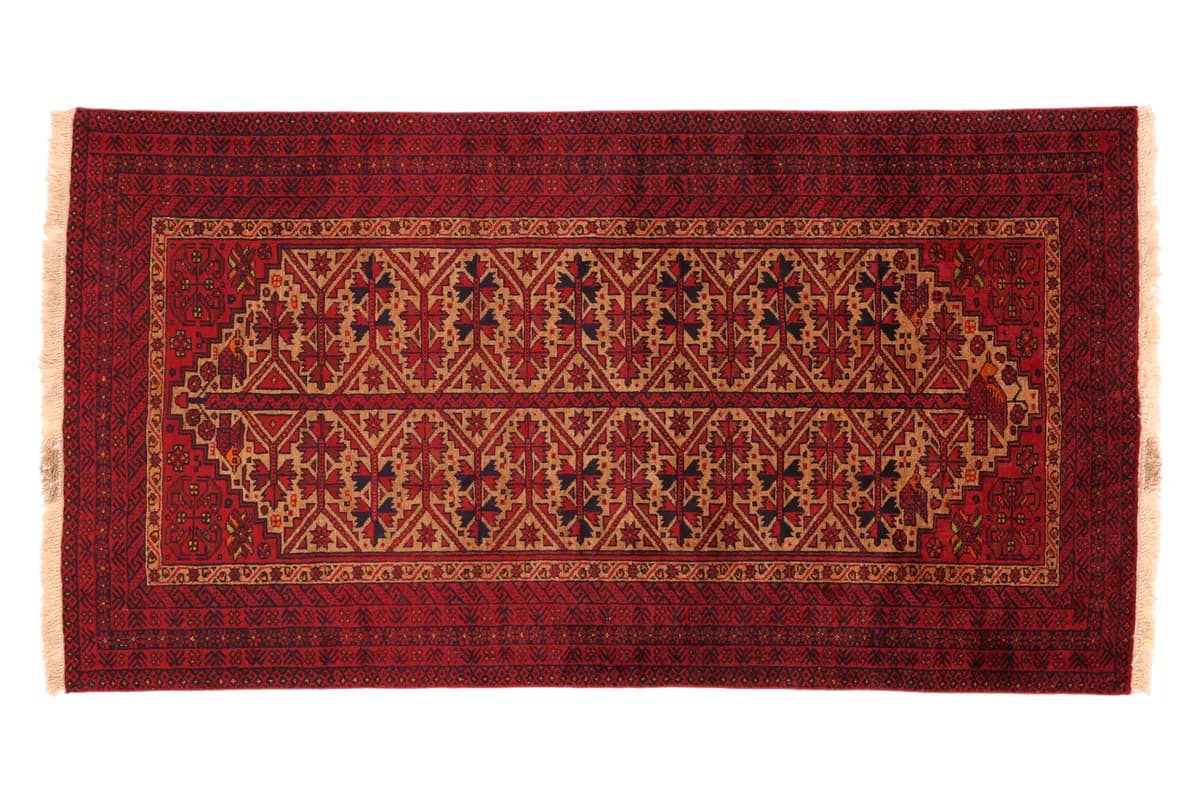
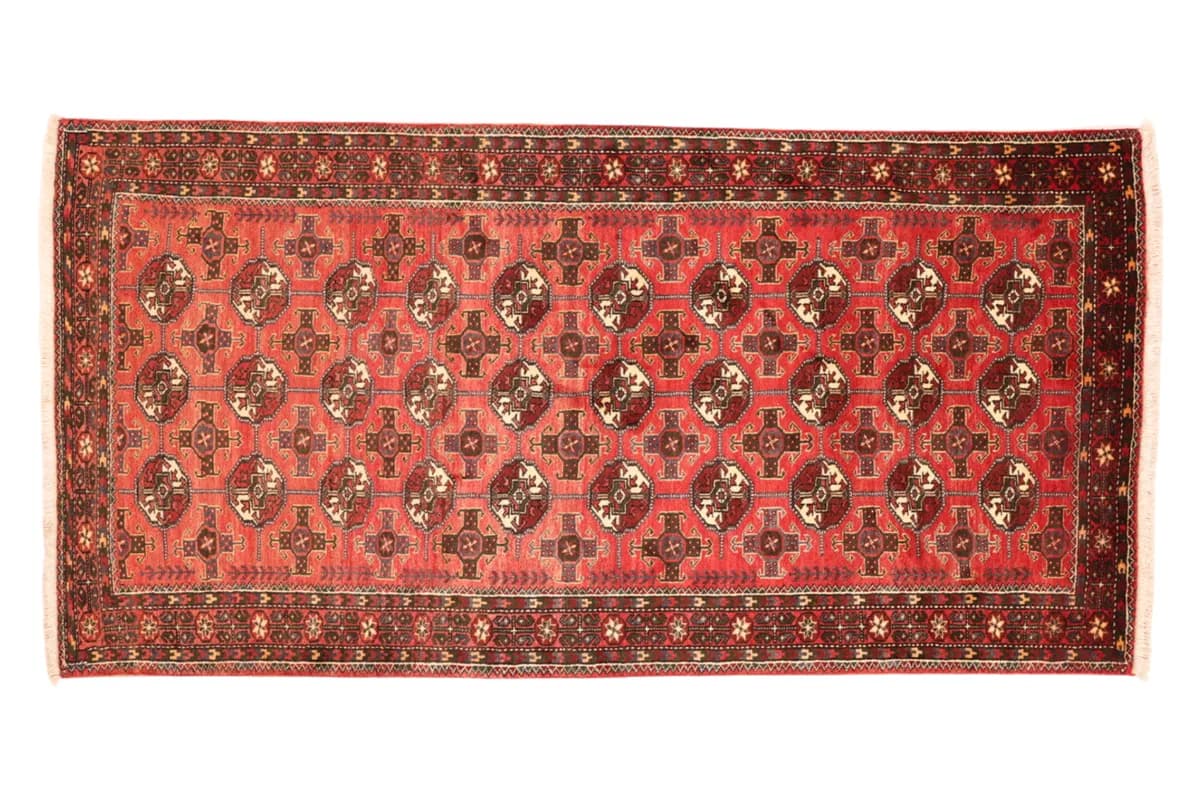
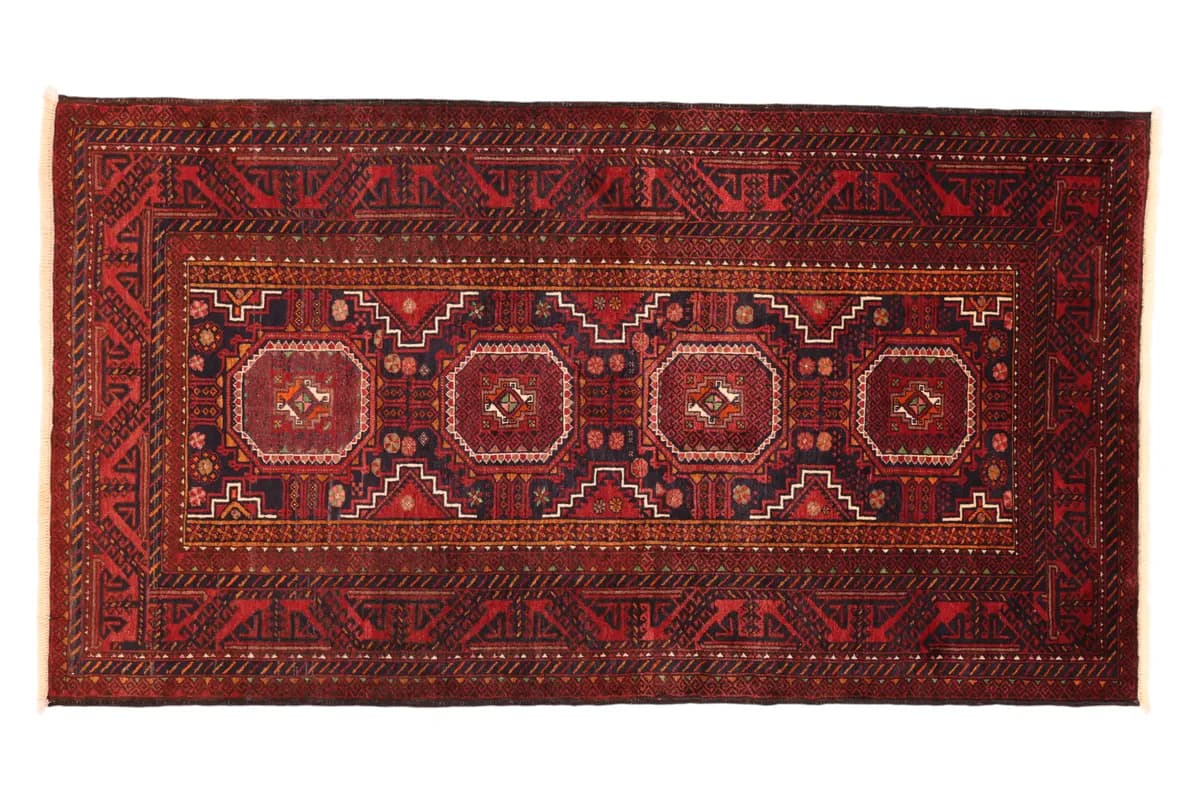
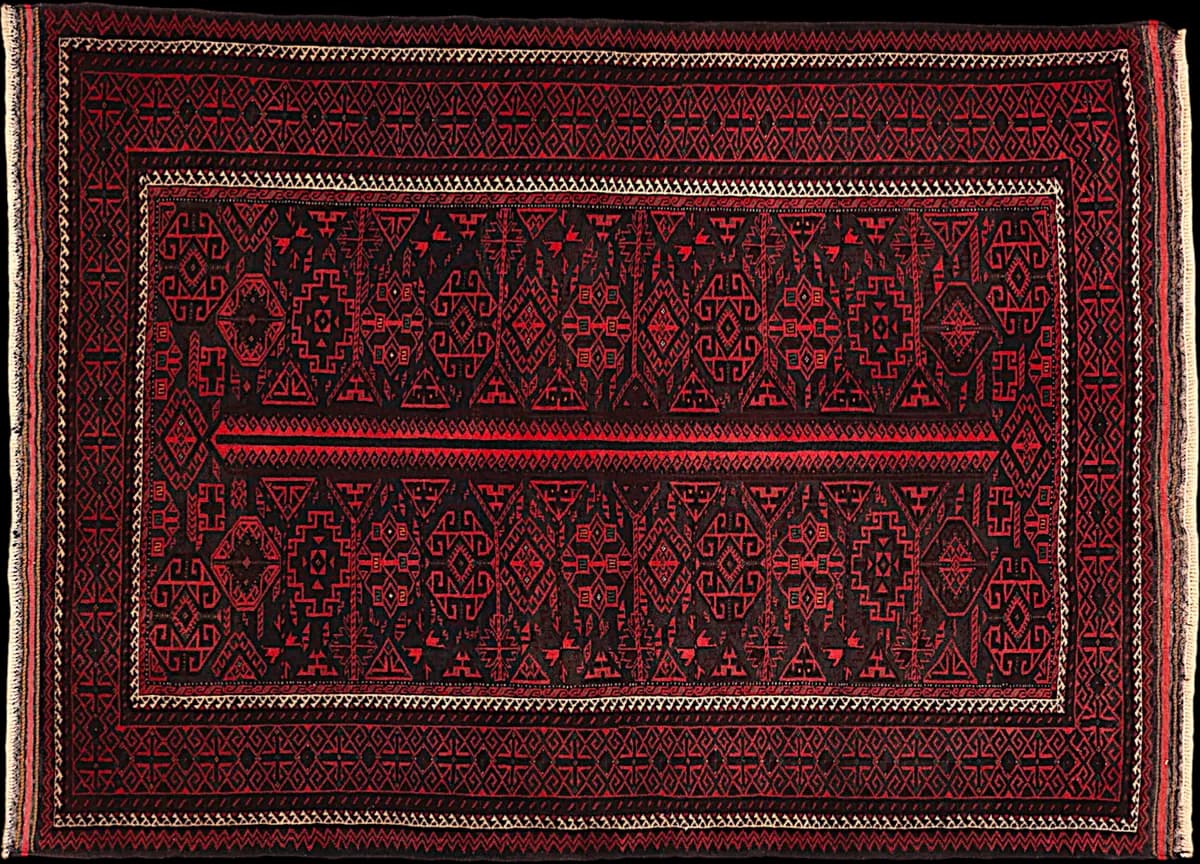
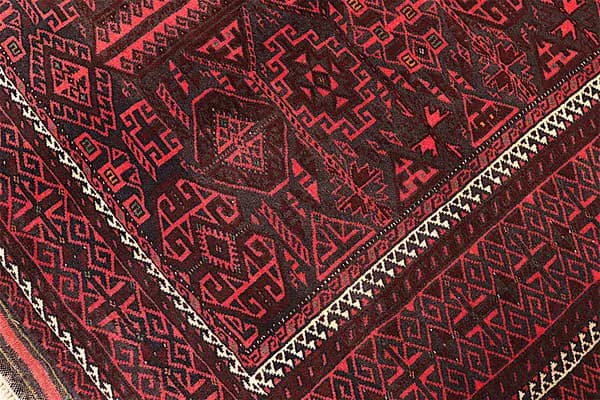
This is a Baluch rug, a tribal weaving from the borderlands of southeastern Iran, measuring 172 x 130 cm (5'8" x 4'3"). Baluch weavers, moving between Iran and its neighbouring regions, are known for deep reds and indigo blues worked into bold, angular geometry, often arranged as a single prayer-niche field. This piece takes that vocabulary somewhere less usual: instead of one continuous field, the design is split cleanly in two.
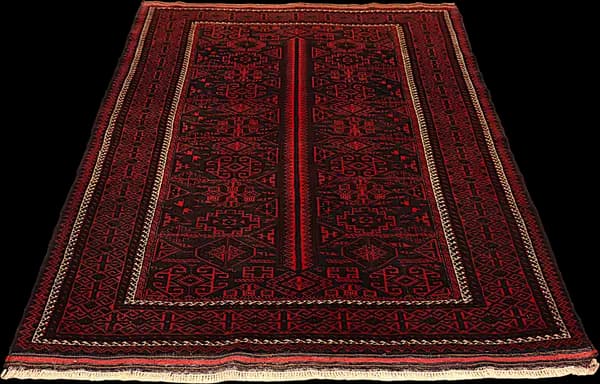
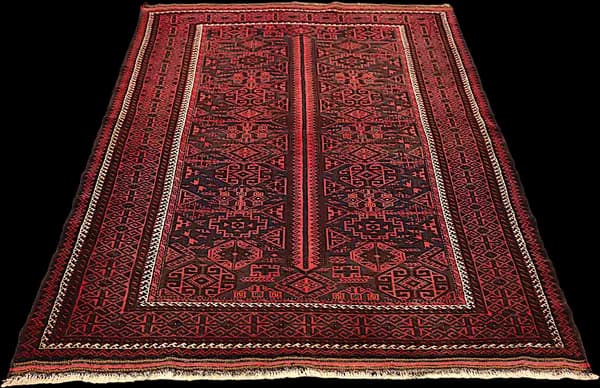
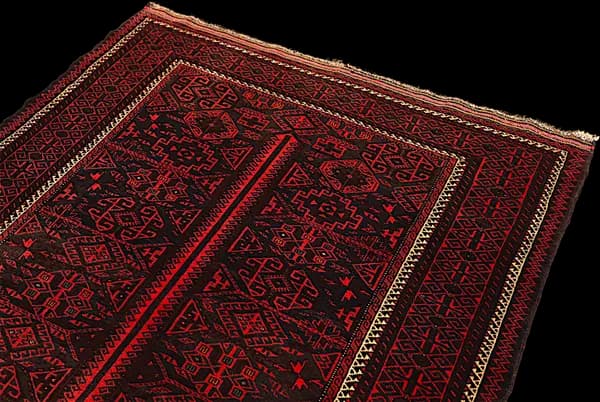
The ground is a deep wine-red, and across its centre runs a plain, undecorated band of the same red, dividing the field into two almost identical registers stacked one above the other. Each half is built from columns of small hooked diamonds and stepped, medallion-like devices in near-black and dark brown, with small flashes of coral-red picked out inside them, and ivory guard stripes marking the edges of each register. A wide border in the same dark red-and-black palette frames the whole, carrying a distinctive ivory zigzag just inside the outer edge. The effect is of two smaller compositions folded together into one rug, mirrored rather than merged.
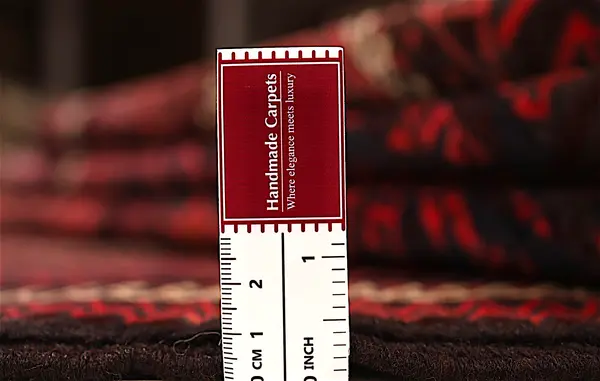
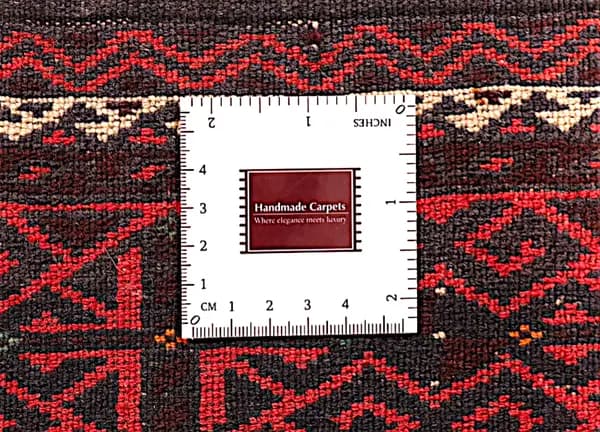
That mirrored order was built entirely by eye. Baluch weavers work from memory on a portable loom, without a drawn plan, and a symmetry this close between the two halves is a matter of a steady hand repeating a pattern held in the head rather than on paper. The pile is hand-spun wool, knotted onto a cotton warp at around 128,000 to 160,000 knots per square metre, a density that gives the surface its firm, slightly textured hand rather than the fine flatness of a workshop piece. Hand-spun yarn varies a little in thickness as it is spun, and it is this that gives the surface its matte, unshiny, faintly irregular character, clipped low at 6 mm.
At this size the rug suits a seating area or a bedroom rather than a large dining table, laid where it will be seen whole rather than partly disappearing under furniture. The wine-red holds its own against dark wood and warms a pale floor without needing help from anything else in the room. Underfoot it is dense and flat, firm rather than deep, a weave that was made for a tent floor and takes daily use without complaint. Seen in low light or full sun, the two halves keep catching the eye against each other, close but never quite the same.
More on Baluch rugs: origin, making and how to recognise a genuine piece
Traditional weave
At 172 × 130 cm (2.24 m²) this is a small rug. It works beside a bed, in a reading corner, in front of a fireplace or as a mat by a door. It does not furnish a room; it makes a point in one.
Yes, knotted by hand — knot by knot on a loom, not machine-made. The density is 128,000 to 160,000 knots per square metre; across 2.24 m² that is roughly 290,000 to 360,000 individual knots, every one of them tied by hand.
Hand-spun wool still carries its own lanolin, which keeps liquid sitting on the surface for a moment: blot quickly, with clear water and a light cloth, working inwards and without rubbing. Otherwise regular vacuuming along the pile is enough. Turn the rug once or twice a year so light and footfall reach it evenly.
We are in the Hamburg Speicherstadt. Come and see this rug in daylight, or write to us — a person answers.
Certificate included verifying origin, materials, and craftsmanship.
Ref: 114545