Exclusive
Bidjar | Exclusivewith silk
247 × 78 cm
4.800 €




1.687 €
Incl. VAT
In Stock · Ready to Ship
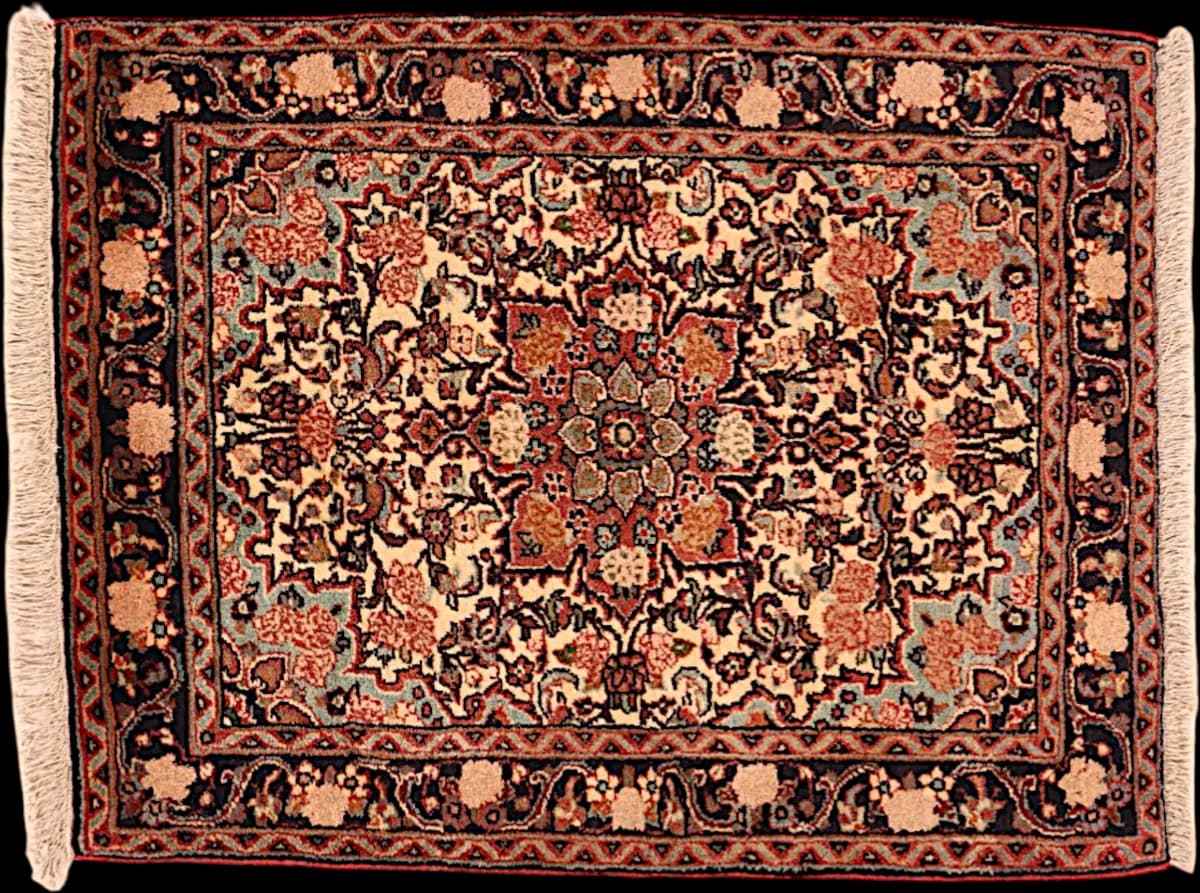
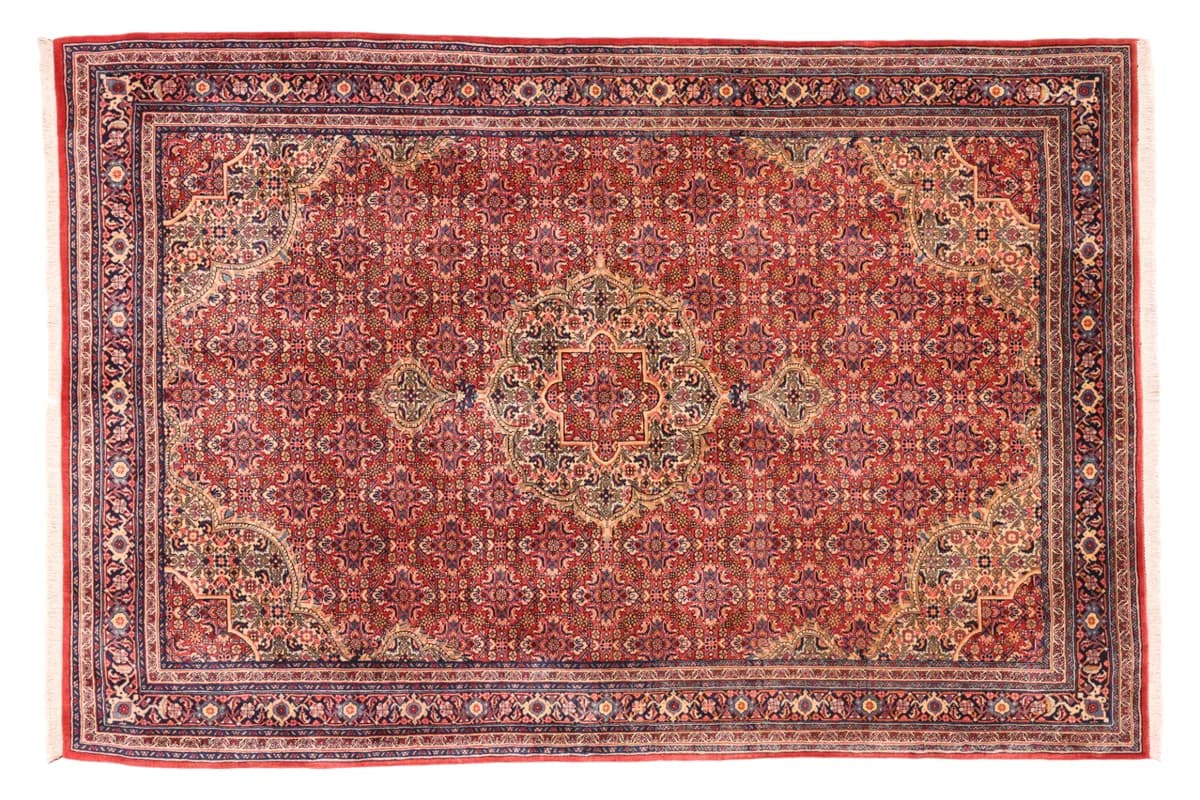
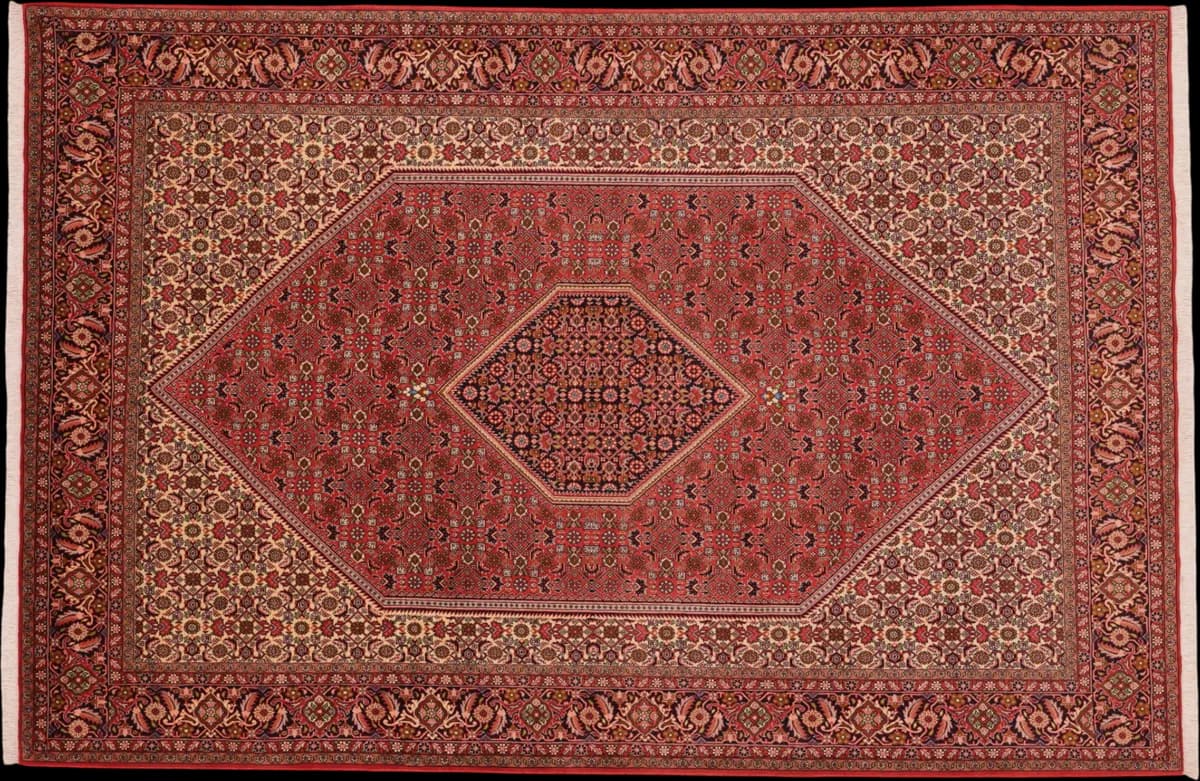
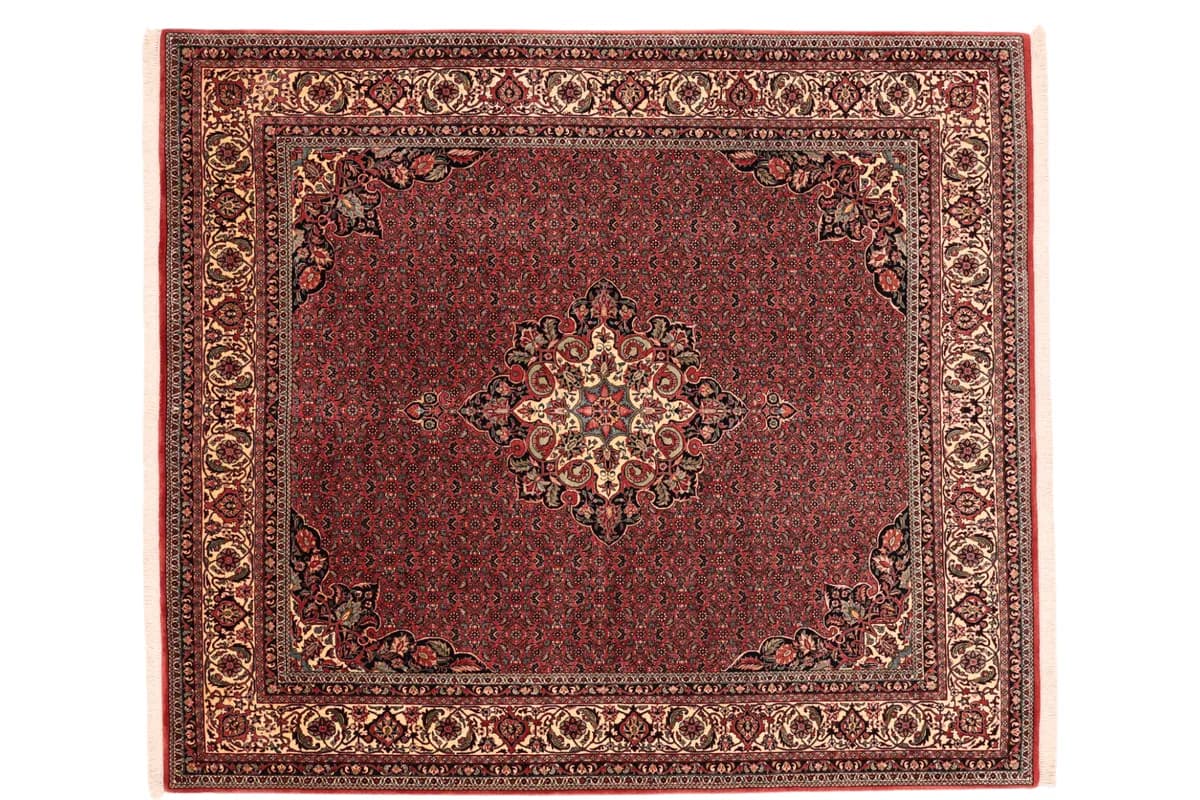
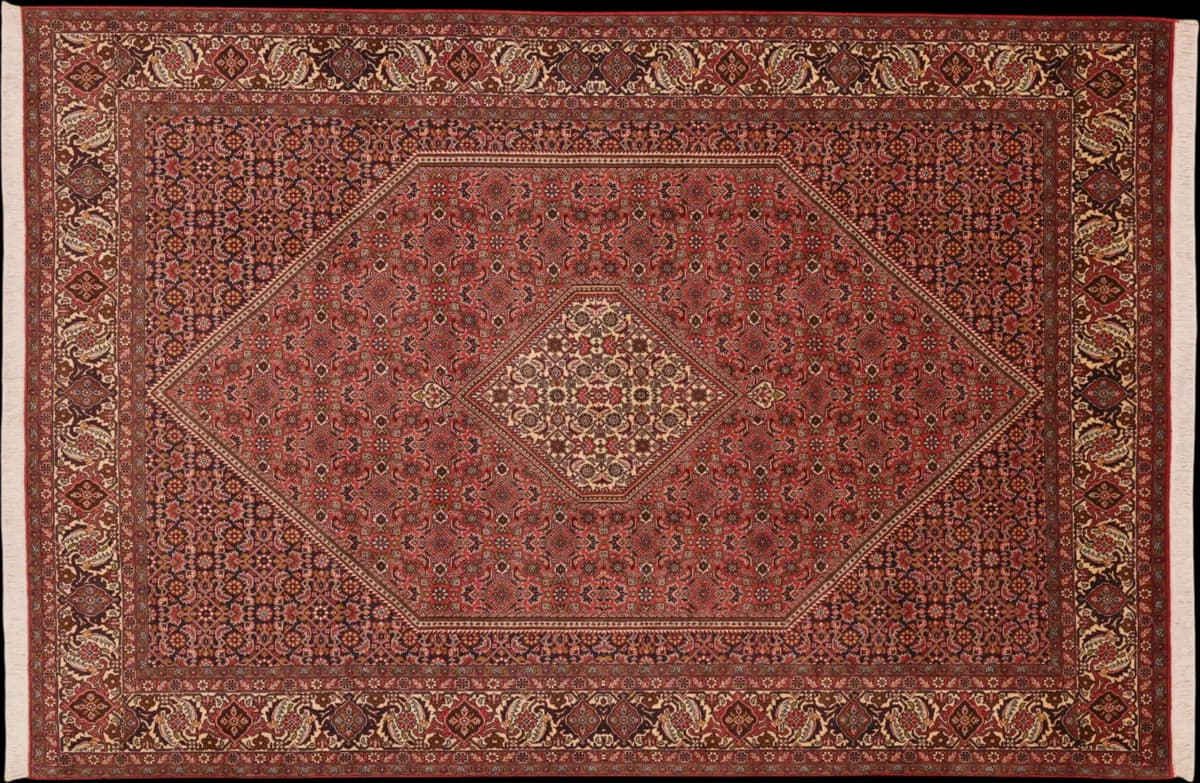
The Bidjar, also written Bijar, is one of the great weaving traditions of Kurdish Iran, and this piece measures 214 x 142 cm (7'0" x 4'8"). Its reputation rests on one quality above all others: a density of knotting unmatched anywhere else in the Persian tradition, tight enough that the finished rug cannot be folded, only rolled. That structural weight is the reason weavers and collectors alike still call these the Iron Rugs of Persia.
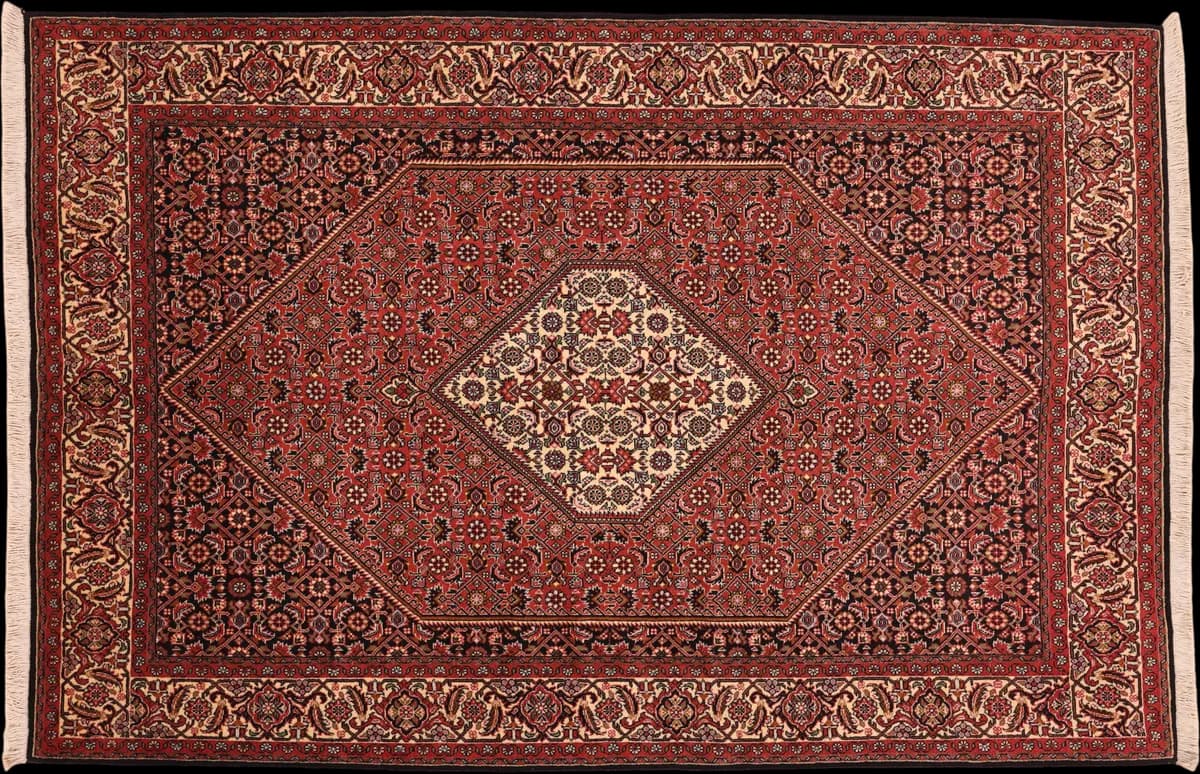
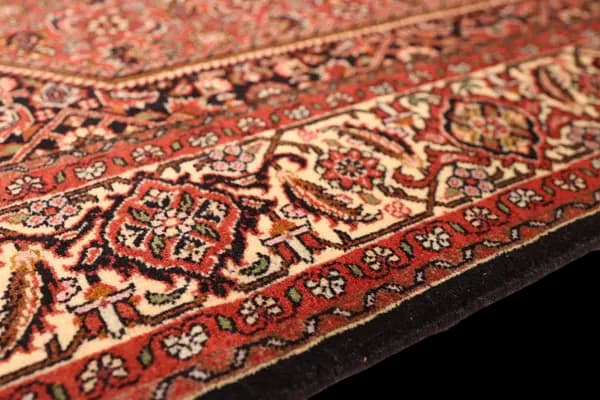
A deep brick red field carries the eye straight to an ivory diamond medallion at its centre, dense with the fish-and-rosette Mahi pattern that repeats quietly across the red ground beneath it. The medallion sits inside a second, larger diamond outlined in black-navy, and against the red this frame reads with real sharpness, giving the whole composition a nested, almost architectural depth. Black-navy spandrels close off the corners in the same dark tone, and around it all runs a wide ivory border, close to a fifth of the rug's width, filled with red and black floral scrollwork drawn as finely as the field within it.
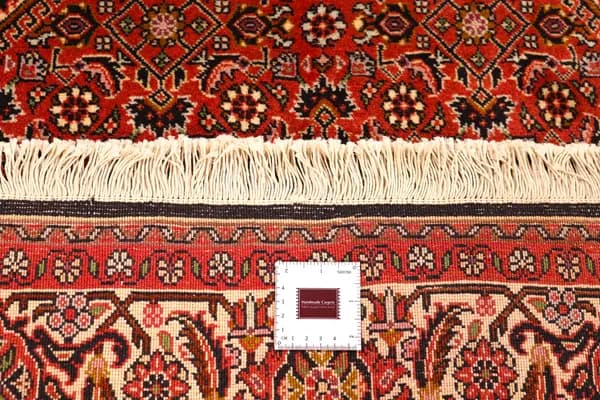
That fineness is not accidental. At 251,000 to 320,000 knots per square metre, this Bidjar sits at the dense end of even its own tradition, and it is that packing of knots which lets the diamond edges stay crisp and the lattice inside the medallion stay legible rather than blurring into the field. The pile is hand-spun wool, worked over a cotton warp to a height of 15 mm, giving a short, even surface with a faint sheen rather than the flatter look of machine-spun yarn. Reaching this density by hand, knot by knot, is work measured in months rather than weeks, and it is what gives a Bidjar its characteristic weight in the hand and underfoot.
A rug this size suits a bedroom comfortably, laid at the foot of the bed or beneath a small seating group in a living room. Against pale flooring the red will hold its own and warm the room, while ivory medallion and border keep it from ever feeling heavy against darker furniture. Underfoot it is dense and firm, built for a room in regular use rather than one kept for best, and the surface will take that use for decades without losing its edge. In low evening light the ivory medallion lifts forward off the red, and that contrast is the thing you keep noticing long after the rug has settled into the room.
More on Bidjar rugs: origin, making and how to recognise a genuine piece
Fine quality weave
At 214 × 142 cm (3.04 m²) this is a medium rug. It works in front of a sofa, in front of a bed or in a study. It is too small for a dining table — there you want about 80 cm of clearance so a chair does not tip over the edge when pushed back.
Yes, knotted by hand — knot by knot on a loom, not machine-made. The density is 251,000 to 320,000 knots per square metre; across 3.04 m² that is roughly 760,000 to 970,000 individual knots, every one of them tied by hand.
Hand-spun wool still carries its own lanolin, which keeps liquid sitting on the surface for a moment: blot quickly, with clear water and a light cloth, working inwards and without rubbing. Otherwise regular vacuuming along the pile is enough. Turn the rug once or twice a year so light and footfall reach it evenly.
We are in the Hamburg Speicherstadt. Come and see this rug in daylight, or write to us — a person answers.
Certificate included verifying origin, materials, and craftsmanship.
Ref: 295308