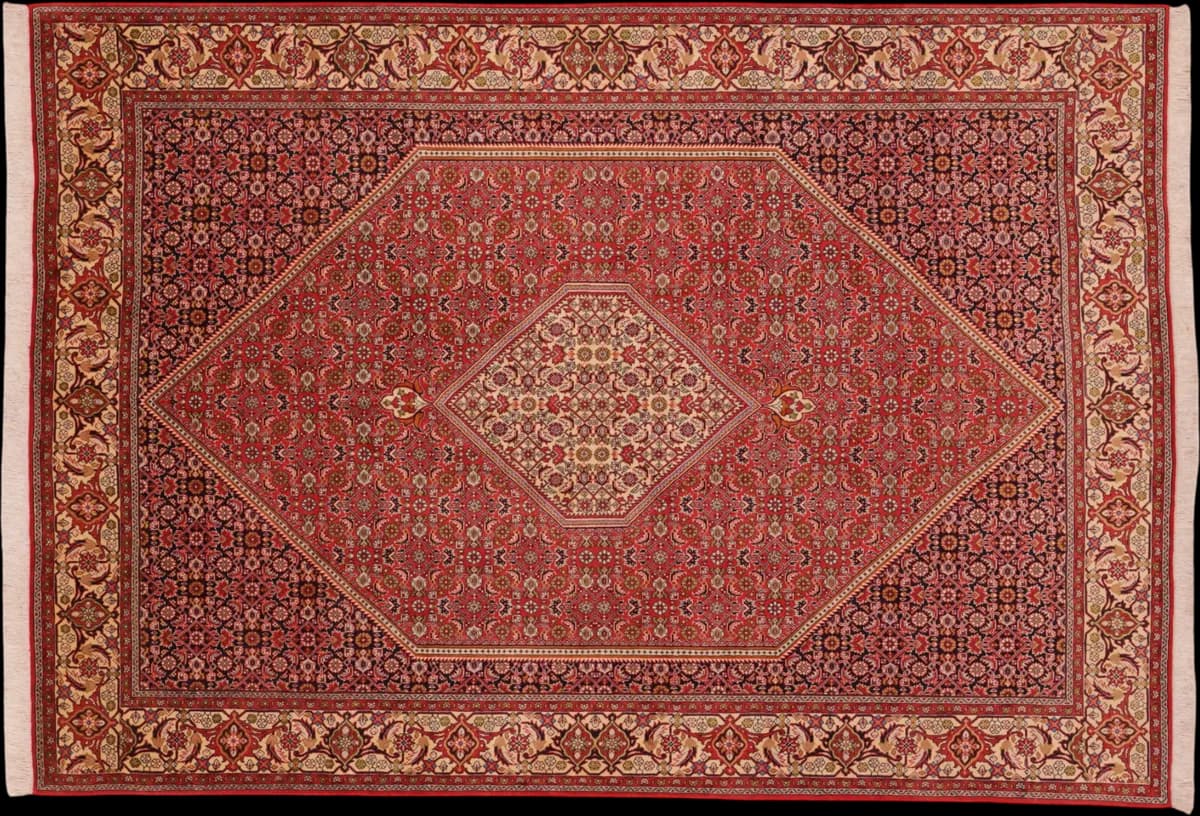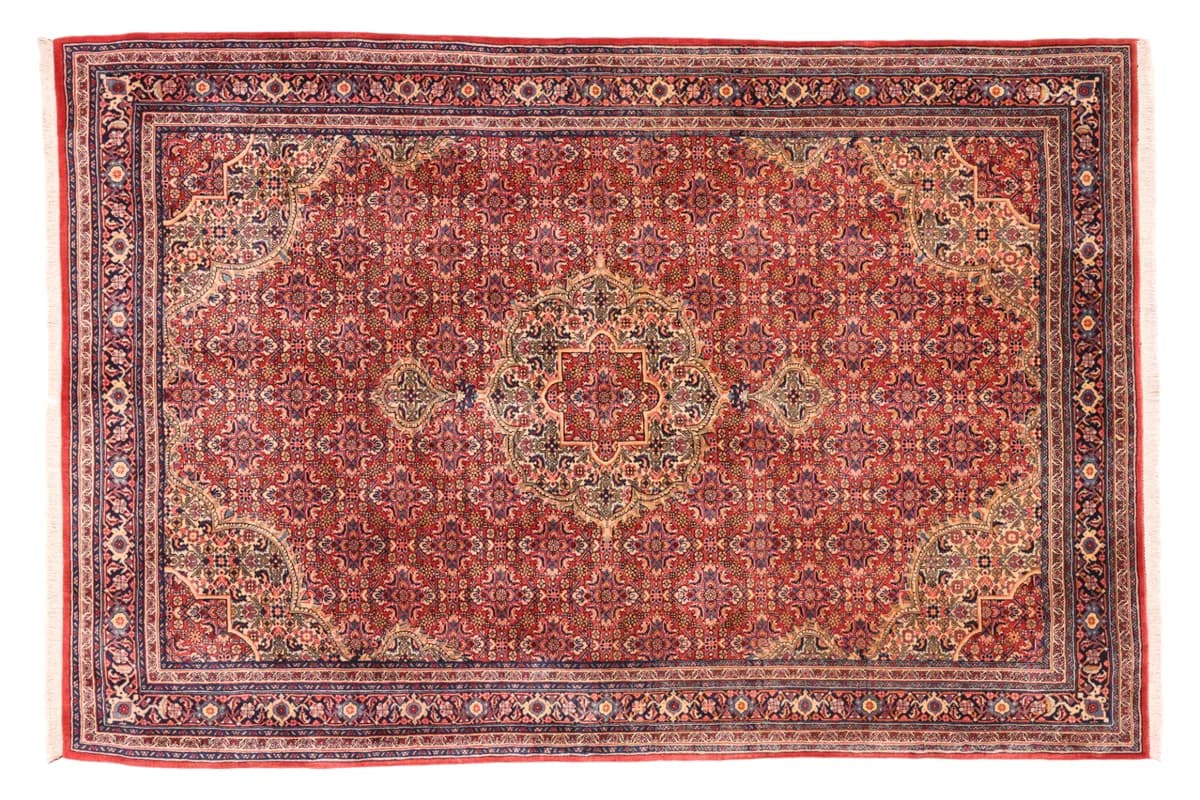
Exclusive
Bidjar | Exclusive
216 × 144 cm
5.550 €






455 €
Incl. VAT
In Stock · Ready to Ship
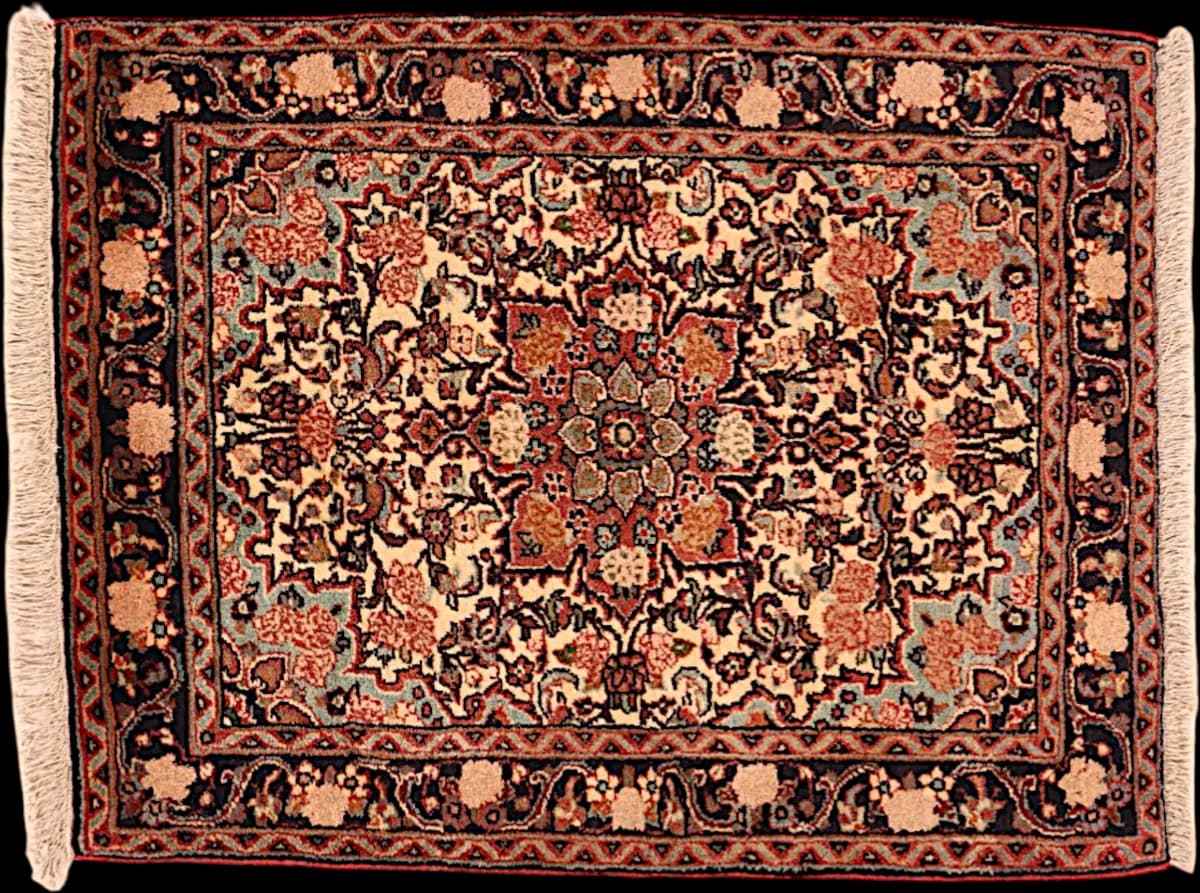
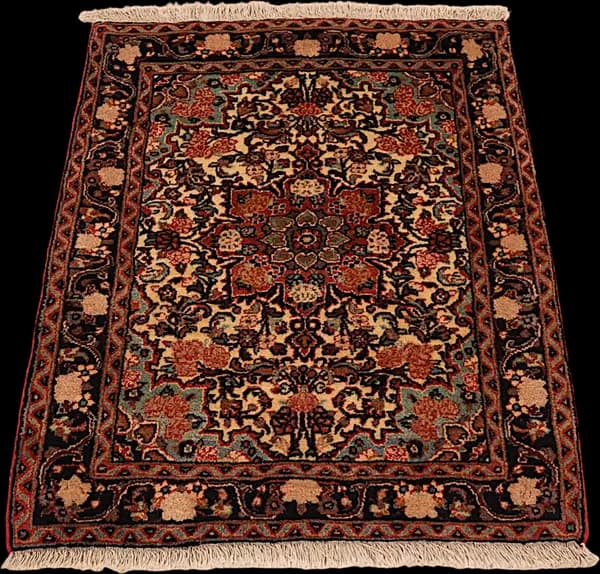
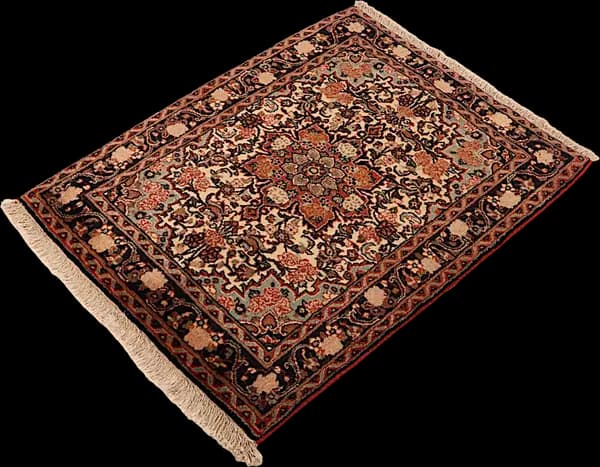
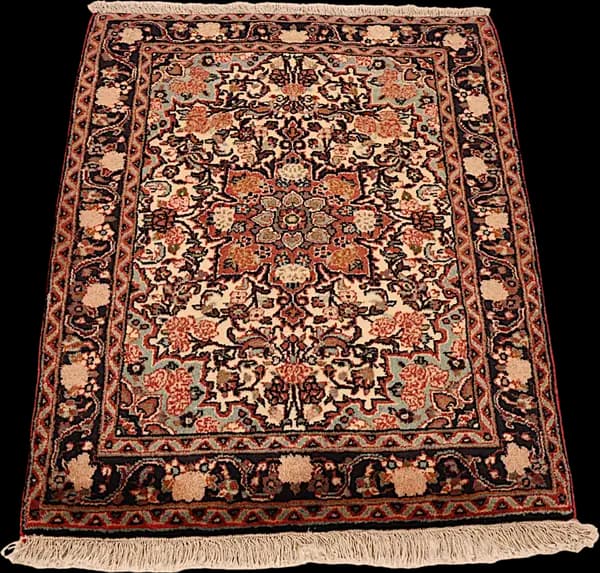
A Bijar, also written Bidjar, from the Kurdish region of western Iran, 94 x 73 cm (3'1" x 2'5"), a rug type long nicknamed the Iron Rugs of Persia for a density and firmness that outlasts almost anything else woven. Bijars are usually built on dark, heavy grounds carrying bold geometry and Persian floral work; this one is not.
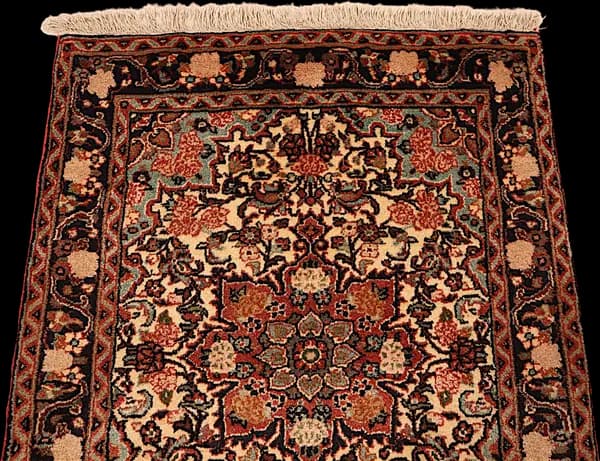
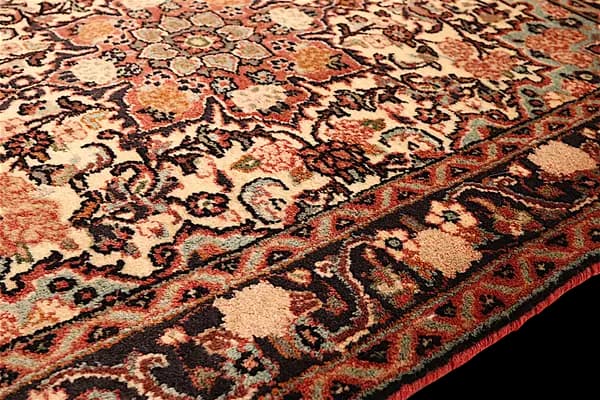
The first impression is pale and warm: an ivory field carrying a dense scatter of pink and salmon floral sprays and leafy vine work. At its centre sits a star-shaped medallion in brick red, built up in concentric layers that shift from red to teal to cream, giving it a raised, almost dimensional presence rather than a flat rosette. Around the whole field runs a wide black border filled with large camel-toned palmettes and scrolling vine, held in by narrow teal and red zigzag guard stripes.
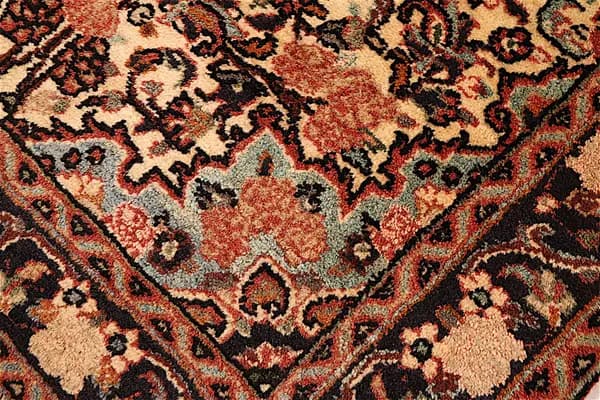
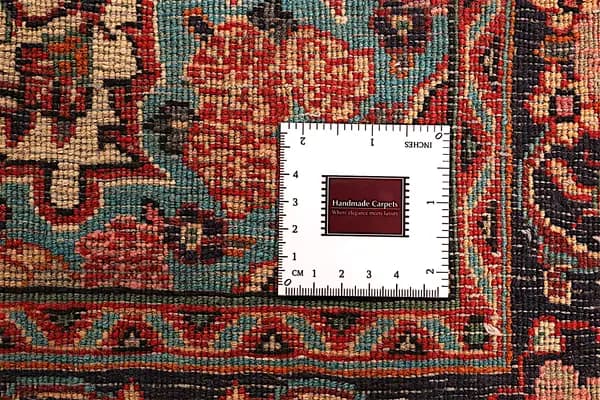
Bijar work is knotted from memory in Kurdistan, and this piece carries the tradition's defining trait: a knot count of 251,000 to 320,000 per square metre, among the tightest in Persian weaving. Packed this closely, the handspun wool pile, kept low at 15 millimetres, holds every floral outline and the medallion's layered edges sharp rather than letting them blur into the field. That same density is what lets Bijars be rolled but never folded, and what keeps their shape and crispness for decades.
At under a metre across, this is a rug for a hallway, a study, or beside a bed — seen close rather than crossed at a glance. Against a pale floor the ivory ground stays quiet, letting the brick-red medallion carry the colour; against dark wood it lifts the space. Underfoot it is dense and firm, built for daily use, and its layered medallion keeps shifting in colour as the light moves.
More on Bidjar rugs: origin, making and how to recognise a genuine piece
Fine quality weave
At 94 × 73 cm (0.69 m²) this is a small rug. It works beside a bed, in a reading corner, in front of a fireplace or as a mat by a door. It does not furnish a room; it makes a point in one.
Yes, knotted by hand — knot by knot on a loom, not machine-made. The density is 251,000 to 320,000 knots per square metre; across 0.69 m² that is roughly 170,000 to 220,000 individual knots, every one of them tied by hand.
Hand-spun wool still carries its own lanolin, which keeps liquid sitting on the surface for a moment: blot quickly, with clear water and a light cloth, working inwards and without rubbing. Otherwise regular vacuuming along the pile is enough. Turn the rug once or twice a year so light and footfall reach it evenly.
We are in the Hamburg Speicherstadt. Come and see this rug in daylight, or write to us — a person answers.
Certificate included verifying origin, materials, and craftsmanship.
Ref: 302725