Exclusive
Bidjar | Exclusive | With Silk · with silk
300 × 209 cm
15.635 €
3.456 €
Incl. VAT
In Stock · Ready to Ship
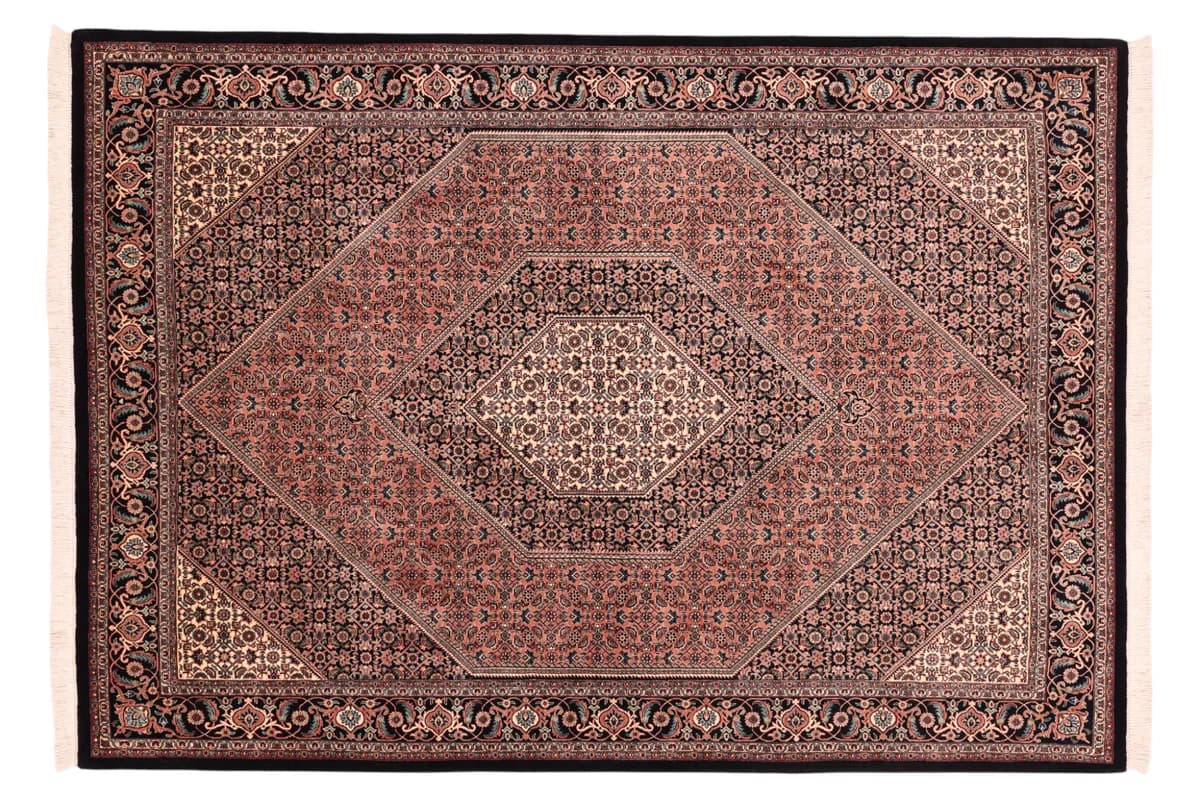
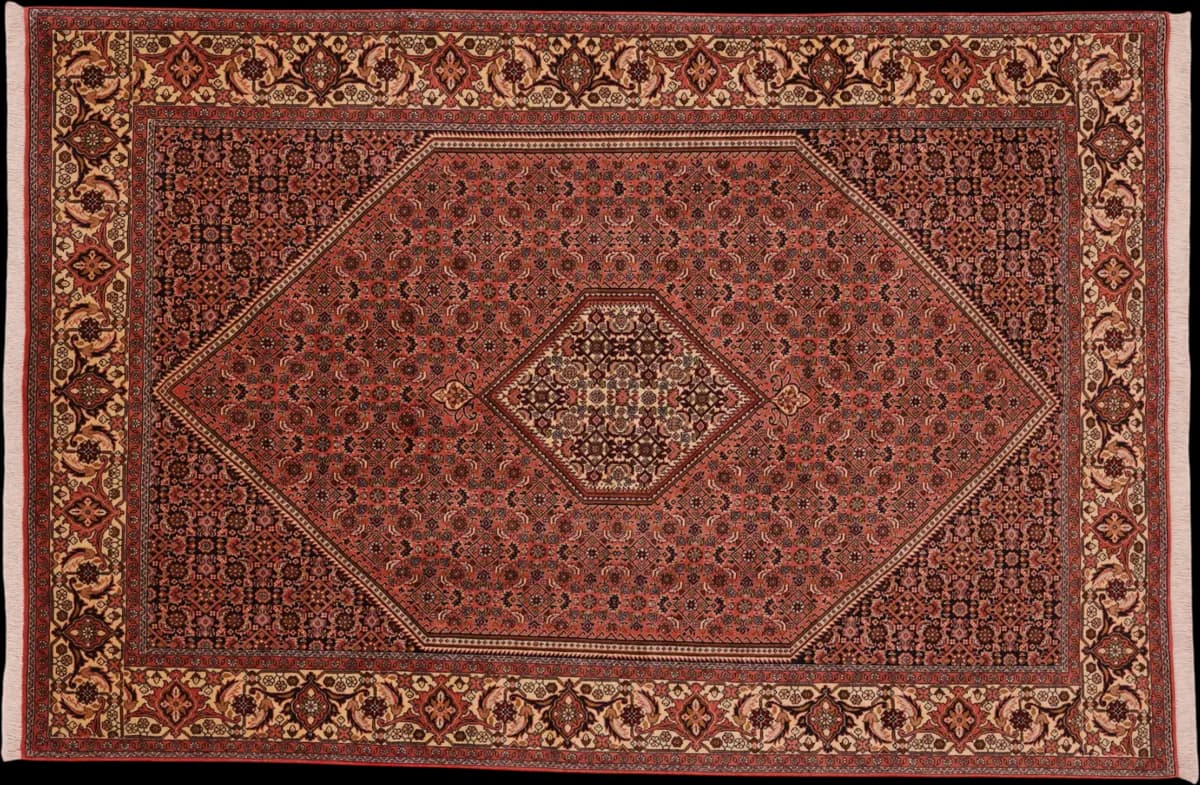
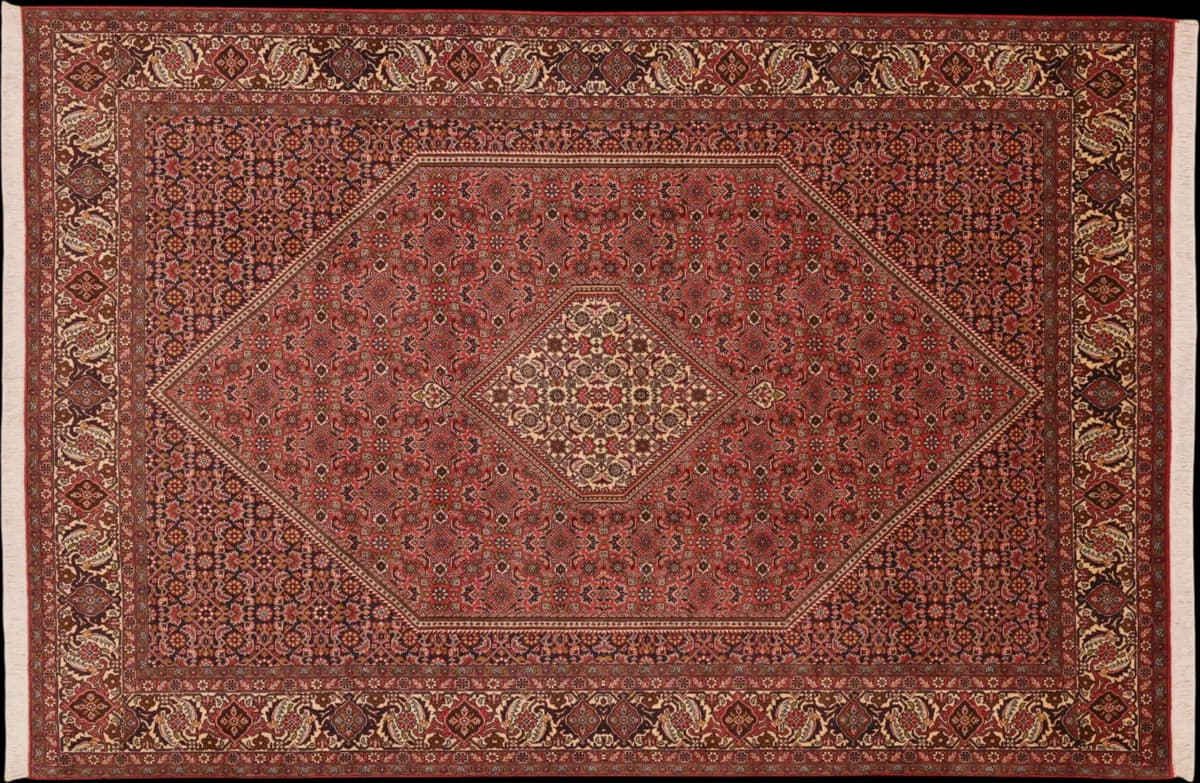
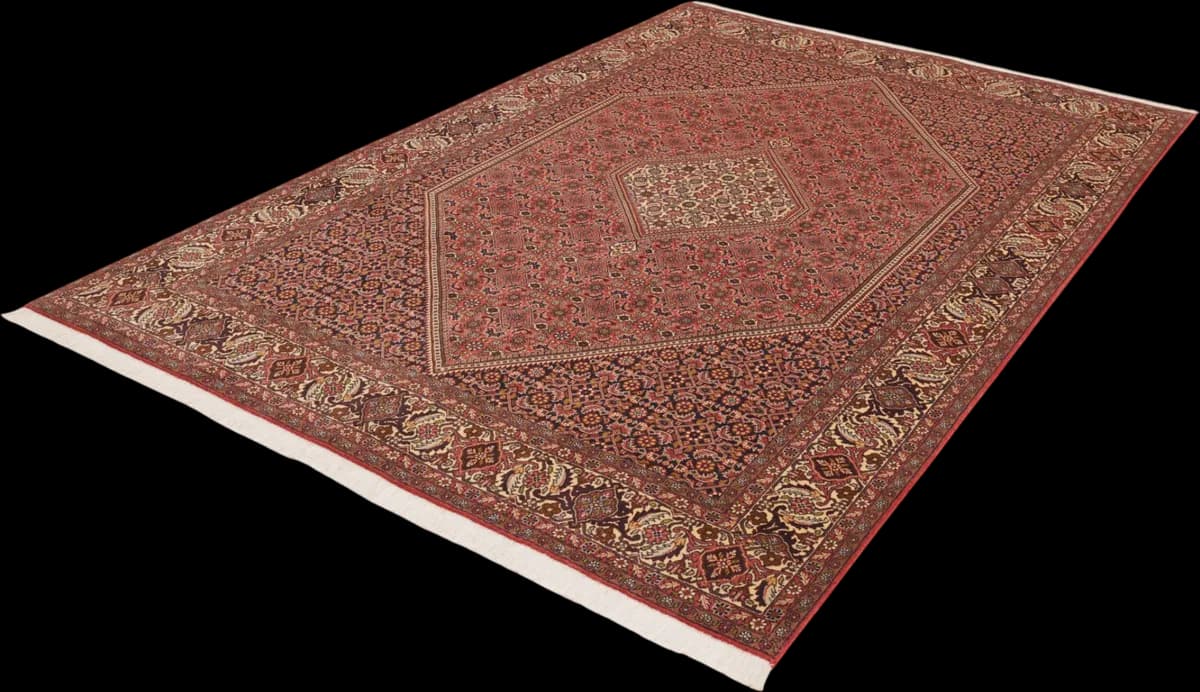
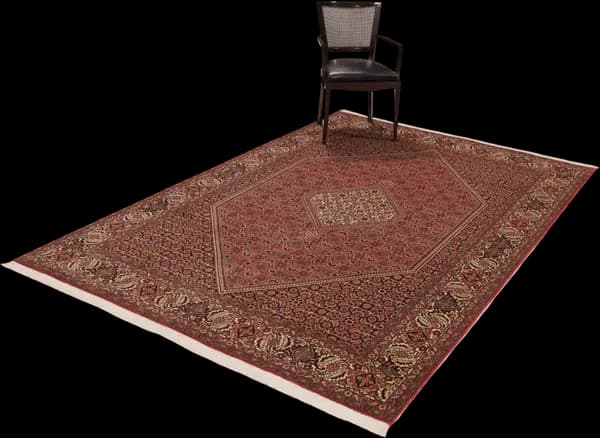
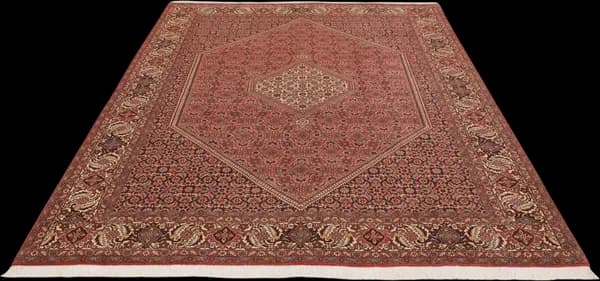
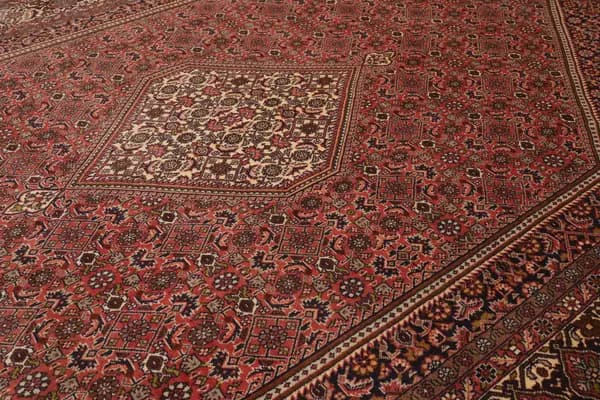
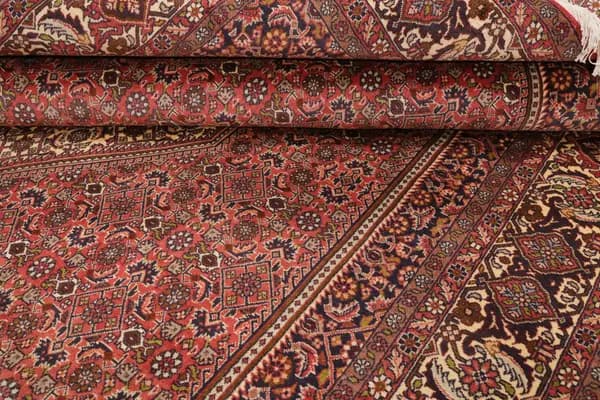
A Bijar rug from the Kurdish regions of western Iran, 294 x 196 cm (9'8" x 6'5"), also written Bidjar. These weavings have long carried the name "the Iron Rugs of Persia", earned by a structure so dense and tightly pressed that it holds its shape and its edges for decades, even under constant use. This particular piece was knotted from memory rather than from a drawn plan, in the tribal manner, which is why its geometry sits with a hand-made ease rather than a ruler's precision.
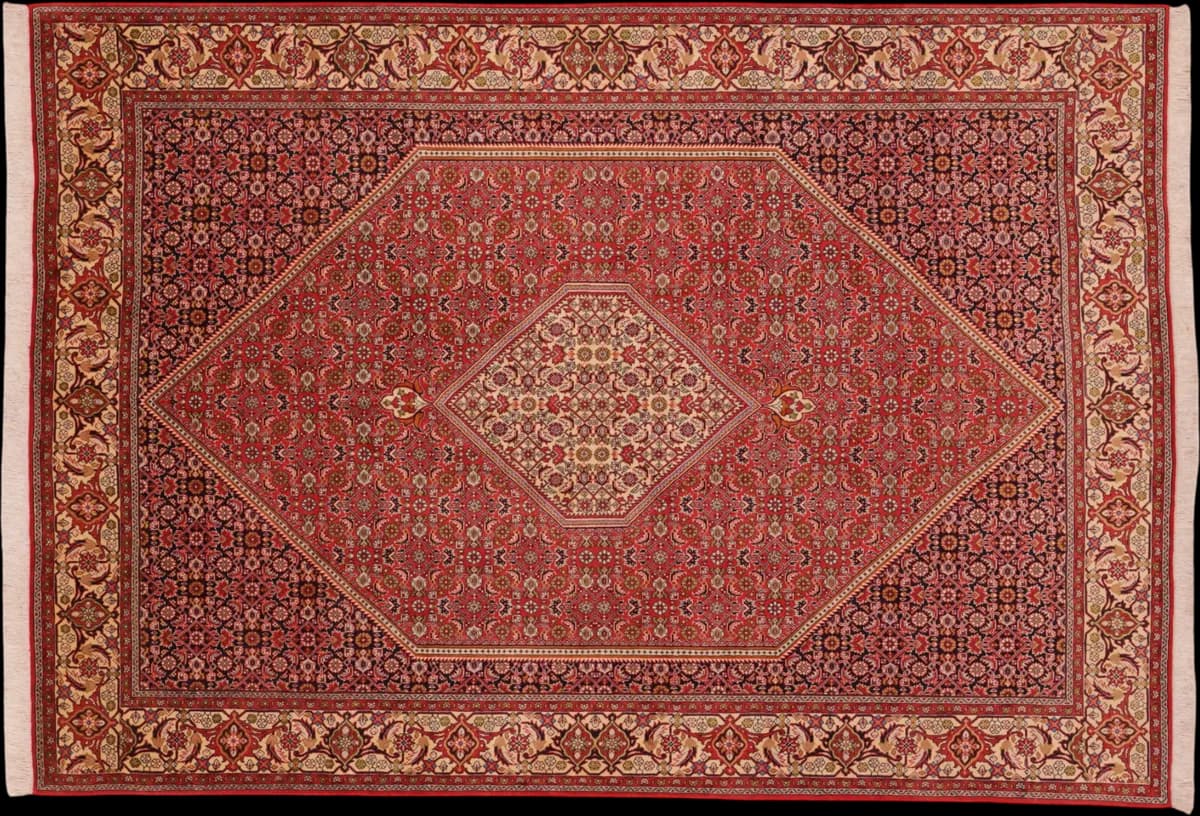
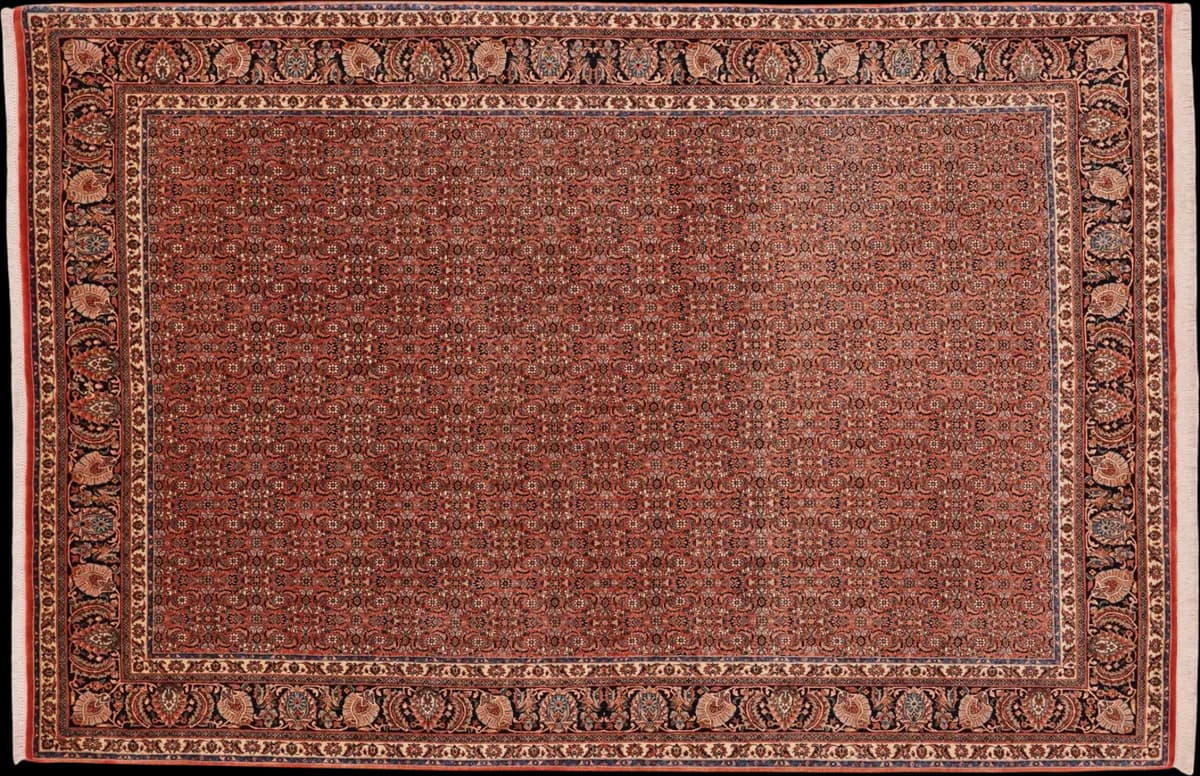
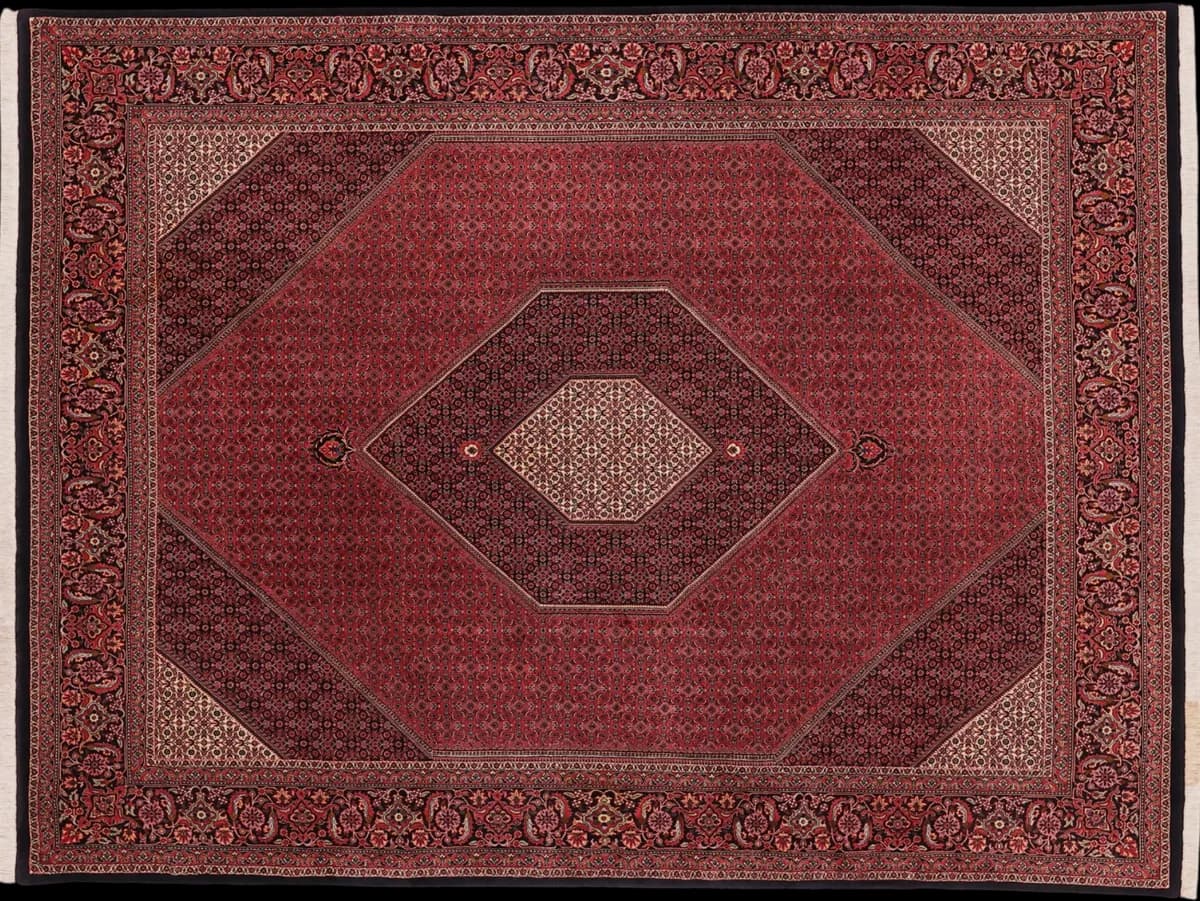
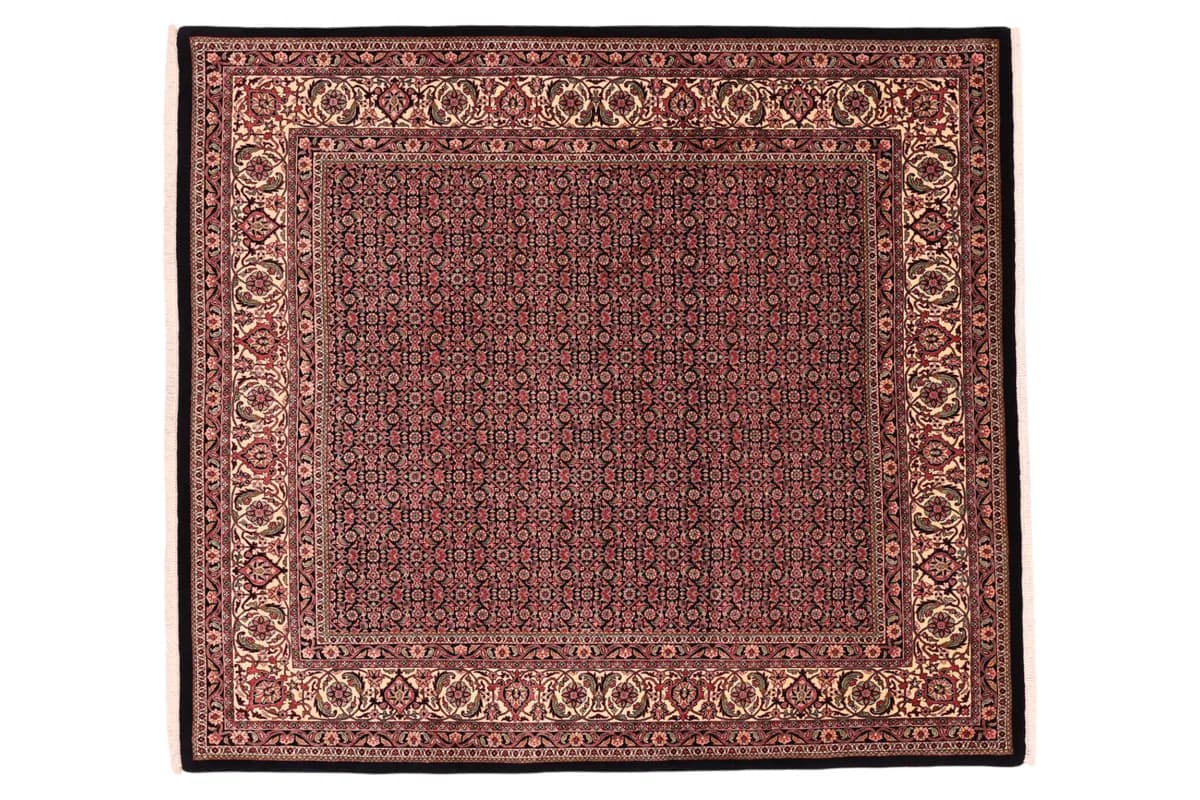
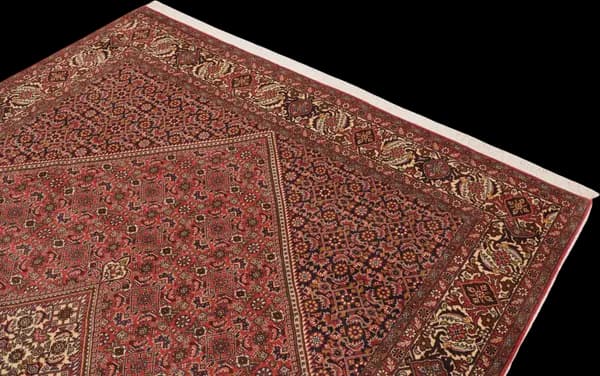
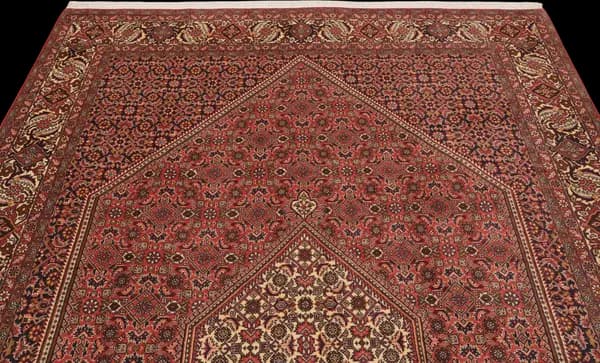
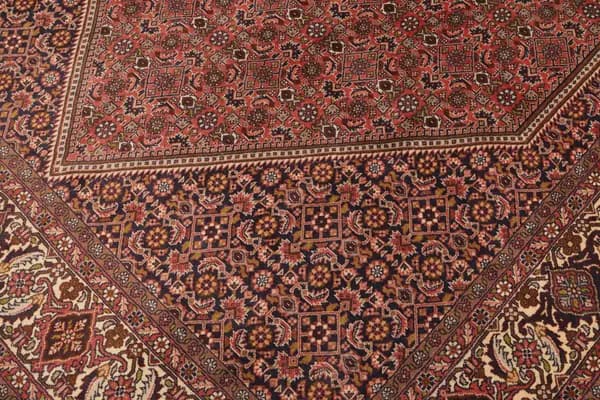
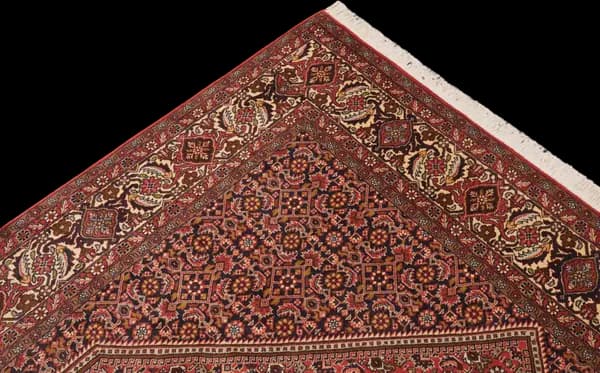
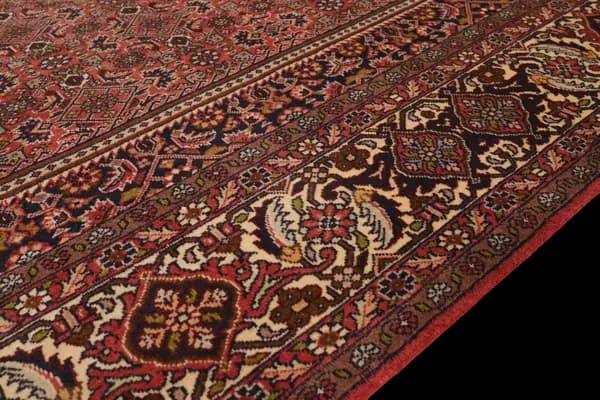
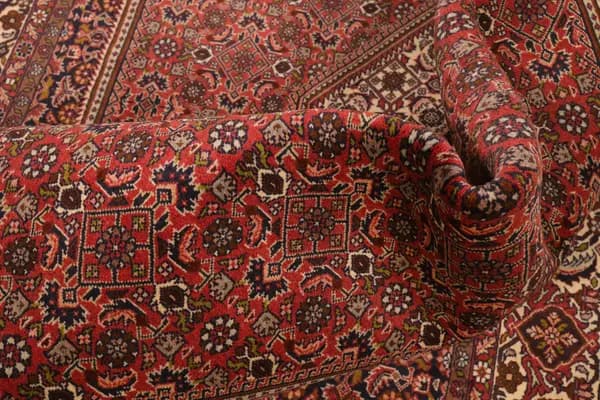
The field is a deep brick red, filled edge to edge with the dense, repeating Mahi lattice, small diamond forms interlocking across the whole ground in olive, teal and dusty pink. Out of this a large ivory diamond medallion sits at the centre, its edge cut sharp against the red rather than fading into the pattern around it, so the eye lands there first. Navy spandrels close off the four corners, echoing that same contrast. The border carries it further, a wide band of dark navy-brown filled with a cream floral vine and small diamond cartouches, held between narrow guard stripes that keep the red field and the border distinct from one another.
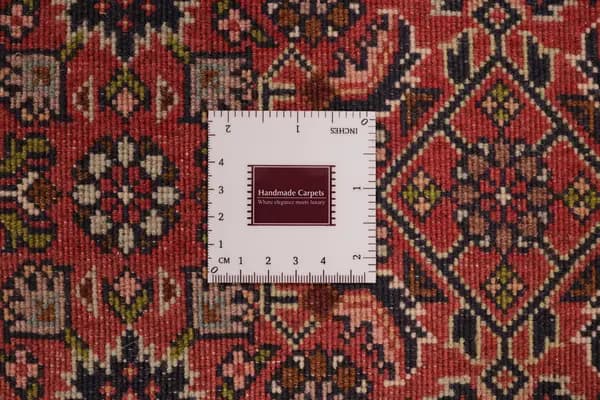
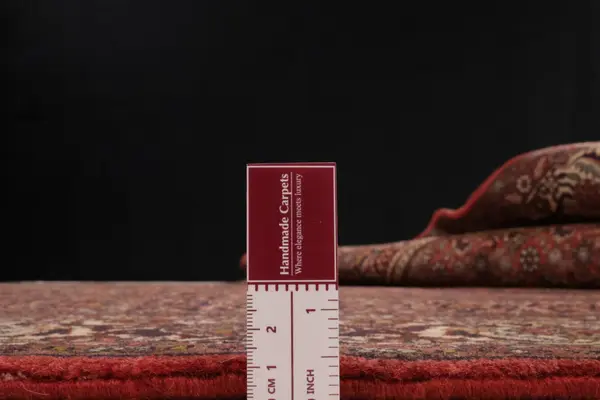
That sharpness at the centre is a direct result of how tightly this rug is knotted. At 321,000 to 380,000 knots per square metre, near the top of what Persian weaving reaches, fine outlines like the medallion's edge hold their line instead of blurring into the surrounding lattice. The pile is handspun wool over a cotton warp, and the slight unevenness in a hand-spun yarn is what gives the surface its faint, shifting sheen rather than a flat, uniform shine. At 15 mm the pile sits close and firm underfoot, and a rug built this way cannot be folded, only rolled, which tells you something about how solid the weave really is.
At close to three metres by two, this is a rug for a dining room under the table or a living room beneath a seating group, somewhere it will be seen whole. The brick red and navy hold their own against dark wood or leather furniture and warm a pale floor without needing help from anything else in the room. Underfoot it is dense and substantial, built for a room that gets used rather than one kept for best. Catch it under evening light and the ivory medallion is the first thing that lifts off the red, every time you walk in.
More on Bidjar rugs: origin, making and how to recognise a genuine piece
Superior craftsmanship
At 294 × 196 cm (5.76 m²) this is a large rug. It sits under a seating group with the front legs of sofa and chairs on it, or under a dining table for four. A table for six wants about 80 cm of clearance all round, and needs more.
Yes, knotted by hand — knot by knot on a loom, not machine-made. The density is 321,000 to 380,000 knots per square metre; across 5.76 m² that is roughly 1.8 to 2.2 million individual knots, every one of them tied by hand.
Hand-spun wool still carries its own lanolin, which keeps liquid sitting on the surface for a moment: blot quickly, with clear water and a light cloth, working inwards and without rubbing. Otherwise regular vacuuming along the pile is enough. Turn the rug once or twice a year so light and footfall reach it evenly.
We are in the Hamburg Speicherstadt. Come and see this rug in daylight, or write to us — a person answers.
Certificate included verifying origin, materials, and craftsmanship.
Ref: 324355