Exclusive
Bidjar | Exclusivewith silk
295 × 102 cm
7.350 €
9.000 €
Incl. VAT
In Stock · Ready to Ship
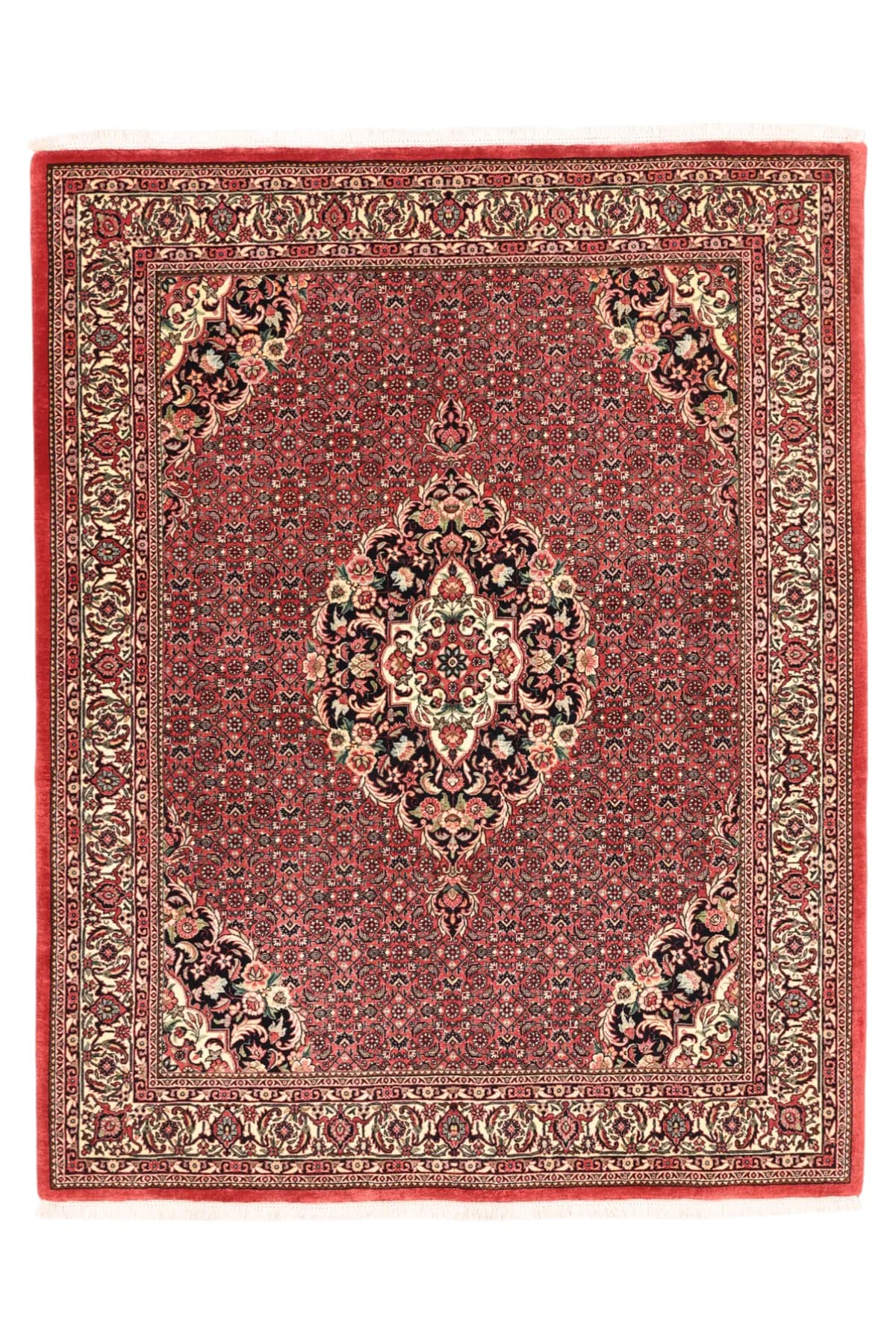
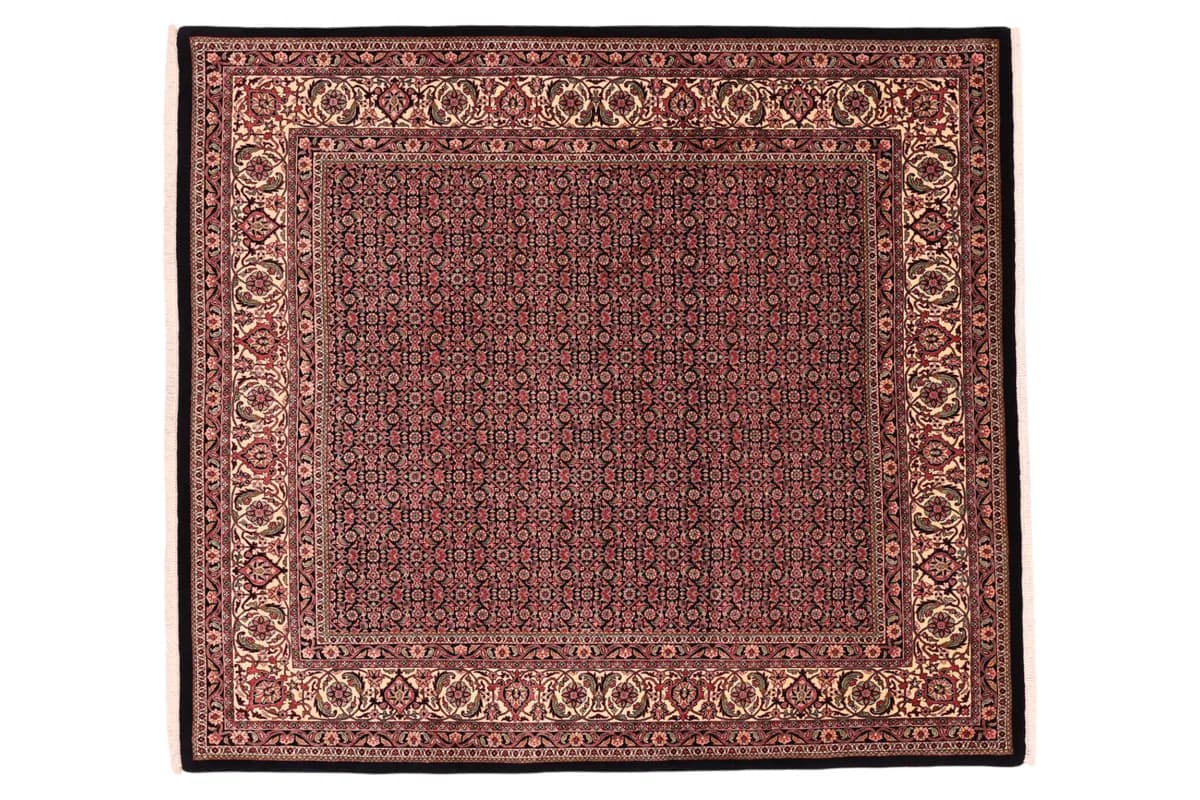
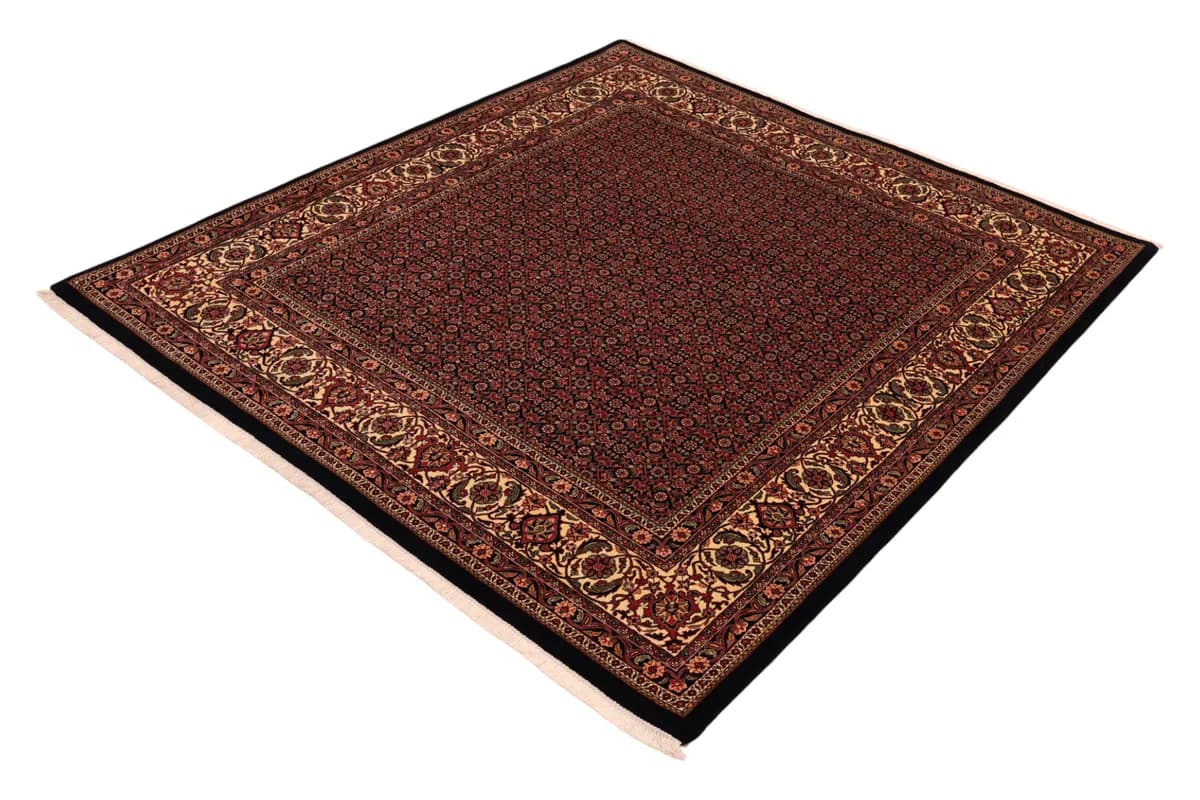
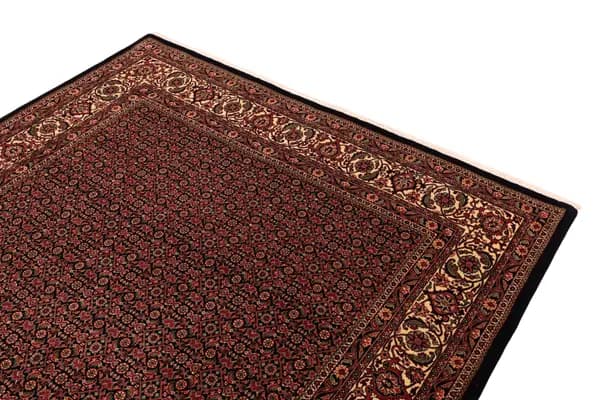
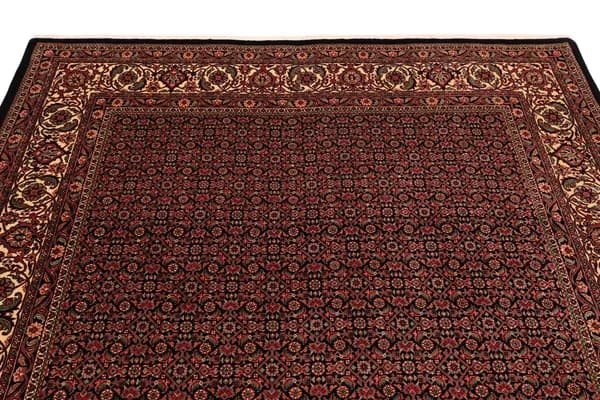
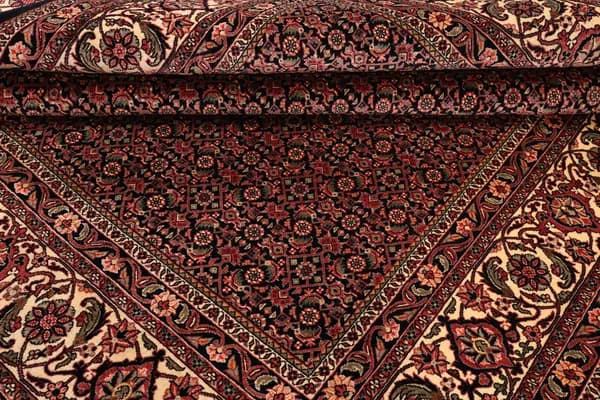
This is a Bijar, also spelled Bidjar, knotted in the Kurdish weaving regions of western Iran — the type long nicknamed the Iron Rugs of Persia for a density that lets it hold its shape and edge through decades of use. At 213 x 189 cm (7'0" x 6'2") the piece is close to square, and its most memorable feature is not the field itself but the border framing it: wide, built from several narrow concentric stripes, and almost as commanding as the pattern it encloses.
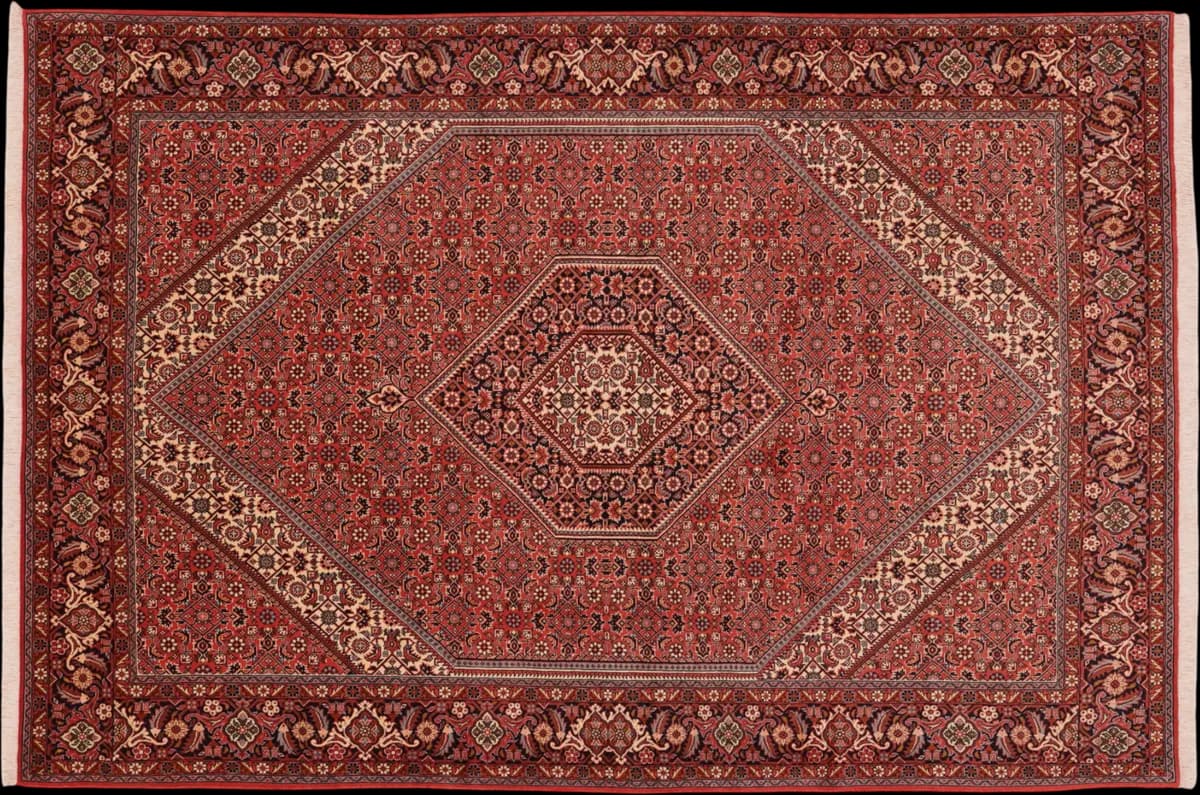
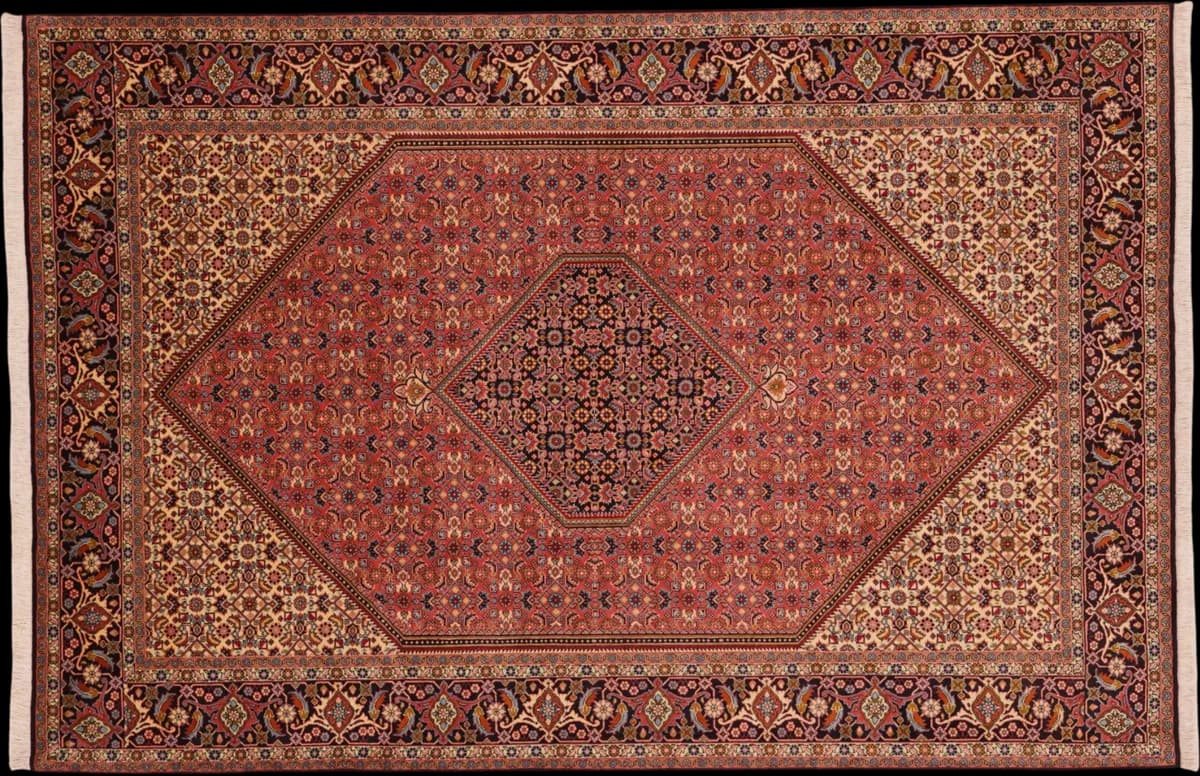
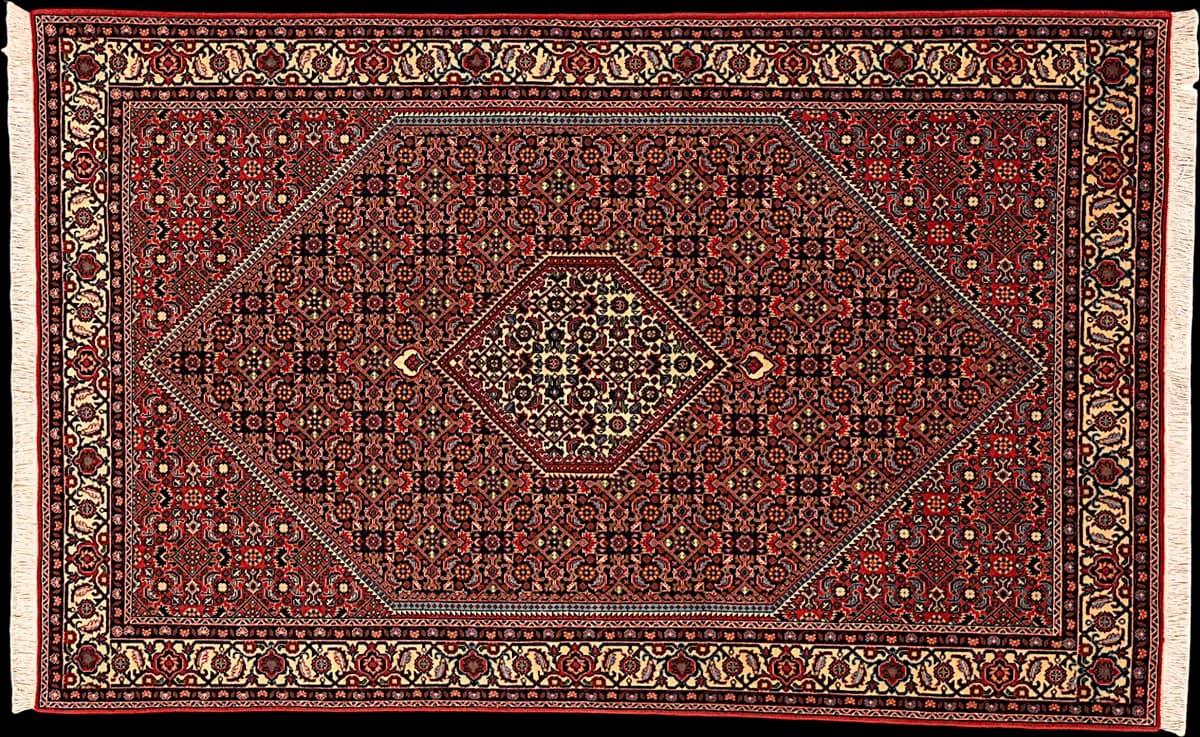
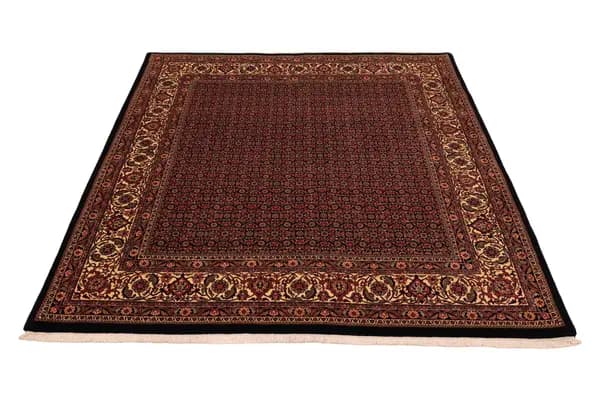
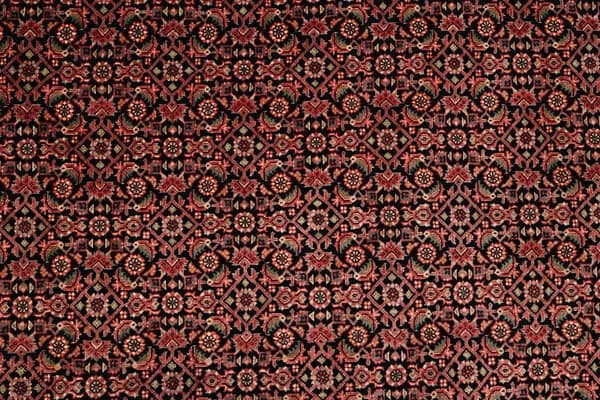
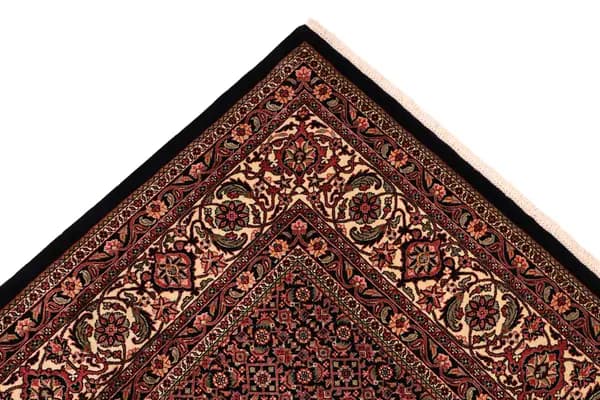
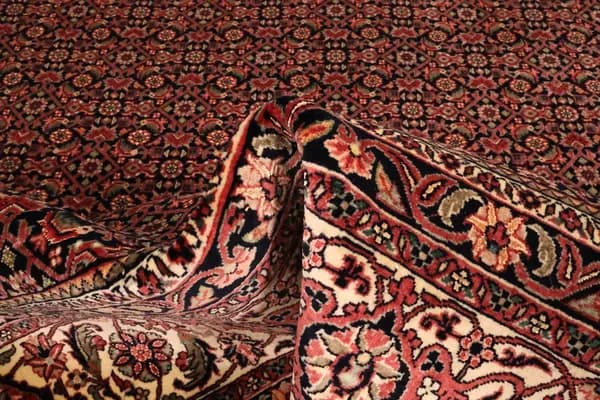
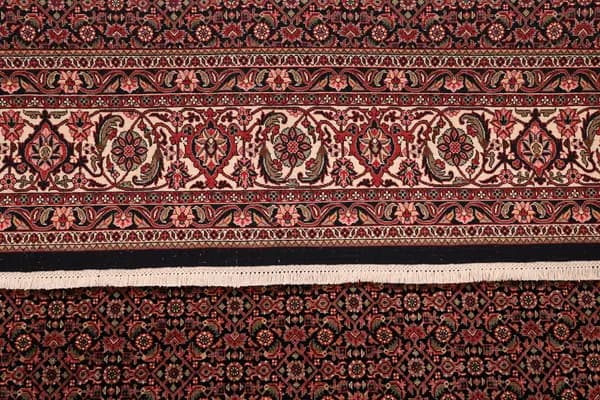
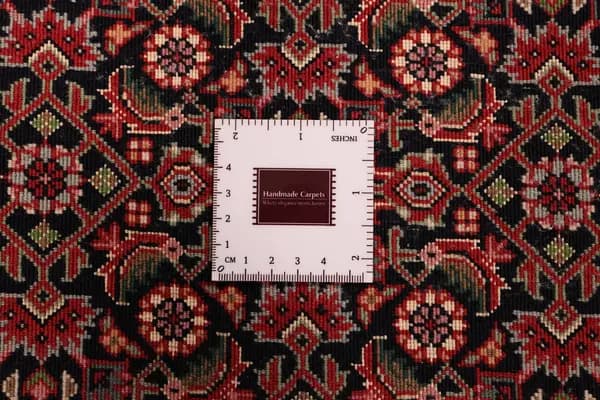
The overall impression is rust red laid over with dark navy, the two colours interlocking across the whole field in a dense Mahi lattice — small rosettes and serrated leaves repeating diamond by diamond, with no medallion to anchor the eye and no single point where the design begins or ends. Ivory takes over at the border, pale against the dark field, carrying its own rust-red palmettes and olive-green vinework, and it is here that several narrow dark guard stripes appear, banding the pale ground until the whole rug reads as a set of nested frames rather than a field with a single edge.
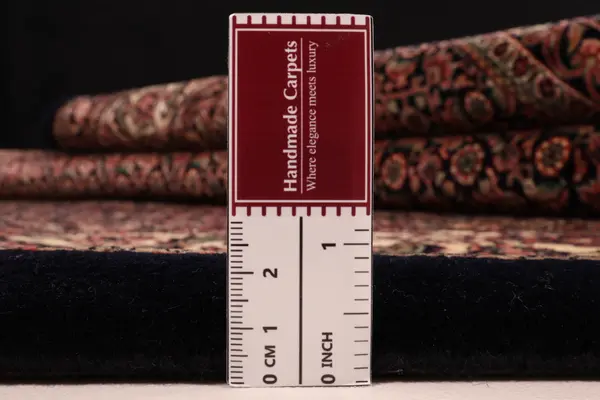
A knot count of 441,000 to 500,000 per square metre is among the highest a Persian loom produces, and it is this density that let the weaver draw several separate guard stripes cleanly rather than let them blur into one border, each stripe distinct however narrow it runs. A small amount of silk worked through the wool pile adds the faint sheen visible across the field, while the pile itself, set at 15mm, is pressed down tight rather than left loose — the source of a Bijar's particular substantial feel, and of its old habit of being rolled rather than folded, the structure being simply too compact to bend.
A piece this size and this close to square suits a dining table with room to spare on every side, or a seating group in a living room where the whole rug is seen at once rather than half hidden under furniture. Against pale flooring the rust red and navy hold their own without needing dark furniture to set them off, and the ivory border keeps the eye from crowding, giving the room a calm edge even where the field stays busy. Underfoot it is dense, firm and quietly heavy, wool pressed tight over a cotton foundation, built for a room that gets used rather than one that asks to be stepped around. What stays interesting over time is the frame itself, its layered stripes holding their own quiet rhythm against the field however the light in the room moves.
More on Bidjar rugs: origin, making and how to recognise a genuine piece
Exceptionally fine weave
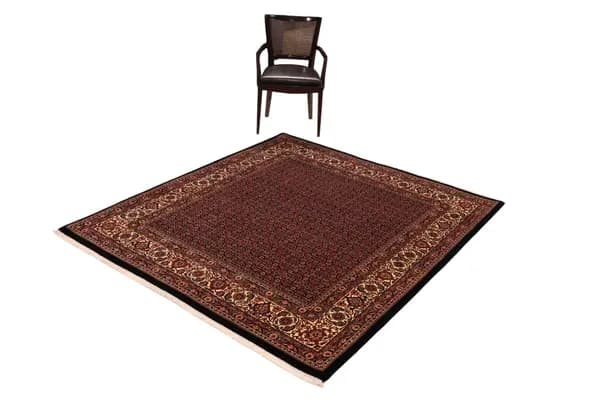
At 213 × 189 cm (4.03 m²) this is a medium rug. It works in front of a sofa, in front of a bed or in a study. It is too small for a dining table — there you want about 80 cm of clearance so a chair does not tip over the edge when pushed back.
Yes, knotted by hand — knot by knot on a loom, not machine-made. The density is 441,000 to 500,000 knots per square metre; across 4.03 m² that is roughly 1.8 to 2.0 million individual knots, every one of them tied by hand.
This pile contains silk and is more delicate than pure wool. Vacuum without a rotating brush and along the pile, do not beat it, and keep it out of permanent direct sun. Blot spills at once with a light cloth, never rub. For a proper clean a silk-blend rug belongs in expert hands — we handle that for pieces bought from us.
We are in the Hamburg Speicherstadt. Come and see this rug in daylight, or write to us — a person answers.
Certificate included verifying origin, materials, and craftsmanship.
Ref: 363147