Bidjar
175 × 114 cm
1.050 €
3.552 €
Incl. VAT
In Stock · Ready to Ship
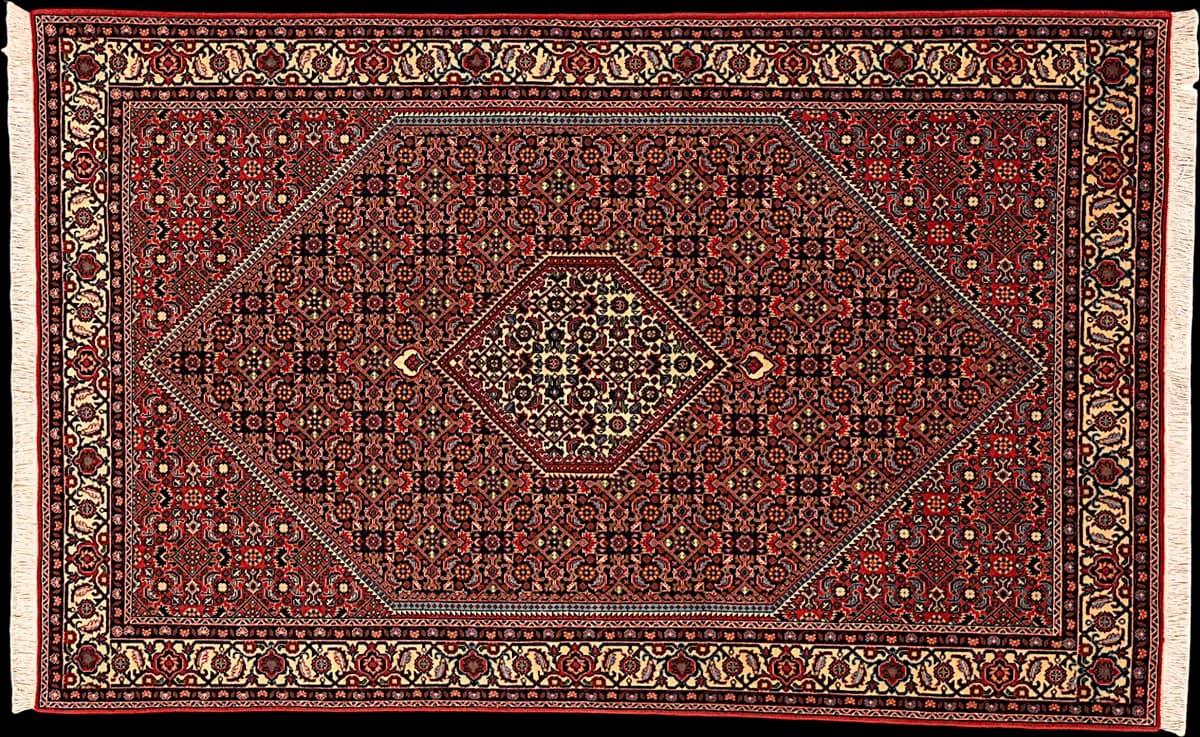
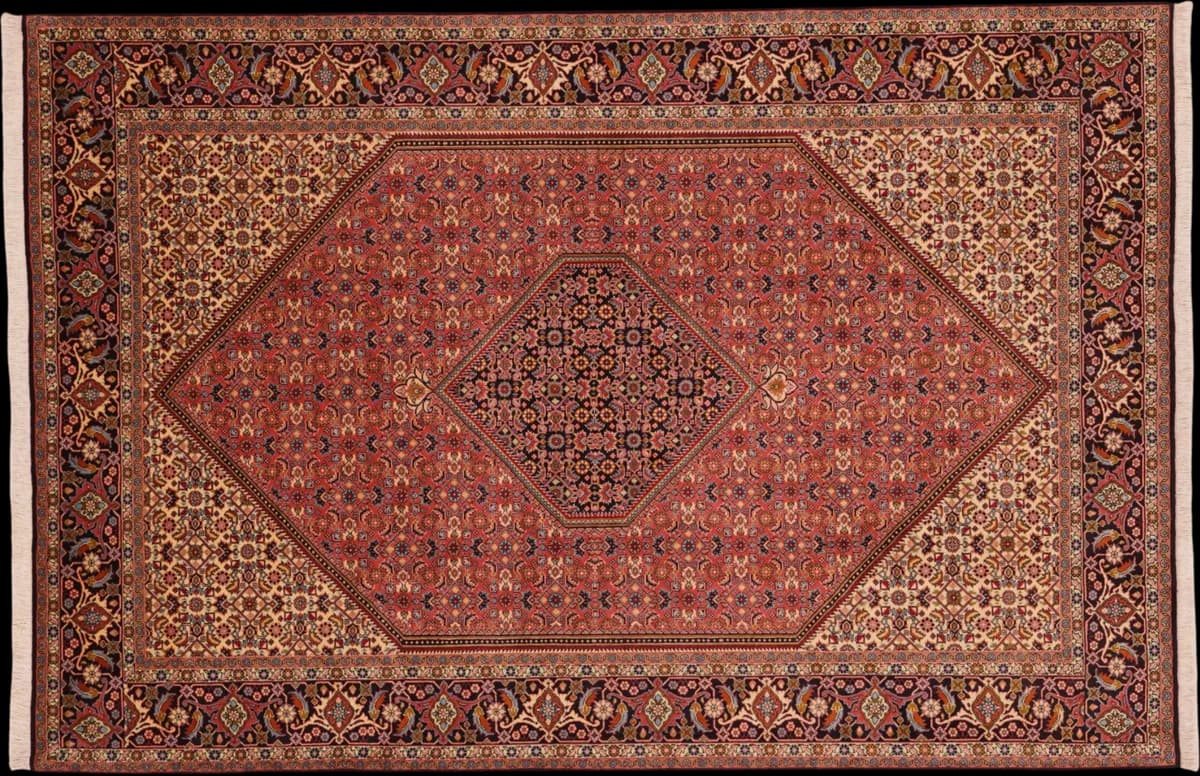
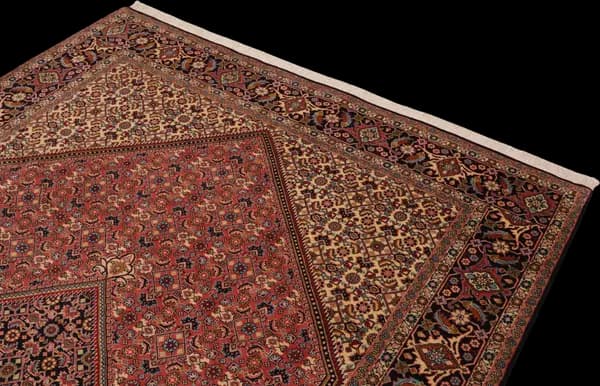
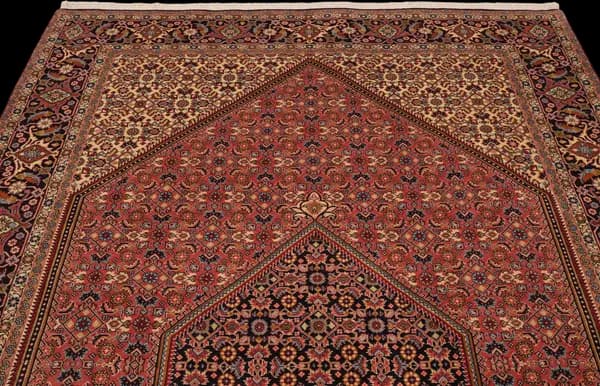
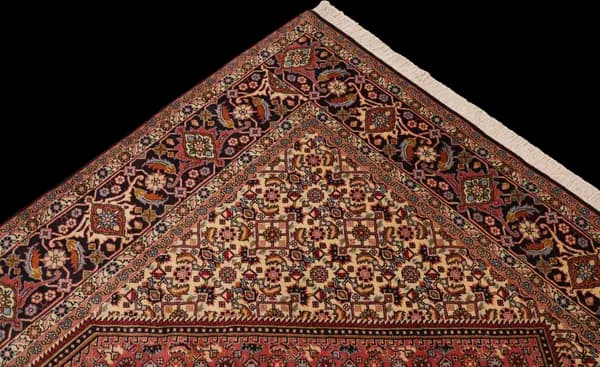
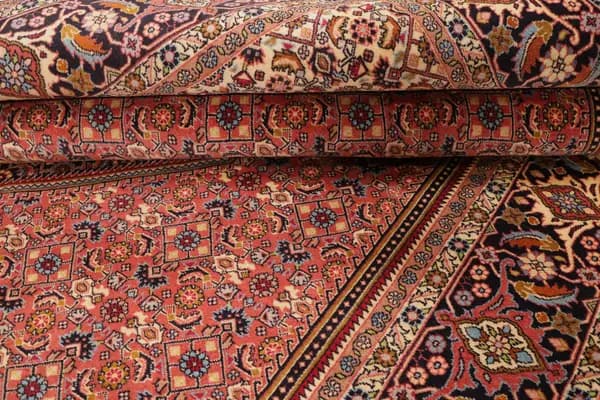
A Bidjar, also written Bidjar or Bijar, from the Kurdish regions of western Iran, 299 x 198 cm (9'10" x 6'6"). Generations of collectors have called this type the iron rug of Persia, for a structure pressed so tightly that the finished piece can only be rolled, never folded. It is a rug knotted from memory rather than a drawn plan, and what is known above all for is how long it lasts.
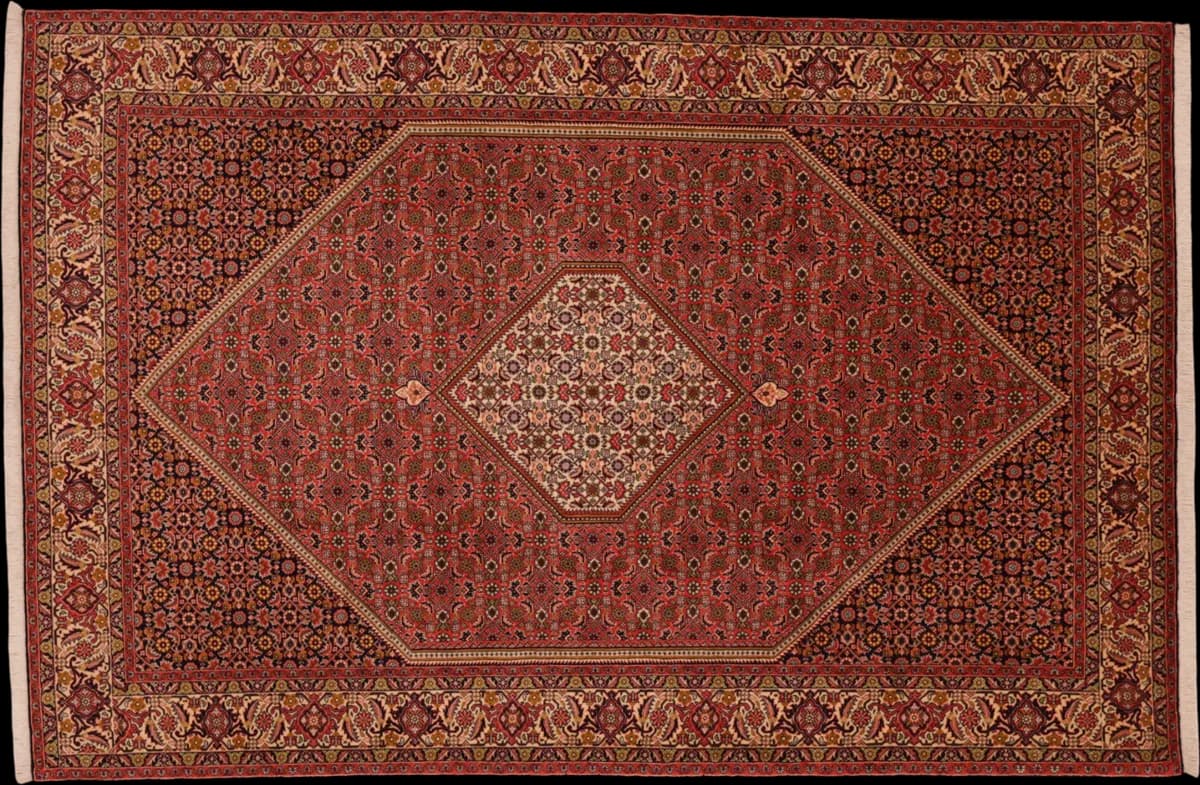
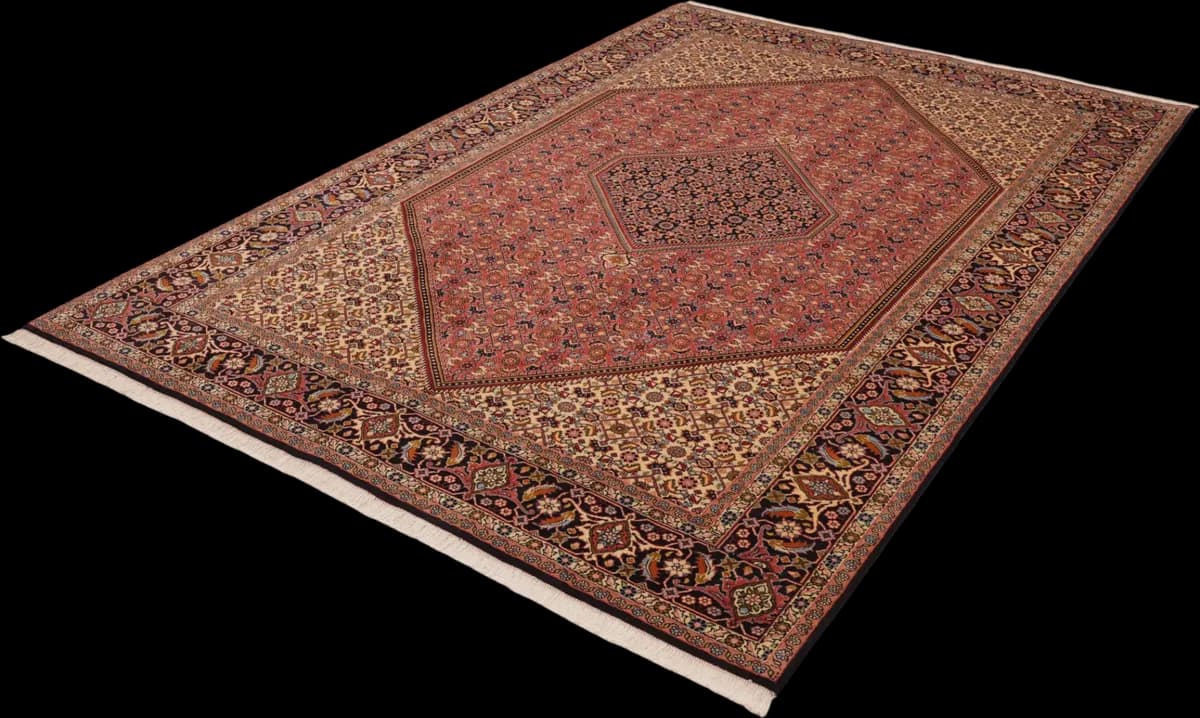
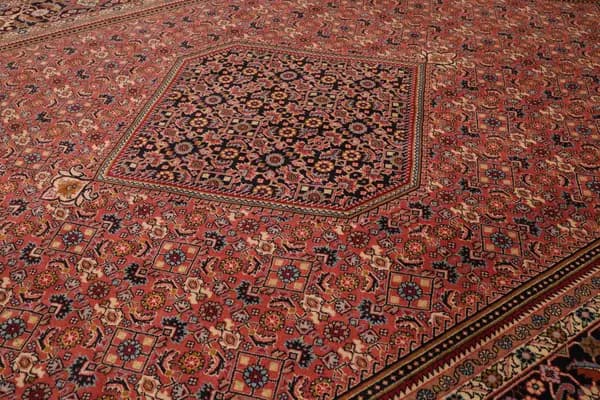
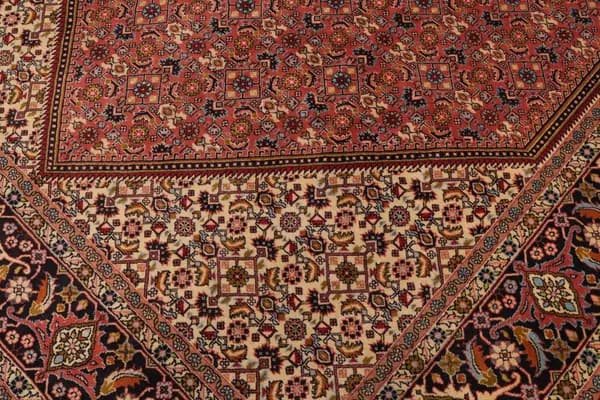
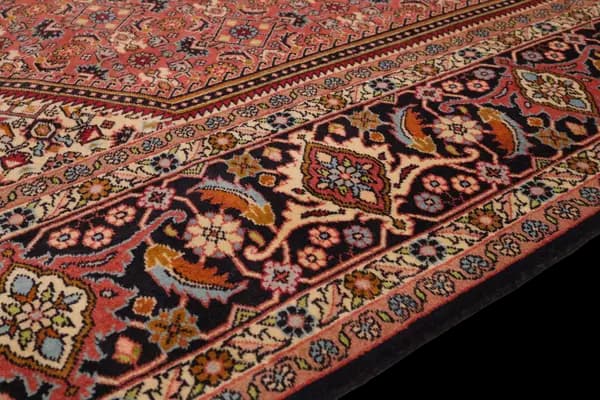
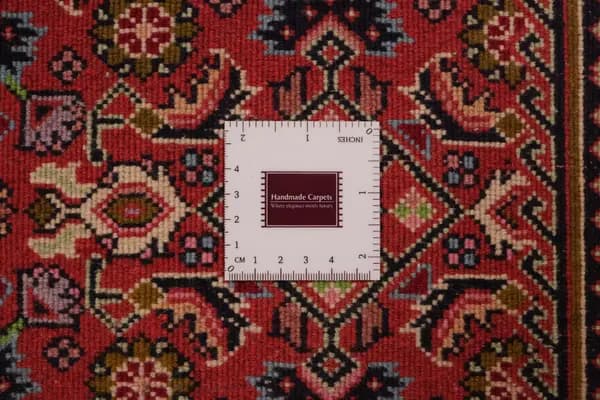
The first impression is a bold navy medallion floating on a warm brick-red ground. Beneath it runs a dense Mahi lattice in reddish-brown, drawn right into the corners without loosening or thinning, cream spandrels echoing the same small-scale pattern at each end. The medallion itself is stepped rather than smoothly curved, a lobed hexagon with small cream palmettes marking its four points. Around all of this sits a wide navy border, close to a fifth of the rug's width, carrying a running floral vine in rose, ochre, teal and cream, a softer, more open register against the tight red field it encloses.
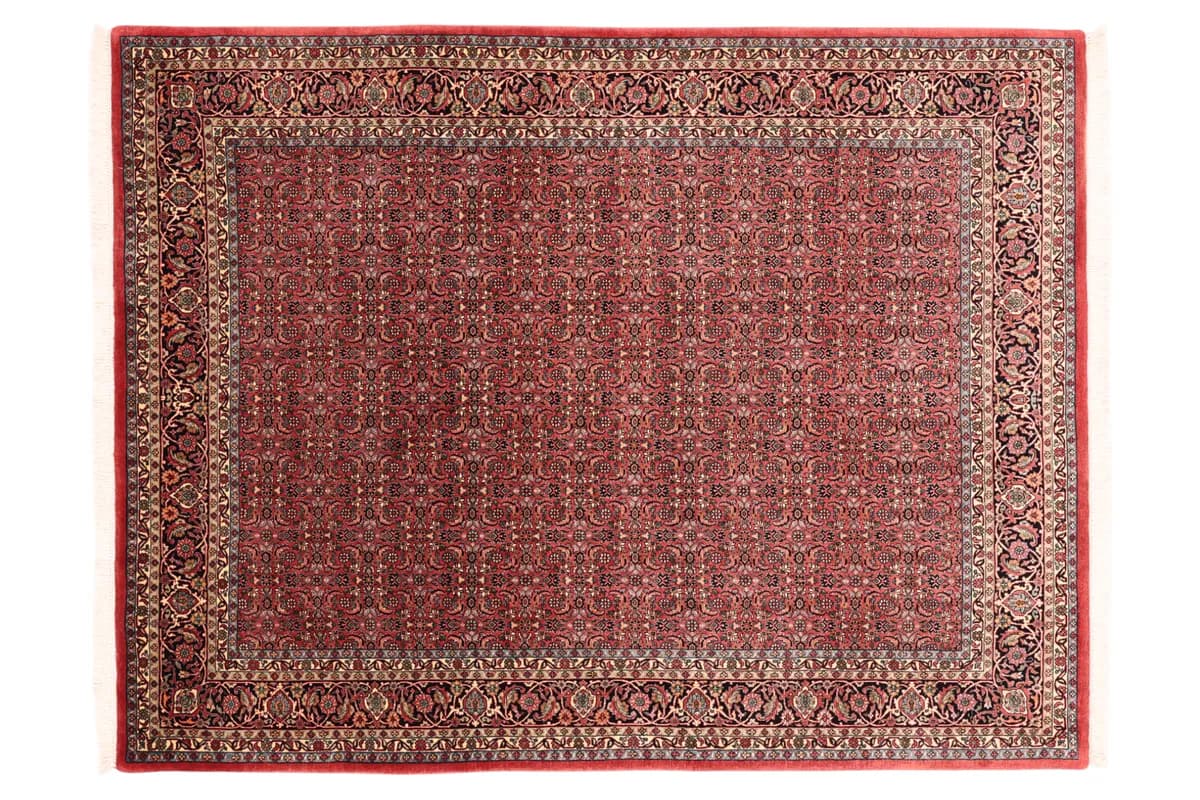
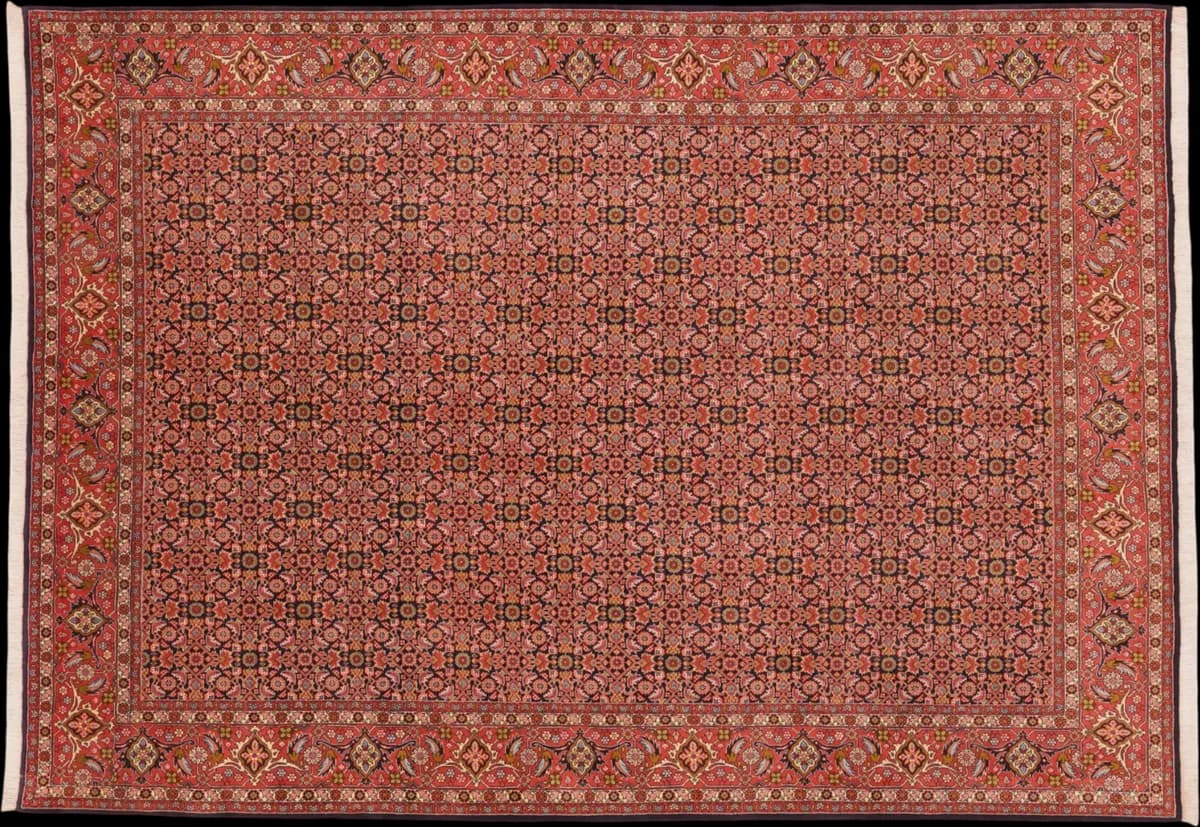
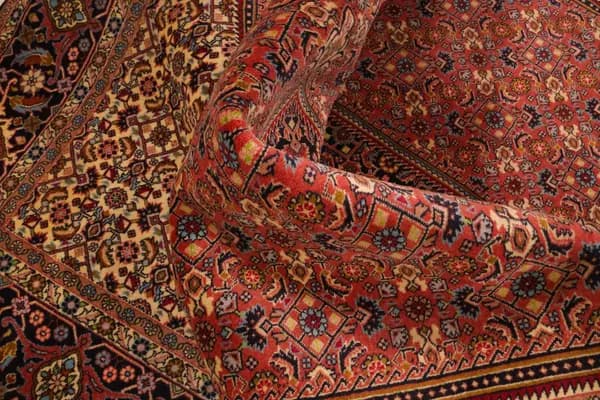
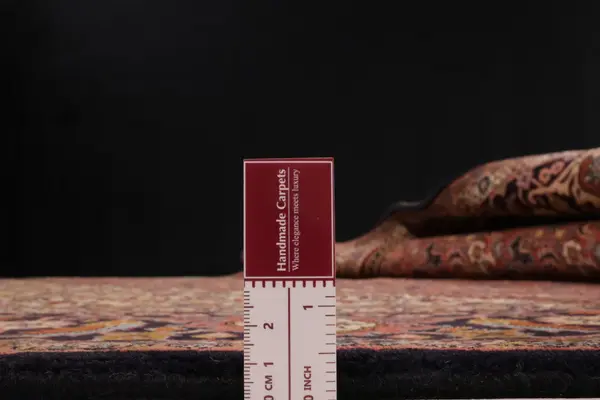
This crispness comes from the knotting itself: 321,000 to 380,000 knots to the square metre, among the tightest counts in Persian weaving. At that density a pattern can be carried into a corner and still hold its edge, rather than blurring the way looser village work often does, and it is unusual to see a piece knotted from memory read this cleanly. The pile is hand-spun wool, only 15 mm deep, set over a cotton warp, and hand-spun yarn takes a faint sheen that machine-spun wool never quite manages. Pressed this firmly, the rug sits heavy in the hand and firm underfoot.
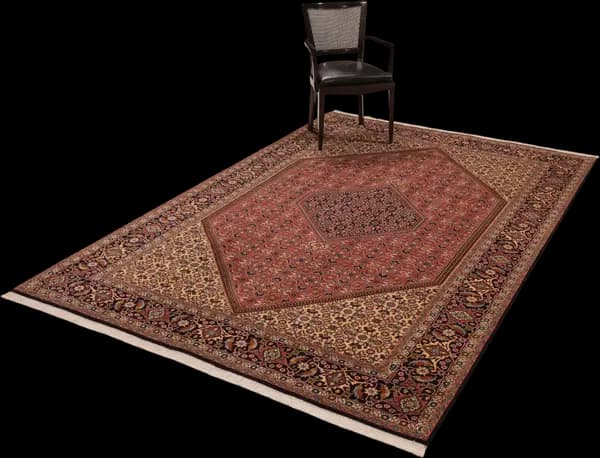
At this size it belongs under a dining table or in front of a sofa group, somewhere it will be seen whole. The brick red holds its own against dark wood and warms a pale floor without needing help from anything else in the room. Underfoot it is dense and substantial rather than soft, built for a room that gets used, not one that is kept for best. Move a lamp past it in the evening and the hand-spun wool catches the light along the lattice, so the pattern seems to shift very slightly as you cross the room.
More on Bidjar rugs: origin, making and how to recognise a genuine piece
Superior craftsmanship
At 299 × 198 cm (5.92 m²) this is a large rug. It sits under a seating group with the front legs of sofa and chairs on it, or under a dining table for four. A table for six wants about 80 cm of clearance all round, and needs more.
Yes, knotted by hand — knot by knot on a loom, not machine-made. The density is 321,000 to 380,000 knots per square metre; across 5.92 m² that is roughly 1.9 to 2.2 million individual knots, every one of them tied by hand.
Hand-spun wool still carries its own lanolin, which keeps liquid sitting on the surface for a moment: blot quickly, with clear water and a light cloth, working inwards and without rubbing. Otherwise regular vacuuming along the pile is enough. Turn the rug once or twice a year so light and footfall reach it evenly.
We are in the Hamburg Speicherstadt. Come and see this rug in daylight, or write to us — a person answers.
Certificate included verifying origin, materials, and craftsmanship.
Ref: 404665