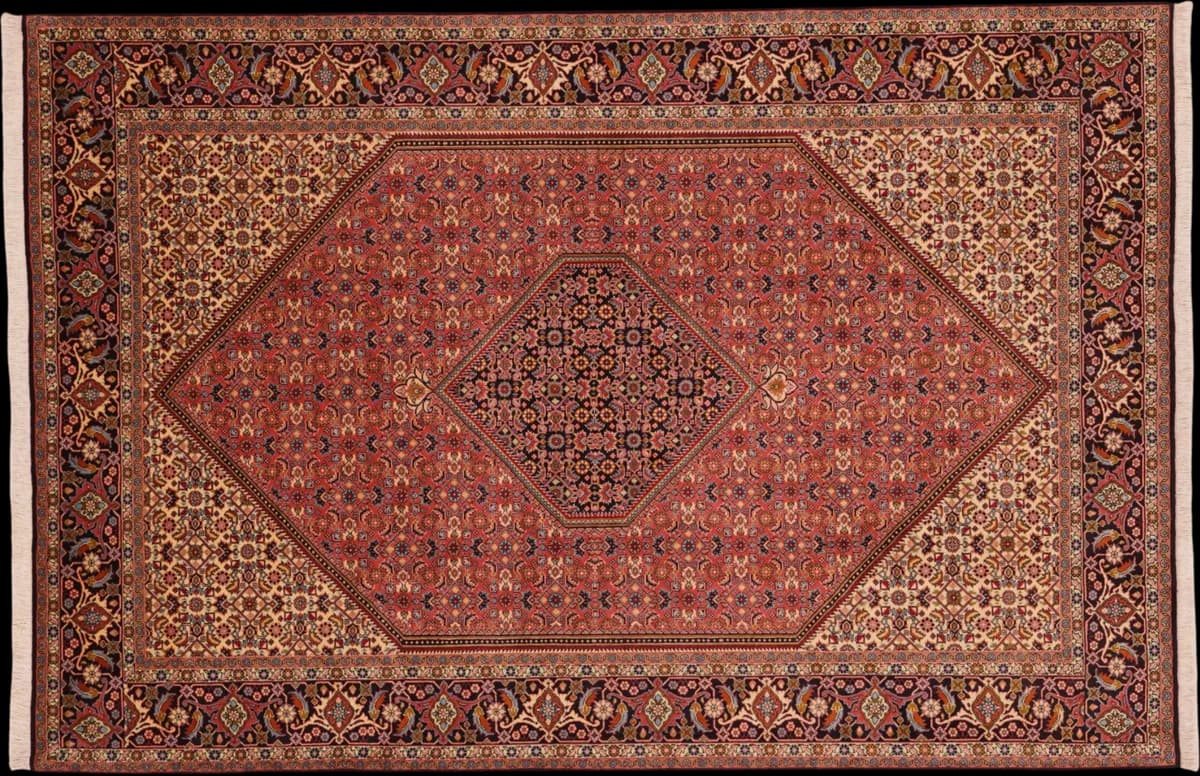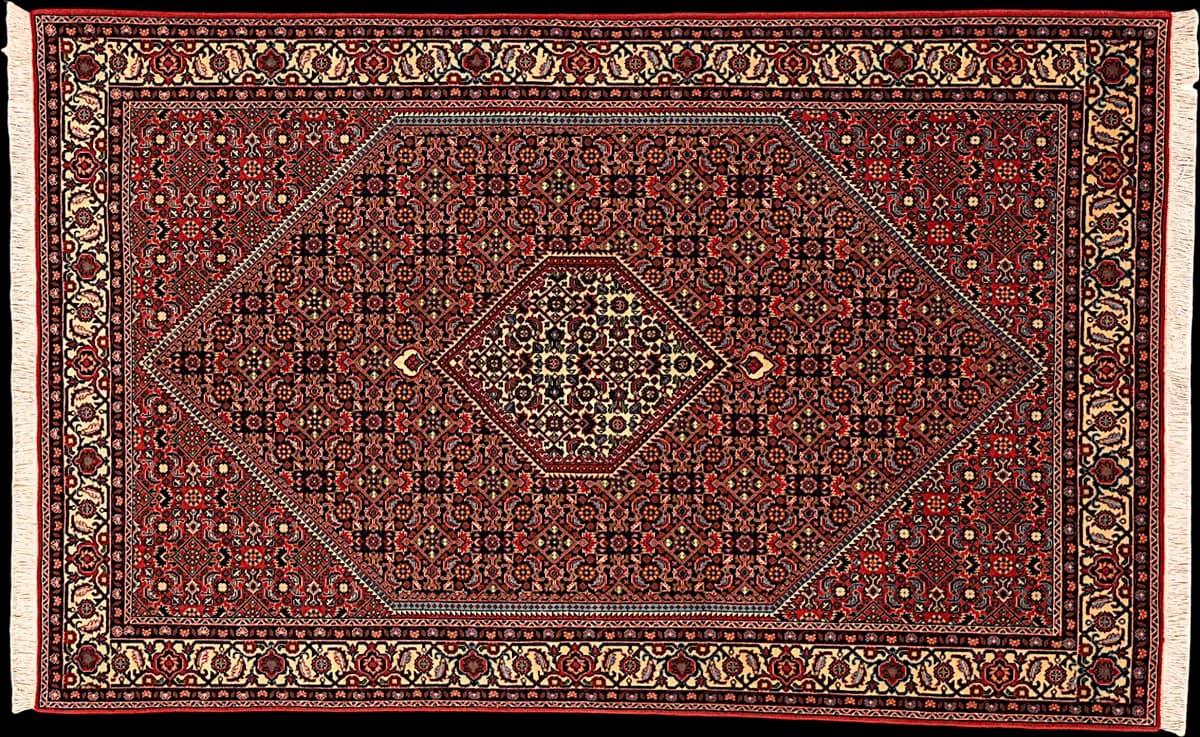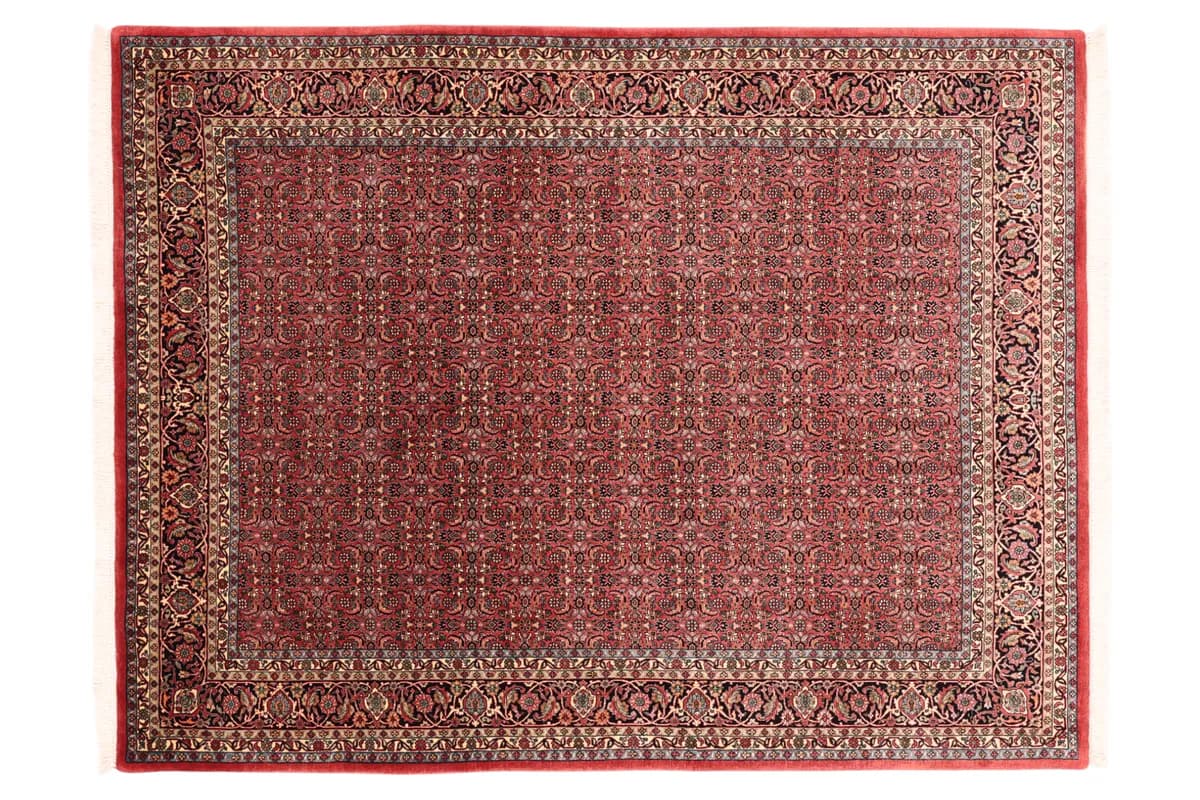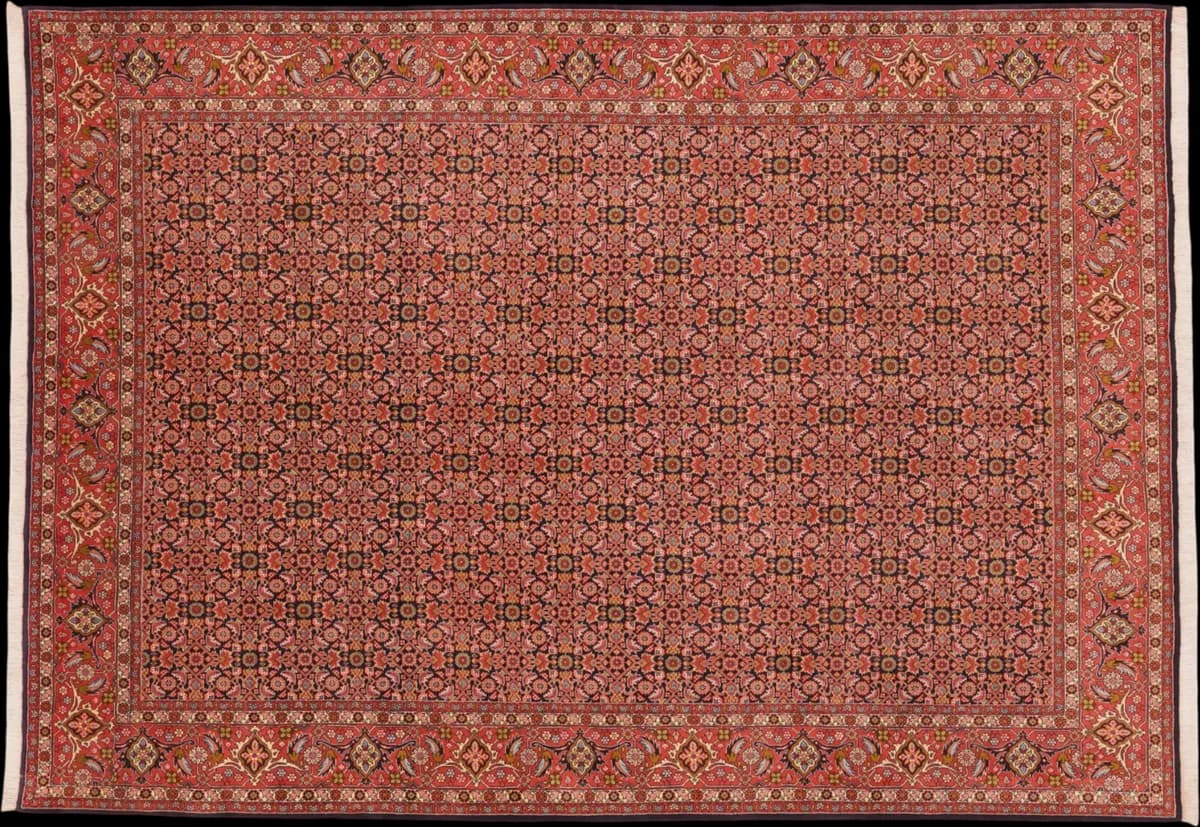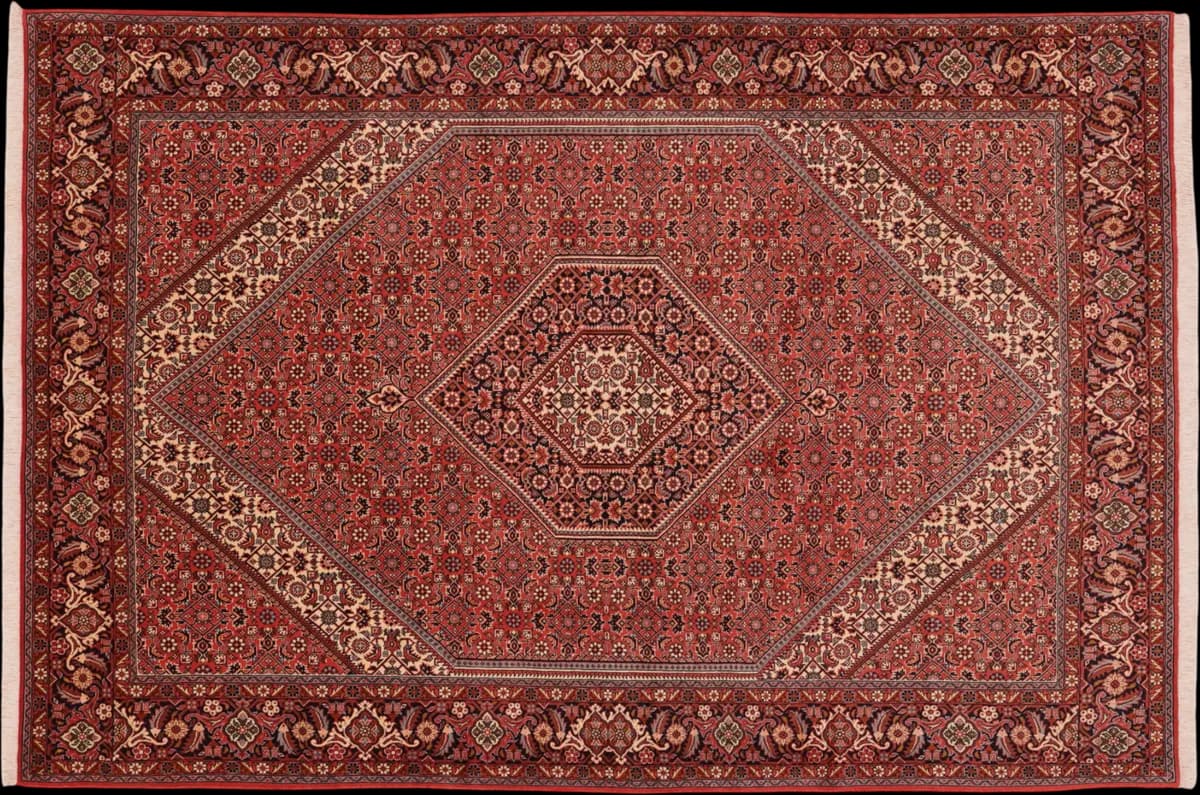
Bidjar
295 × 200 cm
4.650 €





1.680 €
Incl. VAT
In Stock · Ready to Ship
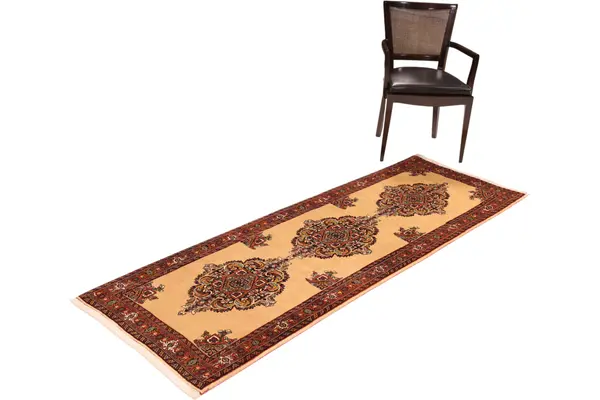
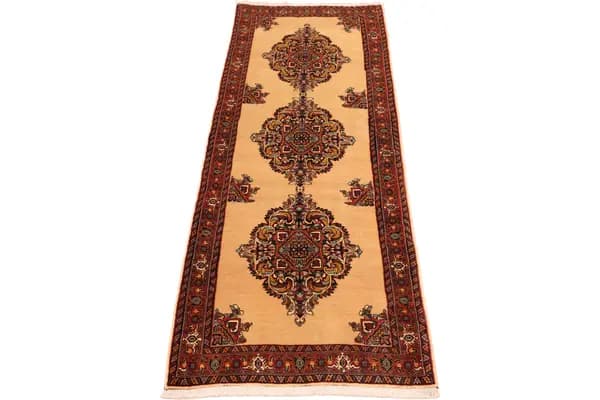
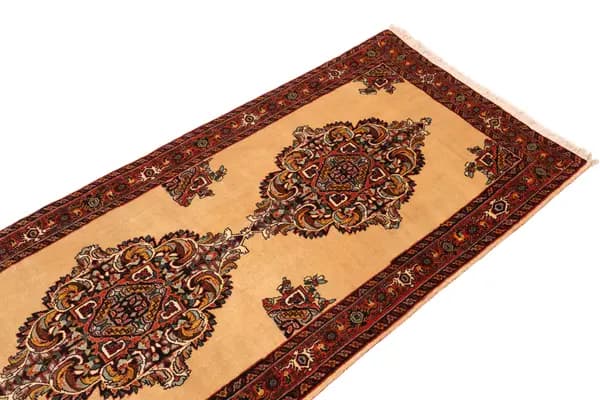
This is a Bidjar runner, also written Bijar, hand-knotted in the Kurdish weaving regions of western Iran, 226 x 77 cm (7'5" x 2'6"). The type is known across the Persian tradition as the iron rug, for a structure so dense and firmly packed that it cannot be folded, only rolled. Most Bidjar rugs are room-sized; this one carries that density into a narrow field.
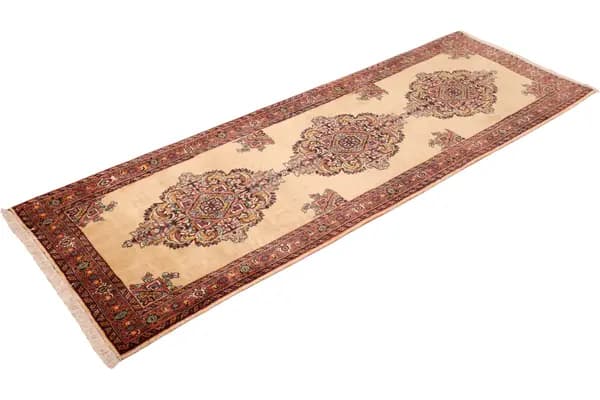
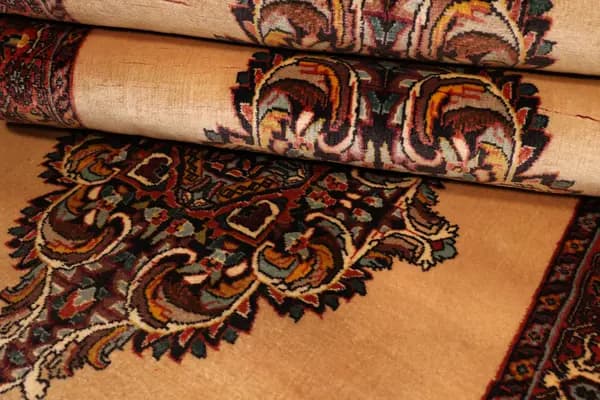
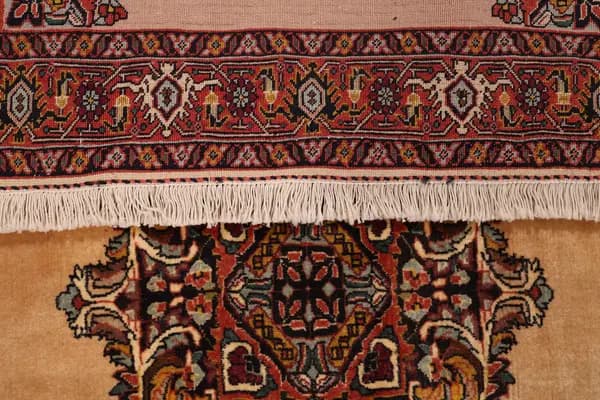
The field is a warm goldbeige, open and unhurried, and down its length three lozenge medallions run in a column, each linked to the next by a small pendant tip. This is the Seh Torandj arrangement, three medallions rather than one, and it suits a runner well. Each lozenge holds burgundy within a navy and indigo outline, and mustard gold and ivory palmettes fill the corners. A deep madder red border closes the field, the surface tight and even, with a light sheen.
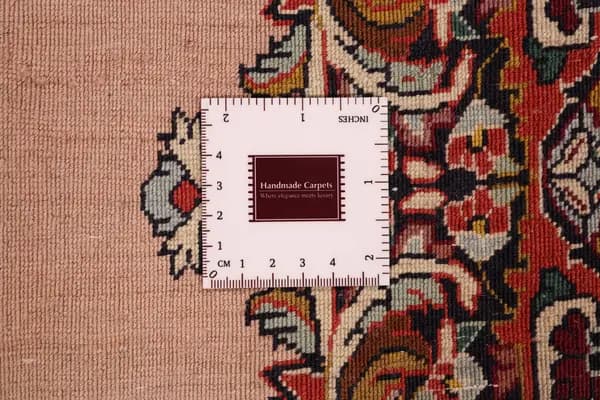
The pile is hand-spun wool, knotted onto a cotton warp at 321,000 to 380,000 knots per square metre, close to the densest end of the Persian tradition. Packed this tightly, the wool holds a crisp line even around a curved palmette, and the same compactness is what makes a Bidjar impossible to fold, only ever rolled. At 15 mm the pile carries real depth, yet the weave keeps its surface flat and precise rather than deep and soft.
A runner of this size suits a hallway or a landing, where the goldbeige field lifts a passage with little daylight and the madder red border holds against a dark floor. Underfoot it is dense and firm, made for daily crossing rather than a room rarely used. Morning light along its length catches the sheen and moves from one medallion to the next.
More on Bidjar rugs: origin, making and how to recognise a genuine piece
Superior craftsmanship
At 226 × 77 cm (1.74 m²) this is a runner. It belongs in a hallway, an entrance, on a landing or lengthways beside a bed. It is too narrow for the middle of a room.
Yes, knotted by hand — knot by knot on a loom, not machine-made. The density is 321,000 to 380,000 knots per square metre; across 1.74 m² that is roughly 560,000 to 660,000 individual knots, every one of them tied by hand.
Hand-spun wool still carries its own lanolin, which keeps liquid sitting on the surface for a moment: blot quickly, with clear water and a light cloth, working inwards and without rubbing. Otherwise regular vacuuming along the pile is enough. Turn the rug once or twice a year so light and footfall reach it evenly.
We are in the Hamburg Speicherstadt. Come and see this rug in daylight, or write to us — a person answers.
Certificate included verifying origin, materials, and craftsmanship.
Ref: 390720