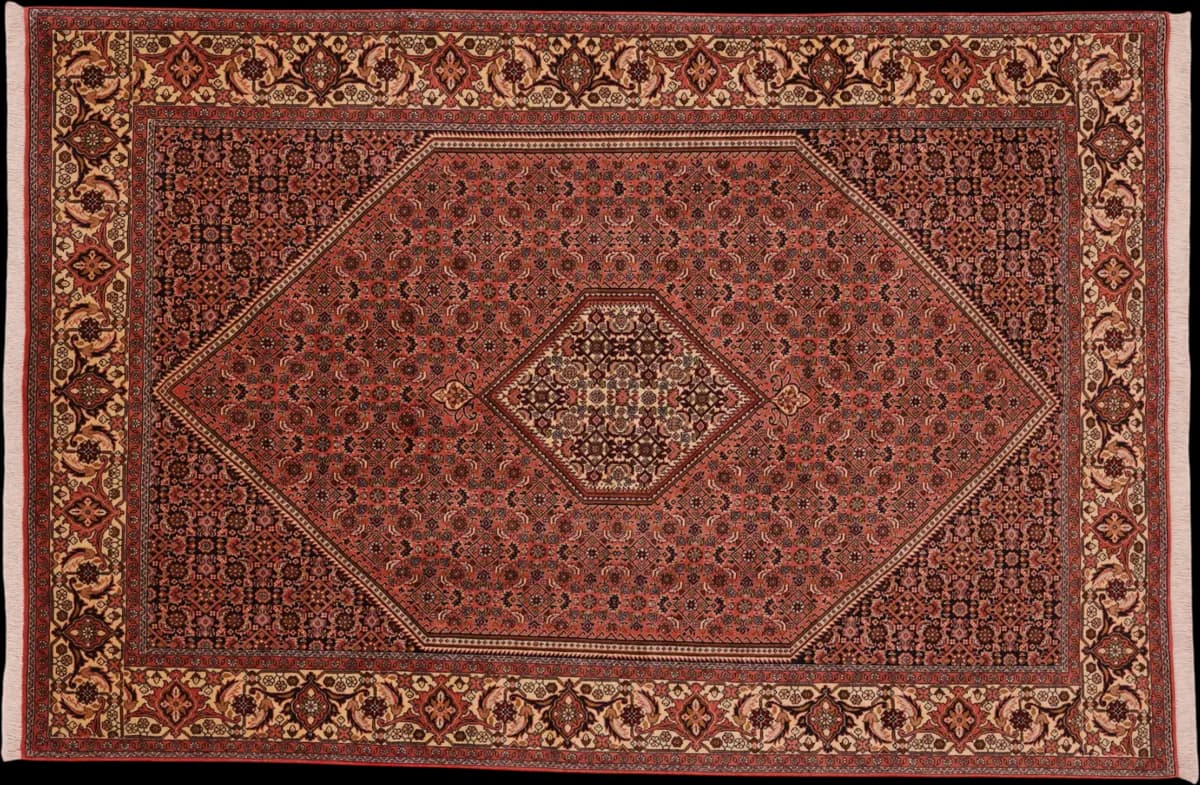
Bidjar
296 × 197 cm
4.350 €







14.700 €
Incl. VAT
In Stock · Ready to Ship
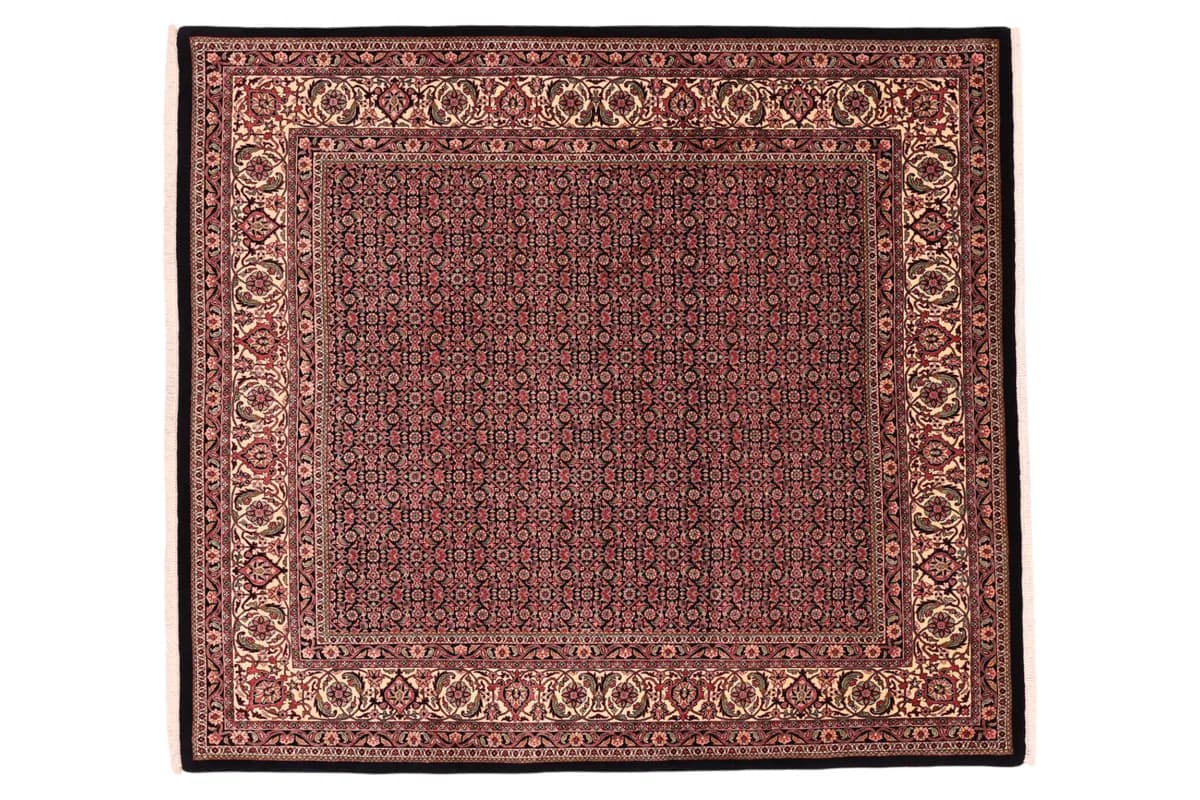
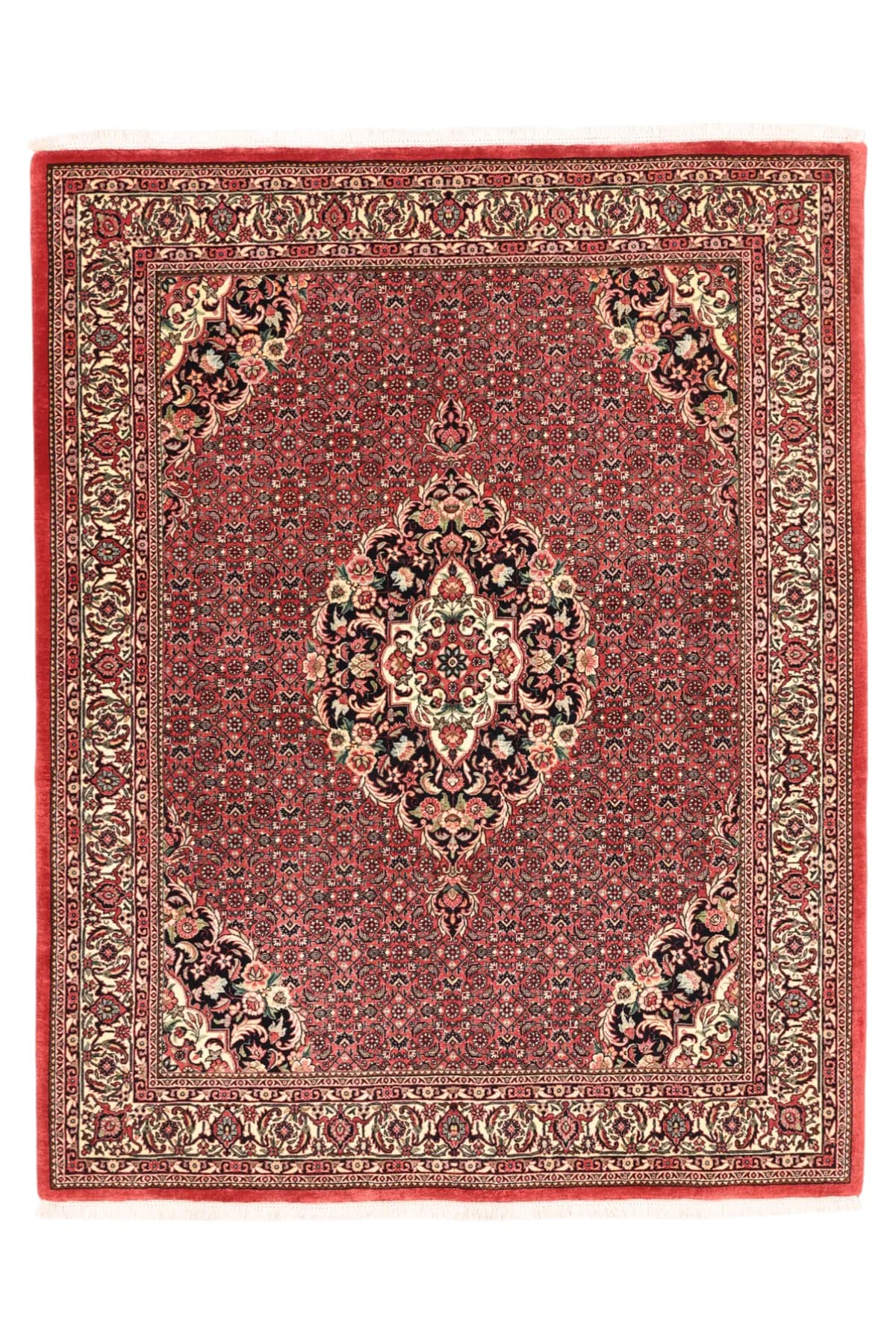
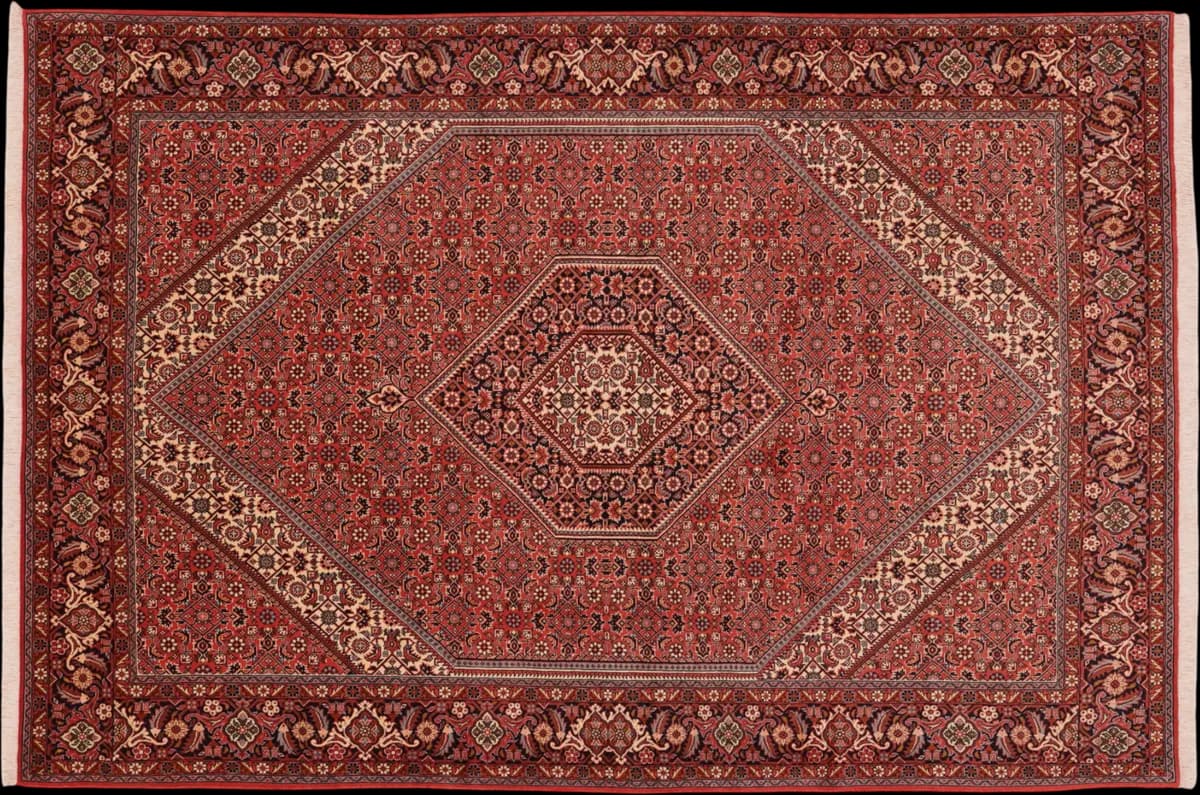
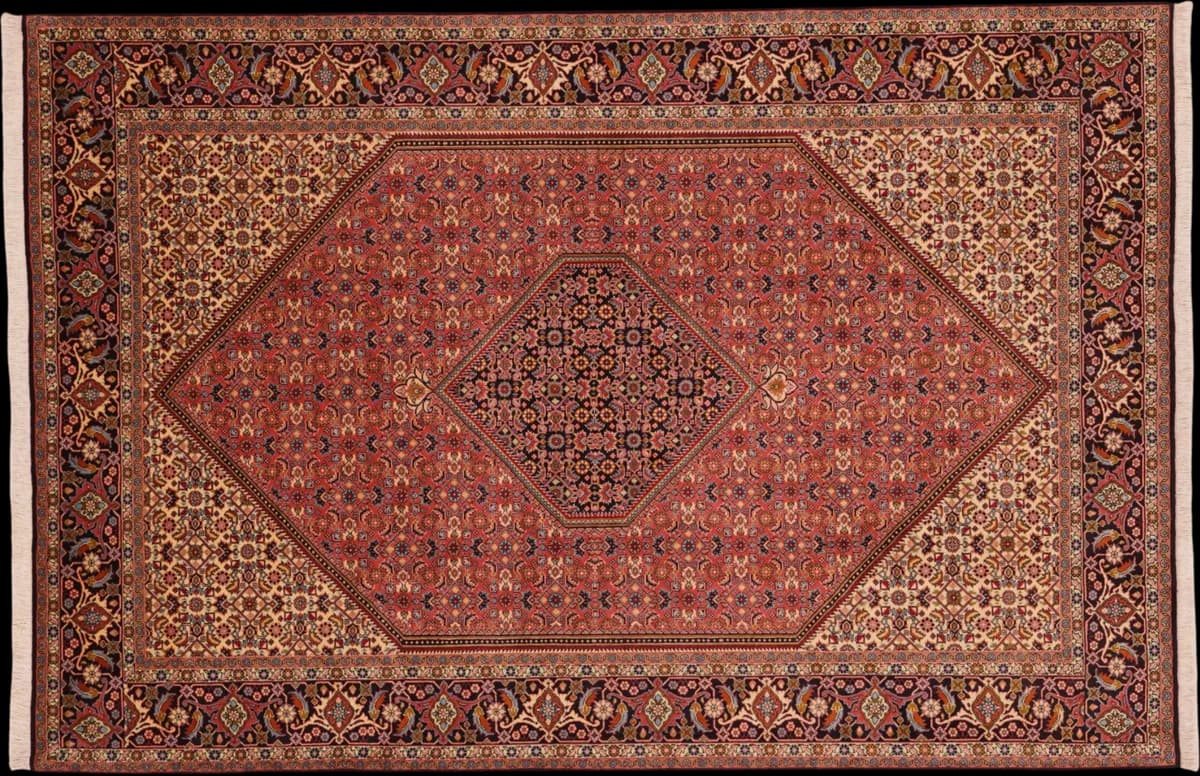
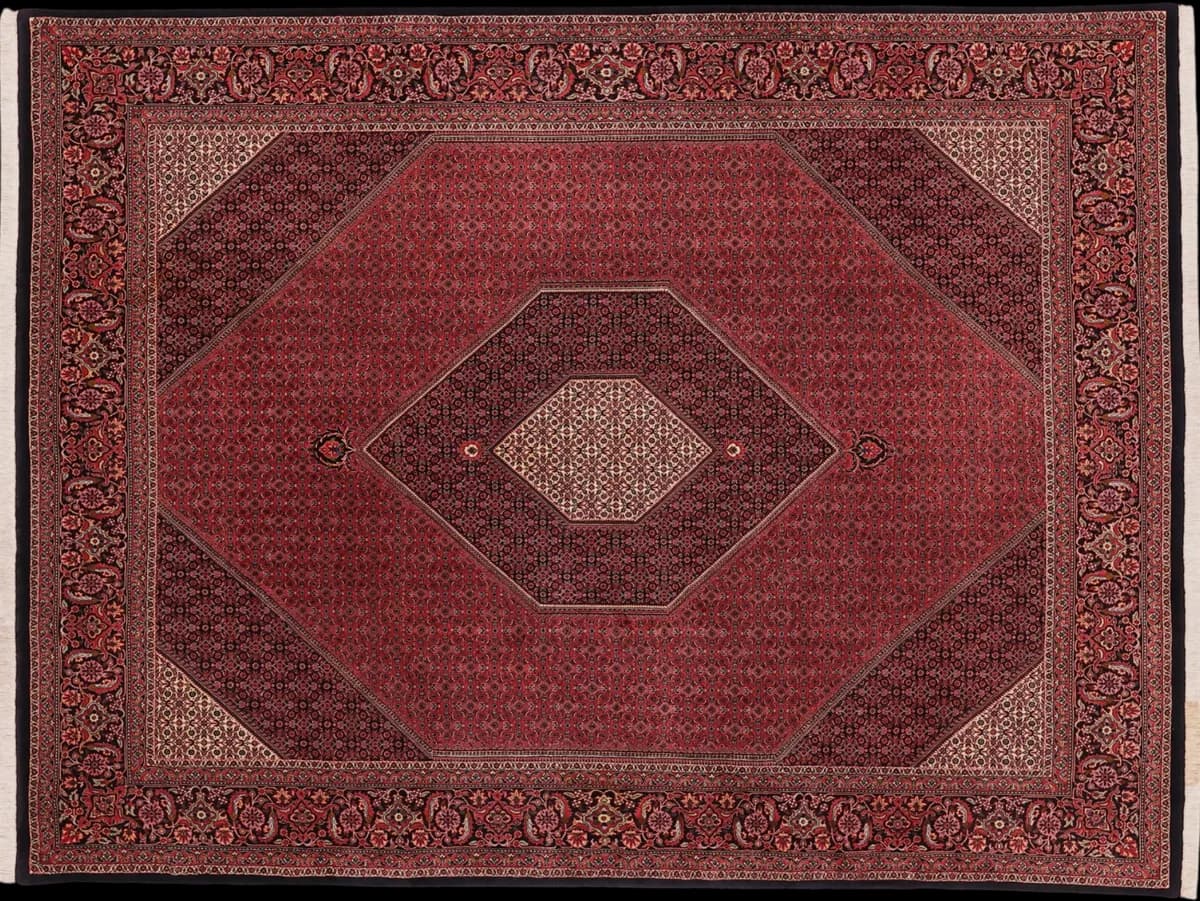
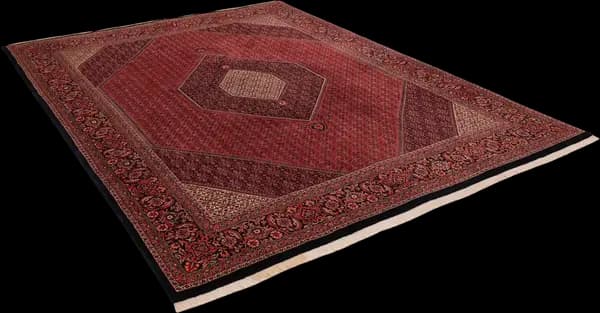
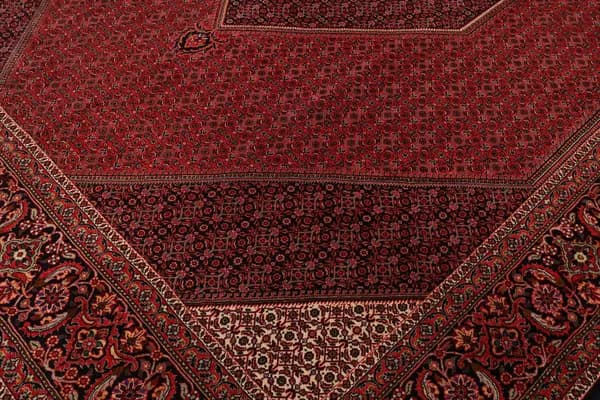
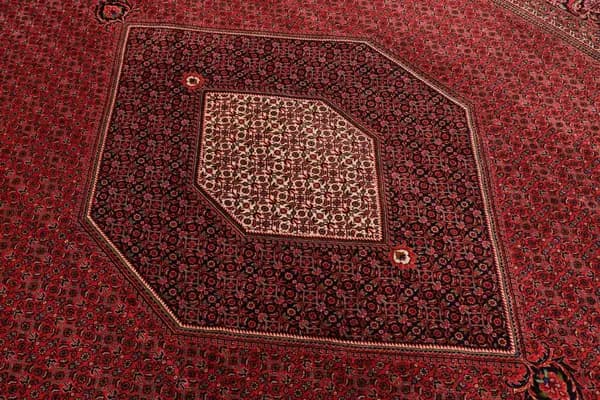
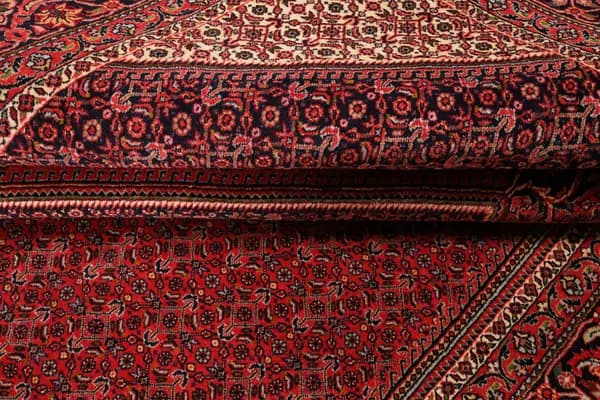
A Bidjar from the Kurdish weaving regions of western Iran, 306 x 229 cm (10'0" x 7'6"), a size suited to a dining table or a substantial seating group. Bidjar rugs are sometimes called the Iron Rugs of Persia, a name earned by a structure so dense and so firmly pressed that the finished piece can only be rolled, never folded. It is a type known above all for combining strict geometry with the softer language of classical Persian floral design.
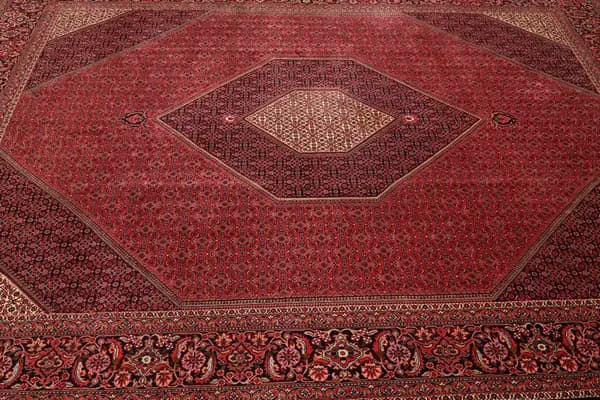
The field reads first as a deep brick and wine red, dense enough to hold the eye before any single motif separates from it. Look closer and the whole ground is filled with a fine Herati lattice, the small repeating diamonds running edge to edge without interruption. The medallion at the centre is built from that same lattice rather than drawn as a separate shape, so it sits within the field as an echo of the pattern rather than a break in it, framed by concentric octagons and lifted by ivory corner spandrels. A wide border in near-black navy closes the composition, dense with red and cream floral vine that answers the field in colour while giving it a firm dark edge.
That unbroken density is not only a design choice. Bidjar weavers pack the wool so tightly onto a cotton warp, at 441,000 to 500,000 knots per square metre, that a lattice this fine survives at full size without blurring into the field around it, which is what lets the medallion read as part of the pattern rather than apart from it. The pile itself is wool with an admixture of silk, and it is the silk that carries the sharper edges of the lattice and the vine, giving the surface a crispness plain wool alone would not hold at 15 mm. It is also this pressed, compact construction that keeps the rug rollable only, never folded, and gives it the weight and firmness underfoot that Bidjar is collected for.
In a dining room, that firmness matters as much as the colour. Chairs move across it daily and the tight, flat pile takes that traffic without softening or crushing underfoot. The red holds its depth against dark wood or dark upholstery and warms a pale floor without needing much light to do it. Where the room does get sun, it crosses the lattice slowly through the day, and the medallion seems to surface and recede within the field rather than simply sit on top of it.
More on Bidjar rugs: origin, making and how to recognise a genuine piece
Exceptionally fine weave
At 306 × 229 cm (7.01 m²) this is a large rug. It sits under a seating group with the front legs of sofa and chairs on it, or under a dining table for four. A table for six wants about 80 cm of clearance all round, and needs more.
Yes, knotted by hand — knot by knot on a loom, not machine-made. The density is 441,000 to 500,000 knots per square metre; across 7.01 m² that is roughly 3.1 to 3.5 million individual knots, every one of them tied by hand.
This pile contains silk and is more delicate than pure wool. Vacuum without a rotating brush and along the pile, do not beat it, and keep it out of permanent direct sun. Blot spills at once with a light cloth, never rub. For a proper clean a silk-blend rug belongs in expert hands — we handle that for pieces bought from us.
We are in the Hamburg Speicherstadt. Come and see this rug in daylight, or write to us — a person answers.
Certificate included verifying origin, materials, and craftsmanship.
Ref: 354984