Exclusive
Bidjar | Exclusive | With Silk · with silk
213 × 189 cm
9.000 €
4.350 €
Incl. VAT
In Stock · Ready to Ship
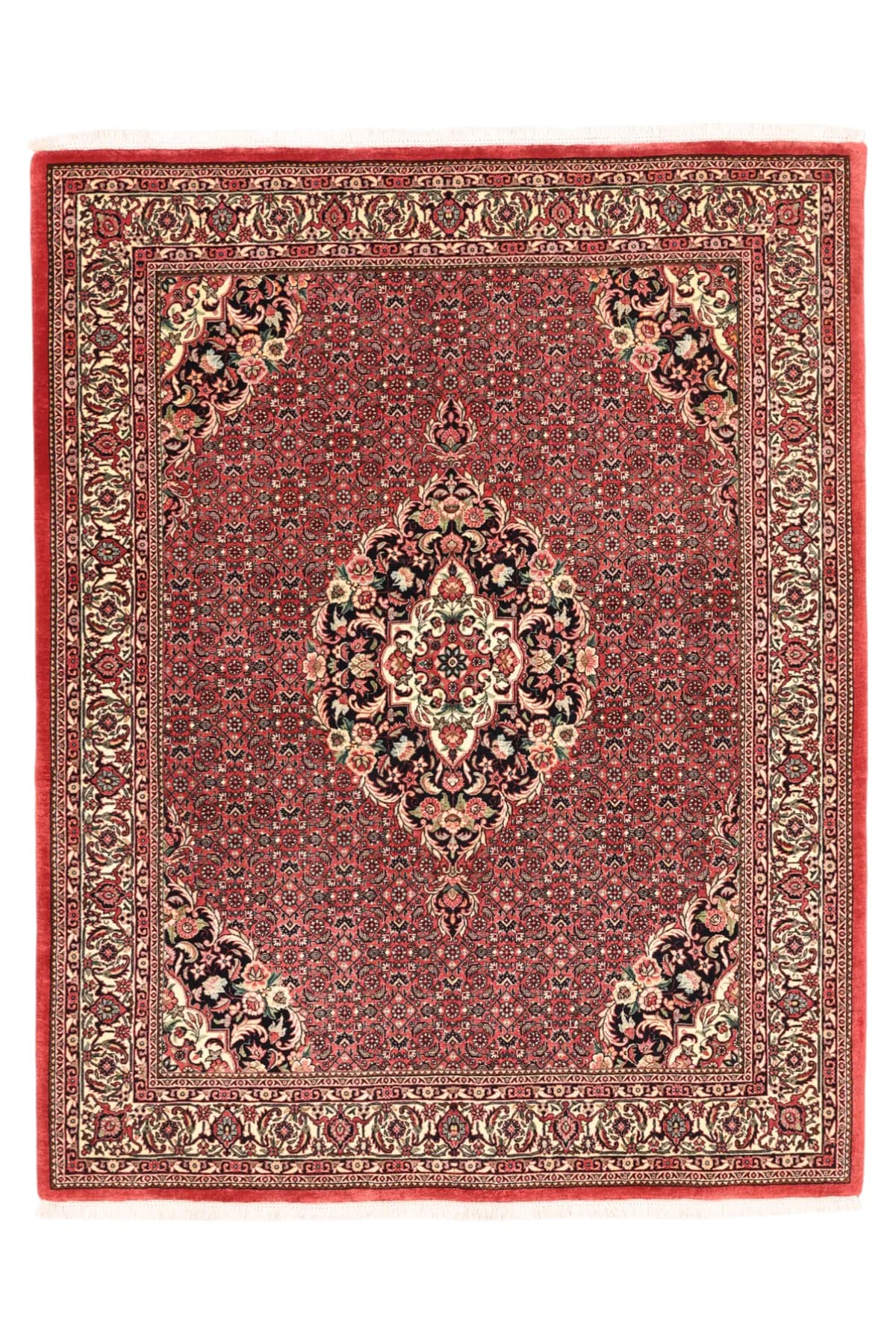
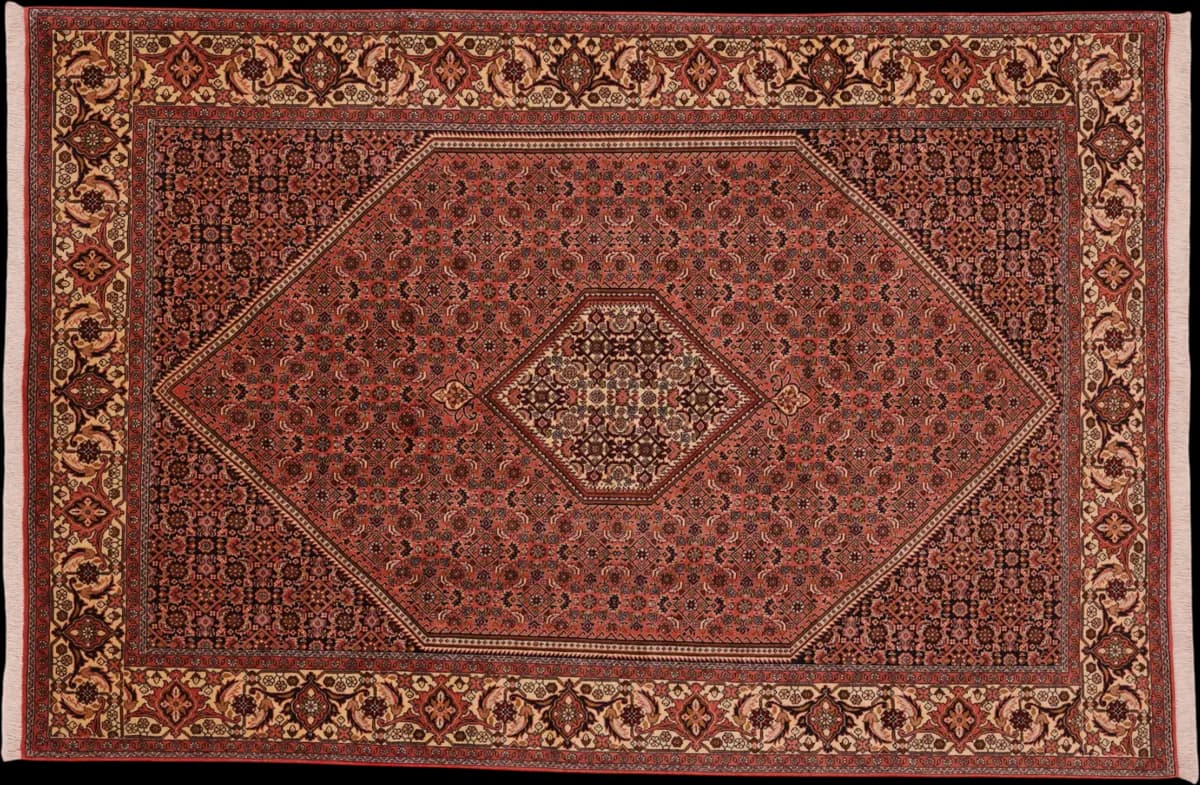
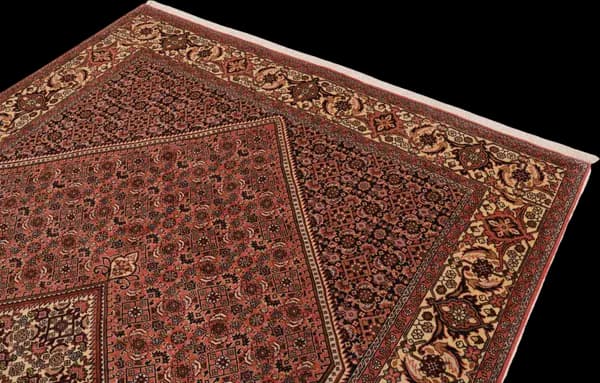
This is a Bijar, also written Bidjar, a rug type from the Kurdish regions of western Iran, here 296 x 197 cm (9'8" x 6'6"). Bijars are known across the trade as the Iron Rugs of Persia, prized for a density and firmness that keeps them sound long after lighter weaves have worn through.
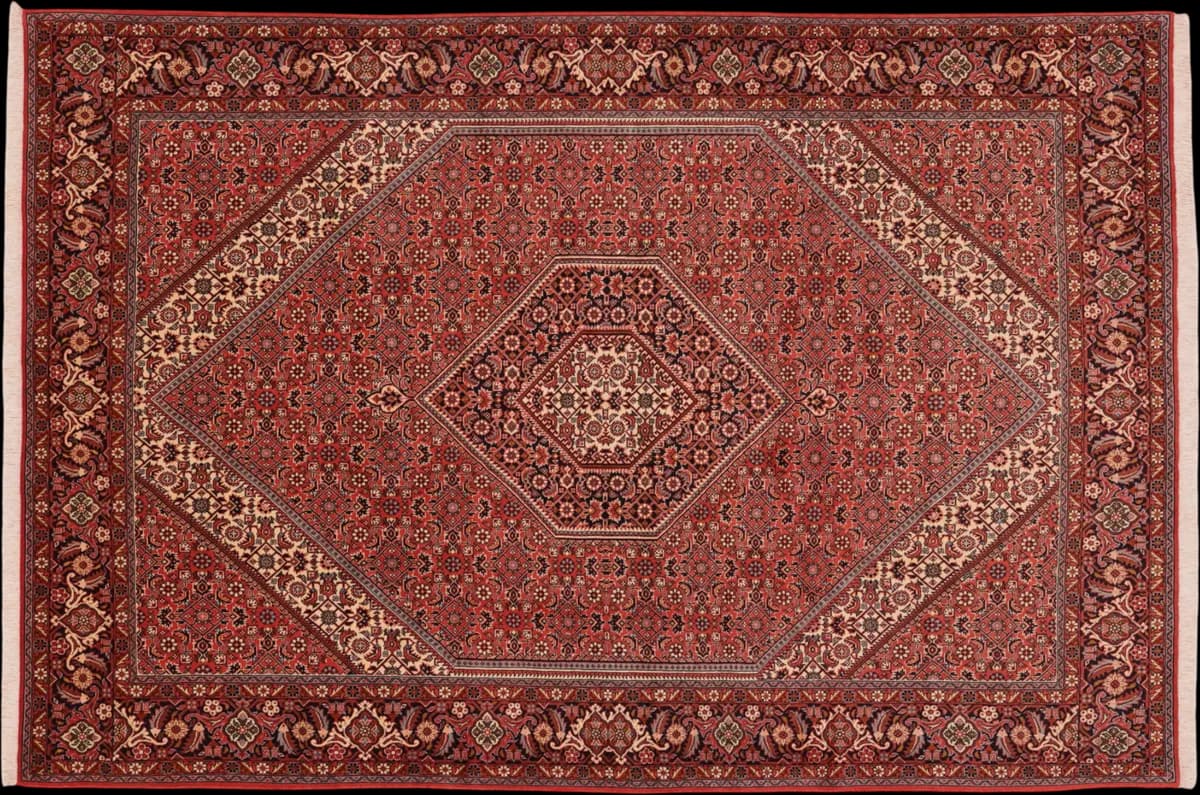
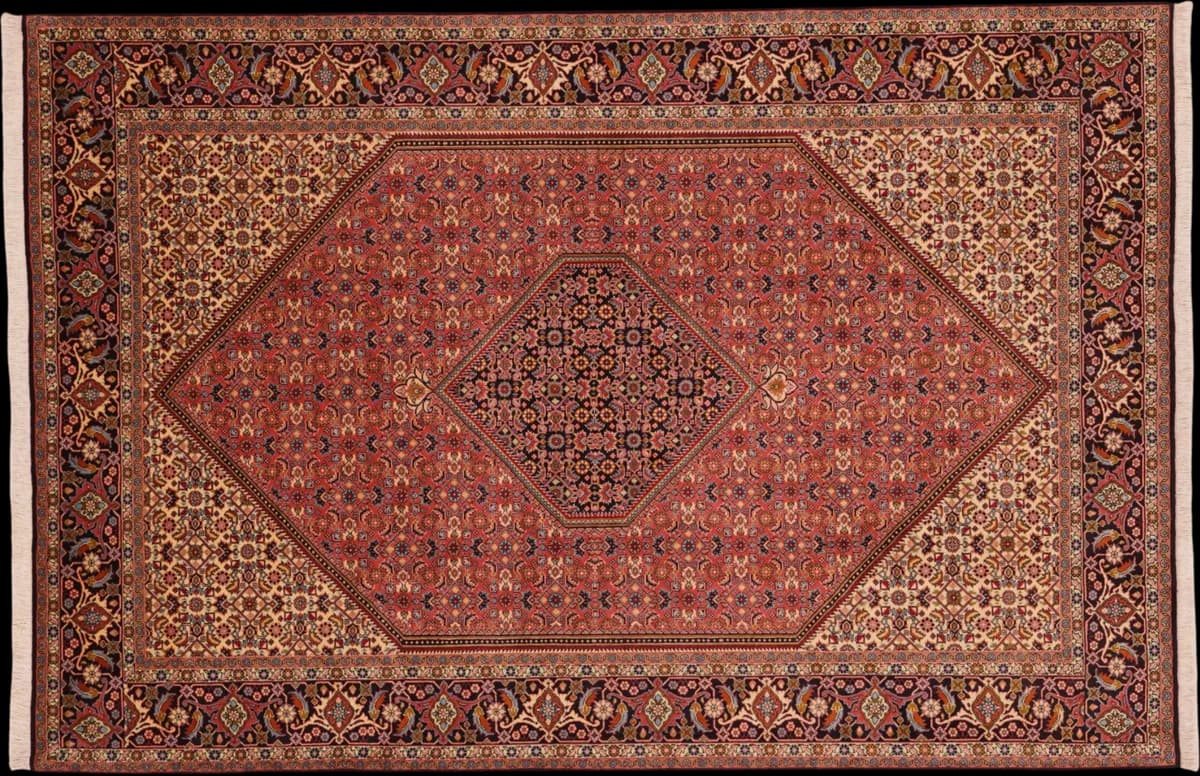
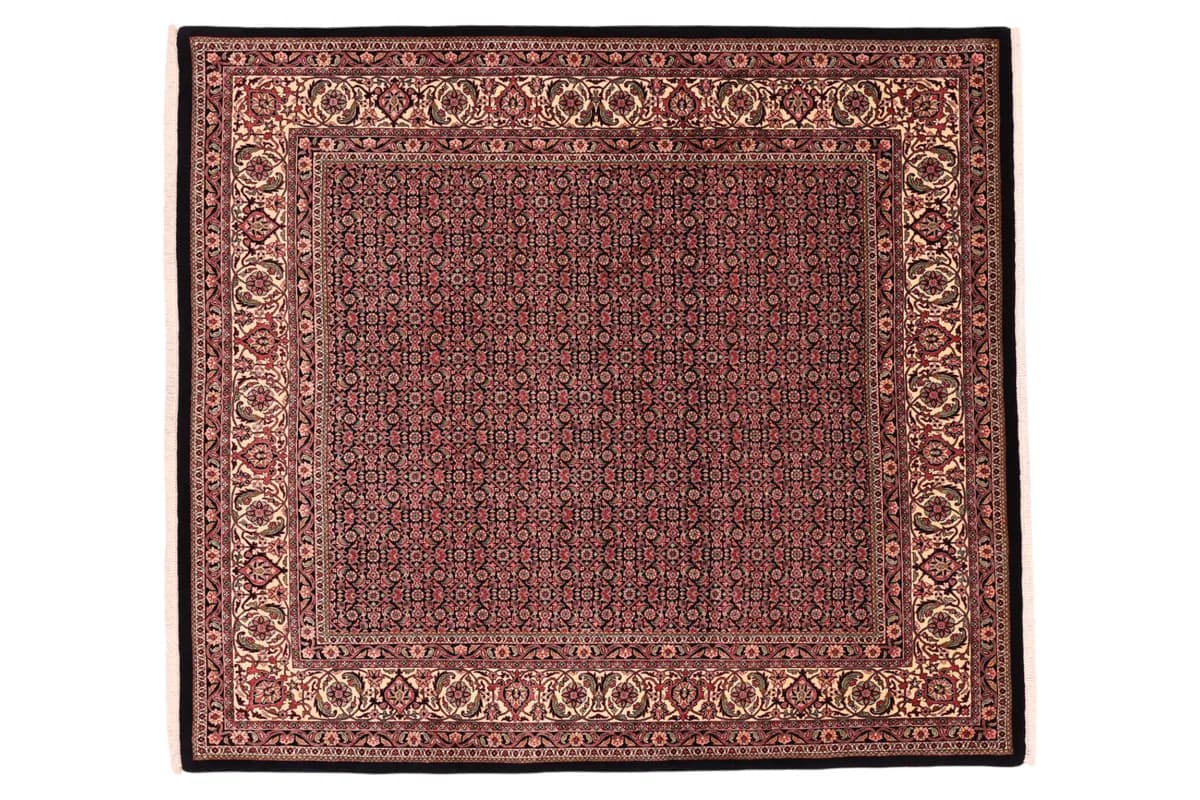
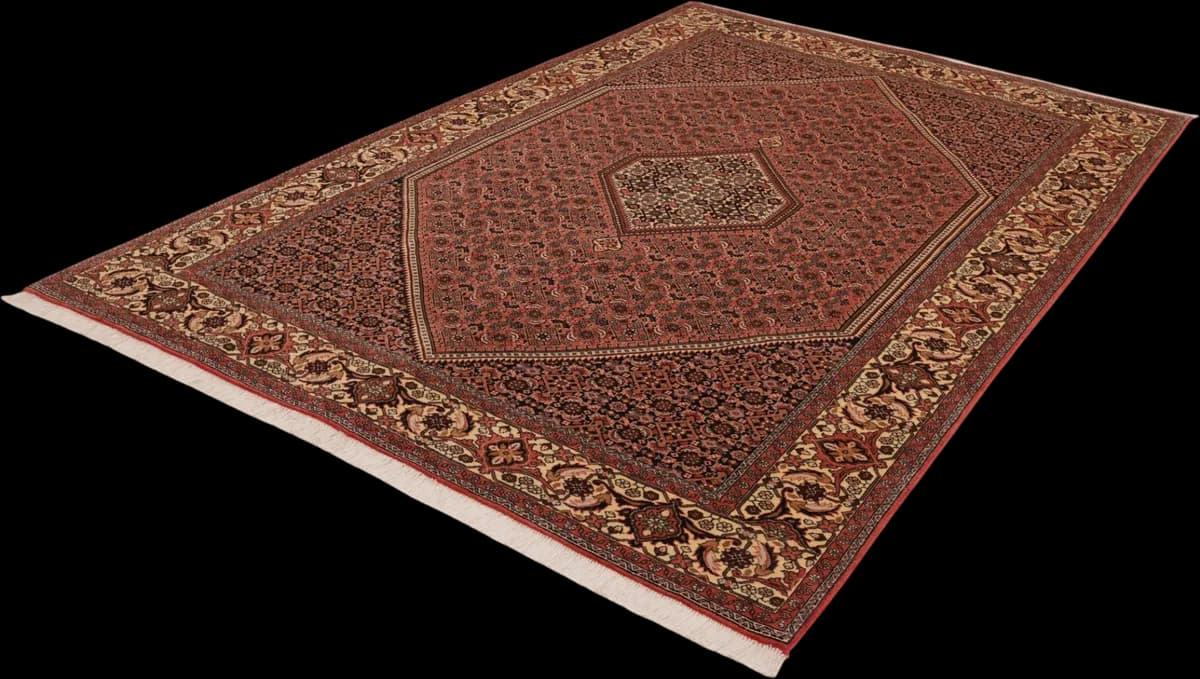
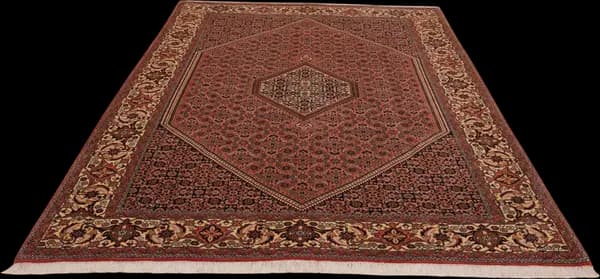
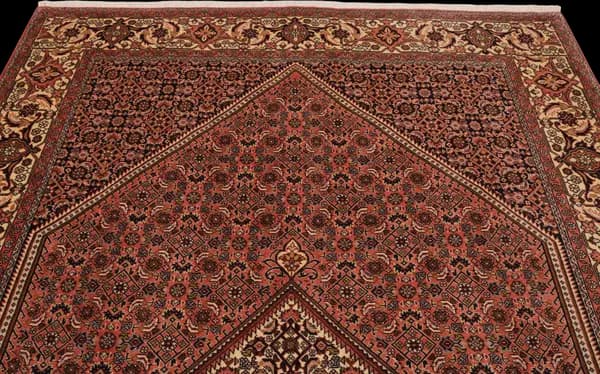
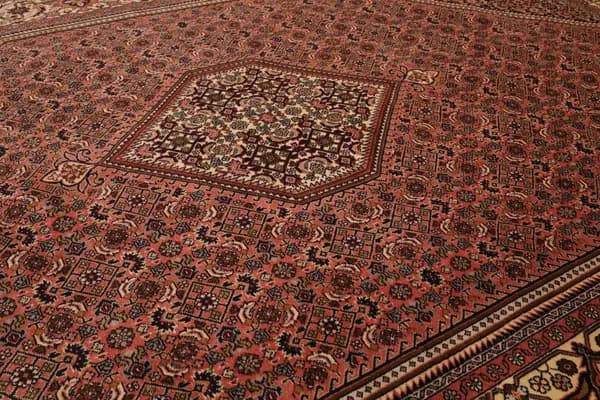
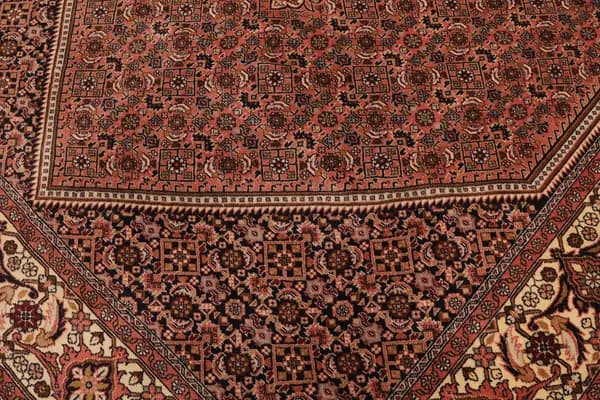
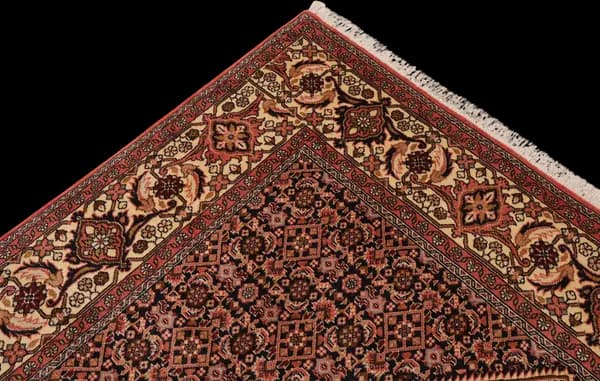
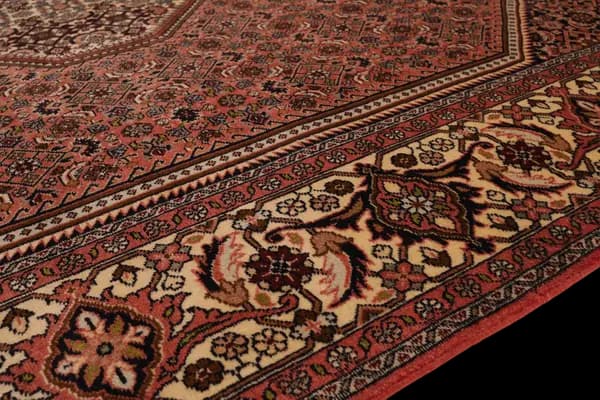
The field is a warm brick red with a salmon undertone, covered edge to edge in a fine Mahi lattice, the fish-and-rosette repeat that draws the eye toward the centre. There a large hexagonal medallion breaks the pattern, holding within it a second, smaller medallion on its own dark ground with a cream field. Dark navy spandrels carry the same lattice into the corners, and a broad cream border, patterned with a red-and-navy floral vine, closes the rug, taking up roughly a fifth of the surface.
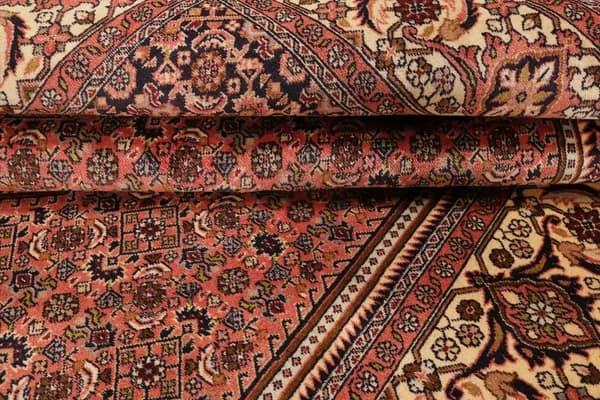
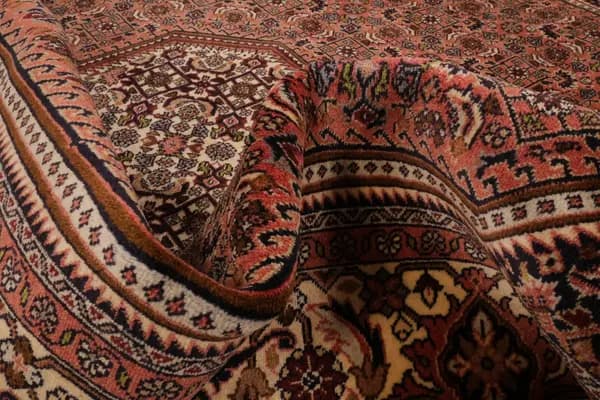
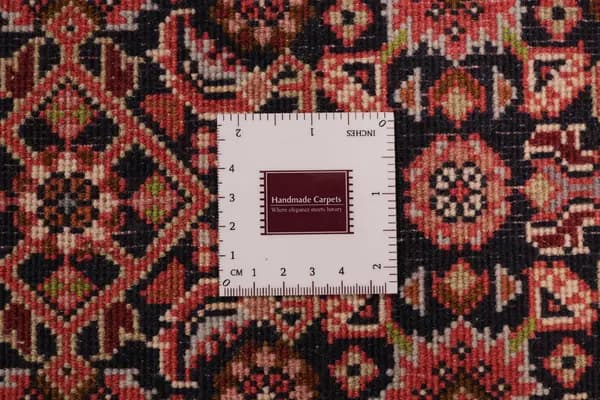
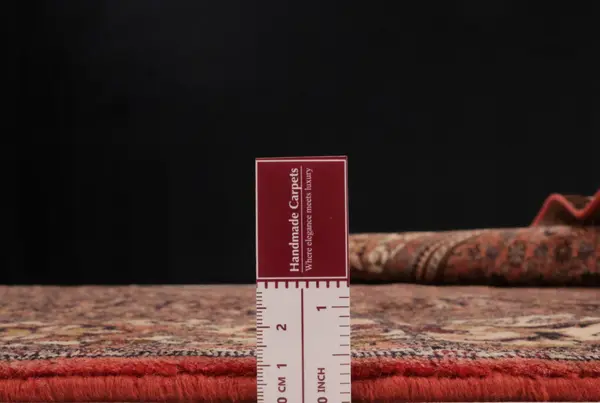
The pile is hand-spun wool, knotted onto a cotton warp at 128,000 to 160,000 knots per square metre, dense enough to keep a pattern this fine legible rather than blurred. That same tight, hard-packed structure is why Bijars can only be rolled, never folded, and why dealers have long called them the Iron Rugs of Persia. At 15 millimetres the pile sits low and even, holding the lattice and the double medallion in a clear, sharp line.
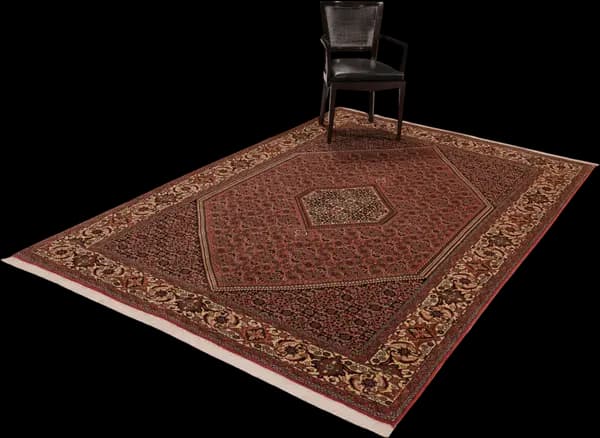
A rug this scale sits well under a dining table or anchors a substantial sofa group in a living room. The brick red warms a pale floor and holds its own against dark wood, while the cream border keeps the depth of colour from closing the room in. Underfoot it is dense and firm, built for a room where people actually gather rather than pass through. Through the day the fine lattice catches the light from different angles, so the pattern never quite sits still.
More on Bidjar rugs: origin, making and how to recognise a genuine piece
Traditional weave
At 296 × 197 cm (5.83 m²) this is a large rug. It sits under a seating group with the front legs of sofa and chairs on it, or under a dining table for four. A table for six wants about 80 cm of clearance all round, and needs more.
Yes, knotted by hand — knot by knot on a loom, not machine-made. The density is 128,000 to 160,000 knots per square metre; across 5.83 m² that is roughly 750,000 to 930,000 individual knots, every one of them tied by hand.
Hand-spun wool still carries its own lanolin, which keeps liquid sitting on the surface for a moment: blot quickly, with clear water and a light cloth, working inwards and without rubbing. Otherwise regular vacuuming along the pile is enough. Turn the rug once or twice a year so light and footfall reach it evenly.
We are in the Hamburg Speicherstadt. Come and see this rug in daylight, or write to us — a person answers.
Certificate included verifying origin, materials, and craftsmanship.
Ref: 356901