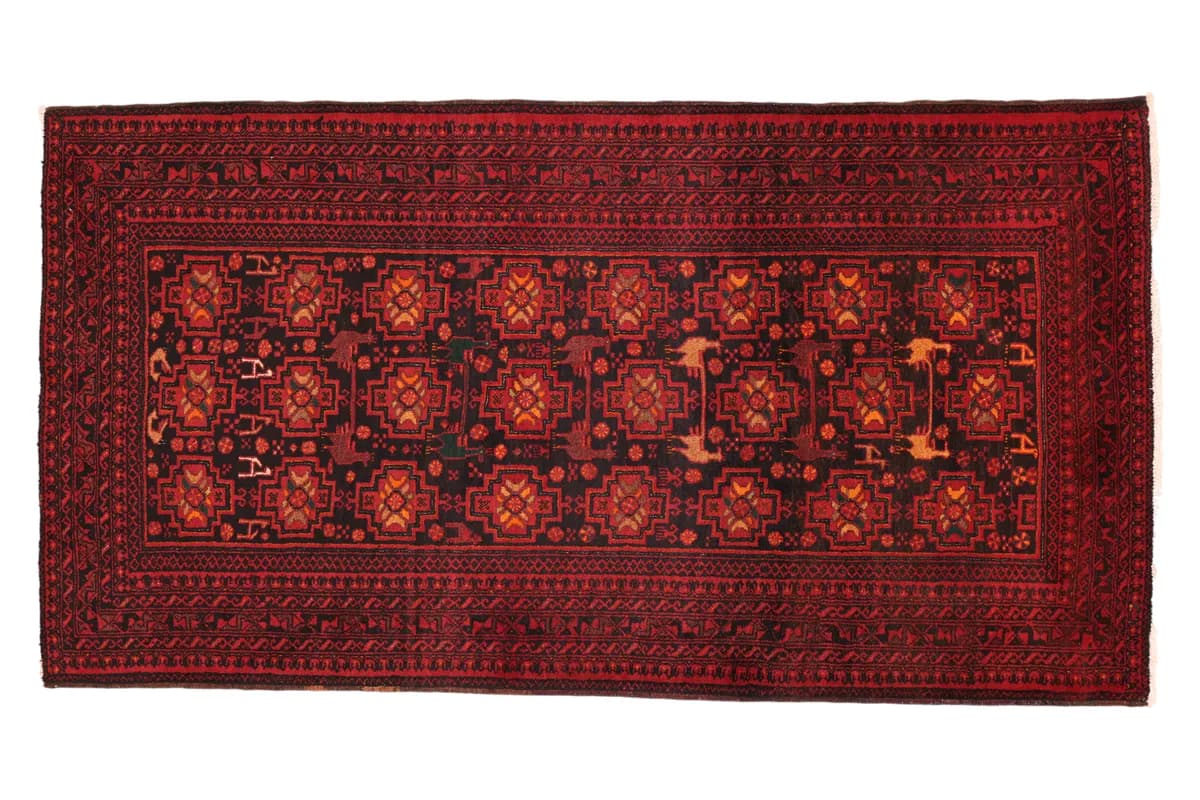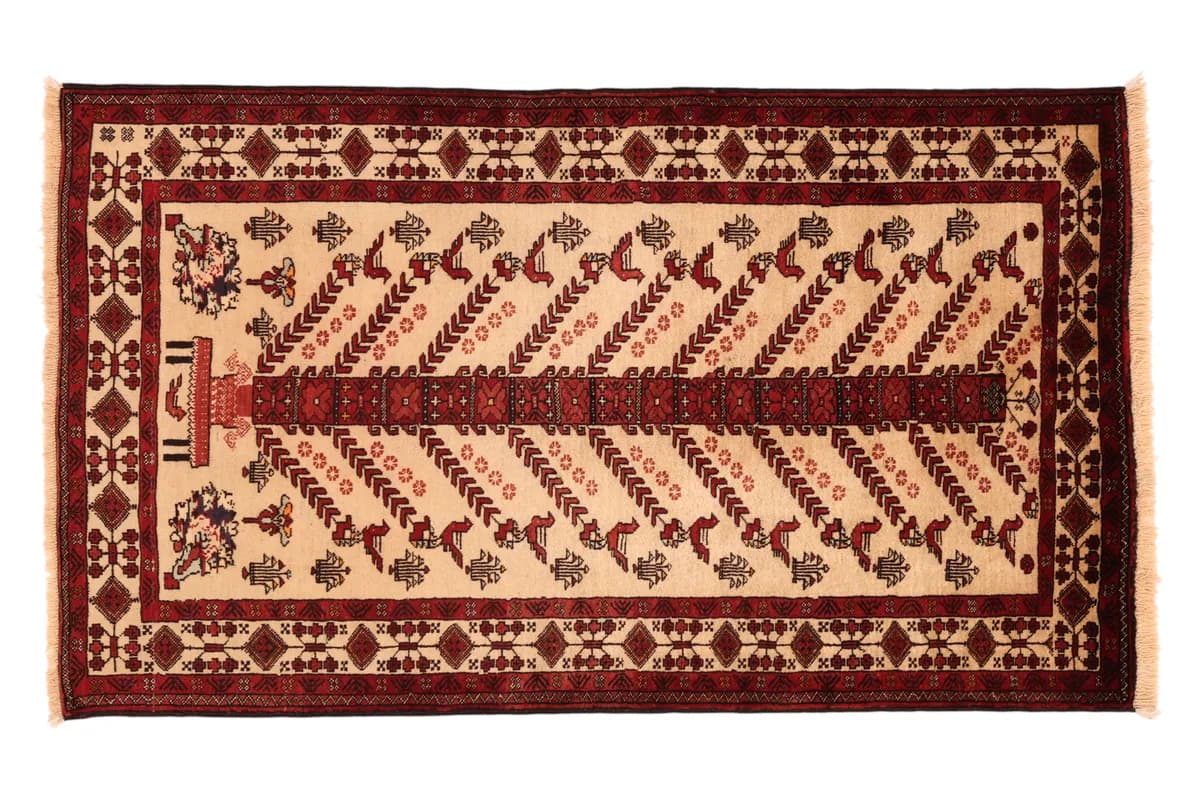
Belutsch
183 × 105 cm
547 €





483 €
Incl. VAT
In Stock · Ready to Ship
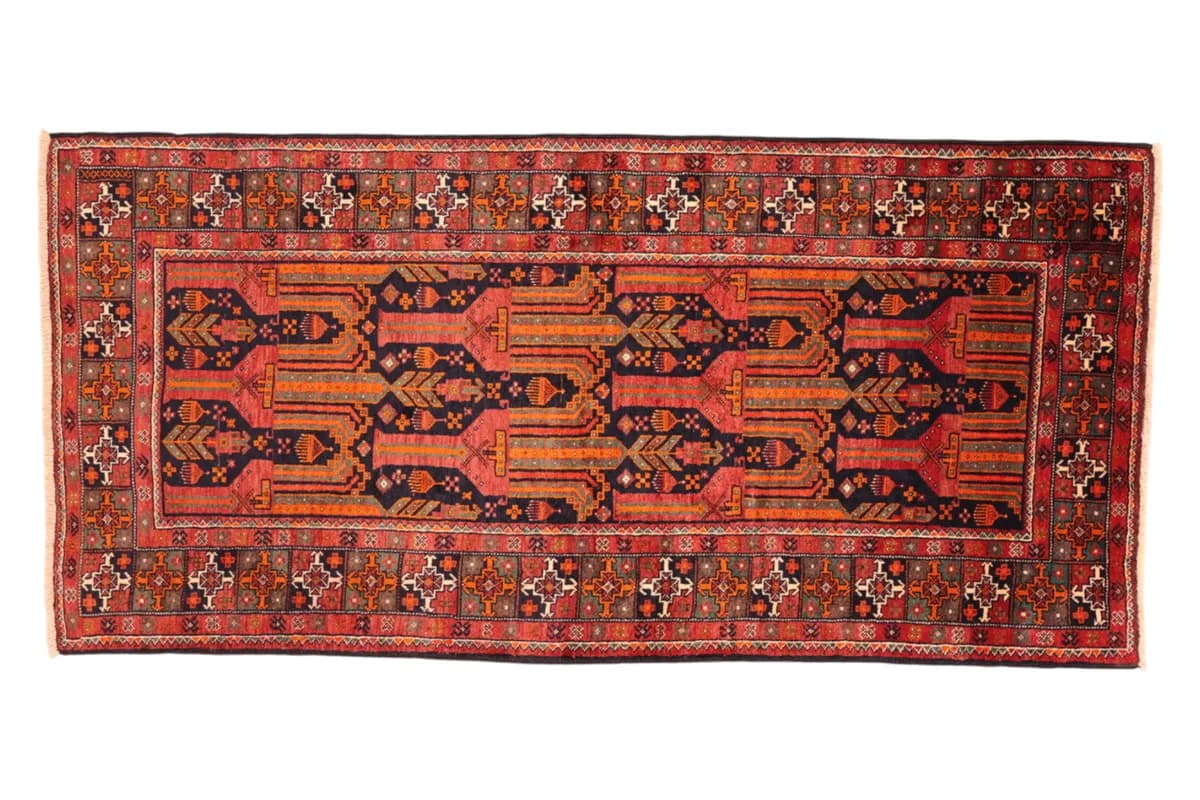
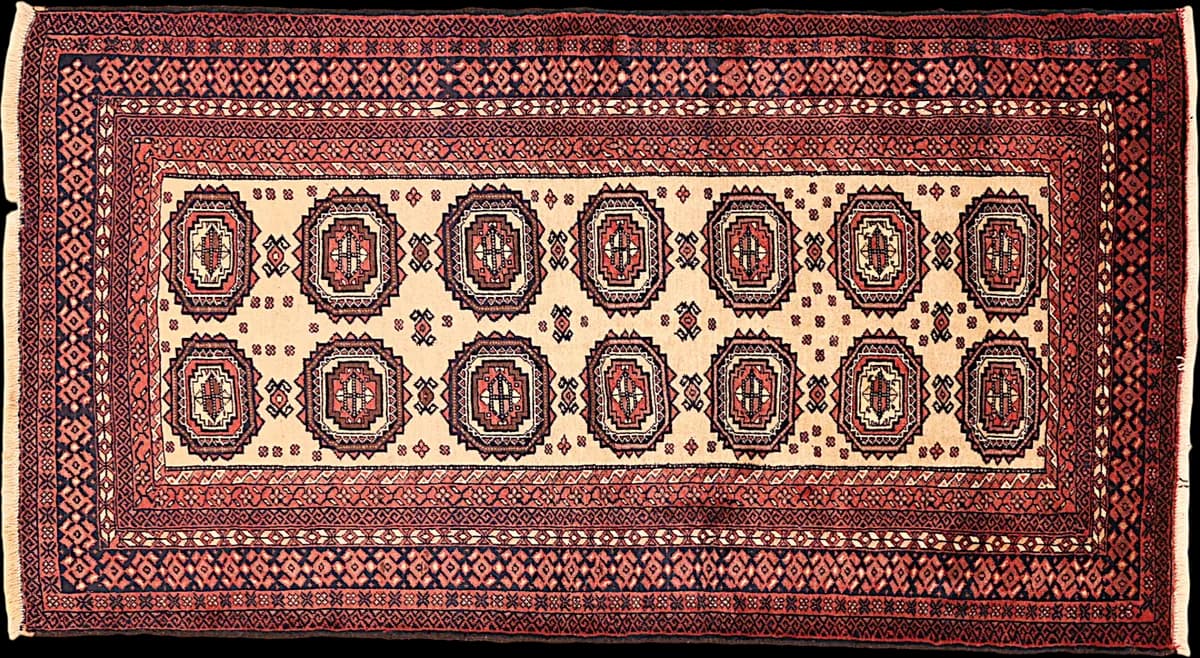
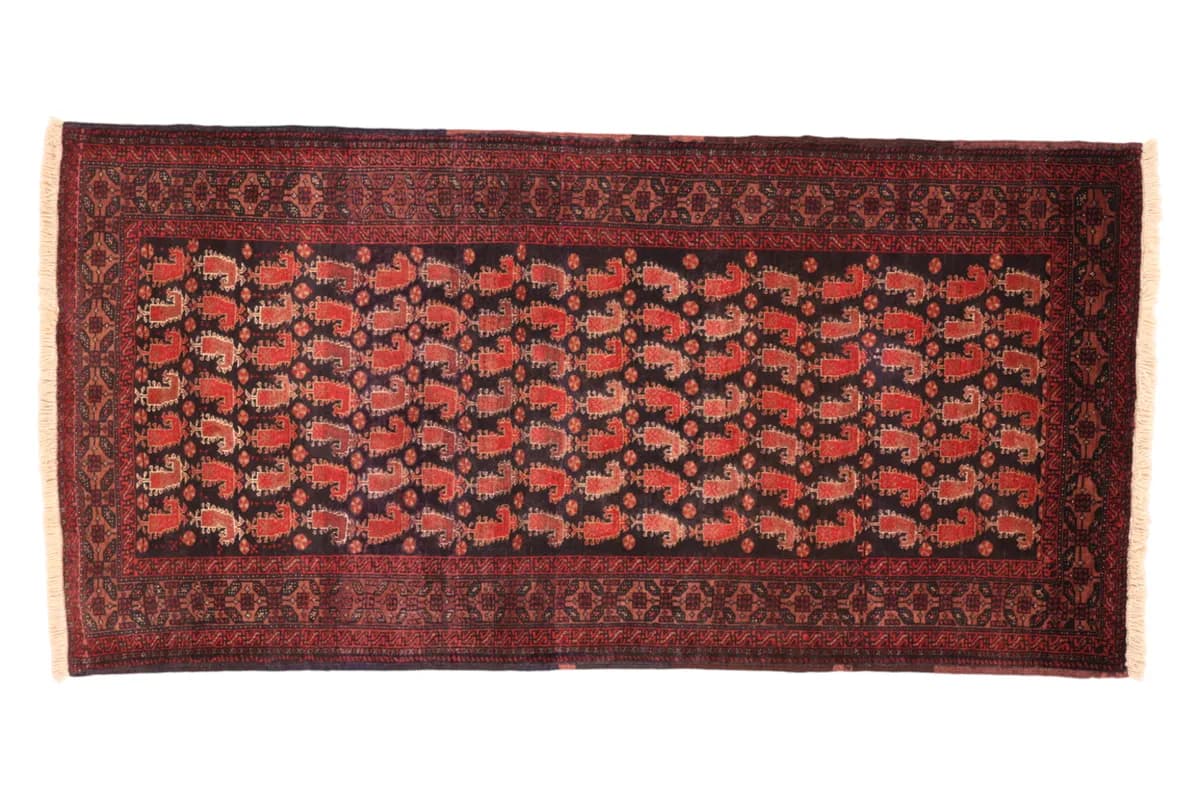
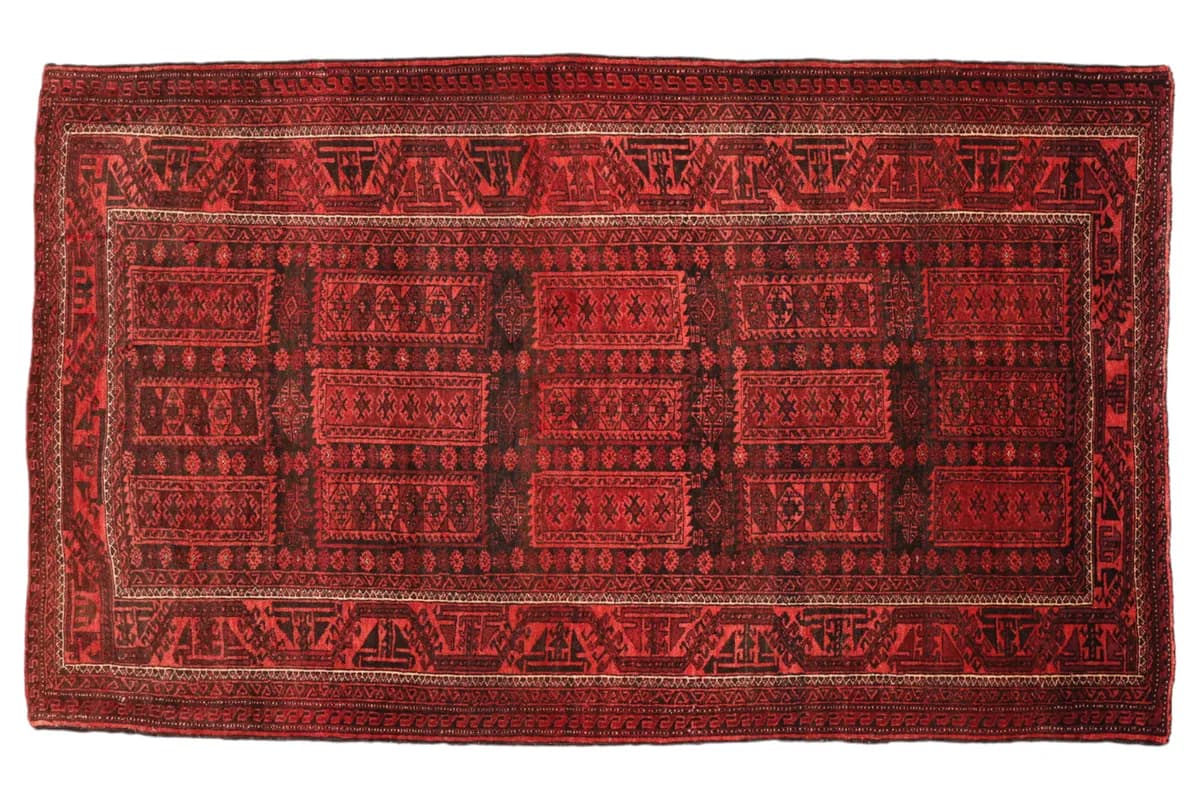
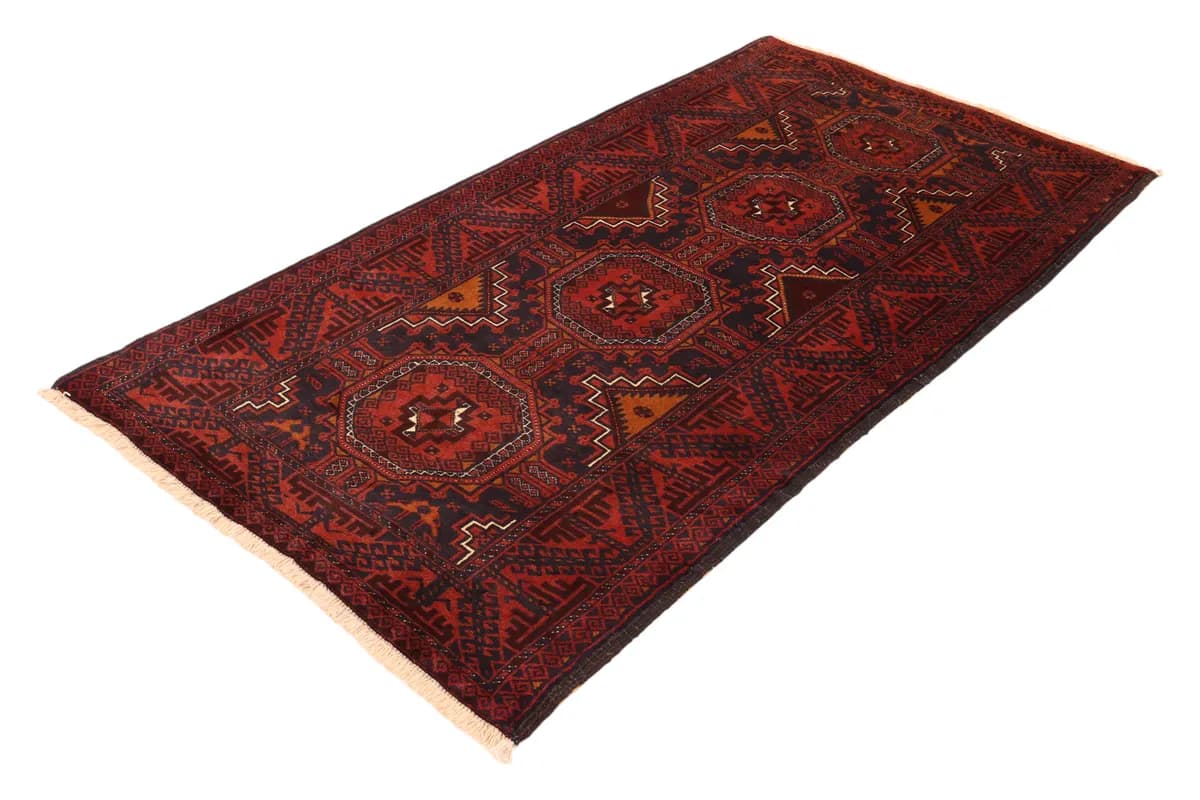
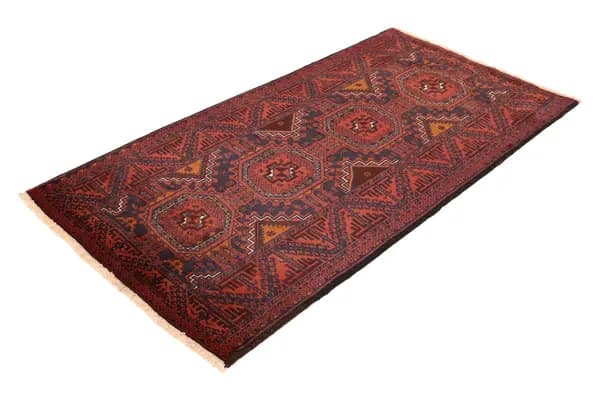
A Baluch runner, hand-knotted in the tribal borderlands of southeast Iran, 198 x 98 cm (6'6" x 3'3"). Baluch weavings are among the most recognisable of the nomadic traditions, prized for deep, earthy reds set against indigo and for a geometric boldness that has passed down through generations largely unchanged. Where this piece departs from the type is in its layout: rather than the single prayer-niche composition so often associated with Baluch work, it sets four medallions marching down the length, and it is that procession, not a static centre, which carries the design.
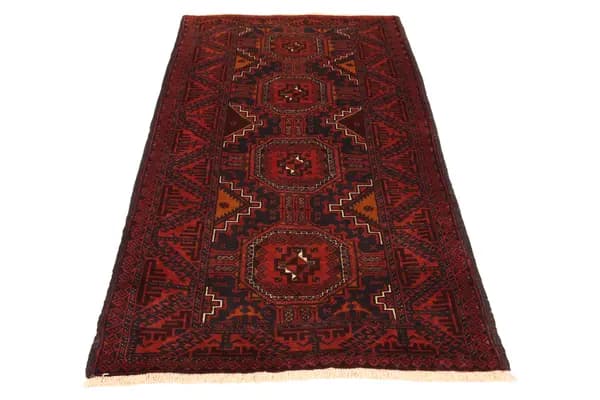
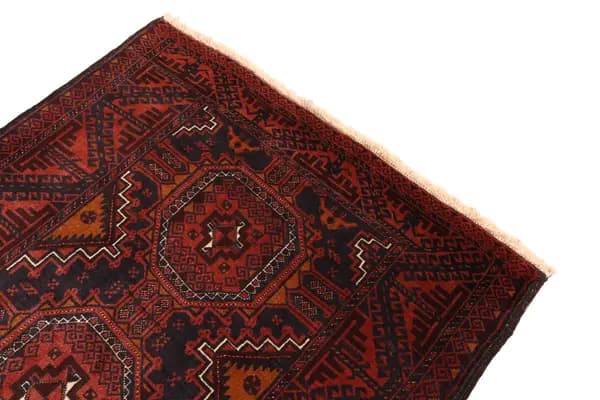
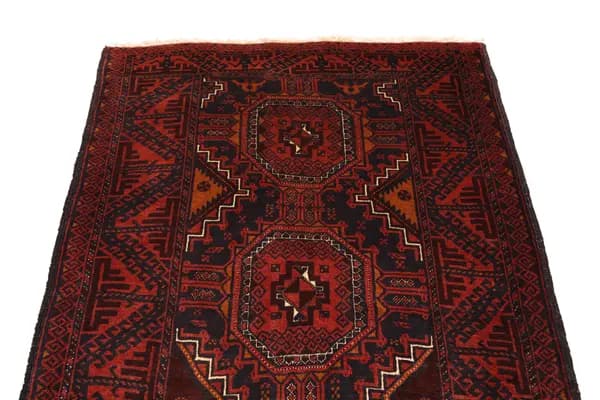
The first impression is of a deep, ziegelrot ground, dense and warm. Down its length march four large octagonal medallions, each built around a diamond centre, and the panels behind them alternate between navy and red, so the eye reads pairs of colour rather than a single repeat. Cream and ivory outlines sharpen every edge, and small mustard-ochre triangular guls sit at the medallion points like punctuation. A wide banded border in matching brick red and dark navy, stepped diamonds and zigzags running its full length, closes the field on both sides, taking up close to a fifth of the width at each end.
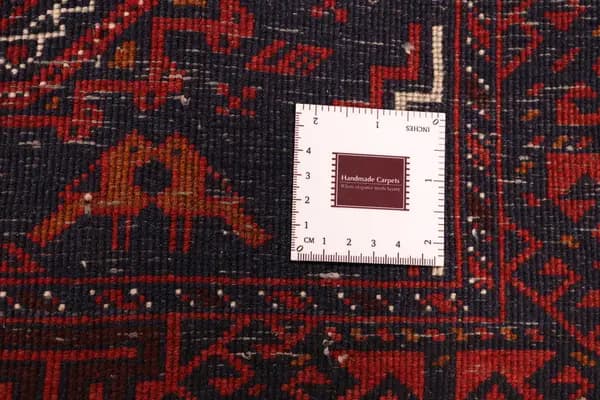
There was no drawn plan behind this. A Baluch weaver works from memory on a portable loom, and the alternating grounds here are the record of that: a decision made and remade as the row grew, not a printed sequence. The wool is hand-spun, slightly uneven in thickness, which gives the low, 6 mm pile its grainy, tactile surface rather than a smooth, machine-even one. At a density of 128,000 to 160,000 knots per square metre it is a firm, close weave, built for a wool this heavy.
A runner of this size belongs in a hallway or along a landing, and this is where its colour earns its keep: brick red and indigo hold their warmth even where daylight is thin. Underfoot it is dense and grainy rather than soft, a rug made to be walked on daily. Passing it, the eye keeps catching the ochre points and cream outlines in turn, so the medallions seem to move with you.
More on Baluch rugs: origin, making and how to recognise a genuine piece
Traditional weave
At 198 × 98 cm (1.94 m²) this is a small rug. It works beside a bed, in a reading corner, in front of a fireplace or as a mat by a door. It does not furnish a room; it makes a point in one.
Yes, knotted by hand — knot by knot on a loom, not machine-made. The density is 128,000 to 160,000 knots per square metre; across 1.94 m² that is roughly 250,000 to 310,000 individual knots, every one of them tied by hand.
Hand-spun wool still carries its own lanolin, which keeps liquid sitting on the surface for a moment: blot quickly, with clear water and a light cloth, working inwards and without rubbing. Otherwise regular vacuuming along the pile is enough. Turn the rug once or twice a year so light and footfall reach it evenly.
We are in the Hamburg Speicherstadt. Come and see this rug in daylight, or write to us — a person answers.
Certificate included verifying origin, materials, and craftsmanship.
Ref: 403570