Exclusive
Bidjar | Exclusivewith silk
350 × 252 cm
18.600 €





1.575 €
Incl. VAT
In Stock · Ready to Ship
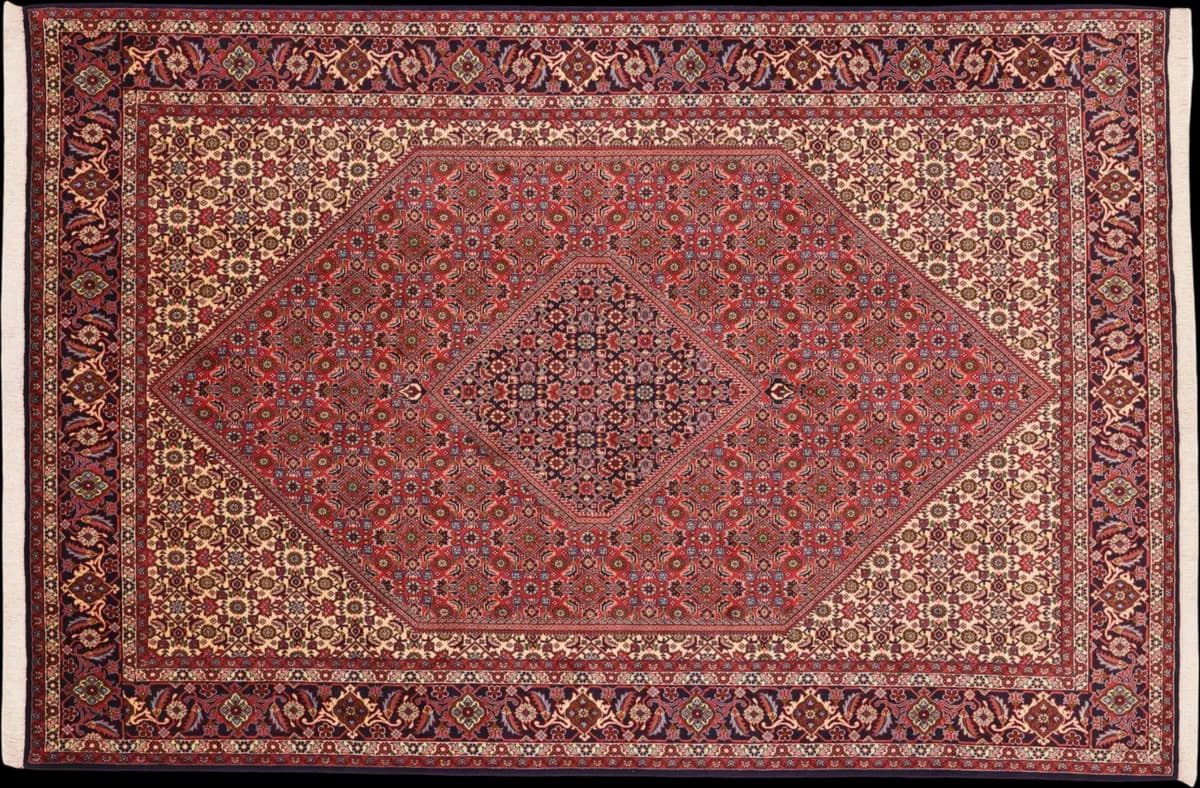
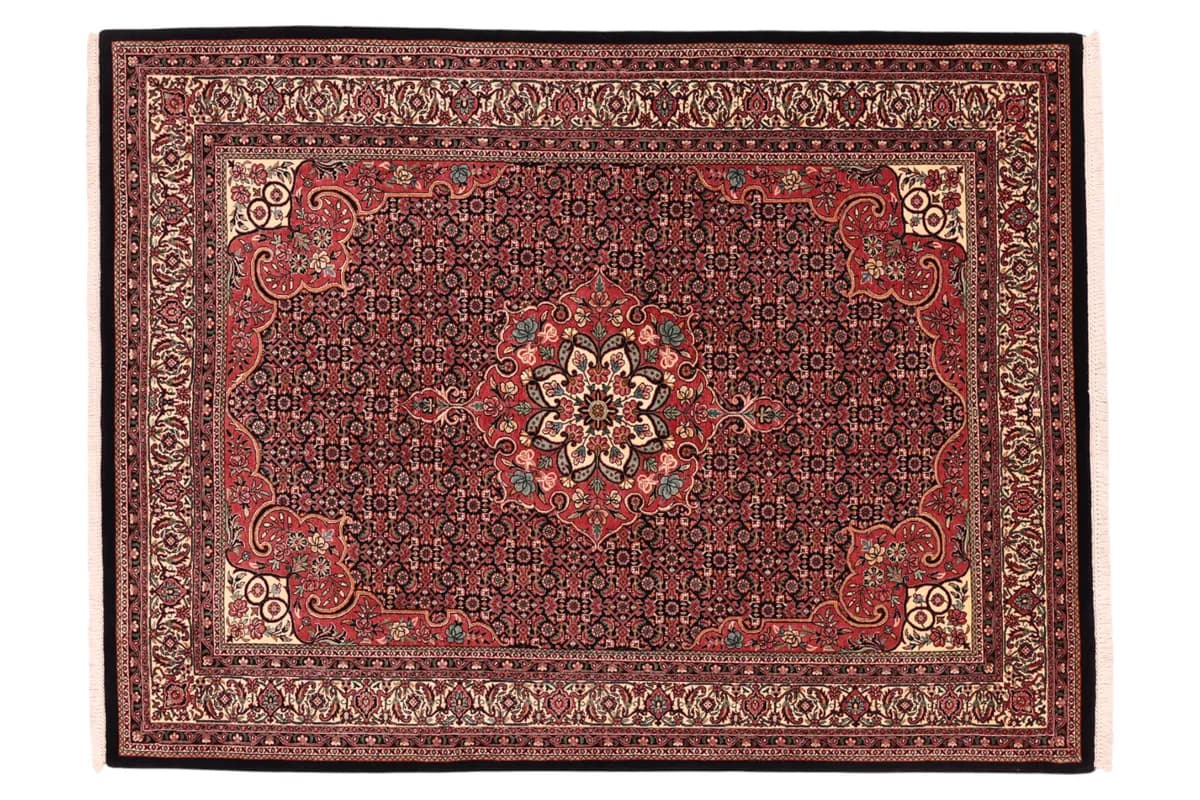
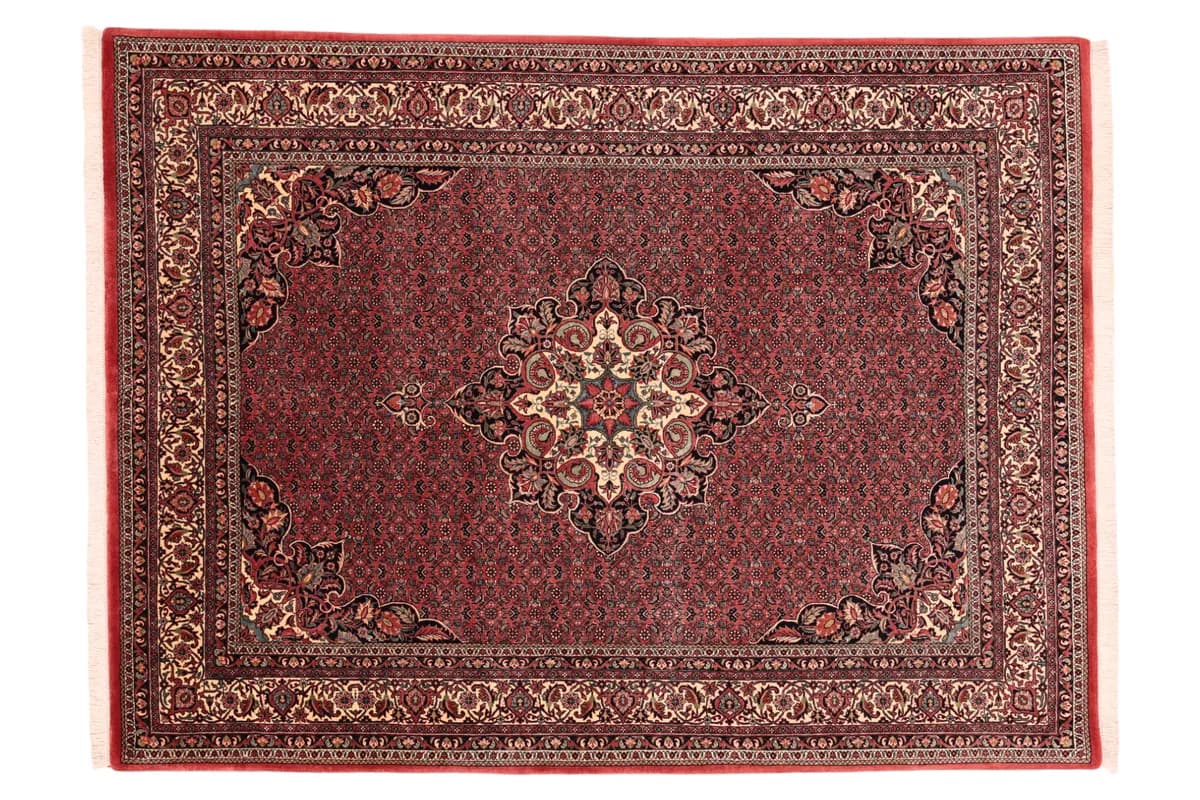
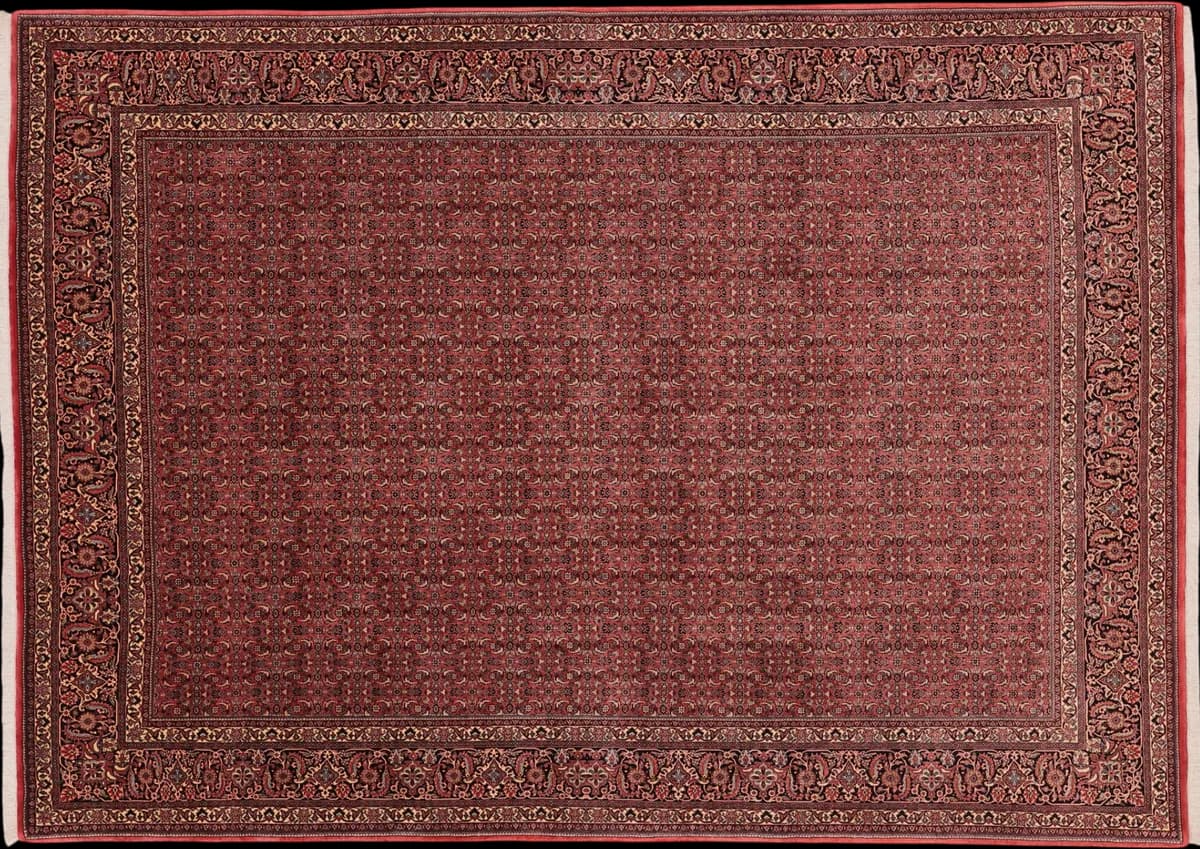
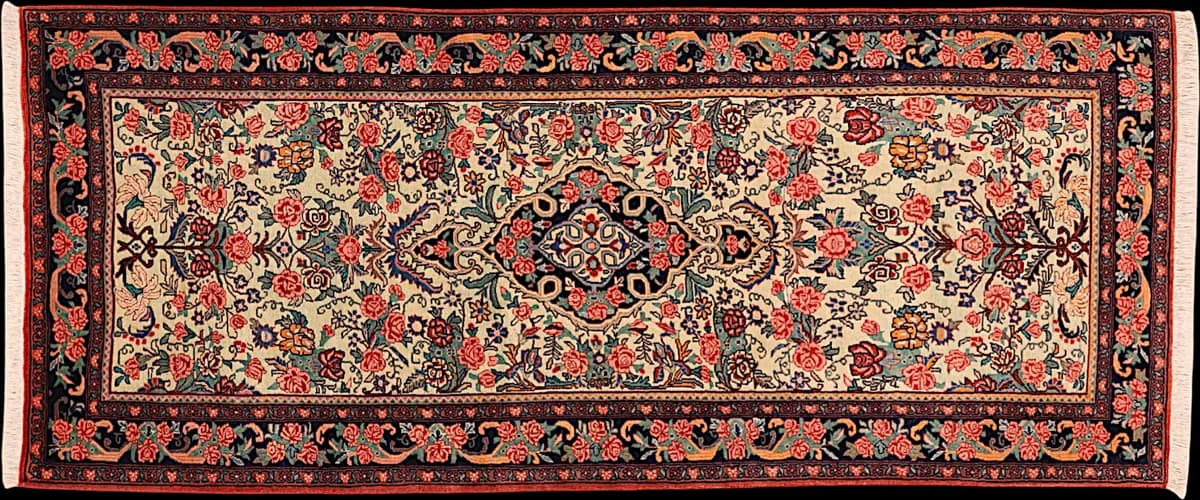
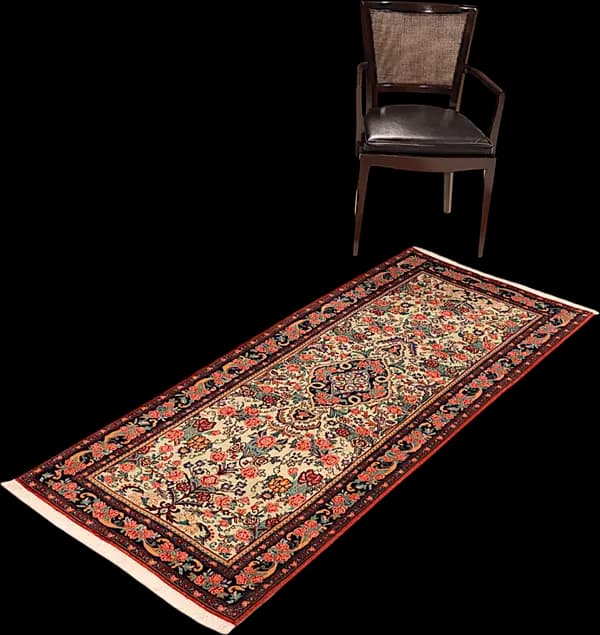
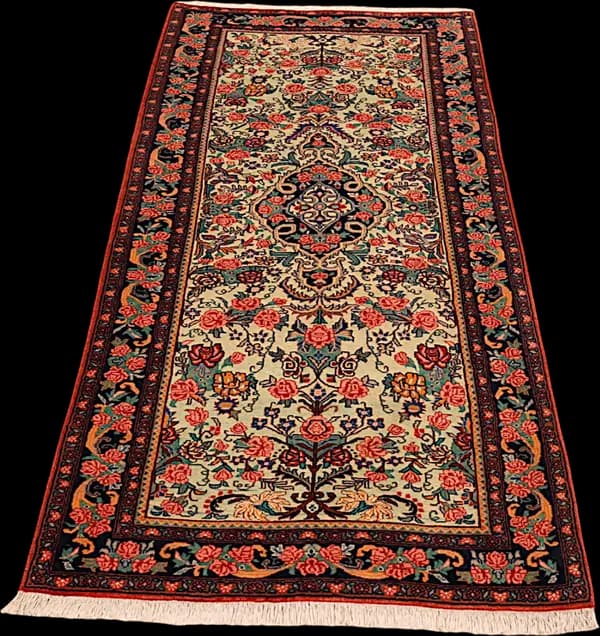
This is a hand-knotted Bidjar runner, also written Bijar, 190 x 79 cm (6'3" x 2'7"), knotted in the Kurdish regions of western Iran. Bidjars are known across the trade as the Iron Rugs of Persia, prized for a density and weight that outlasts almost any other Persian weave. This piece is a slender runner, made for a passage rather than a floor.
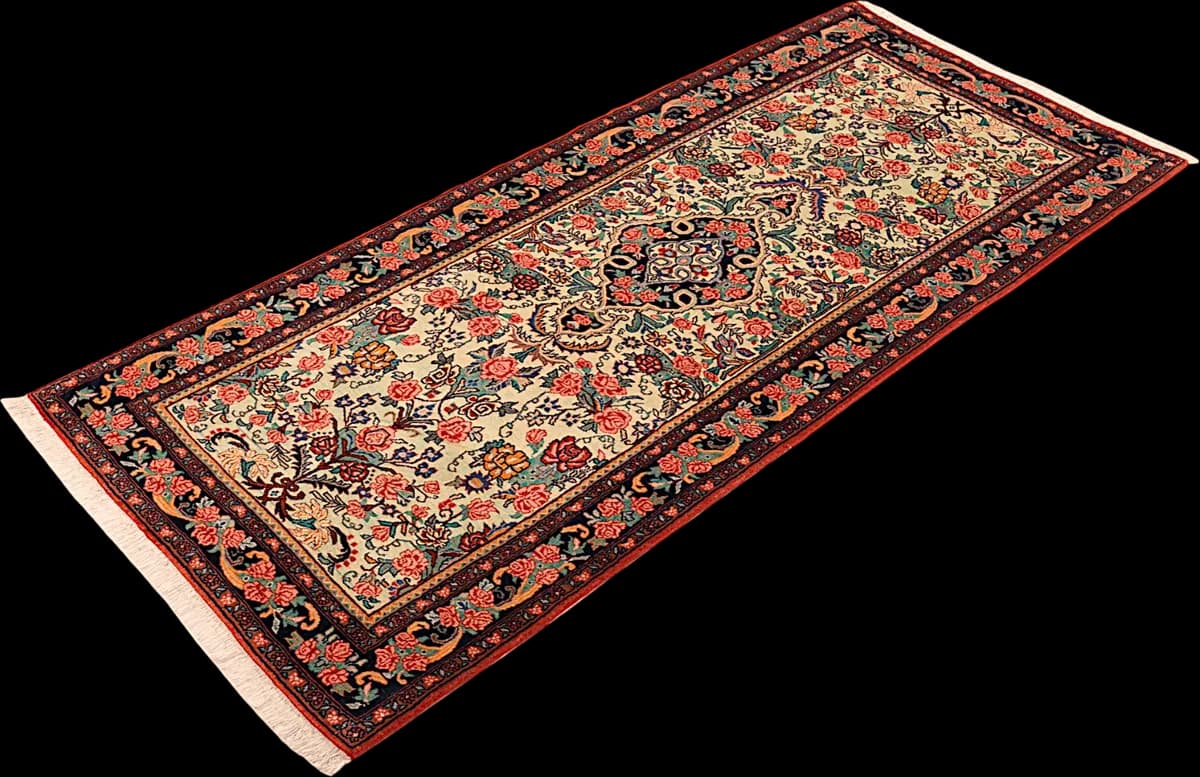
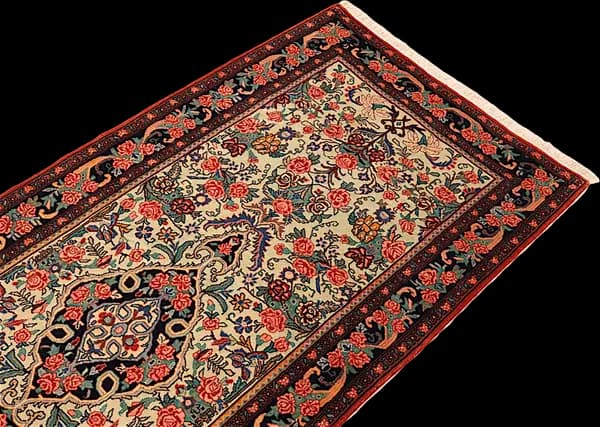
The ground is a luminous ivory, and it stays remarkably open considering how much pattern sits on it. Rose sprays in dusky pink spread across the field in loose, repeating vines, their leaves picked out in sage green. At the centre lies a single medallion, not round or diamond but an elongated lozenge stretching almost the full width of the rug, with a pendant vine above and below. A wide navy border, dense with more rose vines, closes the field, edged by a narrow rust-red guard stripe.
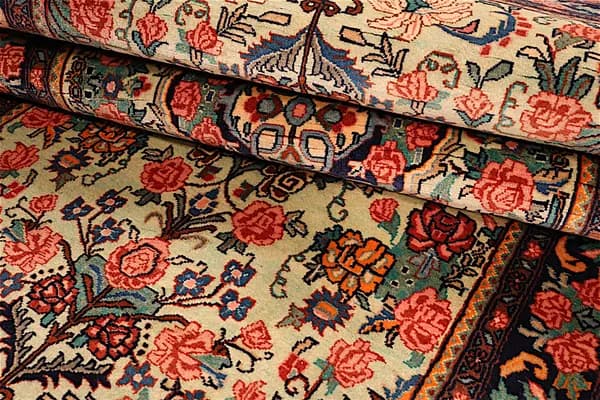
Bidjars take their name from their density, and this one carries 321,000 to 380,000 knots per square metre, among the tightest counts in Persian weaving - months of work at the loom. The wool is handspun, which lets it be drawn finer than machine yarn, so the rose outlines hold their edge instead of blurring into the ivory ground. Clipped low to fifteen millimetres, the pile keeps the drawing precise while still giving the surface a slight, natural sheen. This same density means a Bidjar can only be rolled, never folded.
A runner this size suits a hallway or landing, seen underfoot rather than across a room. Against a dark floor, the ivory ground lifts the space, and the navy medallion holds its own without strong light. Underfoot it is dense and firm, made for daily use rather than careful traffic. Morning light along its length catches the rose pink and lets the whole field glow.
More on Bidjar rugs: origin, making and how to recognise a genuine piece
Superior craftsmanship
At 190 × 79 cm (1.50 m²) this is a runner. It belongs in a hallway, an entrance, on a landing or lengthways beside a bed. It is too narrow for the middle of a room.
Yes, knotted by hand — knot by knot on a loom, not machine-made. The density is 321,000 to 380,000 knots per square metre; across 1.50 m² that is roughly 480,000 to 570,000 individual knots, every one of them tied by hand.
Hand-spun wool still carries its own lanolin, which keeps liquid sitting on the surface for a moment: blot quickly, with clear water and a light cloth, working inwards and without rubbing. Otherwise regular vacuuming along the pile is enough. Turn the rug once or twice a year so light and footfall reach it evenly.
We are in the Hamburg Speicherstadt. Come and see this rug in daylight, or write to us — a person answers.
Certificate included verifying origin, materials, and craftsmanship.
Ref: 609339