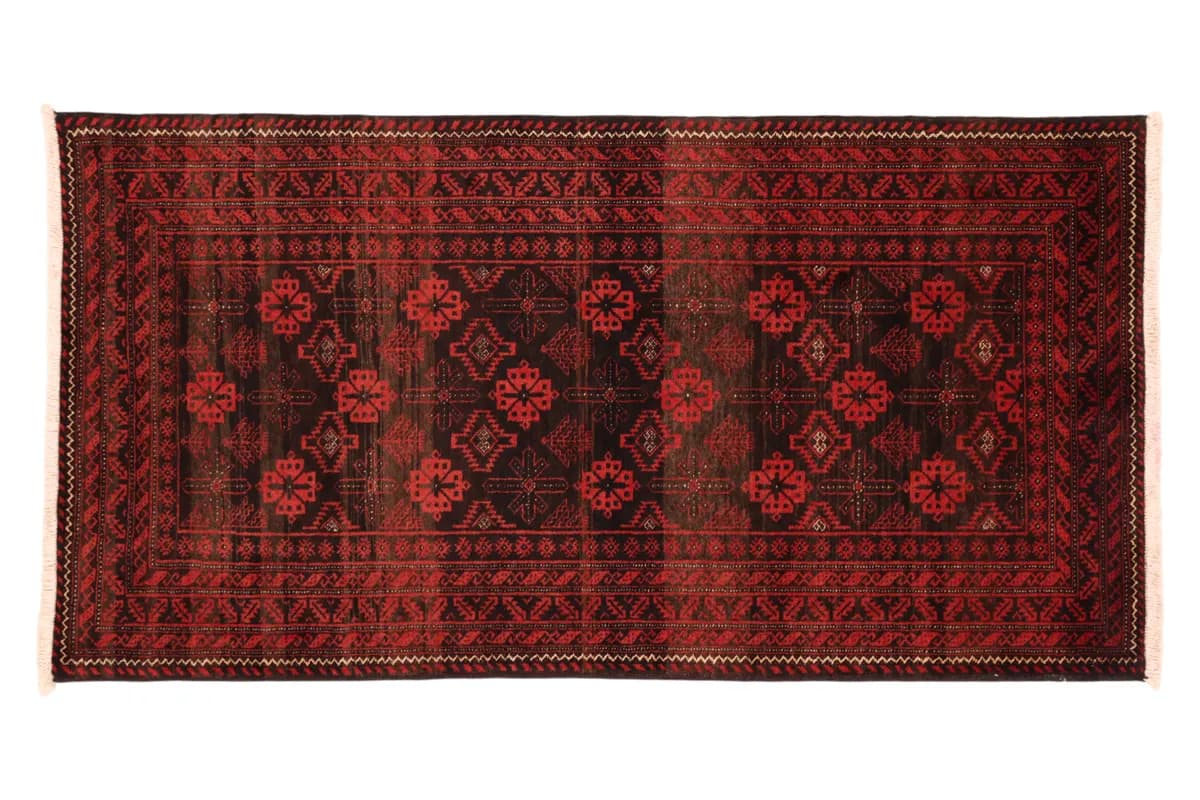
Belutsch
184 × 104 cm
544 €



453 €
Incl. VAT
In Stock · Ready to Ship
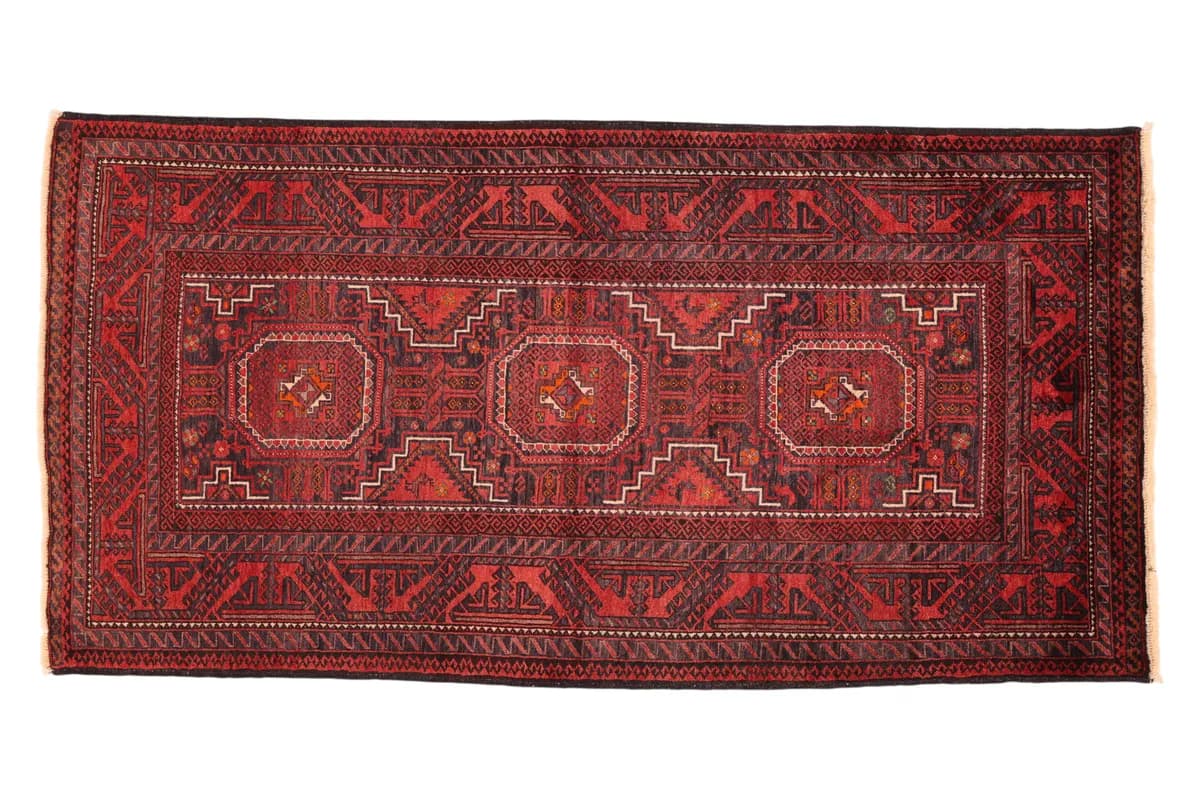
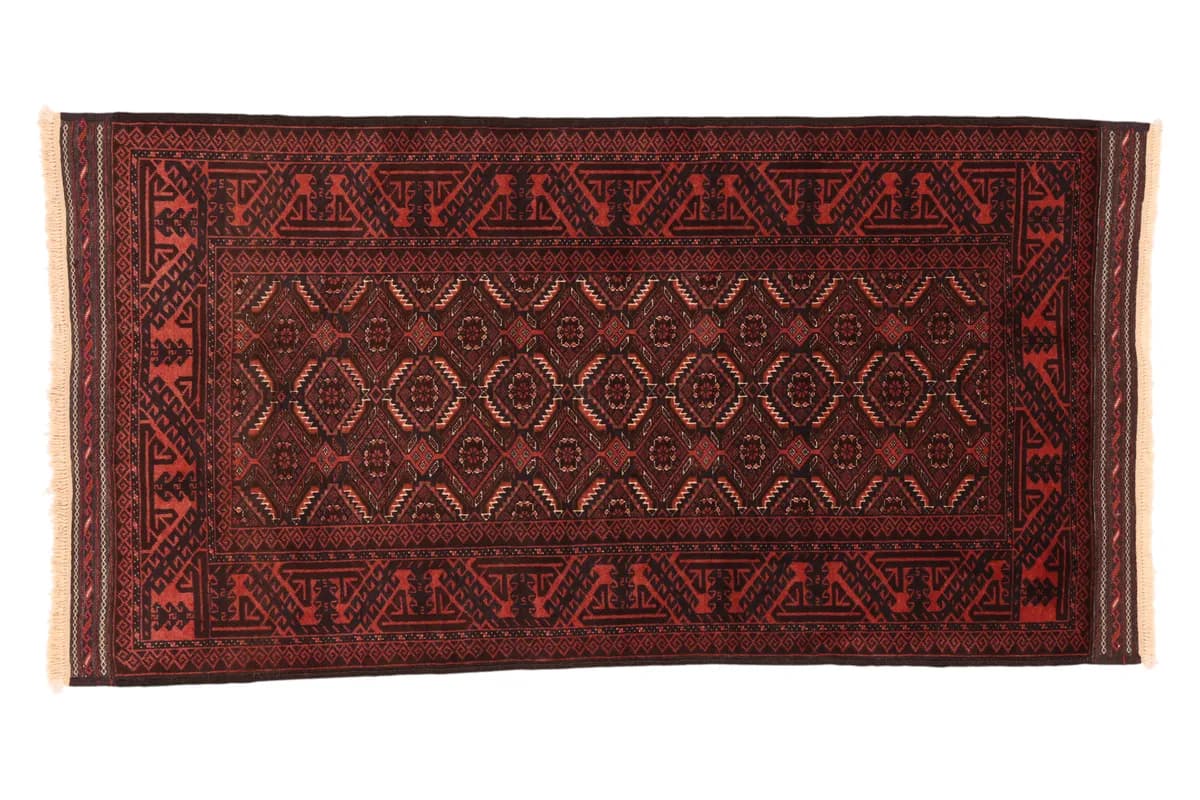
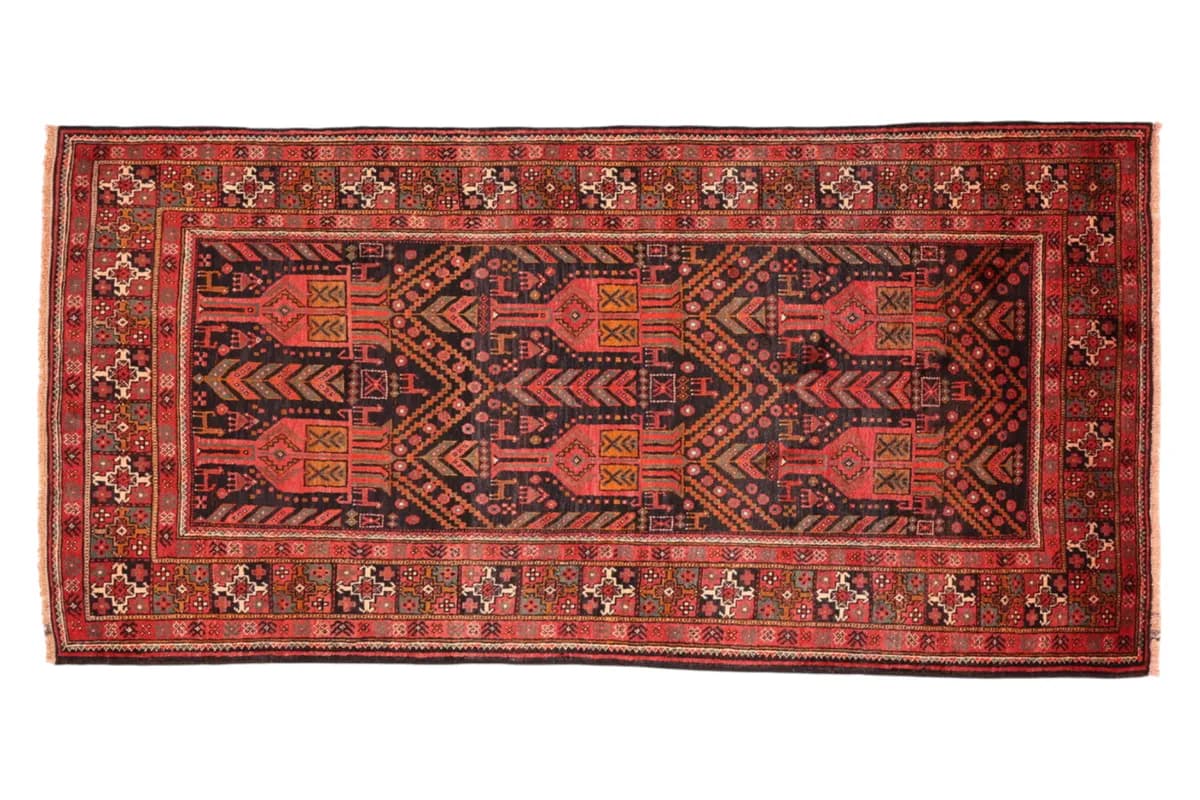
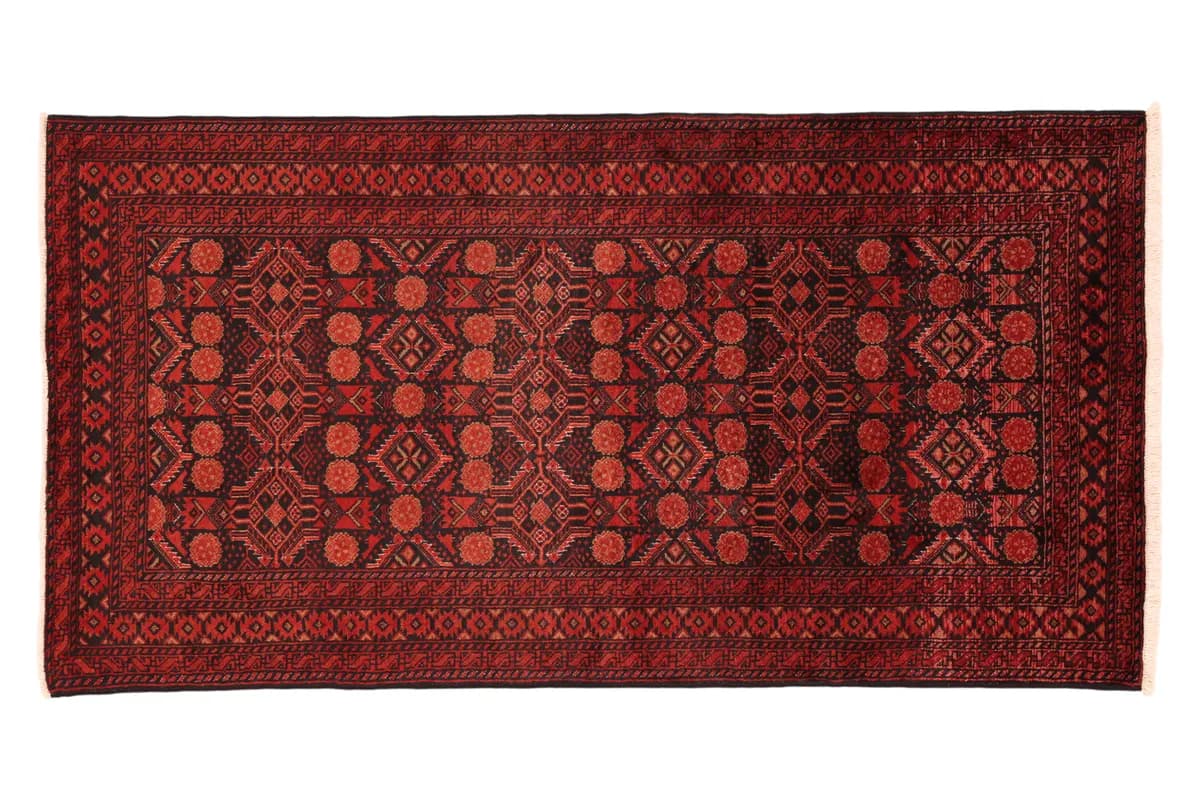
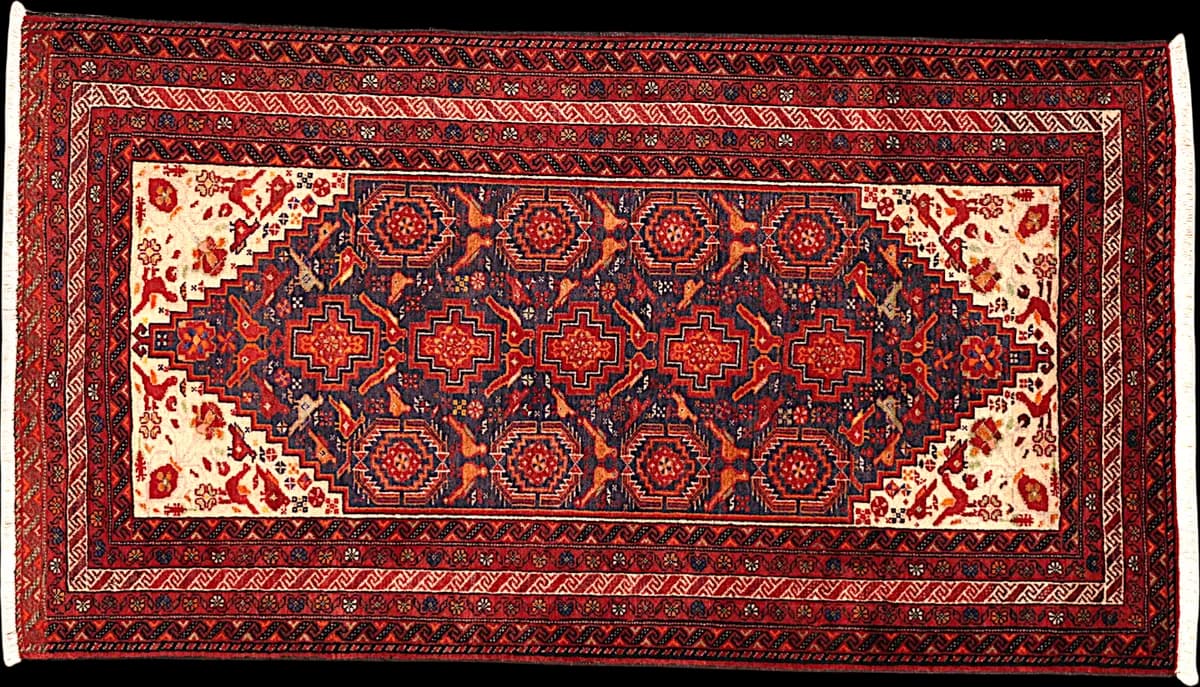
This is a Baluch, also written Belouch, a tribal weaving from the borderlands of southeastern Iran, 184 x 99 cm (6'0" x 3'3"). The type is celebrated for its deep reds and indigo blue and for bold, angular geometry carried from memory rather than a drawn plan, often arranged as a prayer-rug or mihrab layout. This particular piece keeps to that strict geometry almost everywhere, but not quite everywhere.
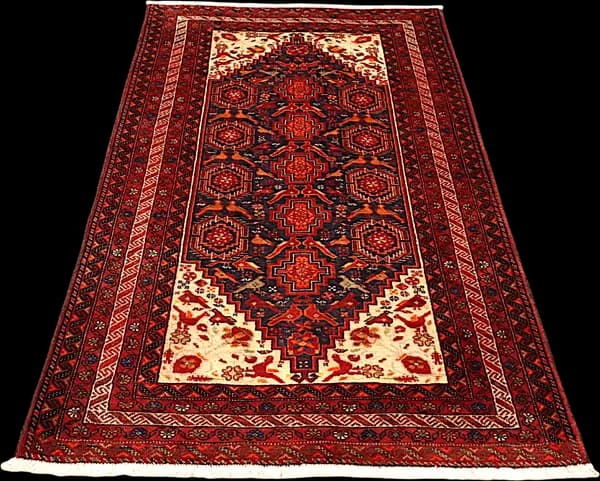
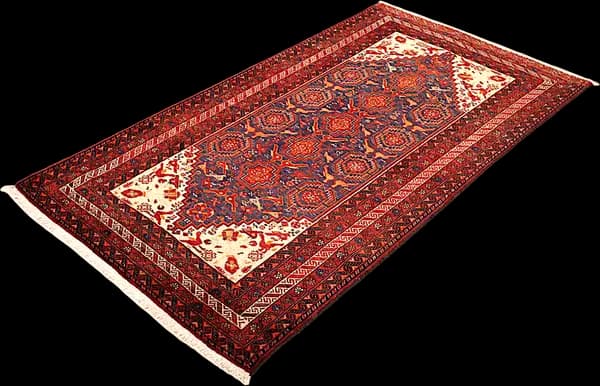
The field is a deep indigo, almost navy, and across it run rows of rust-red octagons and diamonds, evenly spaced, edged in black. At each corner the dark field gives way to ivory, and within these pale spandrels sit small rust-toned figures set among floral sprigs, drawn with enough character that they bring to mind stylised birds or animals rather than pure ornament. It is a small departure, but in a pattern normally kept so severely geometric, it reads as a hint of storytelling. A wide border in dark red and cream, banded with black zigzag and meander stripes, closes the design and holds its own against the density of the field.
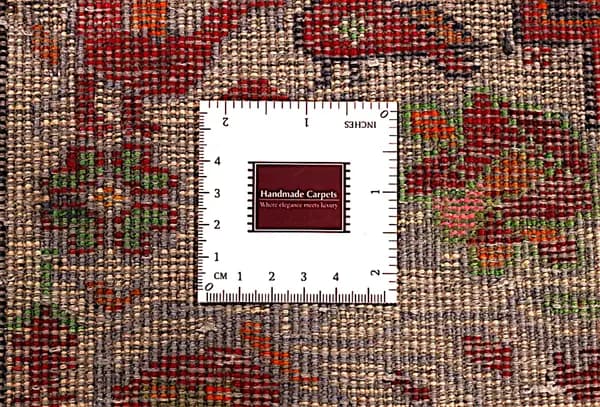
The pile is hand-spun wool, knotted by hand onto a cotton warp, most likely by one weaver working alone over a matter of months on a portable loom rather than in a workshop. That hand-spun wool is what gives the surface its warmth and its slightly uneven, matte character, with none of the sheen a more even commercial yarn would produce. At a density of 128,000 to 160,000 knots per square metre and a pile of 6 millimetres, the weave has enough openness for that bold geometry to sit clearly against the ground, while still holding its shape underfoot after twenty to forty years of use.
A rug this size settles well into a hallway or on a landing, or at the foot of a bed, where its proportions work better than a large square field ever could. The indigo holds its depth even without much daylight, and the rust medallions keep it from reading as flat or cold in a passage that people only pass through briefly. Underfoot it is dense and firm rather than soft, made for the kind of daily footfall a hallway sees. Catch it in low afternoon light and the ivory corners lift first, drawing the eye to those small rust figures before the rest of the pattern settles back into its geometry.
More on Baluch rugs: origin, making and how to recognise a genuine piece
Traditional weave
At 184 × 99 cm (1.82 m²) this is a small rug. It works beside a bed, in a reading corner, in front of a fireplace or as a mat by a door. It does not furnish a room; it makes a point in one.
Yes, knotted by hand — knot by knot on a loom, not machine-made. The density is 128,000 to 160,000 knots per square metre; across 1.82 m² that is roughly 230,000 to 290,000 individual knots, every one of them tied by hand.
Hand-spun wool still carries its own lanolin, which keeps liquid sitting on the surface for a moment: blot quickly, with clear water and a light cloth, working inwards and without rubbing. Otherwise regular vacuuming along the pile is enough. Turn the rug once or twice a year so light and footfall reach it evenly.
We are in the Hamburg Speicherstadt. Come and see this rug in daylight, or write to us — a person answers.
Certificate included verifying origin, materials, and craftsmanship.
Ref: 673970