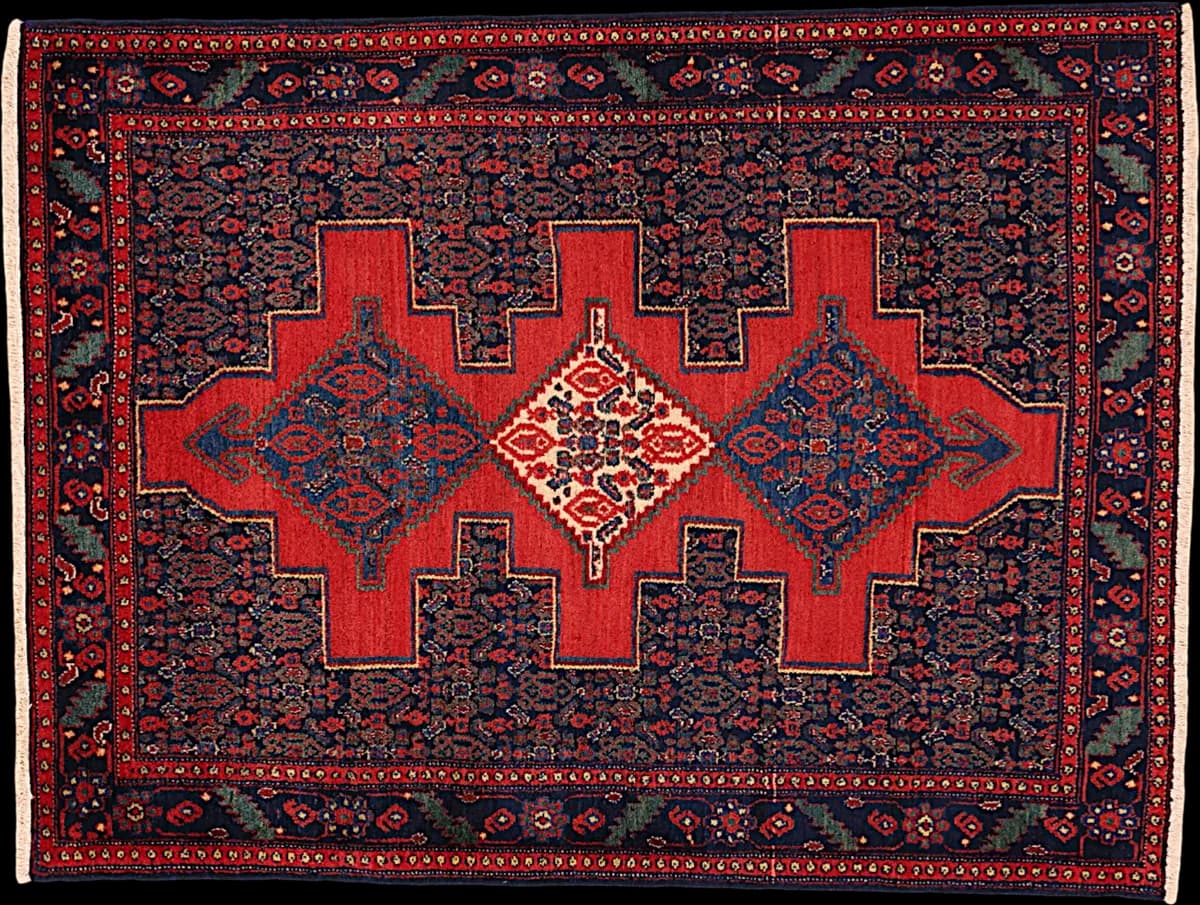
Senneh
152 × 126 cm
1.020 €





1.035 €
Incl. VAT
In Stock · Ready to Ship
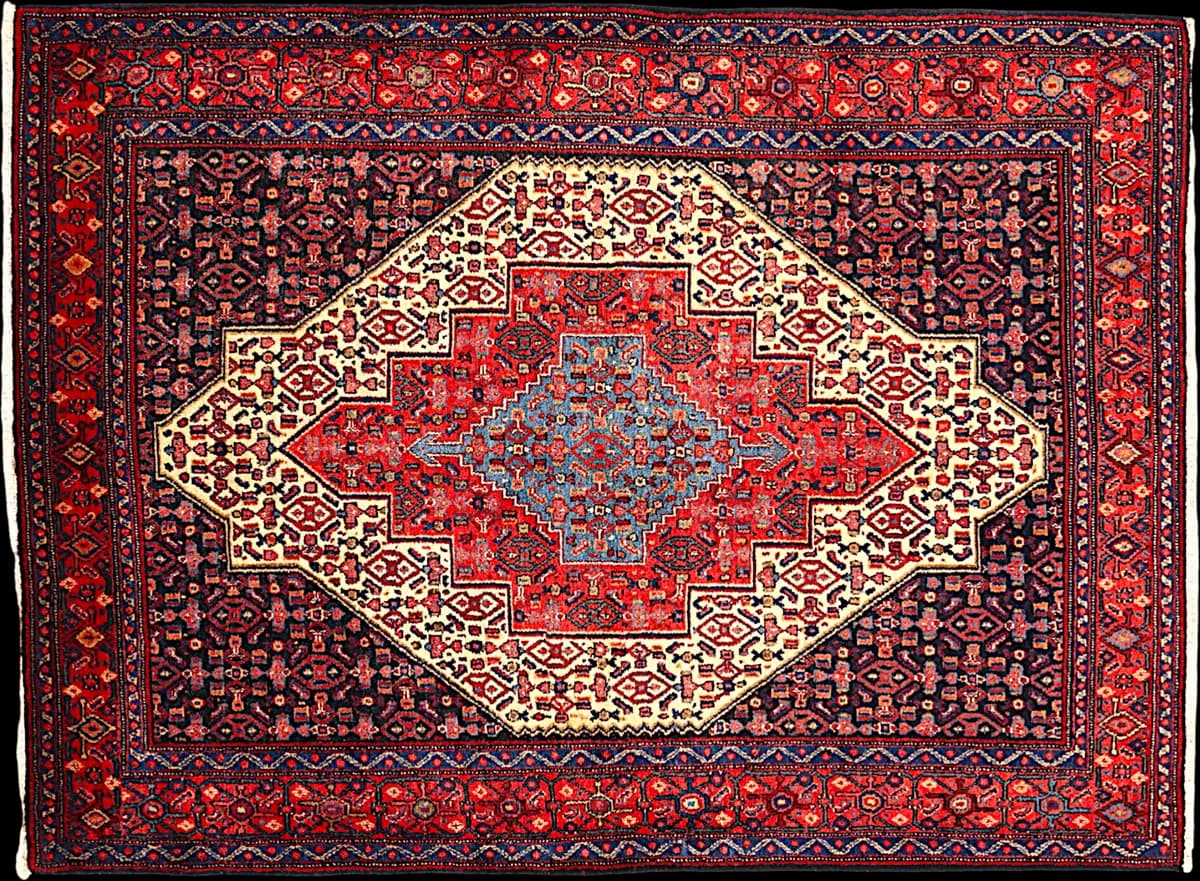
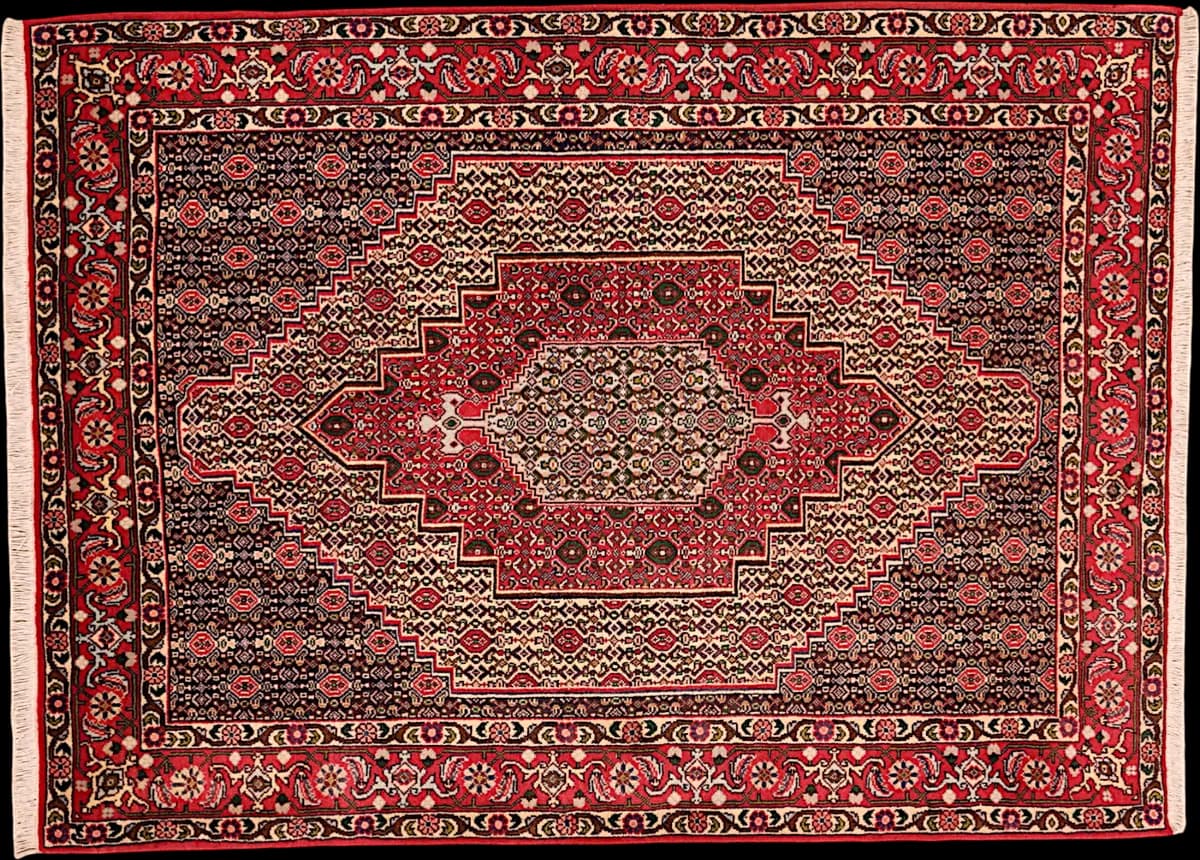
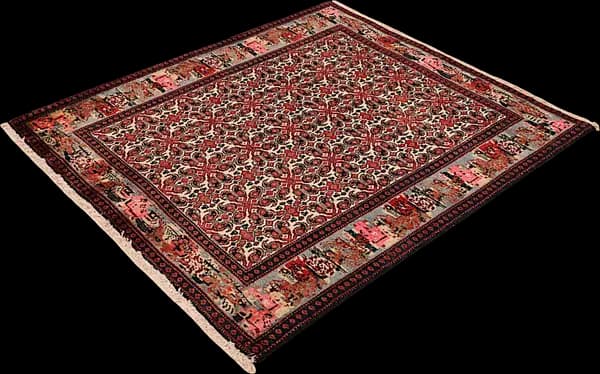
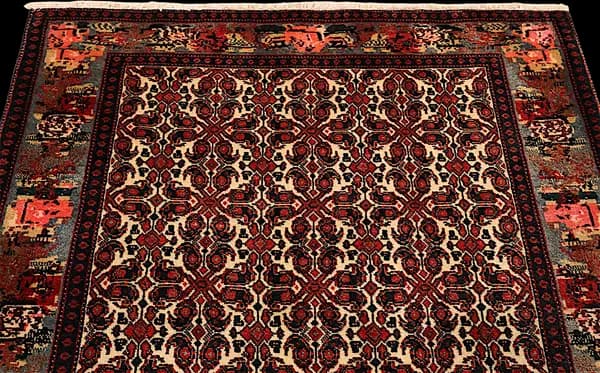
A Sanandaj, also written Senneh, rug from the Kurdish provincial capital of the same name in western Iran, measuring 141 x 123 cm (4'8" x 4'0"). Sanandaj is where Kurdish city weaving reaches its finest expression, prized for drawing far more precise than the tribal work of the surrounding region. The design here is a classic Mahi, or Herati, lattice, but it arrives with a border unusually rich in colour for a pattern normally kept plain.
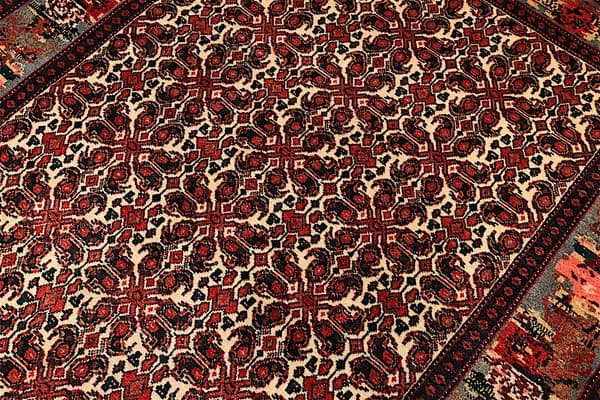
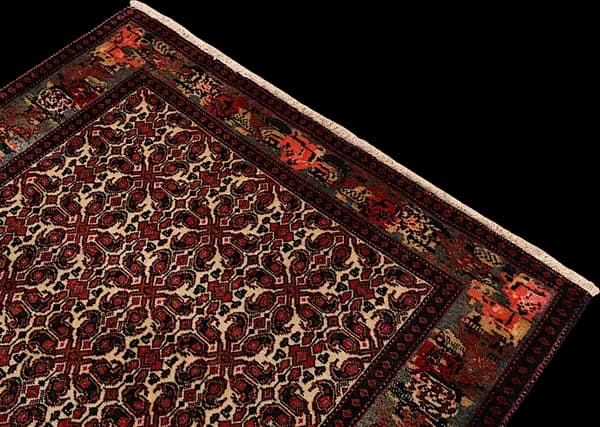
The field is a dense red-on-cream lattice, so tightly repeated that from a distance it reads almost as a printed textile before the eye resolves it into individual diamonds, each holding its own small rosette. Navy outlines carry the lattice across the whole field with no medallion to interrupt it. That discipline gives way at the border: a dark navy band set with small red rosettes, framed by a wide slate-blue guard scattered with pink, coral, salmon and camel boteh forms, laid out almost like a row of small garden panels against the strict geometry inside.
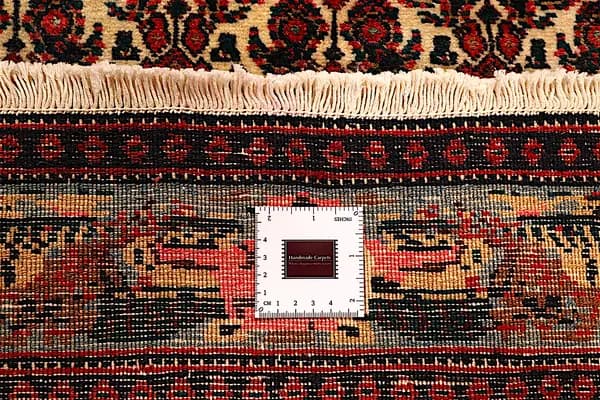
The rug is hand-knotted, with a cotton warp and a pile of hand-spun wool, at a density of 201,000 to 250,000 knots per square metre, fine enough to hold the lattice lines and the small rosette details clearly rather than blurring them. Hand-spun wool never runs perfectly even, and that gives the surface a fine, slightly grained texture even where the pile is clipped tight. At 12 millimetres the pile sits a touch deeper than the most closely sheared city rugs, and it is this depth, together with the density, that lets the crisp red-on-cream drawing carry a soft, faintly plush hand underfoot.
At this size the rug suits a study, a landing, or the floor beside a bed rather than a large open room, and it holds its own there. The cream field lifts a dark or neutral floor, while the brick red keeps the room warm without needing strong colour anywhere else. Underfoot it is dense and firm, built for a spot that sees daily use rather than one kept for show. Morning light picks out the rosettes in the lattice first, then moves out to the coral and camel botehs in the border, so the piece keeps giving something new to notice through the day.
More on Senneh rugs: origin, making and how to recognise a genuine piece
Fine quality weave
At 141 × 123 cm (1.73 m²) this is a small rug. It works beside a bed, in a reading corner, in front of a fireplace or as a mat by a door. It does not furnish a room; it makes a point in one.
Yes, knotted by hand — knot by knot on a loom, not machine-made. The density is 201,000 to 250,000 knots per square metre; across 1.73 m² that is roughly 350,000 to 430,000 individual knots, every one of them tied by hand.
Hand-spun wool still carries its own lanolin, which keeps liquid sitting on the surface for a moment: blot quickly, with clear water and a light cloth, working inwards and without rubbing. Otherwise regular vacuuming along the pile is enough. Turn the rug once or twice a year so light and footfall reach it evenly.
We are in the Hamburg Speicherstadt. Come and see this rug in daylight, or write to us — a person answers.
Certificate included verifying origin, materials, and craftsmanship.
Ref: 702652