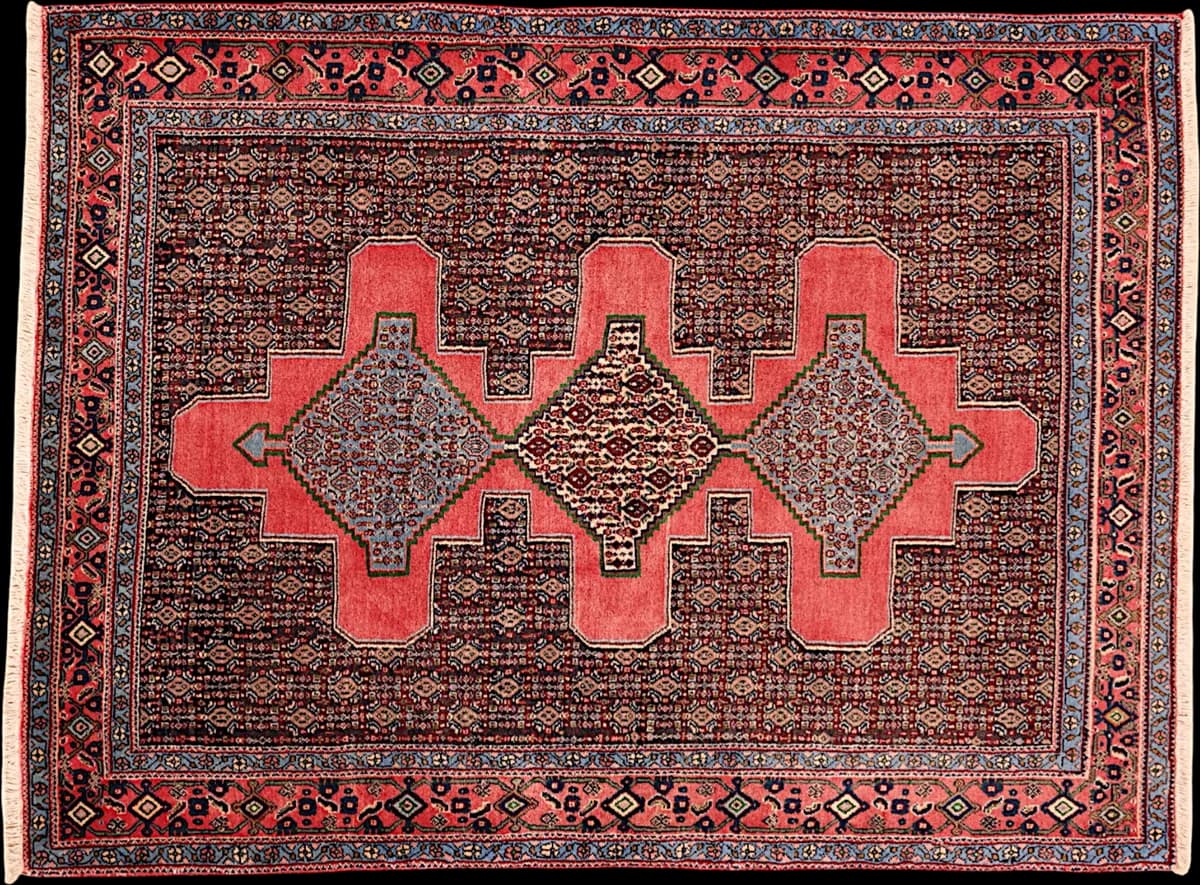
Senneh
161 × 121 cm
975 €
381 €
Incl. VAT
In Stock · Ready to Ship
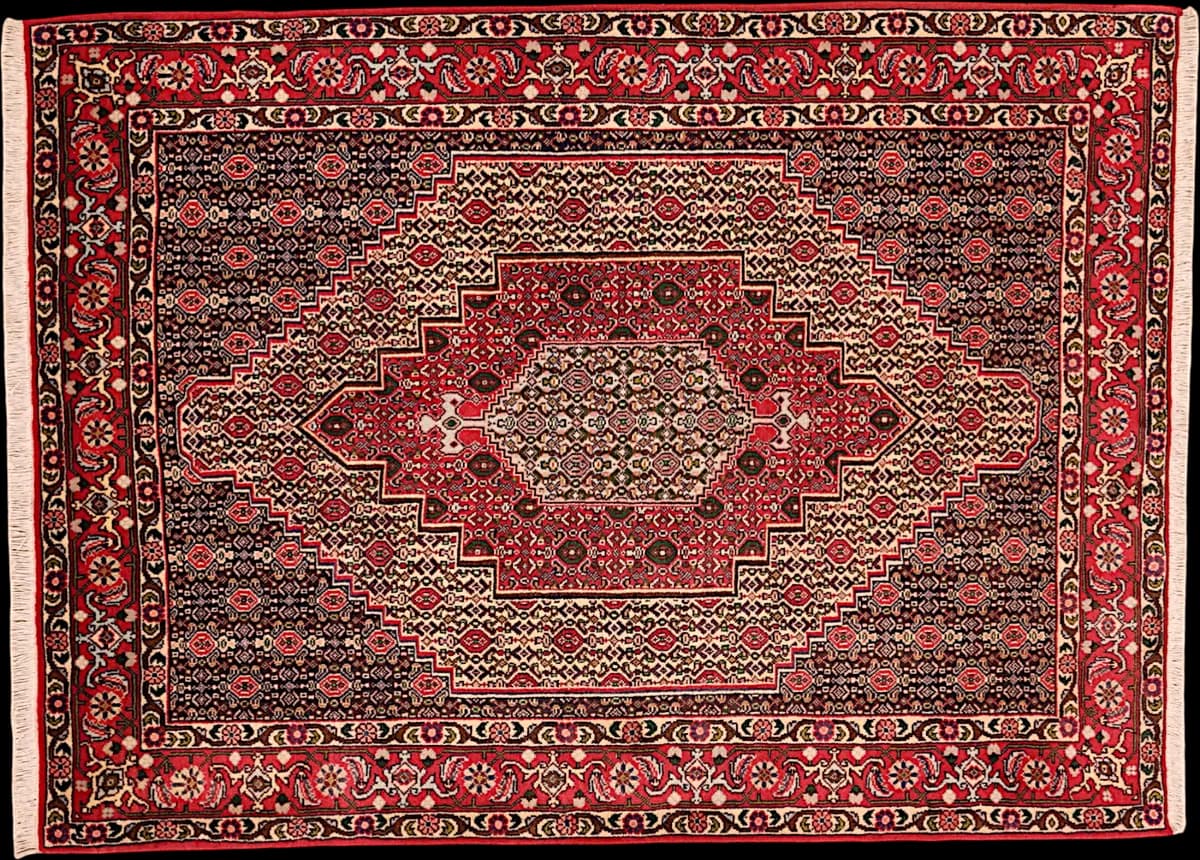
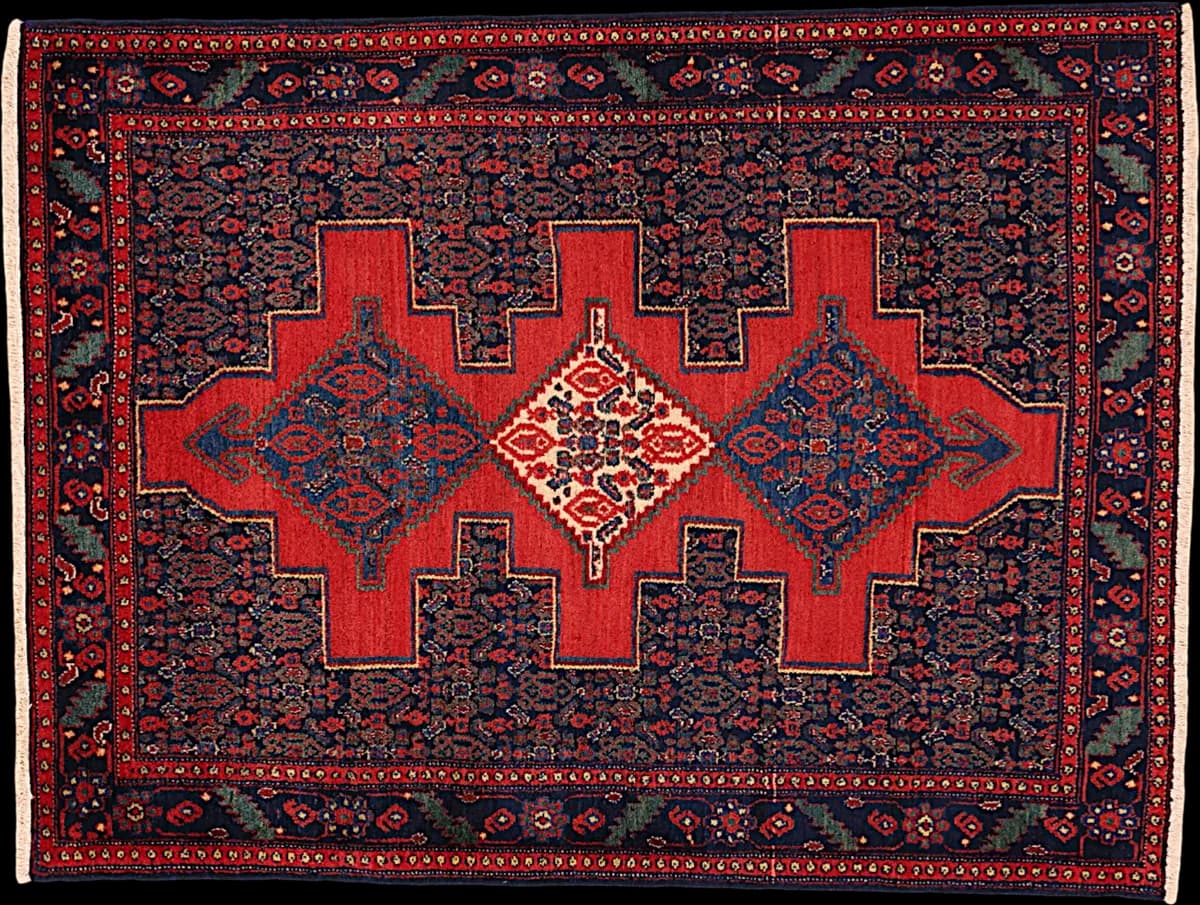
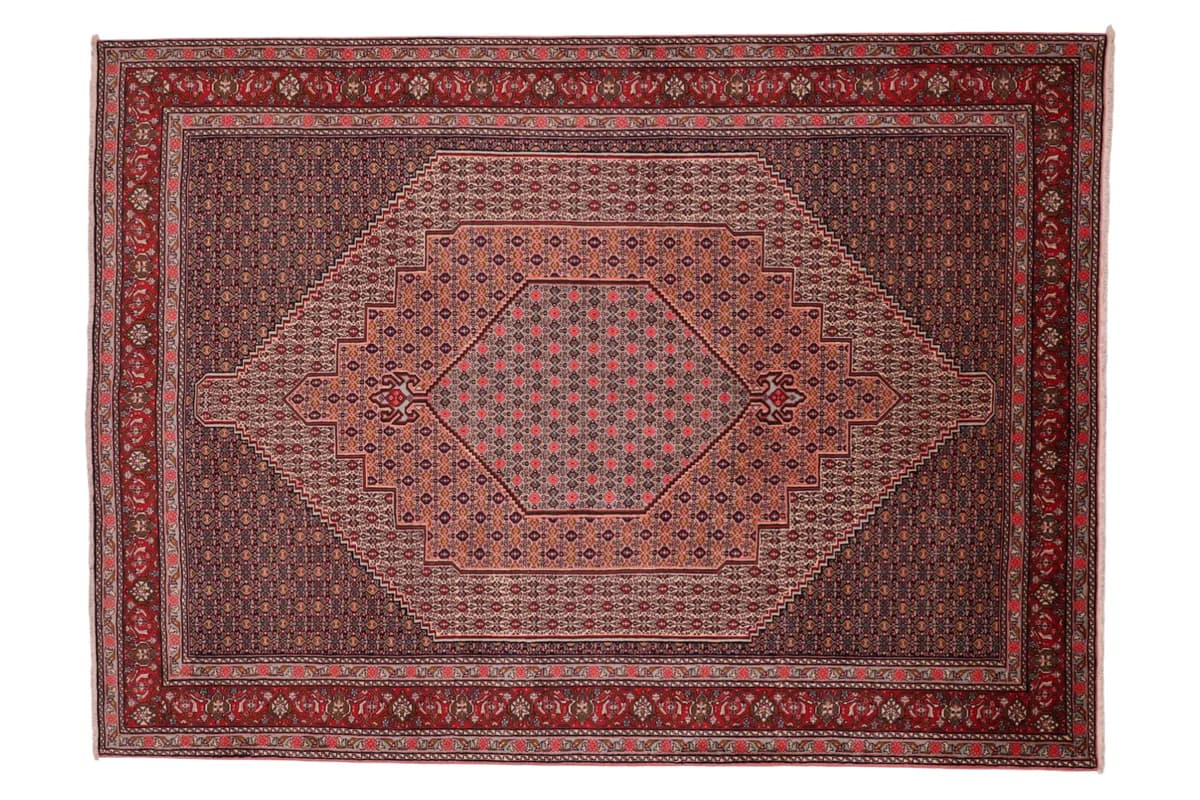
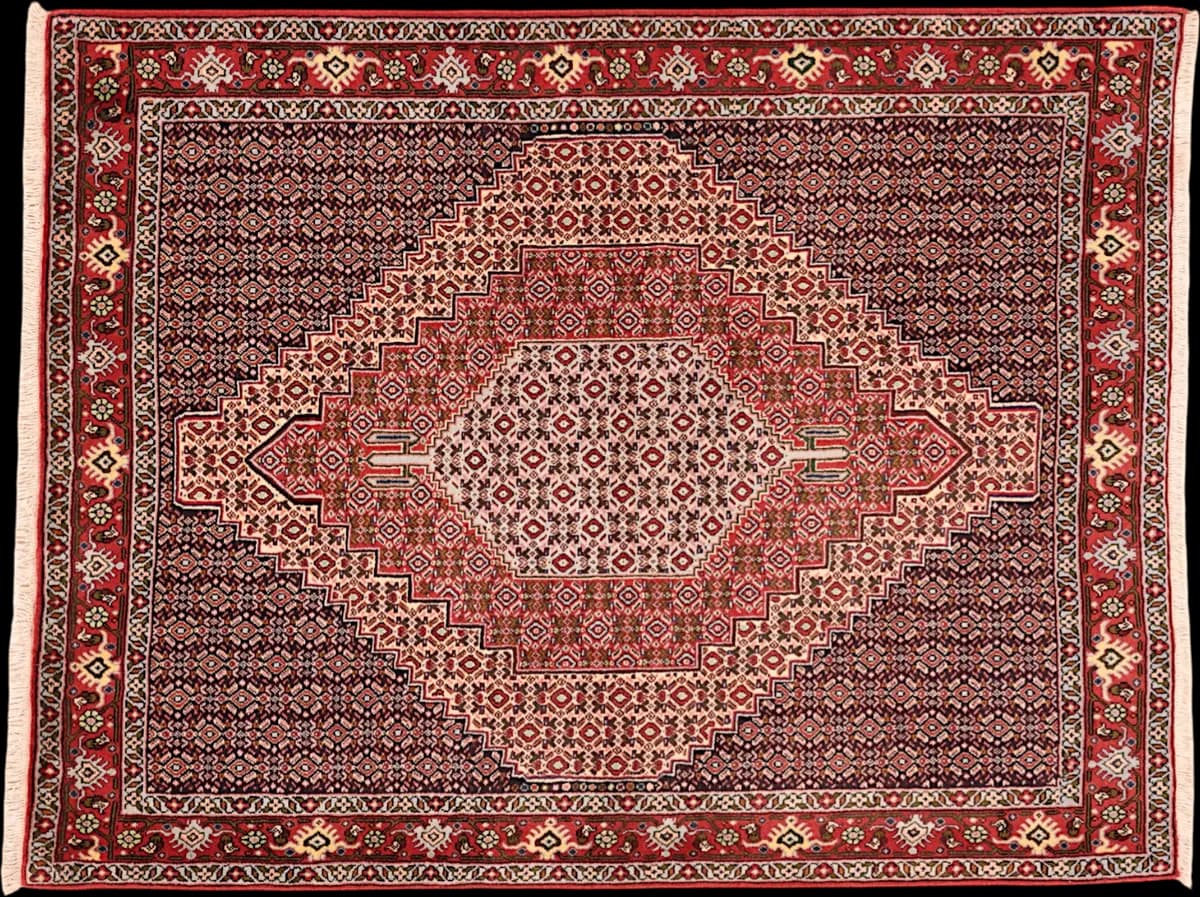
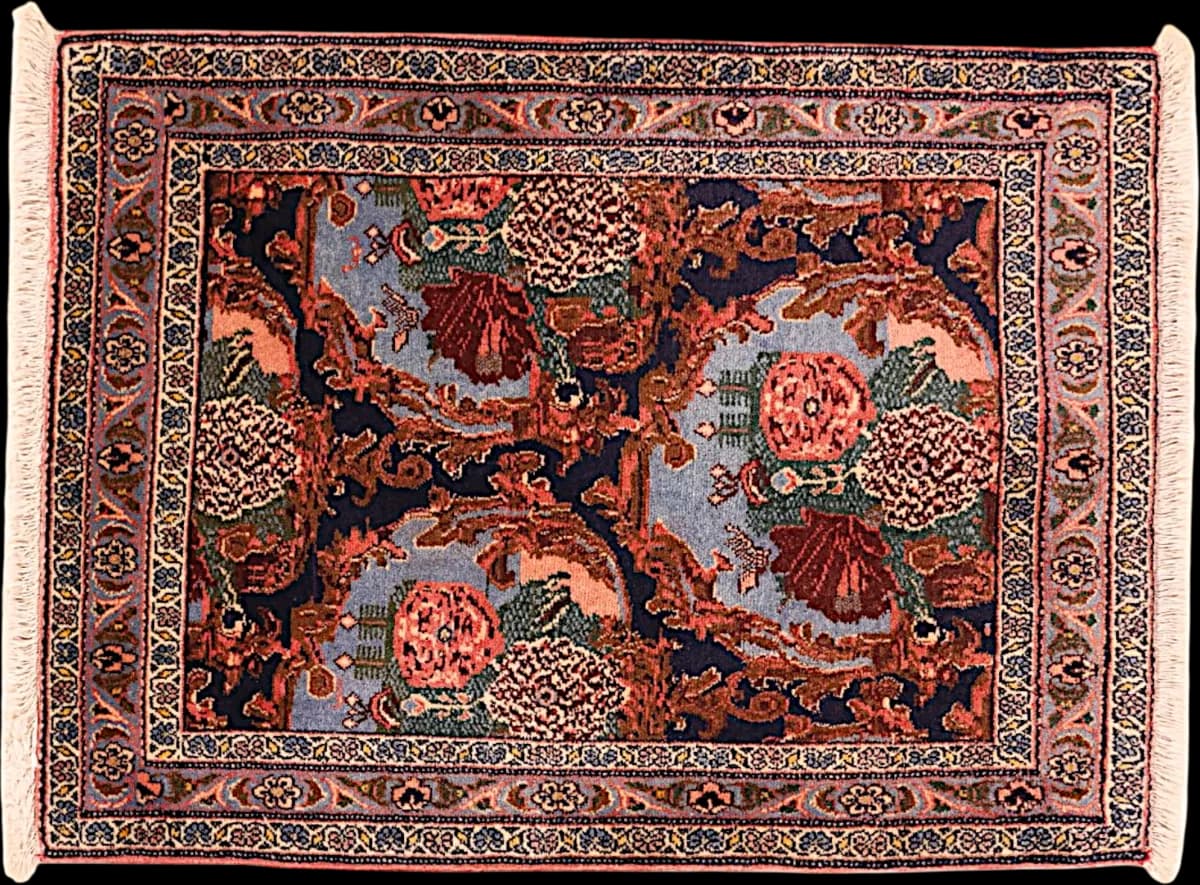
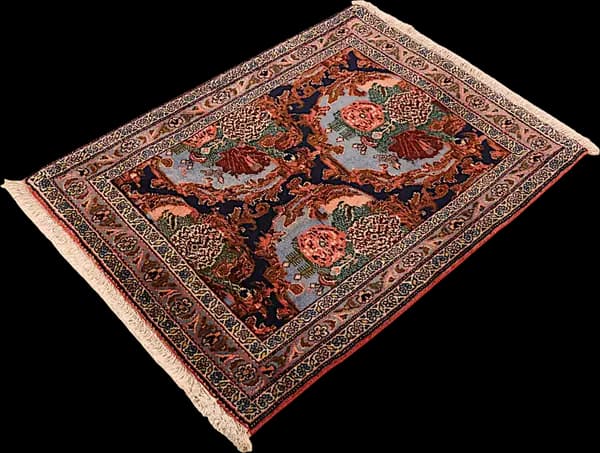
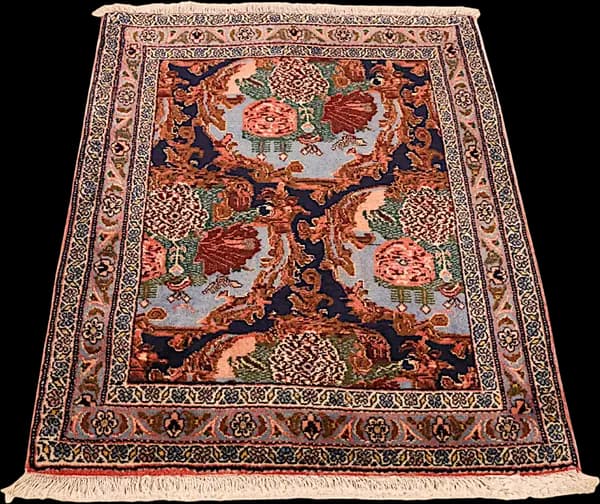
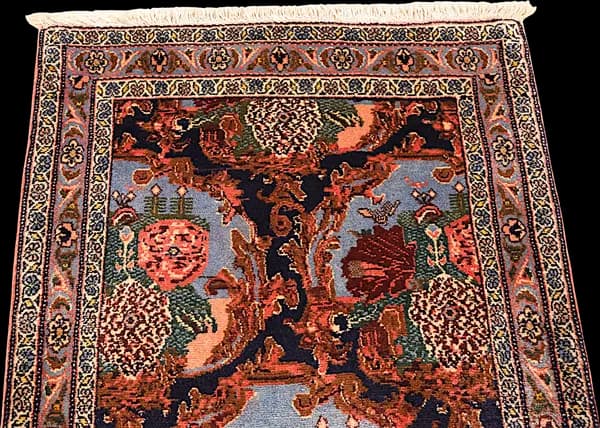
This is a Sanandaj, from the city of that name in Iran's Kurdistan province, historically known as Senneh and long regarded as the source of the finest Kurdish city weaving. It measures 105 x 78 cm (3'5" x 2'7"), a small-format piece. Sanandaj work is prized for close, disciplined drawing and a cultivated palette, usually set out as a medallion, a Herati field, or ranks of boteh.
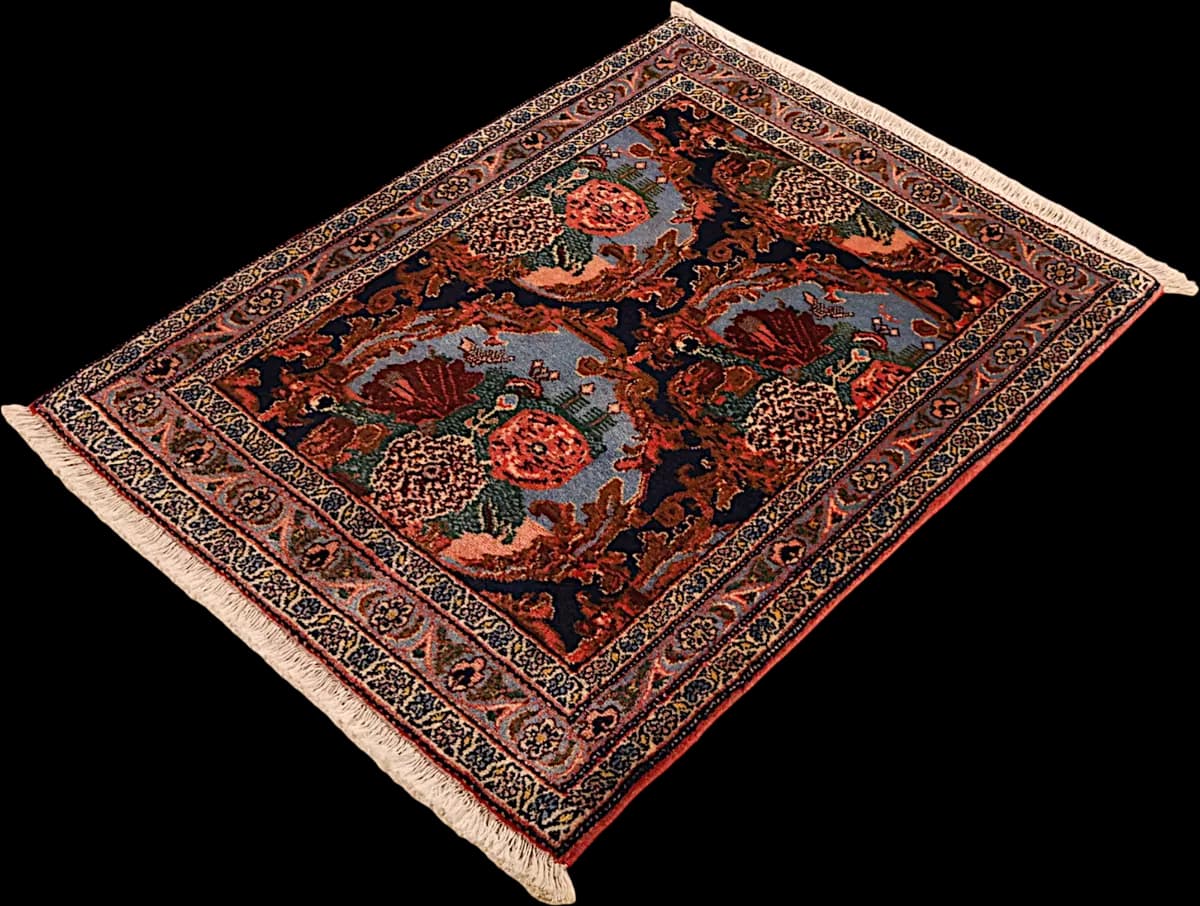
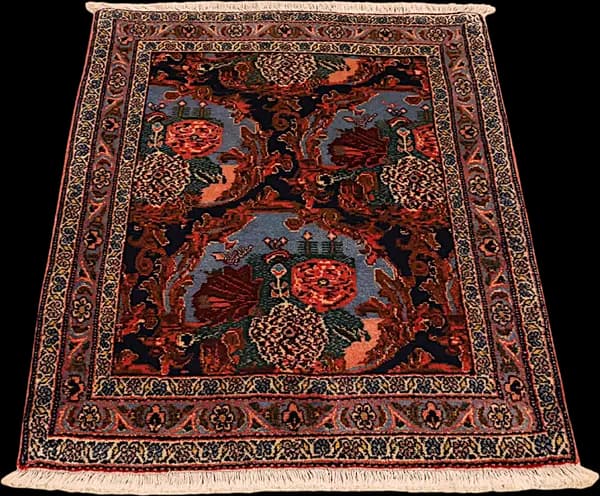
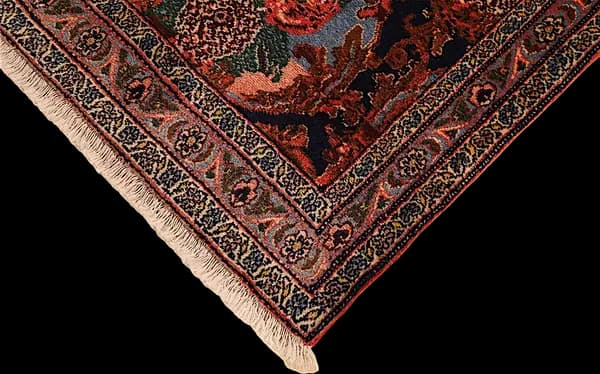
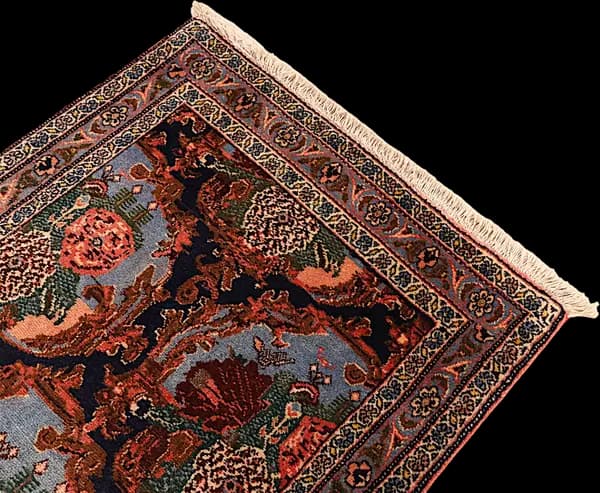
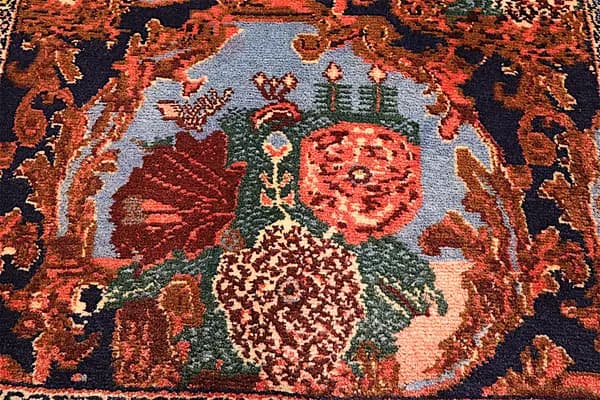
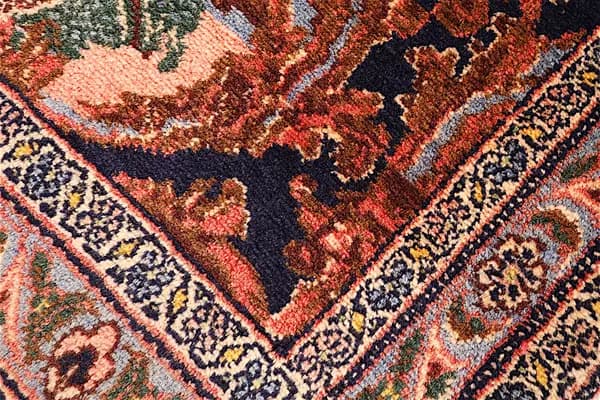
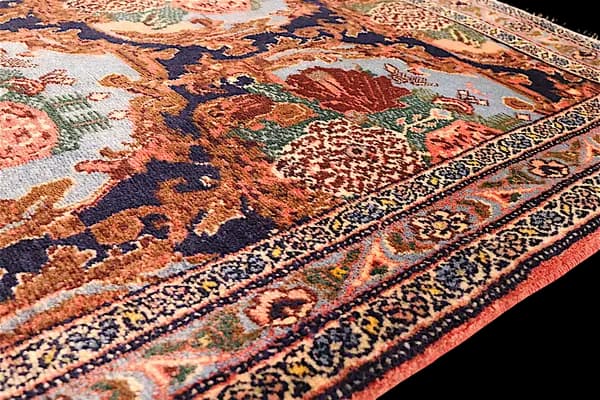
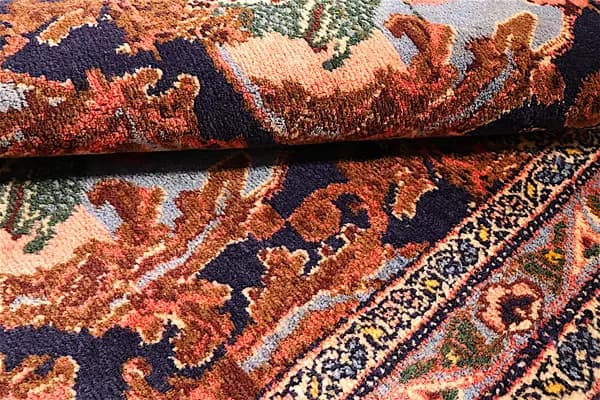
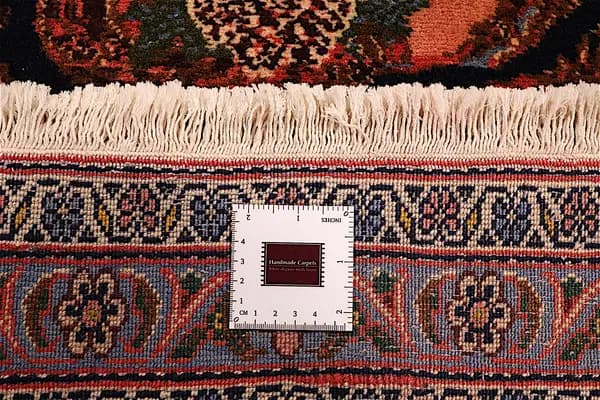
Here the ground is a dove blue, split by darker navy diagonals rather than held as one flat field, and there is no medallion at all. Instead an asymmetric floral scroll runs the full width, carrying four large rosette blooms and shell-shaped palmettes in rust red and terracotta across the shifting blue ground. Ivory, olive green and a soft salmon pink move through the scrollwork, and the border picks up small accents of ochre and gold against a calmer surround. It is a free-running composition from a workshop tradition normally built around a fixed centre.
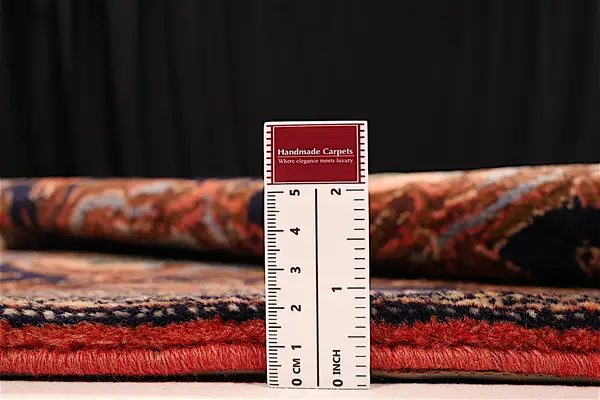
The pile is hand-spun wool, knotted by hand onto a cotton warp at 128,000 to 160,000 knots per square metre and clipped to a close 12 mm. That density is what lets the rosette outlines and the palmette shells stay crisp rather than blurring into the ground, even without a medallion to anchor the eye. Hand-spun wool also takes dye with slight variation along each thread, which is why the surface carries a faint rib where one colour meets the next, and a soft, low sheen rather than a uniform gloss.
A piece this size earns its place close up: at a bedside, in front of a small chair, or by a door where you pass it every day. The dove blue and navy sit well against a pale floor and hold their own in a dimly lit hallway, while the rust and terracotta keep it from turning cold. The pile is dense and firm underfoot, a rug meant for a spot with regular use rather than one kept for show. Watch it through a change of light and the split ground does the work, the diagonals shifting the blue from slate to navy as the sun moves, and the rosettes seem to step forward in turn.
More on Senneh rugs: origin, making and how to recognise a genuine piece
Traditional weave
At 105 × 78 cm (0.82 m²) this is a small rug. It works beside a bed, in a reading corner, in front of a fireplace or as a mat by a door. It does not furnish a room; it makes a point in one.
Yes, knotted by hand — knot by knot on a loom, not machine-made. The density is 128,000 to 160,000 knots per square metre; across 0.82 m² that is roughly 100,000 to 130,000 individual knots, every one of them tied by hand.
Hand-spun wool still carries its own lanolin, which keeps liquid sitting on the surface for a moment: blot quickly, with clear water and a light cloth, working inwards and without rubbing. Otherwise regular vacuuming along the pile is enough. Turn the rug once or twice a year so light and footfall reach it evenly.
We are in the Hamburg Speicherstadt. Come and see this rug in daylight, or write to us — a person answers.
Certificate included verifying origin, materials, and craftsmanship.
Ref: 105945