Senneh
303 × 197 cm
2.597 €




4.023 €
Incl. VAT
In Stock · Ready to Ship
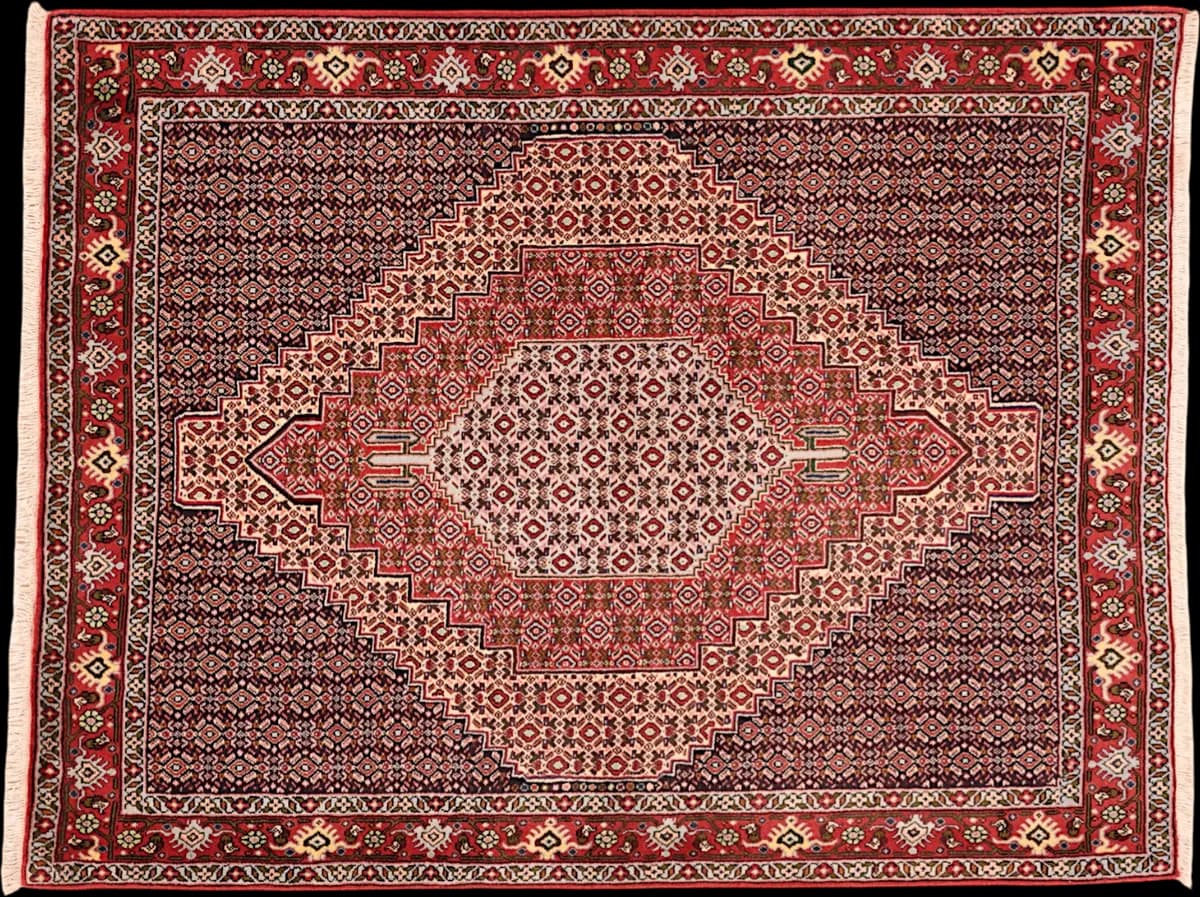
Sanandaj, still often called Senneh after its historic name, is the Kurdish city that produced some of the finest workshop weaving in western Iran, and this rug measures 352 x 254 cm (11'6" x 8'4"). Unlike the looser, freehand work of Kurdish tribal weavers, a Sanandaj rug is drawn out in advance and knotted to that plan in a city workshop, which is why the type is known for close, disciplined drawing and a pile clipped low enough to show every line of it.
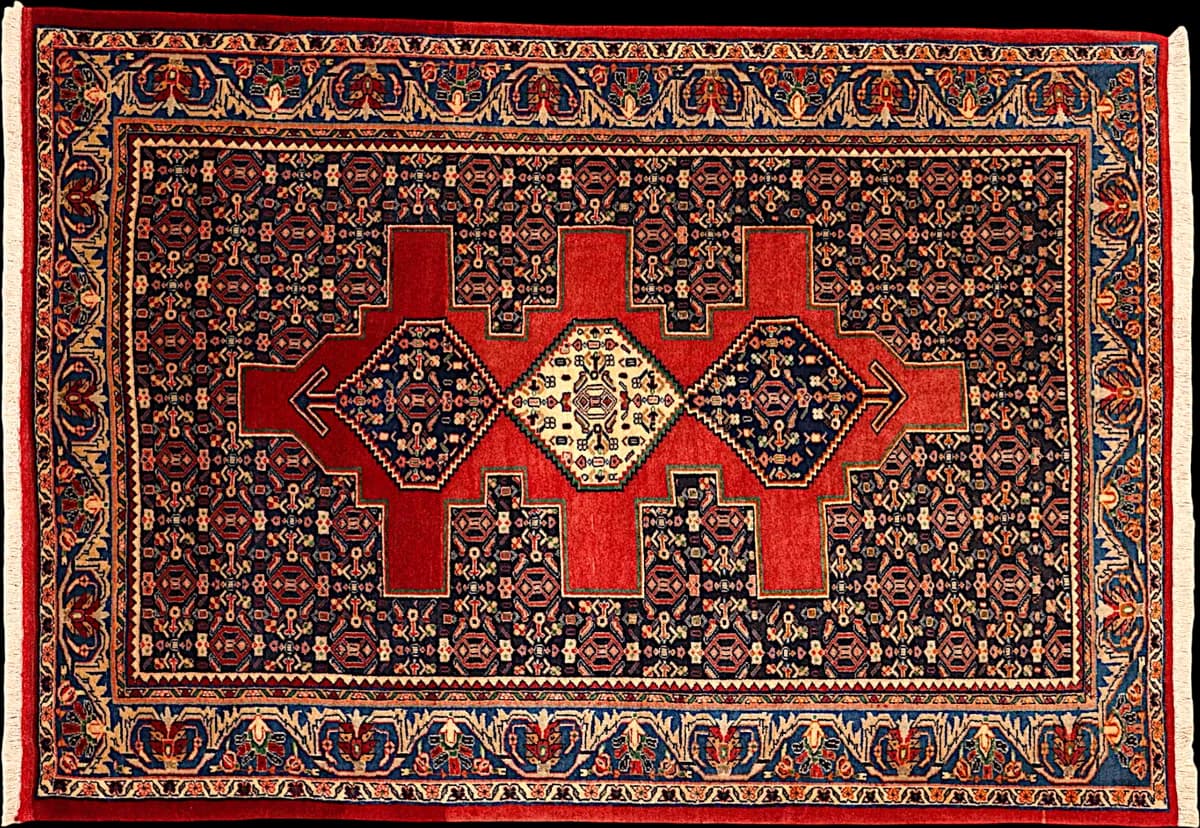
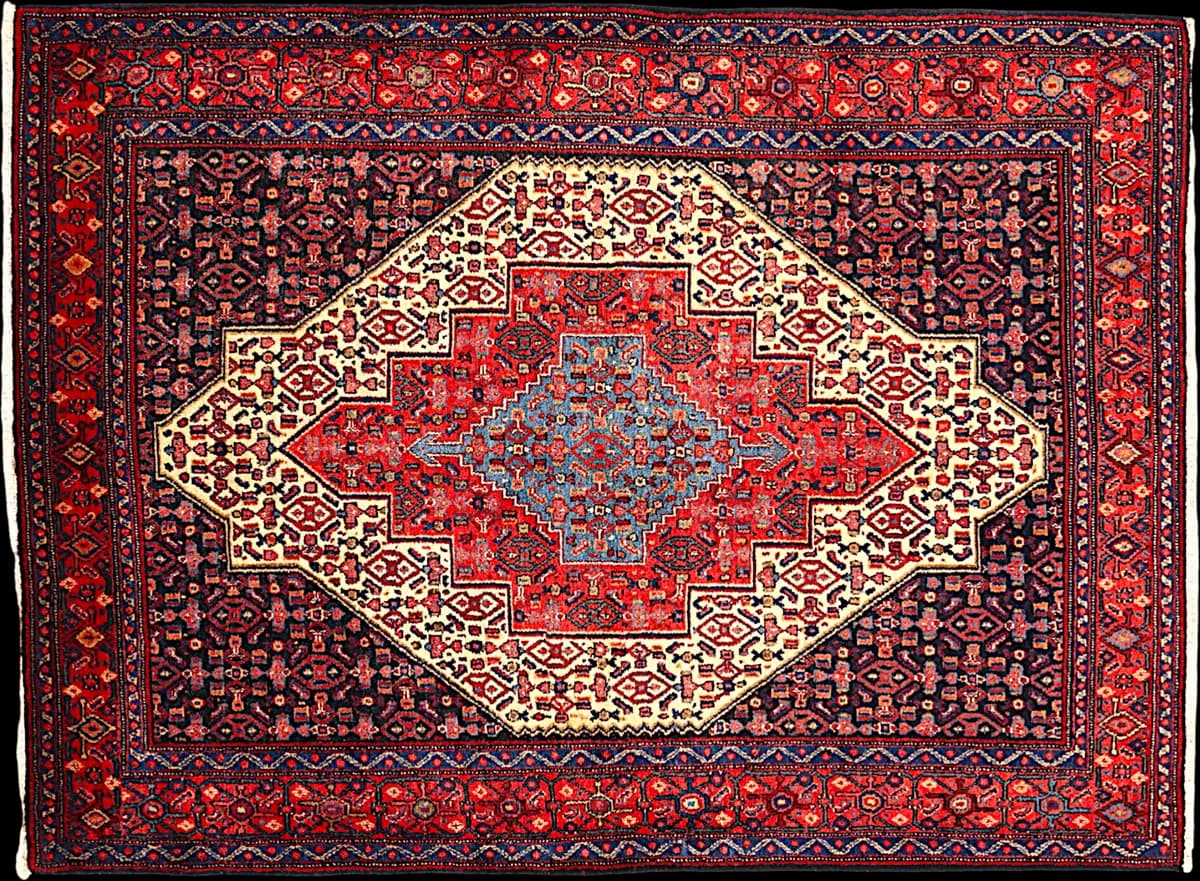
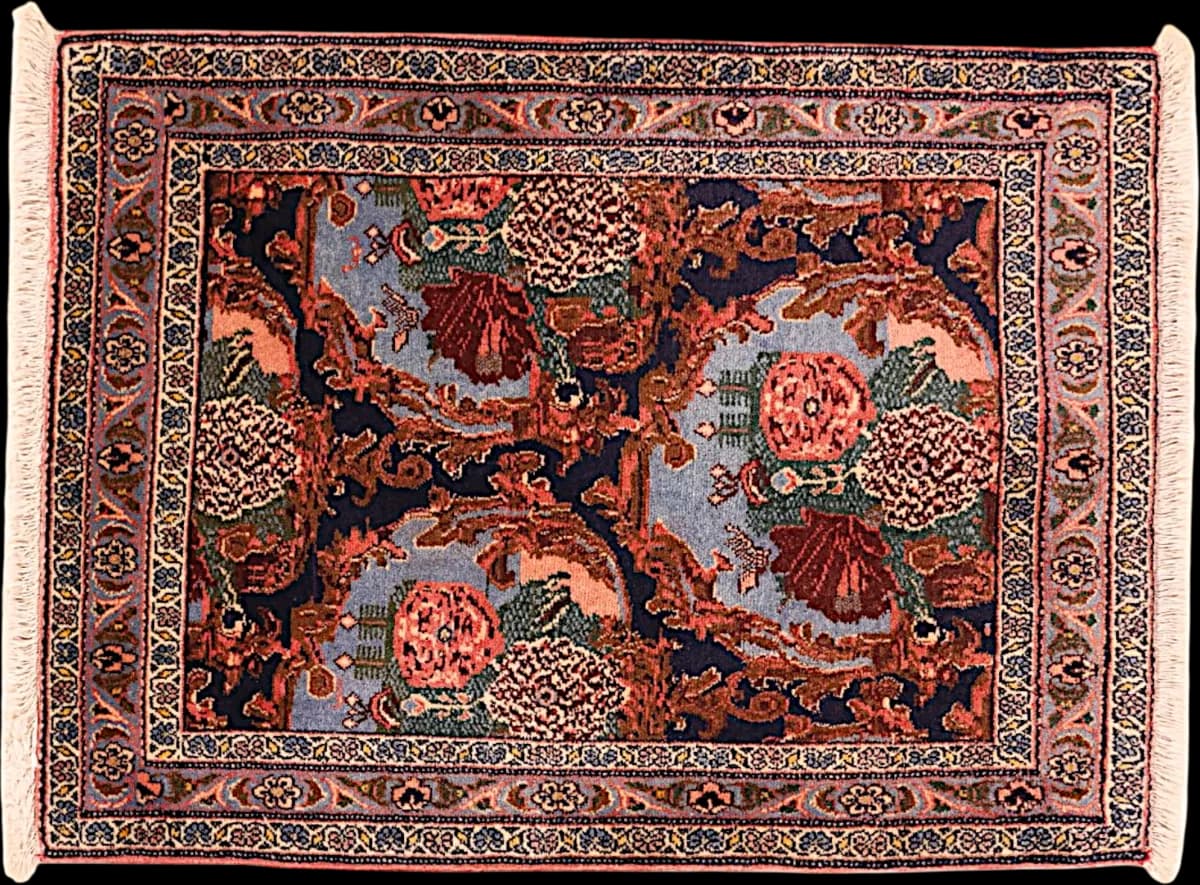
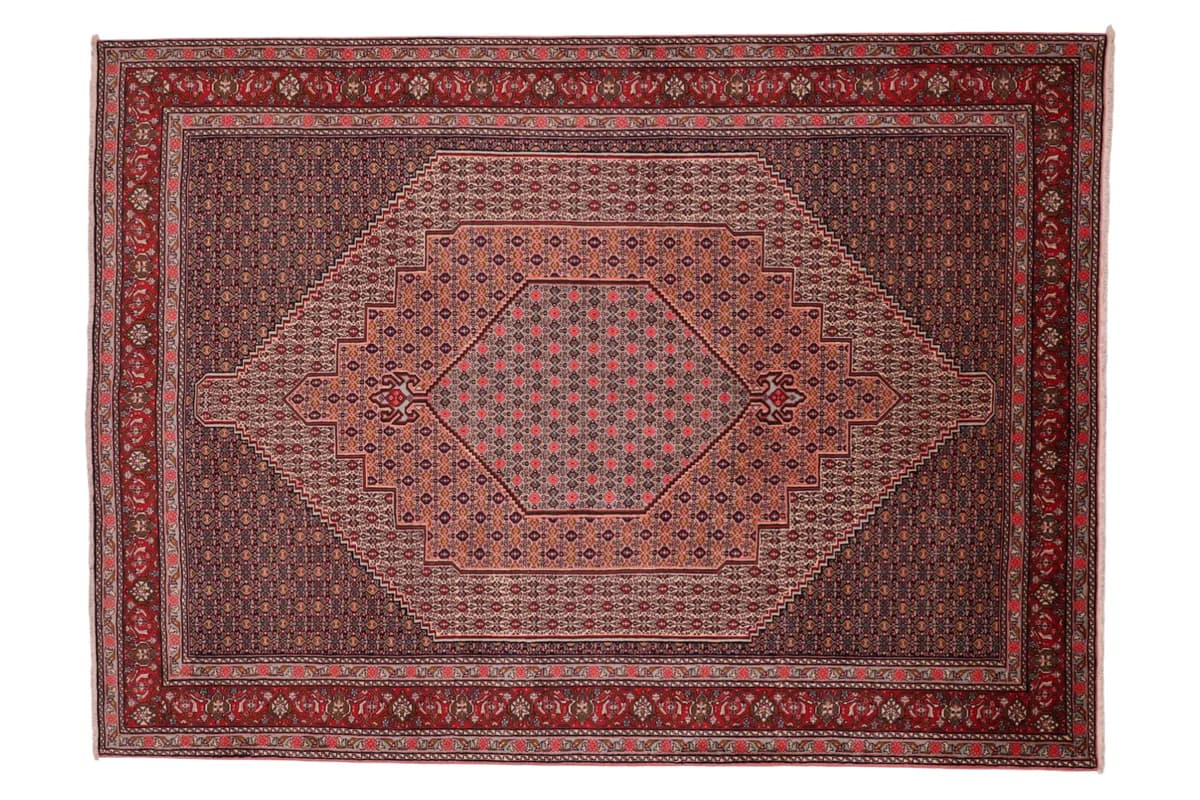
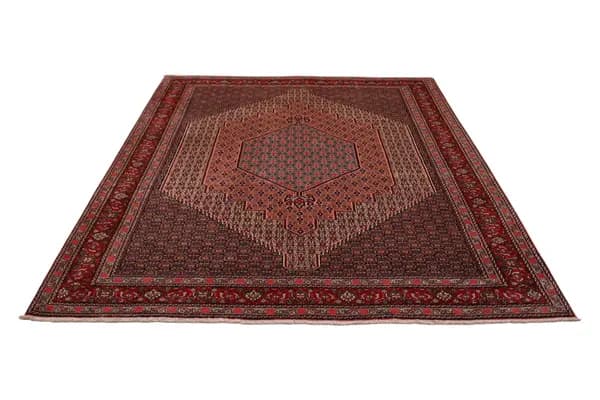
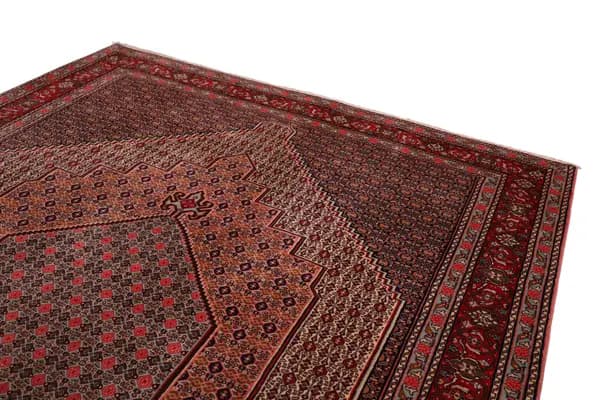
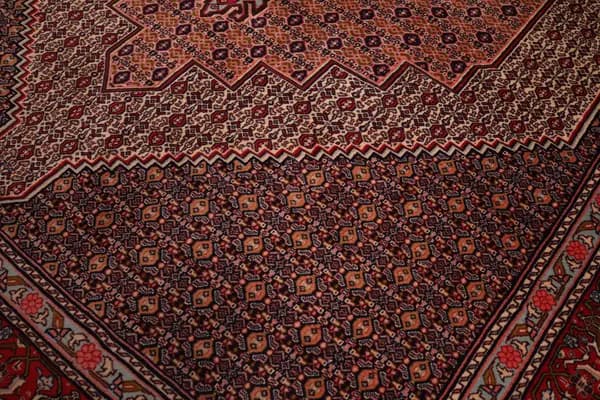
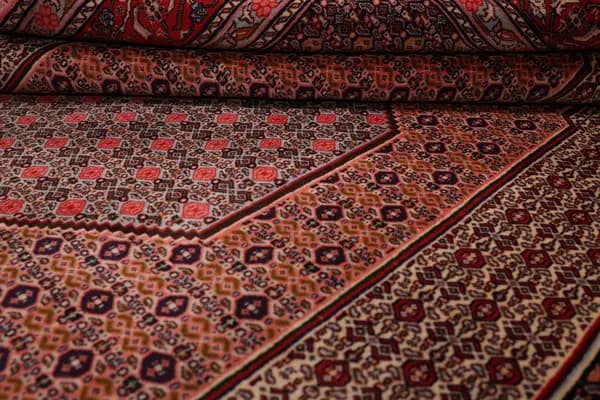
A large stepped hexagonal medallion in soft salmon-pink sits over a densely worked ivory field carrying a fine Mahi lattice, and looking closer, the medallion turns out to be built from nested hexagonal layers, each one carrying its own miniature version of that same lattice, so the shape reads as a medallion set inside a medallion rather than one flat form. Dark navy spandrels anchor the four corners, and the whole field is framed by a wide, deep-red border filled with small floral palmettes, held in turn by narrow light-blue guard stripes.
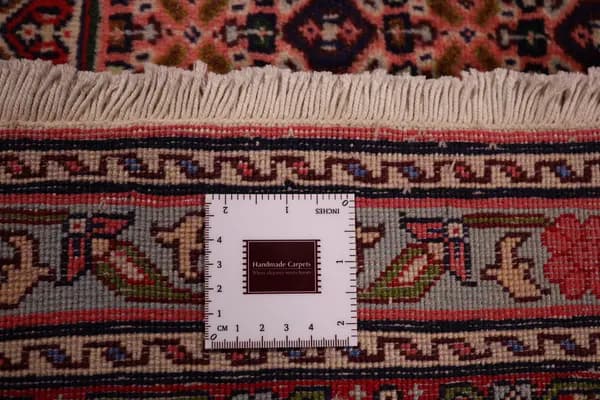
Sanandaj weavers work on a cotton warp, which keeps a line straight under tension and is part of why the pattern here stays so crisp at this scale, even through several nested layers of drawing. The pile itself is hand-spun wool rather than silk, though it has been spun tightly enough to carry a slight natural sheen along the medallion outlines. At 161,000 to 200,000 knots per square metre with a 12 mm pile, this is fine work rather than the very finest the city has produced, but reproducing a medallion-within-a-medallion cleanly at this density still asks a great deal of a weaver, and the rug is twenty to forty years old, old enough to have already settled into itself.
At 352 x 254 cm this is a dining table or living room rug, sized for a sofa group or a table for six to eight. The salmon-pink warms a room with pale floors and holds its own comfortably against dark wood furniture, while the deep-red border keeps the whole composition grounded rather than pretty. Underfoot the wool is dense and firm, made for a room that gets used rather than one that gets protected, and as light moves across it during the day, it is the layered medallion that keeps catching the eye.
More on Senneh rugs: origin, making and how to recognise a genuine piece
Traditional weave
At 352 × 254 cm (8.94 m²) this is a very large rug. It carries a whole seating group with every furniture leg on it, or a dining table with the chairs pushed back. In a small room it becomes the floor rather than a rug.
Yes, knotted by hand — knot by knot on a loom, not machine-made. The density is 161,000 to 200,000 knots per square metre; across 8.94 m² that is roughly 1.4 to 1.8 million individual knots, every one of them tied by hand.
Hand-spun wool still carries its own lanolin, which keeps liquid sitting on the surface for a moment: blot quickly, with clear water and a light cloth, working inwards and without rubbing. Otherwise regular vacuuming along the pile is enough. Turn the rug once or twice a year so light and footfall reach it evenly.
We are in the Hamburg Speicherstadt. Come and see this rug in daylight, or write to us — a person answers.
Certificate included verifying origin, materials, and craftsmanship.
Ref: 527661