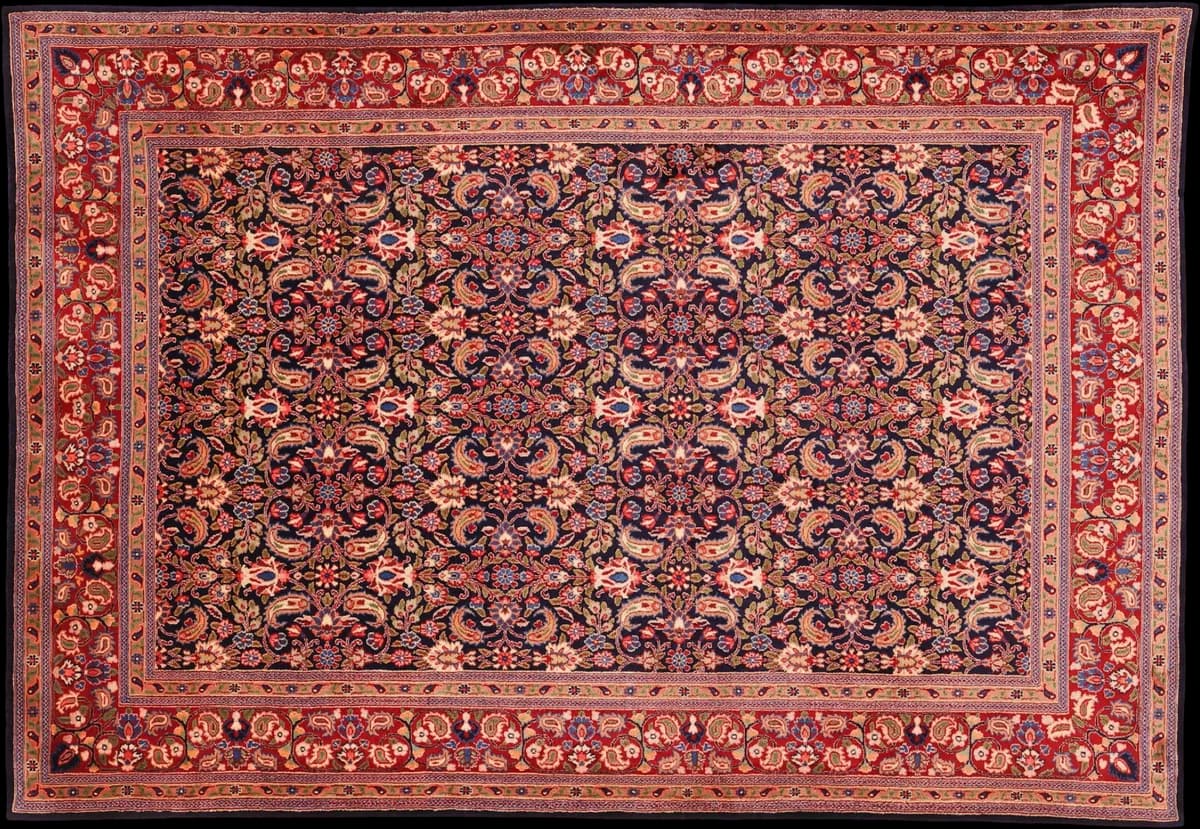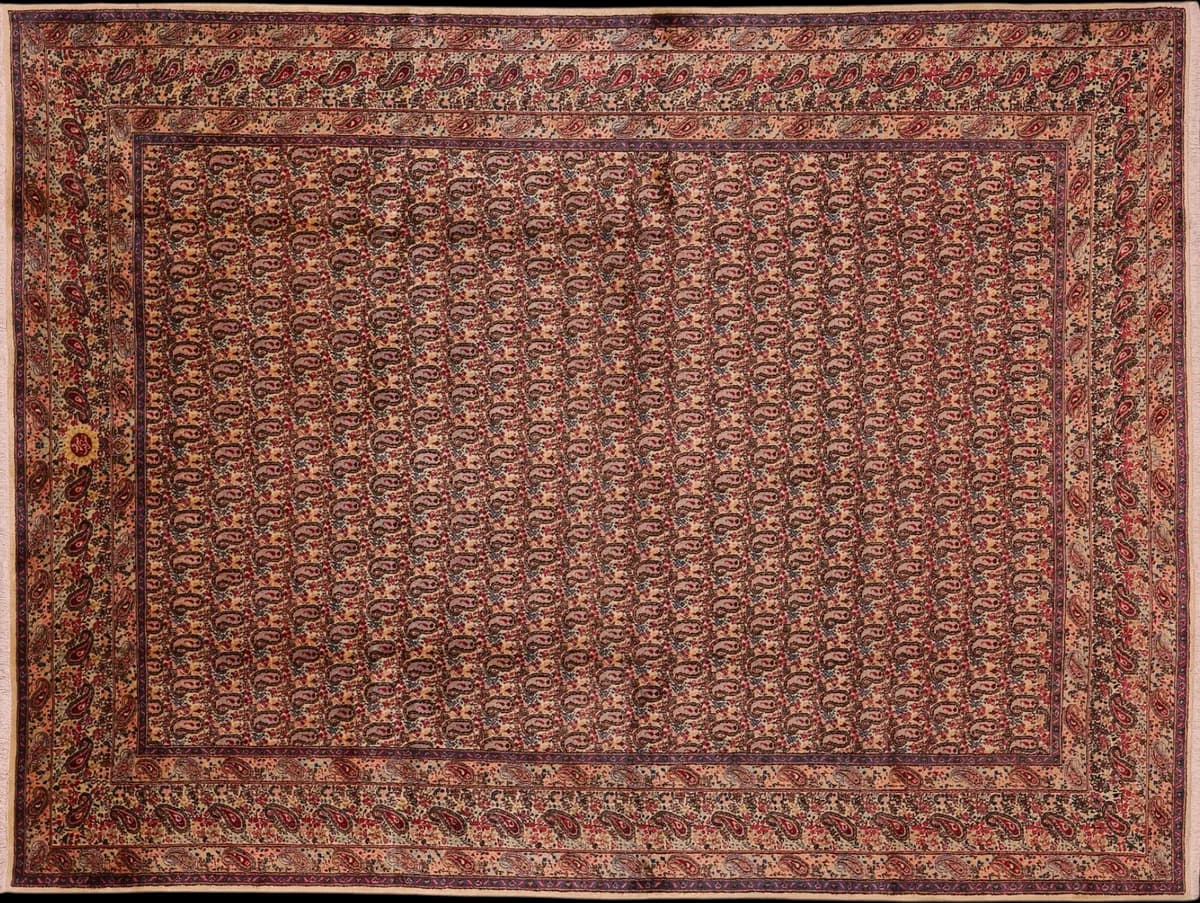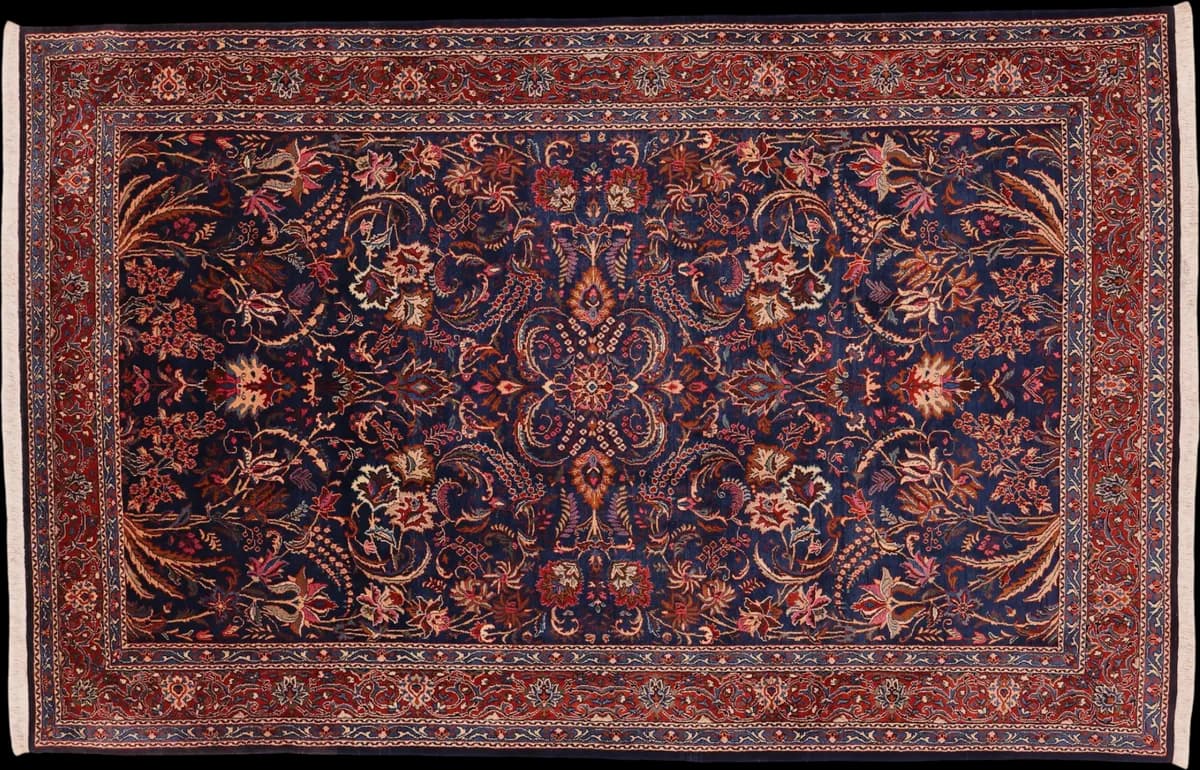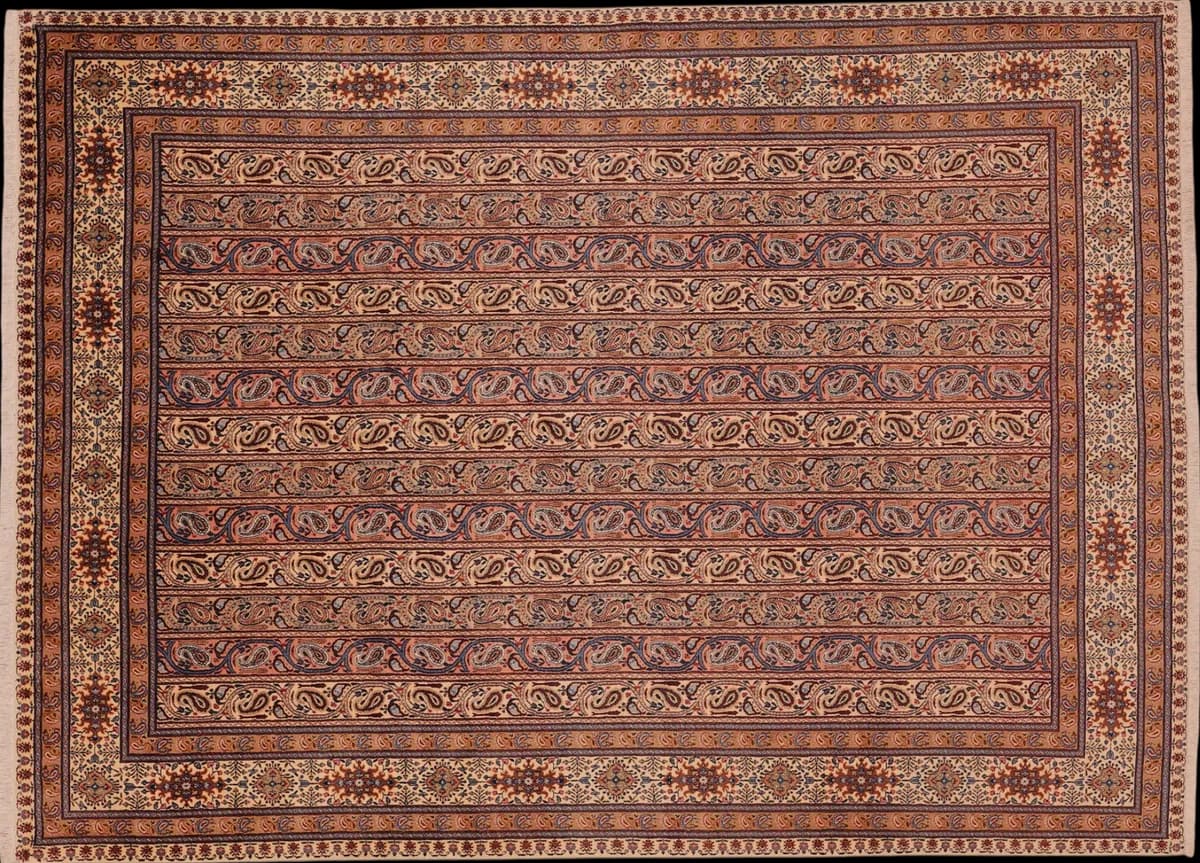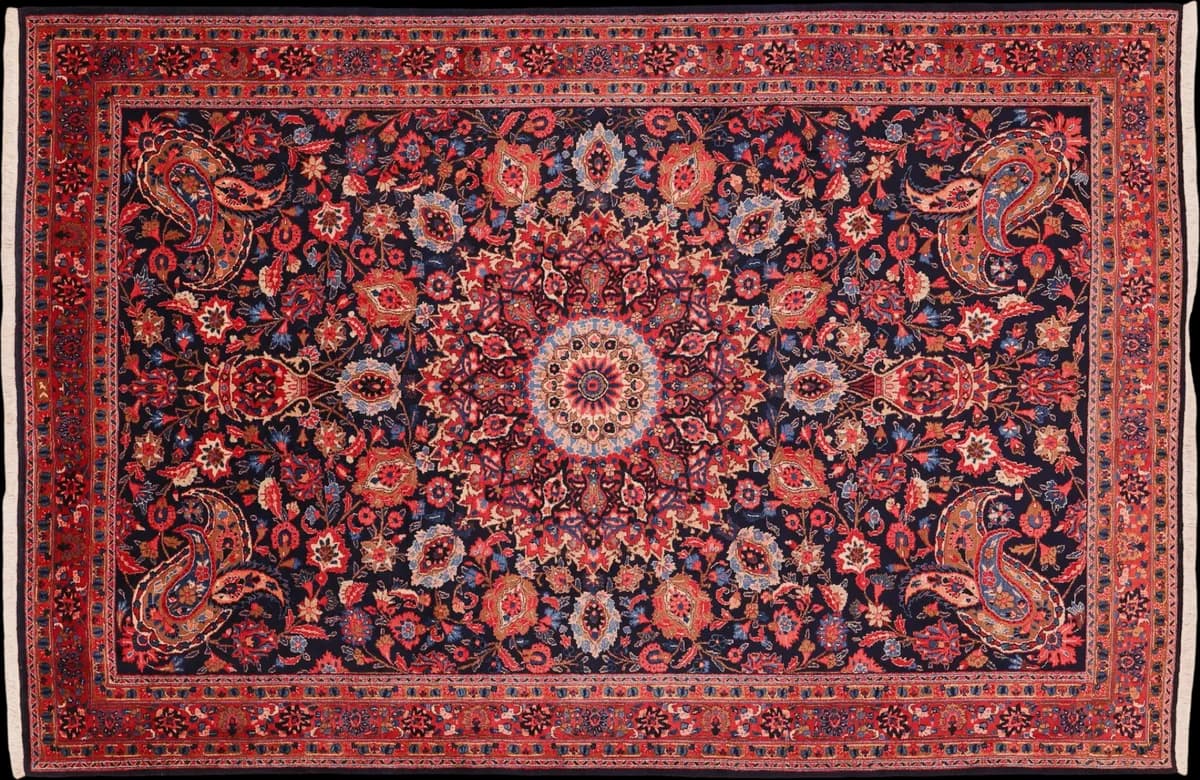
Moud Dorokhsh
316 × 210 cm
3.150 €
5.100 €
Incl. VAT
In Stock · Ready to Ship
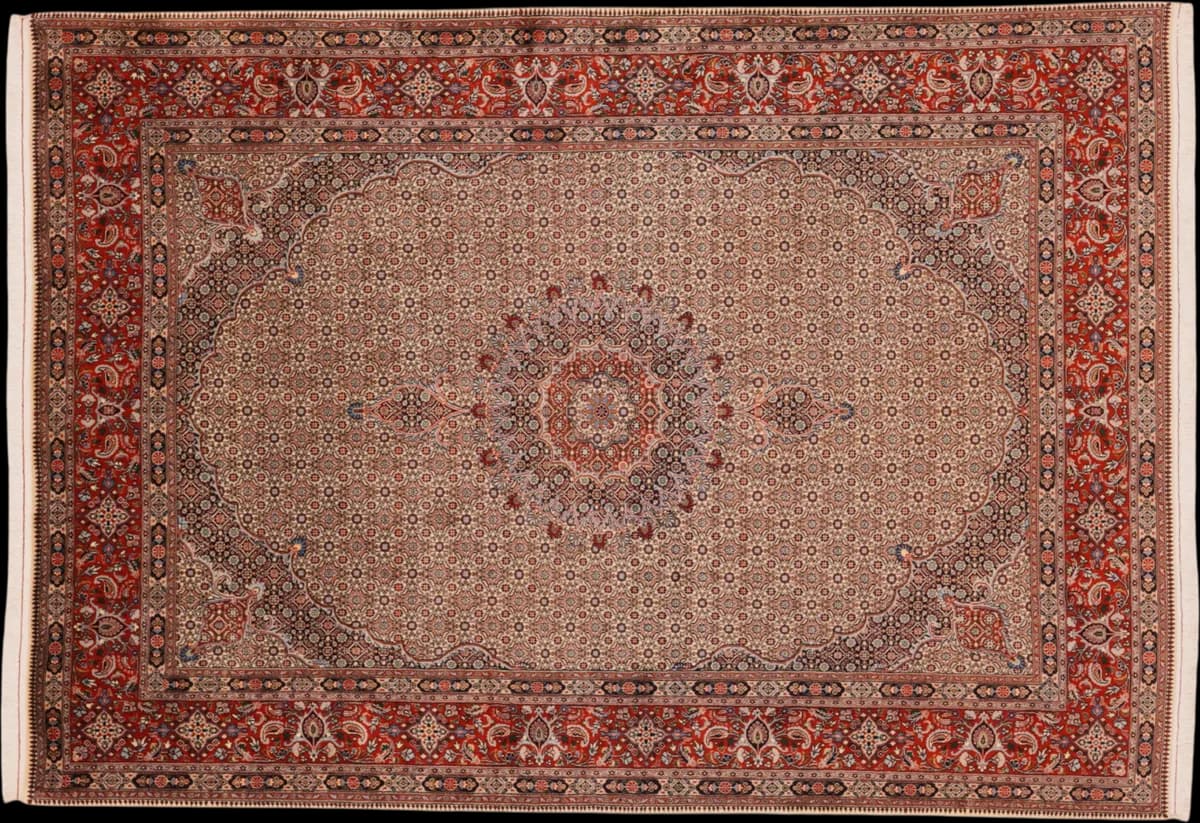
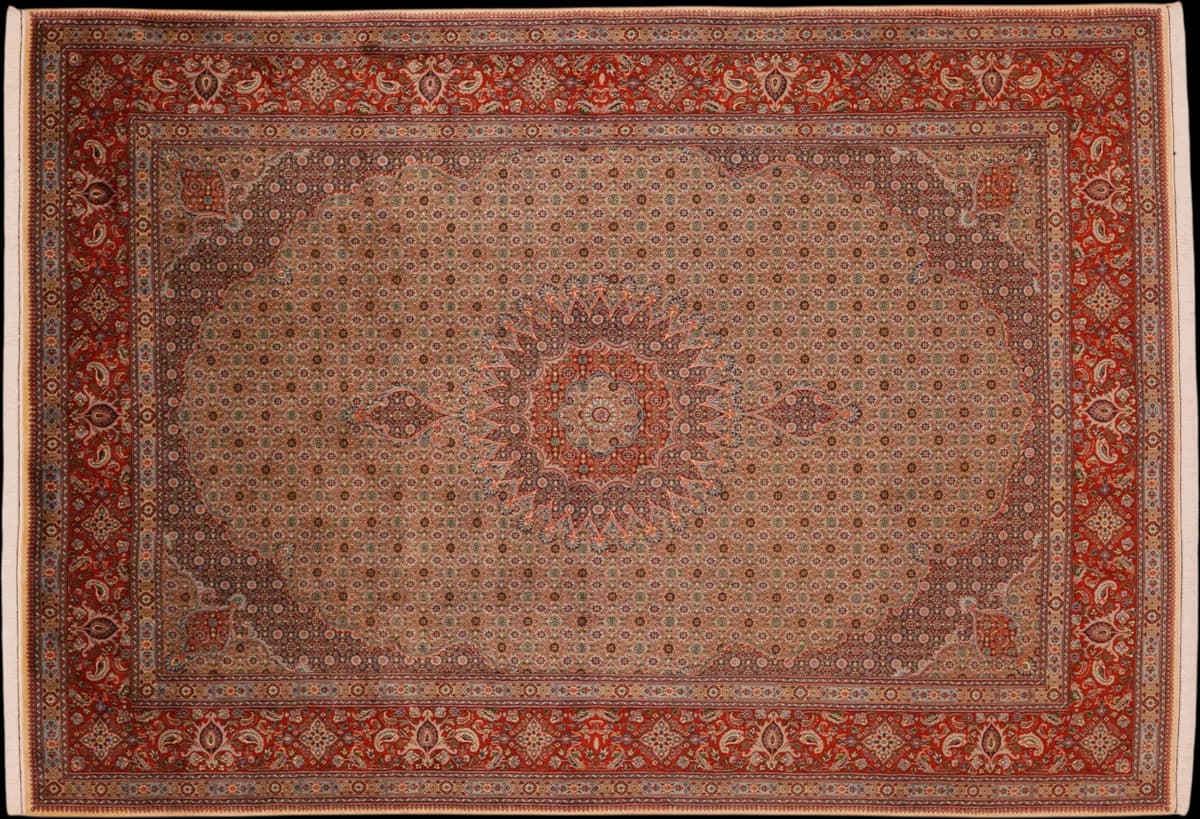
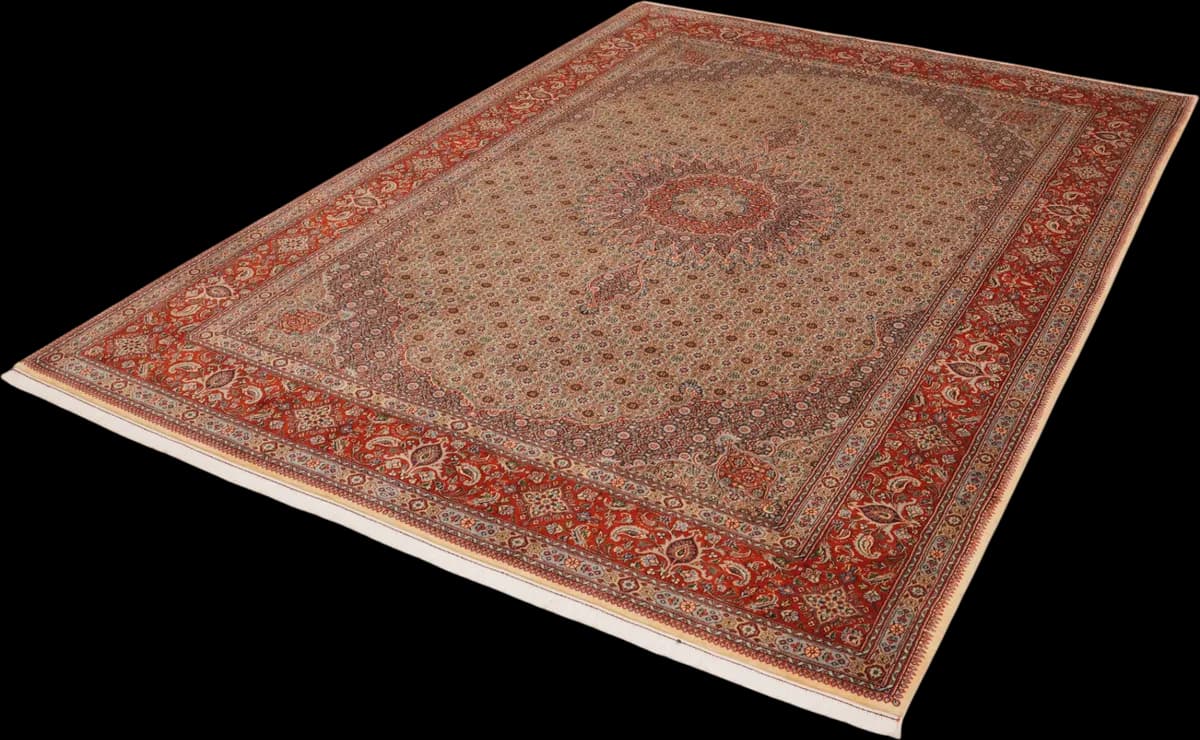
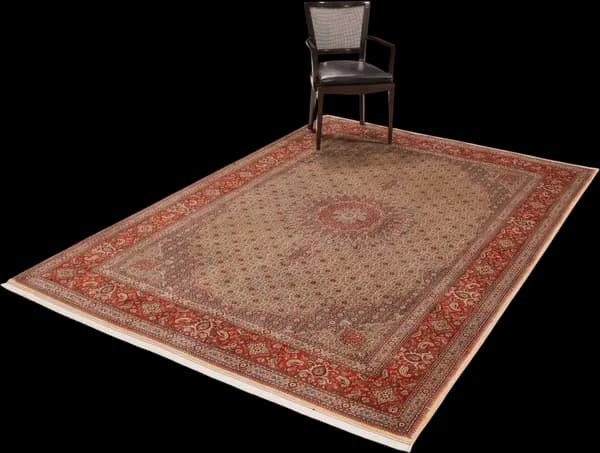
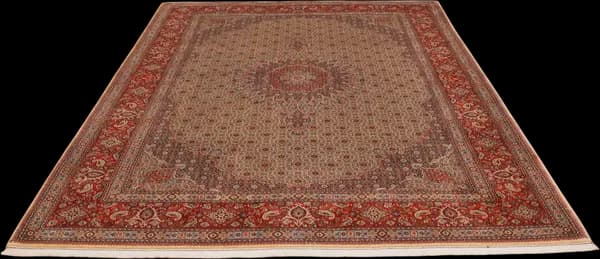
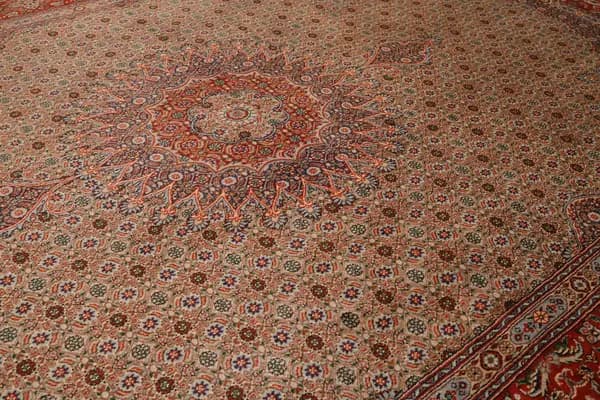
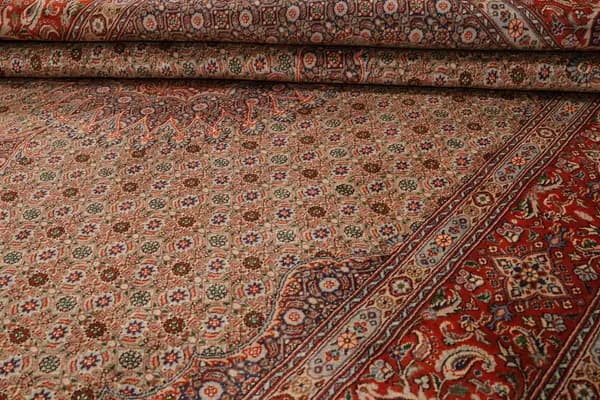
A Dorokhsh rug from the Khorasan weaving villages of eastern Iran, 285 x 200 cm (9'4" x 6'7"). Dorokhsh sits alongside its neighbour Moud in the Birjand district of South Khorasan, and the two are often spoken of in the same breath. What sets Dorokhsh apart is a particular refinement of drawing and a subtle sheen across the surface, qualities that have made it a favourite among decorators who want a classic pattern without the weight some tribal weavings carry.
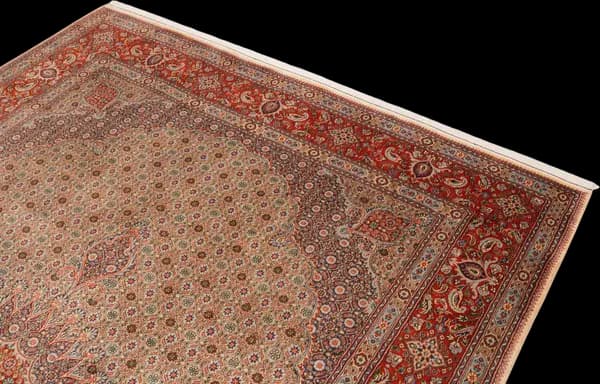
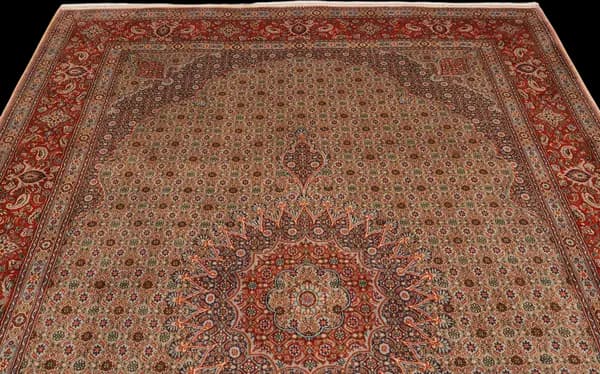
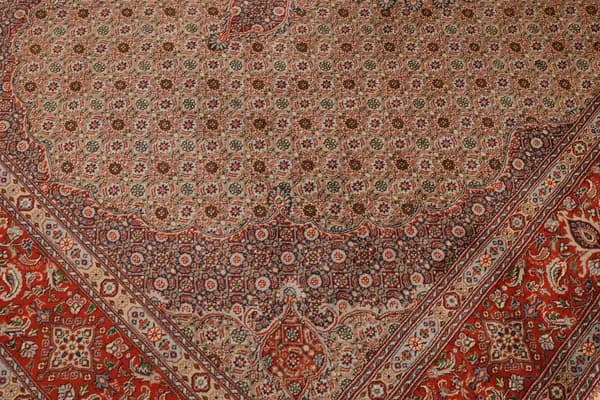
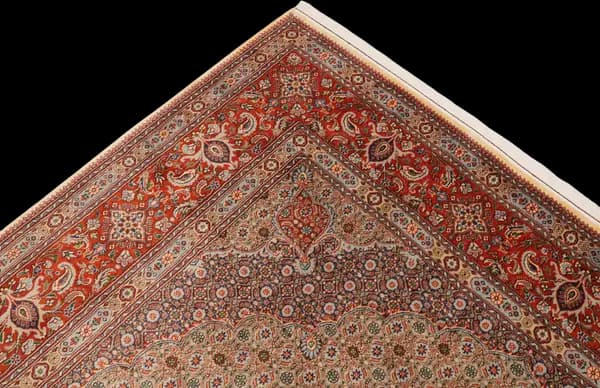
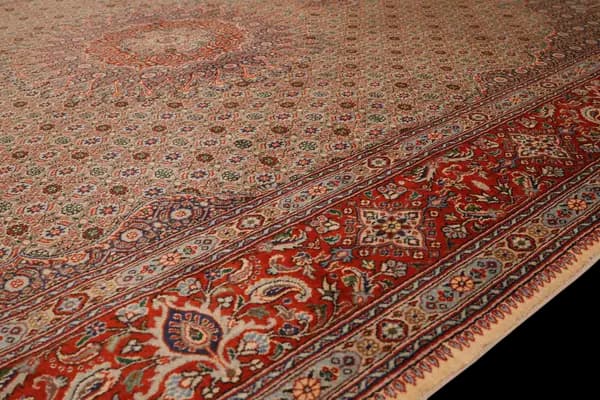
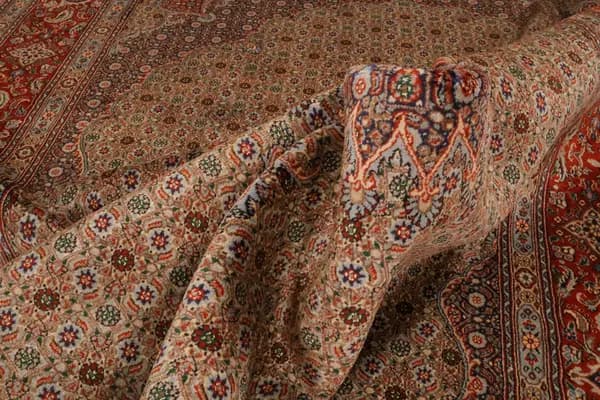
The field opens in warm sand-beige, overlaid with a taut lattice of small rosettes and serrated leaves in taupe, the classic Mahi, or Herati, arrangement repeated with almost fabric-like regularity across the whole surface. At the centre, a large scalloped medallion rises out of this lattice, its outer edge cut into a sharp, sunburst pattern in coral and salmon that stands out cleanly against the pale ground. Brick-red spandrels echo the medallion in the corners, and the same brick-red carries into a broad main border filled with alternating palmettes and paisley forms, held between narrow ivory and navy guard stripes. What is striking is that the lattice keeps its discipline right up to the medallion's edge, with none of the softening or drift a hand-drawn pattern usually shows at that transition.
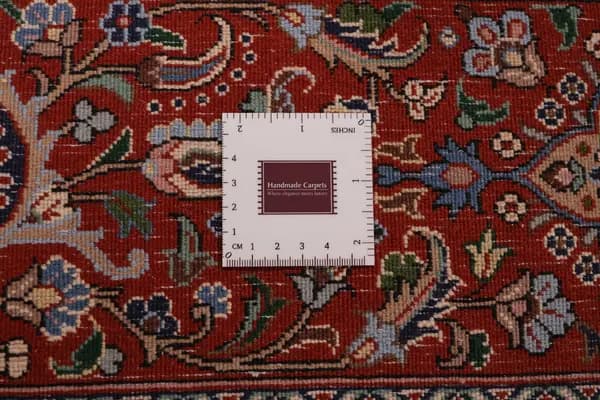
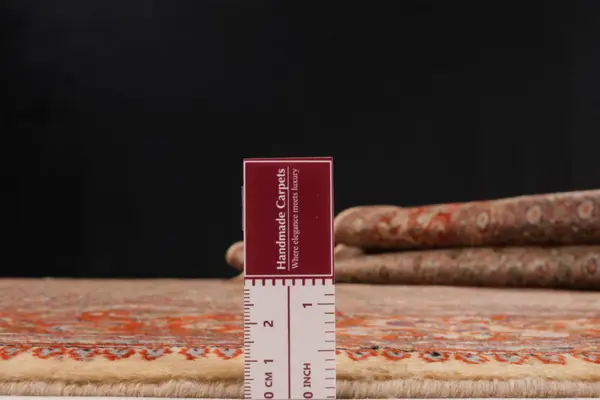
That precision comes from the materials as much as the drawing. The pile is wool with a silk content, and silk spins into a finer thread than wool alone, which lets a weaver knot smaller and tighter without the pattern blurring. At a density of 321,000 to 380,000 knots per square metre, that fine thread was tied by hand many hundreds of thousands of times over a cotton warp, which is what allows the rosettes to stay sharp all the way to the medallion. The 12 mm pile is clipped low and even, giving the light sheen that plays across the surface and lets the small-scale pattern read almost like woven cloth rather than knotted pile.
At this size, the rug suits a dining table or a seating group in a living or dining room, somewhere the whole medallion can be seen at once. The sand and taupe tones lift a plain or pale floor without competing with darker furniture, while the brick-red border holds its own against a dark wood table. Underfoot it is dense and firm, wool with silk taking daily use comfortably, made to be walked on rather than kept for best. As daylight moves across the room, the sheen catches along the lattice and the medallion's sunburst edge, so the precision of the drawing is something you keep noticing rather than something seen once and forgotten.
More on Dorokhsh rugs: origin, making and how to recognise a genuine piece
Superior craftsmanship
At 285 × 200 cm (5.70 m²) this is a large rug. It sits under a seating group with the front legs of sofa and chairs on it, or under a dining table for four. A table for six wants about 80 cm of clearance all round, and needs more.
Yes, knotted by hand — knot by knot on a loom, not machine-made. The density is 321,000 to 380,000 knots per square metre; across 5.70 m² that is roughly 1.8 to 2.2 million individual knots, every one of them tied by hand.
This pile contains silk and is more delicate than pure wool. Vacuum without a rotating brush and along the pile, do not beat it, and keep it out of permanent direct sun. Blot spills at once with a light cloth, never rub. For a proper clean a silk-blend rug belongs in expert hands — we handle that for pieces bought from us.
We are in the Hamburg Speicherstadt. Come and see this rug in daylight, or write to us — a person answers.
Certificate included verifying origin, materials, and craftsmanship.
Ref: 796303