ExclusiveSigned
Moud | Exclusive | Sherkat-e Farsh · with silk
272 × 199 cm
4.800 €
2.880 €
Incl. VAT
In Stock · Ready to Ship
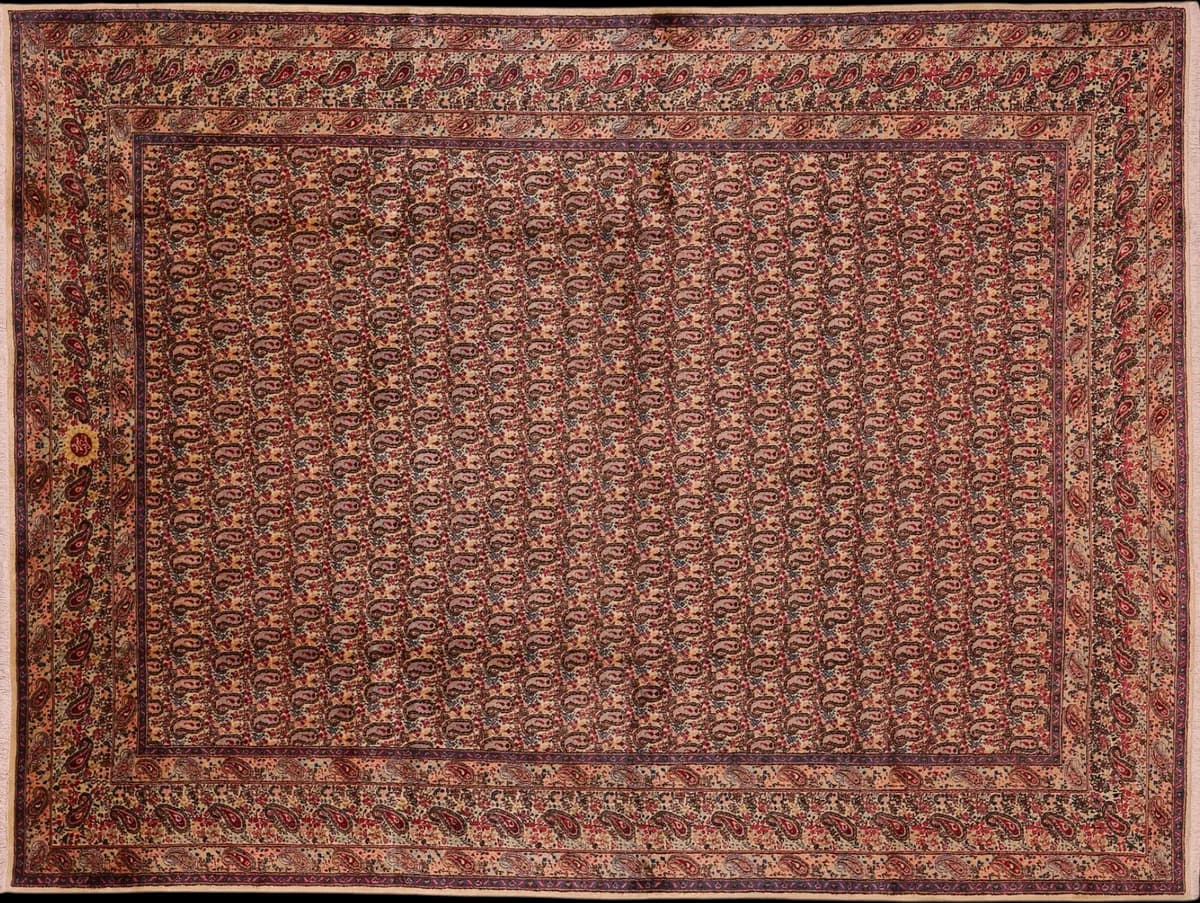
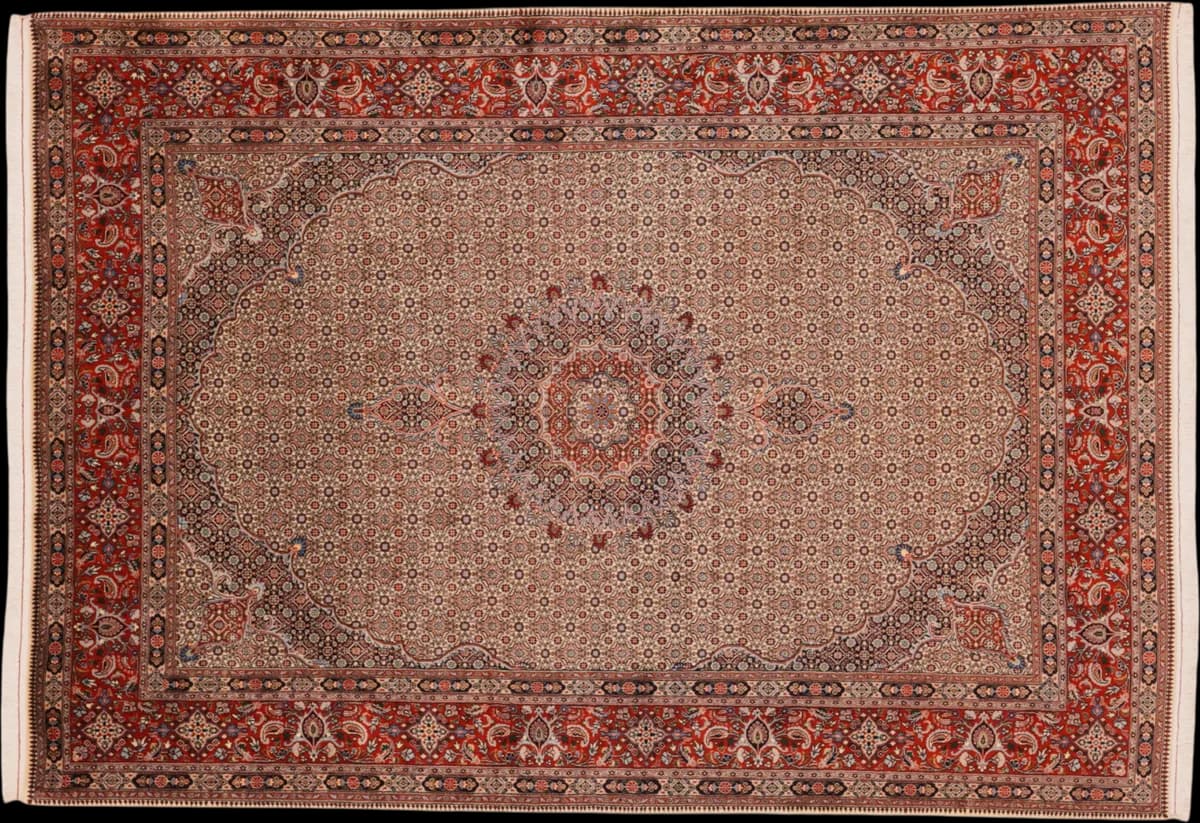
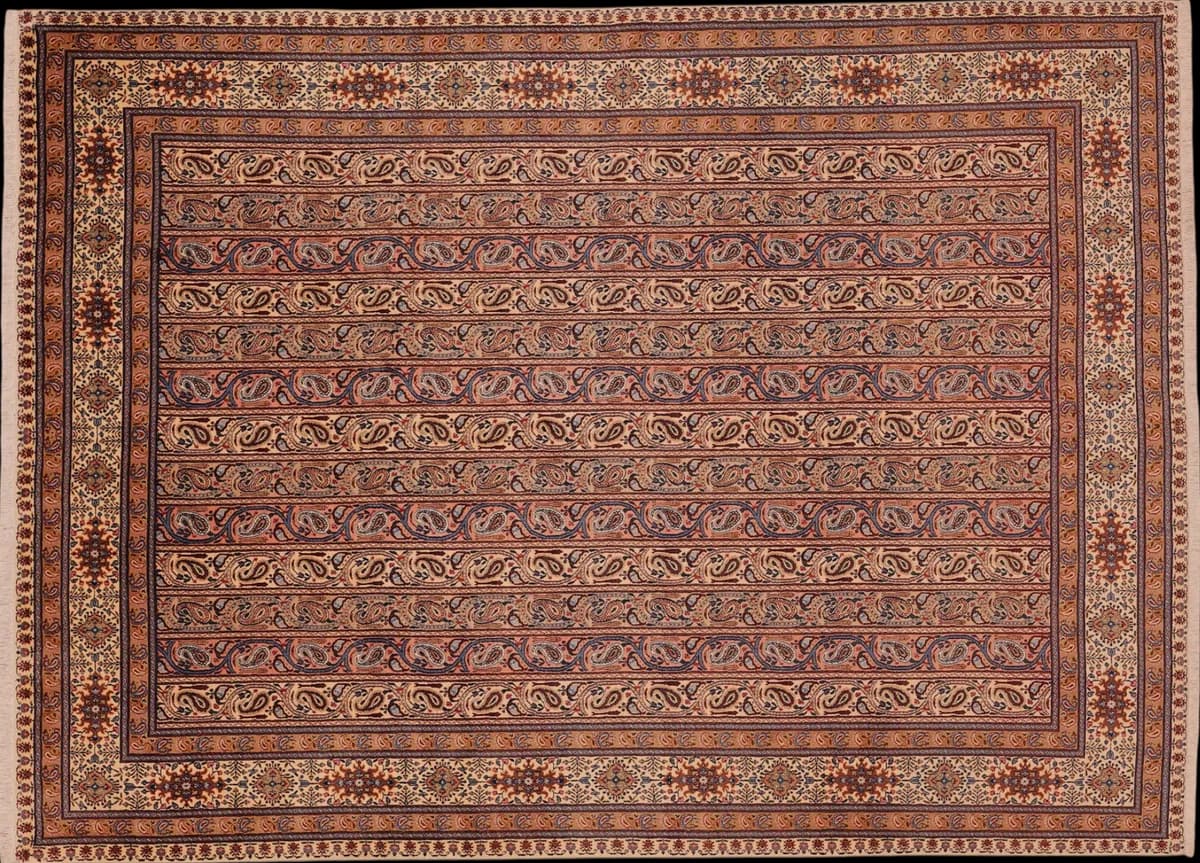
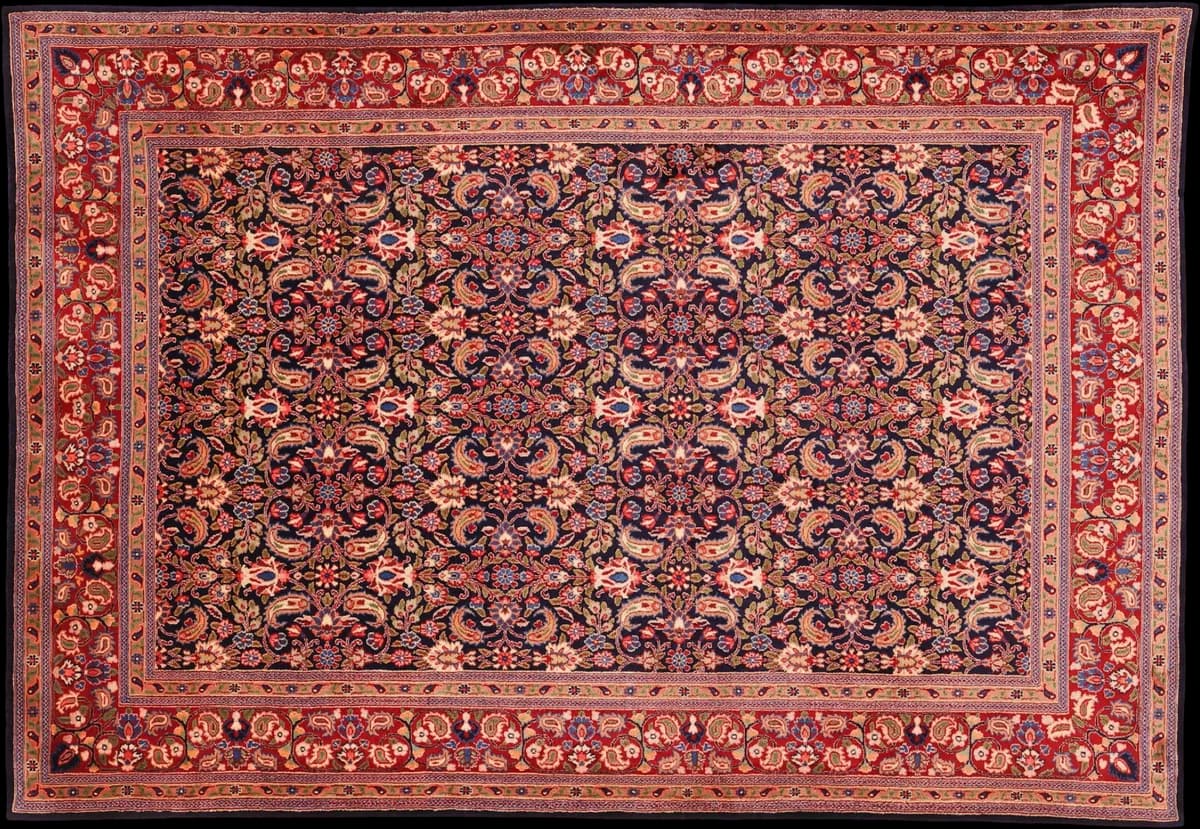
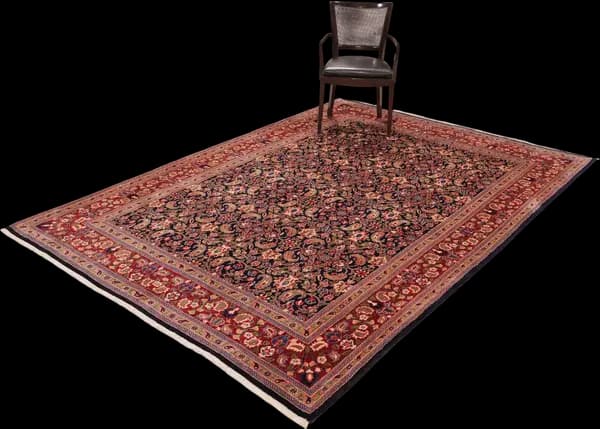
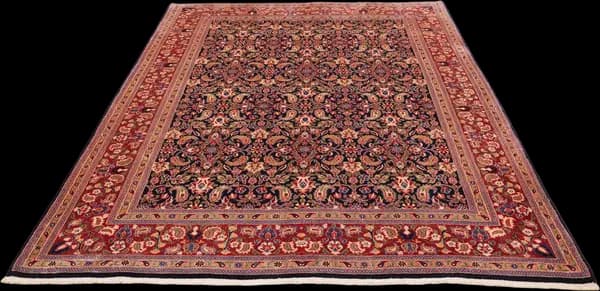
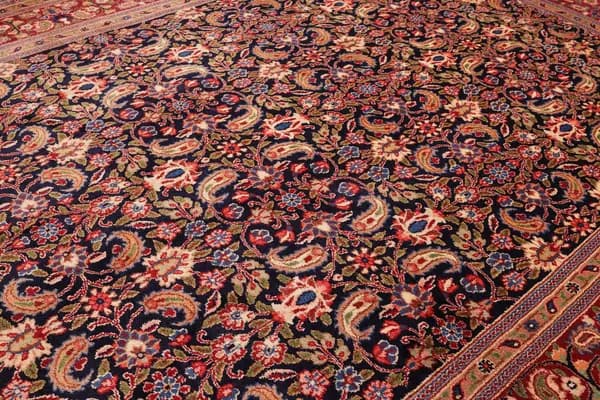
Dorokhsh rugs are woven in the villages around Birjand in South Khorasan, a tradition closely related to the neighbouring Moud weavings and prized for the same thing: a drawing more refined than most village work, finished with a quiet surface glow even though the pile is wool rather than silk. This piece measures 303 x 211 cm (9'11" x 6'11"), a rectangle sized for a proper room rather than an accent. Where Khorasan weaving is often built around a single Herati medallion, this one has none, and it is the density of its pattern, not a centrepiece, that carries the design.
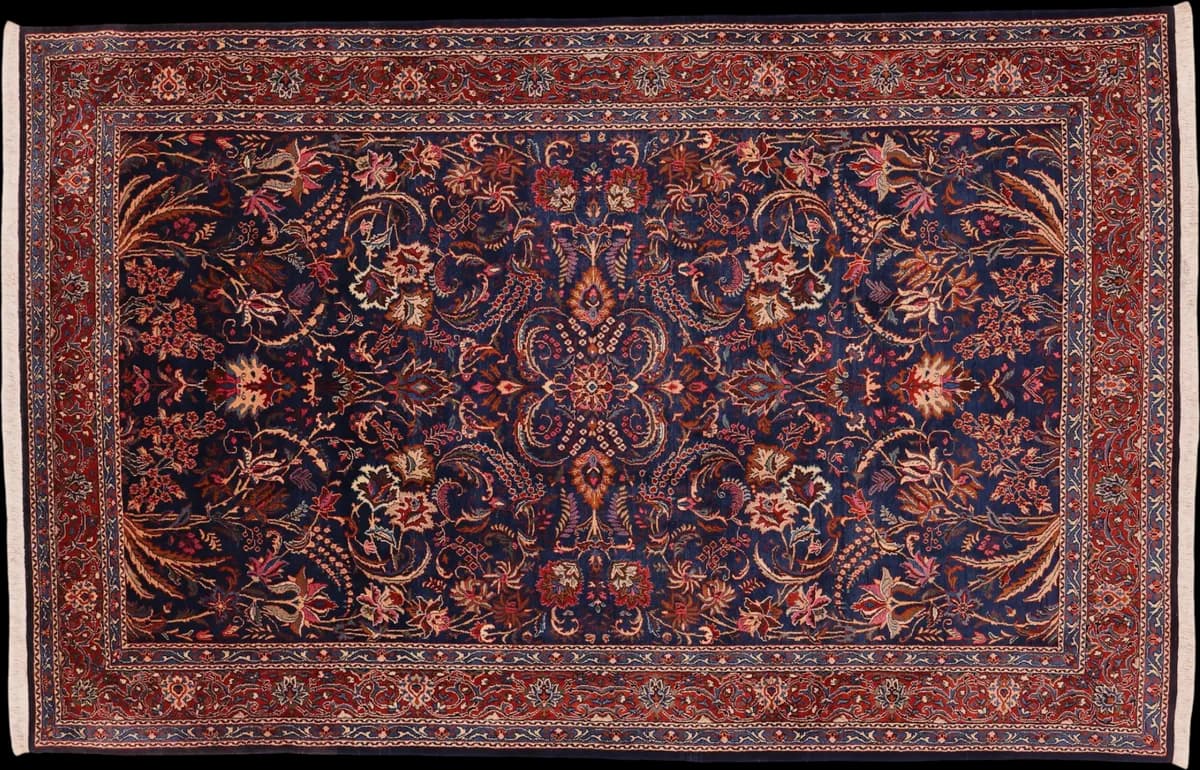
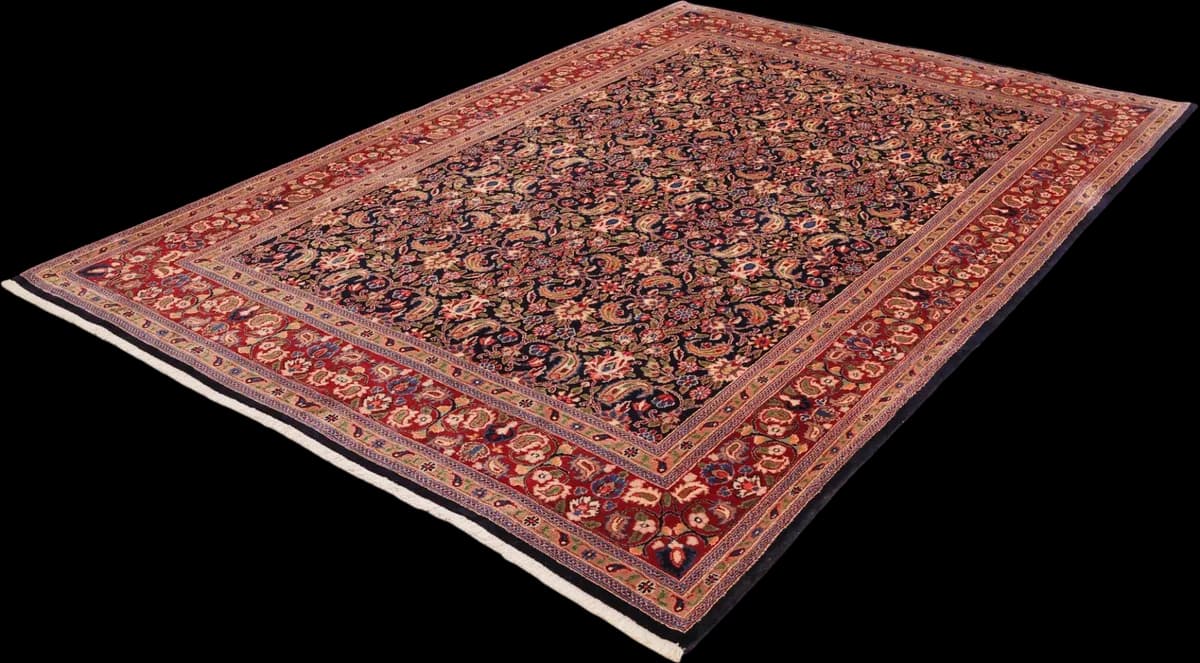
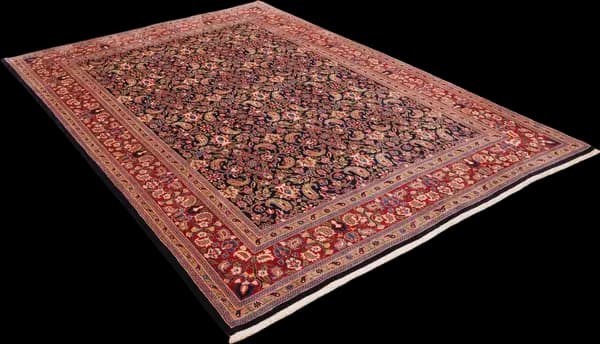
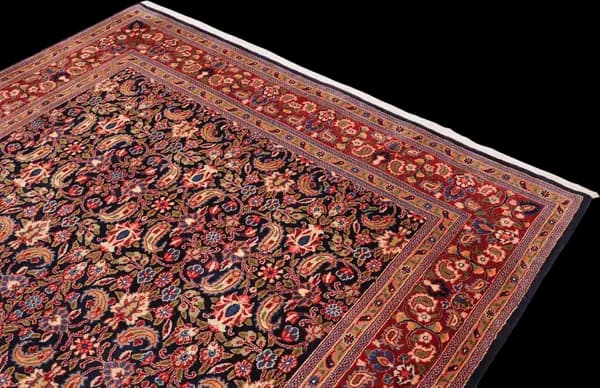
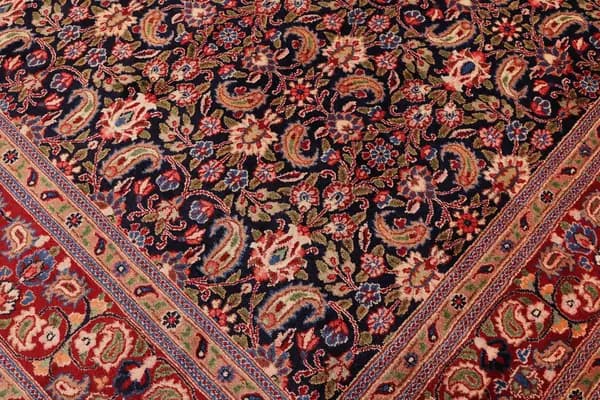
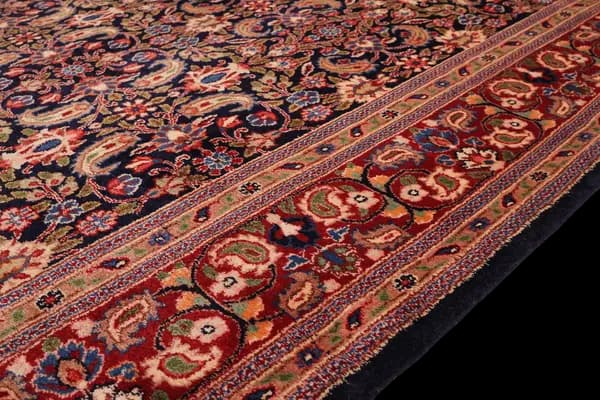
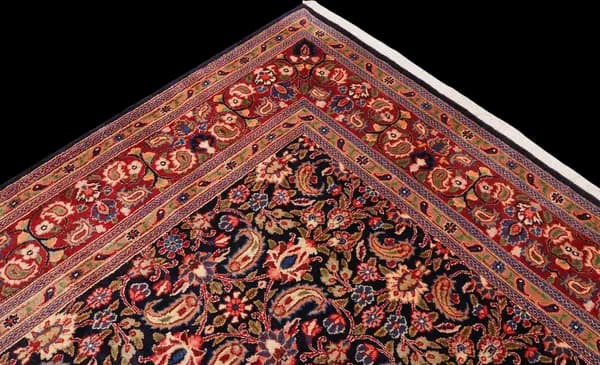
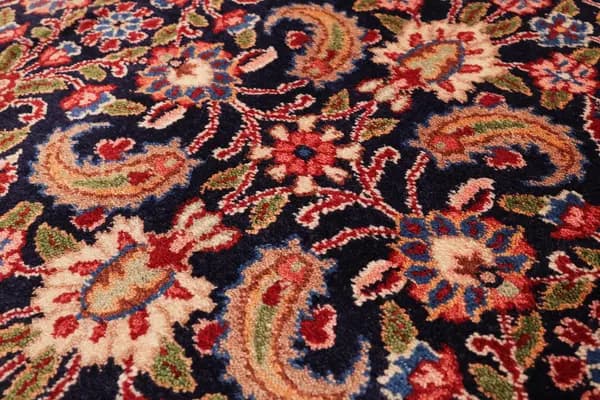
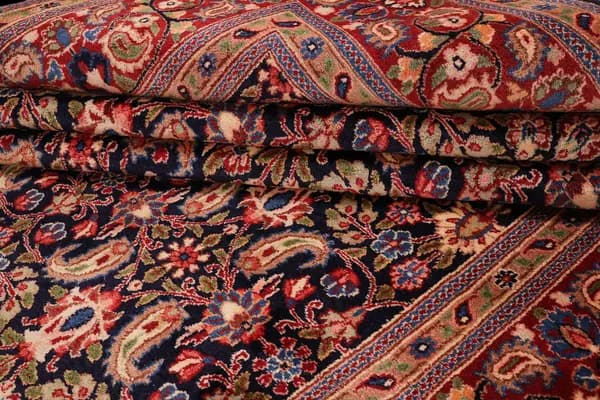
The field is a deep navy, filled edge to edge with a repeat of palmettes in cream and coral red, threaded through with serrated leaves and paisley-like botehs, sage green and dusty rose catching between them, with the odd note of steel blue and camel. There is no medallion to rest the eye on, so the pattern reads as a single continuous fabric of flowers rather than a composition built around a middle. It is the border that gives the rug its frame: a wide band of brick red carrying an ivory floral vine, held in on both sides by narrower stripes of green and navy, dark enough to set the whole field firmly inside its edges.
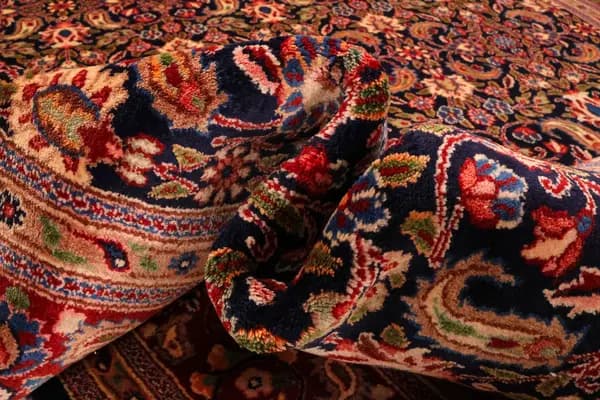
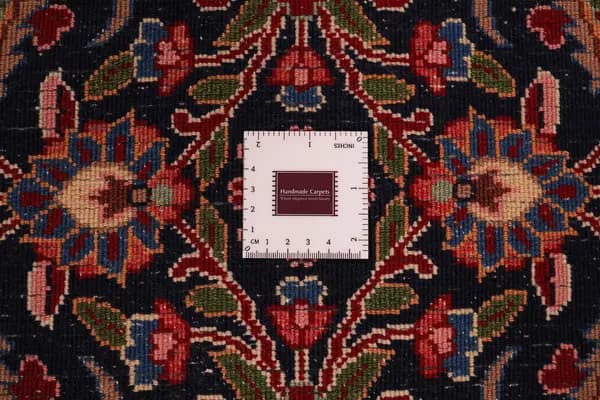
Hand-knotted on a cotton warp with hand-spun wool pile, at a density of 161,000 to 200,000 knots per square metre, this sits at the finer end of village work, fine enough for the weaver to keep every palmette and leaf crisply drawn even in a field this crowded, which is what stops an all-over pattern of this size becoming a blur. Hand-spun wool takes dye with slight variation along the thread, and it is this that gives the surface its soft shift of light rather than a flat, uniform colour. At 12 mm the pile is low and even, and forty to sixty years of use have settled it into a firm, close weave.
A rug of this size sits naturally under a dining table or in front of a sofa group, and this one has the weight for either. The navy holds its own against dark wood furniture and warms a pale floor without needing help from the light; the red border keeps its shape even under a laid table. Underfoot it is dense and firm rather than deep, built for a room that gets used, and the low pile has already proved it wears well. Watch it through an afternoon and the palmettes seem to shift tone as the light moves across them, never quite the same rug twice in a day.
More on Dorokhsh rugs: origin, making and how to recognise a genuine piece
Traditional weave
At 303 × 211 cm (6.39 m²) this is a large rug. It sits under a seating group with the front legs of sofa and chairs on it, or under a dining table for four. A table for six wants about 80 cm of clearance all round, and needs more.
Yes, knotted by hand — knot by knot on a loom, not machine-made. The density is 161,000 to 200,000 knots per square metre; across 6.39 m² that is roughly 1.0 to 1.3 million individual knots, every one of them tied by hand.
Hand-spun wool still carries its own lanolin, which keeps liquid sitting on the surface for a moment: blot quickly, with clear water and a light cloth, working inwards and without rubbing. Otherwise regular vacuuming along the pile is enough. Turn the rug once or twice a year so light and footfall reach it evenly.
We are in the Hamburg Speicherstadt. Come and see this rug in daylight, or write to us — a person answers.
Certificate included verifying origin, materials, and craftsmanship.
Ref: 850622