ExclusiveSigned
Moud Dorokhshwith silk
292 × 197 cm
4.800 €







4.800 €
Incl. VAT
In Stock · Ready to Ship
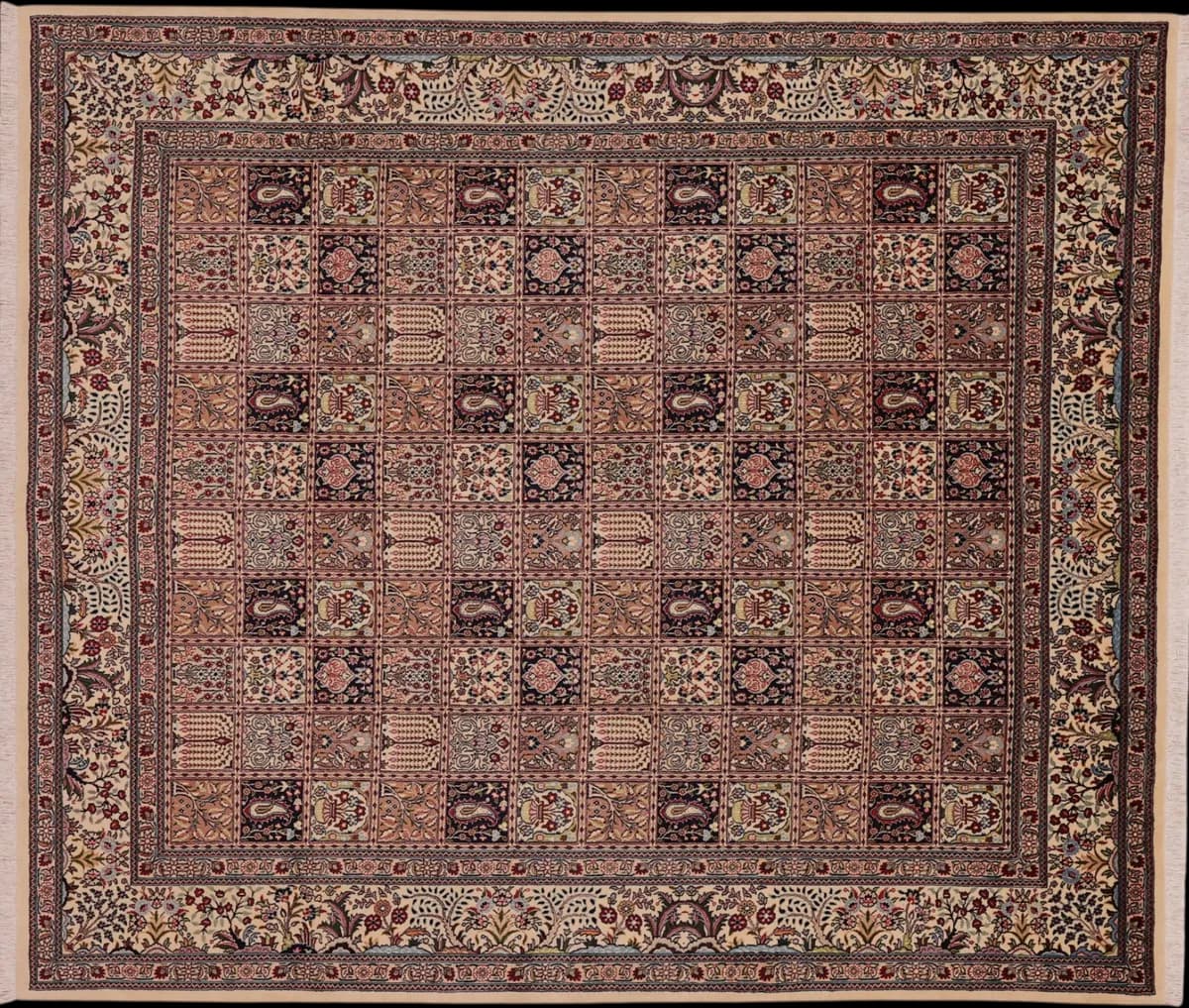
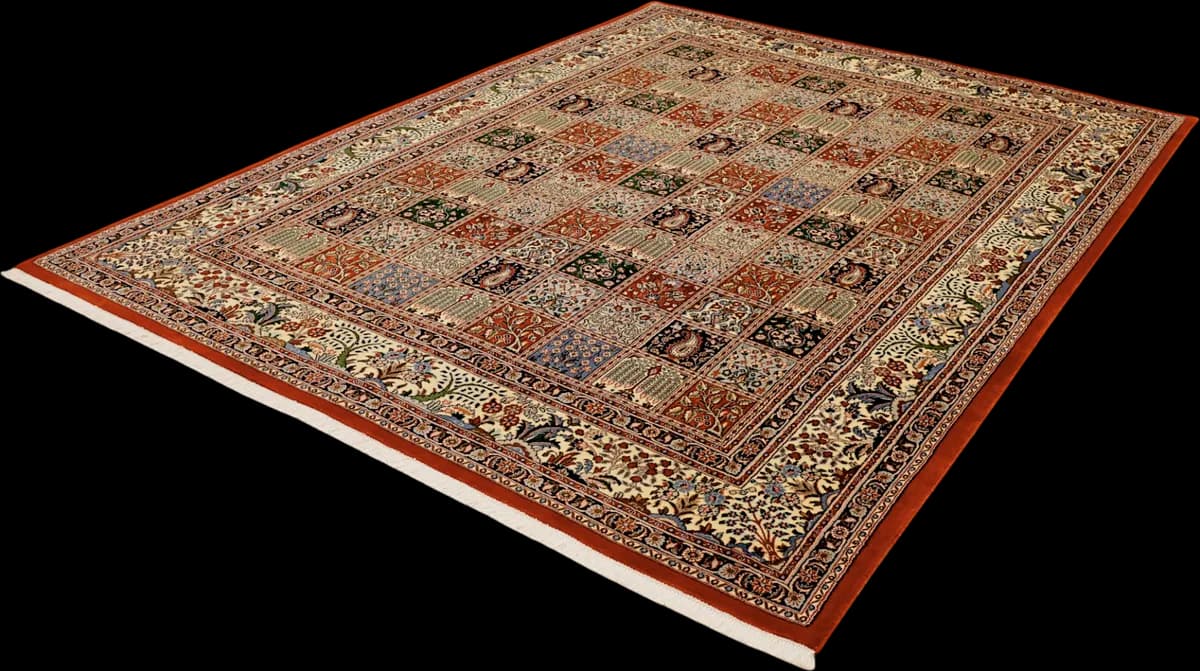
This is a Dorokhsh, a village weaving from the Birjand district of South Khorasan in eastern Iran, often paired in the trade with the neighbouring village of Moud, also written Moude, since the two look so alike. Measuring 272 x 199 cm (8'11" x 6'6"), it belongs to a tradition known less for tribal boldness than for elegant, polished drawing and a soft surface sheen.
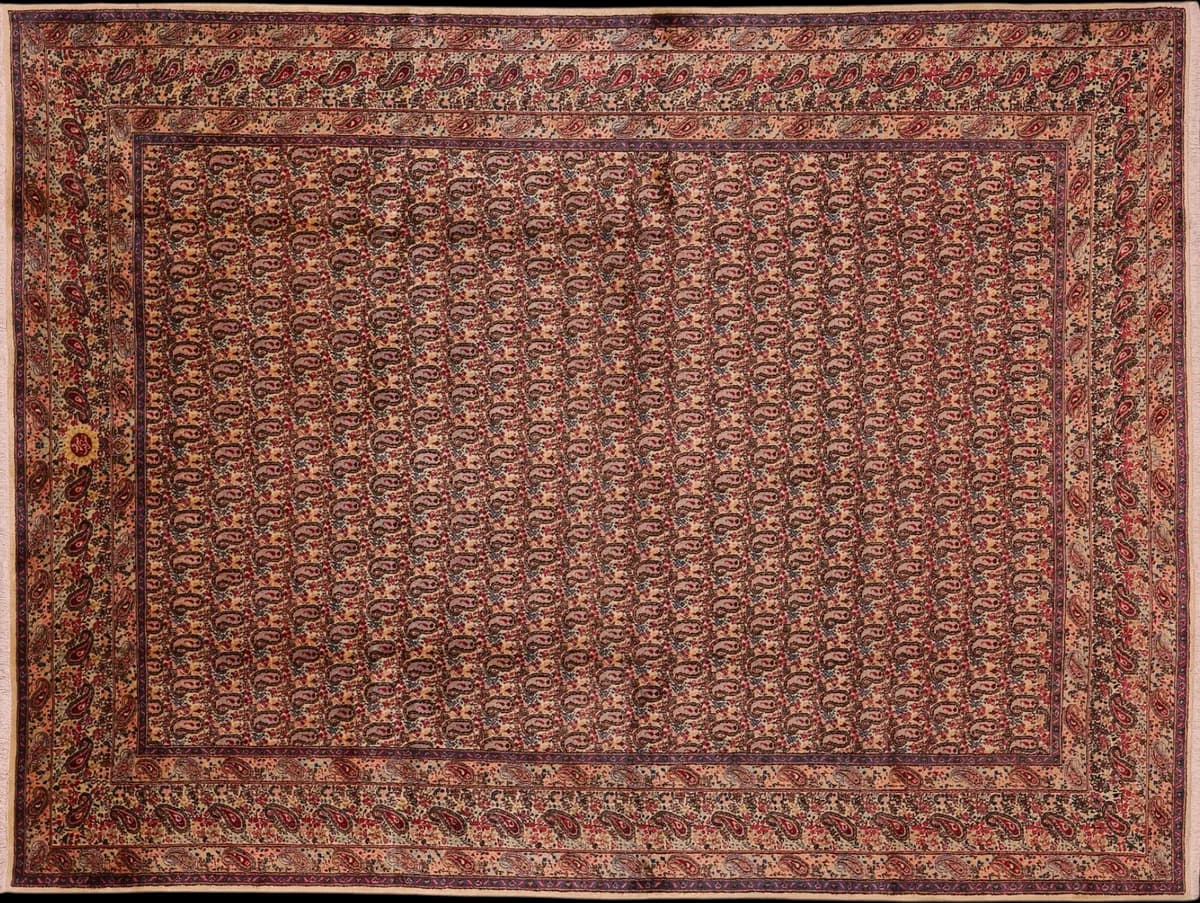
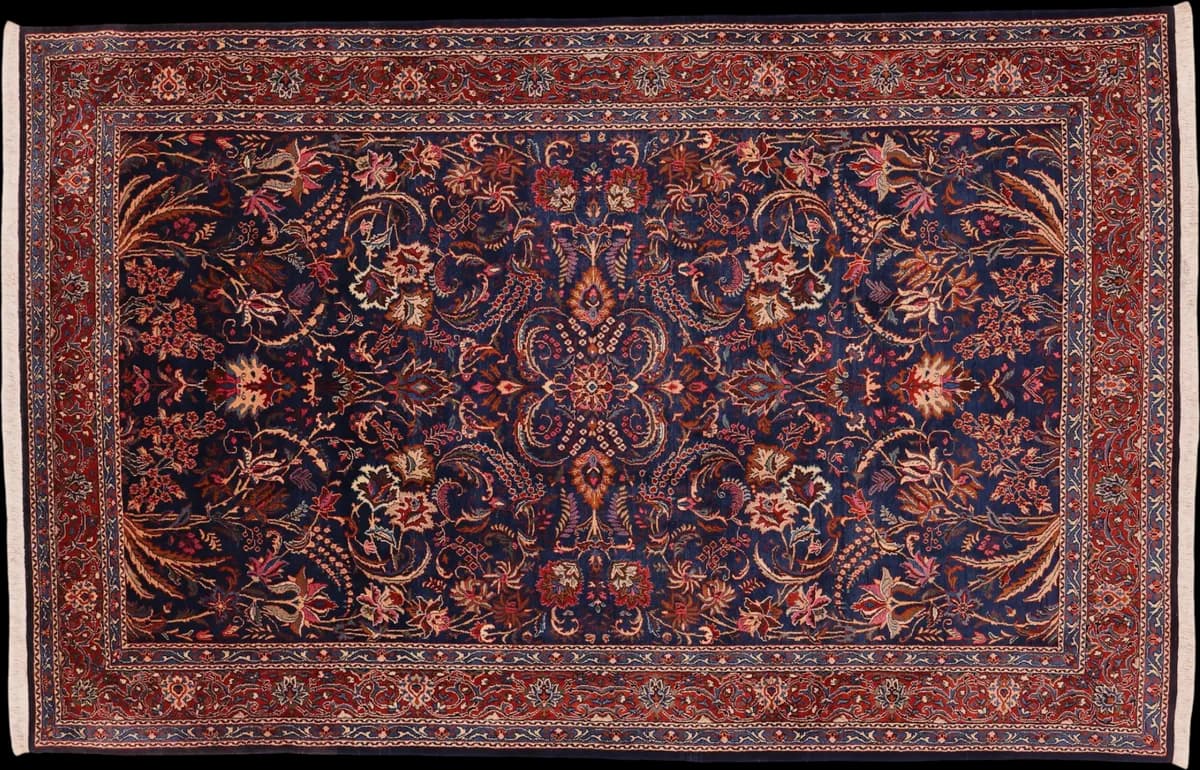
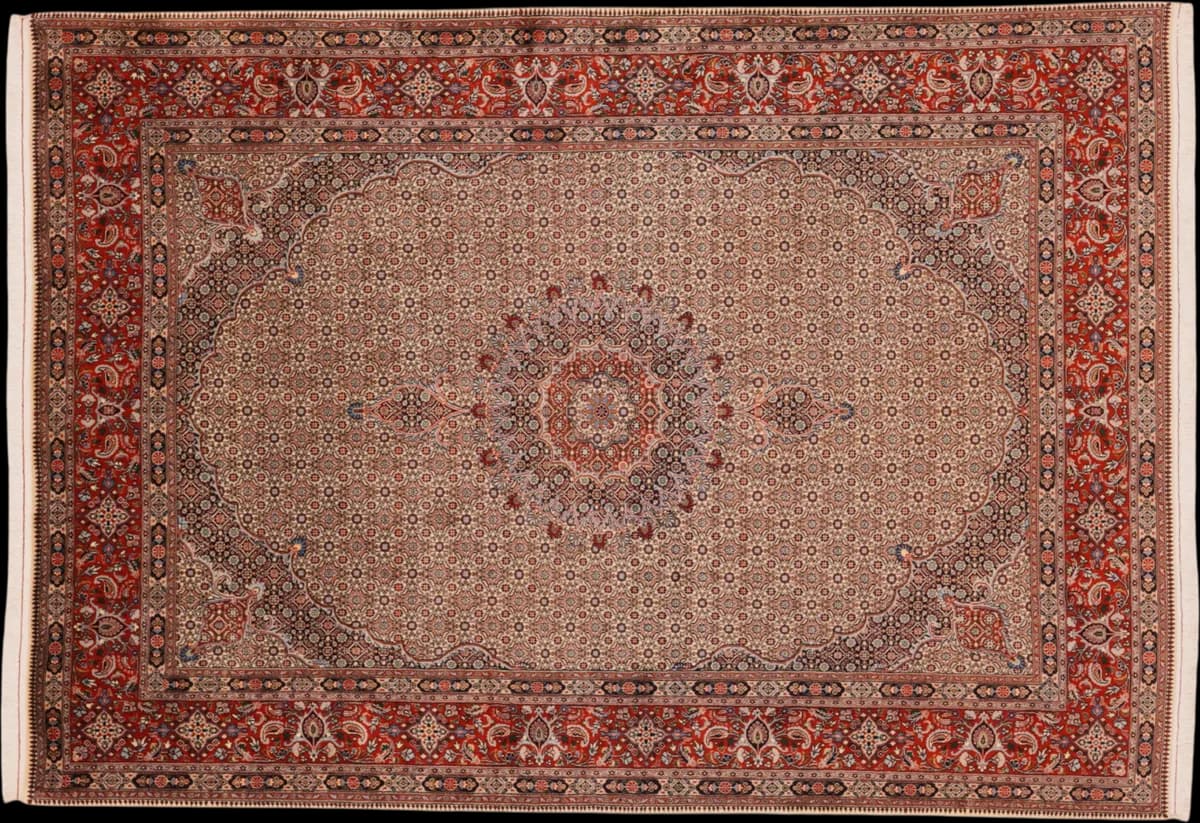
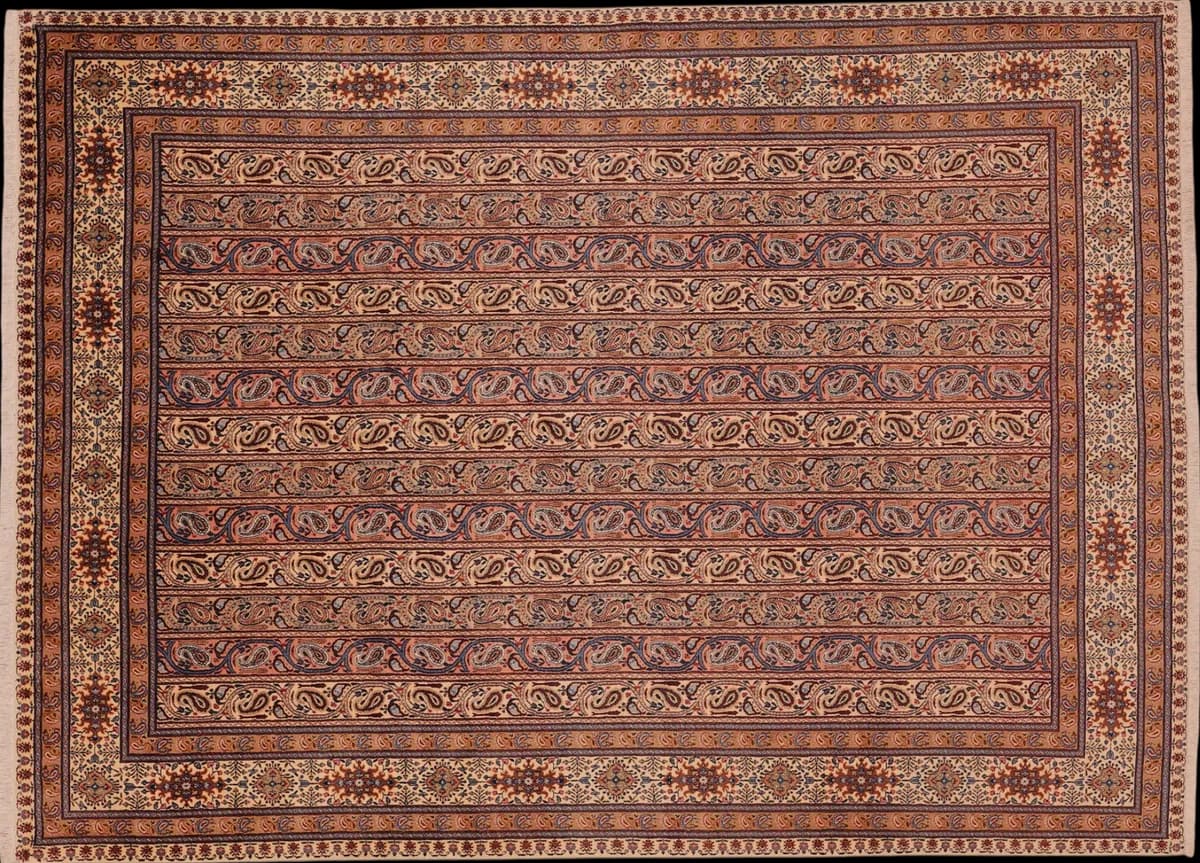
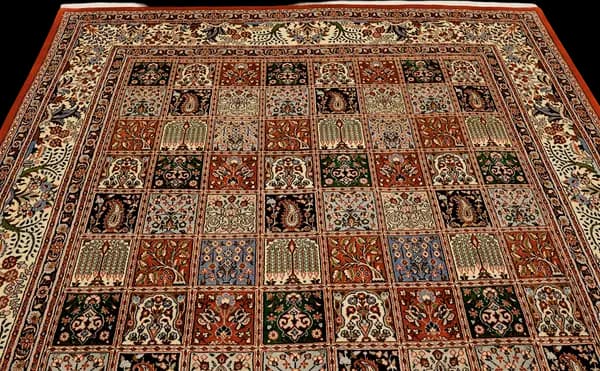
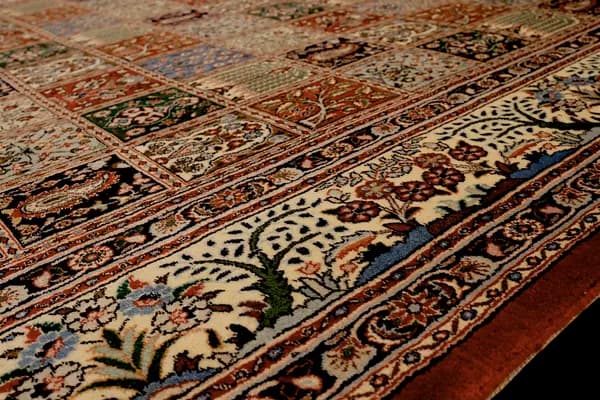
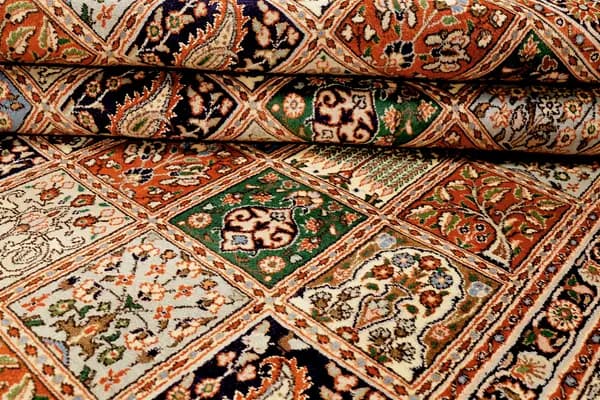
The field opens in cream, broken not by a medallion but by a grid of garden compartments, each panel its own small composition — a floral spray, a paisley, a fine lattice — worked in brick red, navy, sage green, dusty blue and terracotta. The eye moves panel to panel rather than settling on a centre. A navy inner border carries a cream floral vine, and a broad rust-red border closes the design, gathering the compartments' colours into one calm frame.
Each knot is tied by hand, wool for the body of the pile with silk brought in to sharpen the drawing. Silk spins finer than wool, so a knot tied with it turns a tighter corner, keeping two dozen small garden panels distinct rather than blurred together. At 321,000 to 380,000 knots per square metre and a pile shorn to 12 millimetres, the surface catches light evenly across every compartment, which is where the sheen this region is known for comes from. The weaver has signed the piece into the design.
In a living room, set under a seating group, this rug rewards a slow look, since no two of its garden panels repeat. The cream ground lifts a pale floor, while the rust-red border and navy accents hold steady against dark wood or leather. The wool and silk pile, dense and just twelve millimetres deep, wears firm underfoot and takes daily use without complaint. Under afternoon light, the sheen moves from panel to panel, so the design shifts through the day.
More on Dorokhsh rugs: origin, making and how to recognise a genuine piece
Superior craftsmanship
At 272 × 199 cm (5.41 m²) this is a large rug. It sits under a seating group with the front legs of sofa and chairs on it, or under a dining table for four. A table for six wants about 80 cm of clearance all round, and needs more.
Yes, knotted by hand — knot by knot on a loom, not machine-made. The density is 321,000 to 380,000 knots per square metre; across 5.41 m² that is roughly 1.7 to 2.1 million individual knots, every one of them tied by hand.
This pile contains silk and is more delicate than pure wool. Vacuum without a rotating brush and along the pile, do not beat it, and keep it out of permanent direct sun. Blot spills at once with a light cloth, never rub. For a proper clean a silk-blend rug belongs in expert hands — we handle that for pieces bought from us.
We are in the Hamburg Speicherstadt. Come and see this rug in daylight, or write to us — a person answers.
Certificate included verifying origin, materials, and craftsmanship.
Ref: 858894