A village that weaves against its region
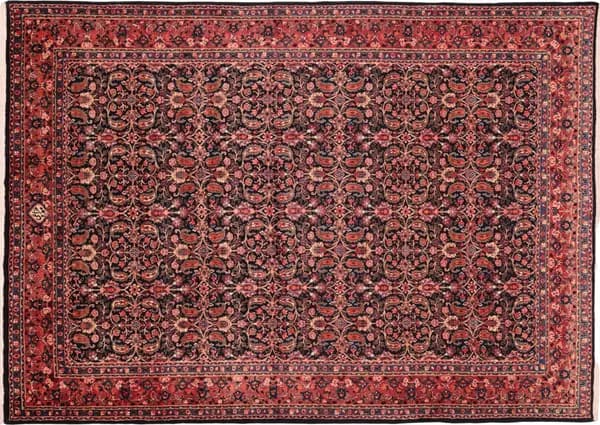
Khorasan is the largest weaving region in Iran and most of what comes out of it is mid-density work on a cotton warp with a substantial wool pile: solid, hard-wearing, often large. Dorokhsh does something else.
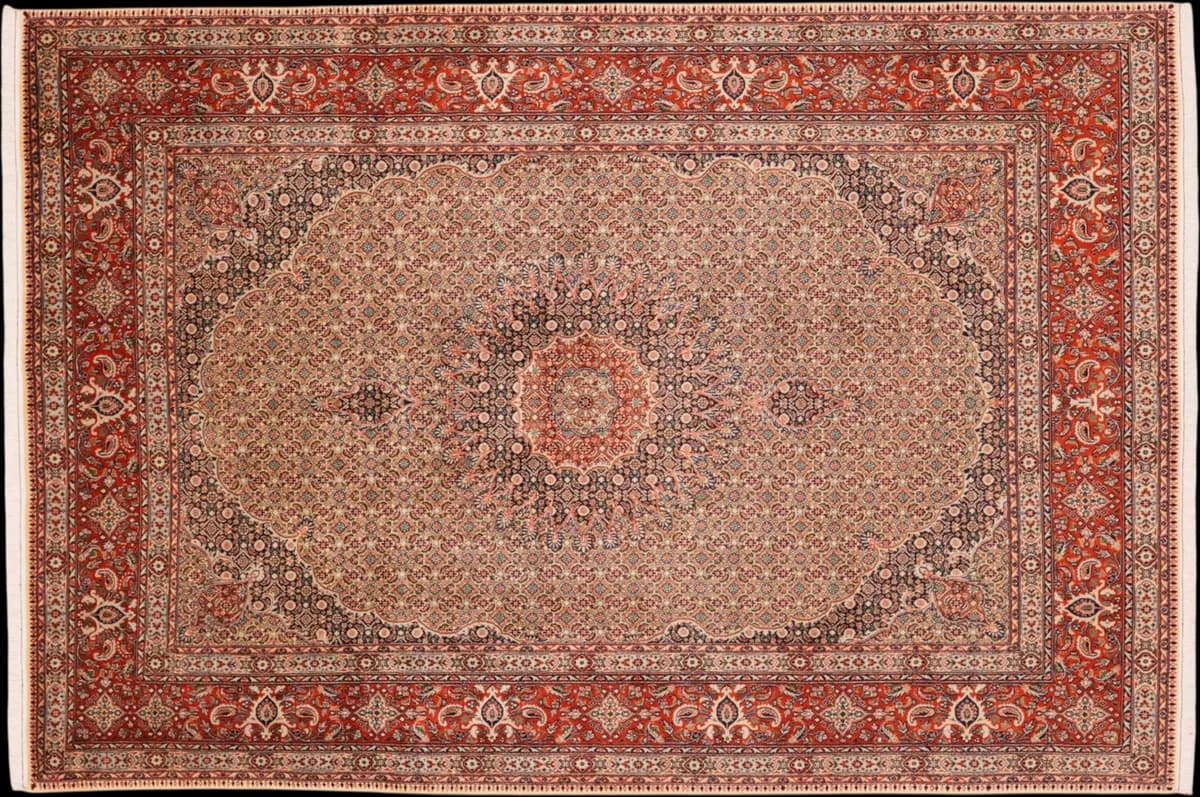
The village weaves finer — well above the regional average — on lighter grounds, with silk running through the contour lines. Placed beside a typical Khorasan rug it looks like it came from a different part of the country.
That divergence is what makes the name worth knowing. A rug sold simply as Khorasan tells you a region; a rug sold as Dorokhsh tells you a specific tradition inside it, and one whose output looks and costs differently.
The light ground
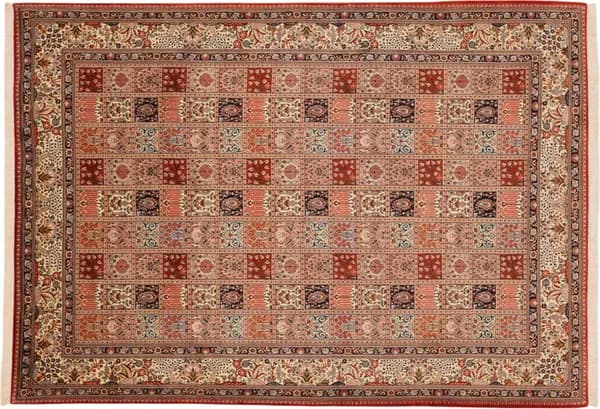
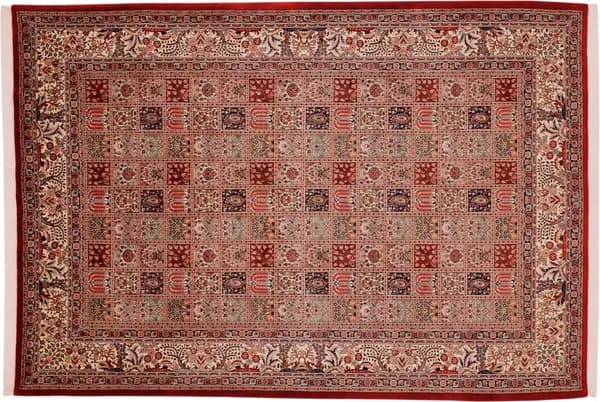
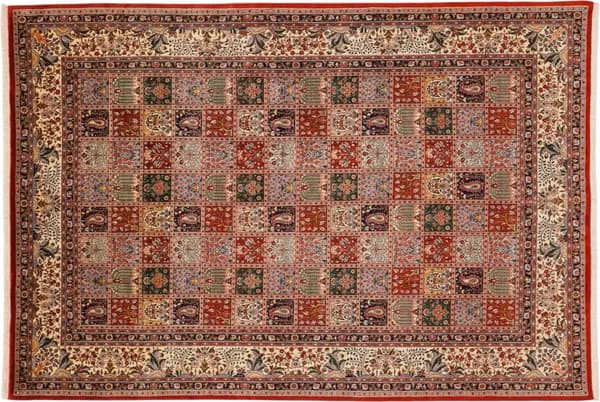
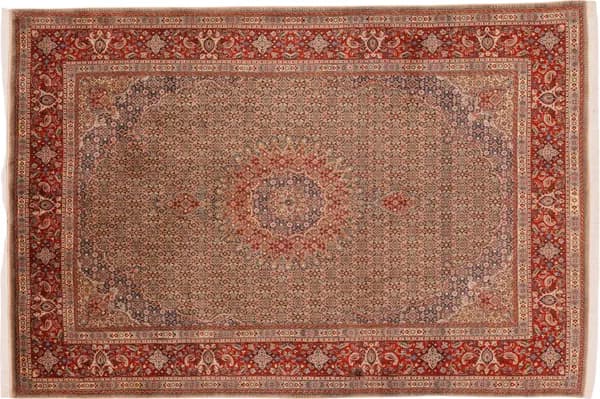
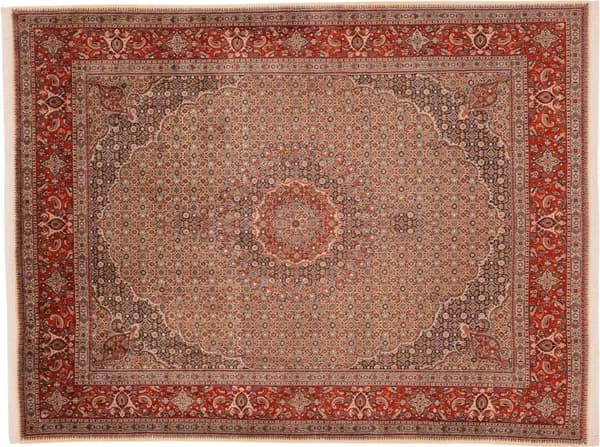
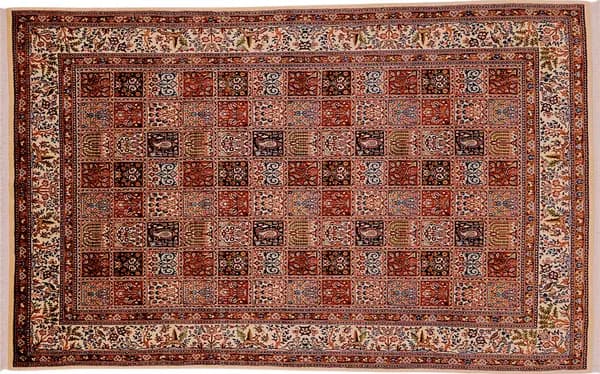
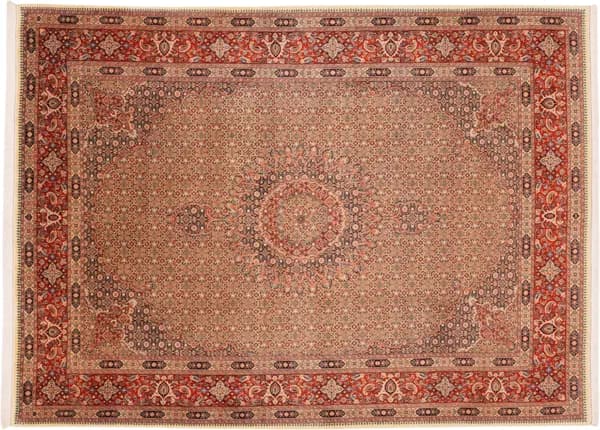
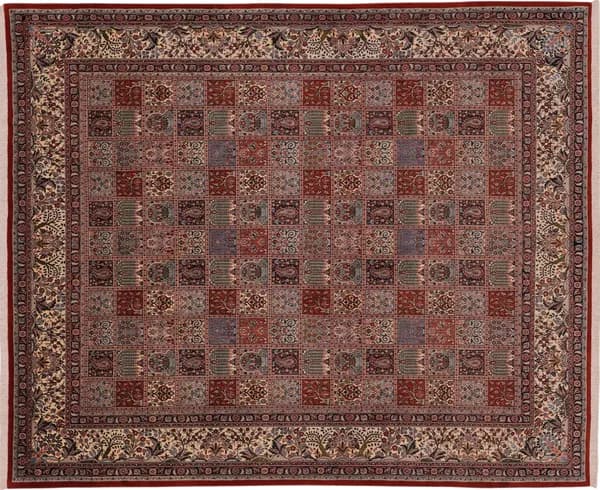
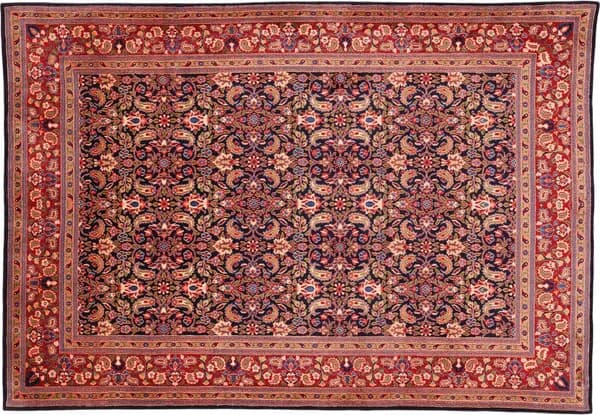
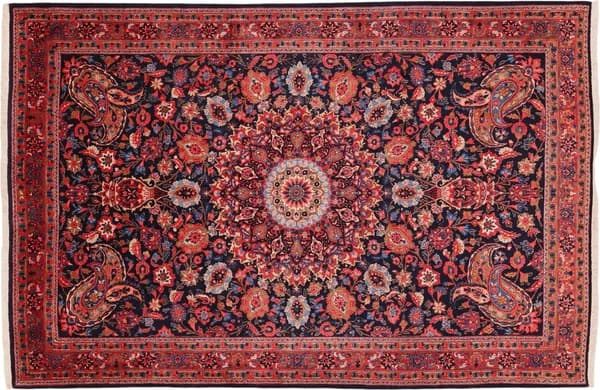
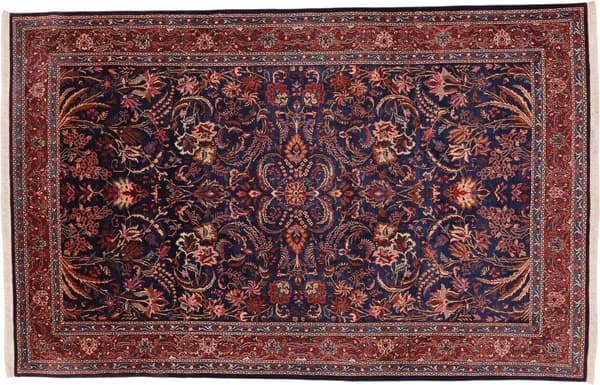
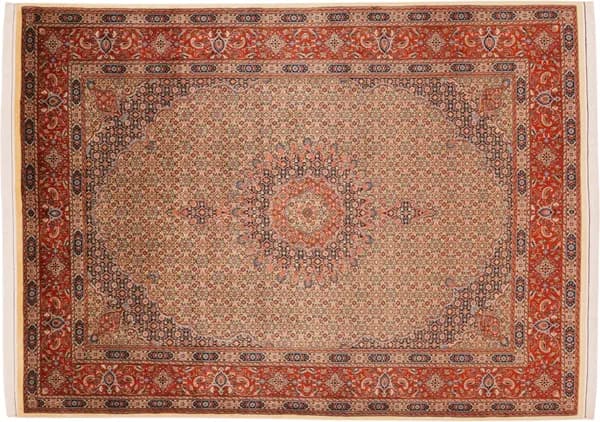
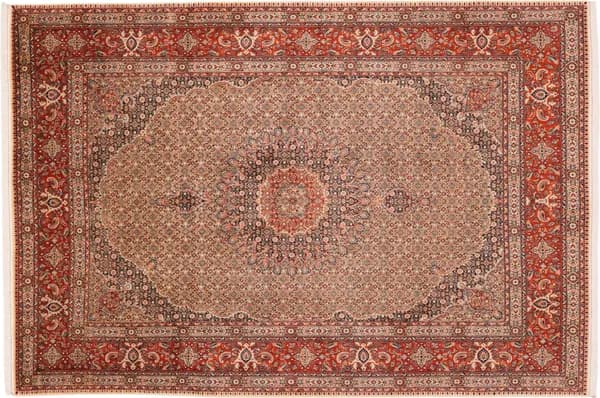
Most of the region works on deep red or dark blue. Dorokhsh sets its medallion on ivory or soft beige, and the drawing — vines, palmettes, corner spandrels — reads dark against light rather than light against dark.
The effect in a room is a considerable difference. A light-ground rug lifts a space and makes it read larger; a dark one anchors and encloses. Between two rugs of identical size and pattern, the ground colour changes the room more than anything else about them.
The trade-off is the usual one for a light rug: marks show earlier and there is nowhere for them to hide. In a formal sitting room that rarely matters; in a hallway it does.
- Ivory or soft beige ground with dark drawing.
- Silk in the contour lines, catching light against wool.
- Finer than the Khorasan regional average.
- Cotton warp with smooth light fringes.
- Also written Drokhsch — the same village.
Which room a Dorokhsh suits
The common format around 288 by 204 centimetres carries a seating group with the front legs of sofa and chairs on the rug, or a dining table for four with the usual 80 centimetres of clearance.
The light ground makes it a good choice for a room that needs opening up — a north-facing sitting room, a space with dark furniture, anywhere the floor is currently swallowing the light.
Because it is a medallion composition, keep the middle visible. Half under a sofa, the arrangement stops working in a way an all-over field would not.
Care
Vacuum along the pile, without a rotating brush — the silk contours are the first thing a brush lifts.
Blot spills at once with clear water and a light cloth, working from the outside in. On a light ground speed matters: a mark left to dry stays visible.
Keep it out of permanently direct sun. Silk contours fade before the wool around them, and the drawing loses definition once they pale.
Dorokhsh or Nain?
Both weave a medallion on a light ground with silk contours. The difference is region and density.
| Criterion | Dorokhsh | Nain |
|---|---|---|
| Region | South Khorasan, east | Isfahan province, centre |
| Knot density | typically 321,000–380,000 / m² | typically 441,000–500,000 / m² |
| Ground | ivory to soft beige | ivory with indigo drawing |
| Common format | around 288 × 204 cm | around 283 × 199 cm |
| Recognition | less established as a name | a classical name with a following |
Common questions
Dorokhsh or Drokhsch?
The same village in South Khorasan. Both spellings appear in the trade and in catalogues; it is worth searching for both.
Is a Dorokhsh a Khorasan rug?
Geographically yes, but it weaves against the regional norm. Where most Khorasan production is mid-density work on dark grounds, Dorokhsh weaves finer, lighter pieces with silk contours. The specific name tells you considerably more than the regional one.
Why is the ground so light?
It is the village tradition, and it is what distinguishes the name. A light-ground rug lifts a room and makes it read larger; a dark one anchors and encloses. Between two otherwise identical rugs, ground colour changes a room more than anything else.
Does the silk make it delicate?
Not significantly. The silk is in the contour lines rather than the body of the pile, so the rug walks like a wool rug. What it does mean is no rotating brush, and no permanent direct sun.
Is it suitable for a hallway?
Less so than a dark rug of the same construction. The light ground shows marks earlier and gives them nowhere to hide. In a sitting room or dining room it is a different proposition.