ExclusiveSigned
Moud Dorokhshwith silk
296 × 185 cm
4.800 €
5.250 €
Incl. VAT
In Stock · Ready to Ship
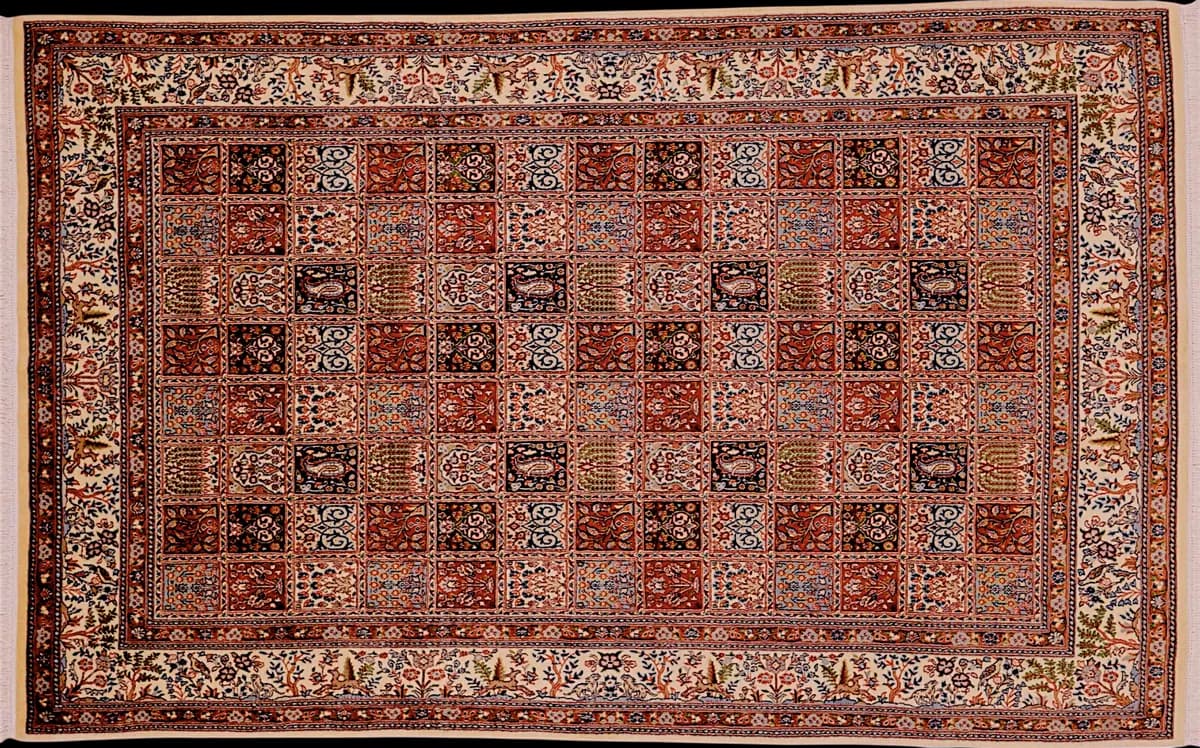
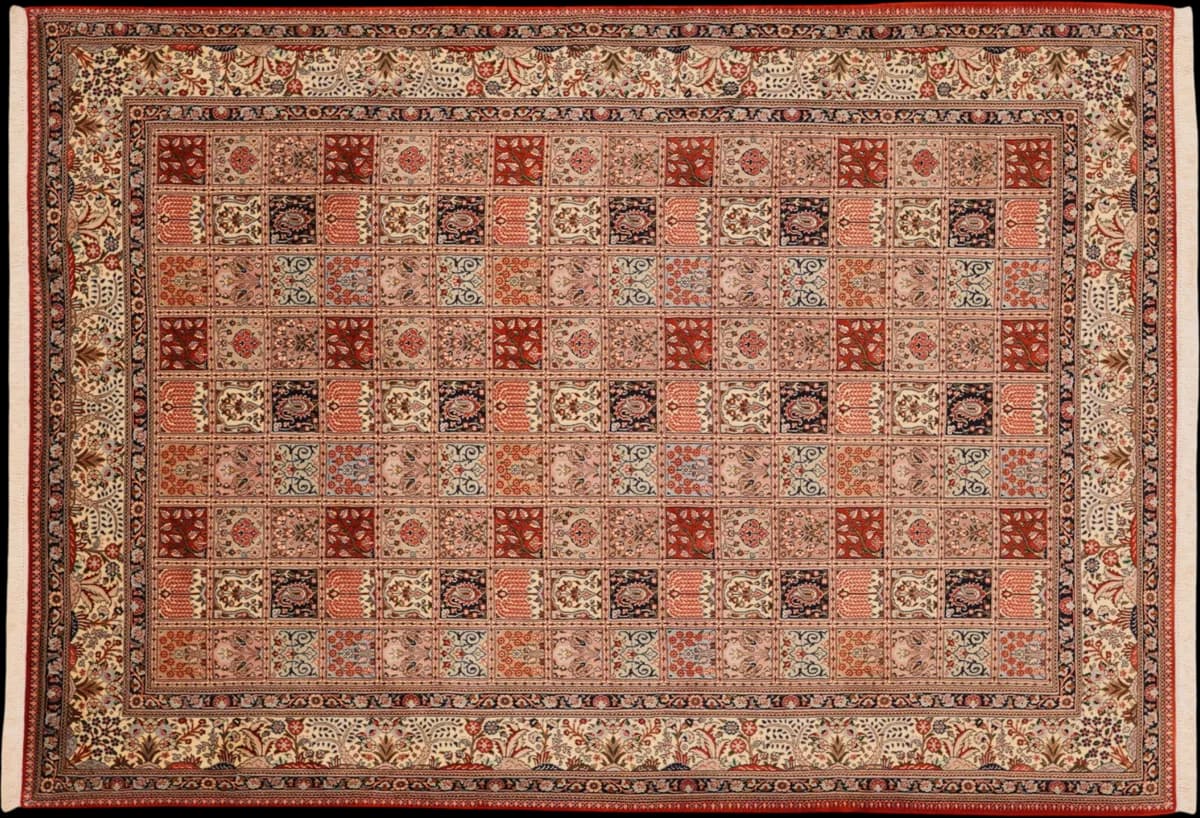
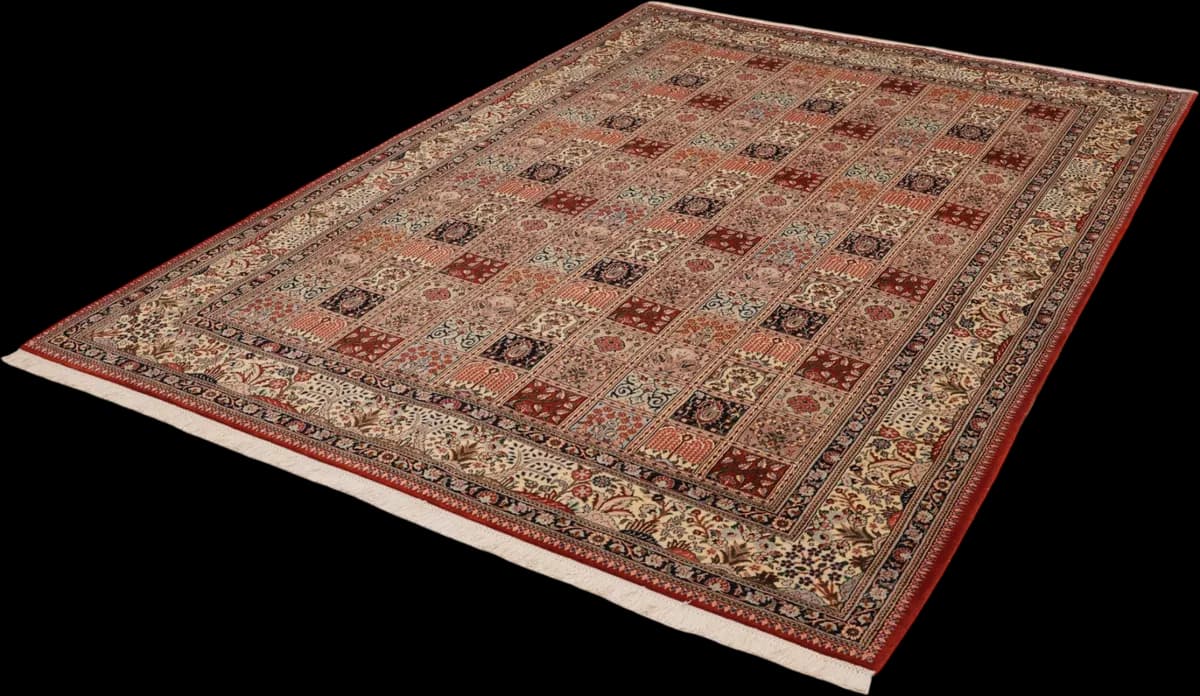
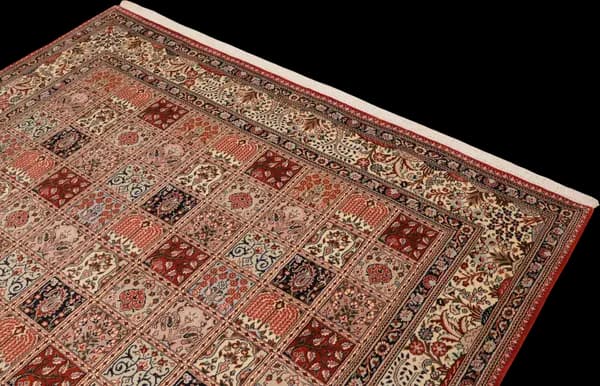
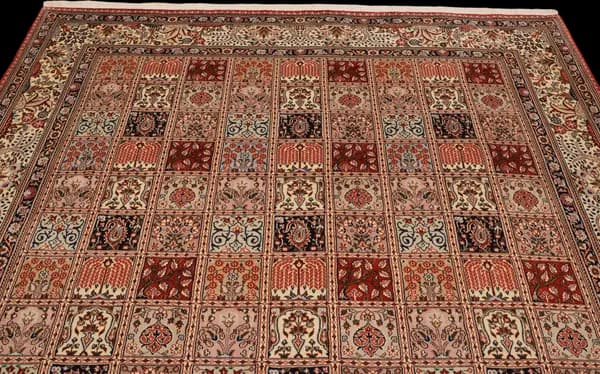
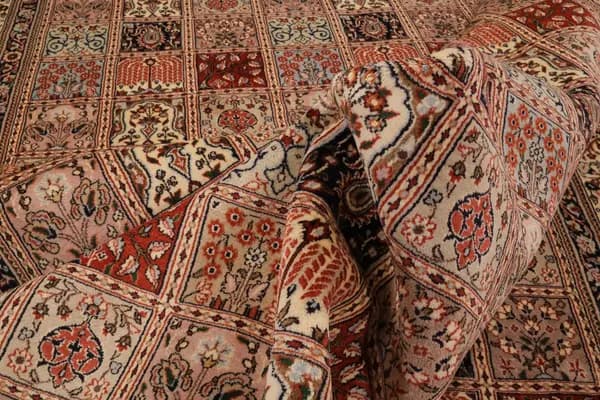
This is a Dorokhsh, from the Khorasan weaving villages around Birjand in eastern Iran, a close neighbour to the better-known Moud rugs of the same district. It measures 293 x 207 cm (9'7" x 6'9"). Khorasan work is usually built around the Herati lattice, but here the field is laid out instead as a garden compartment grid, a design more often associated with Bakhtiari weavings further west, given the fine, polished drawing Dorokhsh is known for.
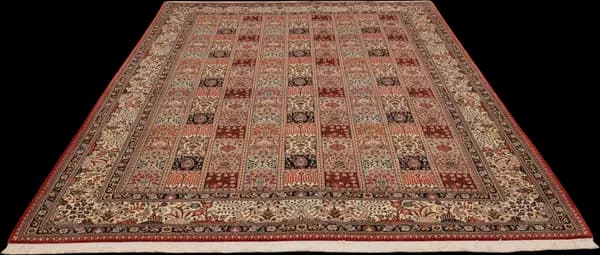
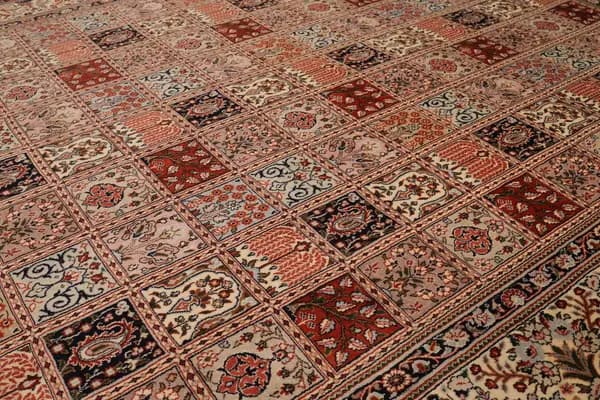
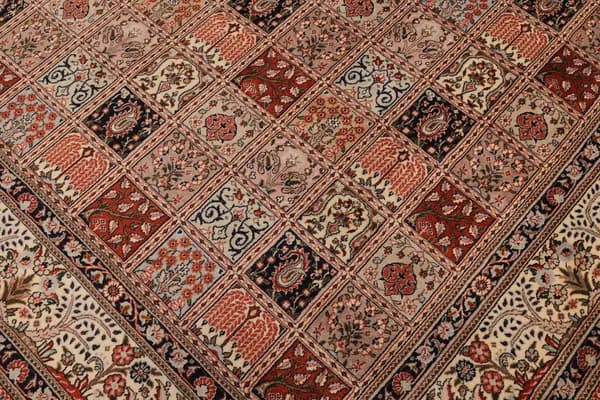
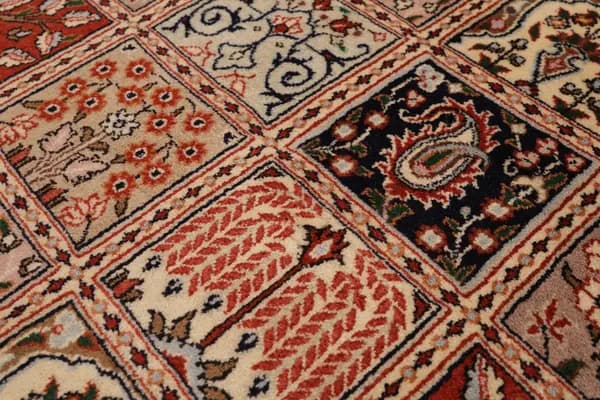
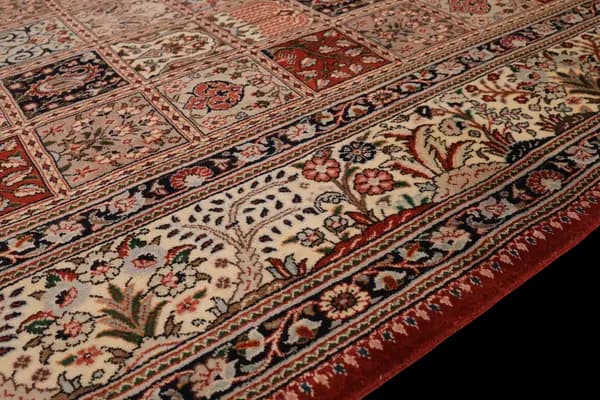
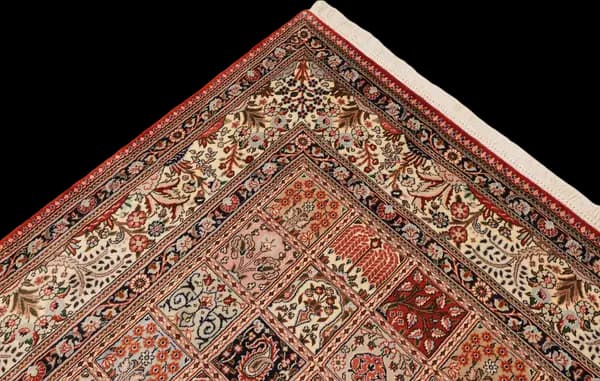
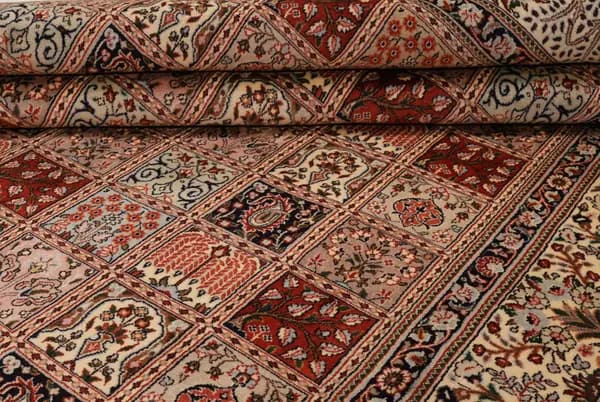
The field reads as a broken, dusty rose, interrupted by panels of terracotta and cream set into a strict rectangular grid. Each small compartment holds its own motif, a tree, a botteh, a floral spray, a paisley, repeating in orderly rows rather than a single continuous pattern. Camel, dusty pink and touches of light blue move through the botteh panels, and the whole field is held by a red main border set on ivory. The effect is a garden seen in plan, each bed distinct, all of them drawn with the same restrained hand.
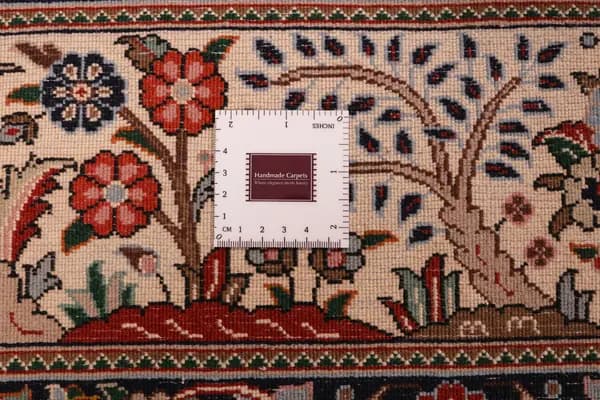
The pile is knotted in wool with a silk content over a cotton warp, at a density of 321,000 to 380,000 knots per square metre. Silk spins finer than wool, so a weaver can turn tighter, smaller knots without losing definition, which is what allows each compartment here to keep its own clear motif at this scale rather than blurring into the next. The pile is kept low, at 12 mm, and clipped closely and evenly, which is why the surface stays smooth and takes light as a soft, matt sheen rather than a texture. The rug is signed, a workshop practice that marks the piece as the work of a named weaver rather than an anonymous production.
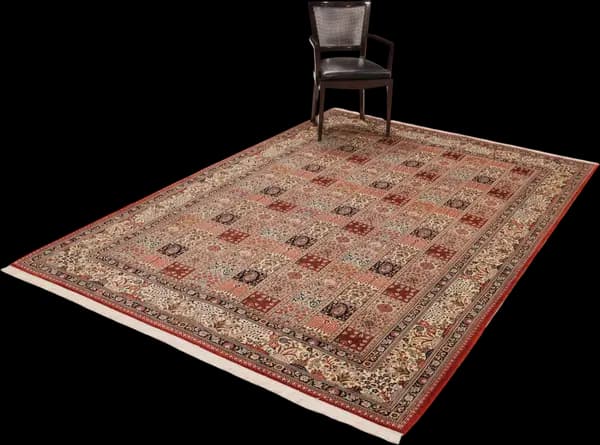
A rug of this size sits well in a dining room under a table, or anchoring a seating group in a living room. The dusty rose and terracotta warm a pale floor without shouting, and the grid of small motifs keeps its order even under a table laid with glasses and chairs pulled in and out. Underfoot it is dense, firm and even, built for a room in regular use rather than one kept for best. Move through the room over the course of a day and the low pile catches the light differently panel by panel, so the grid never looks quite the same twice.
More on Dorokhsh rugs: origin, making and how to recognise a genuine piece
Superior craftsmanship
At 293 × 207 cm (6.07 m²) this is a large rug. It sits under a seating group with the front legs of sofa and chairs on it, or under a dining table for four. A table for six wants about 80 cm of clearance all round, and needs more.
Yes, knotted by hand — knot by knot on a loom, not machine-made. The density is 321,000 to 380,000 knots per square metre; across 6.07 m² that is roughly 1.9 to 2.3 million individual knots, every one of them tied by hand.
This pile contains silk and is more delicate than pure wool. Vacuum without a rotating brush and along the pile, do not beat it, and keep it out of permanent direct sun. Blot spills at once with a light cloth, never rub. For a proper clean a silk-blend rug belongs in expert hands — we handle that for pieces bought from us.
We are in the Hamburg Speicherstadt. Come and see this rug in daylight, or write to us — a person answers.
Certificate included verifying origin, materials, and craftsmanship.
Ref: 577019