Moud | Exclusive | Sherkat-e Farsh · with silk
283 × 198 cm
5.070 €
6.300 €
Incl. VAT
In Stock · Ready to Ship
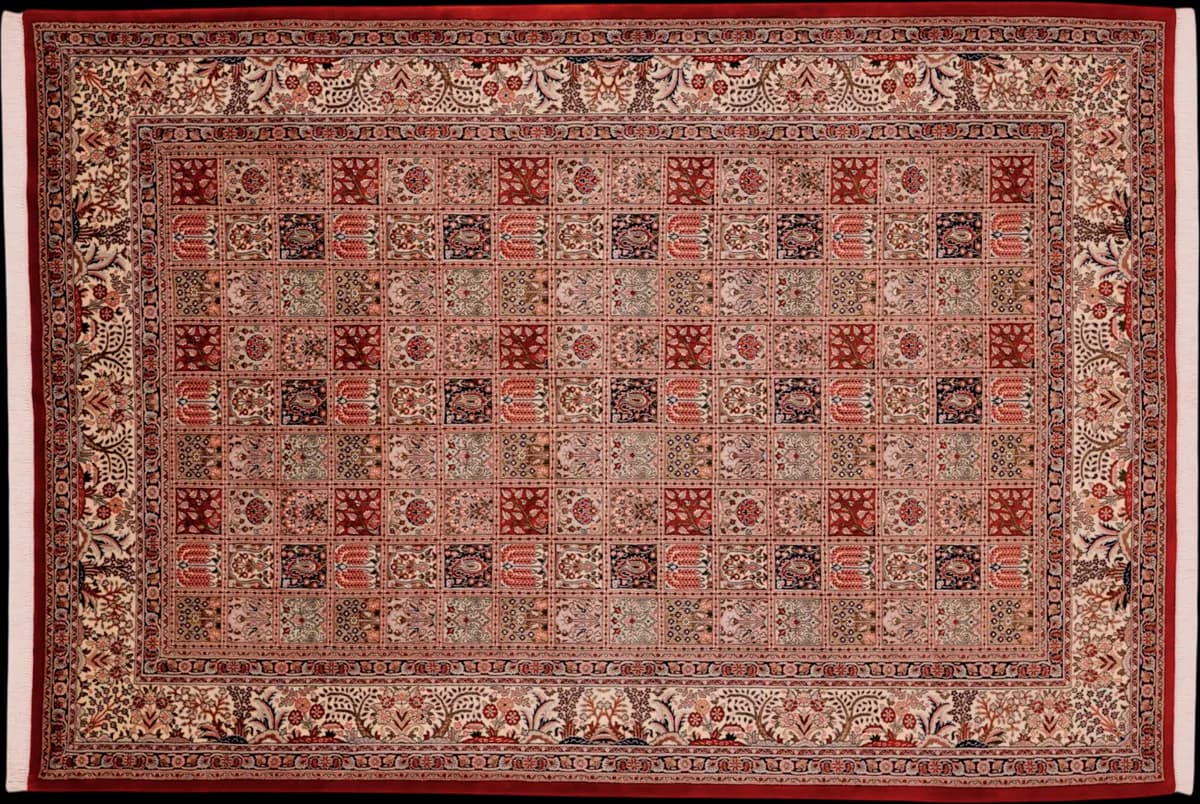
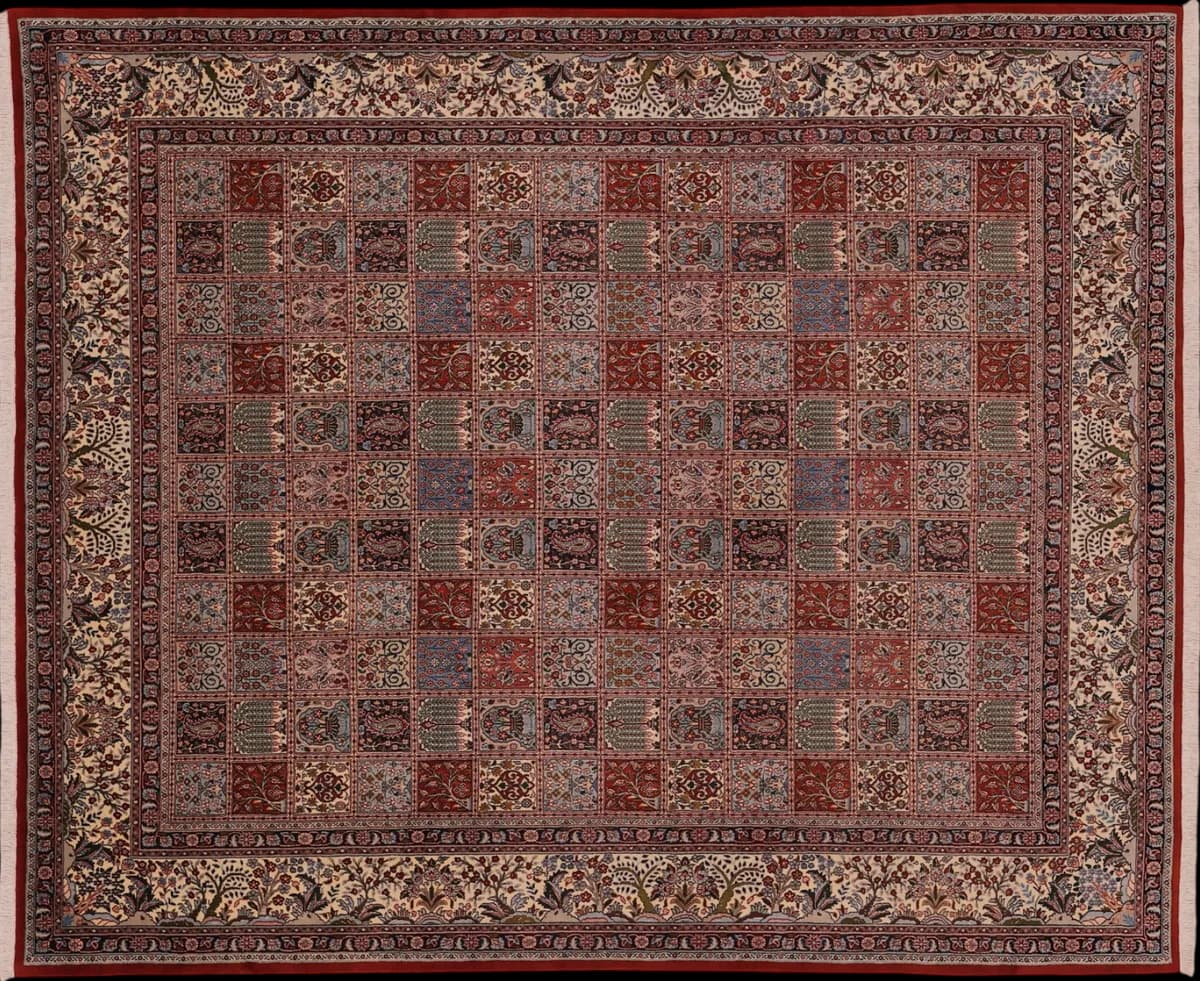
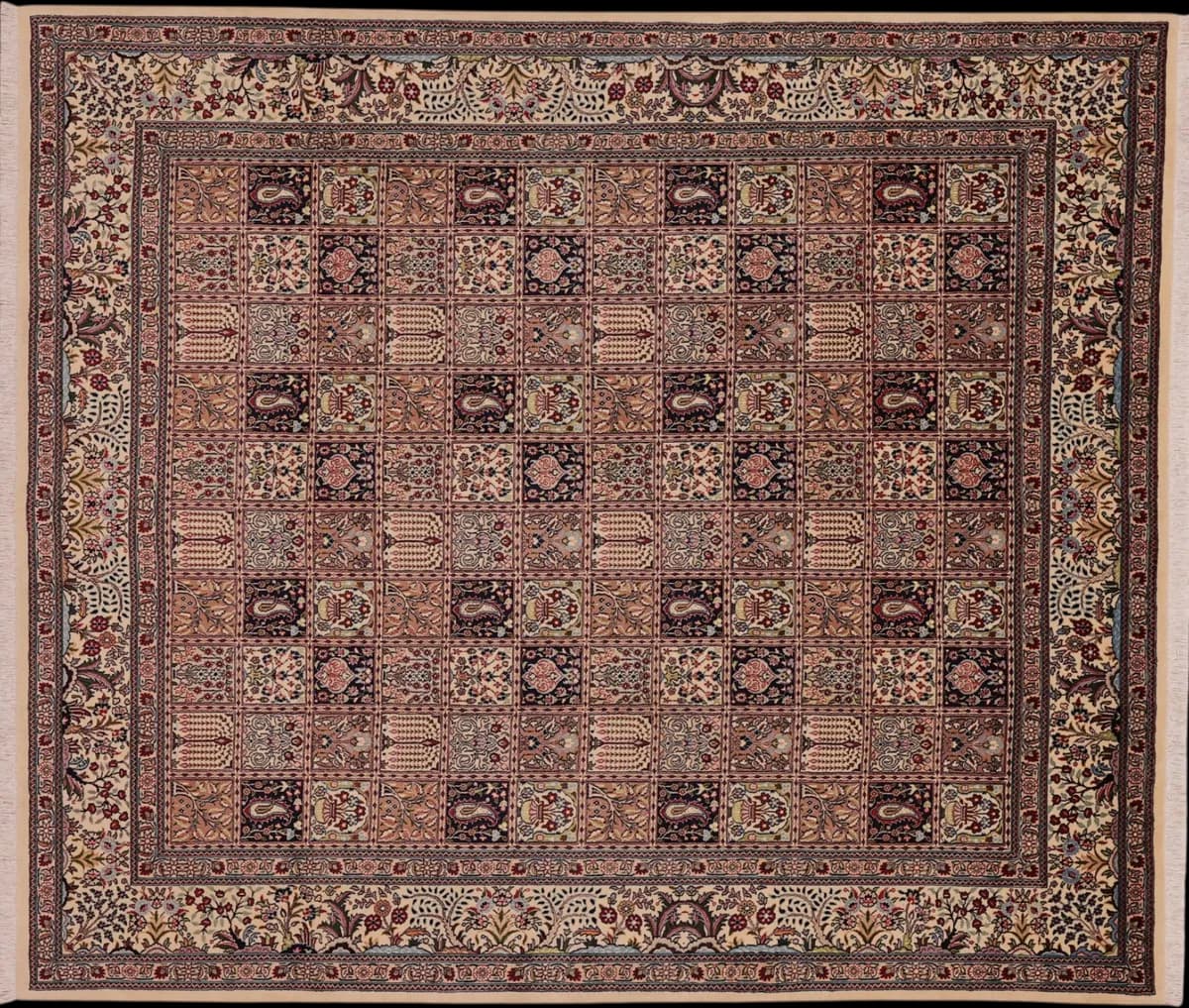
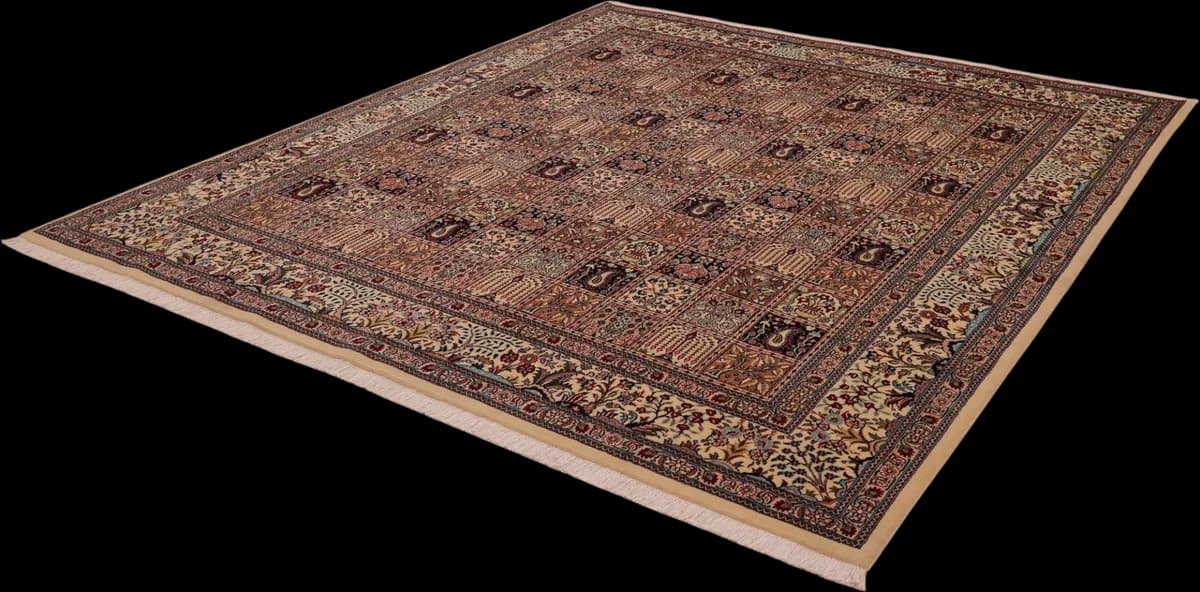
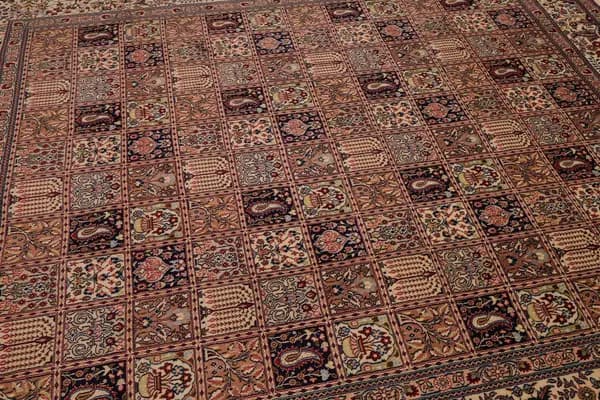
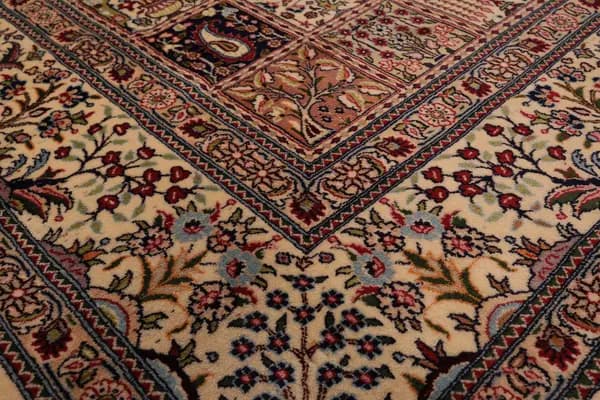
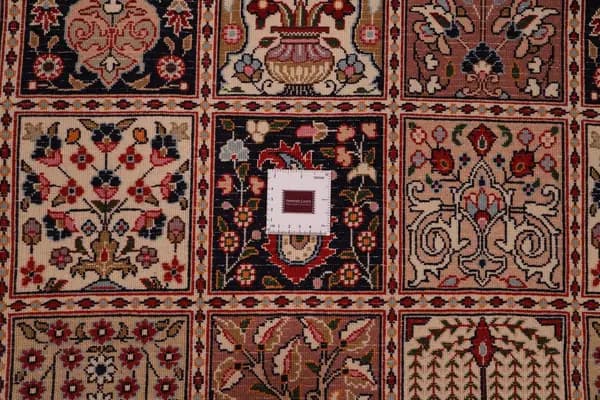
This is a Dorokhsh, from the same corner of South Khorasan in eastern Iran that also gives the trade its Moud rugs, so close in character that dealers often name them together. At 289 x 249 cm (9'6" x 8'2"), it is a generous rectangle, and the type is known for elegant, refined drawing and a polished surface that photographs quietly but reads as alive in a well-lit room. What sets this particular piece apart is how far it takes that refinement: rather than one flowing garden repeat, the design has been organised into a disciplined grid, each compartment its own small composition.
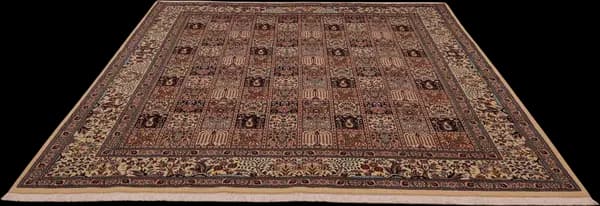
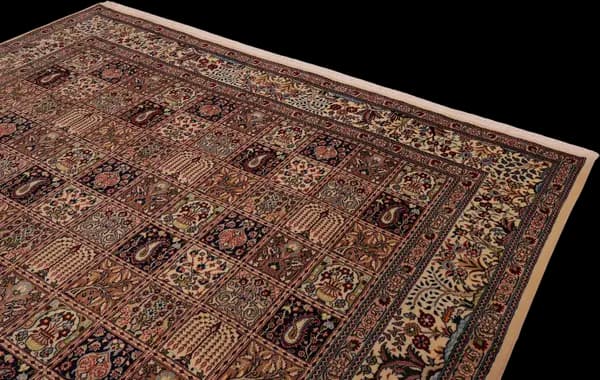
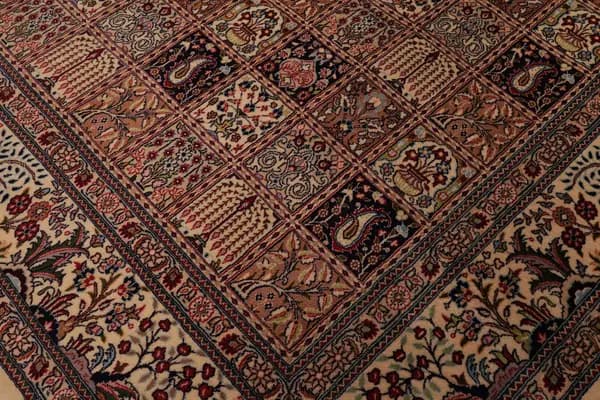
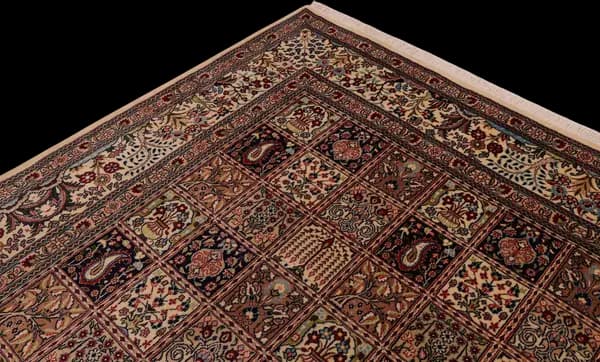
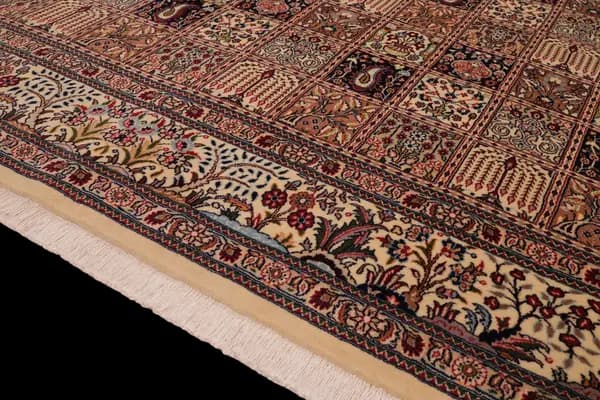
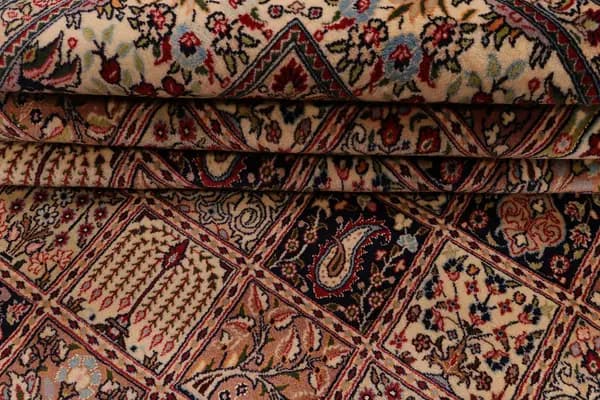
The first impression is of dark aubergine-brown and navy trading places with cream, panel by panel, almost like a checkerboard rather than a single pattern reading across the field. Look closer and each compartment holds its own botanical motif, a boteh here, a floral spray or a small cluster of blossoms there, no two quite alike, yet the alternation of dark and light grounds keeps the whole field orderly rather than busy. That grid gives way to a wide cream-ground border, taking up close to a fifth of the rug's width, where dense scrolling vines and palmettes soften the geometry with movement. Against the calm structure of the field, the border reads almost floral by contrast.
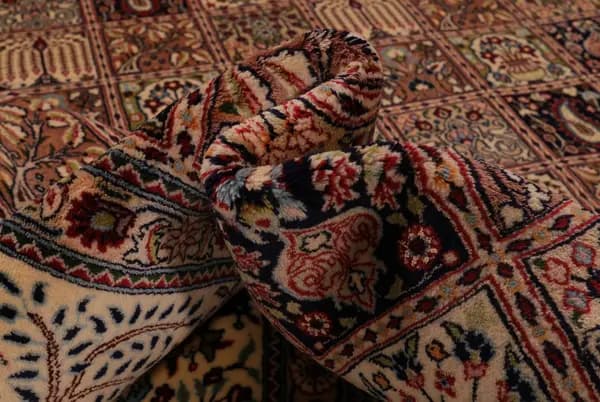
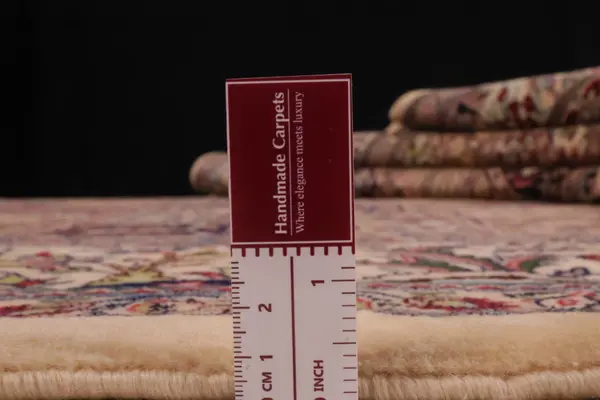
That contrast is not accidental. The knot count here runs to 321,000-380,000 per square metre, fine enough to hold the crisp outlines each small panel needs without them blurring into their neighbours, and the pile is wool with an admixture of silk, which takes a finer twist than wool alone and lets the weaver sharpen an edge or a petal that plain wool would round off. At 12 mm the pile stays low, which is what gives the surface its slight, even lustre rather than a deep, shadowed nap. A grid this consistent, signed by the weaver, represents months of counted, disciplined work at the loom, panel after panel kept true to the plan.
A rug this size and this composed sits naturally in a dining room, under a table where its grid can be read from every seat, or anchoring a living room seating group where guests look down into it rather than past it. The cream compartments and border lift a room that gets modest daylight, while the aubergine and navy panels hold their own against dark wood or leather furniture without disappearing. Underfoot it is dense and firm, built for a room that gets used rather than admired from the doorway. Watch it through the day and the silk in the pile catches the light unevenly across the panels, so the grid seems to shift its balance of dark and pale as the sun moves.
More on Dorokhsh rugs: origin, making and how to recognise a genuine piece
Superior craftsmanship
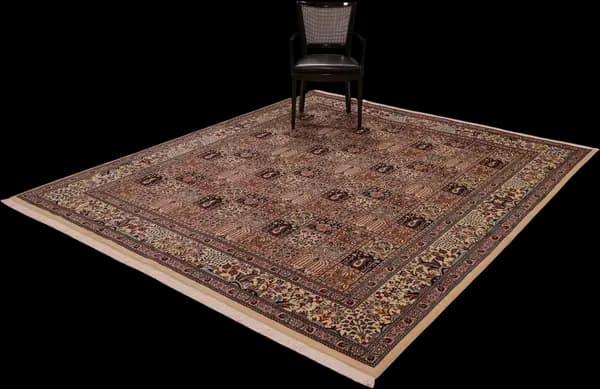
At 289 × 249 cm (7.20 m²) this is a large rug. It sits under a seating group with the front legs of sofa and chairs on it, or under a dining table for four. A table for six wants about 80 cm of clearance all round, and needs more.
Yes, knotted by hand — knot by knot on a loom, not machine-made. The density is 321,000 to 380,000 knots per square metre; across 7.20 m² that is roughly 2.3 to 2.7 million individual knots, every one of them tied by hand.
This pile contains silk and is more delicate than pure wool. Vacuum without a rotating brush and along the pile, do not beat it, and keep it out of permanent direct sun. Blot spills at once with a light cloth, never rub. For a proper clean a silk-blend rug belongs in expert hands — we handle that for pieces bought from us.
We are in the Hamburg Speicherstadt. Come and see this rug in daylight, or write to us — a person answers.
Certificate included verifying origin, materials, and craftsmanship.
Ref: 987207