Signed
Dorokhsh
344 × 259 cm
10.800 €




5.850 €
Incl. VAT
In Stock · Ready to Ship
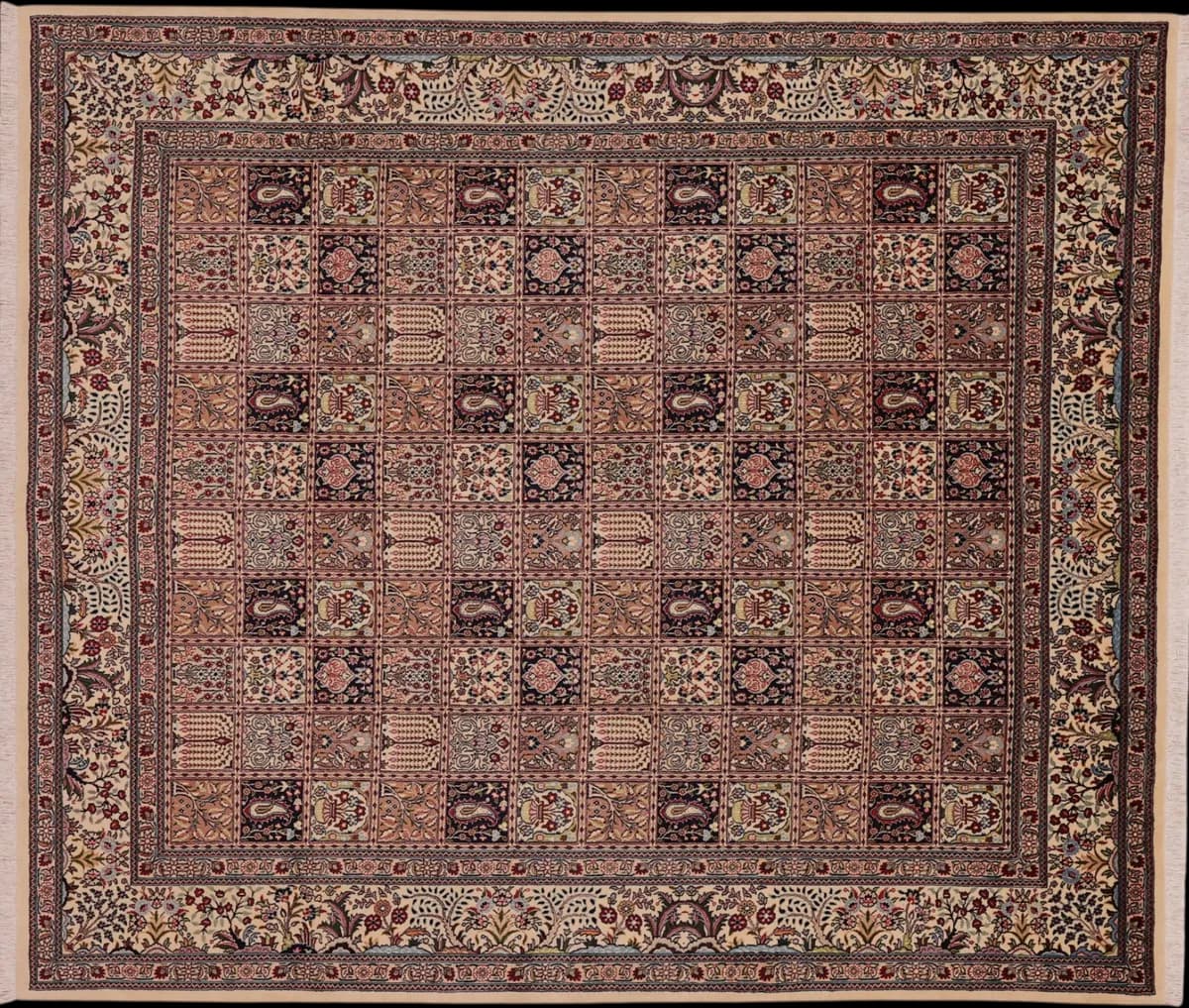
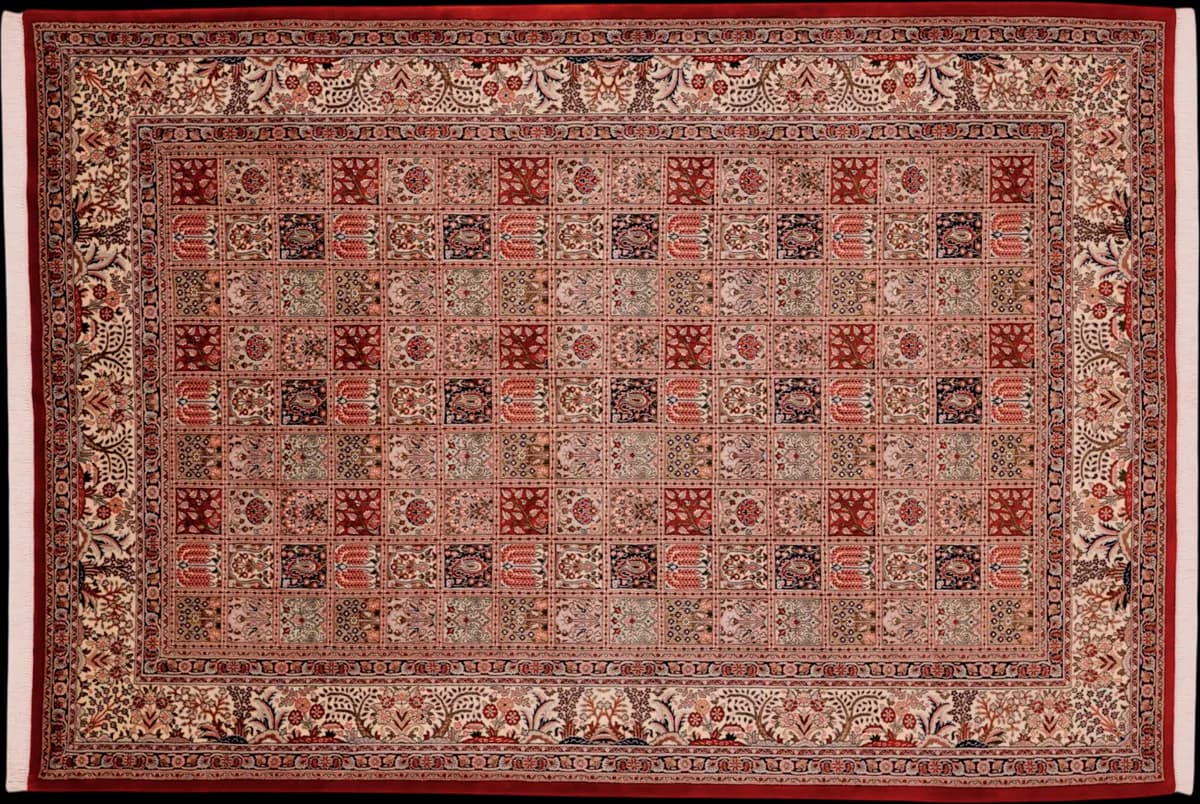
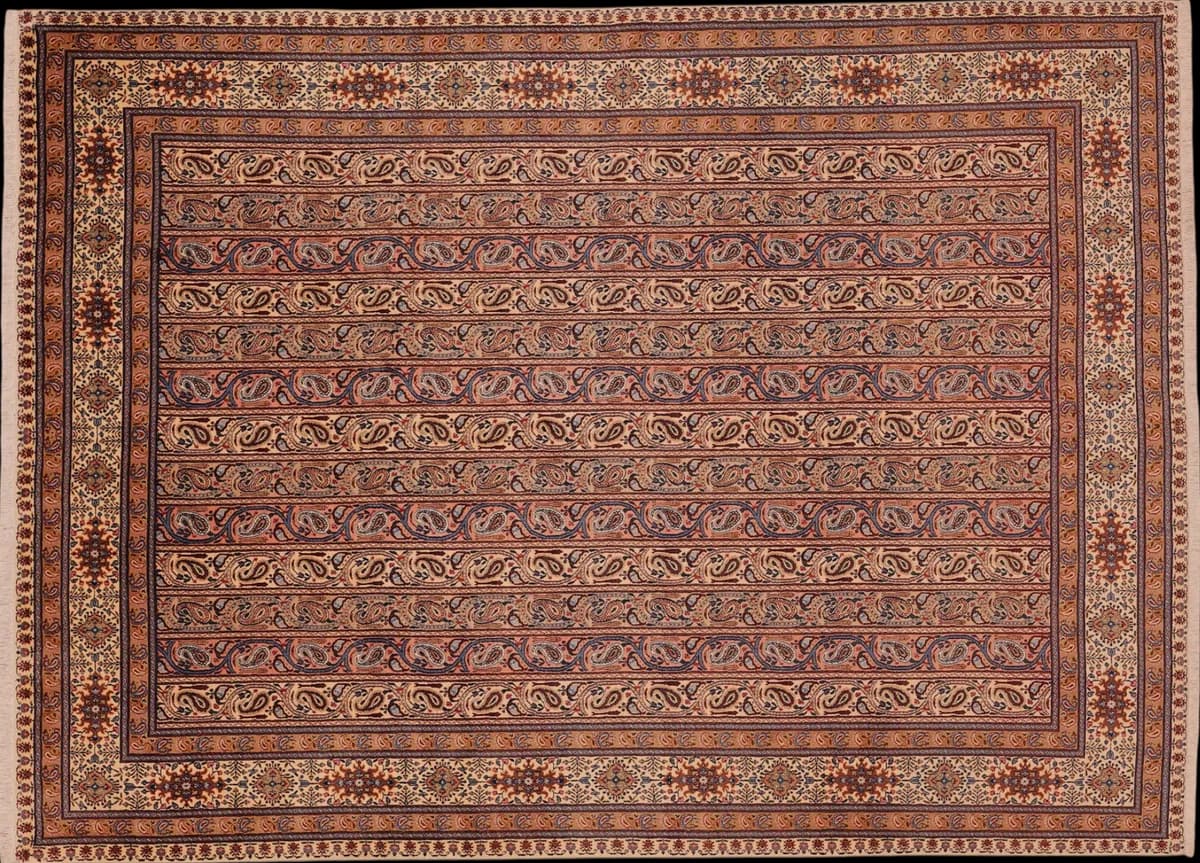
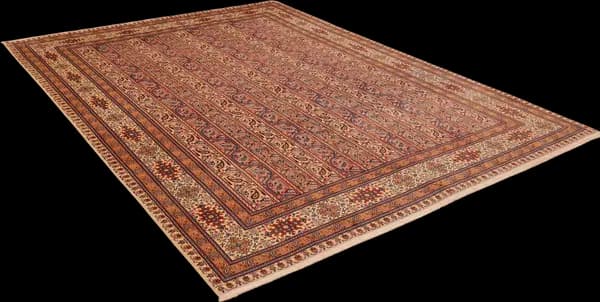
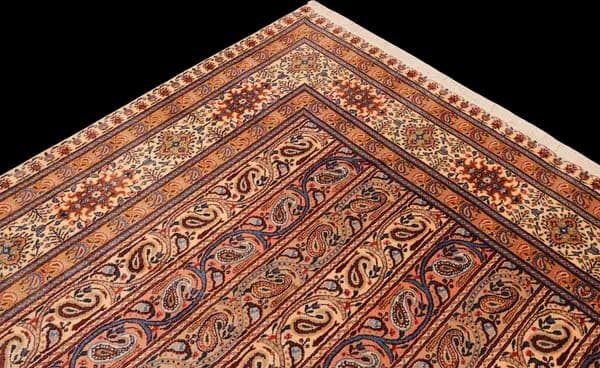
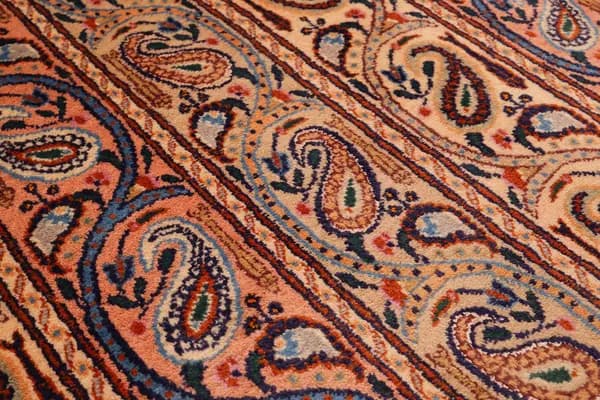
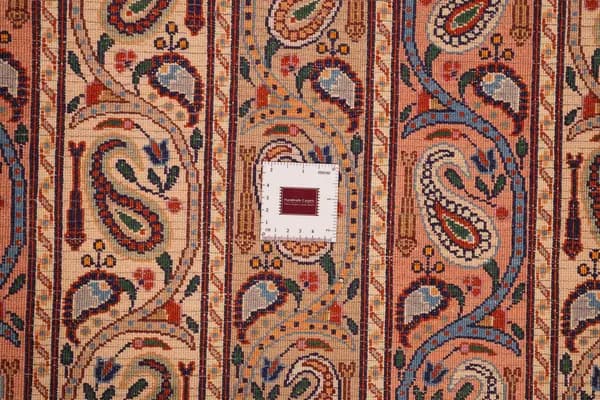
Dorokhsh rugs come from the Khorasan weaving villages of eastern Iran, prized for elegant drawing and a subtle sheen across the surface, more polished than the tribal weavings often set beside them. This one measures 339 x 247 cm (11'1" x 8'1"), a generous rectangle, and it is a striped Moharamati piece built from a repeating paisley rather than a medallion.
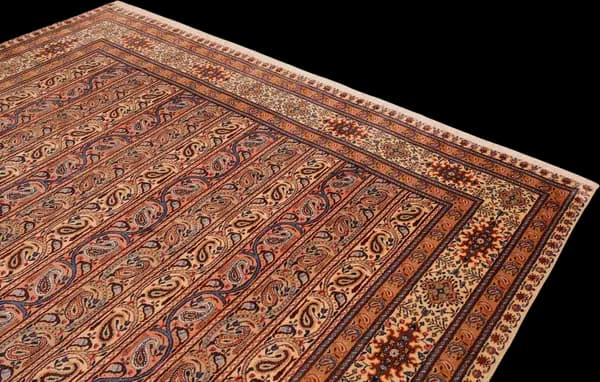
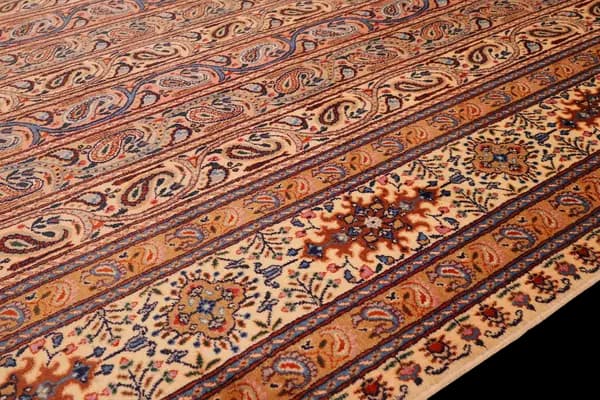
The eye meets tight rows of small paisleys marching across bands of rust, salmon and cream, each row a different ground rather than one field. There is no medallion to gather the eye at the centre, so the pattern reads instead as a sequence, band by band, the boteh outlined in navy with dark brown-black detailing giving each shape a crisp edge. A wide cream border closes the composition, carrying rust-brown floral diamonds and vine sprays between several thin guard stripes in navy and ochre, and against the warm field this border sits with real contrast.
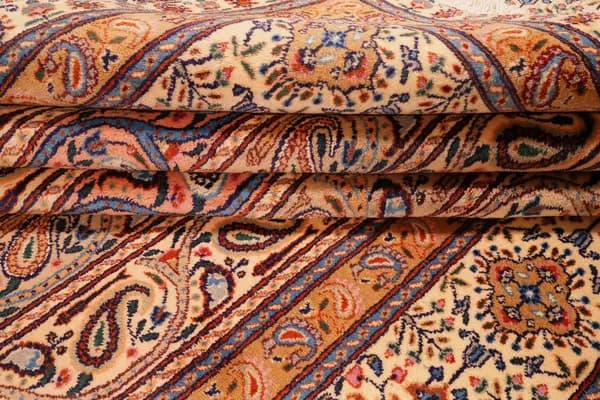
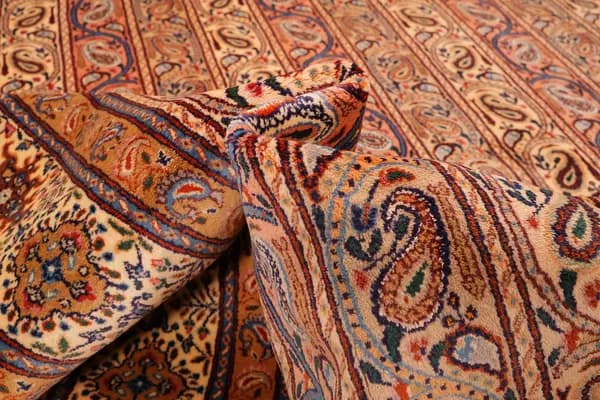
That crispness is a matter of fine knotting. At 321,000 to 380,000 knots per square metre, the weaver could change ground colour cleanly at each band and still keep the paisley edges sharp rather than blurred, which is what makes the striped layout read as rhythm instead of clutter. The pile is hand-spun wool over a cotton warp, clipped to 12 millimetres, low enough to hold the drawing tight and give the surface the light, even sheen Dorokhsh weavers are known for. Made by hand from start to finish, it carries the small variations that come with a wool spun rather than machine-drawn, which is part of where that sheen comes from.
A rug this size sits naturally under a dining table or anchoring a seating group in a living room, and the alternating rust and salmon bands hold their own against dark wood or pale oak alike, warming either without competing. Underfoot it is dense and firm, the tight, fine knotting built for a room that sees daily use rather than one kept for best. As daylight moves across it through the day, the sheen shifts band by band, so the same paisley rows catch the light differently morning to evening, and that quiet change is the sort of thing an owner keeps noticing long after the rug has settled into the room.
More on Dorokhsh rugs: origin, making and how to recognise a genuine piece
Superior craftsmanship
At 339 × 247 cm (8.37 m²) this is a very large rug. It carries a whole seating group with every furniture leg on it, or a dining table with the chairs pushed back. In a small room it becomes the floor rather than a rug.
Yes, knotted by hand — knot by knot on a loom, not machine-made. The density is 321,000 to 380,000 knots per square metre; across 8.37 m² that is roughly 2.7 to 3.2 million individual knots, every one of them tied by hand.
Hand-spun wool still carries its own lanolin, which keeps liquid sitting on the surface for a moment: blot quickly, with clear water and a light cloth, working inwards and without rubbing. Otherwise regular vacuuming along the pile is enough. Turn the rug once or twice a year so light and footfall reach it evenly.
We are in the Hamburg Speicherstadt. Come and see this rug in daylight, or write to us — a person answers.
Certificate included verifying origin, materials, and craftsmanship.
Ref: 915770