Belutsch
210 × 115 cm
545 €








518 €
Incl. VAT
In Stock · Ready to Ship
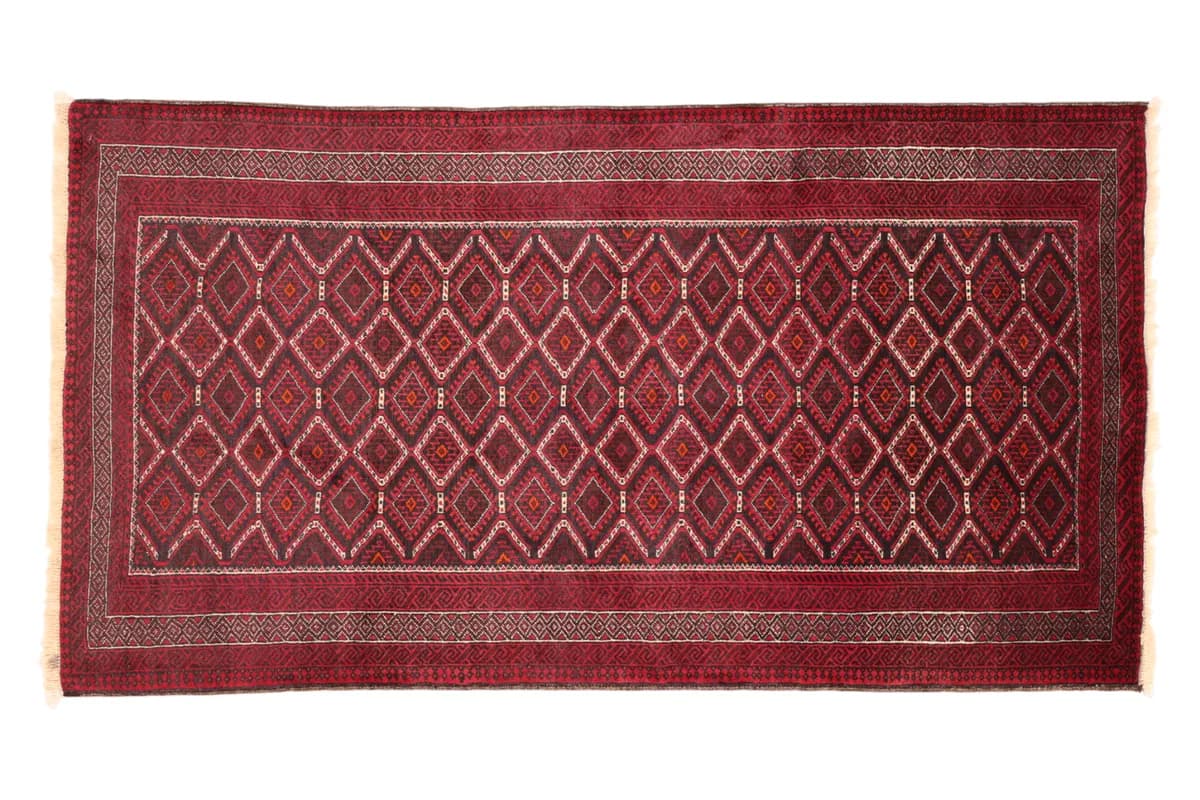
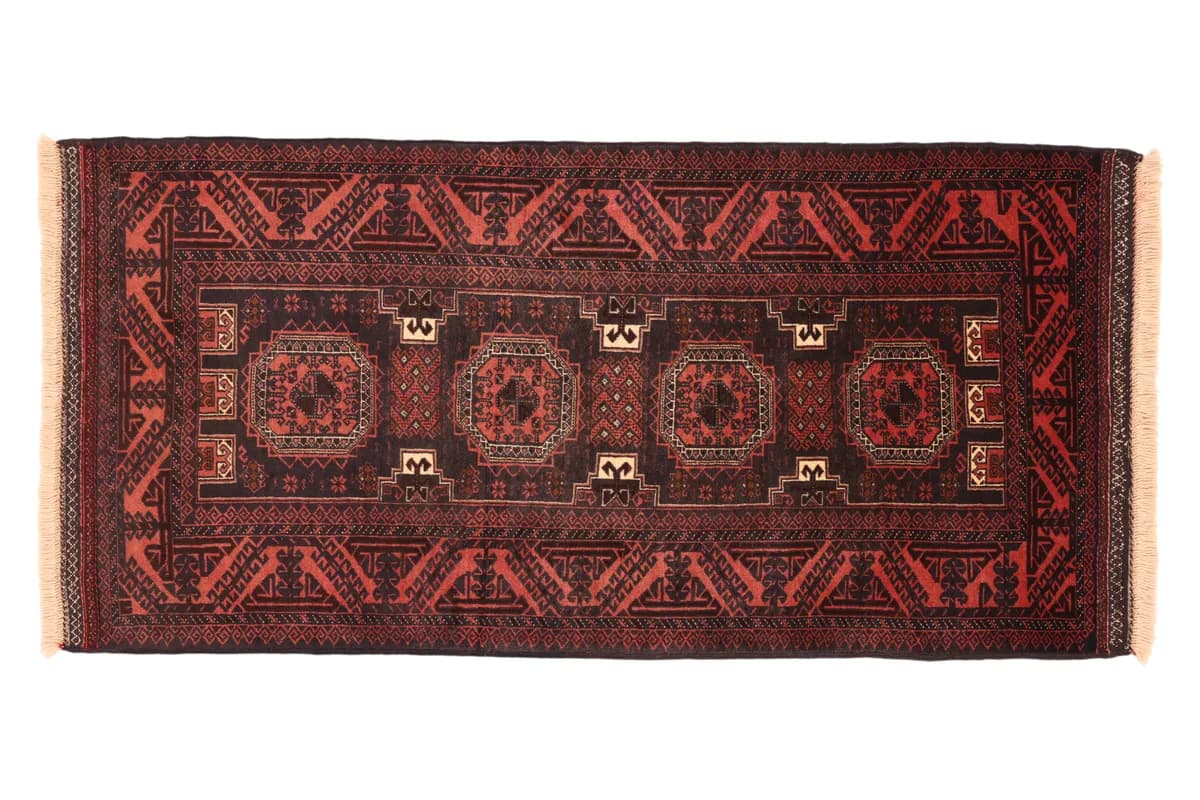
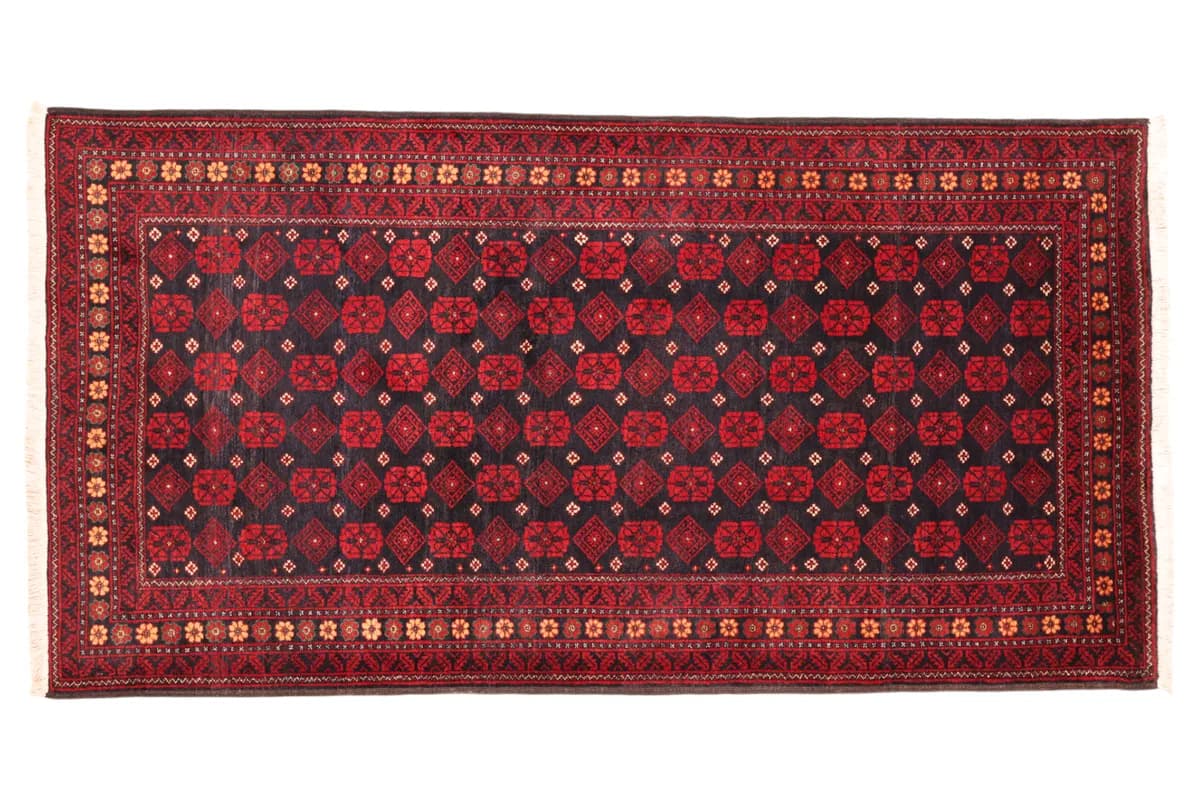
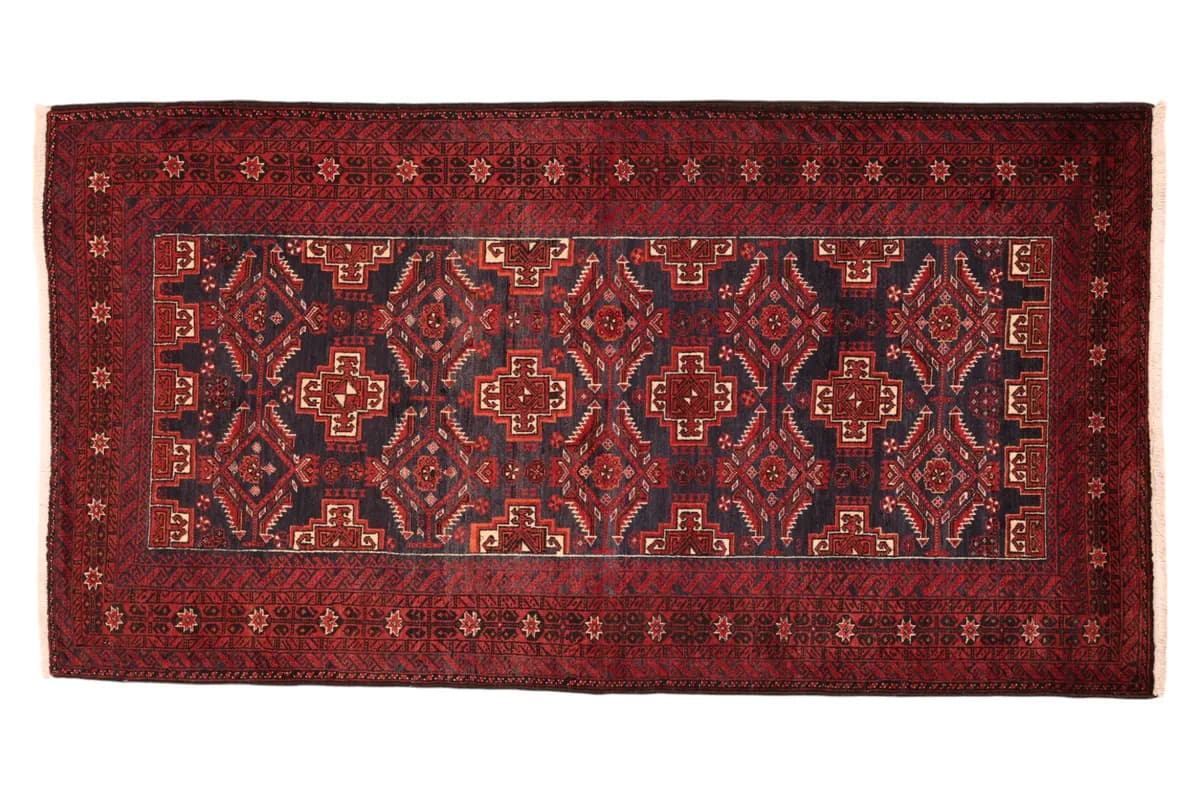
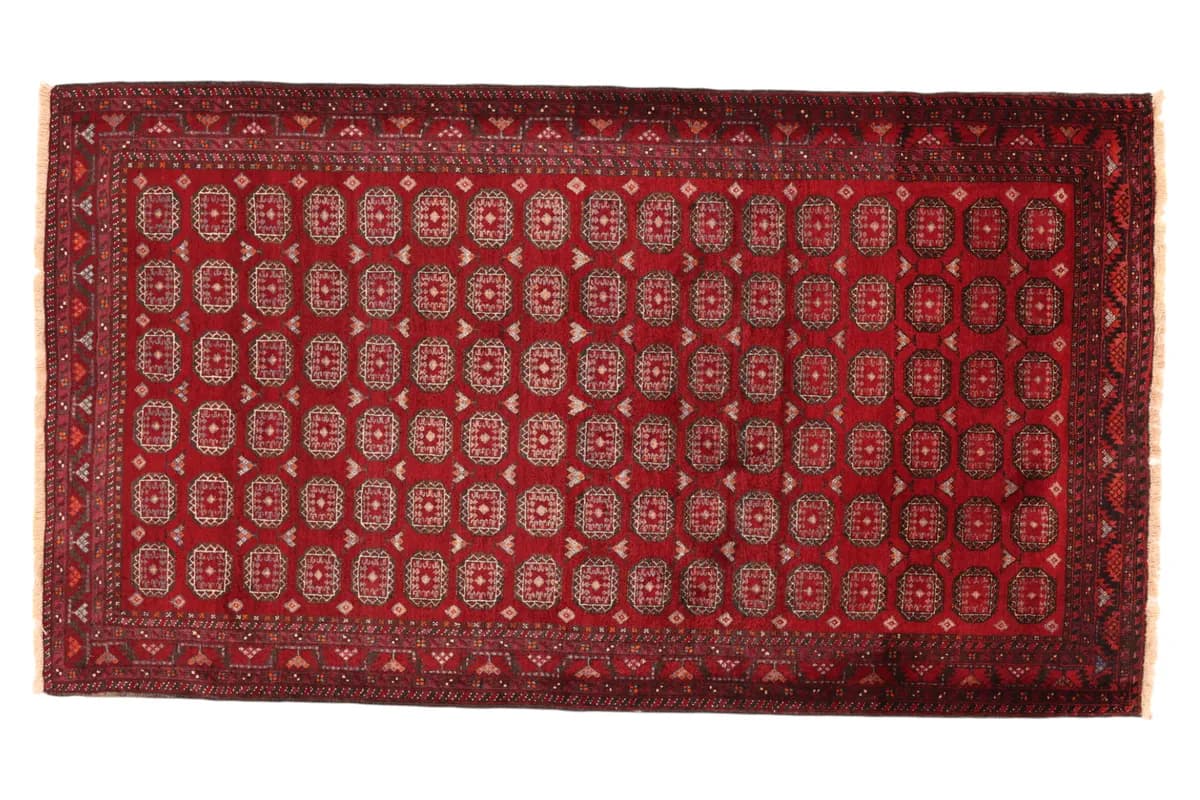
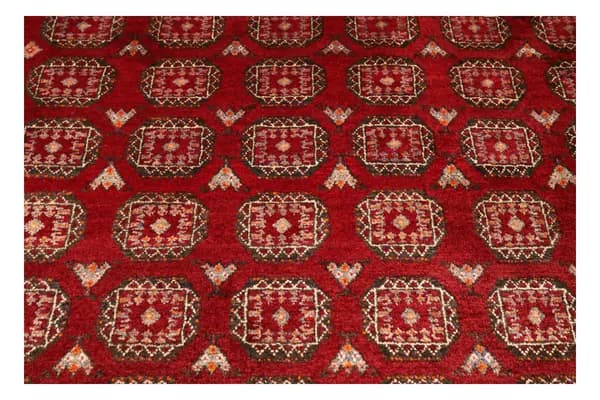
A Baluch rug, also written Belouch, in 193 x 108 cm (6'4" x 3'7"), from the tribal weavings of the borderlands of southeastern Iran. These are pieces knotted from memory rather than from a drawn plan, and they are known above all for bold geometry and deep, earthy colour, carried in wool the weaver spun herself. What marks this particular piece is how evenly that memory has been kept: row after row, without the small drifts of scale or colour that usually give a nomadic rug away.
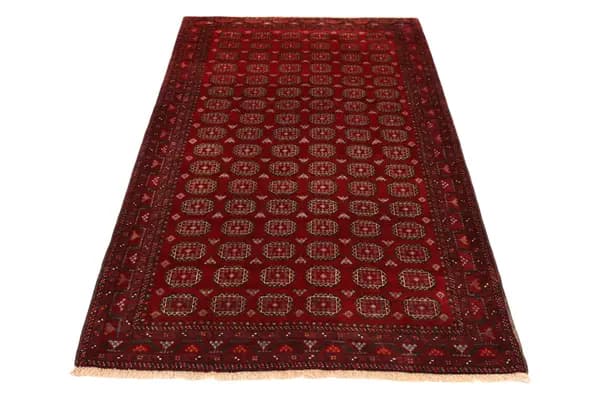
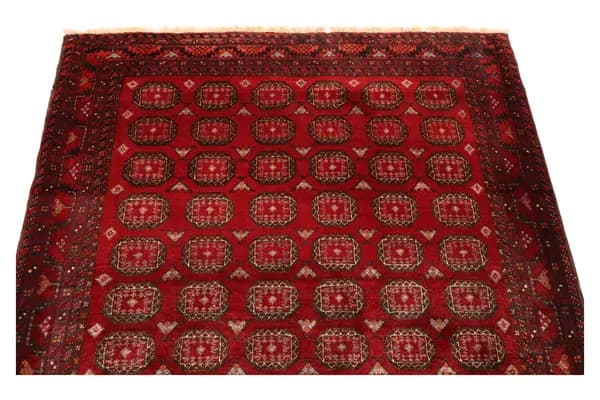
The field is a deep brick red, filled edge to edge with small octagonal guls in tight, disciplined rows, each one outlined in ivory and set against cream. There is no medallion and no centre to the design; the pattern simply repeats itself across the whole width, calm and unbroken. A narrow border in blackish-brown closes the field, worked in a zigzag and diamond band of red and cream with occasional touches of orange and blue, taking up perhaps a fifth of the total width. Look along any row of octagons and they hold their size and their spacing from one selvedge to the other, which is the detail a Baluch rug does not usually offer so consistently.
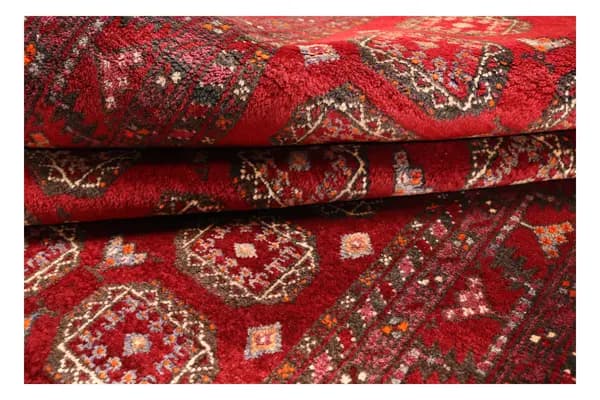
That regularity says something about the hand that made it. A tribal weaver working on a portable loom, without a cartoon to follow, is repeating a pattern purely from memory, row by row, often over several months, and small variation is the normal signature of that method. Here the weaver has held the grid to a fineness of 128,000 to 160,000 knots per square metre on a cotton warp, close enough that the octagons stay crisp rather than blurring at the edges, and kept the count even across the whole piece rather than letting it loosen towards the ends. The wool itself is hand-spun, which gives the surface a slightly uneven, matte texture even where the drawing is exact, and the pile sits at a firm 6 mm, dense enough to hold its edges under the knot.
At this size, the rug suits a hallway, a study, or the floor beside a bed rather than a large open room, and the brick red will hold its own against pale flooring without needing dark furniture to sit against. The dense, hand-spun wool feels firm and slightly textured underfoot, sturdy enough for a well-used passage rather than a room kept for best. Age of twenty to forty years has done nothing to soften that order in the grid, and in low light along a corridor the ivory outlines catch first, drawing the eye steadily down the whole length of the rug.
More on Baluch rugs: origin, making and how to recognise a genuine piece
Traditional weave
At 193 × 108 cm (2.08 m²) this is a small rug. It works beside a bed, in a reading corner, in front of a fireplace or as a mat by a door. It does not furnish a room; it makes a point in one.
Yes, knotted by hand — knot by knot on a loom, not machine-made. The density is 128,000 to 160,000 knots per square metre; across 2.08 m² that is roughly 270,000 to 330,000 individual knots, every one of them tied by hand.
Hand-spun wool still carries its own lanolin, which keeps liquid sitting on the surface for a moment: blot quickly, with clear water and a light cloth, working inwards and without rubbing. Otherwise regular vacuuming along the pile is enough. Turn the rug once or twice a year so light and footfall reach it evenly.
We are in the Hamburg Speicherstadt. Come and see this rug in daylight, or write to us — a person answers.
Certificate included verifying origin, materials, and craftsmanship.
Ref: 808157