Belutsch
179 × 94 cm
779 €
467 €
Incl. VAT
In Stock · Ready to Ship
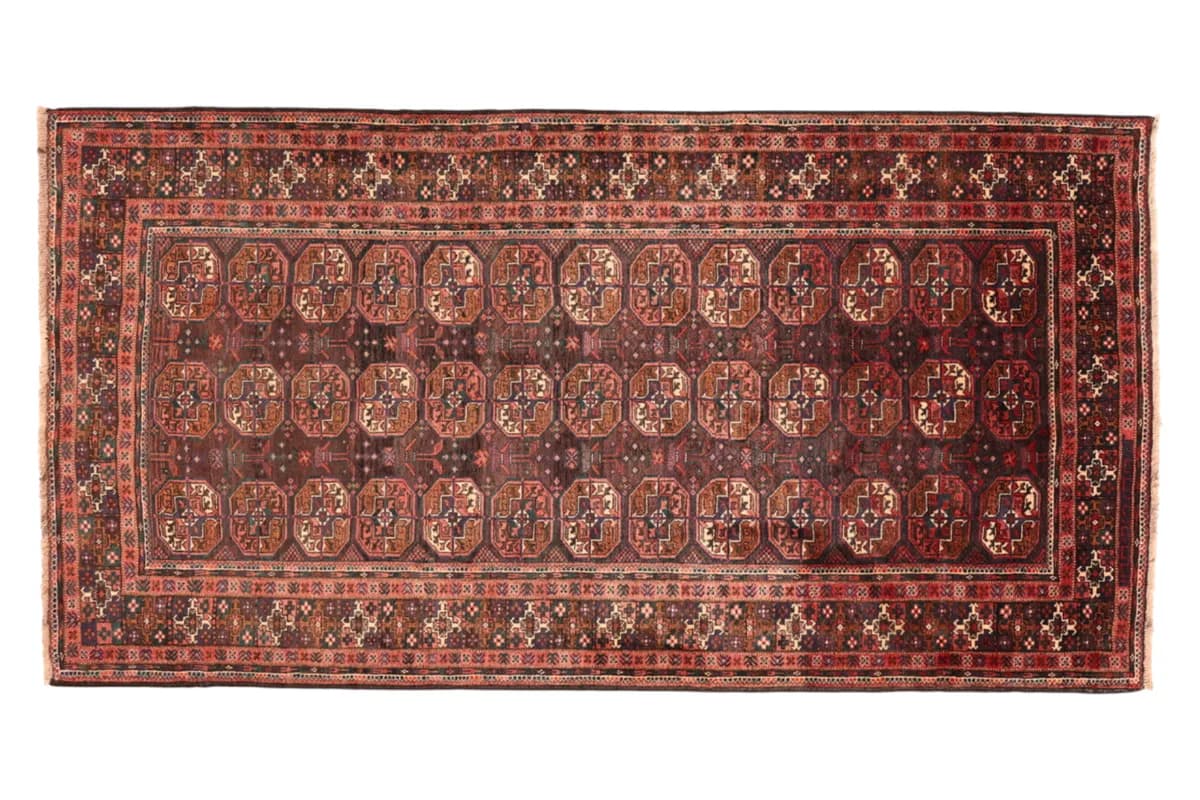
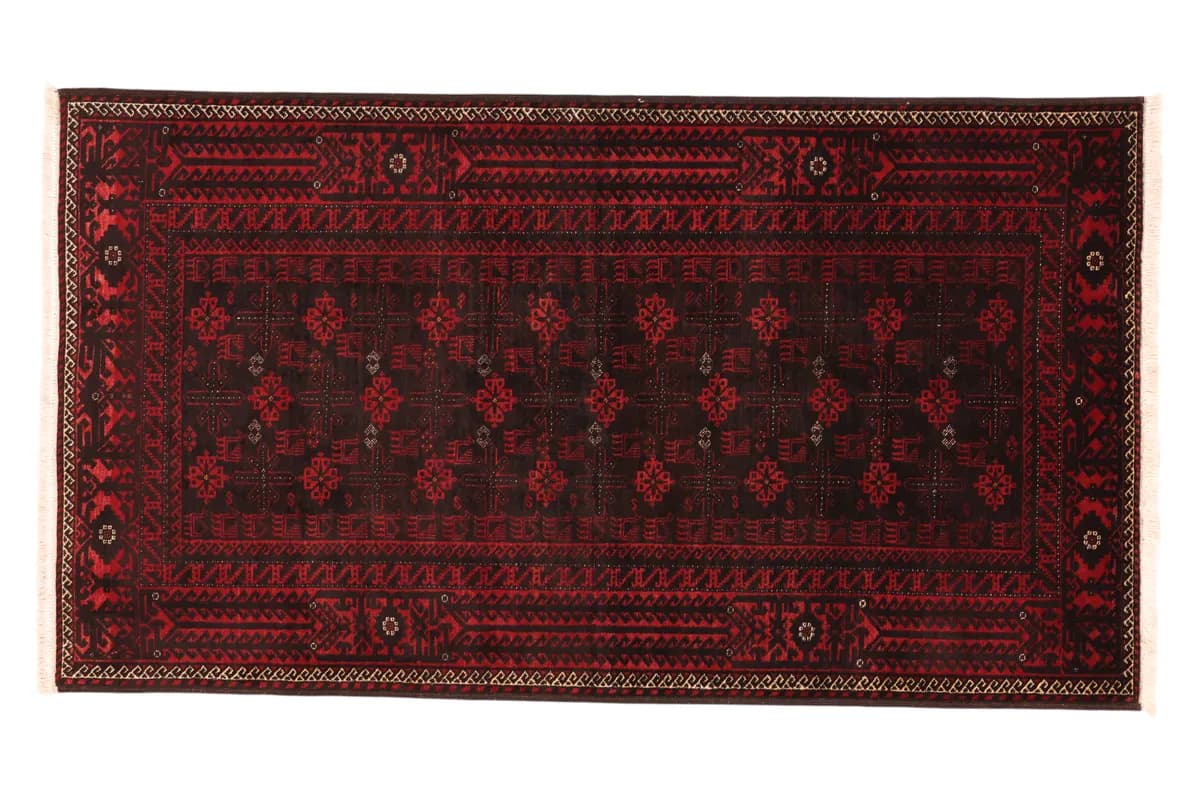
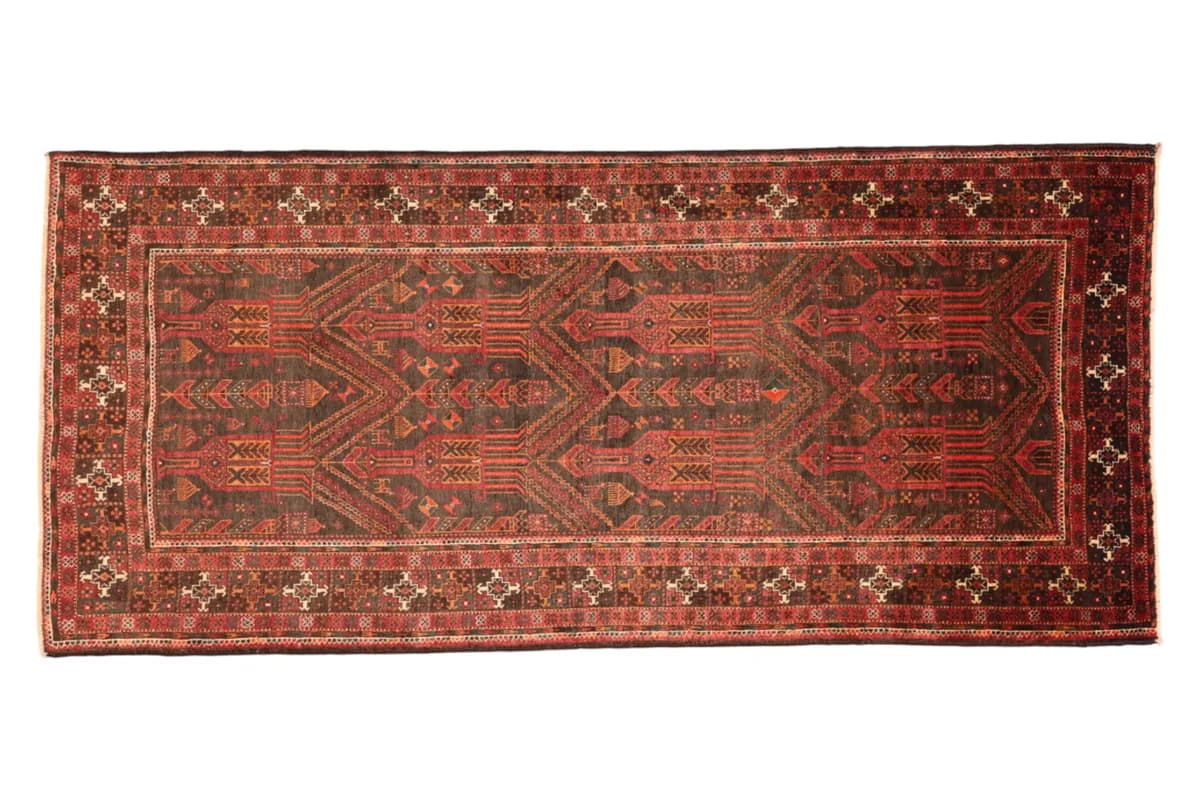
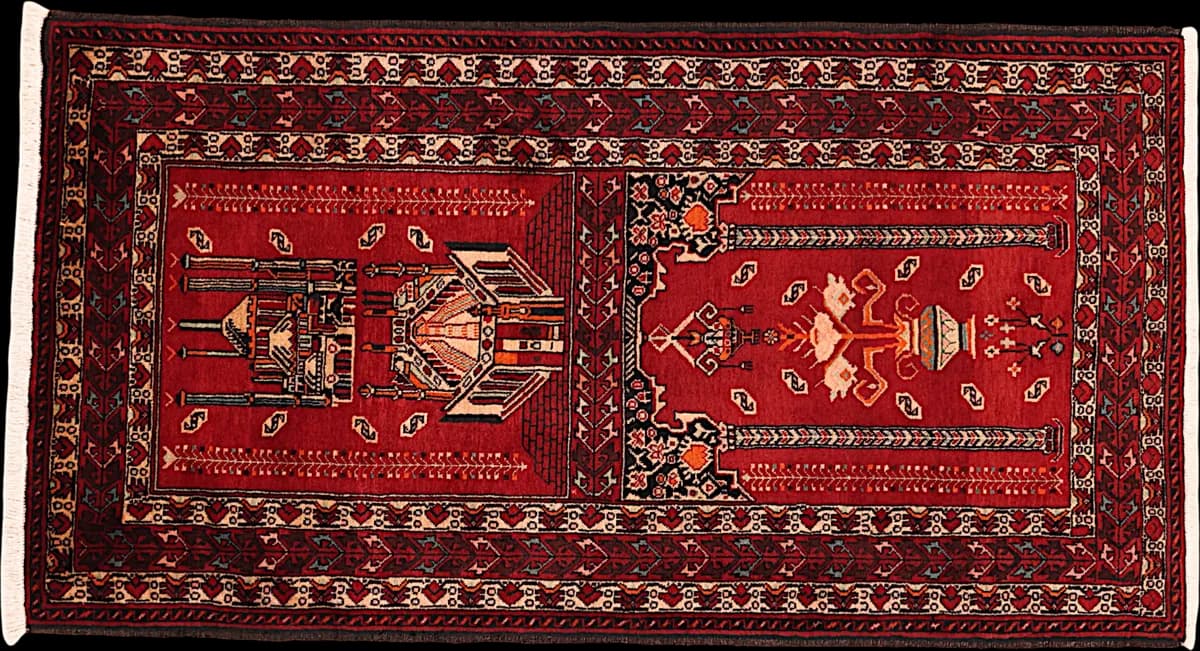
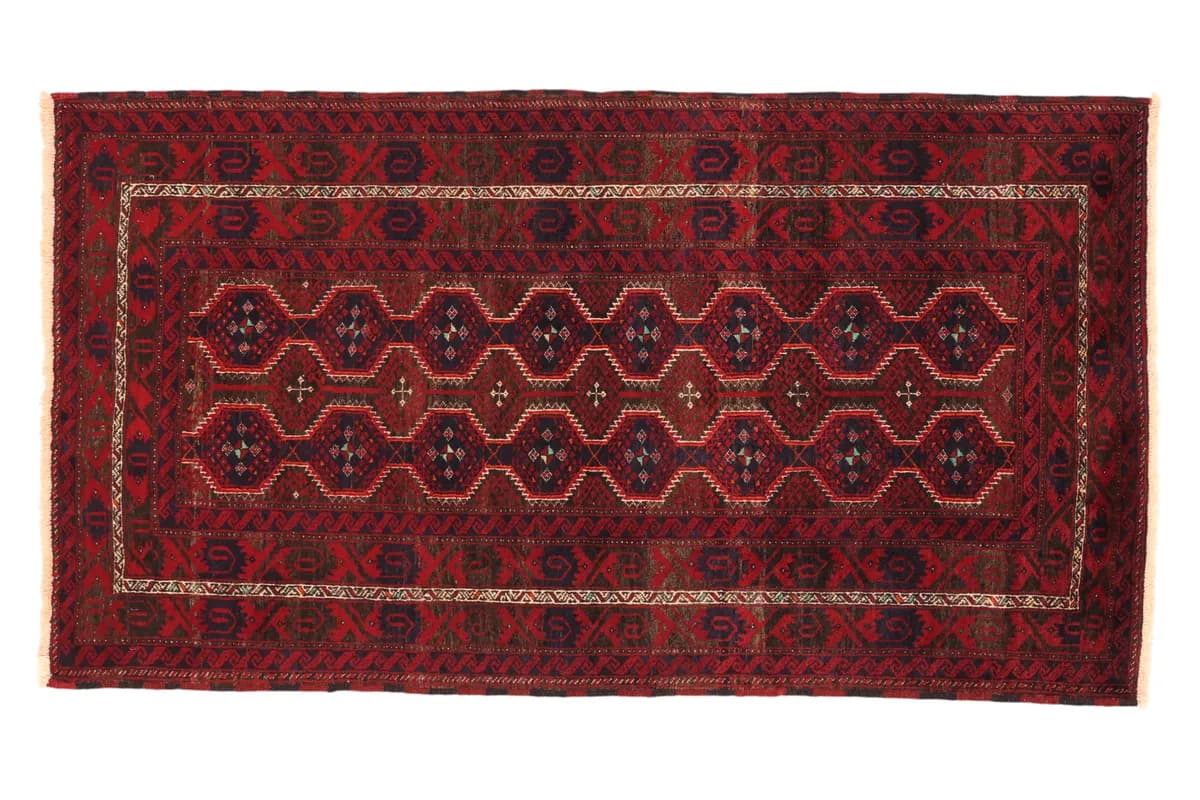
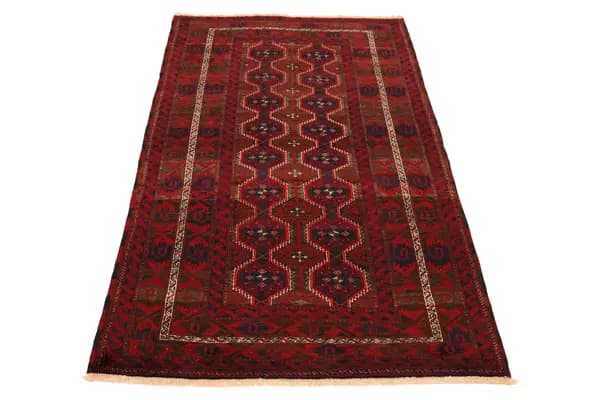
A Baluch rug, hand-knotted by nomadic weavers in the borderlands of south-eastern Iran, measuring 174 x 94 cm (5'9" x 3'1"). These are tribal weavings, made from memory rather than a drawn plan, and known for their earthy palette of deep red and indigo. Many classic pieces carry a single prayer-niche design; this one instead runs a continuous pair of medallion rows the length of the rug, a variation that belongs to the same Turkmen-Baluch tradition but reads quite differently on the floor.
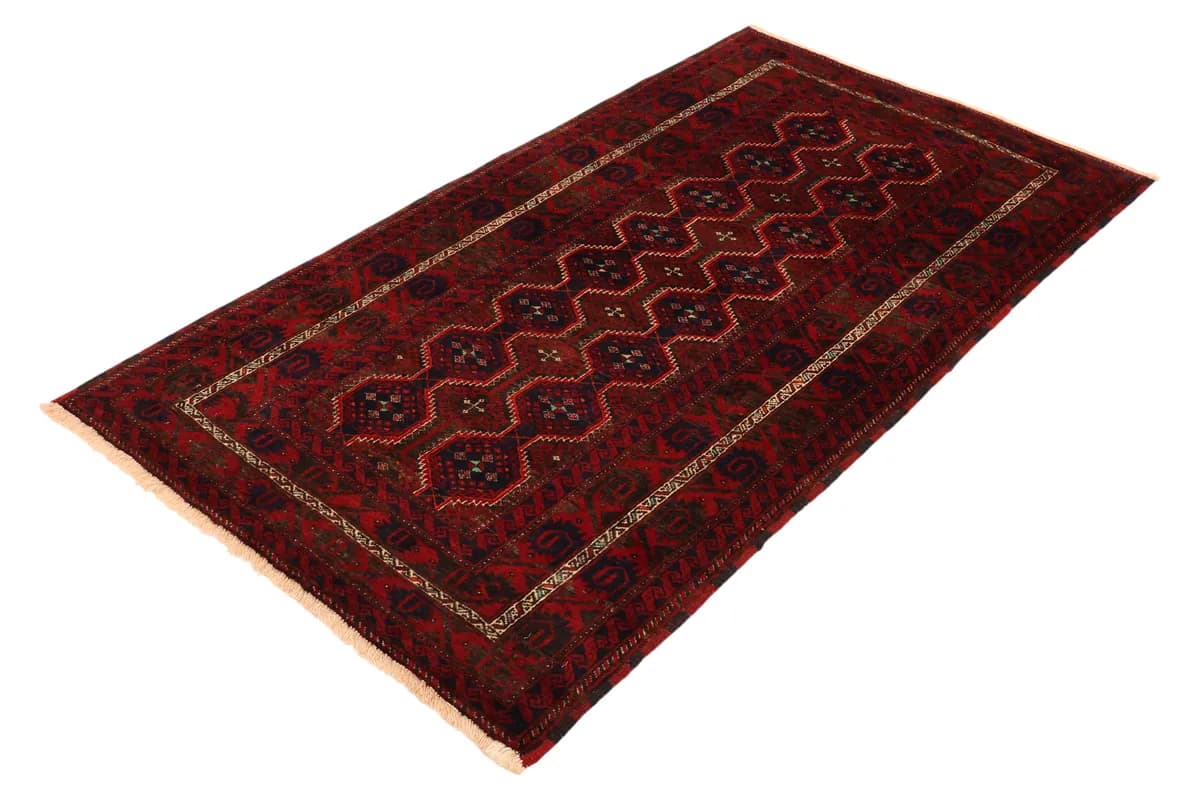
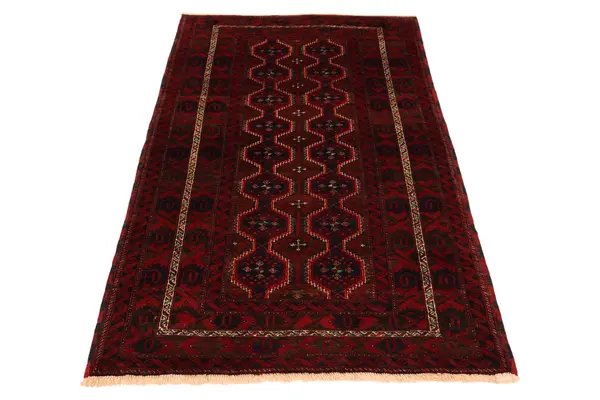
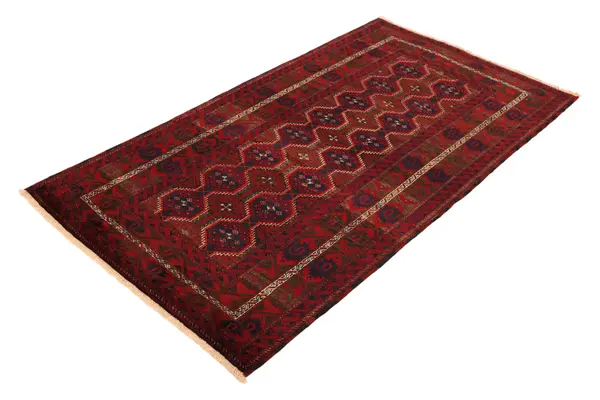
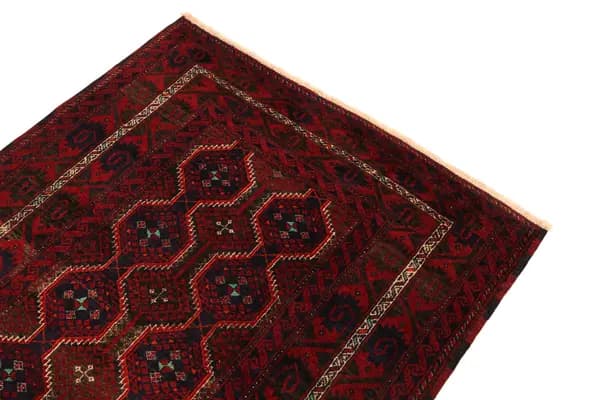
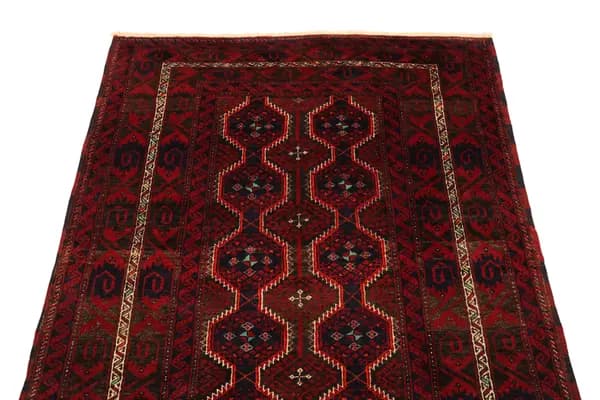
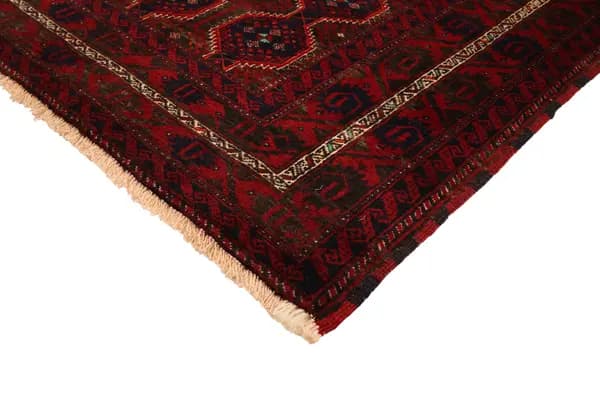
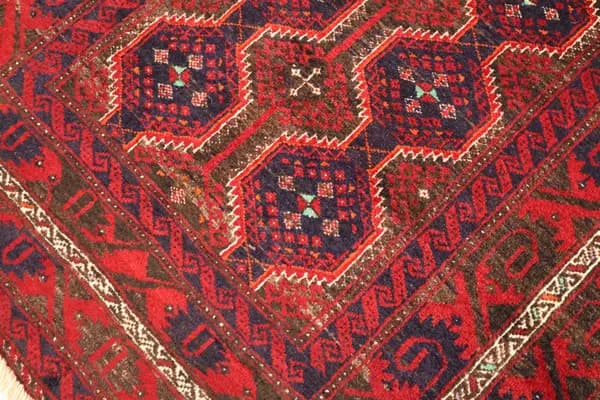
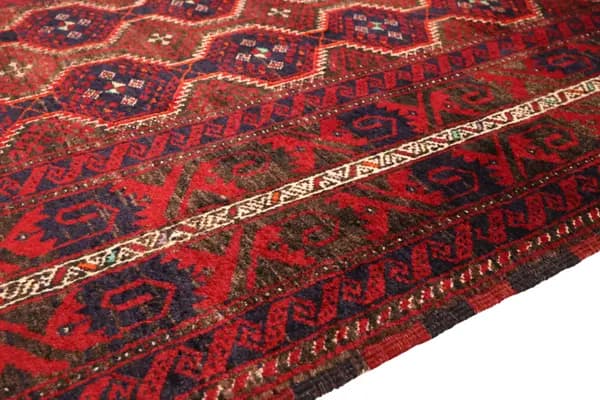
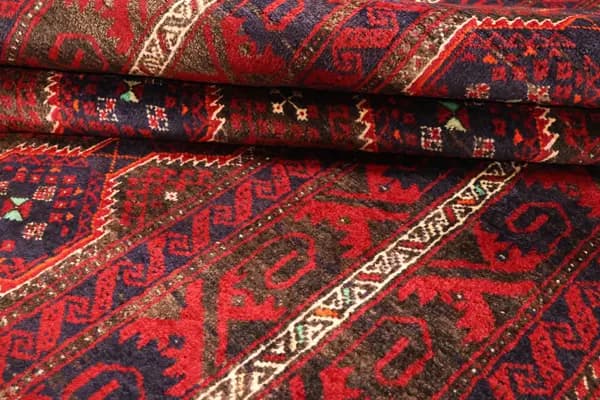
The field sits in a dark, brick-toned red, shading into patches of near-brown. Across it run two parallel lines of navy diamond medallions, connected end to end, each one holding a small cream, orange or turquoise motif at its centre. Between the two rows, small cream cross-shaped ornaments repeat at regular intervals, filling the ground rather than sitting apart from it. A layered border in red, navy and cream, built from zigzag bands and cloud-band motifs, runs around the whole piece and takes up close to a fifth of its width, standing out clearly against the darker field within.
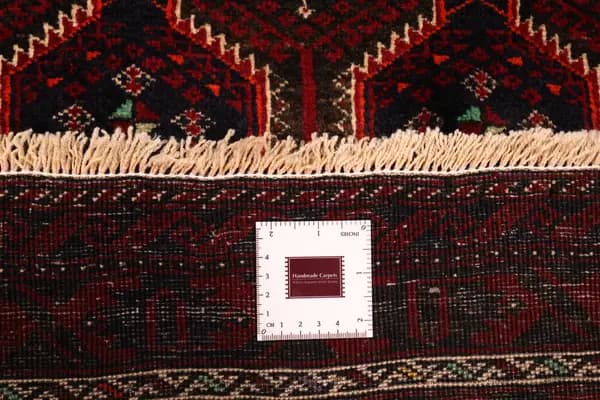
The pile is hand-knotted in handspun wool on a cotton warp, at a density of 128,000 to 160,000 knots per square metre. Handspun wool is thicker and less even than machine-spun yarn, and at this density it favours bold, angular shapes over fine curves, which is exactly why the medallions and border motifs here are sharp-edged rather than rounded. The surface takes its matte, textured look from the same handspun wool, with no sheen to soften the geometry. At twenty to forty years old, the rug has already been lived with, and the wool has the settled, slightly irregular character that only comes from a hand working without a fixed template.
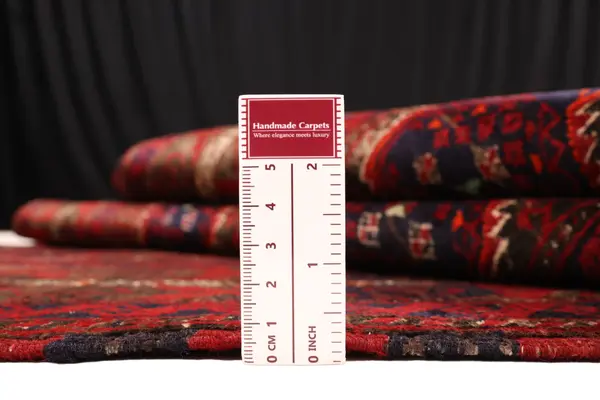
At this size the rug suits a hallway, a landing, or the floor beside a bed, somewhere it will be seen close up rather than across a room. The brick red and dark brown warm a pale wooden floor, while the navy medallions keep the whole piece grounded rather than busy, and the small turquoise and orange touches give the eye something to return to. Underfoot it is dense and firm at six millimetres of pile, built for a well-used passage rather than a room kept for best. As daylight moves across it through the day, the cream border and the small accent motifs are what catch the light first.
More on Baluch rugs: origin, making and how to recognise a genuine piece
Traditional weave
At 174 × 94 cm (1.64 m²) this is a small rug. It works beside a bed, in a reading corner, in front of a fireplace or as a mat by a door. It does not furnish a room; it makes a point in one.
Yes, knotted by hand — knot by knot on a loom, not machine-made. The density is 128,000 to 160,000 knots per square metre; across 1.64 m² that is roughly 210,000 to 260,000 individual knots, every one of them tied by hand.
Hand-spun wool still carries its own lanolin, which keeps liquid sitting on the surface for a moment: blot quickly, with clear water and a light cloth, working inwards and without rubbing. Otherwise regular vacuuming along the pile is enough. Turn the rug once or twice a year so light and footfall reach it evenly.
We are in the Hamburg Speicherstadt. Come and see this rug in daylight, or write to us — a person answers.
Certificate included verifying origin, materials, and craftsmanship.
Ref: 929321