Ghashghai
277 × 171 cm
2.850 €
4.050 €
Incl. VAT
In Stock · Ready to Ship
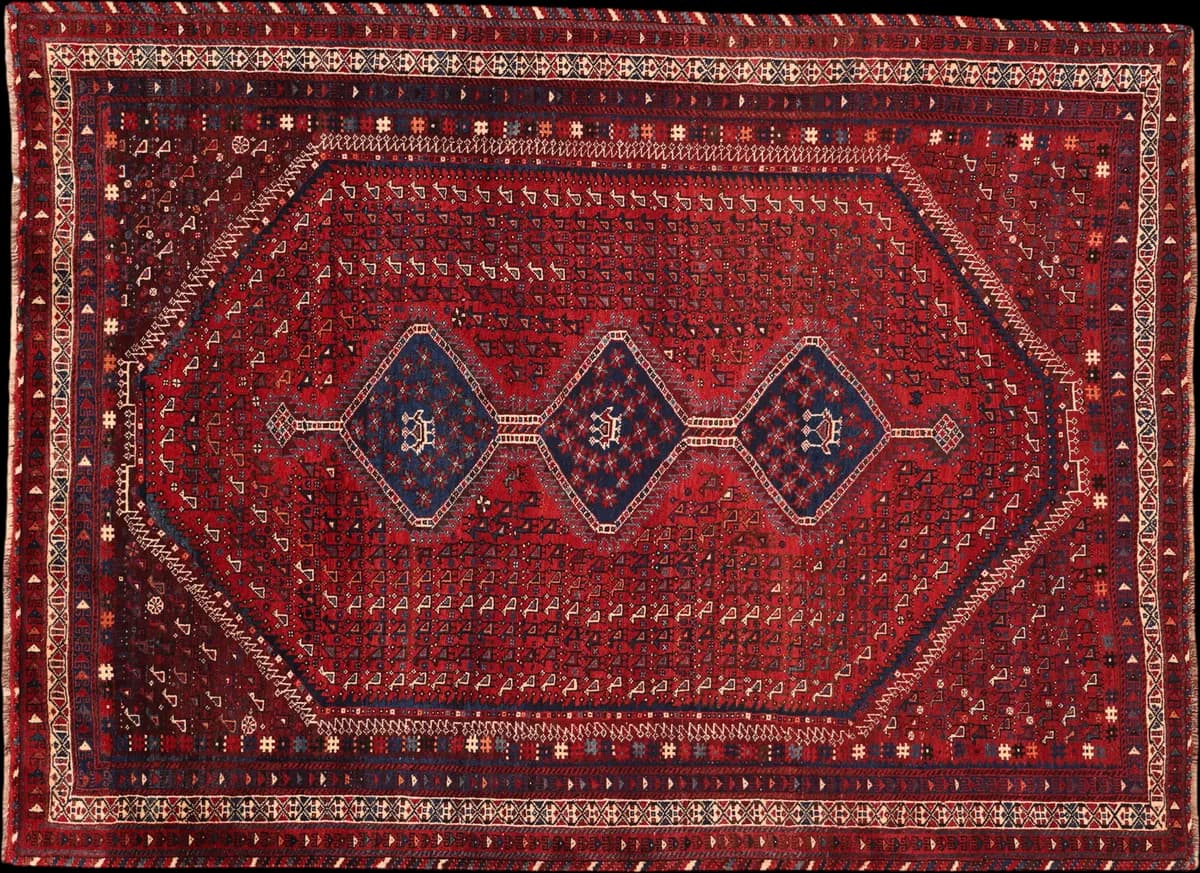
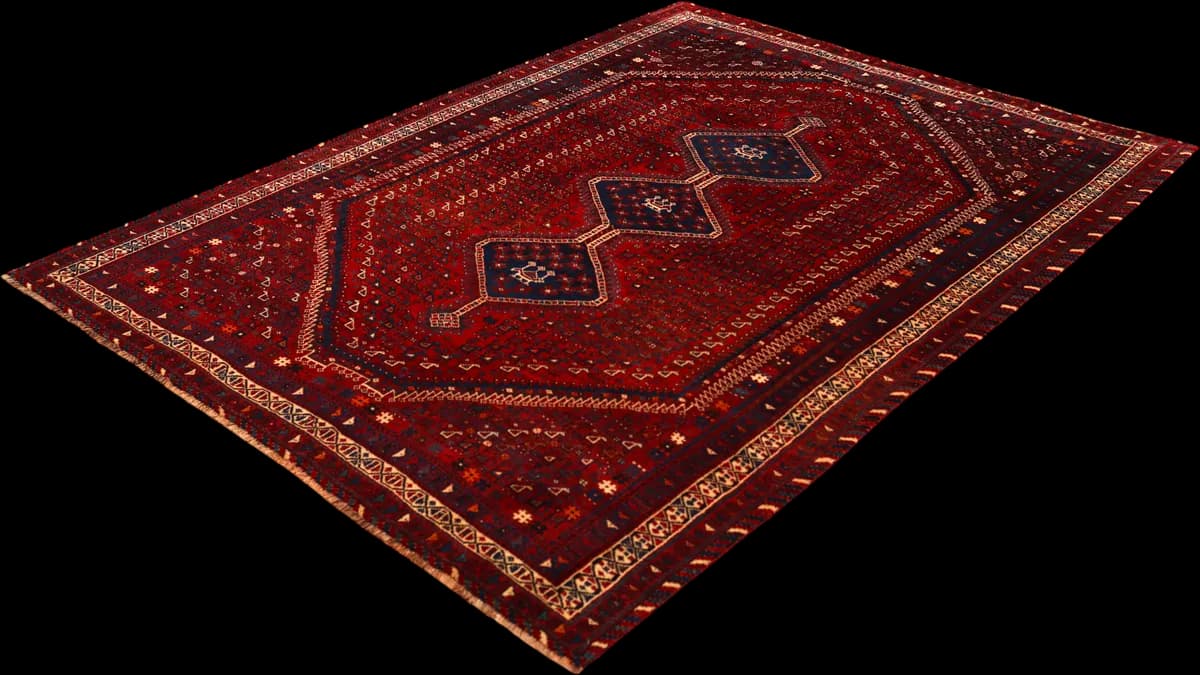
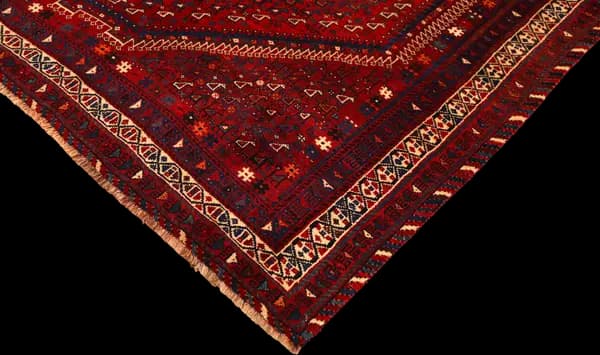
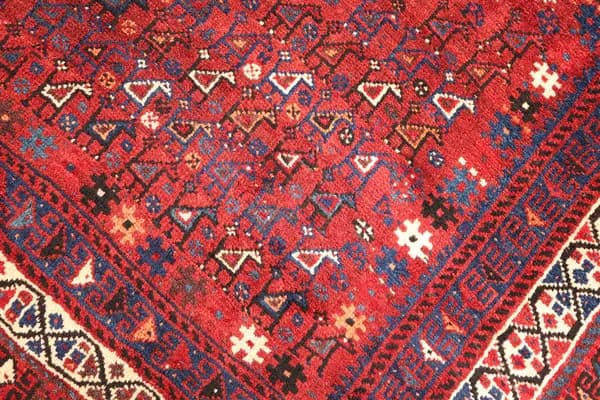
A Qashqai tribal rug, 286 x 209 cm (9'4" x 6'10"), woven by the nomadic confederation that moves seasonally between the highlands of Fars and the lowlands near Shiraz. Their weavings are often called the most celebrated of all Persian tribal rugs, prized for bold rosette medallions, animal figures and a boteh larger and more stylised than elsewhere. Here the medallions do something the type rarely does: they join hands.
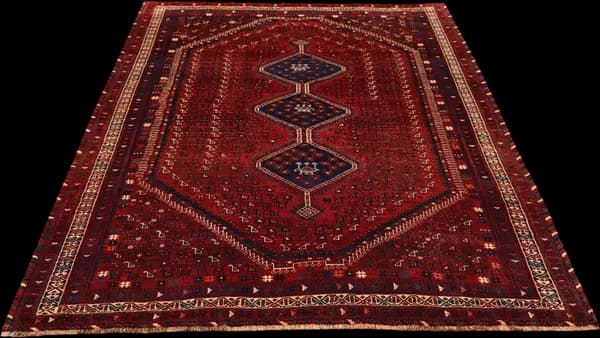
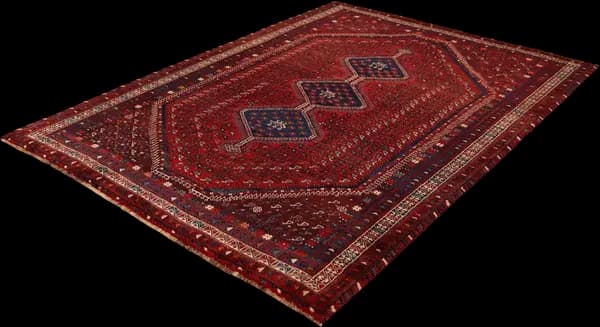
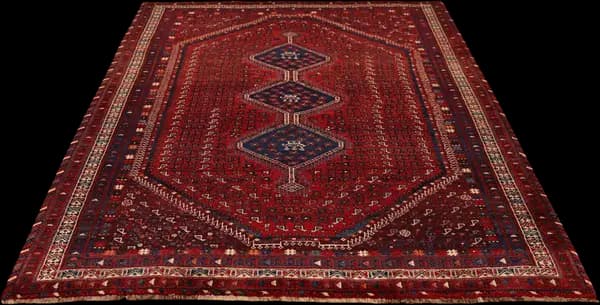
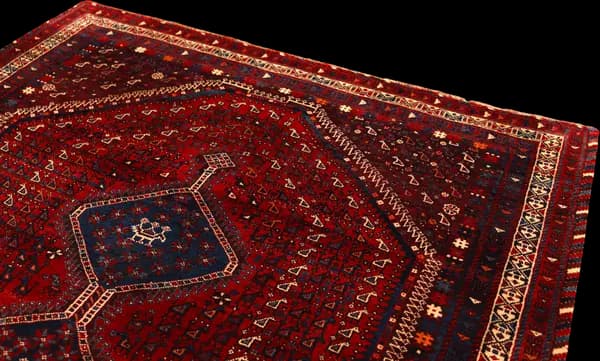
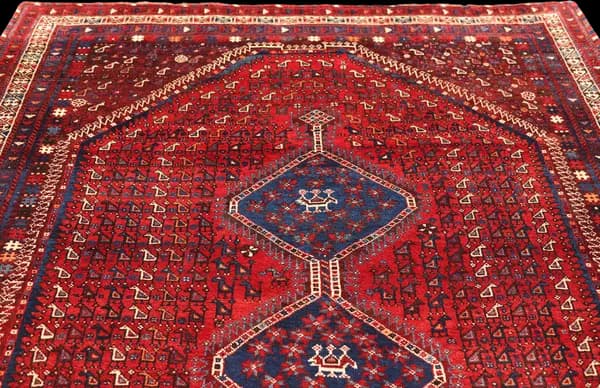
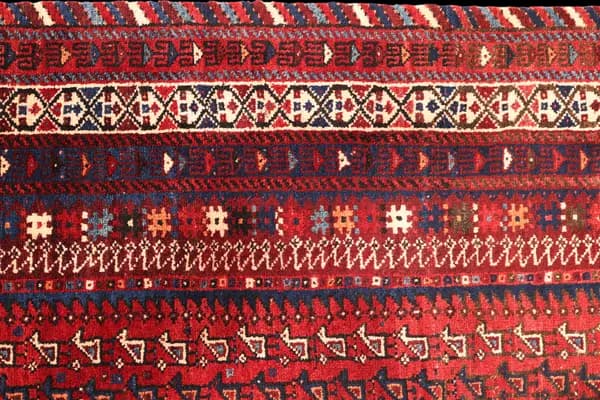
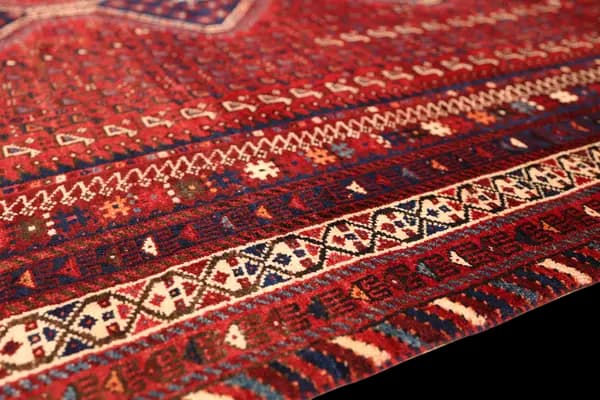
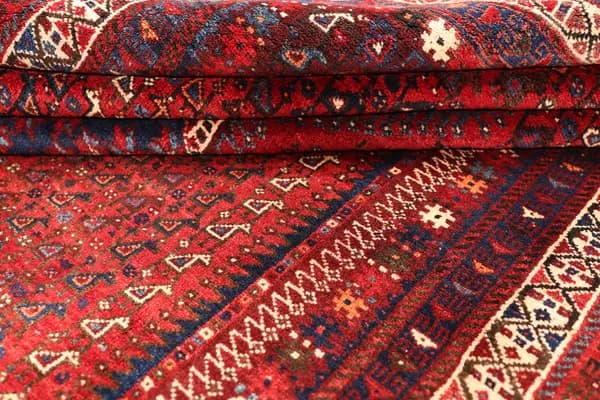
The first impression is a deep, warm brick red, weinrot in its darker folds, out of which three navy-blue diamond medallions rise in a row. They are not scattered loosely across the field but linked directly to one another by narrow diamond-shaped struts, so the eye reads them as one continuous chain rather than three separate ornaments. Around them the red ground is dense with small tribal figures, birds, hooked diamonds, stars, in ivory, light blue, rust-orange and dark brown. A stepped hexagonal frame holds the whole composition, and a wide border in dark red and navy, marked by a cream zigzag band, closes it off from the field.
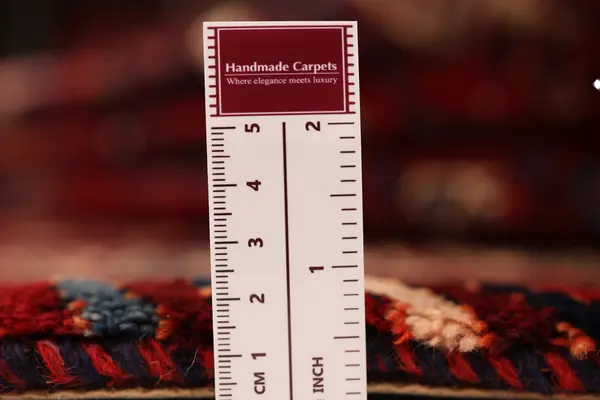
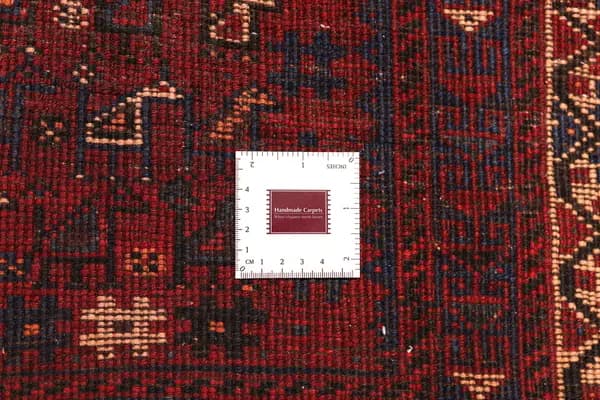
This chained arrangement is a recognised Qashqai device, but it only works because the rug was knotted freehand, from memory, without a drawn plan. A weaver working from a cartoon repeats a motif at fixed intervals; a weaver working from memory can let one medallion run into the next, and here she has, turning three shapes into a sequence rather than a pattern. The wool is hand-spun for both warp and pile, giving the surface its slightly uneven, matte character and a visible pile height of 12 mm. At a density of 128,000 to 160,000 knots per square metre, moderate for the region, the weaver could work quickly enough to keep the whole sequence in mind from start to finish, which is exactly what this piece shows.
At this size the rug suits a dining table or a seating group in a living room, with room enough at the edges for chairs to move freely. The red holds its depth against dark furniture and warms a pale wooden floor without needing help from anything else in the room. Underfoot it is dense and slightly springy, wool that was spun and knotted for daily use rather than display, and it takes a busy household well. As the light shifts across it through the day, the chain of medallions is the thing you keep coming back to.
More on Qashqai rugs: origin, making and how to recognise a genuine piece
Traditional weave
At 286 × 209 cm (5.98 m²) this is a large rug. It sits under a seating group with the front legs of sofa and chairs on it, or under a dining table for four. A table for six wants about 80 cm of clearance all round, and needs more.
Yes, knotted by hand — knot by knot on a loom, not machine-made. The density is 128,000 to 160,000 knots per square metre; across 5.98 m² that is roughly 770,000 to 960,000 individual knots, every one of them tied by hand.
Hand-spun wool still carries its own lanolin, which keeps liquid sitting on the surface for a moment: blot quickly, with clear water and a light cloth, working inwards and without rubbing. Otherwise regular vacuuming along the pile is enough. Turn the rug once or twice a year so light and footfall reach it evenly.
We are in the Hamburg Speicherstadt. Come and see this rug in daylight, or write to us — a person answers.
Certificate included verifying origin, materials, and craftsmanship.
Ref: 939700