Ghashghai
250 × 145 cm
1.634 €






4.950 €
Incl. VAT
In Stock · Ready to Ship
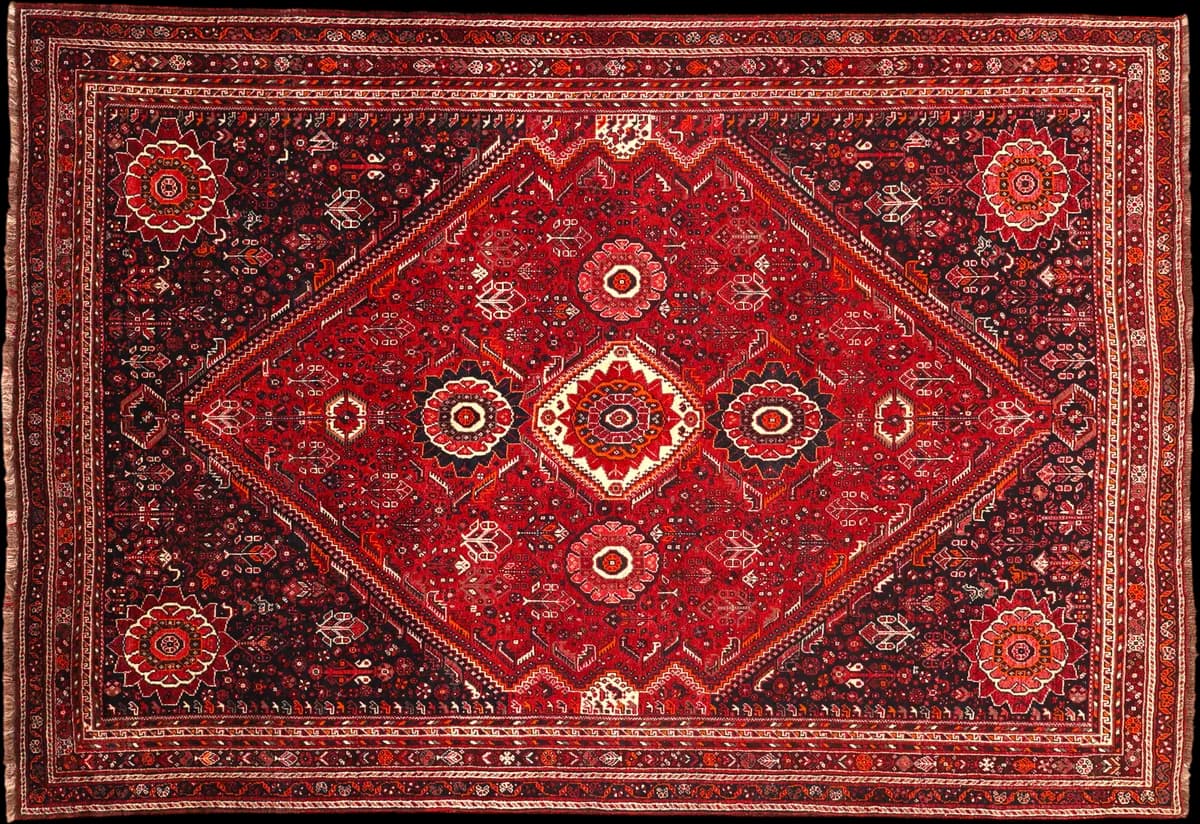
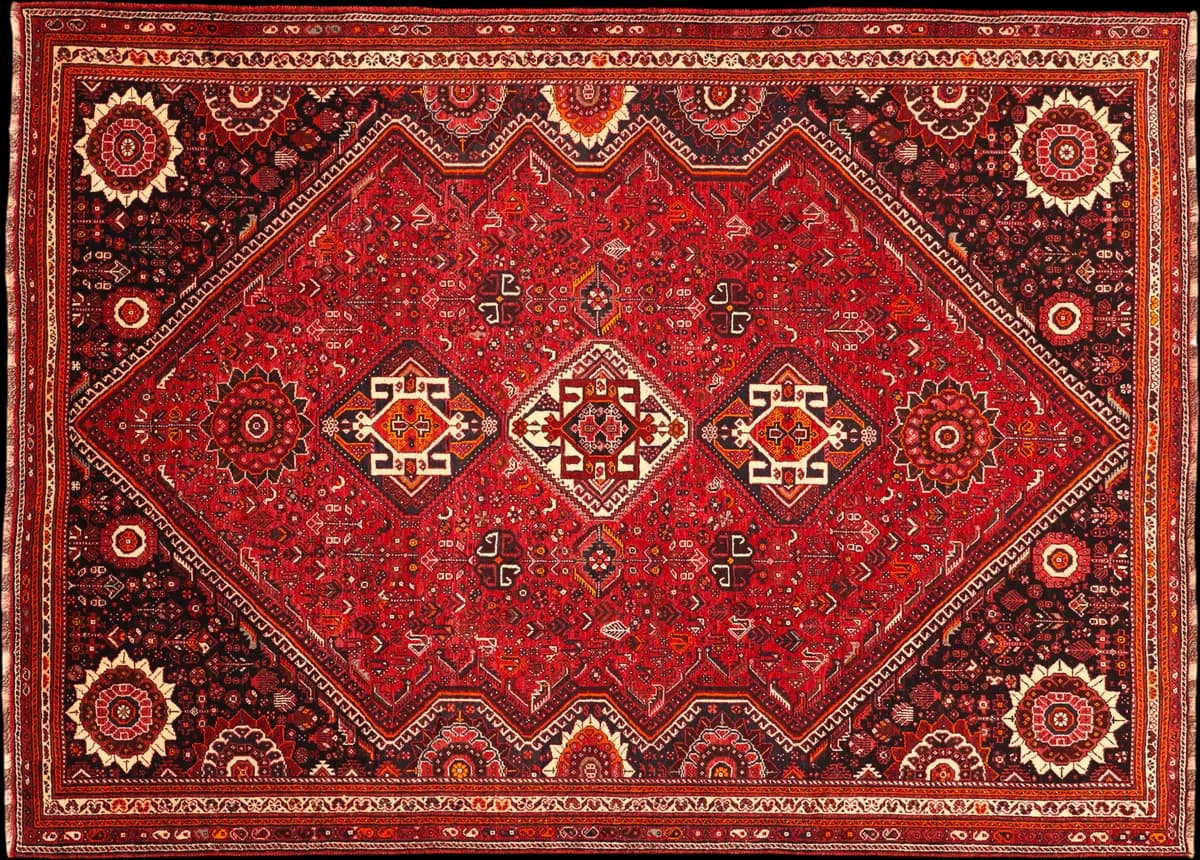
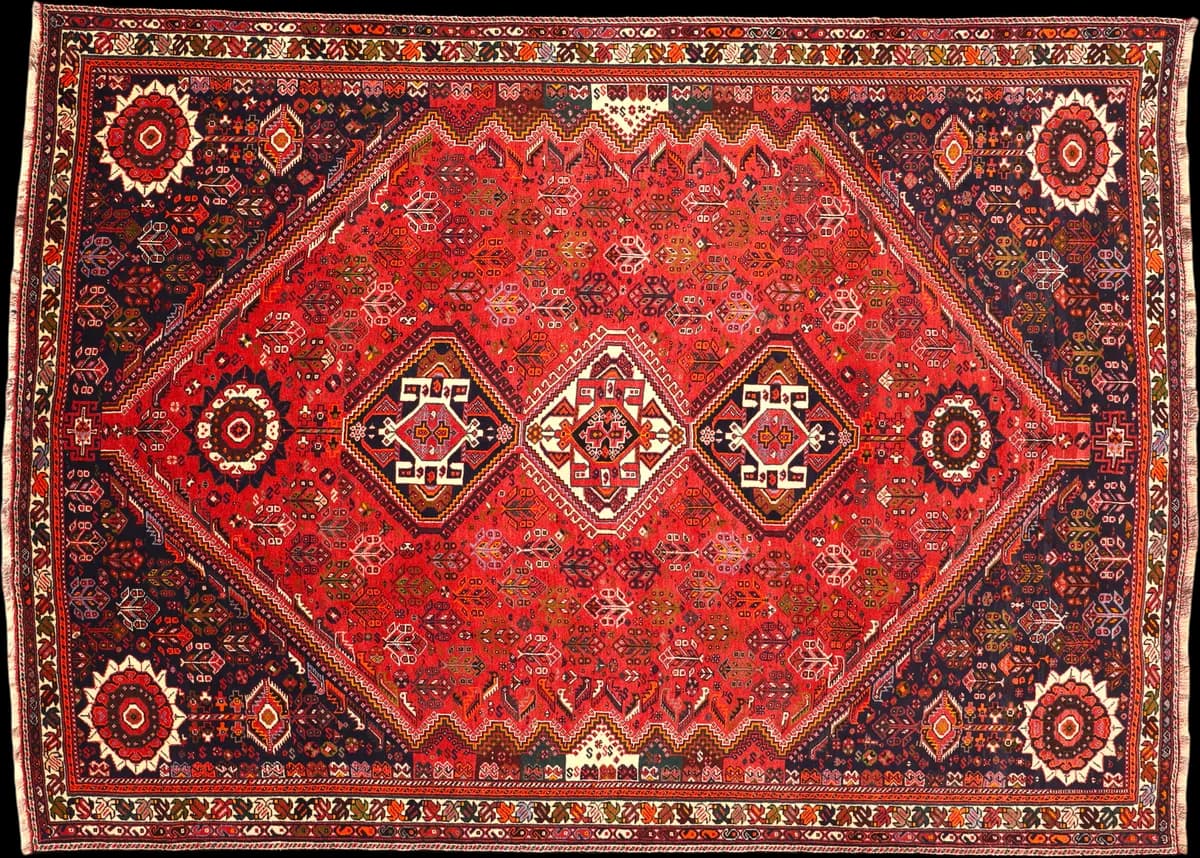
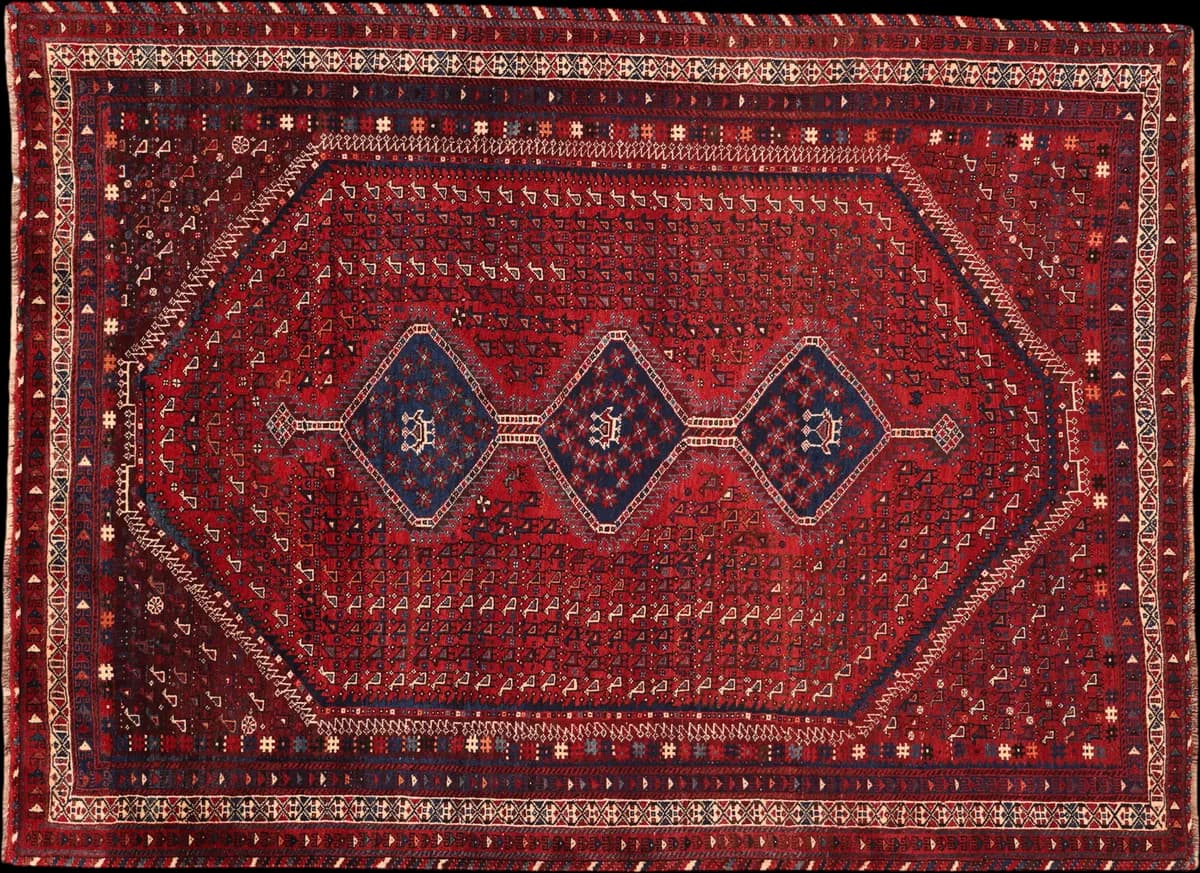
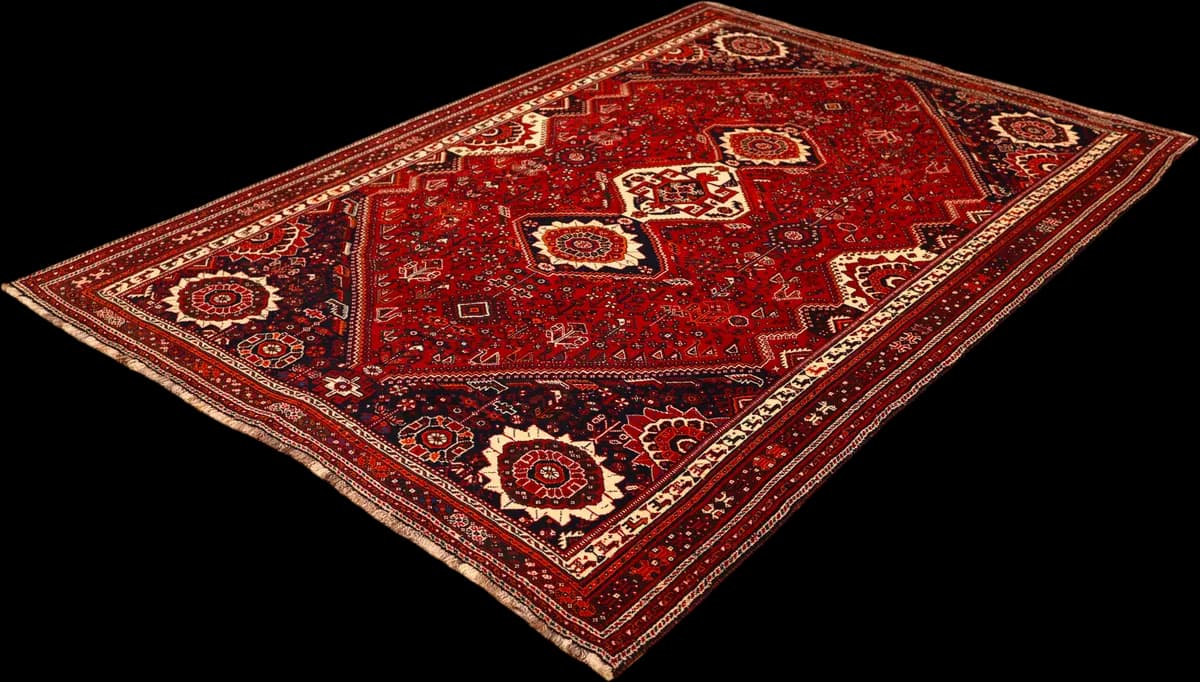
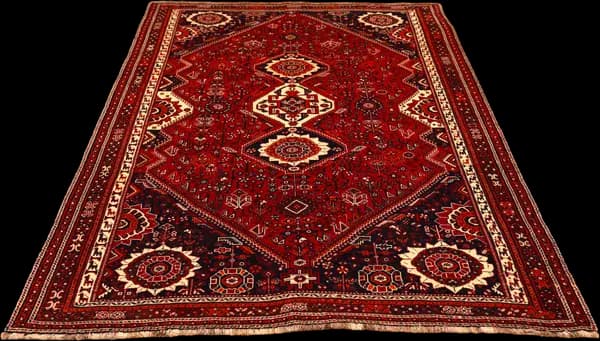
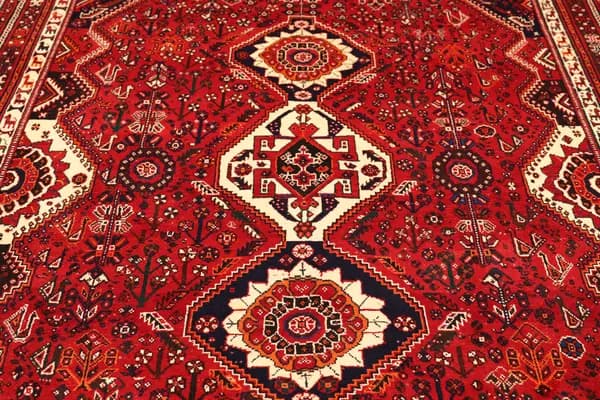
This is a Qashqai rug, also written Ghashghai, a nomadic tribal weaving from the Fars province of southern Iran, 314 x 211 cm (10'4" x 6'11"). The Qashqai moved seasonally between the highlands and the warmer plains near Shiraz, and their rugs are counted among the best known of all Persian tribal weavings, prized for bold medallions, animal figures and a boteh larger and more stylised than the form takes elsewhere. This piece carries that vocabulary but organises it with unusual discipline for a tribal field.
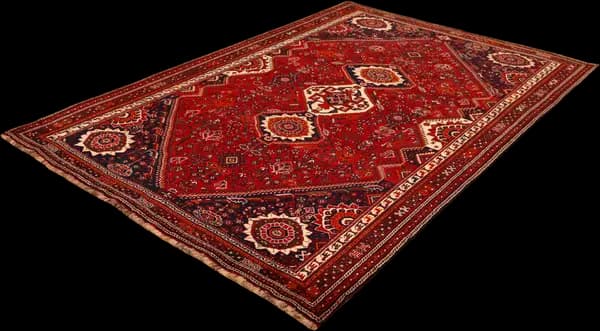
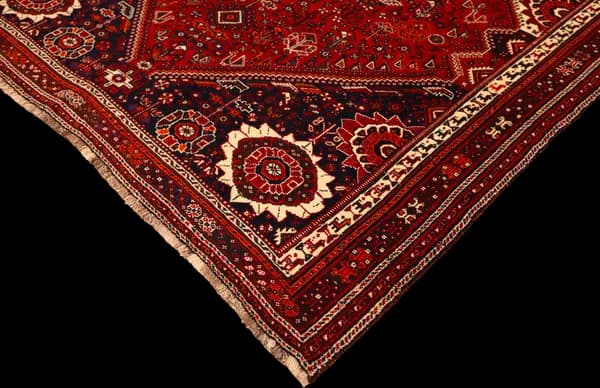
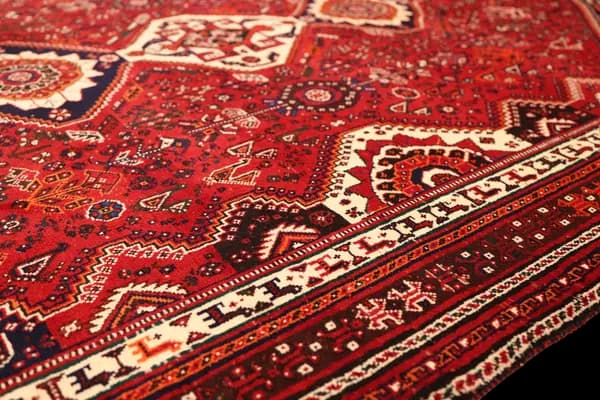
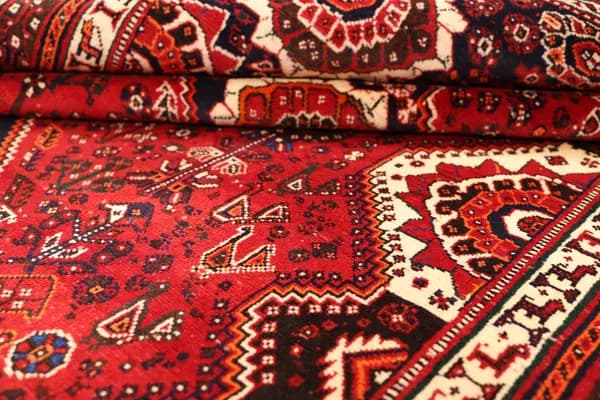
The first impression is a deep brick red, carried by a stacked column of ivory diamond medallions running down the centre, flanked by two smaller diamonds of the same form. Around them the red ground is scattered with small botehs and rosettes, held within a lattice of dark navy diamonds. In each corner a navy spandrel holds a large ivory rosette medallion, four in total, giving the layout a symmetry that reads almost architectural against the looser scatter typical of the type. A narrow border of dark red, ivory and navy stripes, with small geometric motifs, closes the field without competing with it.
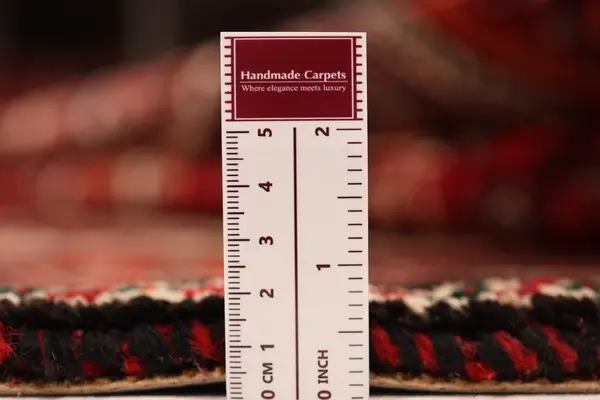
It is hand-knotted, the pile hand-spun wool over a natural wool warp, at a density of 128,000 to 160,000 knots per square metre. That is a mid-fine count for a tribal weaving, worked on a portable loom without a drawn cartoon to follow, entirely from the weaver's memory. Holding four corner rosettes and a central medallion column in balance under those conditions is a real feat of eye and recall, and it is what gives this rug its structured, deliberate look rather than the more freely scattered fields common to Qashqai work. The pile stands 12 mm, giving the matte, slightly textured surface where individual knots remain visible underfoot.
At 314 x 211 cm this rug suits a living or dining room, comfortably under a sofa group or a table for six. The brick red holds its own against dark wood or leather and warms a pale floor without overwhelming it, while the ivory medallions keep the eye moving rather than settling in one place. Underfoot the wool is dense and firm, wearing well under regular use rather than asking to be spared it. As daylight moves across the room, the ivory rosettes catch first, and the red deepens toward evening.
More on Qashqai rugs: origin, making and how to recognise a genuine piece
Traditional weave
At 314 × 211 cm (6.63 m²) this is a large rug. It sits under a seating group with the front legs of sofa and chairs on it, or under a dining table for four. A table for six wants about 80 cm of clearance all round, and needs more.
Yes, knotted by hand — knot by knot on a loom, not machine-made. The density is 128,000 to 160,000 knots per square metre; across 6.63 m² that is roughly 0.8 to 1.1 million individual knots, every one of them tied by hand.
Hand-spun wool still carries its own lanolin, which keeps liquid sitting on the surface for a moment: blot quickly, with clear water and a light cloth, working inwards and without rubbing. Otherwise regular vacuuming along the pile is enough. Turn the rug once or twice a year so light and footfall reach it evenly.
We are in the Hamburg Speicherstadt. Come and see this rug in daylight, or write to us — a person answers.
Certificate included verifying origin, materials, and craftsmanship.
Ref: 103117