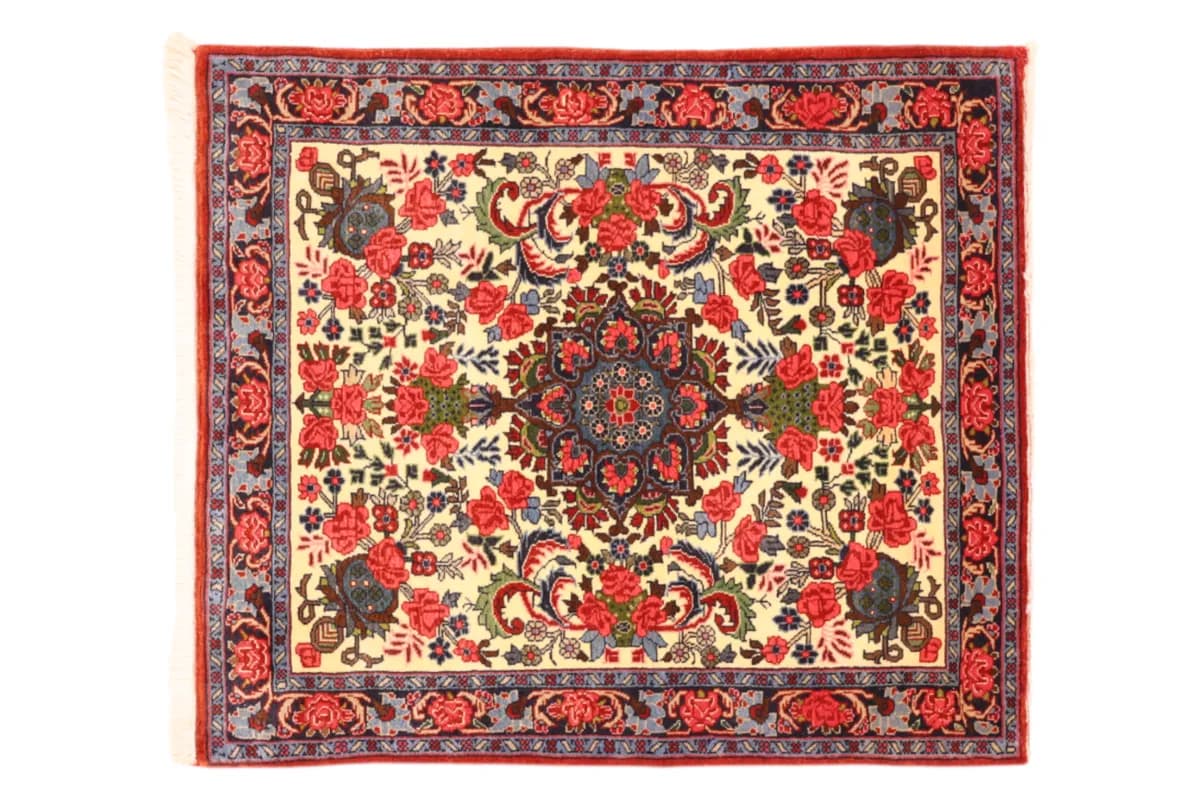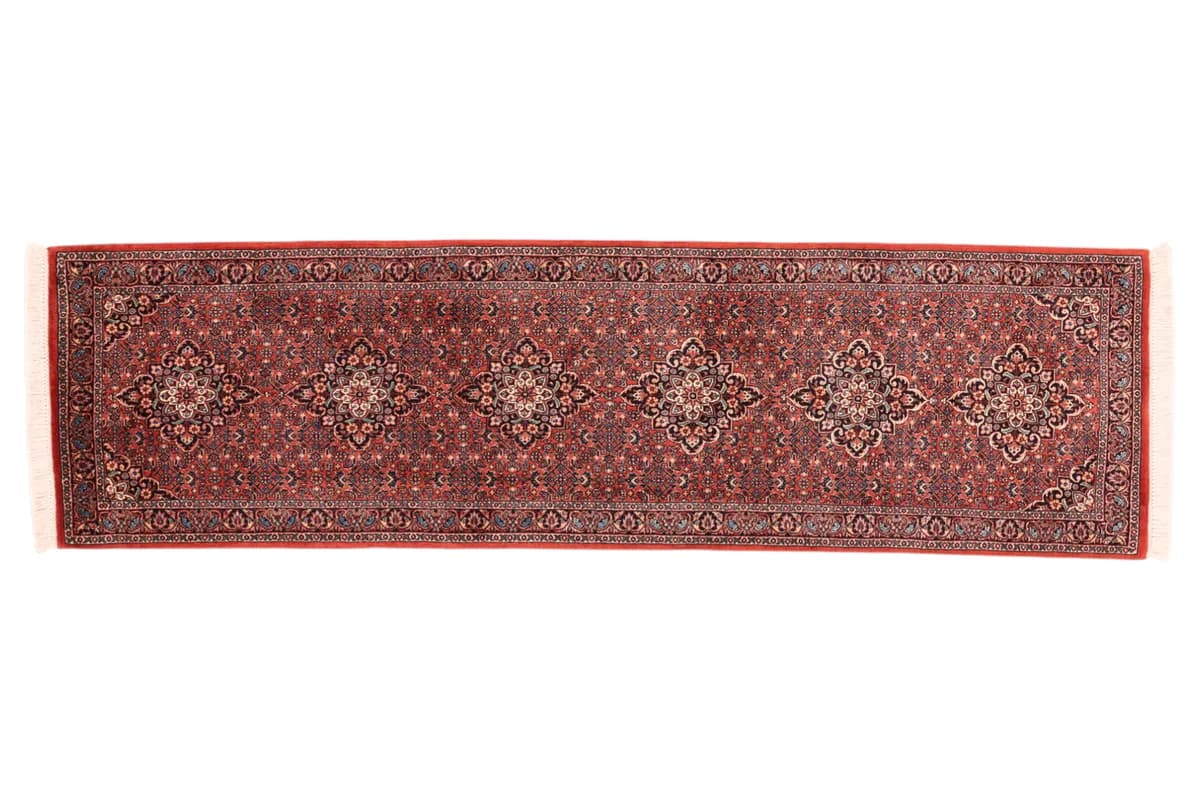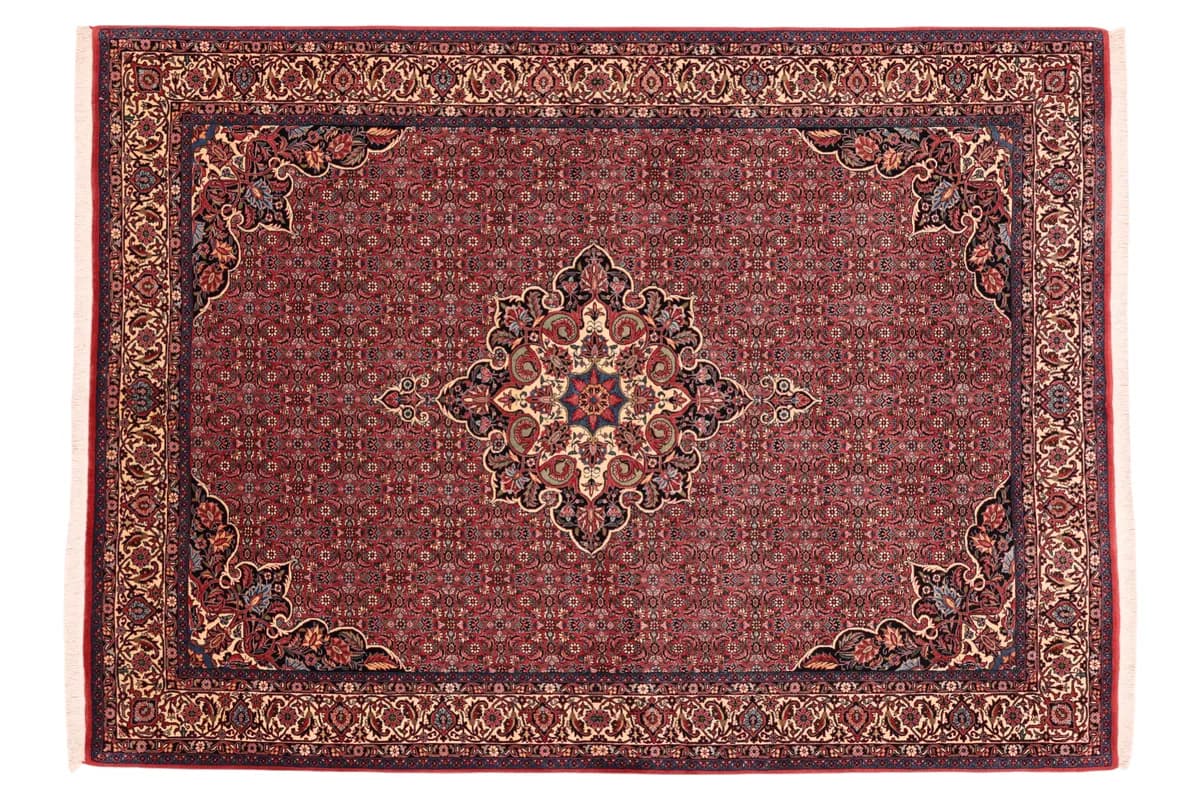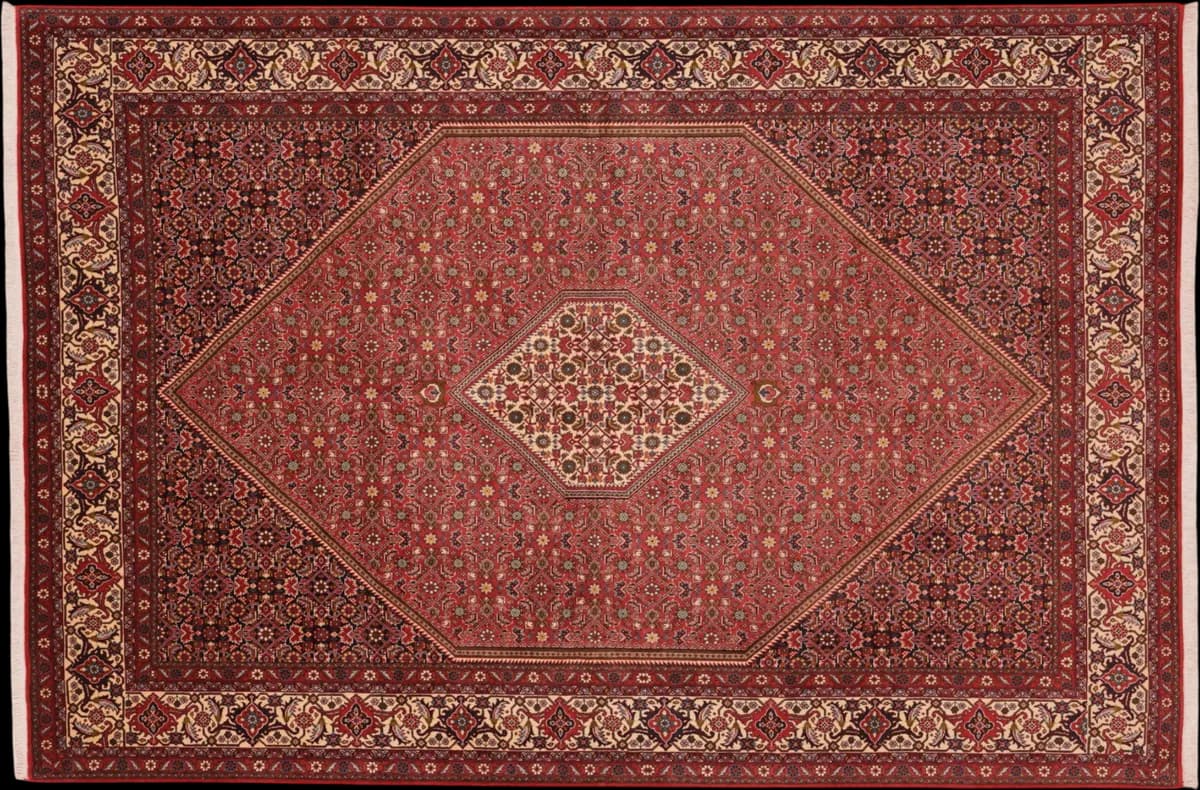
Bidjar
294 × 198 cm
4.650 €
26.700 €
Incl. VAT
In Stock · Ready to Ship
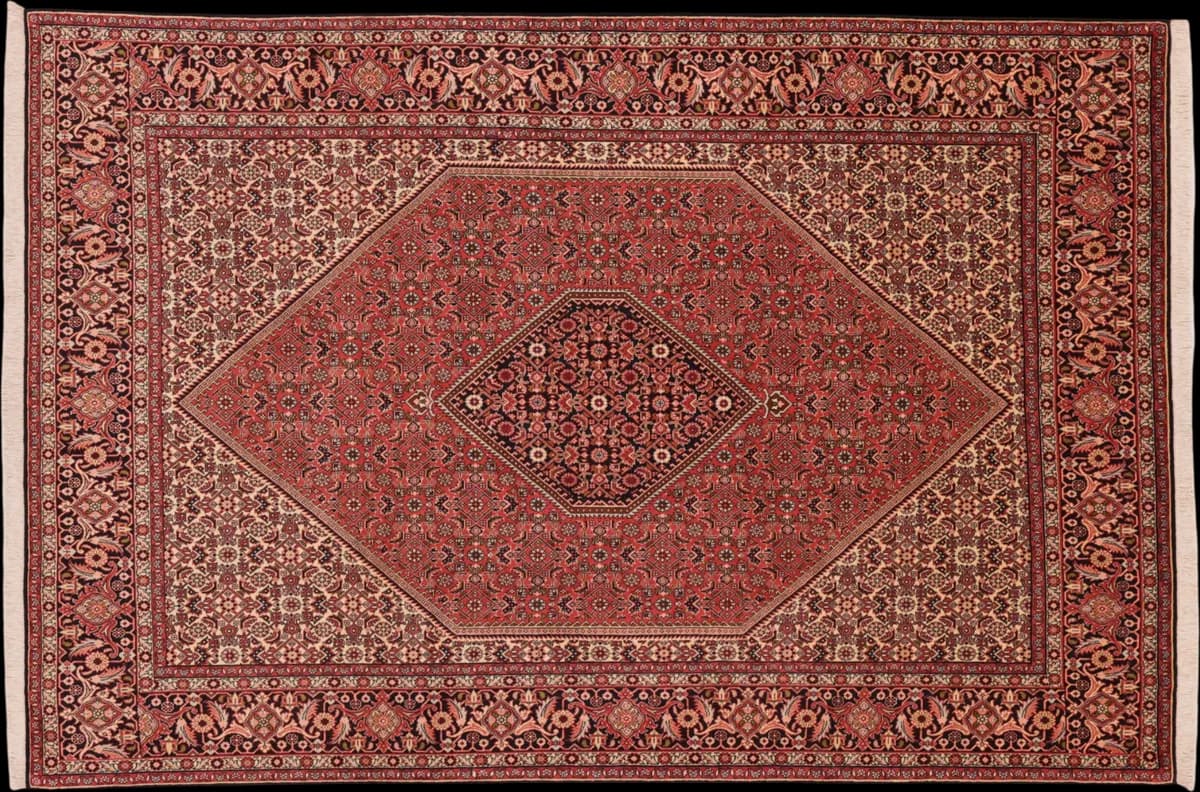
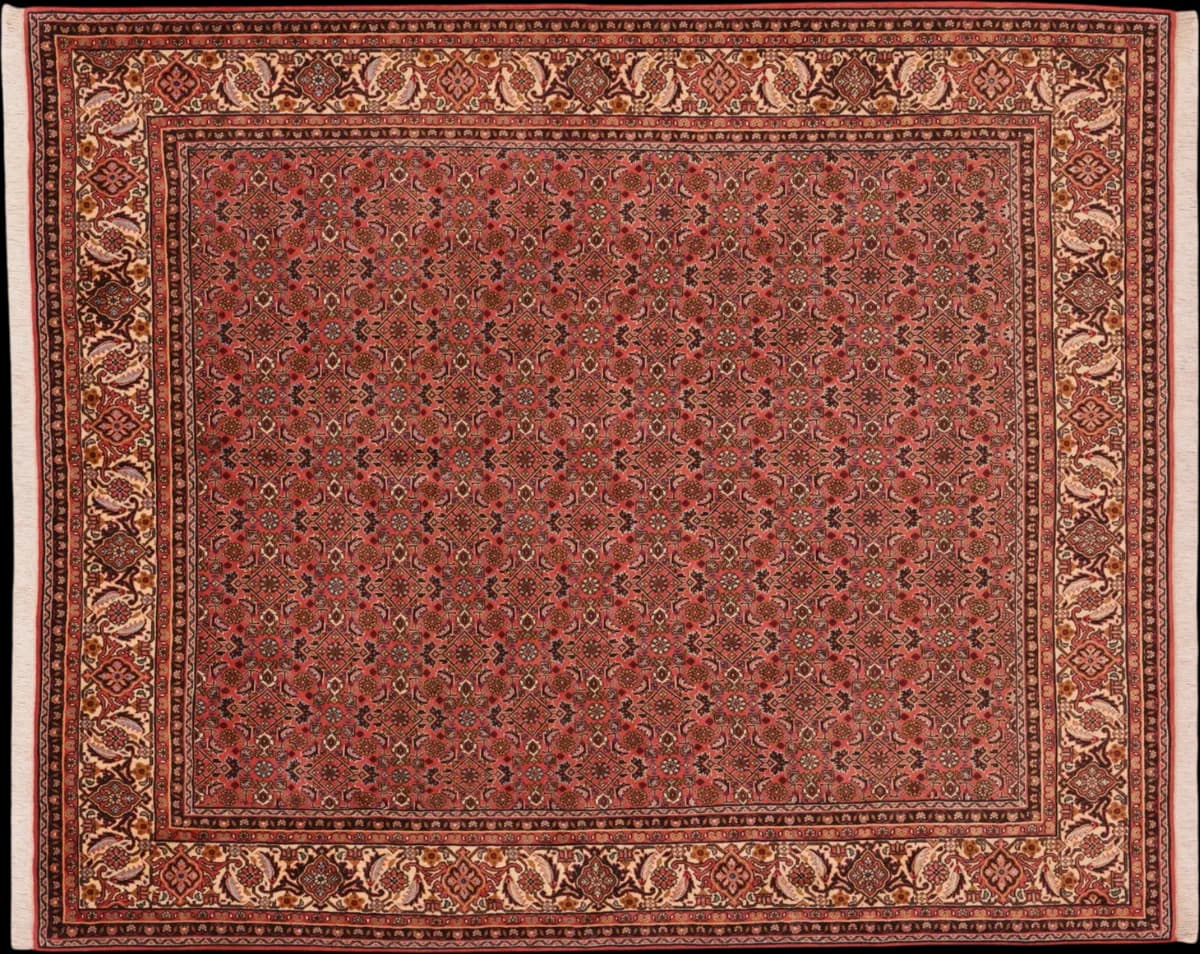
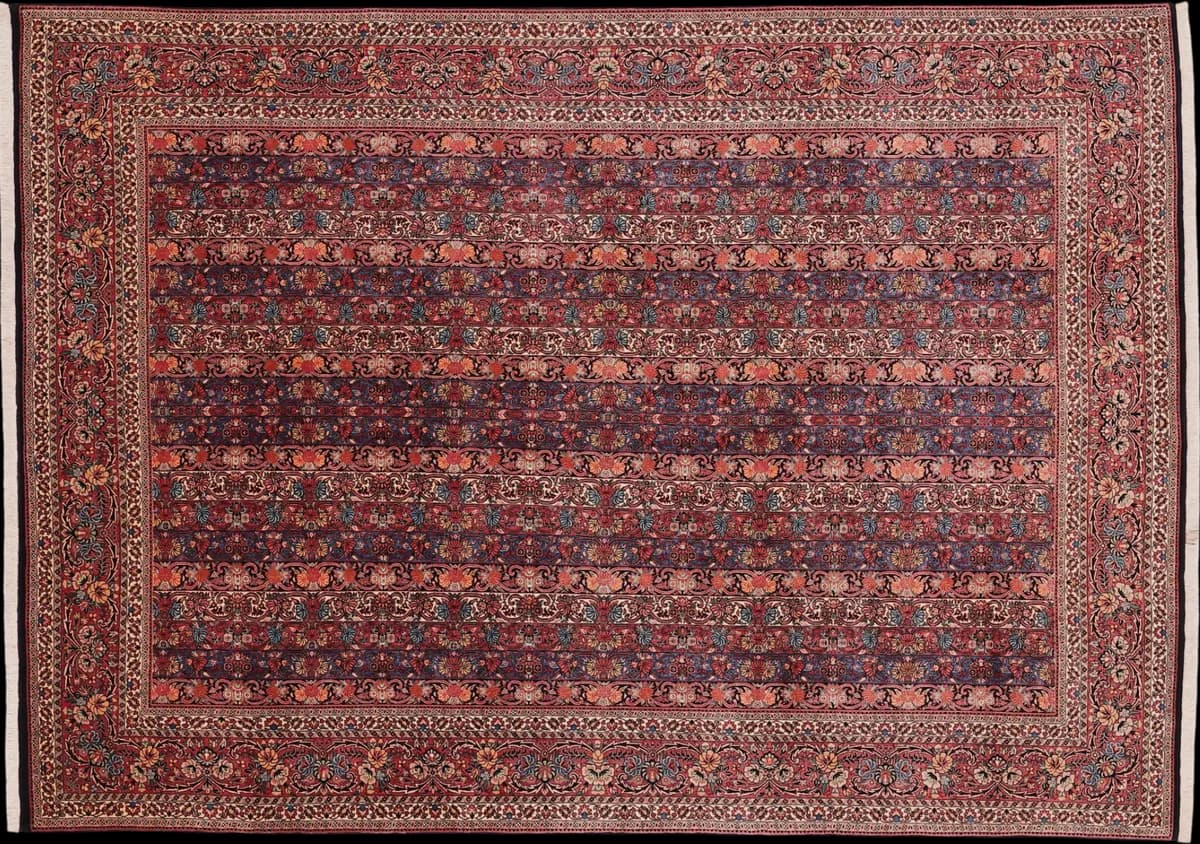
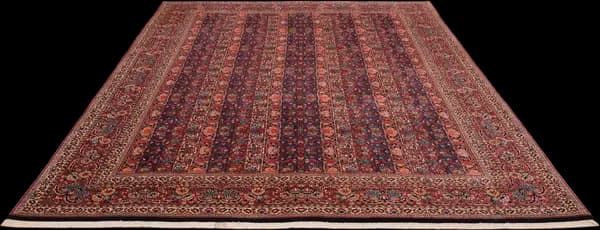
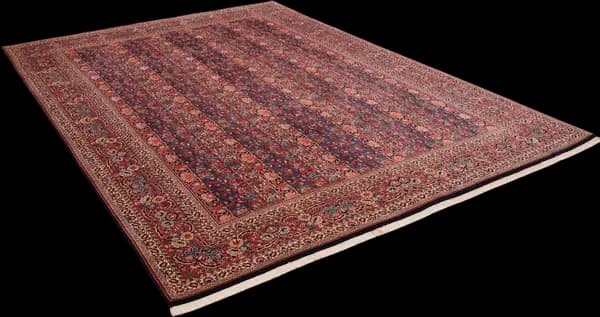
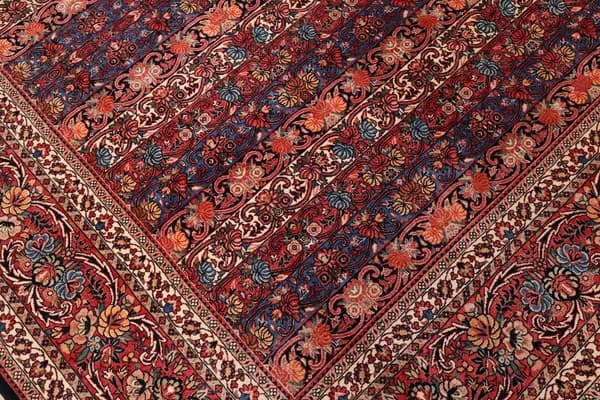
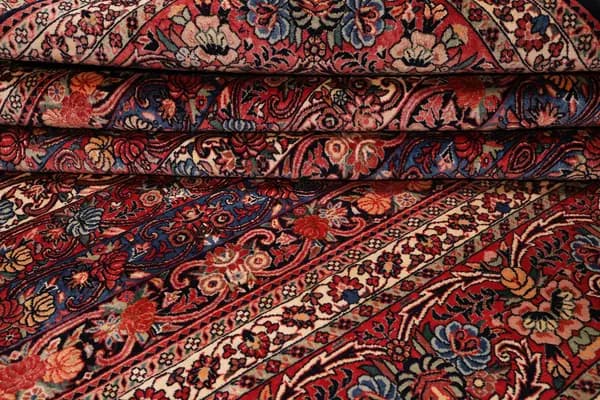
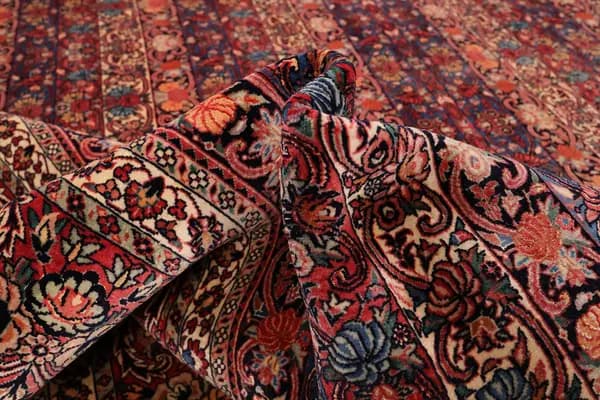
The rug in front of you is a Bidjar from the Kurdish weaving regions of western Iran, 352 x 248 cm (11'7" x 8'2"), a type known across the trade as one of the Iron Rugs of Persia. The name comes from a construction so dense and so firmly pressed that a Bidjar is never folded, only rolled, and it is prized above almost any other Persian rug for how long it holds its form underfoot.
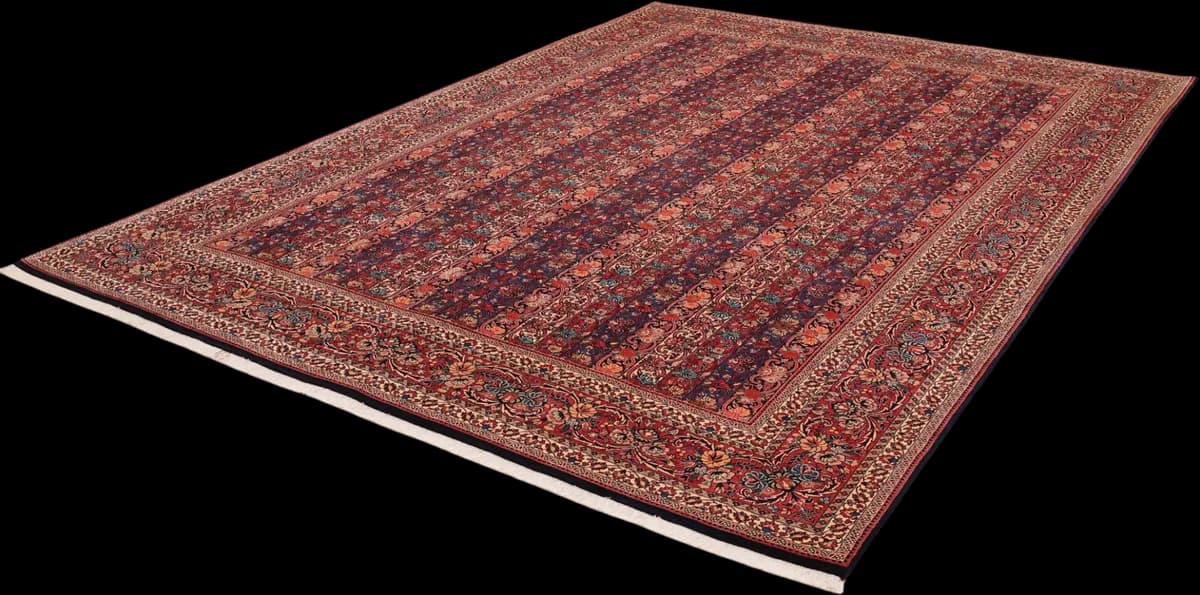
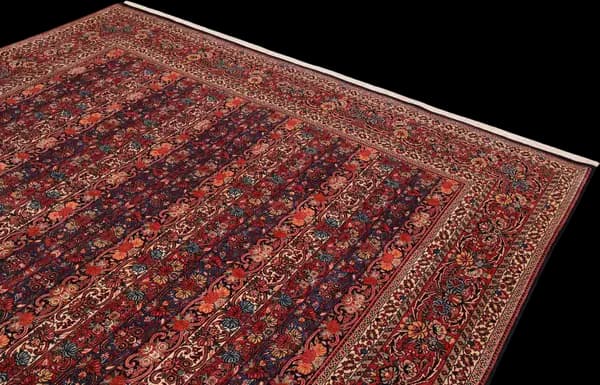
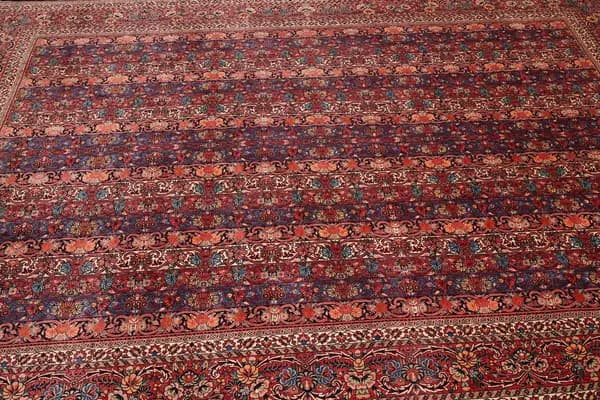
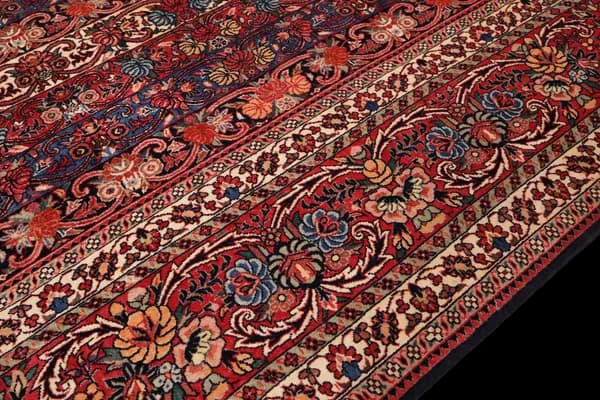
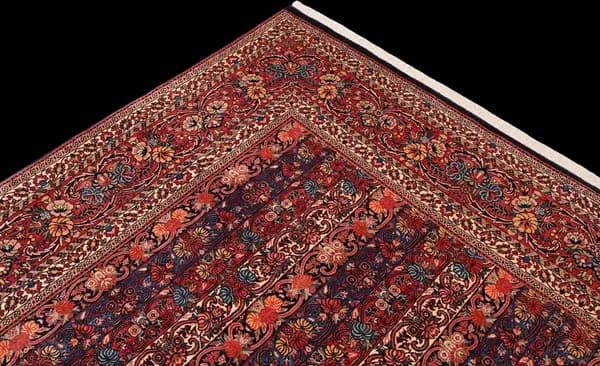
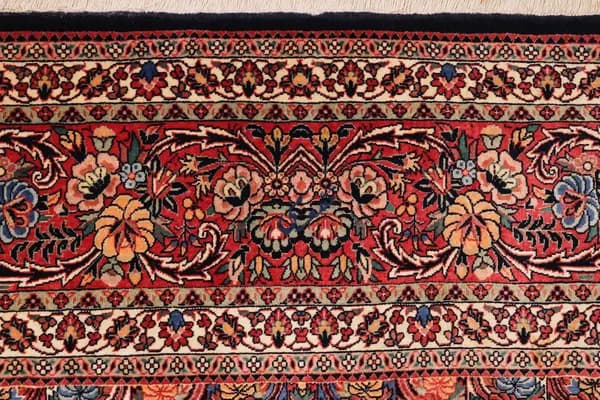
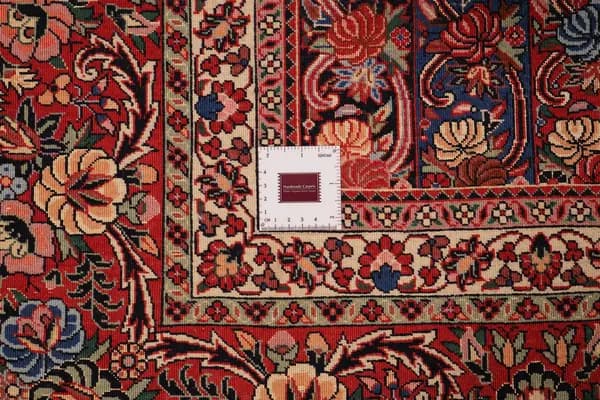
The first impression is of colour organised into rhythm: brick red and dark indigo grounds alternate in broad horizontal bands across the field, each one carrying the same Mahi diamond-and-rosette repeat rather than the scattered, uniform spread this pattern usually takes. Fine floral detail sits inside the diamonds, outlined in black, with touches of cream, dusty rose, teal and mustard-gold moving through the bands. A wide border in reddish pink carries a scrolling vine and palmette design, held between a narrow navy guard stripe and an outer cream floral band. The surface is tight and even, the pattern crisp at every edge, with a slight sheen catching across it.
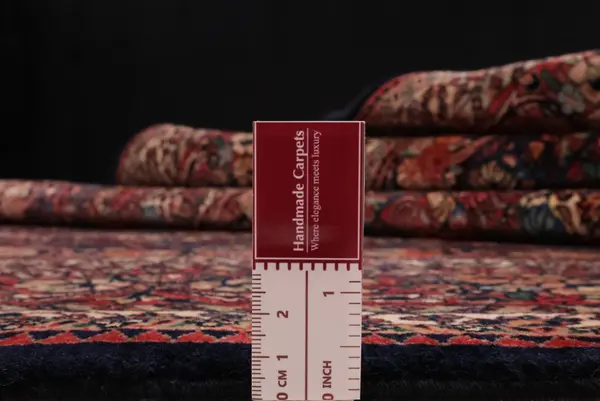
That discipline in the pattern comes from the same discipline that built the rug. The pile is wool with silk worked through it, knotted at 441,000 to 500,000 knots per square metre on a cotton foundation, among the densest constructions in the entire Persian tradition. Silk spins far finer than wool, which is what lets a knot count this high sit cleanly, and it is that fineness that keeps the banded stripes sharp rather than blurring at their edges. A pile of 15 mm packed this tightly is also what gives the rug its legendary weight and durability, and its refusal to fold.
A rug of this size sits naturally under a dining table or anchoring a seating group in a living room, and this one has the presence for either. The brick red and indigo hold their own against dark wood furniture and warm a pale floor at the same time, while the rose-pink border keeps the whole piece from reading as heavy. Underfoot it is dense, firm and substantial, a construction built for a room that gets used rather than one that gets protected. As light moves across it through the day, the silk in the pile catches along the bands in turn, and the striped rhythm of the pattern seems to shift with it.
More on Bidjar rugs: origin, making and how to recognise a genuine piece
Superior craftsmanship
At 352 × 248 cm (8.73 m²) this is a very large rug. It carries a whole seating group with every furniture leg on it, or a dining table with the chairs pushed back. In a small room it becomes the floor rather than a rug.
Yes, knotted by hand — knot by knot on a loom, not machine-made. The density is 441,000 to 500,000 knots per square metre; across 8.73 m² that is roughly 3.8 to 4.4 million individual knots, every one of them tied by hand.
This pile contains silk and is more delicate than pure wool. Vacuum without a rotating brush and along the pile, do not beat it, and keep it out of permanent direct sun. Blot spills at once with a light cloth, never rub. For a proper clean a silk-blend rug belongs in expert hands — we handle that for pieces bought from us.
We are in the Hamburg Speicherstadt. Come and see this rug in daylight, or write to us — a person answers.
Certificate included verifying origin, materials, and craftsmanship.
Ref: 989140