Exclusive
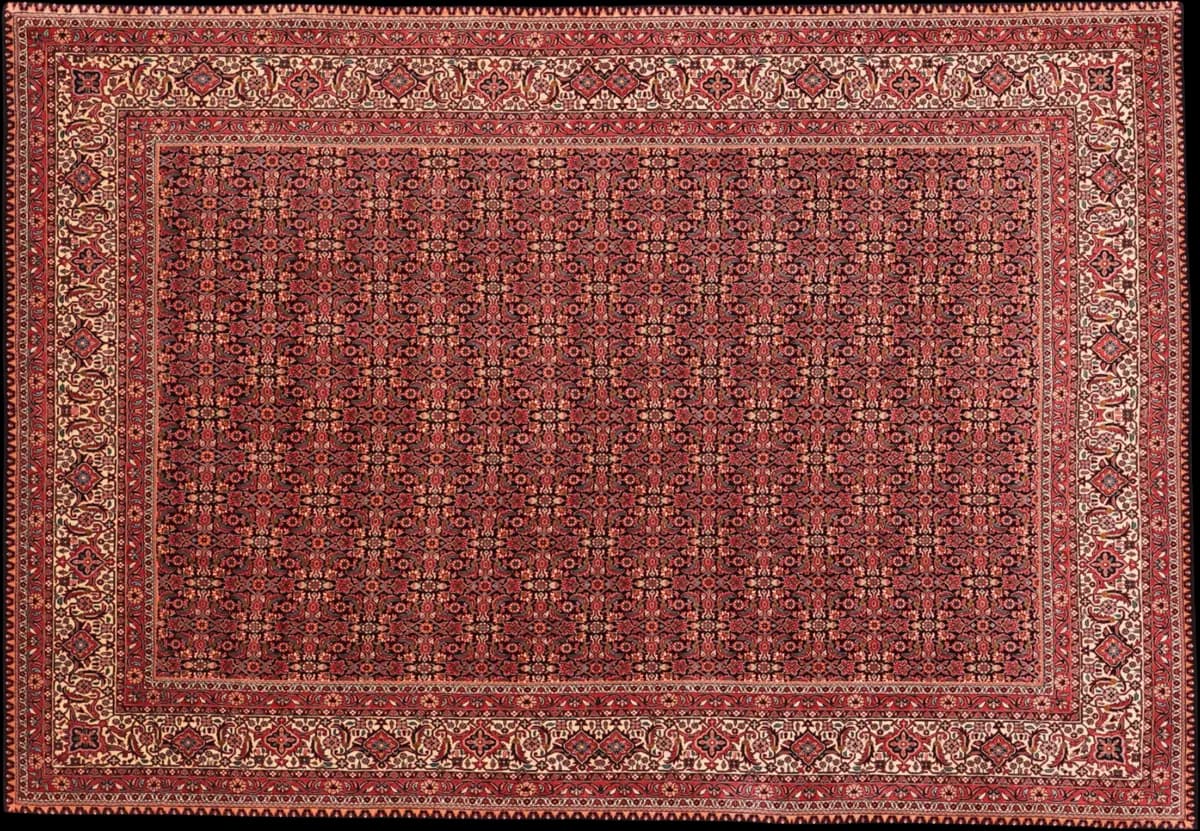
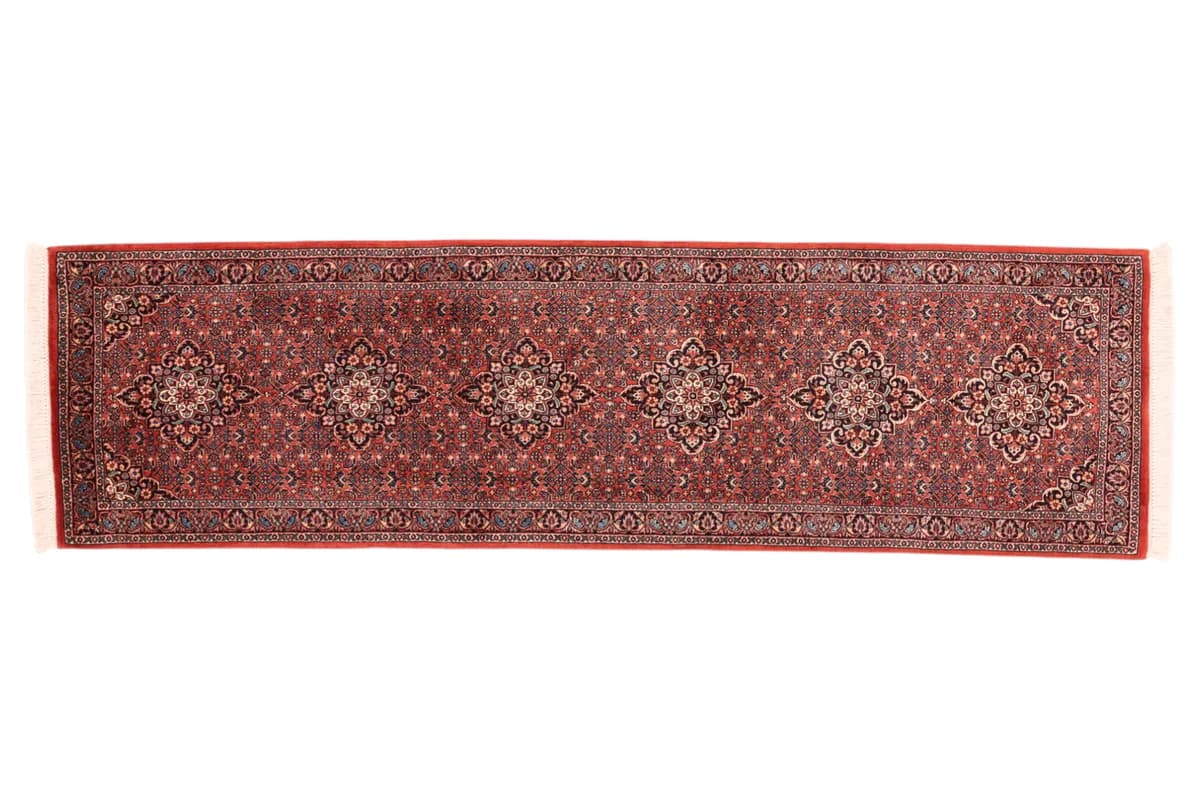
Bidjar | Exclusivewith silk
213 × 60 cm
2.070 €


885 €
Incl. VAT
In Stock · Ready to Ship
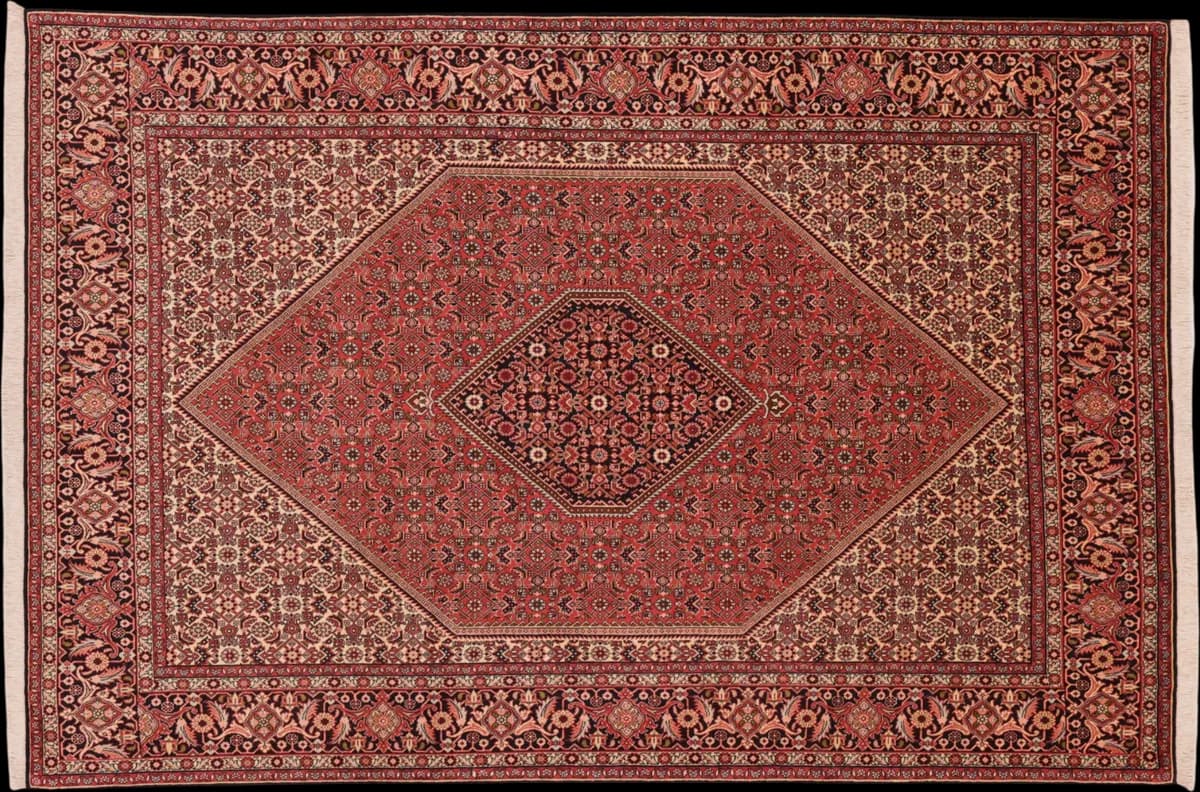
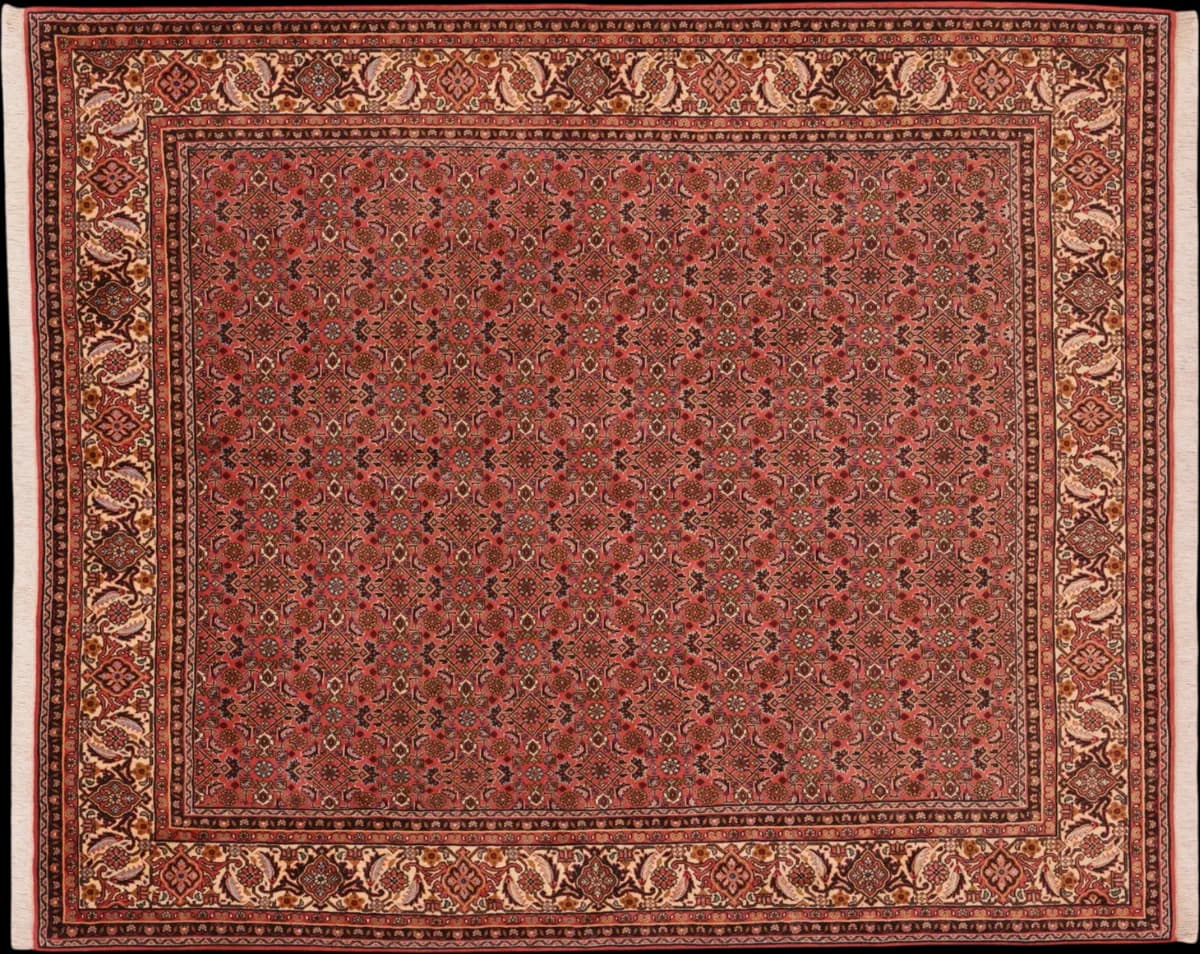
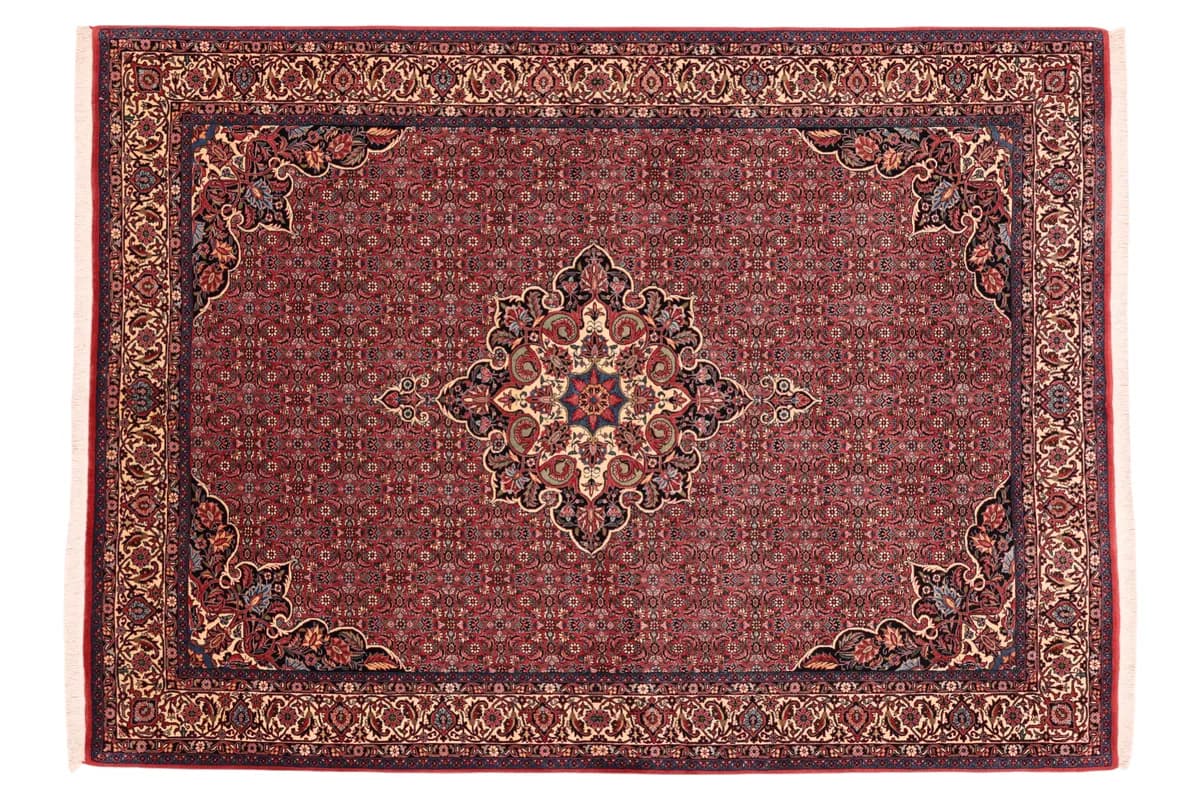
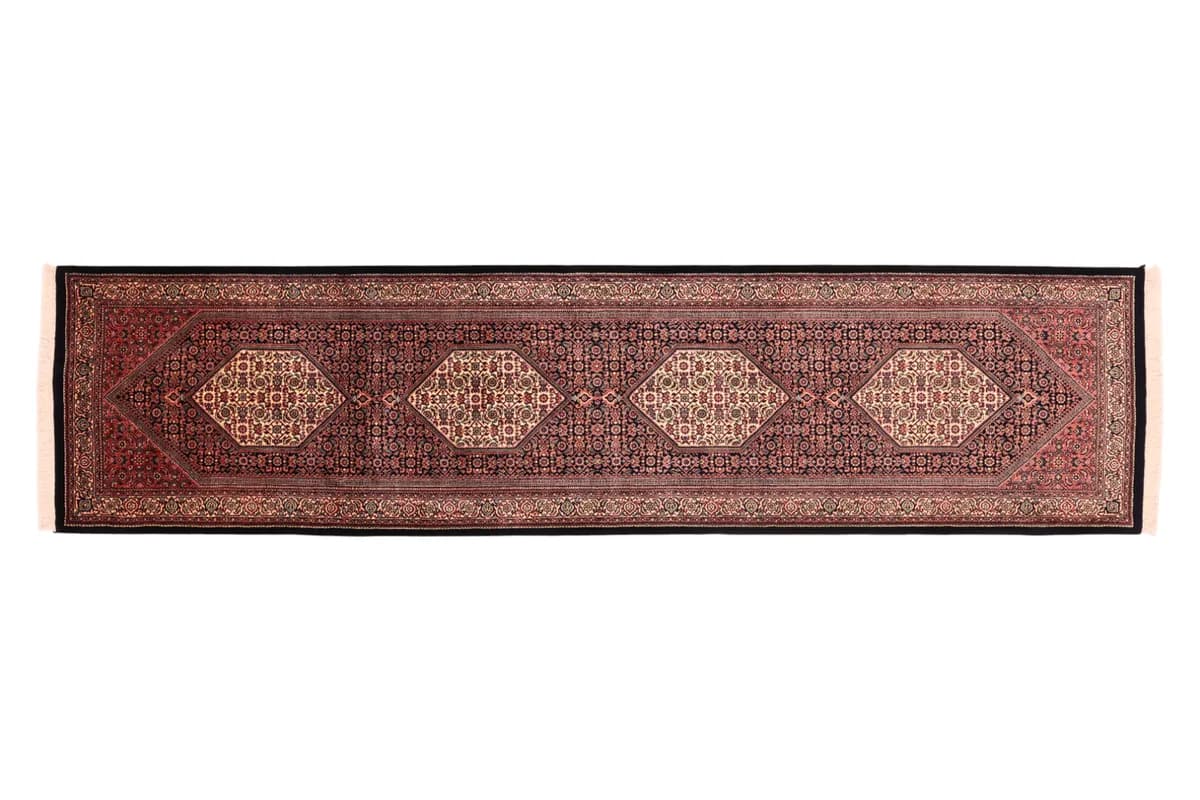
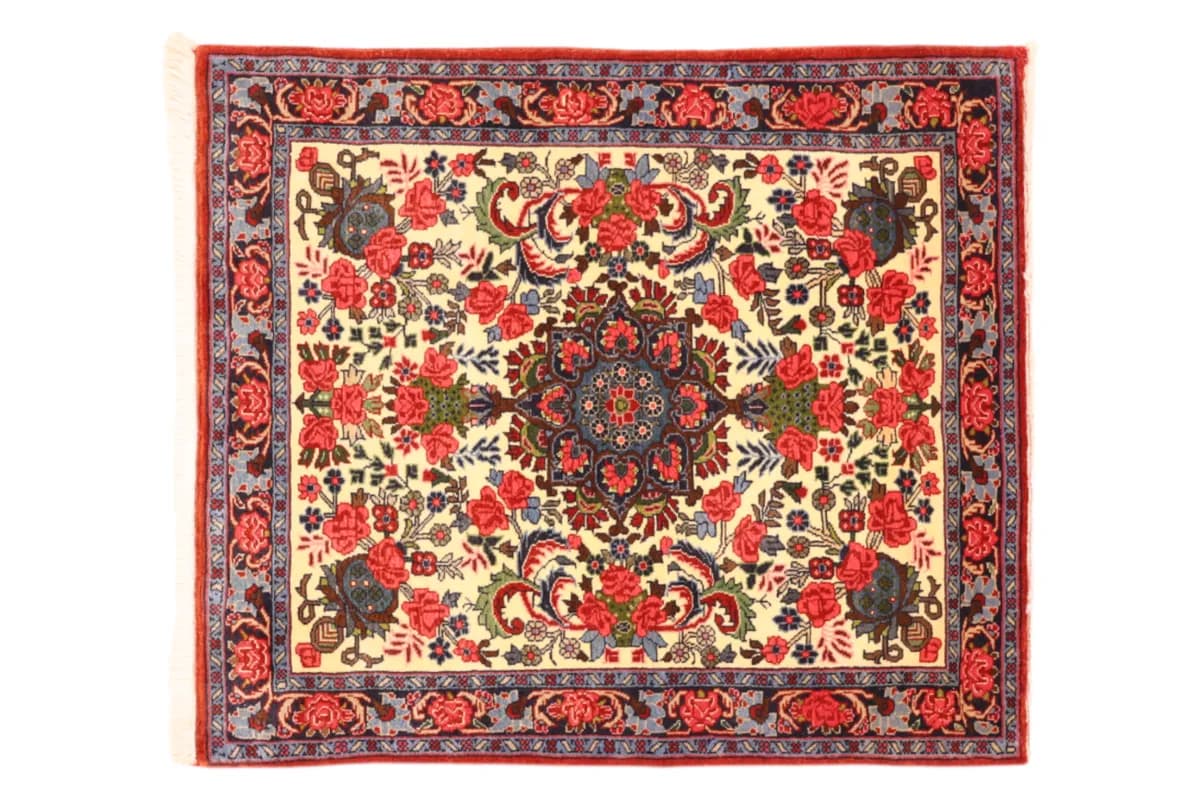
A Bidjar, knotted by Kurdish weavers in the west of Iran, in a compact 81 x 70 cm (2'8" x 2'4"). The type is nicknamed the Iron Rug of Persia, prized for a density unmatched anywhere in the Persian tradition and for a construction so tight the finished piece can only be rolled, never folded. Most Bidjars lean dark and heavy in colour; this one, on an ivory ground, does not.
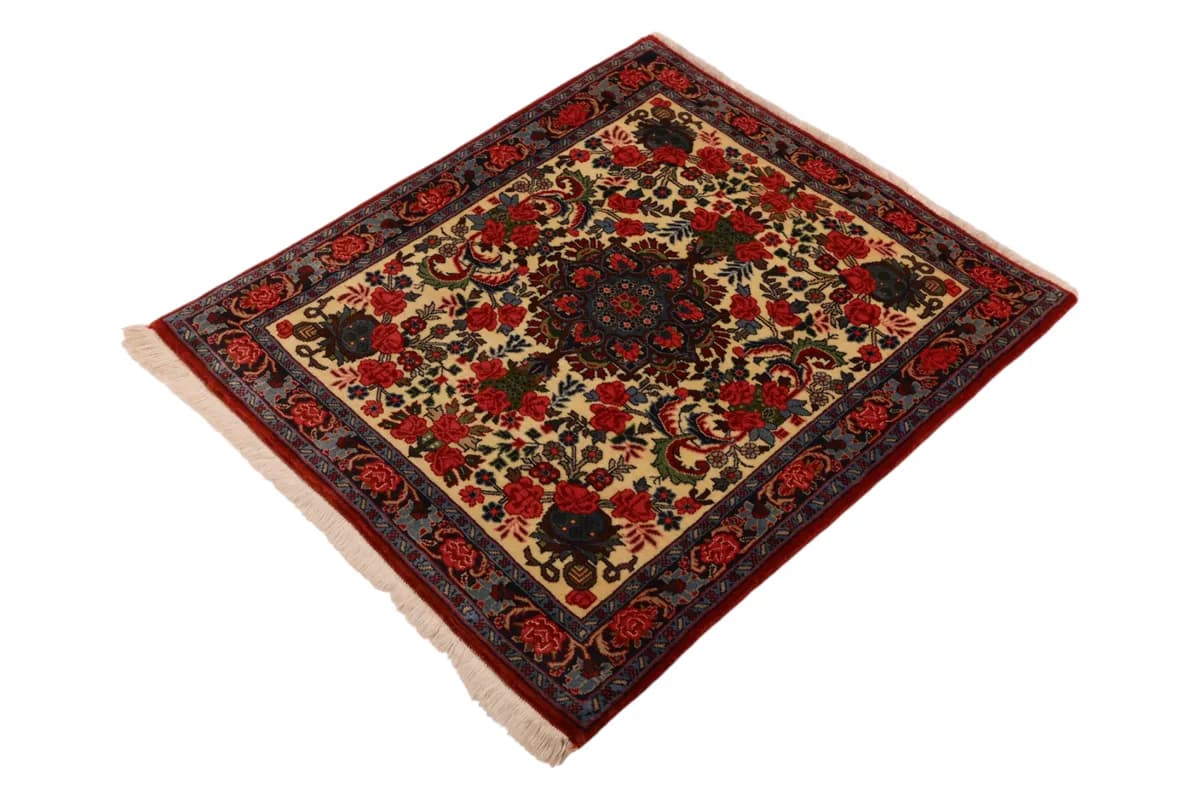
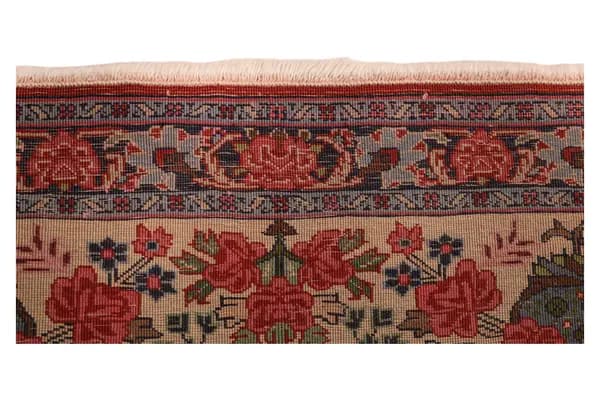
The field is cream to ivory, scattered with dense sprays of deep red roses that read as bouquets rather than a repeating pattern. At the centre sits a star-shaped medallion outlined in navy and brown, and in each corner a dark, rounded motif trails a floral pendant, the kind of shape often taken for a stylised basket or vase of flowers. A wide steel-blue border carries a running vine of the same red roses, closed off by a narrow dark red outer line noticeably deeper than the field. The surface throughout is matte, the wool dense, the contours of each motif sharply held rather than blurred.
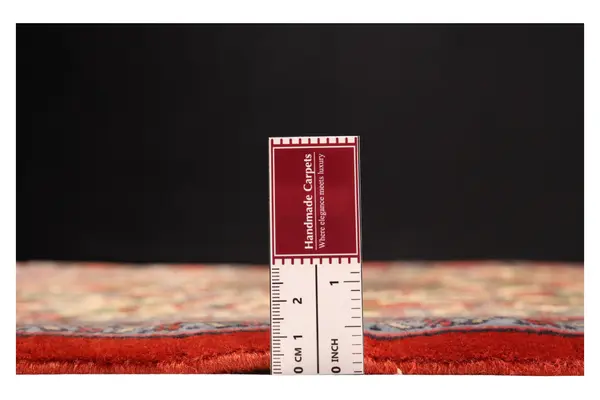
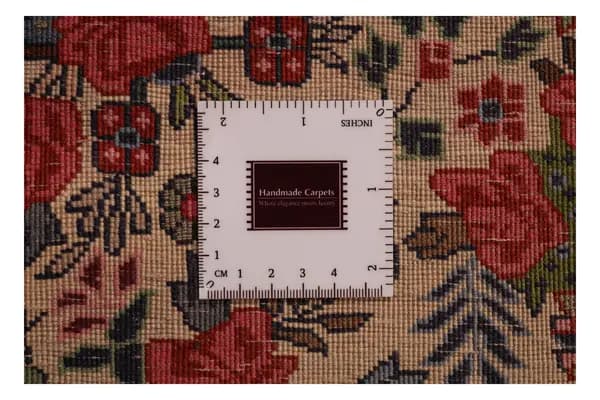
That sharpness is a direct result of the knotting: 441,000 to 500,000 knots per square metre, among the tightest counts a rug can carry, packed onto a cotton warp with a 15 mm pile of handspun wool. It is this density, not the colour, that earns the Bidjar its reputation for lasting through decades of use without losing its edges or its shape. Here the same tight structure that normally produces a heavy, dark, almost armoured rug has instead held a pattern this fine and this floral without letting it blur or soften, which is the rarer outcome for the type.
At this size the rug belongs somewhere small and looked-at rather than walked across constantly: in front of a door, at a bedside, or under a chair in a study. The ivory ground lifts a dim hallway or a shaded corner, and the red roses hold their colour against dark wood or a pale floor equally well. Underfoot it is firm and substantial, the density of a far larger Bidjar compressed into a small footprint, and made to be used rather than kept aside. In changing light the red deepens and the ivory field seems to widen, the small star medallion staying quietly at the centre of it all.
More on Bidjar rugs: origin, making and how to recognise a genuine piece
Exceptionally fine weave
At 81 × 70 cm (0.57 m²) this is a small rug. It works beside a bed, in a reading corner, in front of a fireplace or as a mat by a door. It does not furnish a room; it makes a point in one.
Yes, knotted by hand — knot by knot on a loom, not machine-made. The density is 441,000 to 500,000 knots per square metre; across 0.57 m² that is roughly 250,000 to 280,000 individual knots, every one of them tied by hand.
Hand-spun wool still carries its own lanolin, which keeps liquid sitting on the surface for a moment: blot quickly, with clear water and a light cloth, working inwards and without rubbing. Otherwise regular vacuuming along the pile is enough. Turn the rug once or twice a year so light and footfall reach it evenly.
We are in the Hamburg Speicherstadt. Come and see this rug in daylight, or write to us — a person answers.
Certificate included verifying origin, materials, and craftsmanship.
Ref: 993768