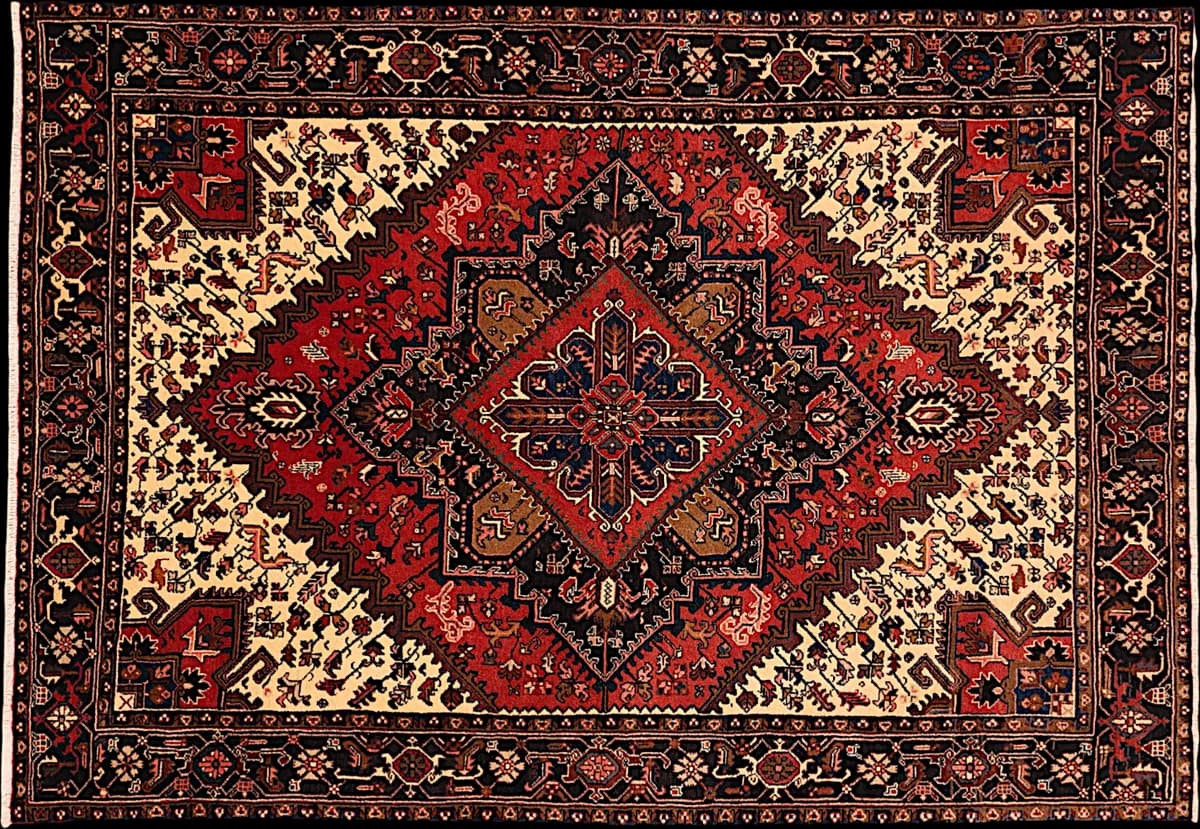
Heriz
292 × 205 cm
2.426 €





2.446 €
Incl. VAT
In Stock · Ready to Ship
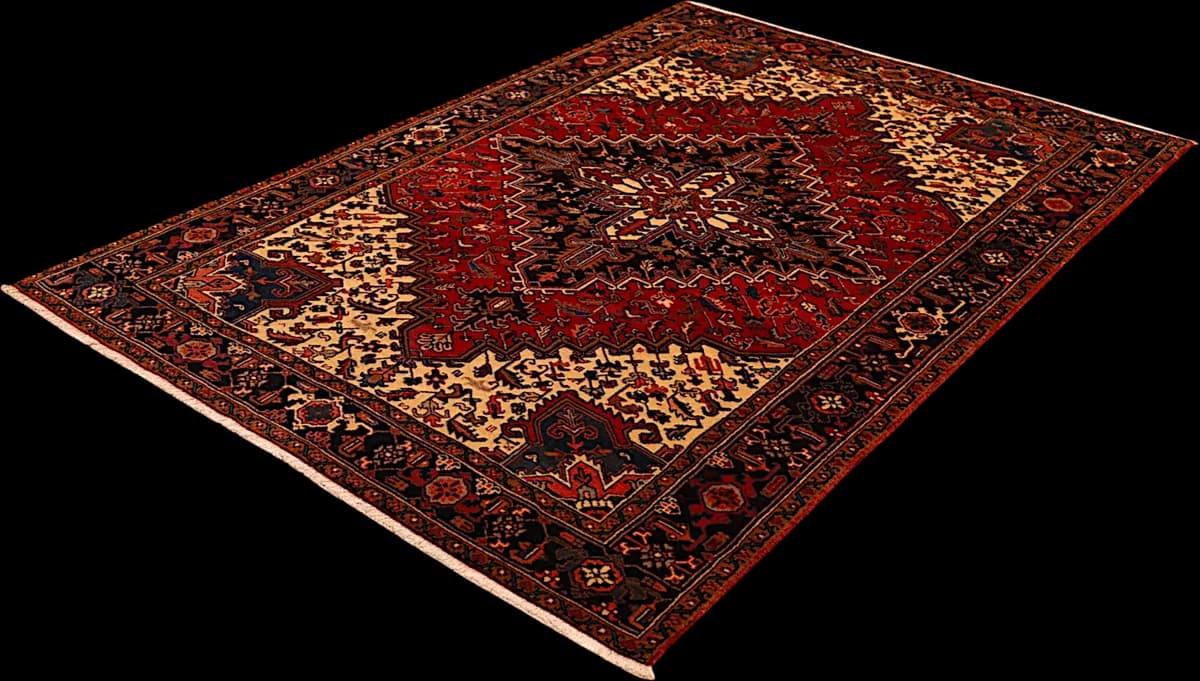
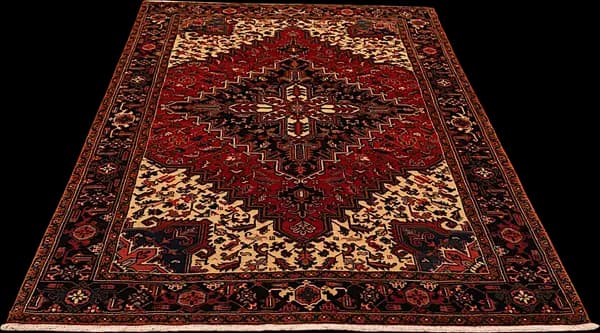
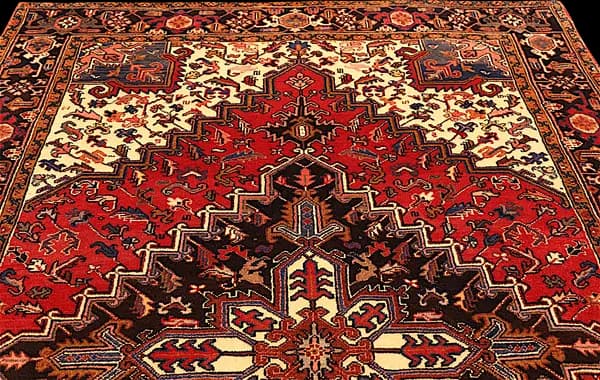
This is a Heriz, a village weaving from Heris on the slopes of Mount Sabalan, northeast of Tabriz in northwest Iran, measuring 293 x 206 cm (9'7" x 6'9"). Heriz rugs are known for a large geometric medallion set boldly on an open field. This piece is Heriz at its most classic — bold in scale, calm in drawing, without the extravagance the type can carry.
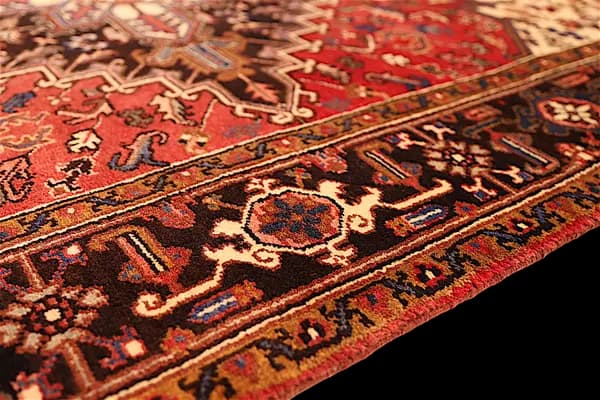
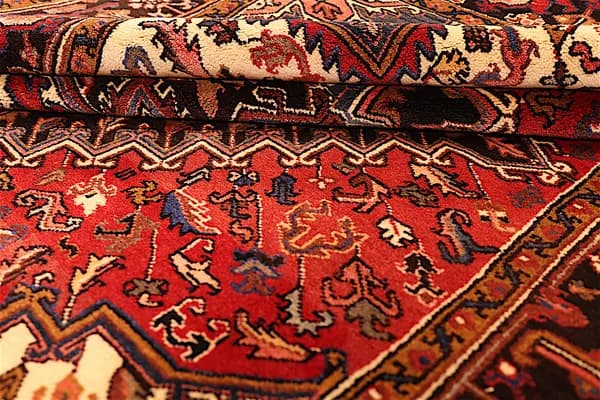
The first impression is colour: a deep, glowing brick red fills the field almost edge to edge. Across it sits a large stepped star medallion, outlined in dark navy-black, with pendants reaching toward the corners. Four ivory spandrels fill the corners, each dense with floral scrollwork against the red. A wide border in the same dark ground carries a row of rosette medallions, taking up roughly a sixth of the rug.
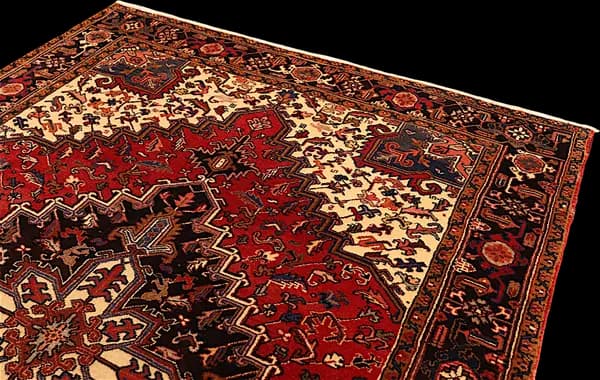
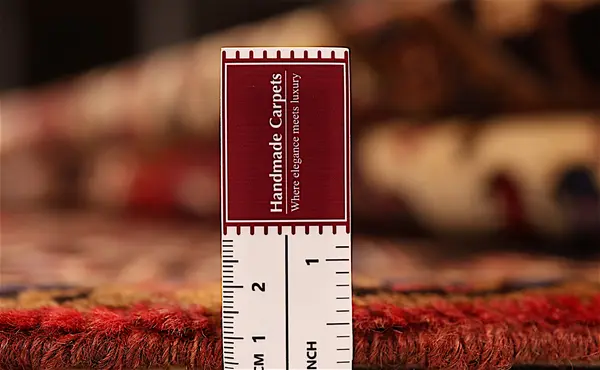
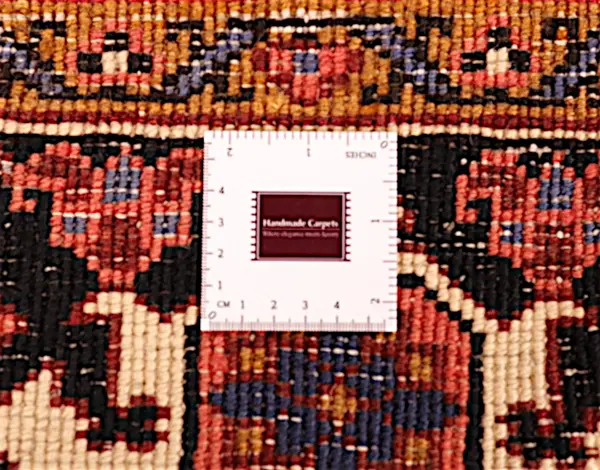
Heriz weavers worked from Tabriz city patterns, redrawn freehand at village scale, which is why the lines here are bold and angular rather than fine. The pile is hand-knotted from hand-spun wool at a moderate density, around 72,000 to 90,000 knots per square metre, low enough to keep the geometry crisp. That wool, drawn from water rich in copper, was set at a full 12mm pile over a cotton warp, giving the surface real substance and the resilience Heriz is known for.
The rug suits a dining table or a seating group in a living room. The brick red holds its own against dark wood and warms a pale floor, while the ivory corners keep the design from feeling heavy. Underfoot the wool is dense and firm, built for daily use rather than kept for best. As light moves across the room, the red deepens toward the medallion and softens at the corners — a rug that settles into a home rather than announcing itself.
More on Heriz rugs: origin, making and how to recognise a genuine piece
Artisan crafted
At 293 × 206 cm (6.04 m²) this is a large rug. It sits under a seating group with the front legs of sofa and chairs on it, or under a dining table for four. A table for six wants about 80 cm of clearance all round, and needs more.
Yes, knotted by hand — knot by knot on a loom, not machine-made. The density is 72,000 to 90,000 knots per square metre; across 6.04 m² that is roughly 430,000 to 540,000 individual knots, every one of them tied by hand.
Hand-spun wool still carries its own lanolin, which keeps liquid sitting on the surface for a moment: blot quickly, with clear water and a light cloth, working inwards and without rubbing. Otherwise regular vacuuming along the pile is enough. Turn the rug once or twice a year so light and footfall reach it evenly.
We are in the Hamburg Speicherstadt. Come and see this rug in daylight, or write to us — a person answers.
Certificate included verifying origin, materials, and craftsmanship.
Ref: 167064