

Heriz
277 × 205 cm
2.300 €
2.515 €
Incl. VAT
In Stock · Ready to Ship
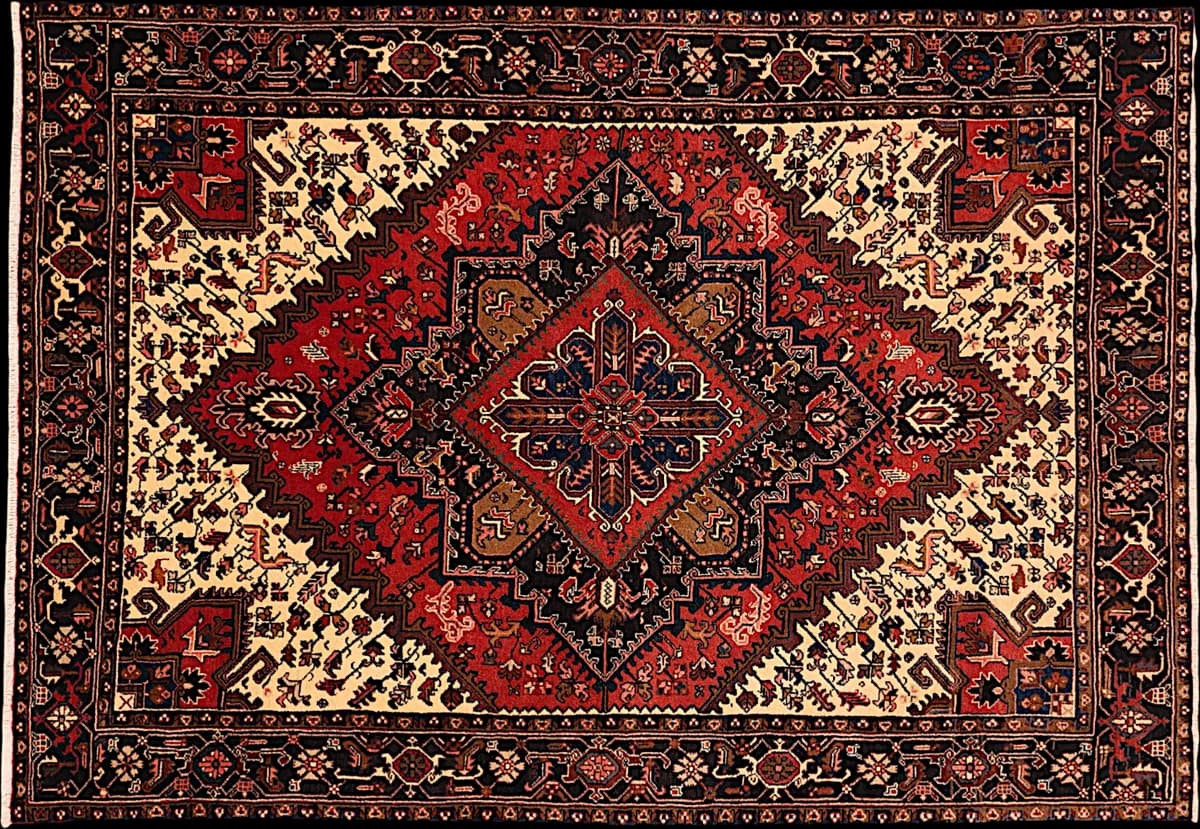
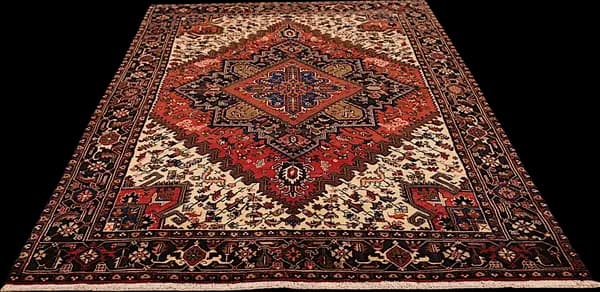
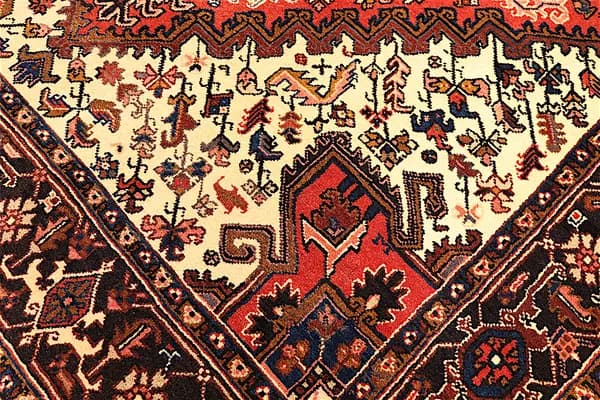
This is a Heriz, a village rug from the slopes below Mount Sabalan in the northwest of Iran, not far from Tabriz, measuring 297 x 209 cm (9'9" x 6'10"). Heriz weavers took the great medallion designs of the Tabriz workshops and redrew them by hand in their own bolder, more angular manner, and the type has been prized ever since for exactly that graphic strength paired with a wool famously tough enough for daily use over generations. What sets this particular piece apart is the precision of that redrawing: a Heriz this crisply composed, on a field this saturated, is not the rule but the exception.
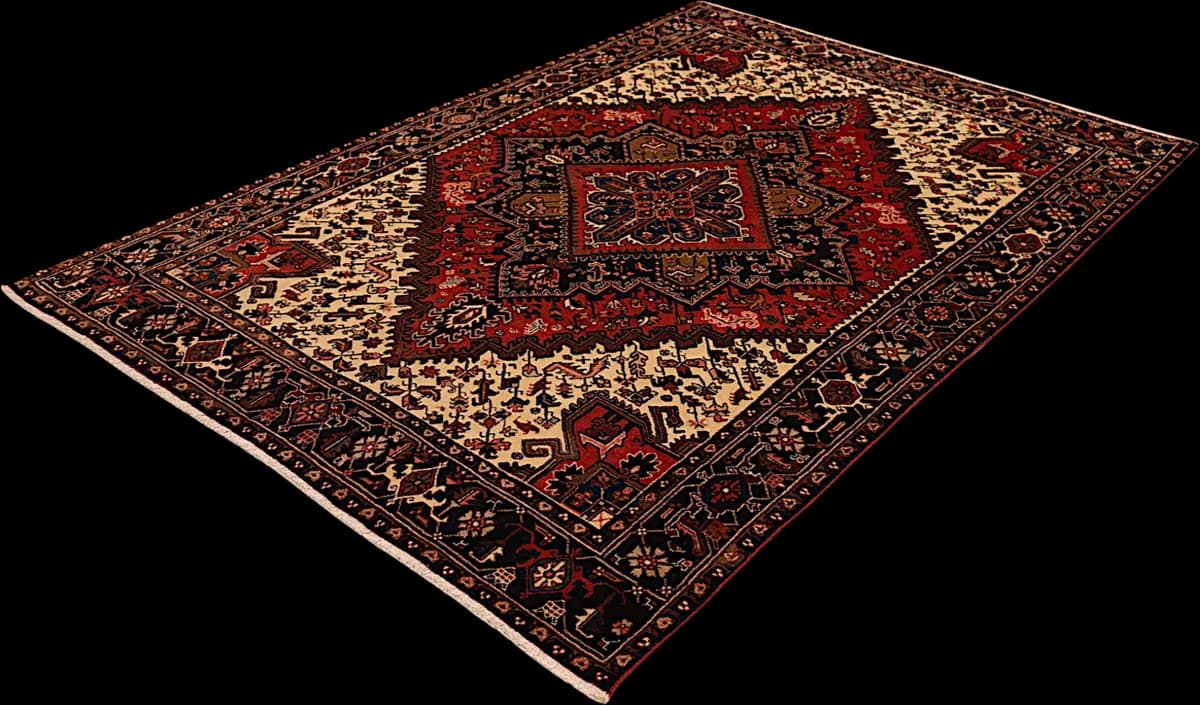
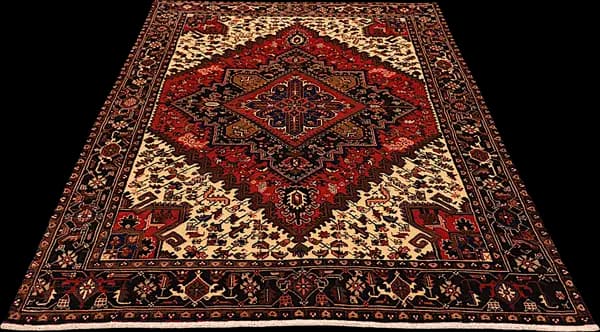
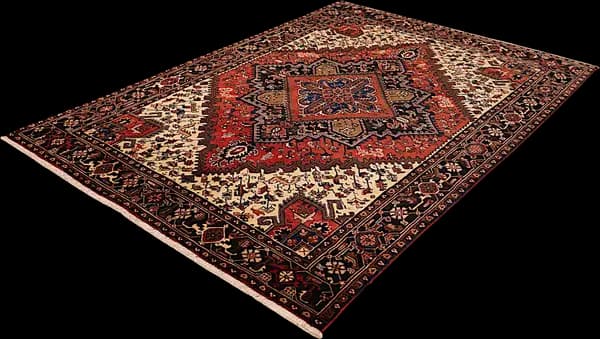
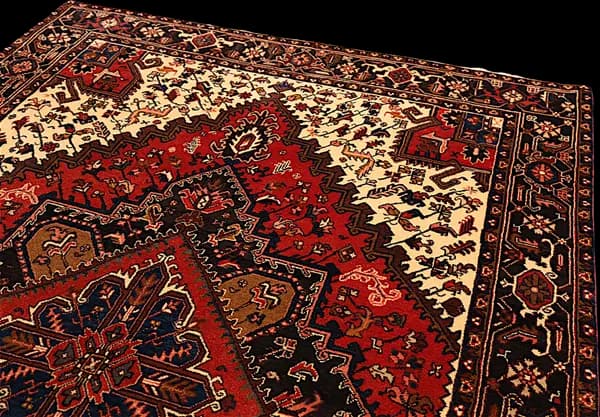
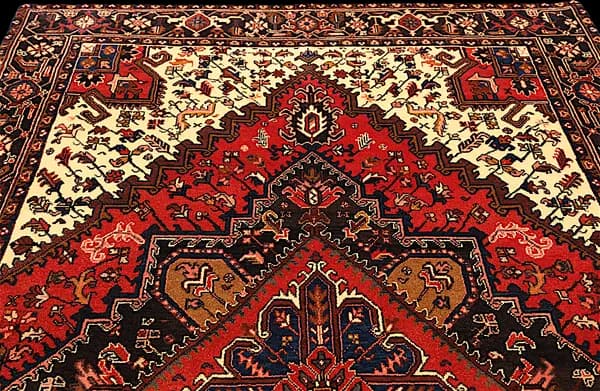
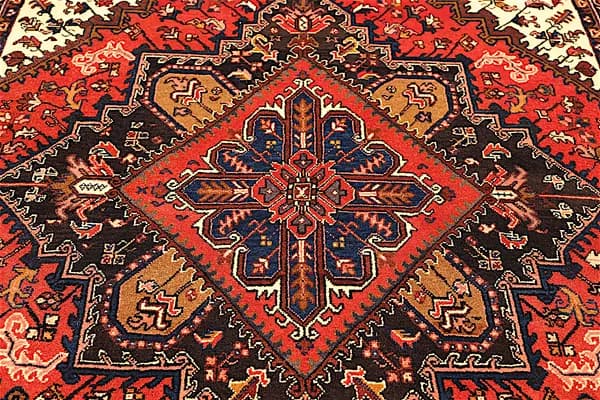
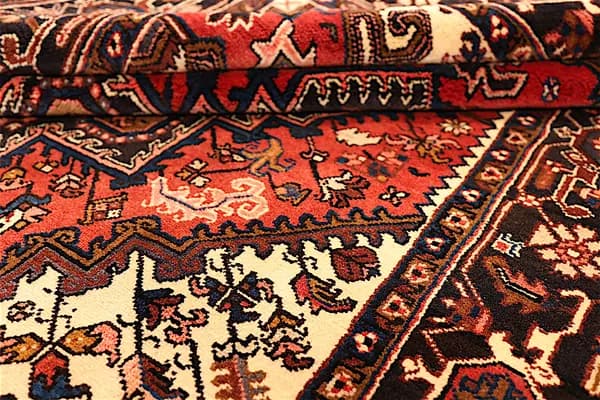
The field is a deep, almost lacquered brick red, and it carries a large stepped medallion built from navy and red in tight interlocking angles. At its centre sits a second, smaller medallion, cruciform, in navy, cream and red, so the eye finds a medallion within the medallion rather than a single fixed point. Ivory cornerpieces anchor the four corners, each filled with dense floral vinework in camel, dusty rose and small touches of teal. A wide, near-black indigo border, patterned with small florals and diamonds, closes the field on all sides and holds the red inside it rather than letting it spread.
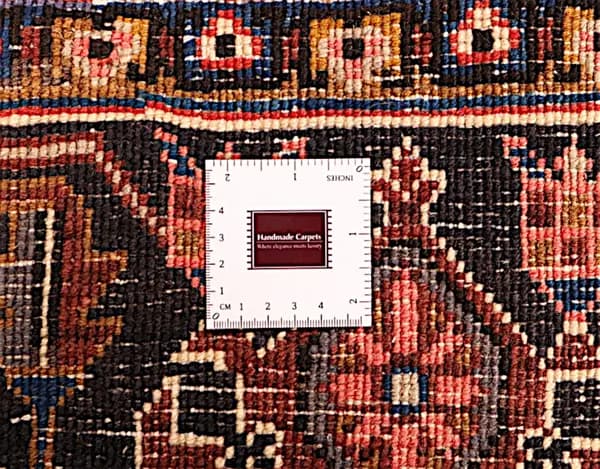
That sharpness of drawing sits on a construction typical of the region: a cotton warp, a hand-spun wool pile, and a knot count of 72,000 to 90,000 per square metre. This is a village density rather than a workshop one, coarser than a city rug of comparable size, and it is exactly this coarseness of knot, worked with an unusually steady hand, that gives the medallion its clean stepped edges instead of a softer, blurred outline. The wool itself, rich in local copper minerals, is what has let Heriz rugs of this age go on being walked on rather than retired to a wall.
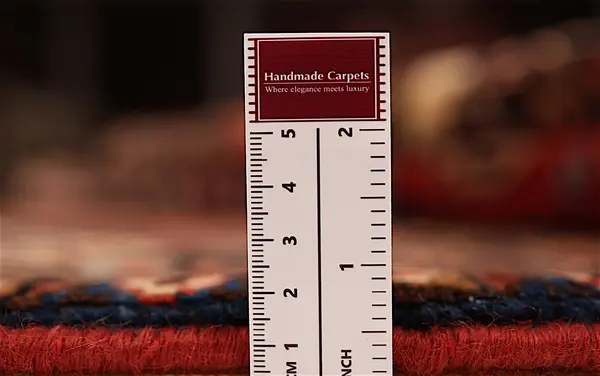
At close to three metres by two, this is a dining room or living room rug, sized to sit a table and chairs or a sofa group comfortably inside its border. Against pale floors that red will hold the room together rather than recede, and against dark wood or leather it will simply match the confidence of the piece. The pile, at 12 mm and firmly packed, is dense and springy underfoot, built for a room that gets used every day rather than one kept for best. In the low sun of a late afternoon, the red deepens and the navy of the medallion comes forward, and that shift is one you will keep noticing long after the rug has become the room's obvious centre.
More on Heriz rugs: origin, making and how to recognise a genuine piece
Artisan crafted
At 297 × 209 cm (6.21 m²) this is a large rug. It sits under a seating group with the front legs of sofa and chairs on it, or under a dining table for four. A table for six wants about 80 cm of clearance all round, and needs more.
Yes, knotted by hand — knot by knot on a loom, not machine-made. The density is 72,000 to 90,000 knots per square metre; across 6.21 m² that is roughly 450,000 to 560,000 individual knots, every one of them tied by hand.
Hand-spun wool still carries its own lanolin, which keeps liquid sitting on the surface for a moment: blot quickly, with clear water and a light cloth, working inwards and without rubbing. Otherwise regular vacuuming along the pile is enough. Turn the rug once or twice a year so light and footfall reach it evenly.
We are in the Hamburg Speicherstadt. Come and see this rug in daylight, or write to us — a person answers.
Certificate included verifying origin, materials, and craftsmanship.
Ref: 727308


